
molecular geometry the orientation of atoms in space
- Slides: 44
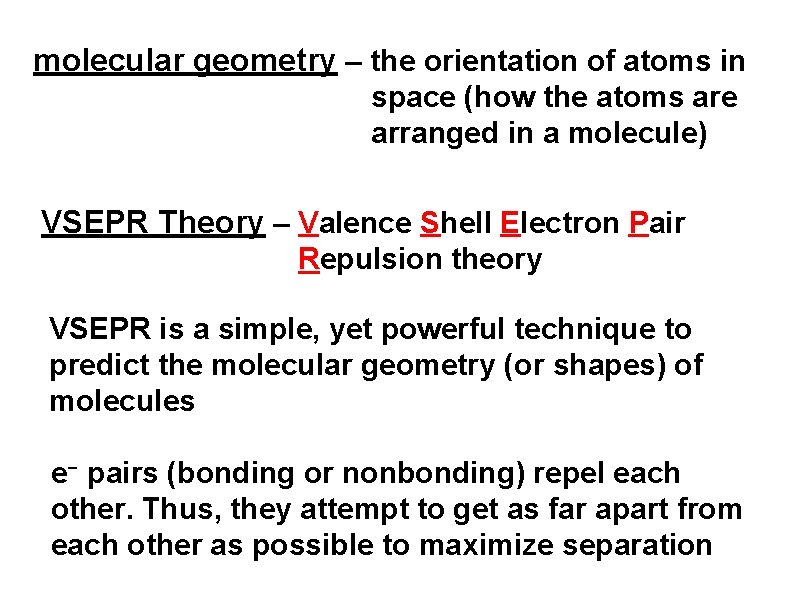
molecular geometry – the orientation of atoms in space (how the atoms are arranged in a molecule) VSEPR Theory – Valence Shell Electron Pair Repulsion theory VSEPR is a simple, yet powerful technique to predict the molecular geometry (or shapes) of molecules e- pairs (bonding or nonbonding) repel each other. Thus, they attempt to get as far apart from each other as possible to maximize separation
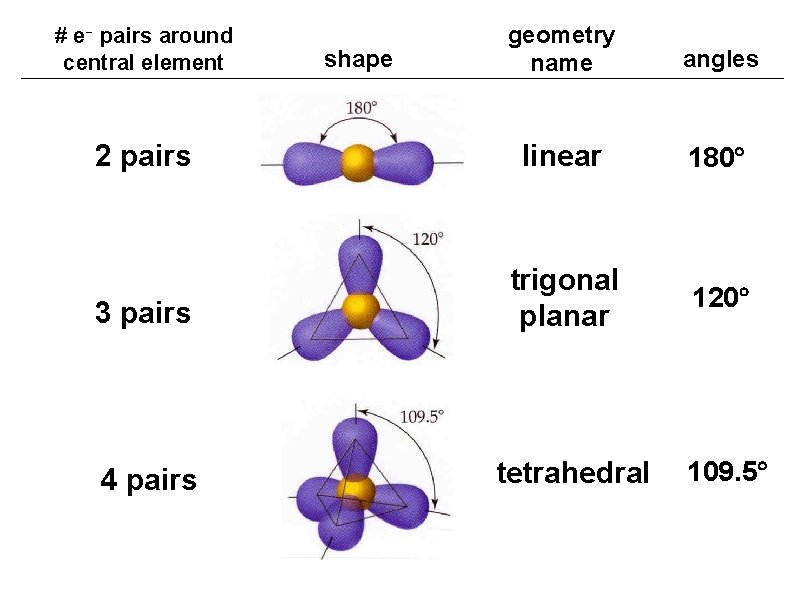
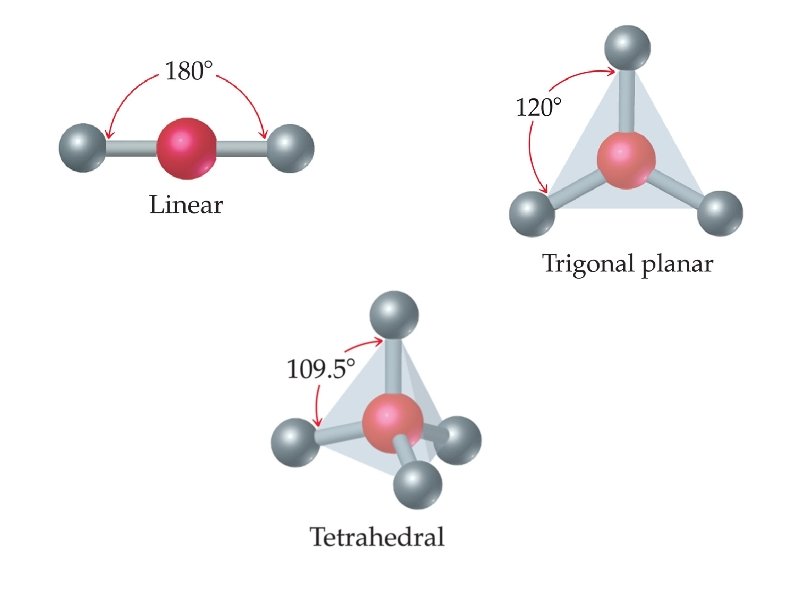
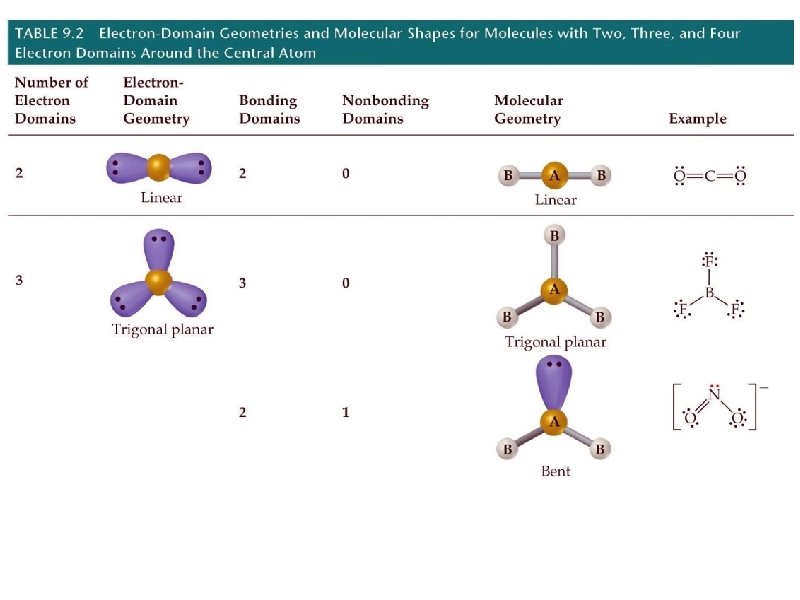
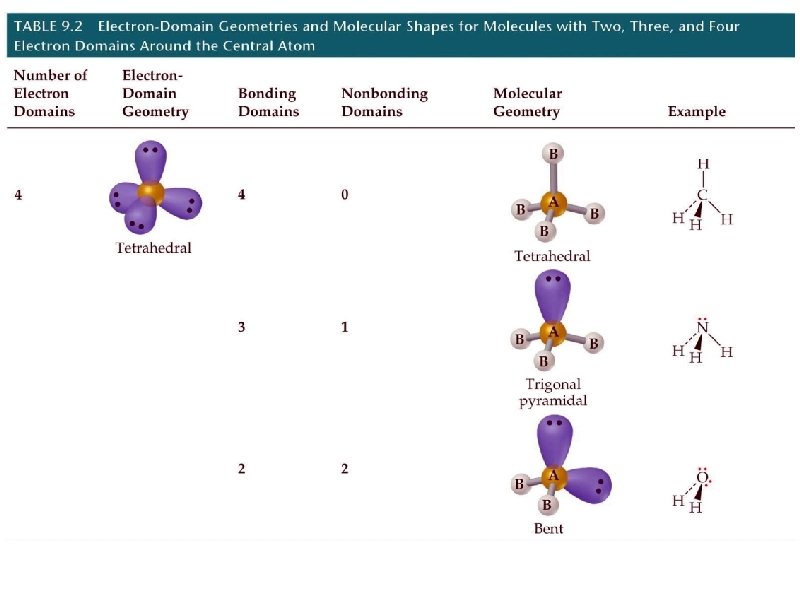
geometry name angles 2 pairs linear 180 3 pairs trigonal planar 120 4 pairs tetrahedral # e- pairs around central element shape 109. 5
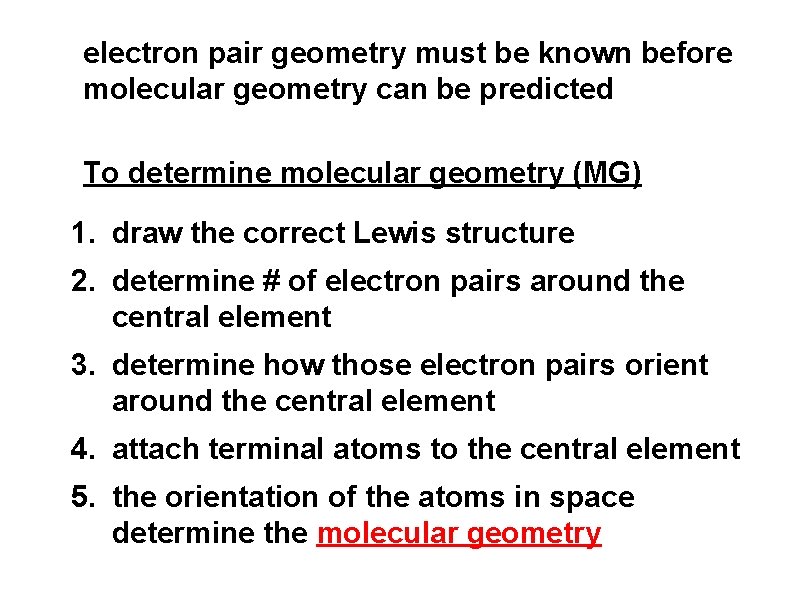
electron pair geometry must be known before molecular geometry can be predicted To determine molecular geometry (MG) 1. draw the correct Lewis structure 2. determine # of electron pairs around the central element 3. determine how those electron pairs orient around the central element 4. attach terminal atoms to the central element 5. the orientation of the atoms in space determine the molecular geometry
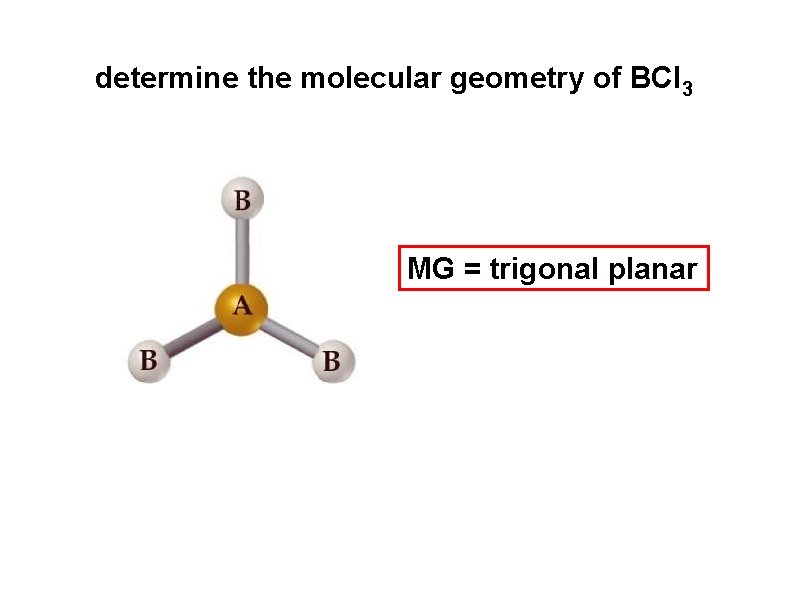
determine the molecular geometry of BCl 3 MG = trigonal planar
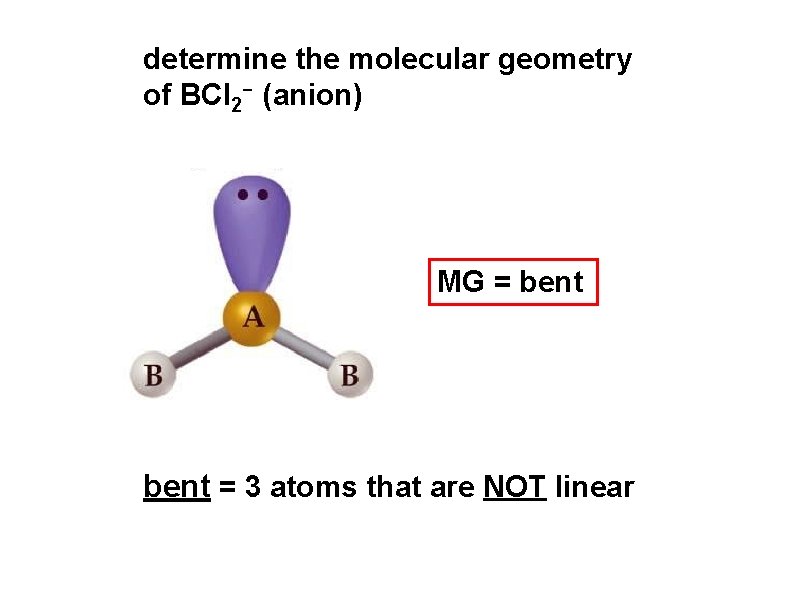
determine the molecular geometry of BCl 2 - (anion) MG = bent = 3 atoms that are NOT linear
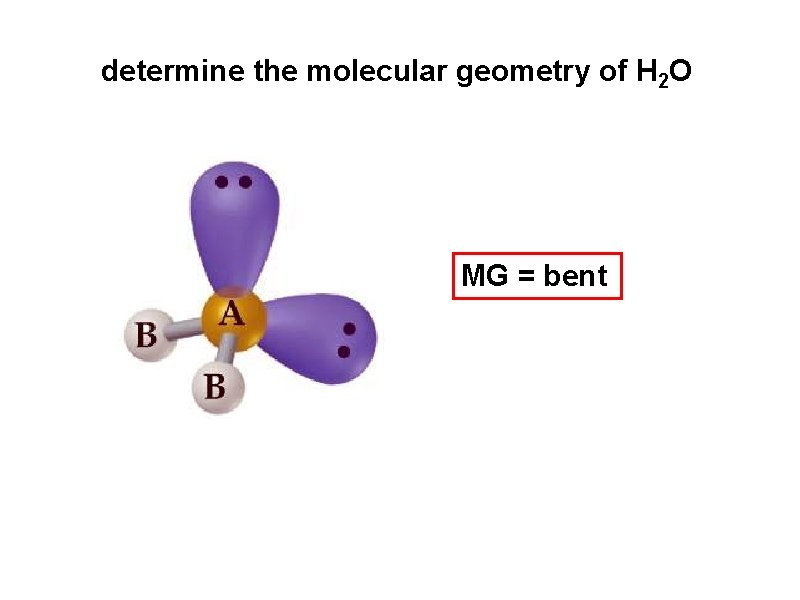
determine the molecular geometry of H 2 O MG = bent
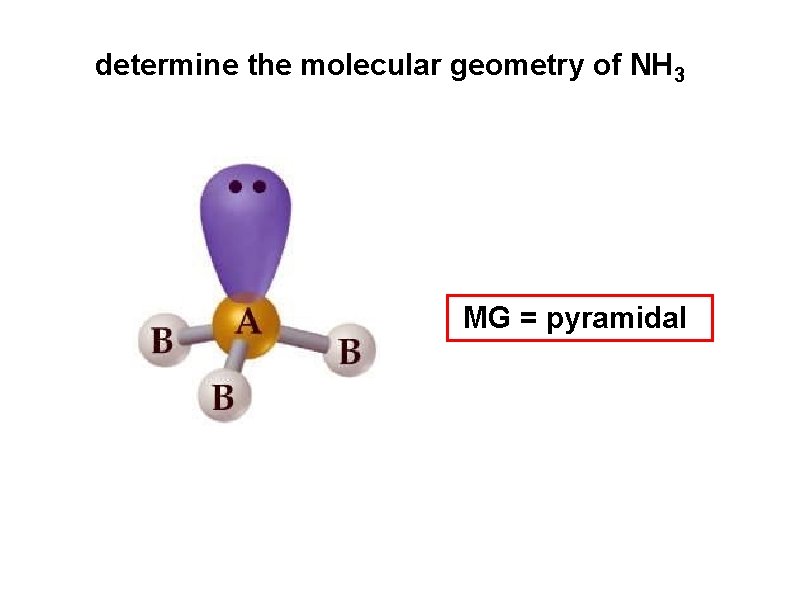
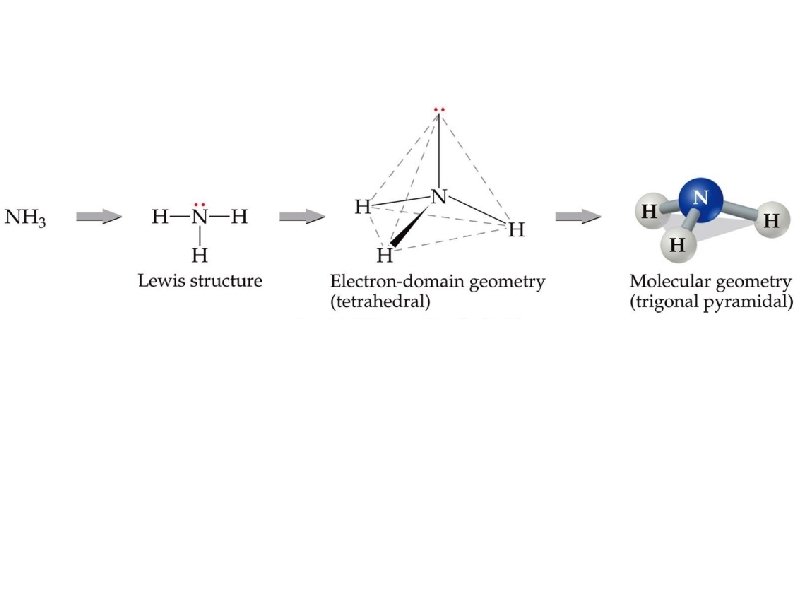
determine the molecular geometry of NH 3 MG = pyramidal
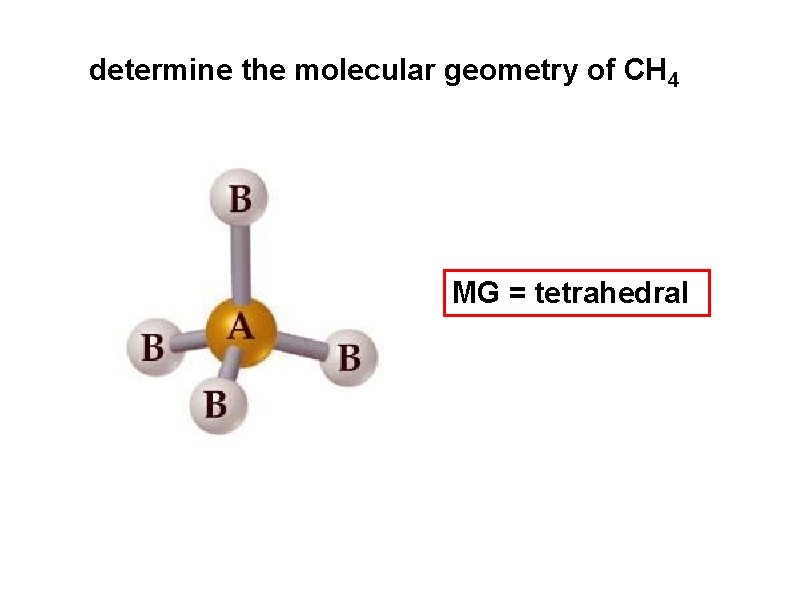
determine the molecular geometry of CH 4 MG = tetrahedral
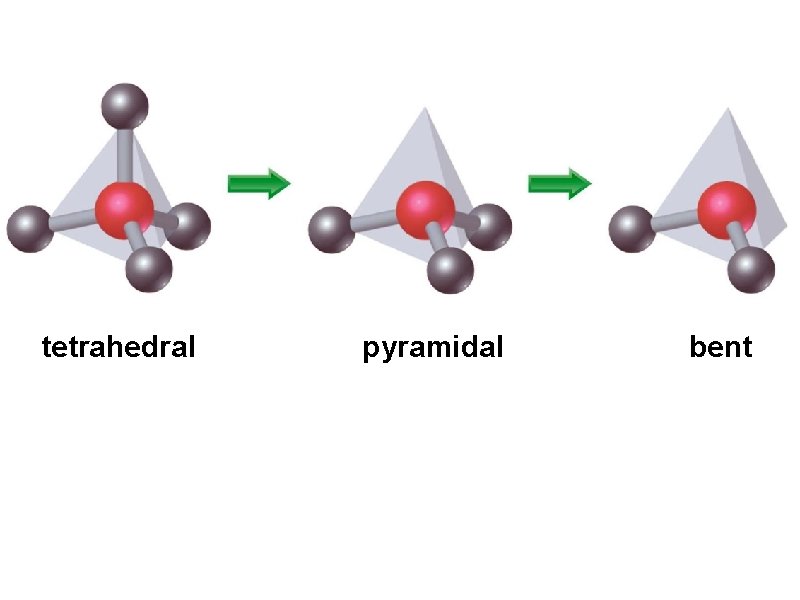
tetrahedral pyramidal bent
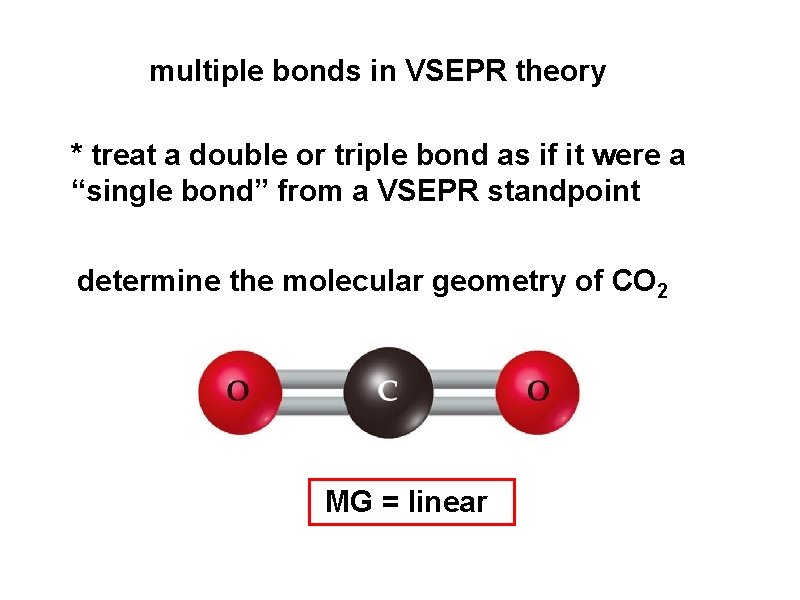
multiple bonds in VSEPR theory * treat a double or triple bond as if it were a “single bond” from a VSEPR standpoint determine the molecular geometry of CO 2 MG = linear
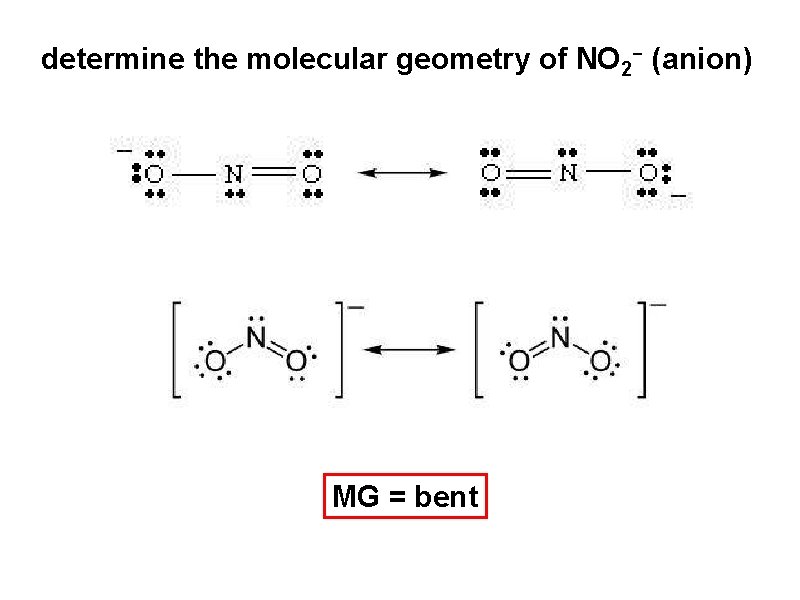
determine the molecular geometry of NO 2 - (anion) MG = bent
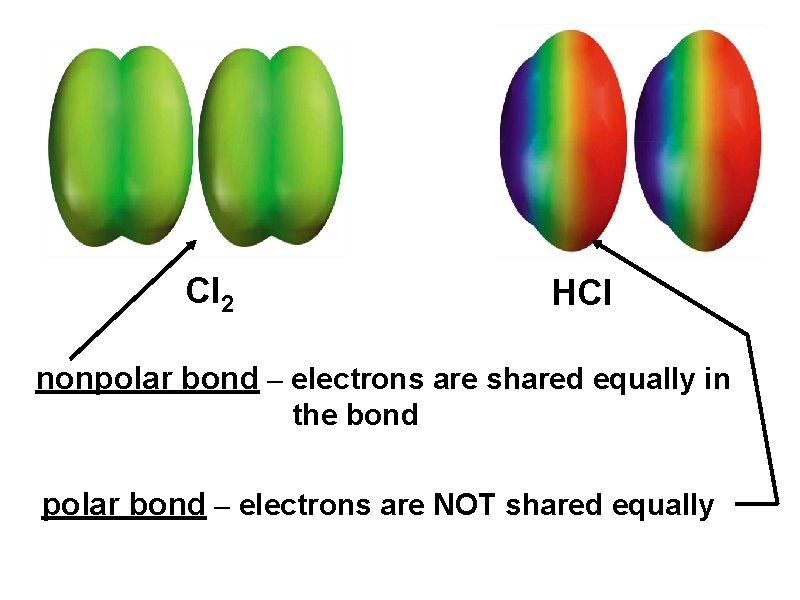
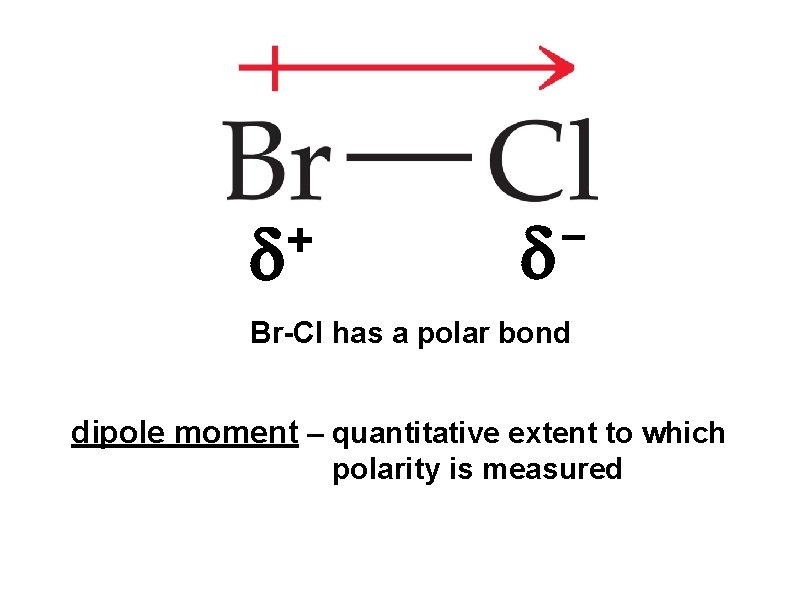
Cl 2 HCl nonpolar bond – electrons are shared equally in the bond polar bond – electrons are NOT shared equally
+ Br-Cl has a polar bond dipole moment – quantitative extent to which polarity is measured
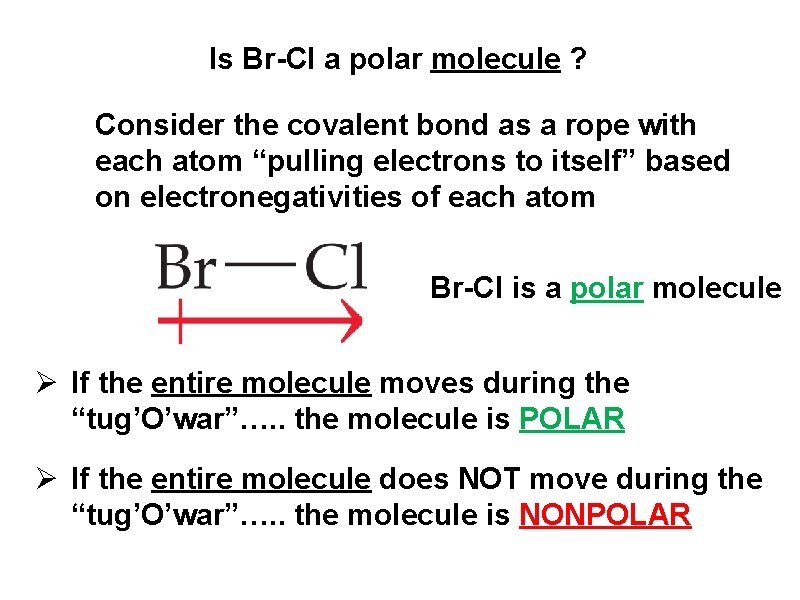
Is Br-Cl a polar molecule ? Consider the covalent bond as a rope with each atom “pulling electrons to itself” based on electronegativities of each atom Br-Cl is a polar molecule Ø If the entire molecule moves during the “tug’O’war”…. . the molecule is POLAR Ø If the entire molecule does NOT move during the “tug’O’war”…. . the molecule is NONPOLAR
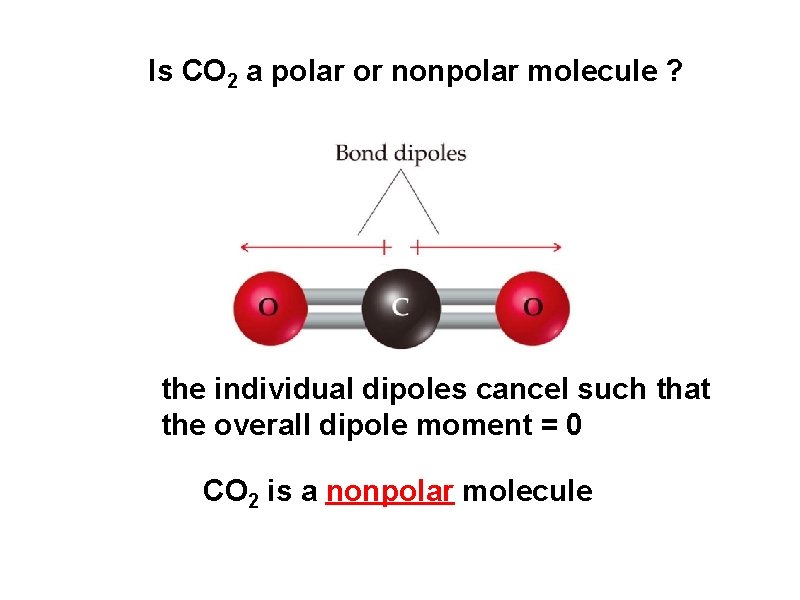
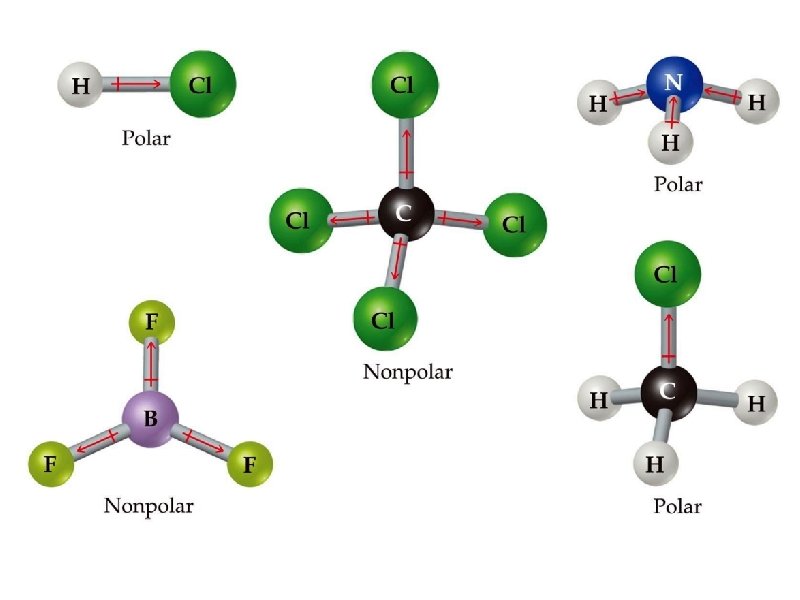
Is CO 2 a polar or nonpolar molecule ? the individual dipoles cancel such that the overall dipole moment = 0 CO 2 is a nonpolar molecule
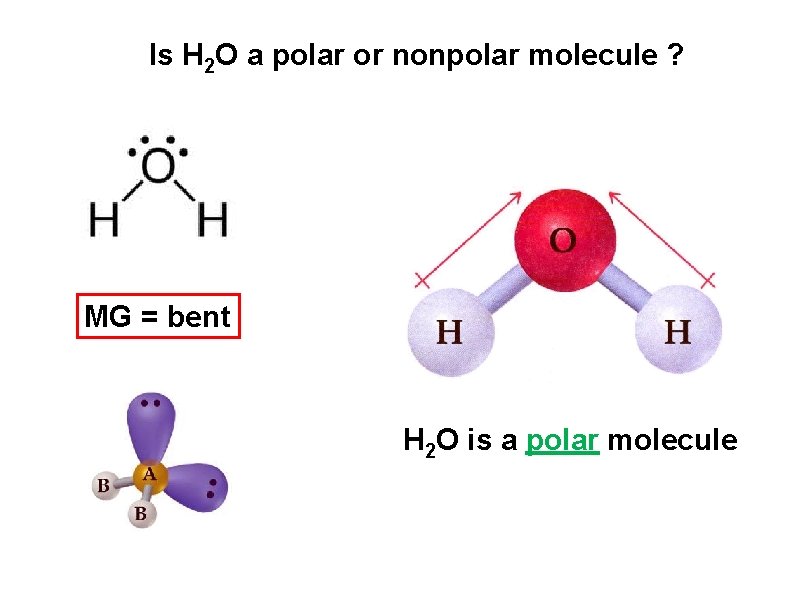
Is H 2 O a polar or nonpolar molecule ? MG = bent H 2 O is a polar molecule
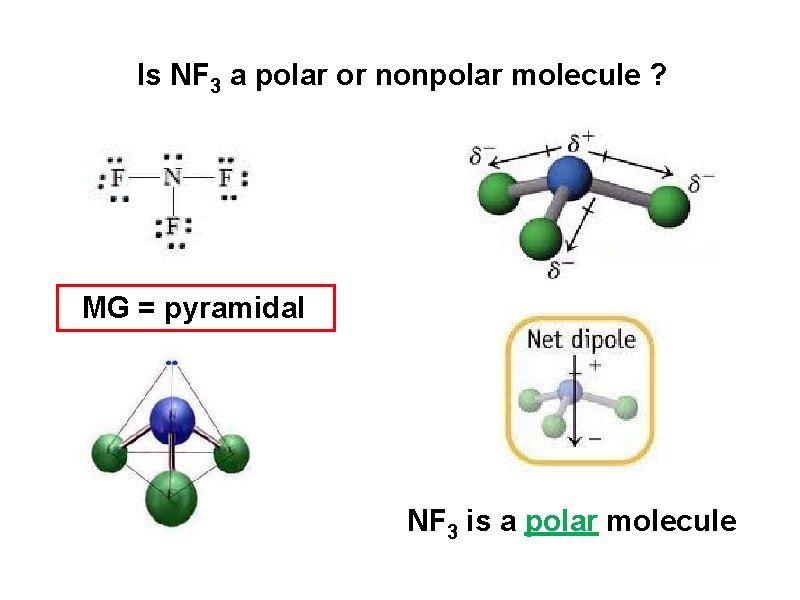
Is NF 3 a polar or nonpolar molecule ? MG = pyramidal NF 3 is a polar molecule
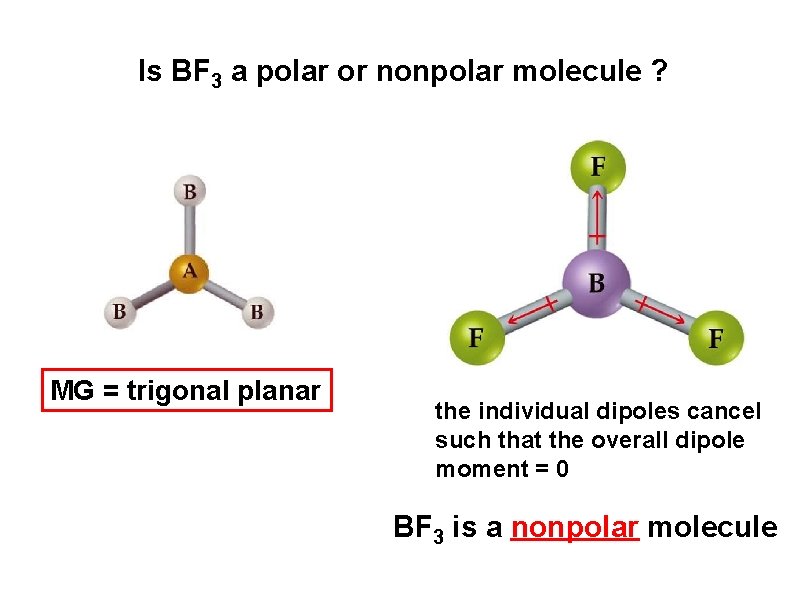
Is BF 3 a polar or nonpolar molecule ? MG = trigonal planar the individual dipoles cancel such that the overall dipole moment = 0 BF 3 is a nonpolar molecule
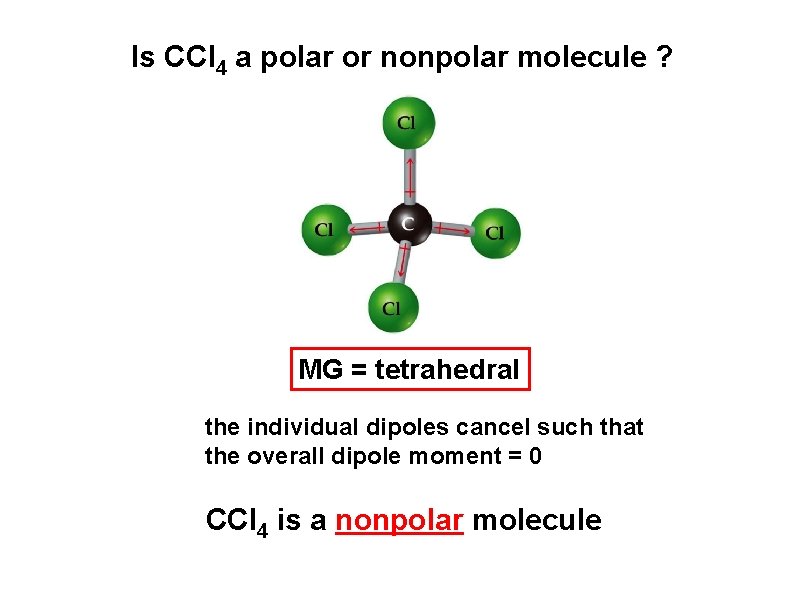
Is CCl 4 a polar or nonpolar molecule ? MG = tetrahedral the individual dipoles cancel such that the overall dipole moment = 0 CCl 4 is a nonpolar molecule
valence bond theory – describes how atomic (VB theory) orbitals form bonds
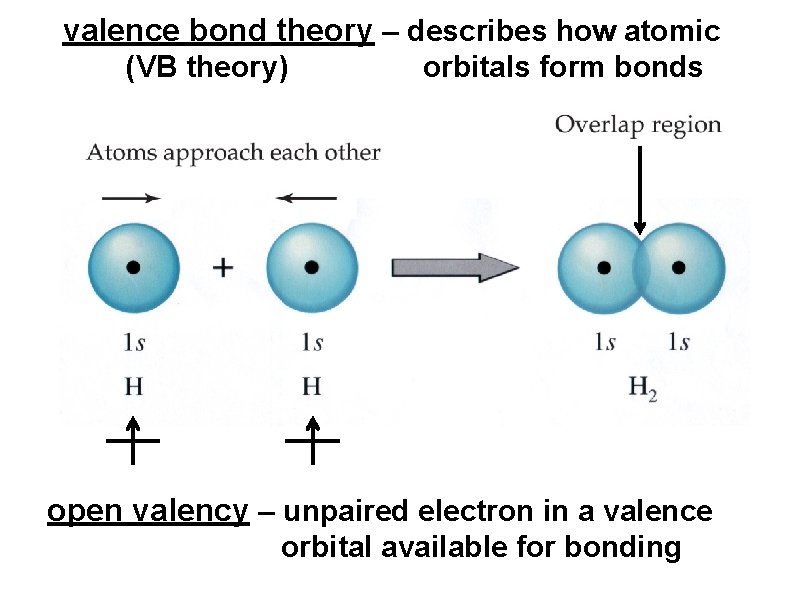
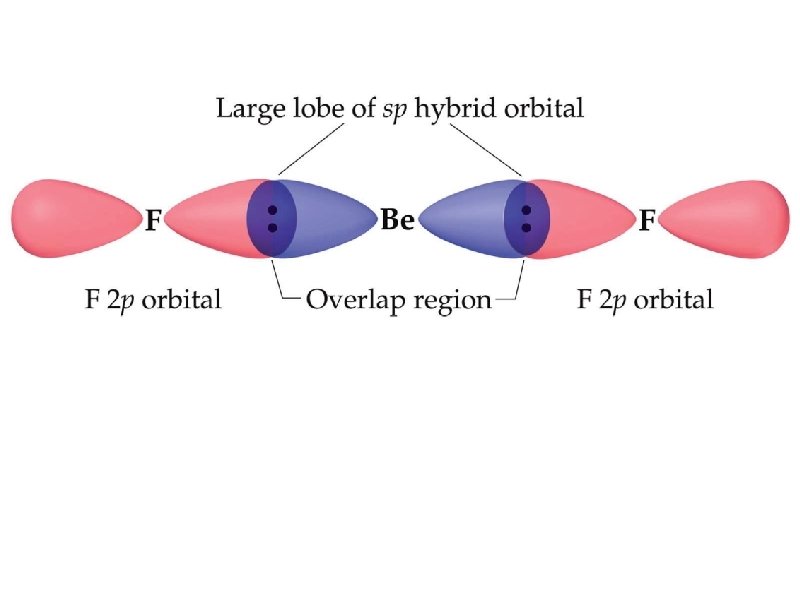
valence bond theory – describes how atomic (VB theory) orbitals form bonds open valency – unpaired electron in a valence orbital available for bonding
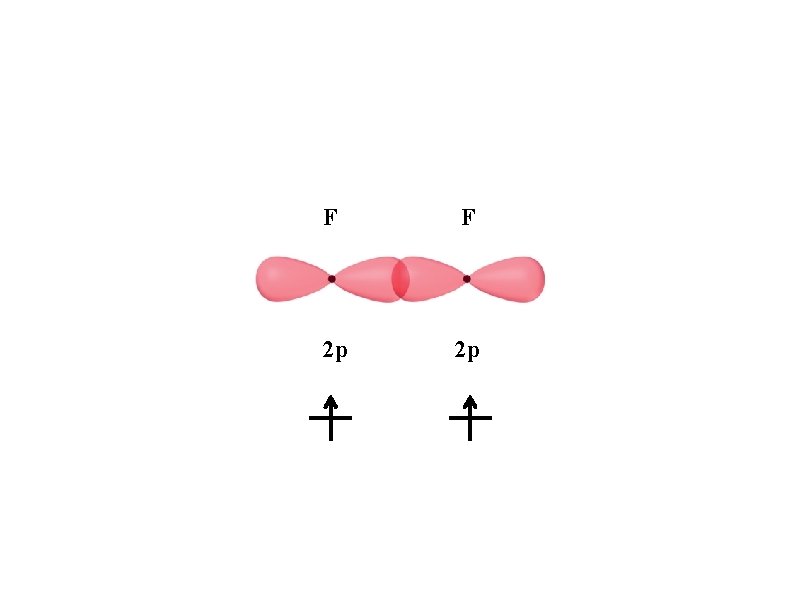
F F 2 p 2 p
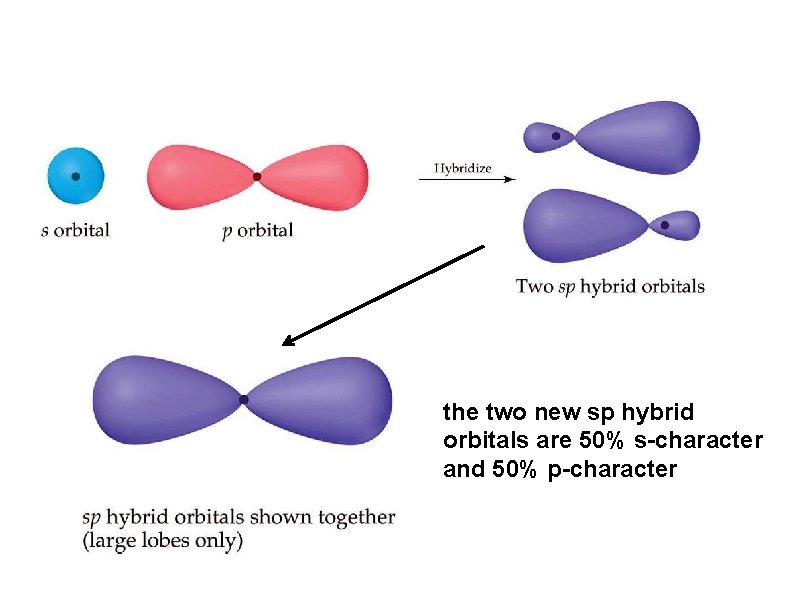
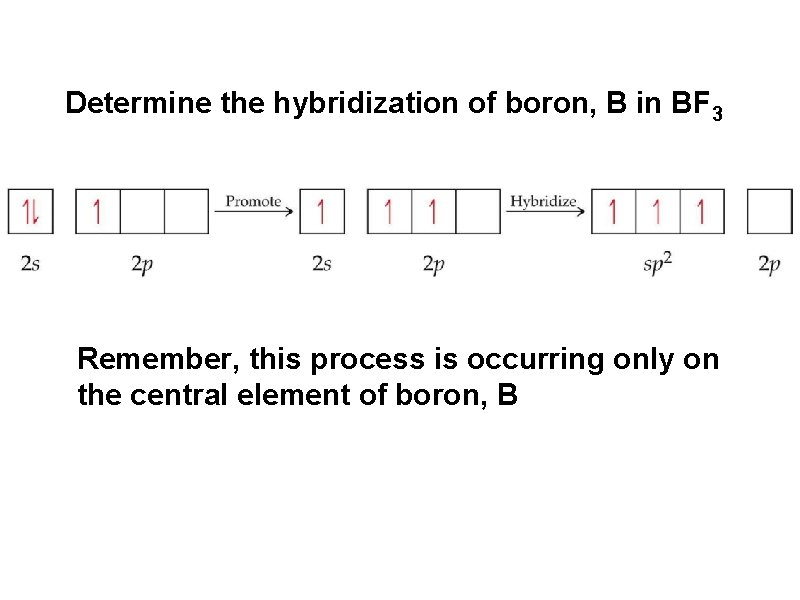
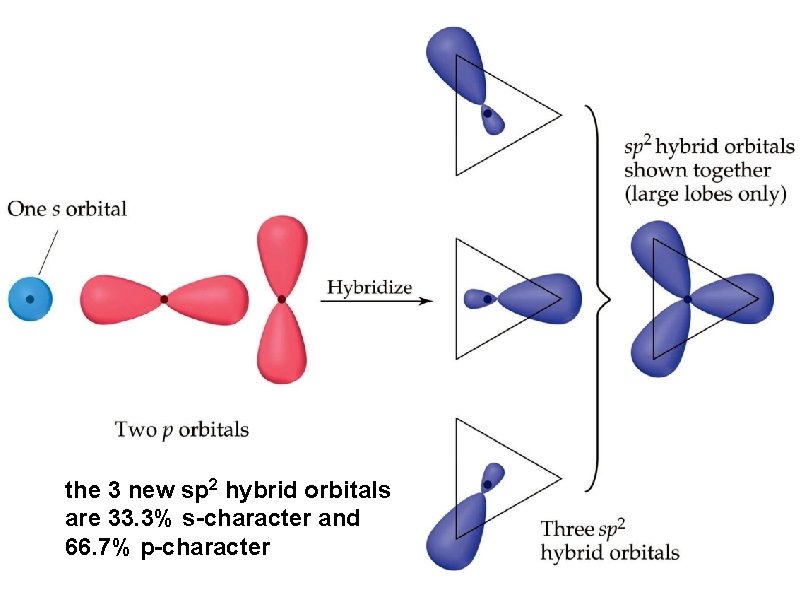
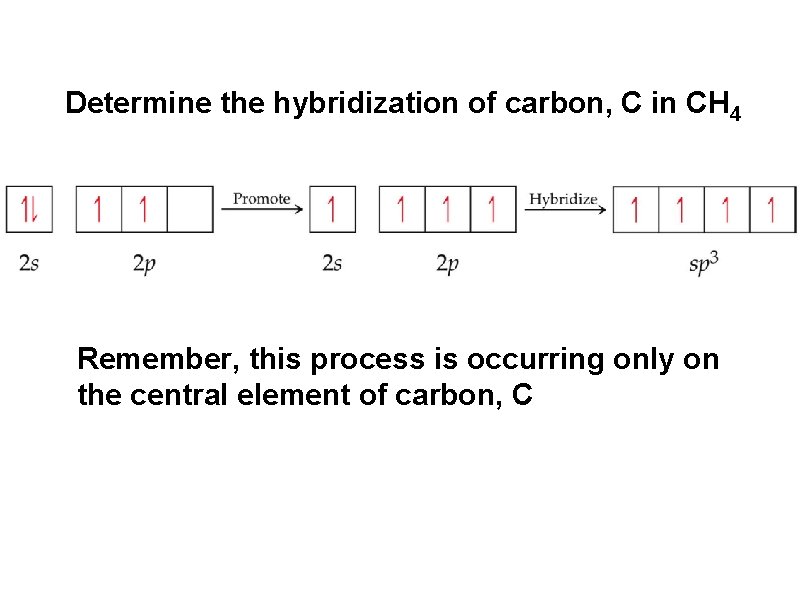
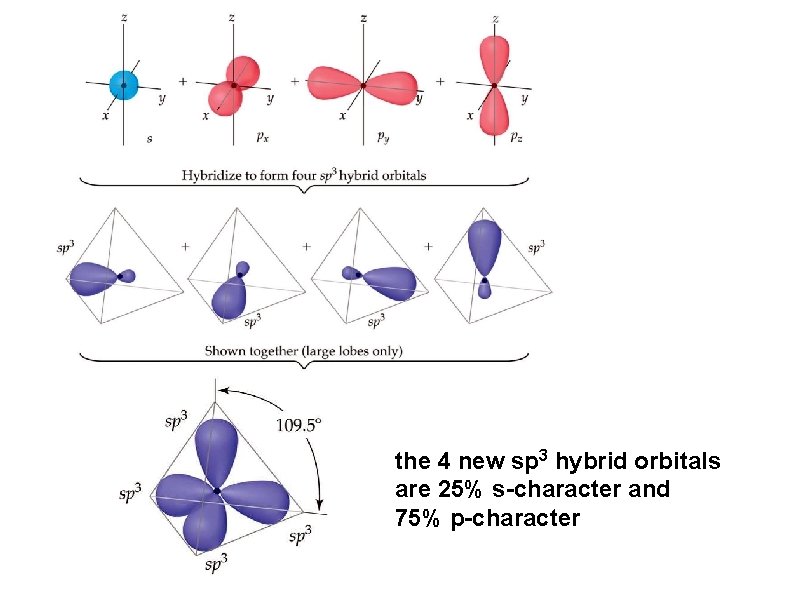
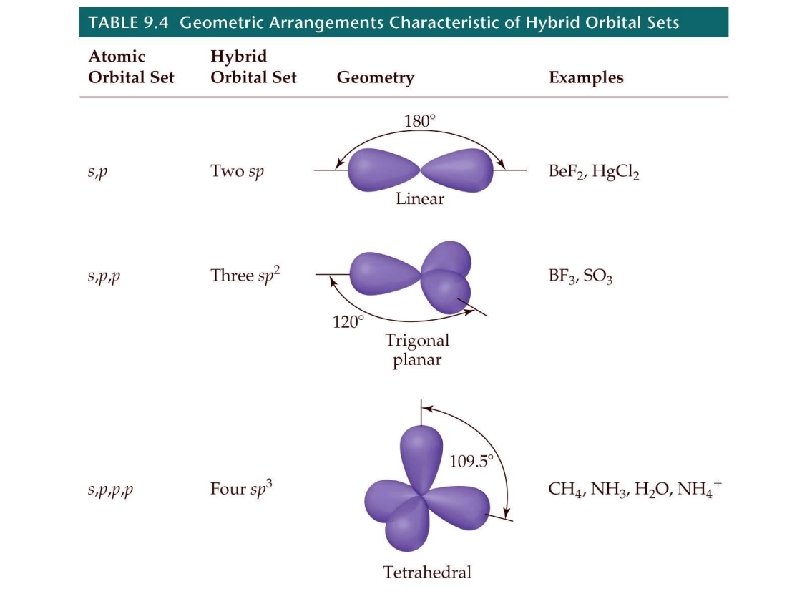
electron promotion – electron is removed from one orbital and placed in an orbital of higher energy hybridization – simple atomic orbitals on the central atom “mix” to form new “hybrid” orbitals hybrid – something of a mixed origin
the two new sp hybrid orbitals are 50% s-character and 50% p-character
Determine the hybridization of boron, B in BF 3 Remember, this process is occurring only on the central element of boron, B
the 3 new sp 2 hybrid orbitals are 33. 3% s-character and 66. 7% p-character
Determine the hybridization of carbon, C in CH 4 Remember, this process is occurring only on the central element of carbon, C
the 4 new sp 3 hybrid orbitals are 25% s-character and 75% p-character
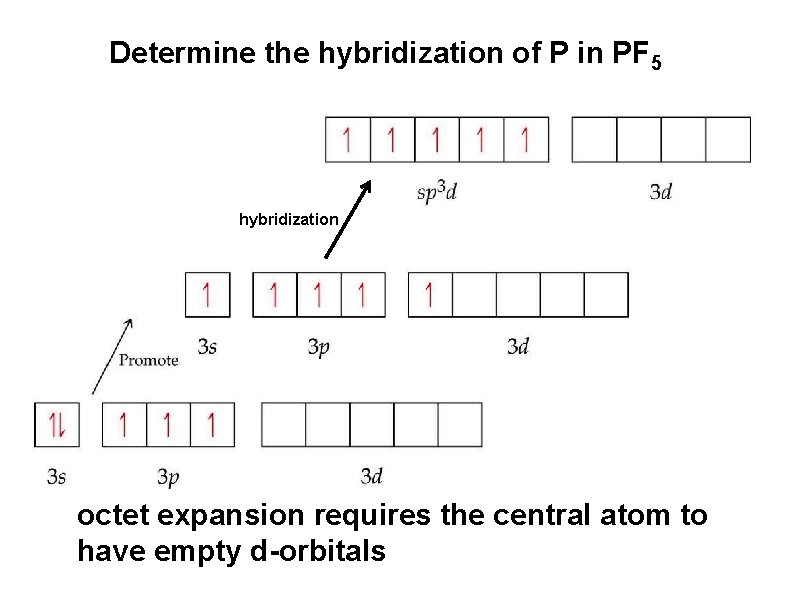
Determine the hybridization of P in PF 5 hybridization octet expansion requires the central atom to have empty d-orbitals
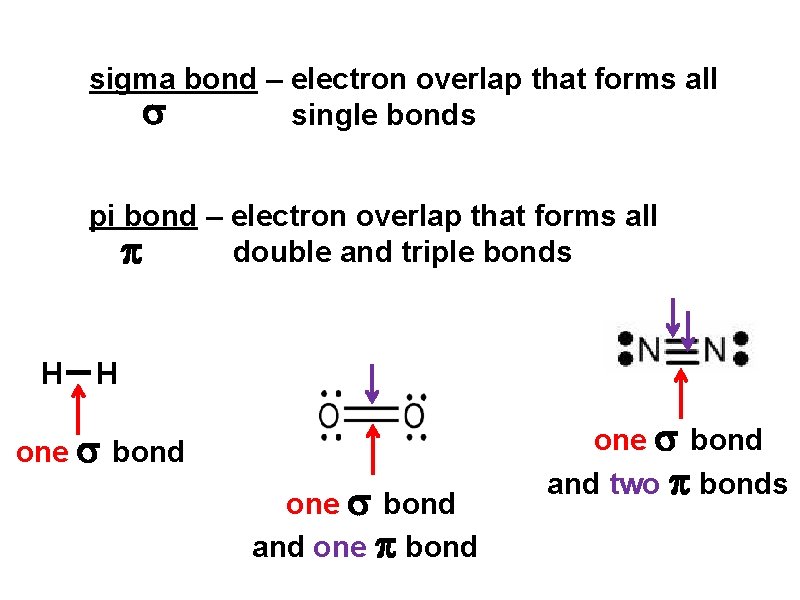
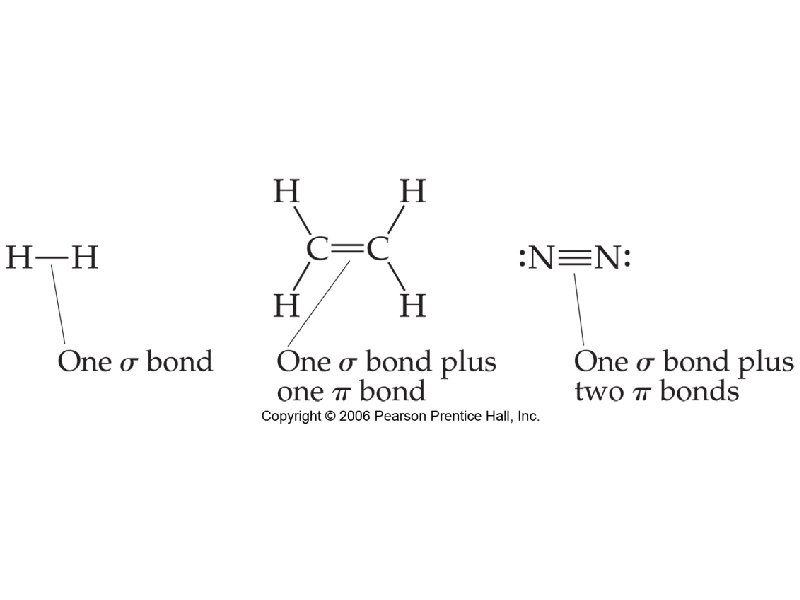
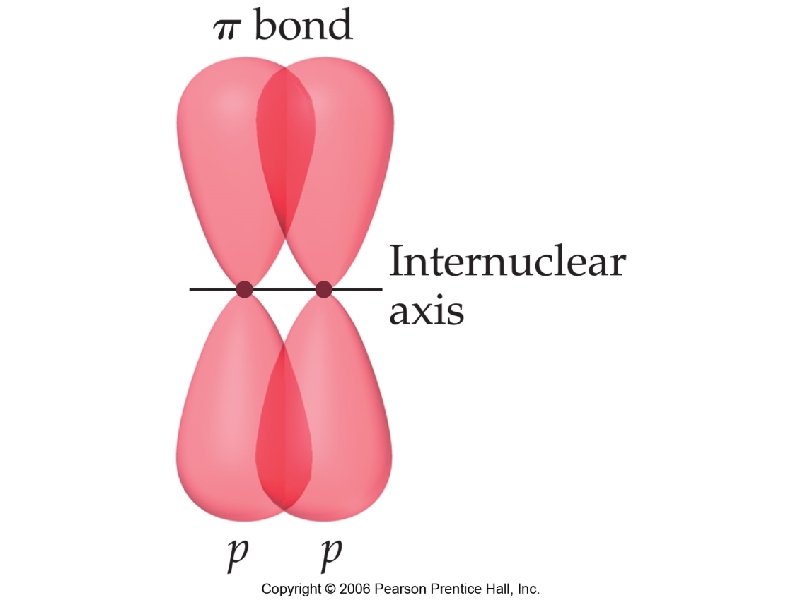
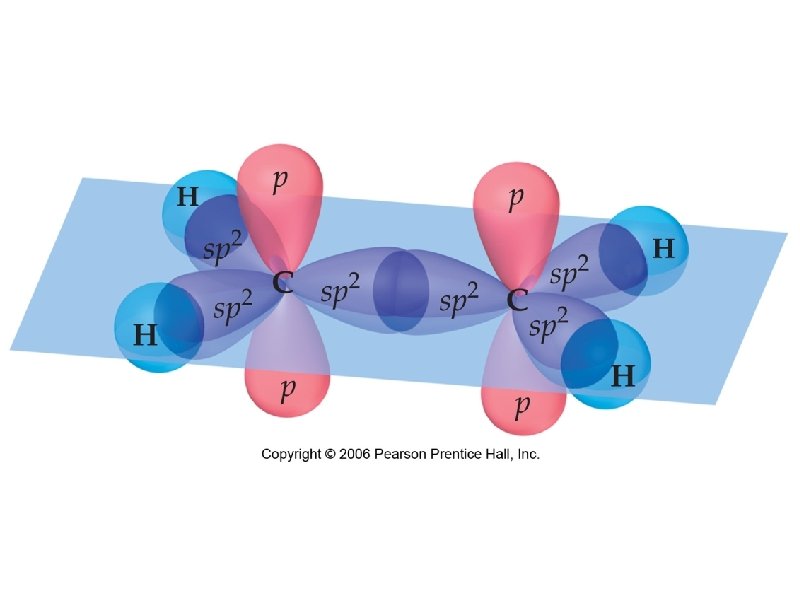
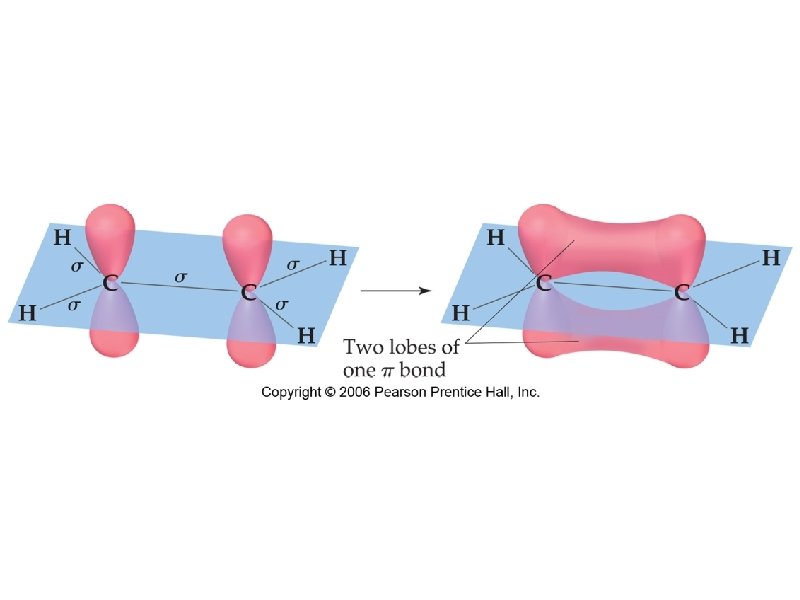
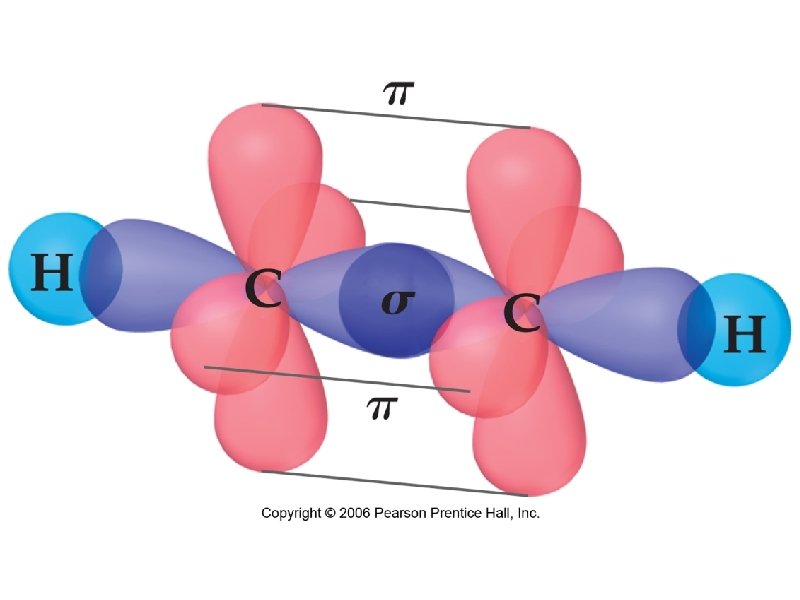
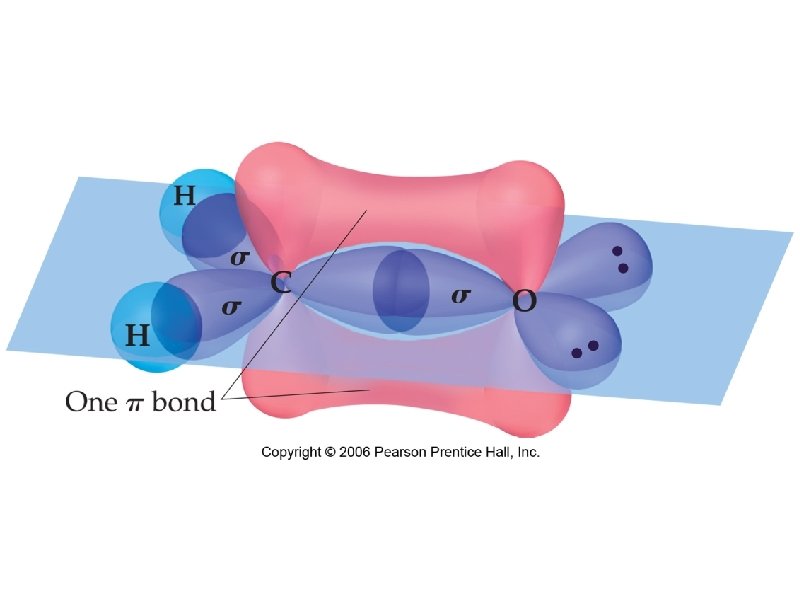
sigma bond – electron overlap that forms all single bonds pi bond – electron overlap that forms all double and triple bonds H H one bond and two bonds
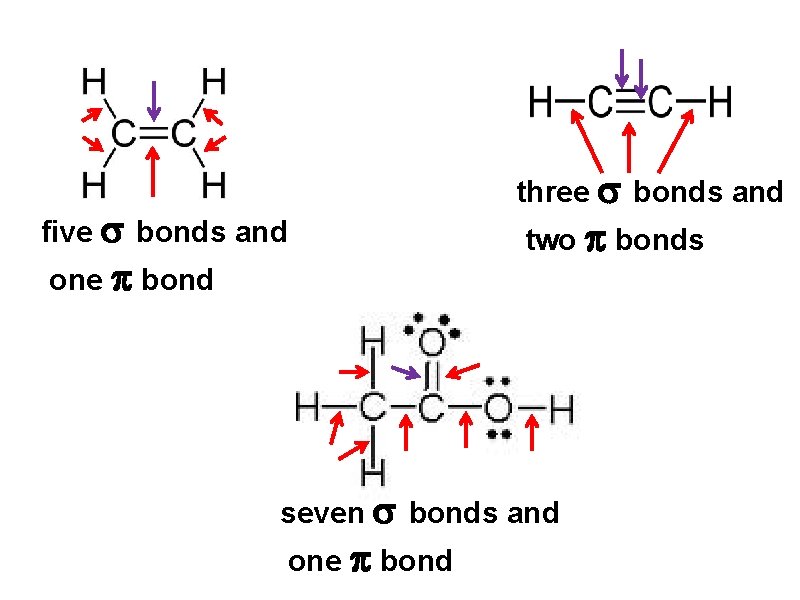
three bonds and five bonds and two bonds one bond seven bonds and one bond