
Molecular Compounds and Nomenclature Molecular Nomenclature Most compounds

- Slides: 10
Molecular Compounds and Nomenclature
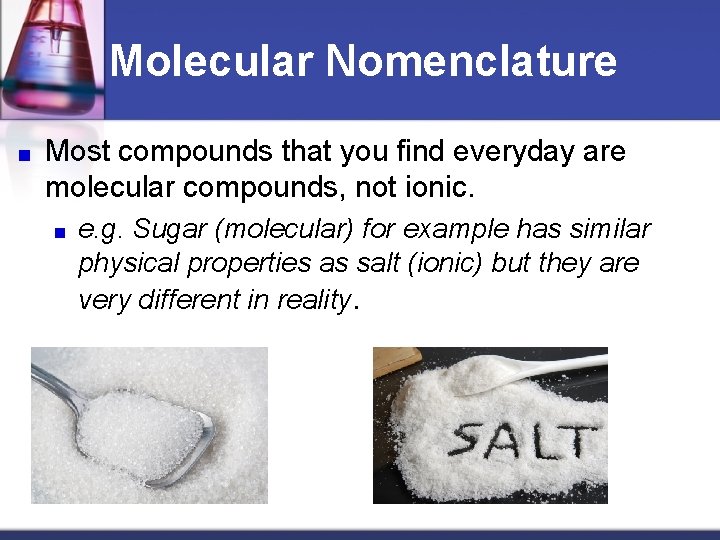
Molecular Nomenclature ■ Most compounds that you find everyday are molecular compounds, not ionic. ■ e. g. Sugar (molecular) for example has similar physical properties as salt (ionic) but they are very different in reality.
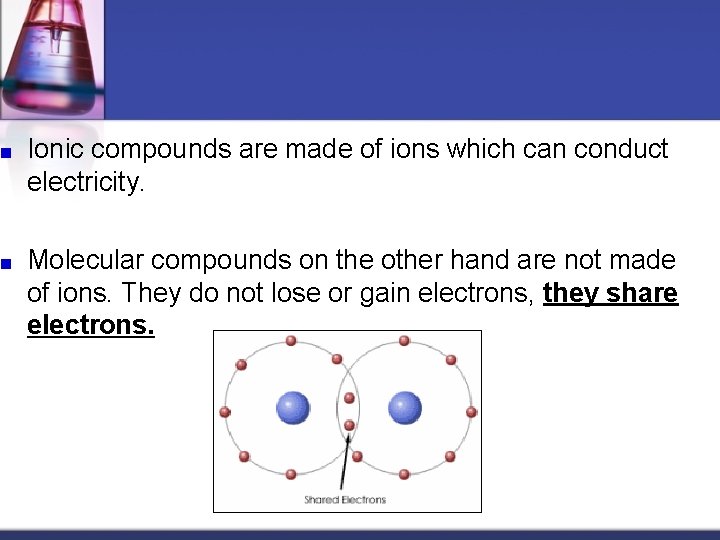
■ Ionic compounds are made of ions which can conduct electricity. ■ Molecular compounds on the other hand are not made of ions. They do not lose or gain electrons, they share electrons.
• Ionic compounds can only bond to non metals in a limited way. e. g. for every Ca 2+ we can only bond 2 F to it. Molecular compounds do not work that way.
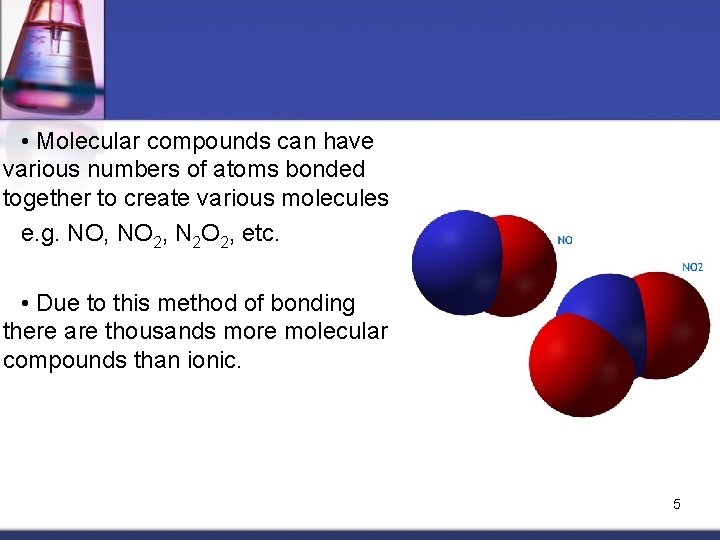
• Molecular compounds can have various numbers of atoms bonded together to create various molecules. e. g. NO, NO 2, N 2 O 2, etc. • Due to this method of bonding there are thousands more molecular compounds than ionic. 5
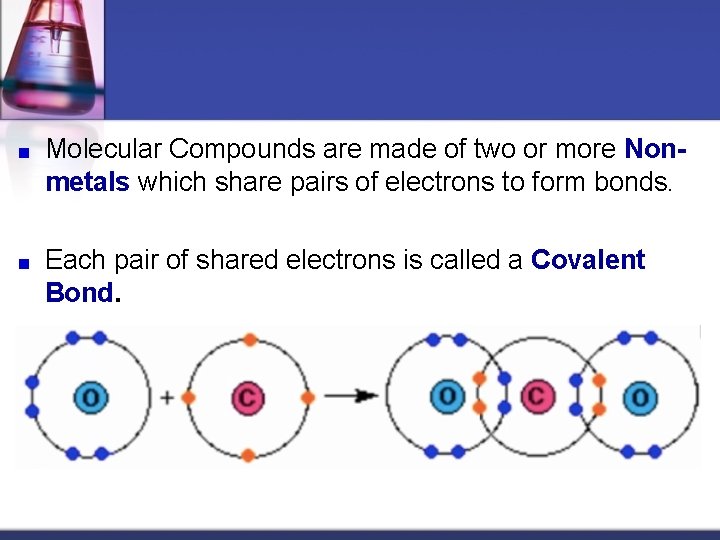
■ Molecular Compounds are made of two or more Nonmetals which share pairs of electrons to form bonds. ■ Each pair of shared electrons is called a Covalent Bond.
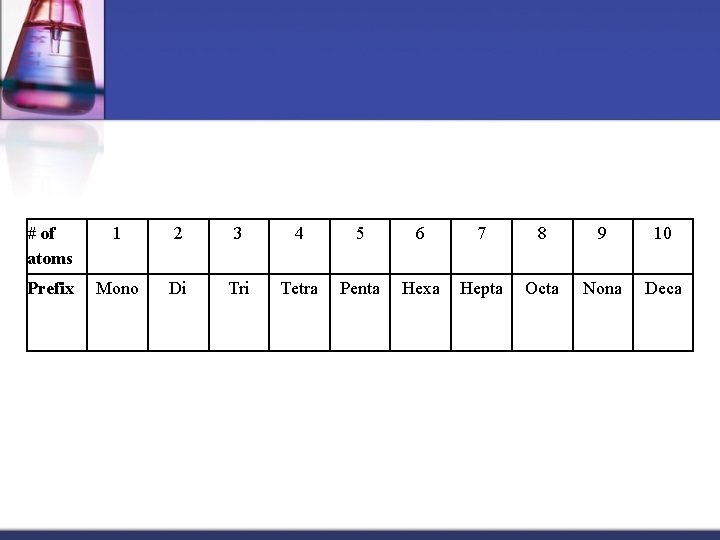
■ Naming molecular compounds ■ The prefixes are used to count the number of atoms in the molecule. ■ This is important as molecular compounds containing 2 elements can have different combinations of atoms…each have different properties.
# of atoms 1 2 3 4 5 6 7 8 9 10 Prefix Mono Di Tri Tetra Penta Hexa Hepta Octa Nona Deca
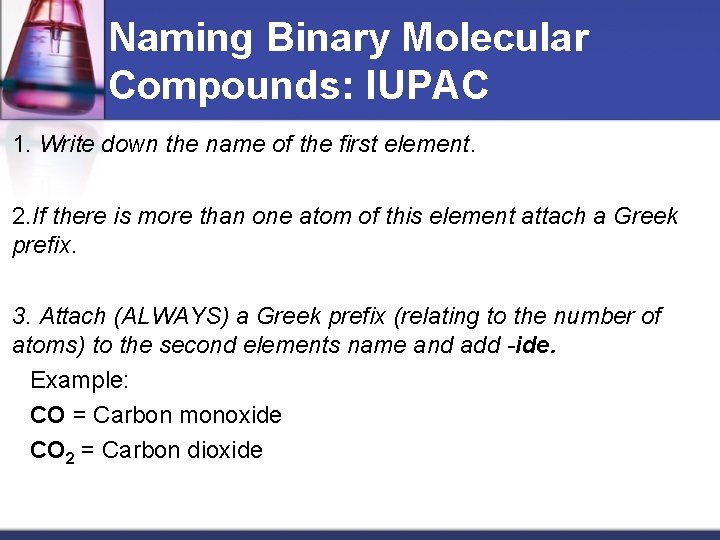
Naming Binary Molecular Compounds: IUPAC 1. Write down the name of the first element. 2. If there is more than one atom of this element attach a Greek prefix. 3. Attach (ALWAYS) a Greek prefix (relating to the number of atoms) to the second elements name and add -ide. Example: CO = Carbon monoxide CO 2 = Carbon dioxide