
Molecular Chaperones The Hsp 70 Superfamily Pathways For

- Slides: 16
Molecular Chaperones The Hsp 70 Super-family
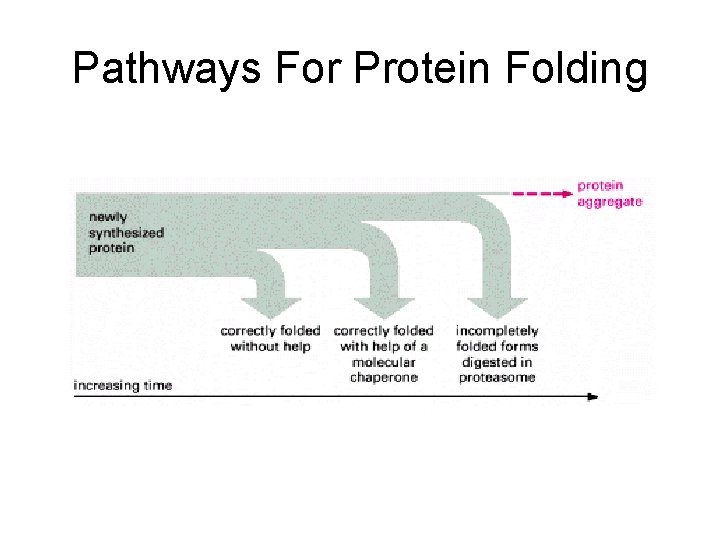
Pathways For Protein Folding
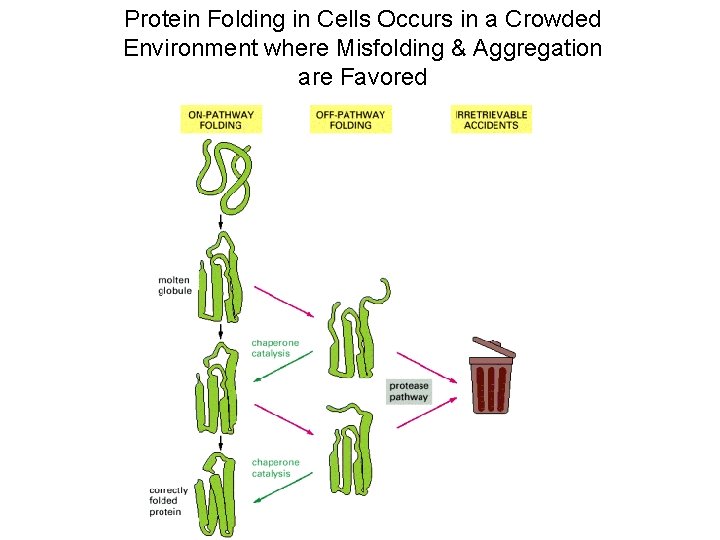
Protein Folding in Cells Occurs in a Crowded Environment where Misfolding & Aggregation are Favored
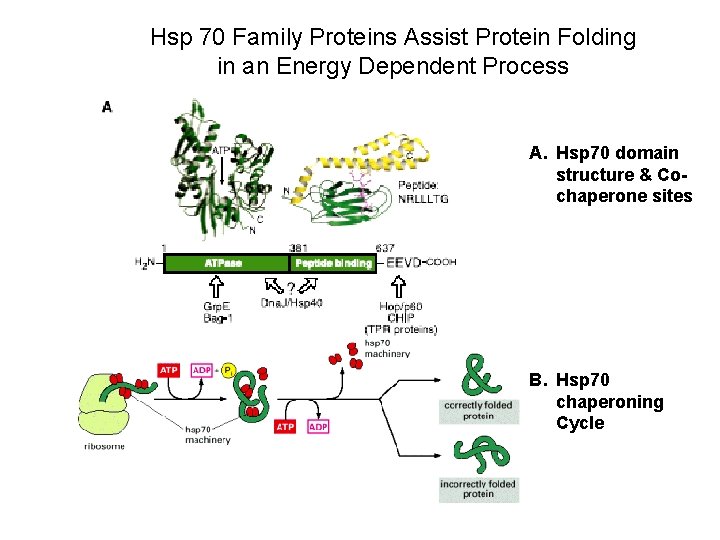
Hsp 70 Family Proteins Assist Protein Folding in an Energy Dependent Process A. Hsp 70 domain structure & Cochaperone sites B. Hsp 70 chaperoning Cycle
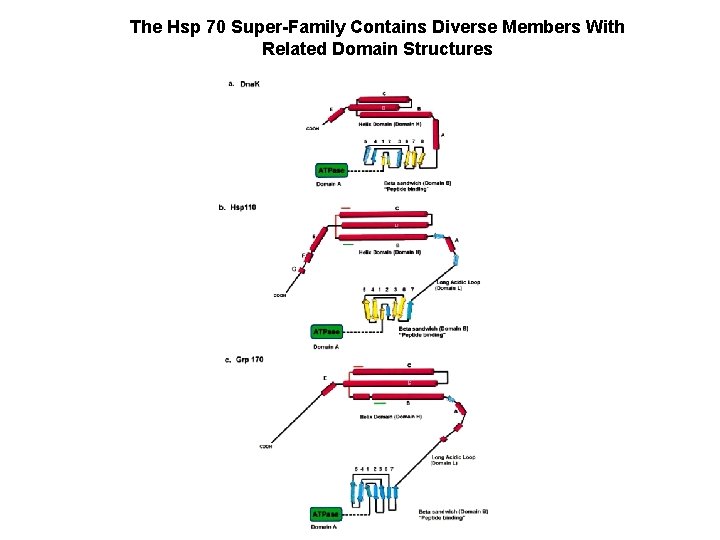
The Hsp 70 Super-Family Contains Diverse Members With Related Domain Structures
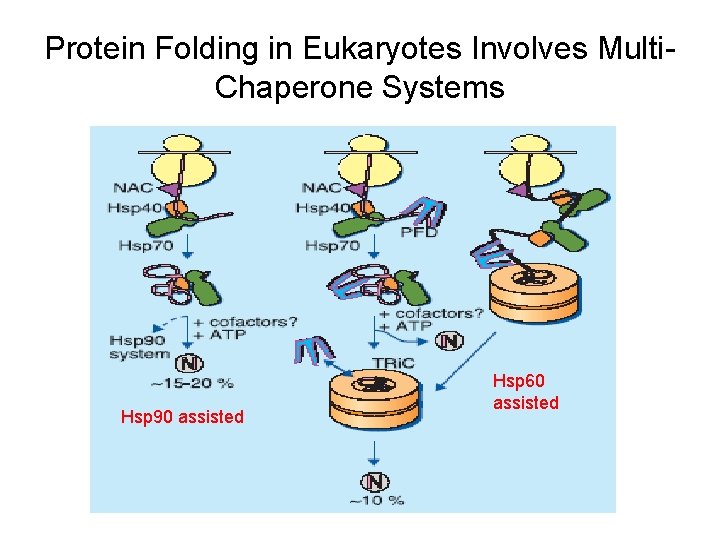
Protein Folding in Eukaryotes Involves Multi. Chaperone Systems Hsp 90 assisted Hsp 60 assisted
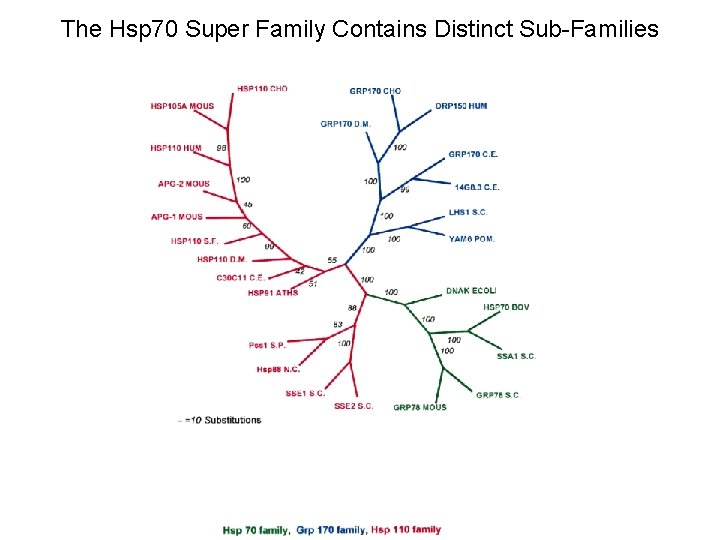
The Hsp 70 Super Family Contains Distinct Sub-Families
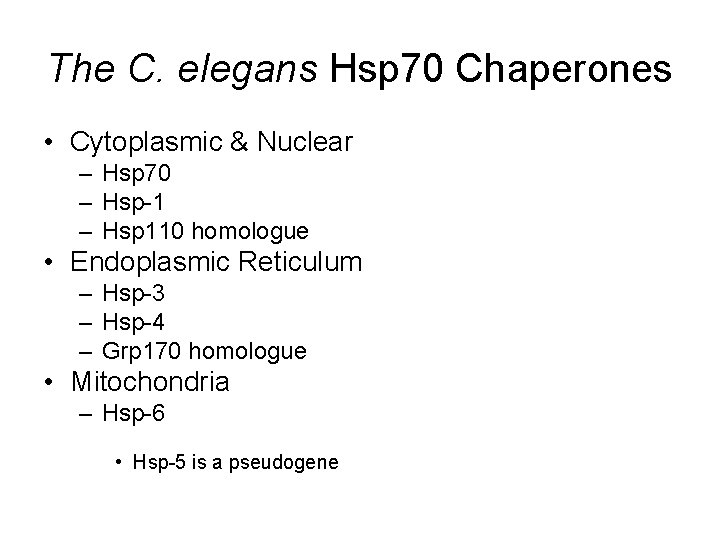
The C. elegans Hsp 70 Chaperones • Cytoplasmic & Nuclear – Hsp 70 – Hsp-1 – Hsp 110 homologue • Endoplasmic Reticulum – Hsp-3 – Hsp-4 – Grp 170 homologue • Mitochondria – Hsp-6 • Hsp-5 is a pseudogene
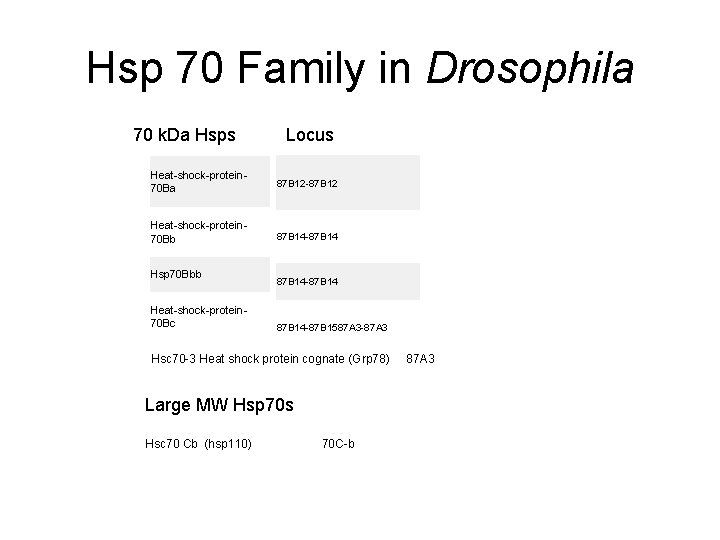
Hsp 70 Family in Drosophila 70 k. Da Hsps Locus Heat-shock-protein 70 Ba 87 B 12 -87 B 12 Heat-shock-protein 70 Bb 87 B 14 -87 B 14 Hsp 70 Bbb Heat-shock-protein 70 Bc 87 B 14 -87 B 14 -87 B 1587 A 3 -87 A 3 Hsc 70 -3 Heat shock protein cognate (Grp 78) Large MW Hsp 70 s Hsc 70 Cb (hsp 110) 70 C-b 87 A 3
Hsp 70 Family Members are Found in All Major Cellular Compartments • Cytoplasm & Nucleus – Hsp 70 (multiple paralogs) – Hsp 110 (Multiple Paralogs) • Mitochondria & Chloroplasts – Hsp 70 • Endoplasmic Reticulum – Grp 78 (hsp 70 multiple paralogs) – Grp 170
Cells Respond to Stress by Increased Synthesis of Molecular Chaperones • Misfolded proteins in the cytoplasm & nucleus induce the heat shock response, synthesis of additional heat shock proteins - Hsp’s • Misfolded proteins in the endoplasmic reticulum induce the unfolded protein response, synthesis of additional ER chaperones - Grp’s
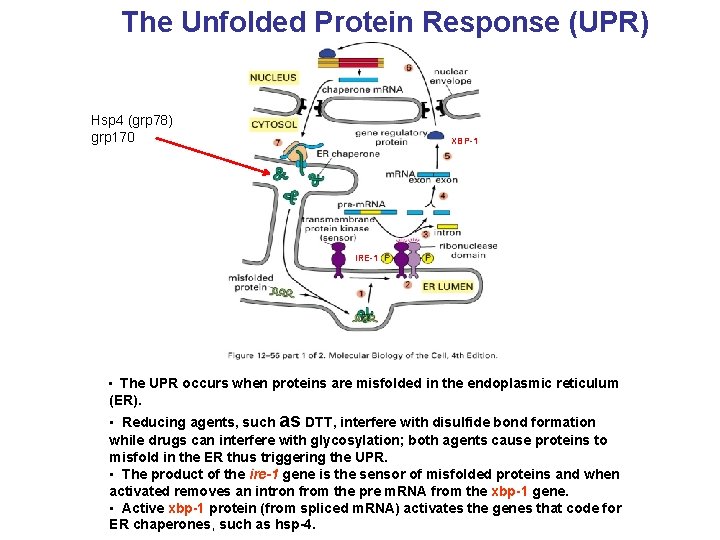
The Unfolded Protein Response (UPR) Hsp 4 (grp 78) grp 170 XBP-1 IRE-1 • The UPR occurs when proteins are misfolded in the endoplasmic reticulum (ER). • Reducing agents, such as DTT, interfere with disulfide bond formation while drugs can interfere with glycosylation; both agents cause proteins to misfold in the ER thus triggering the UPR. • The product of the ire-1 gene is the sensor of misfolded proteins and when activated removes an intron from the pre m. RNA from the xbp-1 gene. • Active xbp-1 protein (from spliced m. RNA) activates the genes that code for ER chaperones, such as hsp-4.
Cellular Stresses Promote Misfolding and Aggregation of Proteins • • High temperatures Heavy metals Alcohol Anoxia Osmotic stress Energy starvation Reducing agents
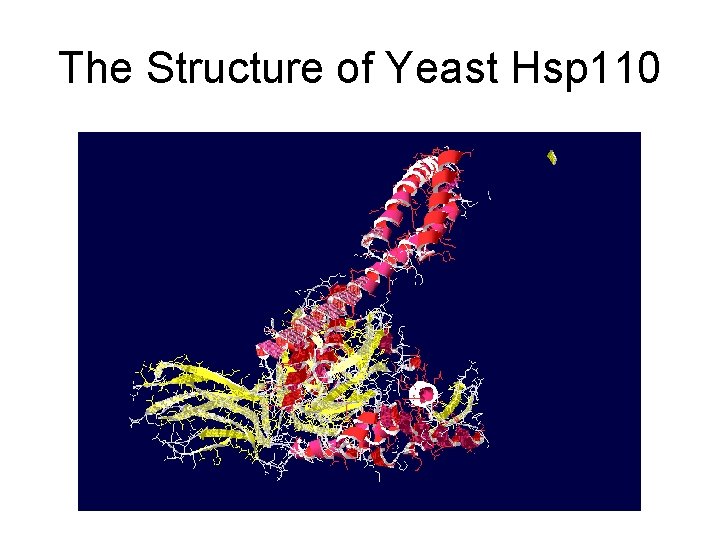
The Structure of Yeast Hsp 110
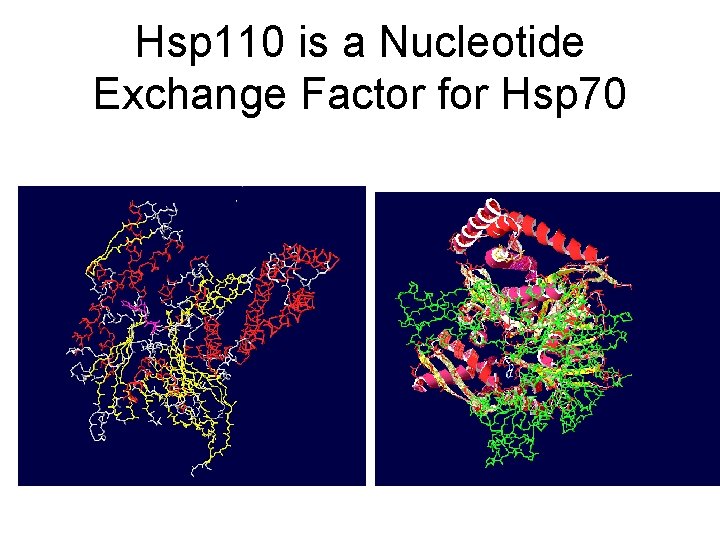
Hsp 110 is a Nucleotide Exchange Factor for Hsp 70
Summary Efficient folding of many newly synthesized proteins depends on assistance from molecular chaperones, which serve to prevent protein misfolding and aggregation in the crowded environment of the cell. Nascent chains binding chaperones, including trigger factor, Hsp 70, and prefoldin, stabilize elongating chains on ribosomes in a Nonaggregated state. Folding in the cytosol is achieved either on controlled chain release from these factors or after transfer of newly synthesized proteins to downstream chaperones, such as the chaperonins. These are large, cylindrical complexes that provide a central compartment for a single protein chain to fold unimpaired by aggregation. Understanding how the thousands of different proteins synthesized in a cell use this chaperone machinery has profound implications for biotechnology and medicine. -