
Molecular Cell Biology Lecture Oct 18 2018 Proteomics
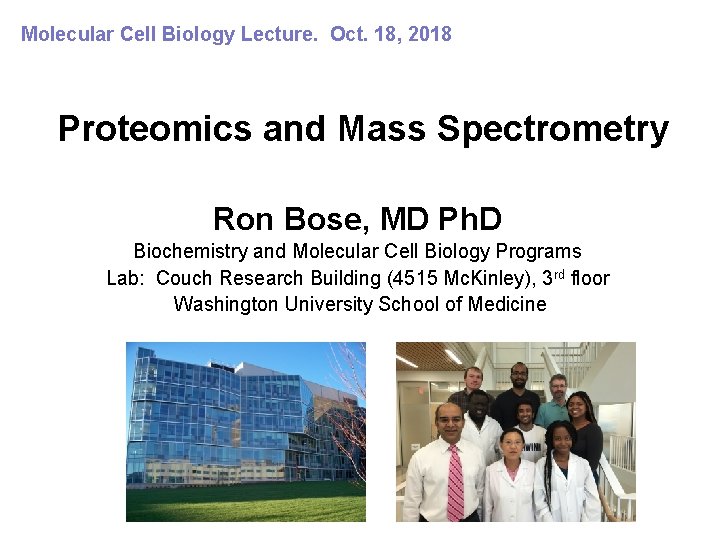
Molecular Cell Biology Lecture. Oct. 18, 2018 Proteomics and Mass Spectrometry Ron Bose, MD Ph. D Biochemistry and Molecular Cell Biology Programs Lab: Couch Research Building (4515 Mc. Kinley), 3 rd floor Washington University School of Medicine
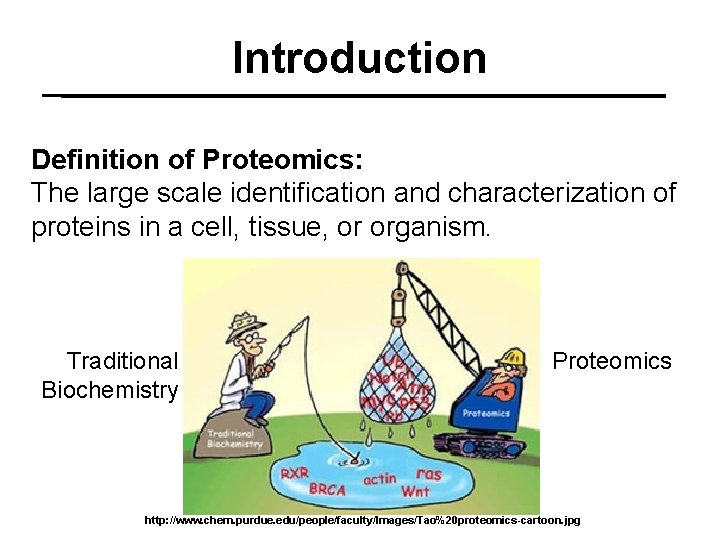
Introduction Definition of Proteomics: The large scale identification and characterization of proteins in a cell, tissue, or organism. Traditional Biochemistry Proteomics http: //www. chem. purdue. edu/people/faculty/Images/Tao%20 proteomics-cartoon. jpg

Introduction Definition of Proteomics: The large scale identification and characterization of proteins in a cell, tissue, or organism. Well Established Methods for Proteomics 1. 2 D-gels 2. Mass Spectrometry Methods still under development 1. Protein Arrays 2. Antibody Arrays 3. Proteome-wide coverage with Antibodies
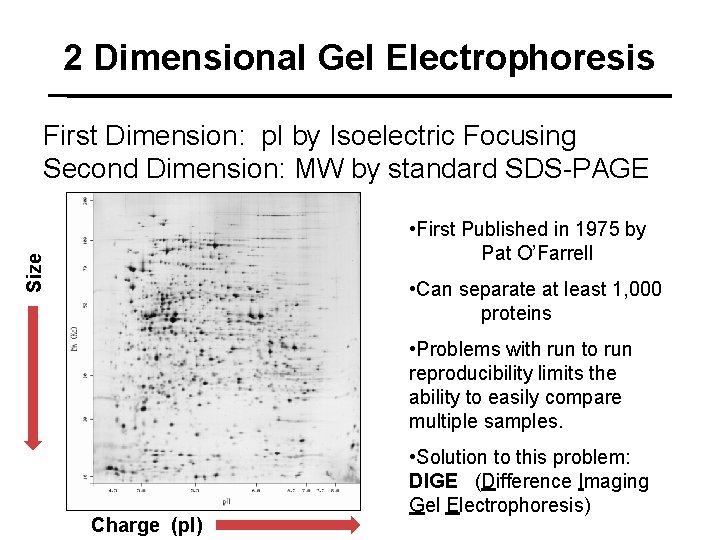
2 Dimensional Gel Electrophoresis First Dimension: p. I by Isoelectric Focusing Second Dimension: MW by standard SDS-PAGE Size • First Published in 1975 by Pat O’Farrell • Can separate at least 1, 000 proteins • Problems with run to run reproducibility limits the ability to easily compare multiple samples. Charge (p. I) • Solution to this problem: DIGE (Difference Imaging Gel Electrophoresis)
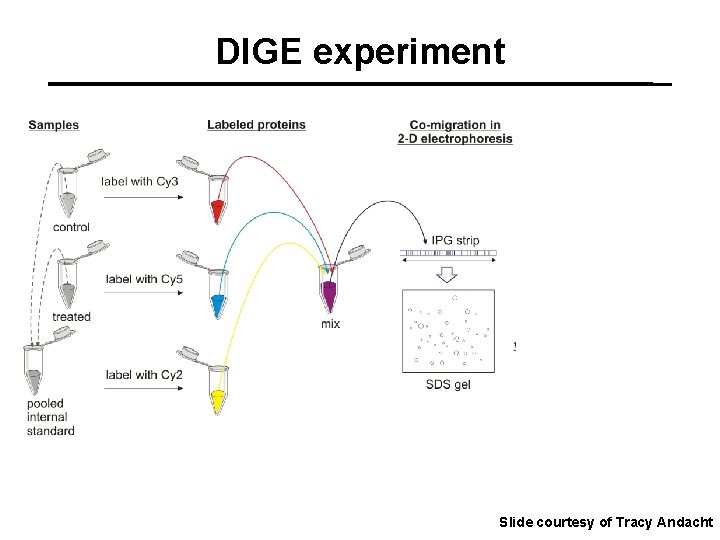
DIGE experiment Slide courtesy of Tracy Andacht
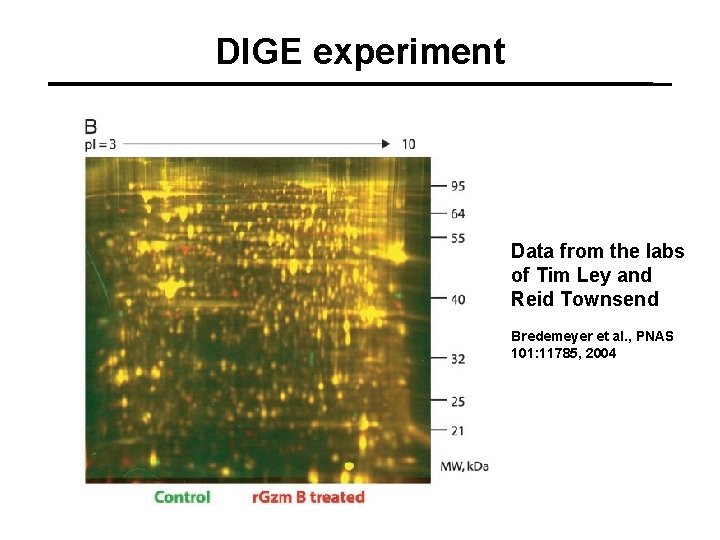
DIGE experiment Data from the labs of Tim Ley and Reid Townsend Bredemeyer et al. , PNAS 101: 11785, 2004
Limitations of DIGE 1. Protein solubility during Isoelectric Focusing. • Membrane proteins often lost. 2. Size Limits – difficulty with proteins >100 k. D. 3. Identification of the proteins in each spot is tedious and slow. • Use of robotics 4. Individual spots typically contain several proteins. • Intensity change is therefore the sum of the changes of each individual protein.
Principles of Mass Spectrometry The Importance of Mass: 1. The mass of a molecule is a fundamental physical property of a molecule. 2. Mass can be used to identify the molecule. Fragmentation provides Chemical Structure: If you fragment a molecule in a predictable manner and make measurements on the individual fragments, you can determine the chemical structure of the molecule.
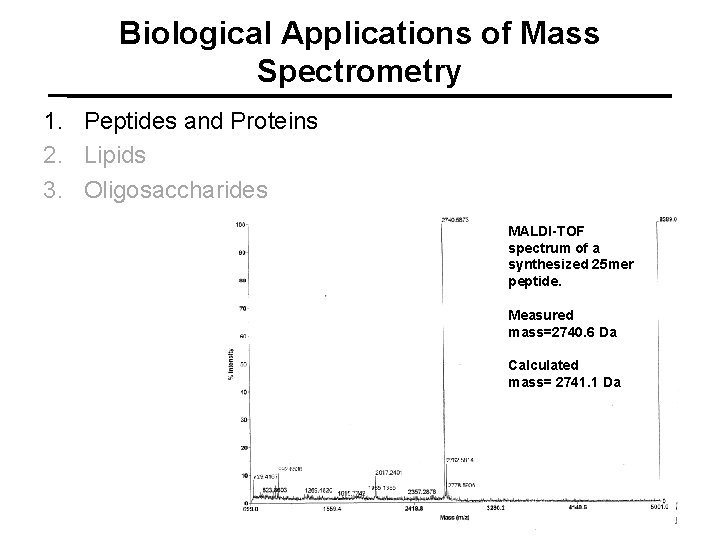
Biological Applications of Mass Spectrometry 1. Peptides and Proteins 2. Lipids 3. Oligosaccharides MALDI-TOF spectrum of a synthesized 25 mer peptide. Measured mass=2740. 6 Da Calculated mass= 2741. 1 Da
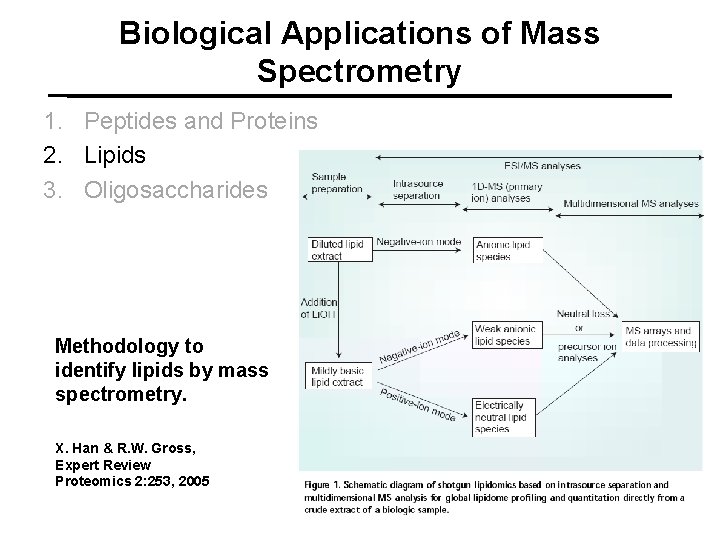
Biological Applications of Mass Spectrometry 1. Peptides and Proteins 2. Lipids 3. Oligosaccharides Methodology to identify lipids by mass spectrometry. X. Han & R. W. Gross, Expert Review Proteomics 2: 253, 2005
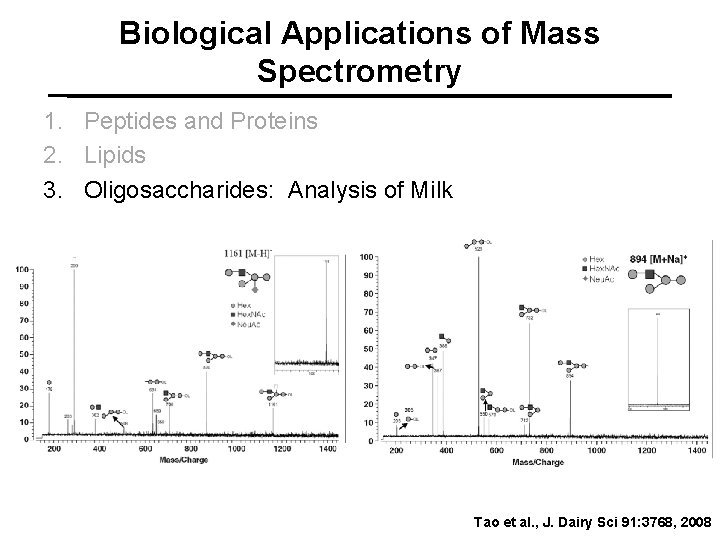
Biological Applications of Mass Spectrometry 1. Peptides and Proteins 2. Lipids 3. Oligosaccharides: Analysis of Milk Tao et al. , J. Dairy Sci 91: 3768, 2008
Applications of Mass Spectrometry in the Physical Sciences Widely used in Analytical Chemistry and Organic Chemistry. Examples: • Analyzing of drugs during chemical synthesis • Identifying chemicals molecules or checking for contaminants. • Environmental – • Measuring toxins such as PCB and Heavy Metals Geology – Analyzing petroleum or petrochemicals
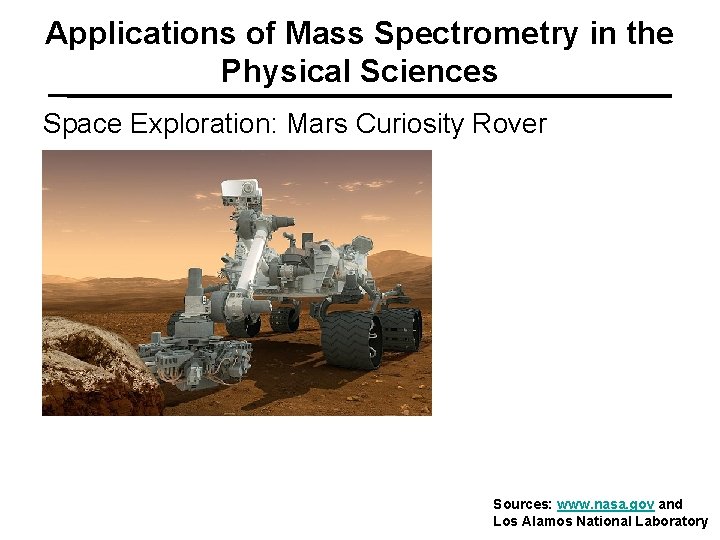
Applications of Mass Spectrometry in the Physical Sciences Space Exploration: Mars Curiosity Rover Sources: www. nasa. gov and Los Alamos National Laboratory
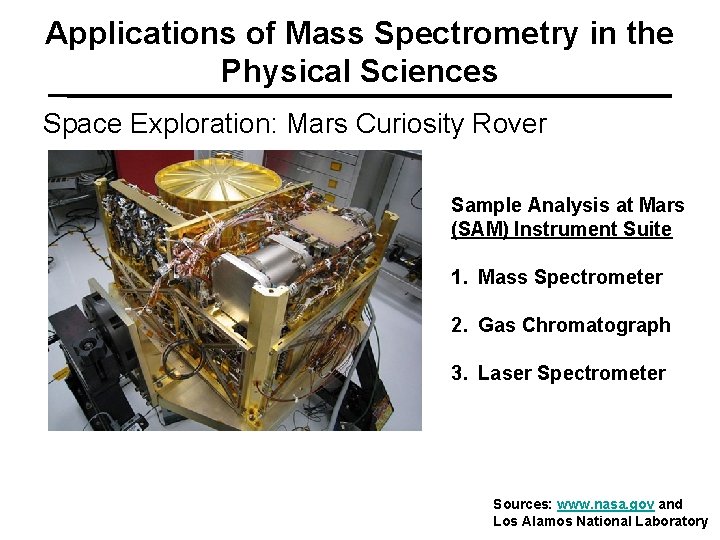
Applications of Mass Spectrometry in the Physical Sciences Space Exploration: Mars Curiosity Rover Sample Analysis at Mars (SAM) Instrument Suite 1. Mass Spectrometer 2. Gas Chromatograph 3. Laser Spectrometer Sources: www. nasa. gov and Los Alamos National Laboratory

Applications of Mass Spectrometry in the Physical Sciences Undersea Exploration: Deep Water Horizon Spill
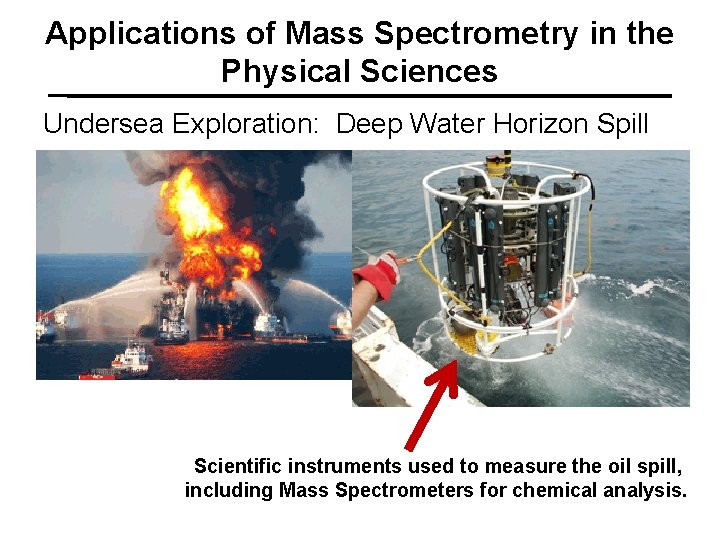
Applications of Mass Spectrometry in the Physical Sciences Undersea Exploration: Deep Water Horizon Spill Scientific instruments used to measure the oil spill, including Mass Spectrometers for chemical analysis.
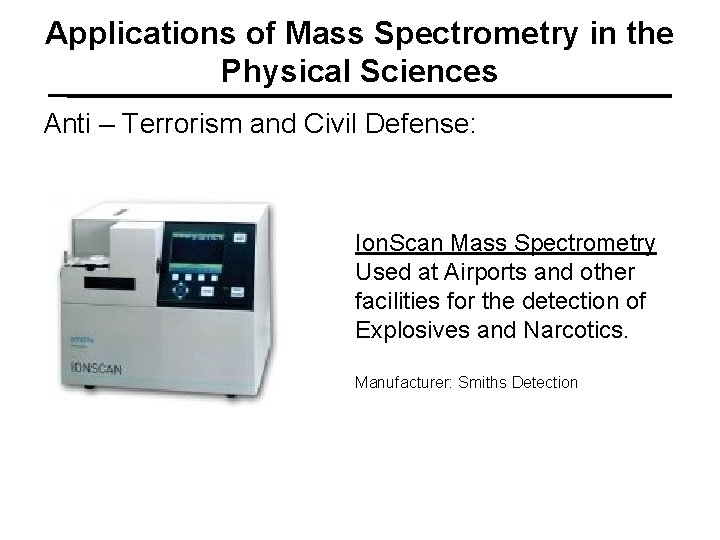
Applications of Mass Spectrometry in the Physical Sciences Anti – Terrorism and Civil Defense: Ion. Scan Mass Spectrometry Used at Airports and other facilities for the detection of Explosives and Narcotics. Manufacturer: Smiths Detection
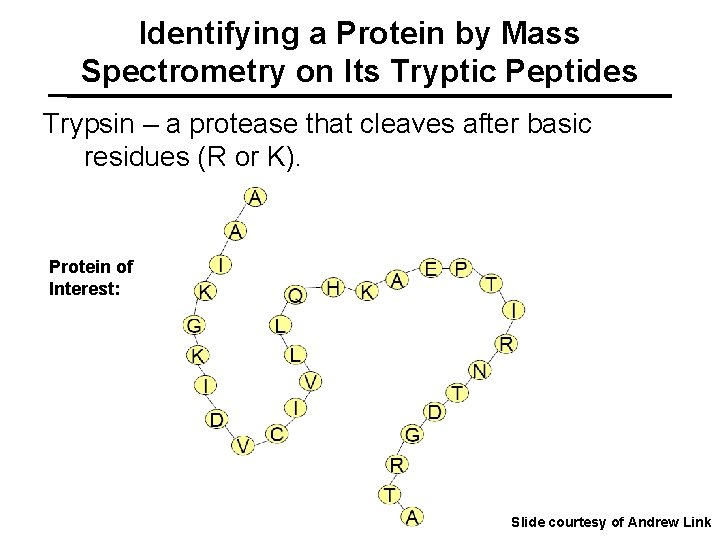
Identifying a Protein by Mass Spectrometry on Its Tryptic Peptides Trypsin – a protease that cleaves after basic residues (R or K). Protein of Interest: Slide courtesy of Andrew Link
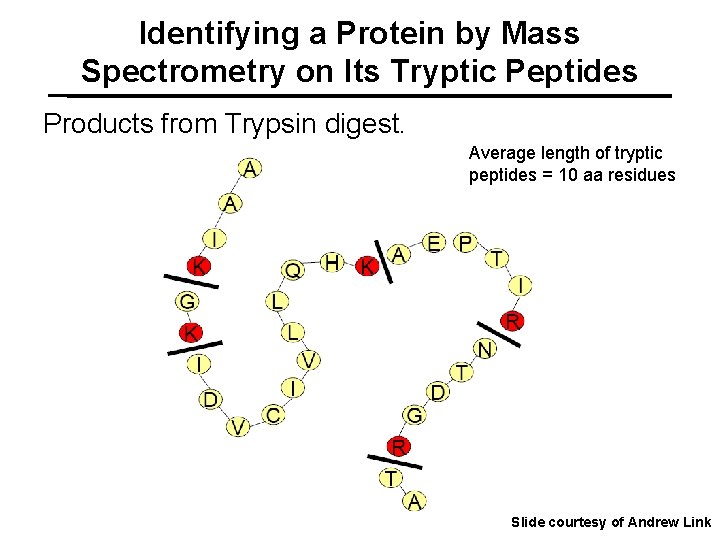
Identifying a Protein by Mass Spectrometry on Its Tryptic Peptides Products from Trypsin digest. Average length of tryptic peptides = 10 aa residues Slide courtesy of Andrew Link
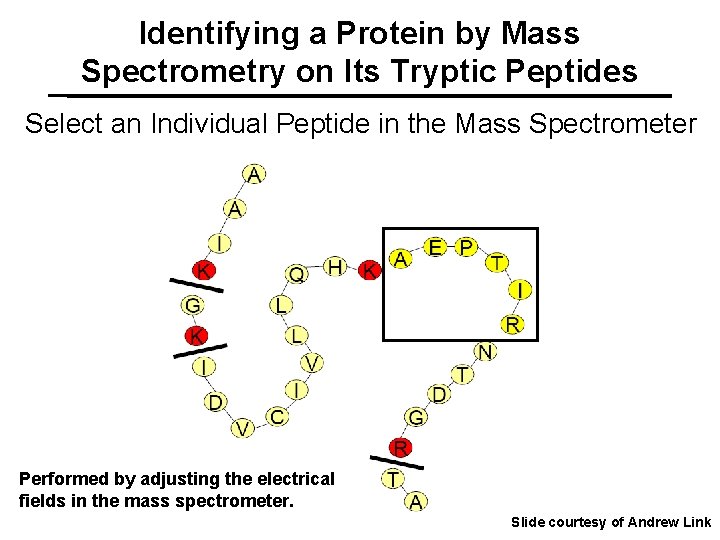
Identifying a Protein by Mass Spectrometry on Its Tryptic Peptides Select an Individual Peptide in the Mass Spectrometer Performed by adjusting the electrical fields in the mass spectrometer. Slide courtesy of Andrew Link
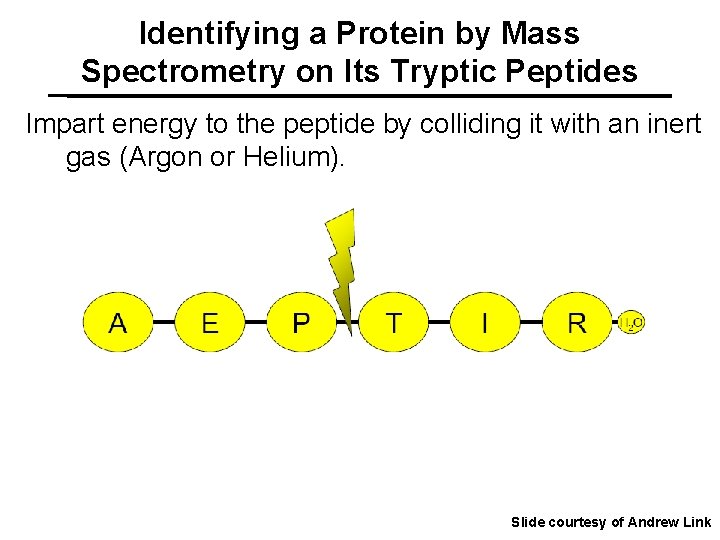
Identifying a Protein by Mass Spectrometry on Its Tryptic Peptides Impart energy to the peptide by colliding it with an inert gas (Argon or Helium). Slide courtesy of Andrew Link
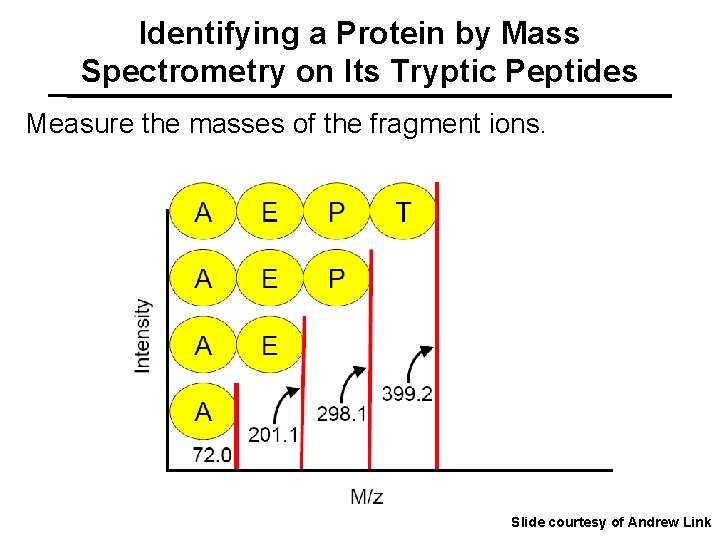
Identifying a Protein by Mass Spectrometry on Its Tryptic Peptides Measure the masses of the fragment ions. Slide courtesy of Andrew Link
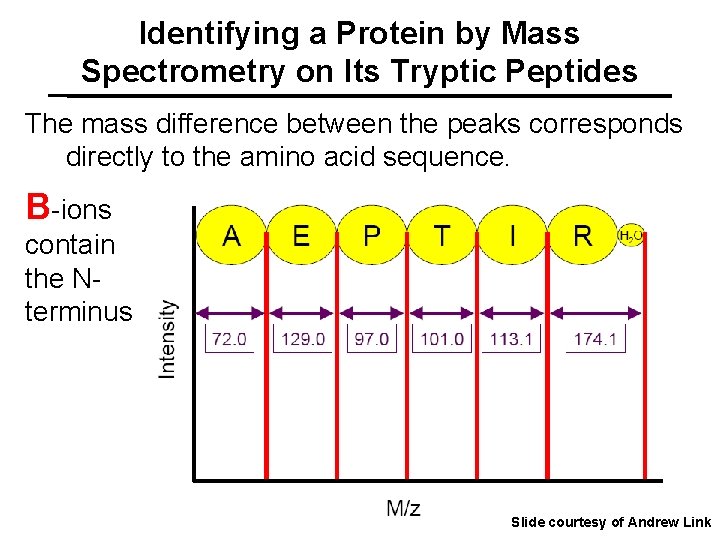
Identifying a Protein by Mass Spectrometry on Its Tryptic Peptides The mass difference between the peaks corresponds directly to the amino acid sequence. B-ions contain the Nterminus Slide courtesy of Andrew Link
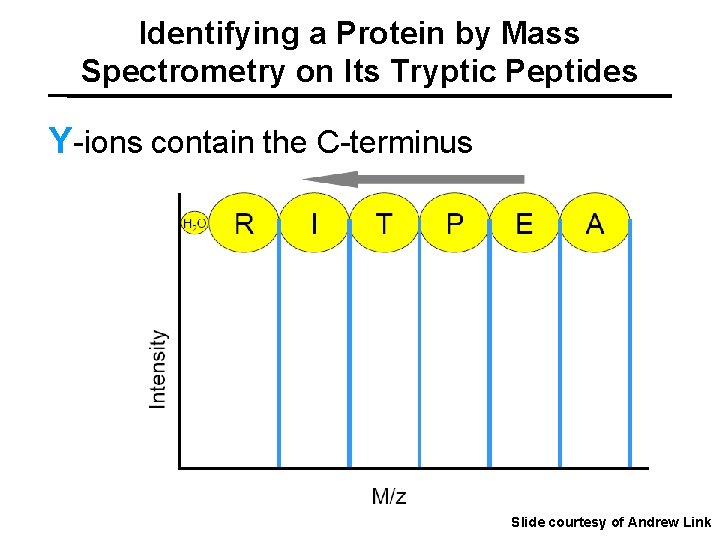
Identifying a Protein by Mass Spectrometry on Its Tryptic Peptides Y-ions contain the C-terminus Slide courtesy of Andrew Link
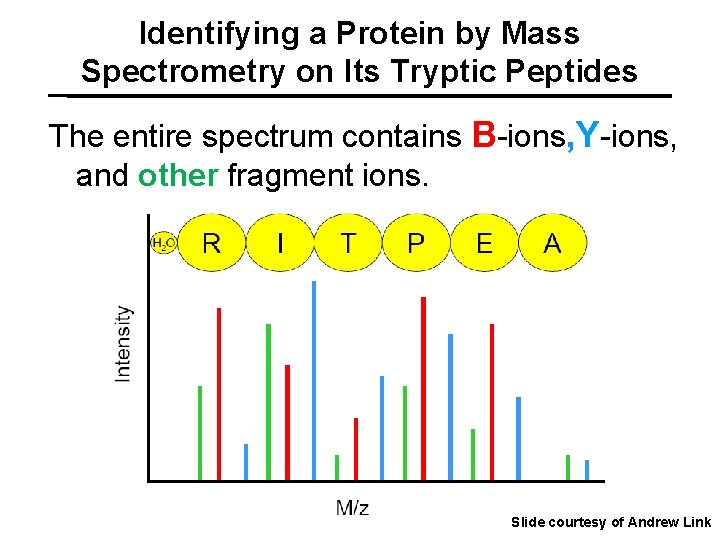
Identifying a Protein by Mass Spectrometry on Its Tryptic Peptides The entire spectrum contains B-ions, Y-ions, and other fragment ions. Slide courtesy of Andrew Link
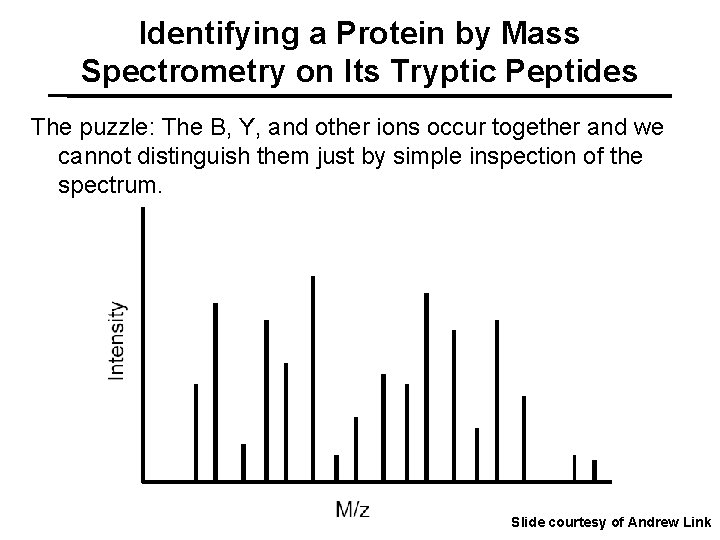
Identifying a Protein by Mass Spectrometry on Its Tryptic Peptides The puzzle: The B, Y, and other ions occur together and we cannot distinguish them just by simple inspection of the spectrum. Slide courtesy of Andrew Link
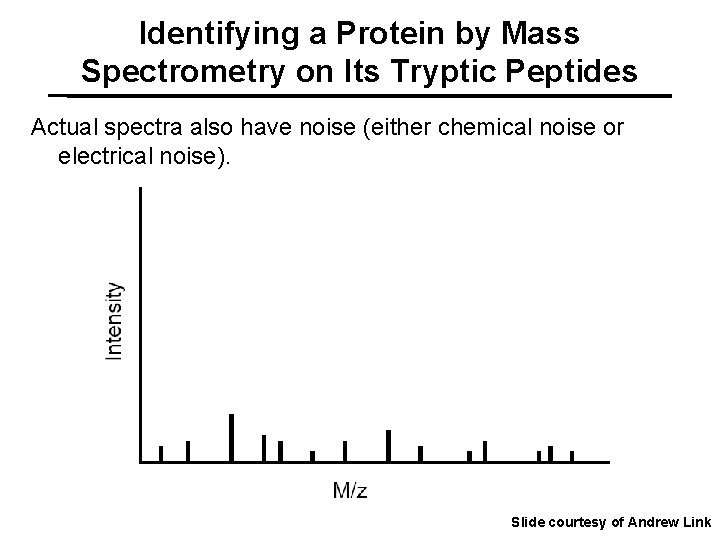
Identifying a Protein by Mass Spectrometry on Its Tryptic Peptides Actual spectra also have noise (either chemical noise or electrical noise). Slide courtesy of Andrew Link
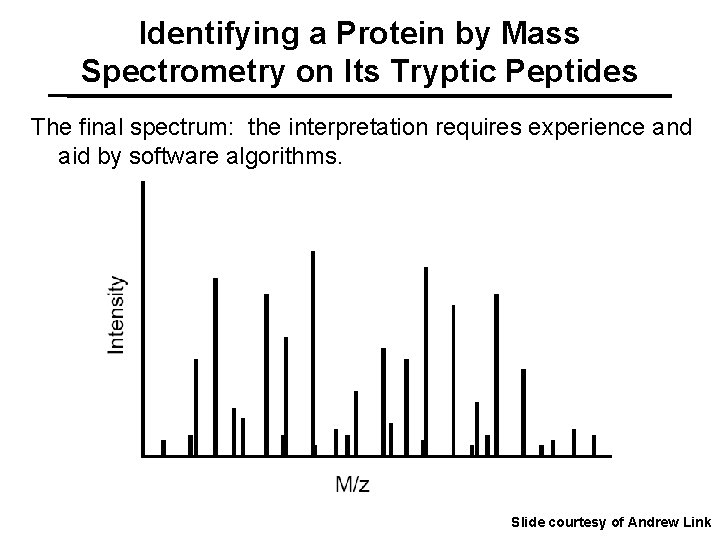
Identifying a Protein by Mass Spectrometry on Its Tryptic Peptides The final spectrum: the interpretation requires experience and aid by software algorithms. Slide courtesy of Andrew Link
Software for Interpreting Peptide Mass Spectra Statistical Matching Work by statistically matching the measured spectra with theoretical spectra of all possible tryptic peptides from an organism. 1. 2. 3. 4. Se. Quest MASCOT X! Tandem OMSSA Requires a fully sequenced genome. De novo sequencing (determines a peptide sequence based on the spacings of the fragment ions). 1. Pep. Novo
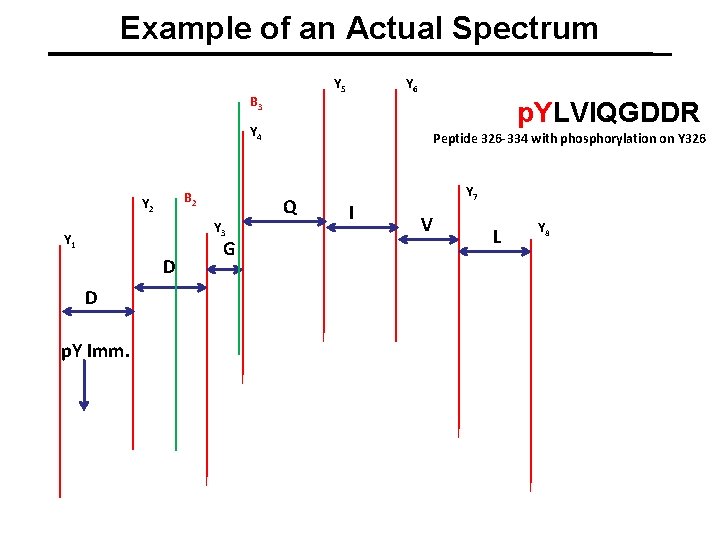
Example of an Actual Spectrum Y 5 B 3 Y 6 p. YLVIQGDDR Y 4 B 2 Y 2 Q Y 3 Y 1 D D p. Y Imm. Peptide 326 -334 with phosphorylation on Y 326 G I Y 7 V L Y 8
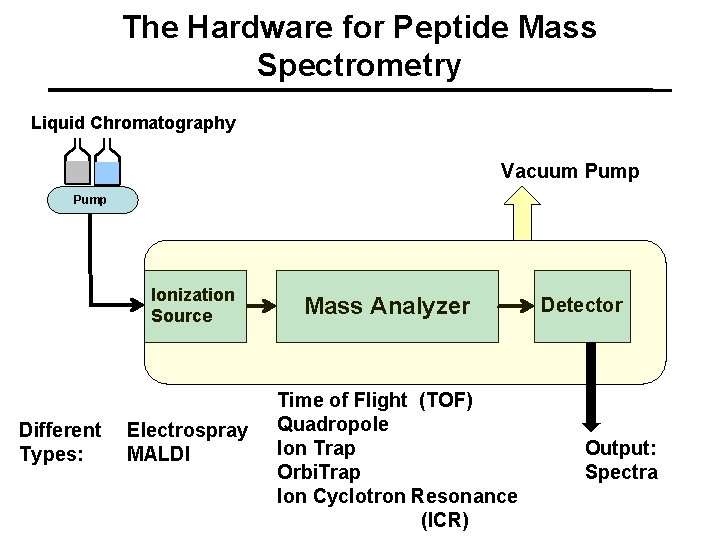
The Hardware for Peptide Mass Spectrometry Liquid Chromatography Vacuum Pump Ionization Source Different Types: Electrospray MALDI Mass Analyzer Time of Flight (TOF) Quadropole Ion Trap Orbi. Trap Ion Cyclotron Resonance (ICR) Detector Output: Spectra
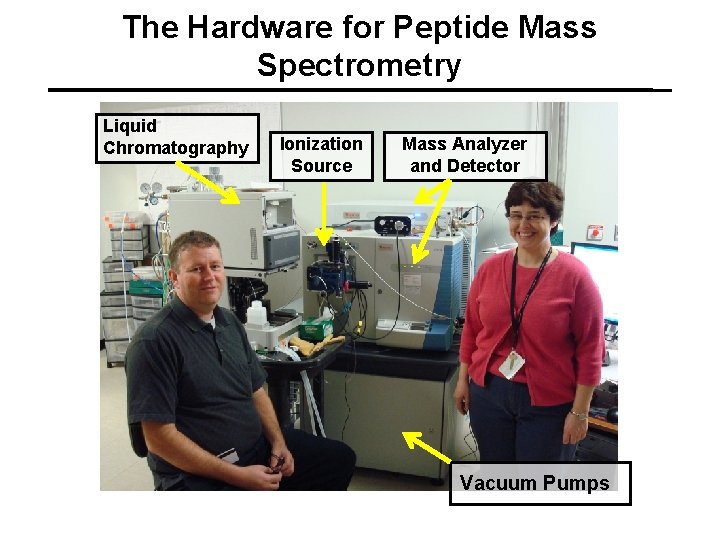
The Hardware for Peptide Mass Spectrometry Liquid Chromatography Ionization Source Mass Analyzer and Detector Vacuum Pumps
Movie of MALDI – TOF mass spectrometer. http: //www. youtube. com/watch? v=OKx. Rx 0 ctrl 0 Movie of FT-ICR mass spectrometer. http: //www. youtube. com/watch? v=a 5 a. Llm 9 q-Xc&feature=related
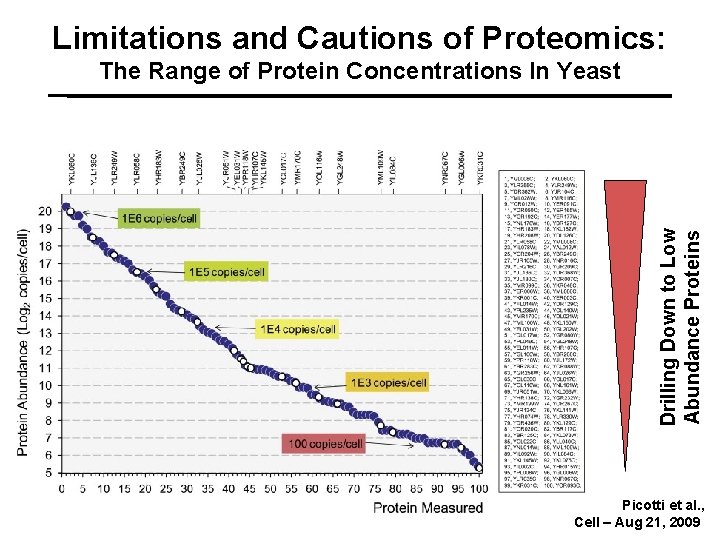
Limitations and Cautions of Proteomics: Drilling Down to Low Abundance Proteins The Range of Protein Concentrations In Yeast Picotti et al. , Cell – Aug 21, 2009
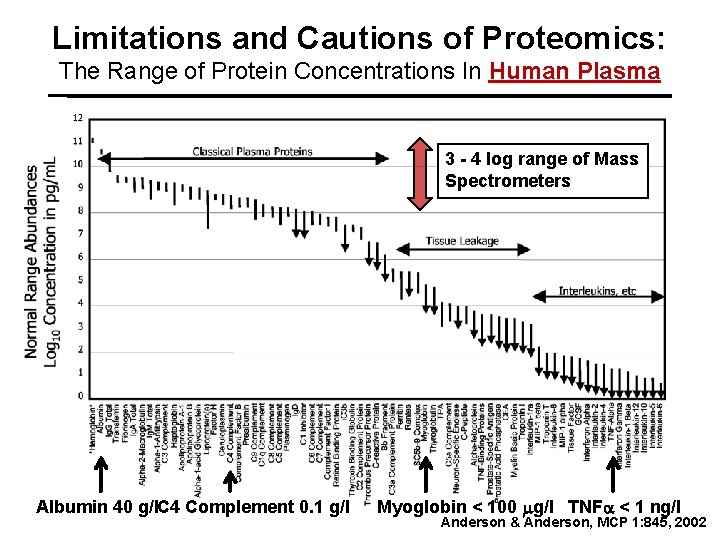
Limitations and Cautions of Proteomics: The Range of Protein Concentrations In Human Plasma 3 - 4 log range of Mass Spectrometers Albumin 40 g/l. C 4 Complement 0. 1 g/l Myoglobin < 100 mg/l TNFa < 1 ng/l Anderson & Anderson, MCP 1: 845, 2002
Limitations and Cautions of Proteomics: The Range of Protein Concentrations In Human Plasma Depletion Remove abundant proteins that are not of interest to your experiment. Methods: Antibody based depletion, selective lysis technique, subcellular fractionation, etc. Enrichment Enrich for the proteins of interest. Methods – Lysis techniques or subcellular fractionation, affinity-based enrichment (antibodies, resins, etc). Fractionation Reduce the complexity of your sample by separating the proteins into different fractions and running these fractions separately.
Examples of Proteomic Experiments 1. Identification of Single Proteins 2. Identification of Proteins in the Nuclear Pore Complex 3. Identification of Proteins in the Secretory Pathway 4. Quantitative Measurement of Signal Transduction Pathways
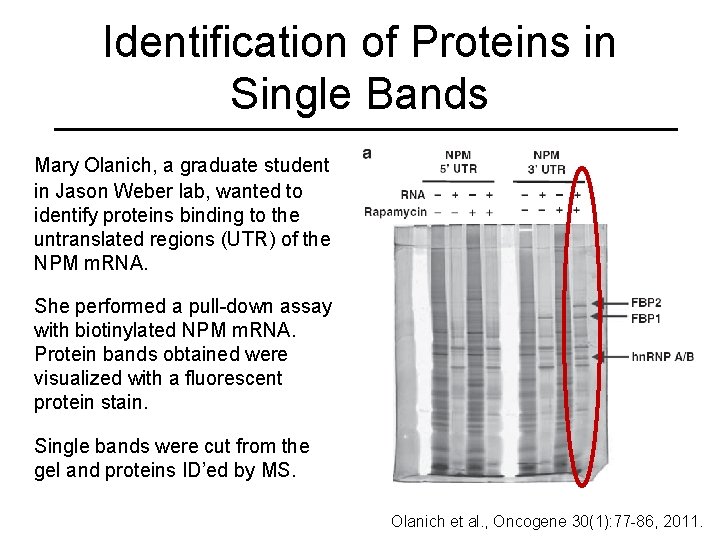
Identification of Proteins in Single Bands Mary Olanich, a graduate student in Jason Weber lab, wanted to identify proteins binding to the untranslated regions (UTR) of the NPM m. RNA. She performed a pull-down assay with biotinylated NPM m. RNA. Protein bands obtained were visualized with a fluorescent protein stain. Single bands were cut from the gel and proteins ID’ed by MS. Olanich et al. , Oncogene 30(1): 77 -86, 2011.
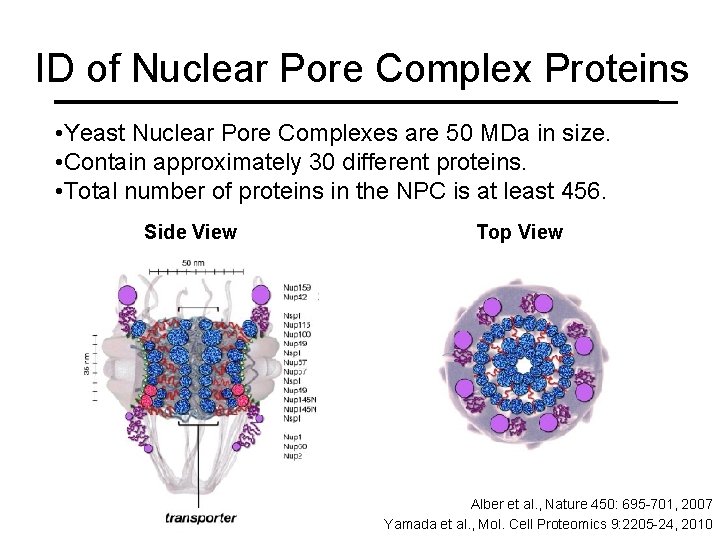
ID of Nuclear Pore Complex Proteins • Yeast Nuclear Pore Complexes are 50 MDa in size. • Contain approximately 30 different proteins. • Total number of proteins in the NPC is at least 456. Side View Top View Alber et al. , Nature 450: 695 -701, 2007 Yamada et al. , Mol. Cell Proteomics 9: 2205 -24, 2010
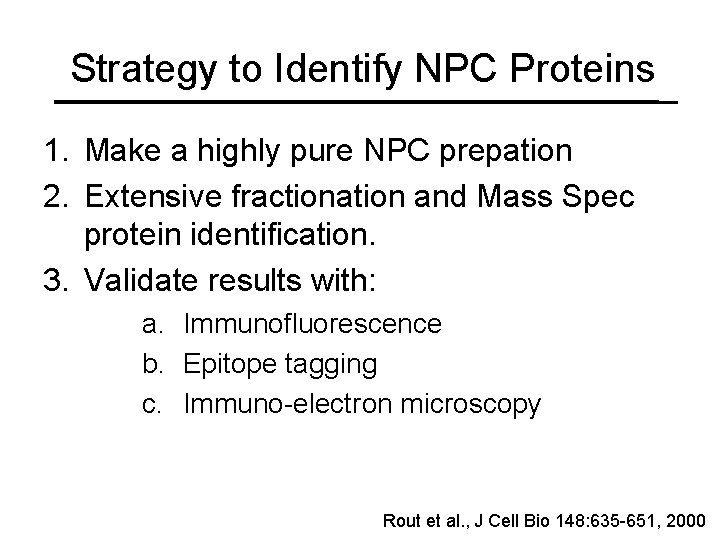
Strategy to Identify NPC Proteins 1. Make a highly pure NPC prepation 2. Extensive fractionation and Mass Spec protein identification. 3. Validate results with: a. Immunofluorescence b. Epitope tagging c. Immuno-electron microscopy Rout et al. , J Cell Bio 148: 635 -651, 2000
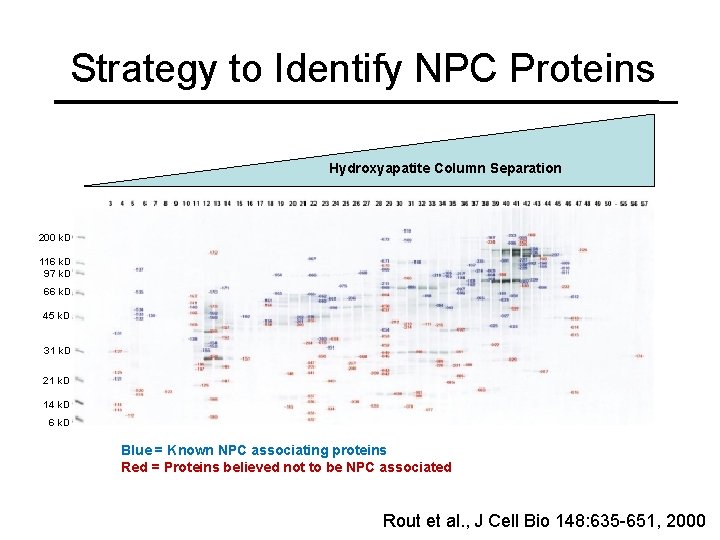
Strategy to Identify NPC Proteins Hydroxyapatite Column Separation 200 k. D 116 k. D 97 k. D 66 k. D 45 k. D 31 k. D 21 k. D 14 k. D 6 k. D Blue = Known NPC associating proteins Red = Proteins believed not to be NPC associated Rout et al. , J Cell Bio 148: 635 -651, 2000
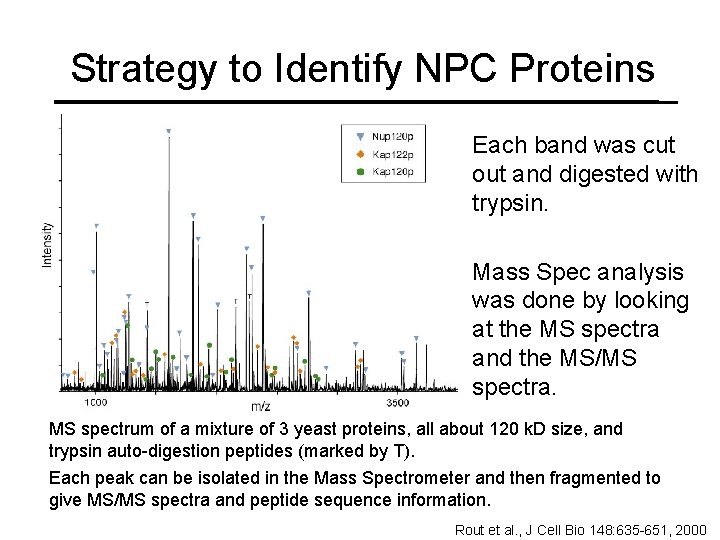
Strategy to Identify NPC Proteins Each band was cut out and digested with trypsin. Mass Spec analysis was done by looking at the MS spectra and the MS/MS spectra. MS spectrum of a mixture of 3 yeast proteins, all about 120 k. D size, and trypsin auto-digestion peptides (marked by T). Each peak can be isolated in the Mass Spectrometer and then fragmented to give MS/MS spectra and peptide sequence information. Rout et al. , J Cell Bio 148: 635 -651, 2000
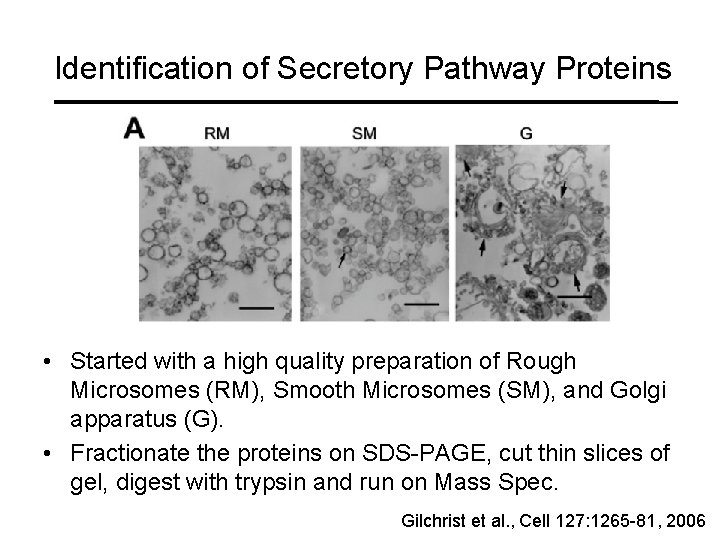
Identification of Secretory Pathway Proteins • Started with a high quality preparation of Rough Microsomes (RM), Smooth Microsomes (SM), and Golgi apparatus (G). • Fractionate the proteins on SDS-PAGE, cut thin slices of gel, digest with trypsin and run on Mass Spec. Gilchrist et al. , Cell 127: 1265 -81, 2006
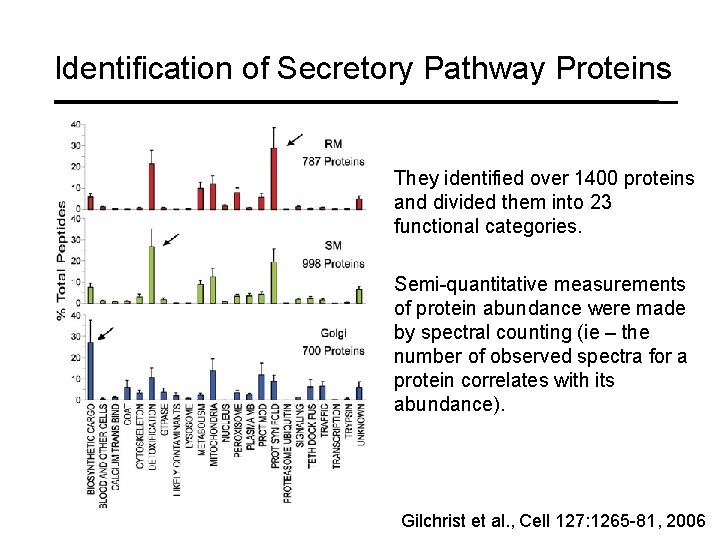
Identification of Secretory Pathway Proteins They identified over 1400 proteins and divided them into 23 functional categories. Semi-quantitative measurements of protein abundance were made by spectral counting (ie – the number of observed spectra for a protein correlates with its abundance). Gilchrist et al. , Cell 127: 1265 -81, 2006
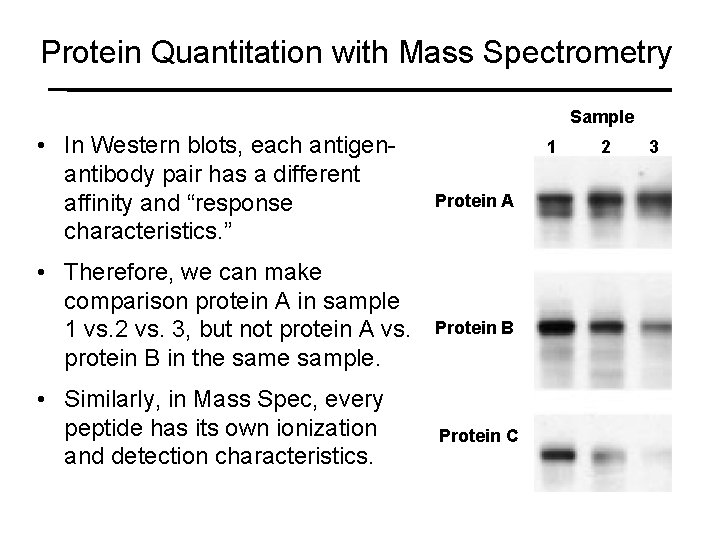
Protein Quantitation with Mass Spectrometry Sample • In Western blots, each antigenantibody pair has a different affinity and “response characteristics. ” • Therefore, we can make comparison protein A in sample 1 vs. 2 vs. 3, but not protein A vs. protein B in the sample. • Similarly, in Mass Spec, every peptide has its own ionization and detection characteristics. 1 Protein A Protein B Protein C 2 3
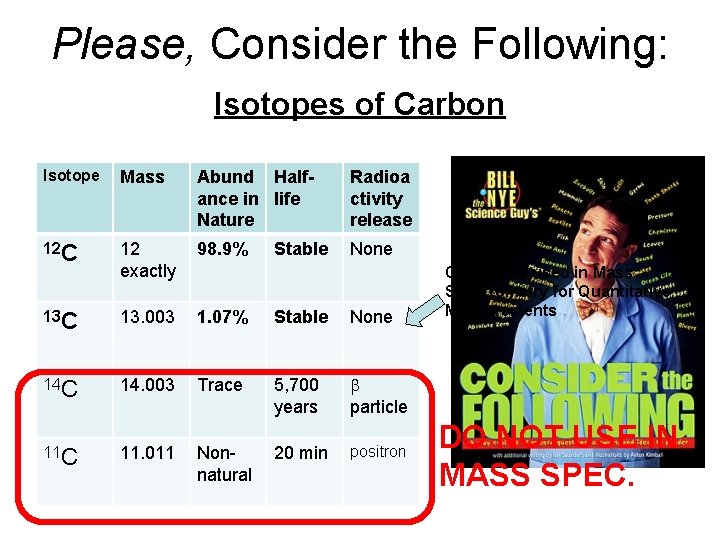
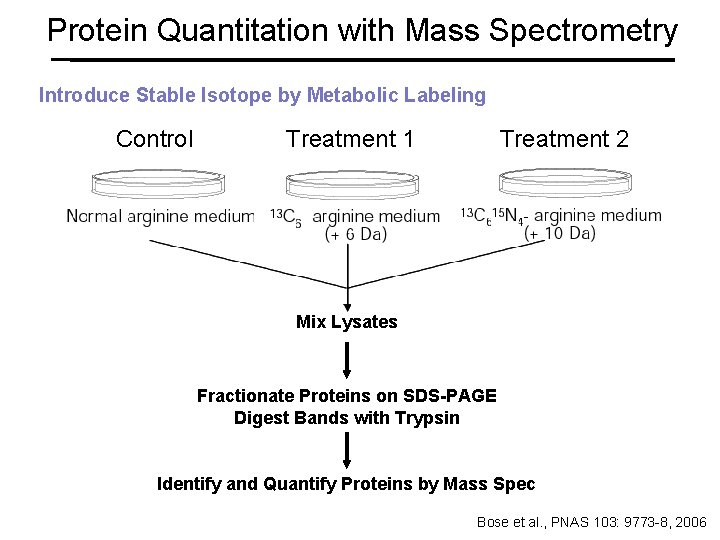
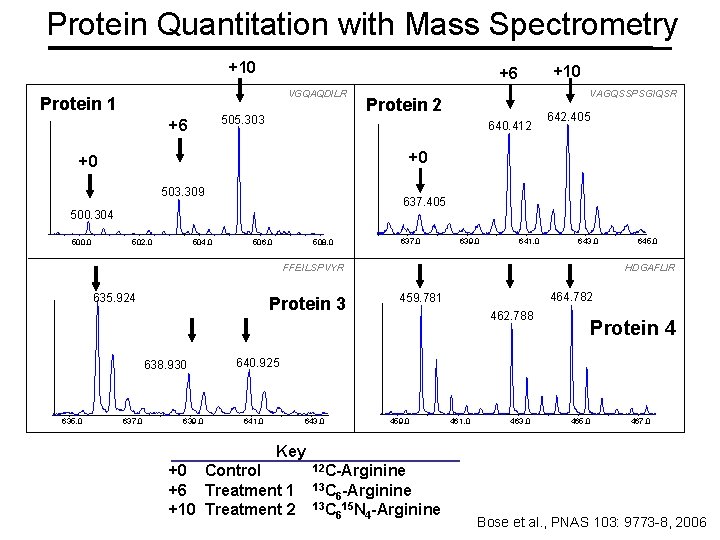
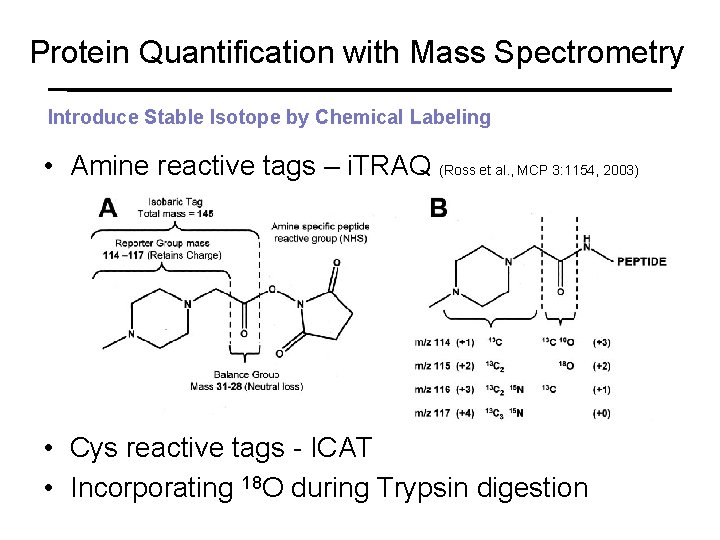
Protein Quantitation with Mass Spectrometry 1. Stable Isotope Labels based Quantitation Examples of Stable Isotopes: 13 C, 15 N, 2 H, 18 O Advantage of Stable Isotopes: They are easy separated and distinguished in the Mass Spec. Approach: An internal comparison within one Mass Spec run. Different samples can be “labeled” with different isotopes. Advantages: Precision of quantitation, less susceptible to artifacts in Mass Spec runs. Limitations: Cost of isotopes. Limited number of isotope combinations are feasible. 2. Label-free Quantitation – No isotopes used.
Please, Consider the Following: Isotopes of Carbon Isotope Mass Abund Halfance in life Nature Radioa ctivity release 12 C 12 exactly 98. 9% None 13 C 13. 003 1. 07% Stable None 14 C 14. 003 Trace 5, 700 years b particle 11 C 11. 011 Nonnatural 20 min positron Stable Commonly used in Mass Spectrometry for Quantitative Measurements DO NOT USE IN MASS SPEC.
Protein Quantitation with Mass Spectrometry Introduce Stable Isotope by Metabolic Labeling Control Treatment 1 Treatment 2 Mix Lysates Fractionate Proteins on SDS-PAGE Digest Bands with Trypsin Identify and Quantify Proteins by Mass Spec Bose et al. , PNAS 103: 9773 -8, 2006
Protein Quantitation with Mass Spectrometry +10 VGQAQDILR Protein 1 505. 303 +6 VAGQSSPSGIQSR Protein 2 640. 412 642. 405 +0 +0 503. 309 637. 405 500. 304 500. 0 +10 +6 502. 0 504. 0 506. 0 508. 0 637. 0 639. 0 641. 0 643. 0 FFEILSPVYR 635. 924 Protein 3 638. 930 635. 0 637. 0 639. 0 645. 0 HDGAFLIR 464. 782 459. 781 462. 788 Protein 4 640. 925 641. 0 643. 0 459. 0 461. 0 463. 0 465. 0 467. 0 Key +0 Control +6 Treatment 1 +10 Treatment 2 12 C-Arginine 13 C 6 -Arginine 13 C 15 N -Arginine 6 4 Bose et al. , PNAS 103: 9773 -8, 2006
Protein Quantification with Mass Spectrometry Introduce Stable Isotope by Chemical Labeling • Amine reactive tags – i. TRAQ (Ross et al. , MCP 3: 1154, 2003) • Cys reactive tags - ICAT • Incorporating 18 O during Trypsin digestion
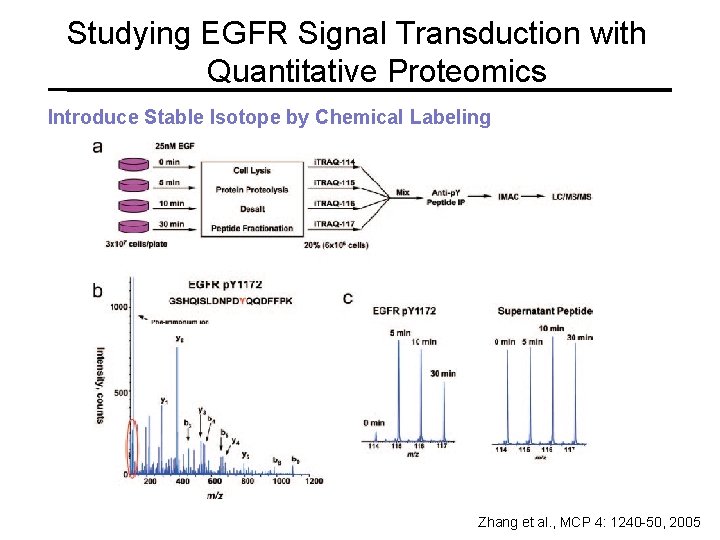
Studying EGFR Signal Transduction with Quantitative Proteomics Introduce Stable Isotope by Chemical Labeling Zhang et al. , MCP 4: 1240 -50, 2005
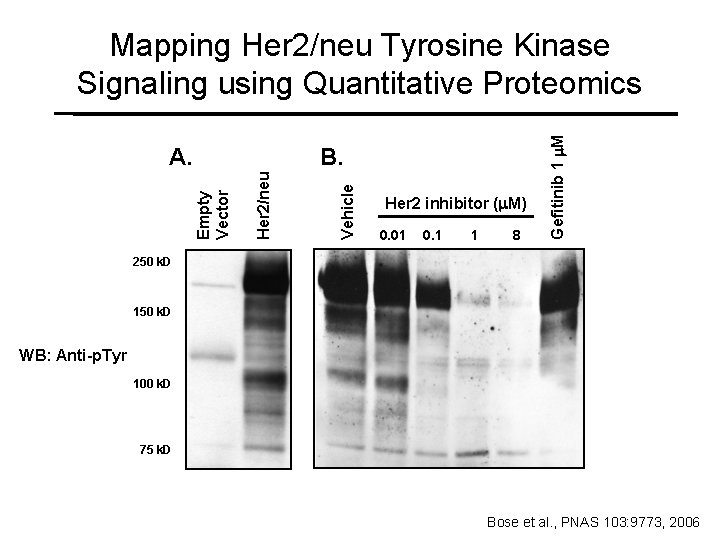
Vehicle Her 2/neu B. Empty Vector A. Her 2 inhibitor (m. M) 0. 01 0. 1 1 8 Gefitinib 1 m. M Mapping Her 2/neu Tyrosine Kinase Signaling using Quantitative Proteomics 250 k. D 150 k. D WB: Anti-p. Tyr 100 k. D 75 k. D Bose et al. , PNAS 103: 9773, 2006
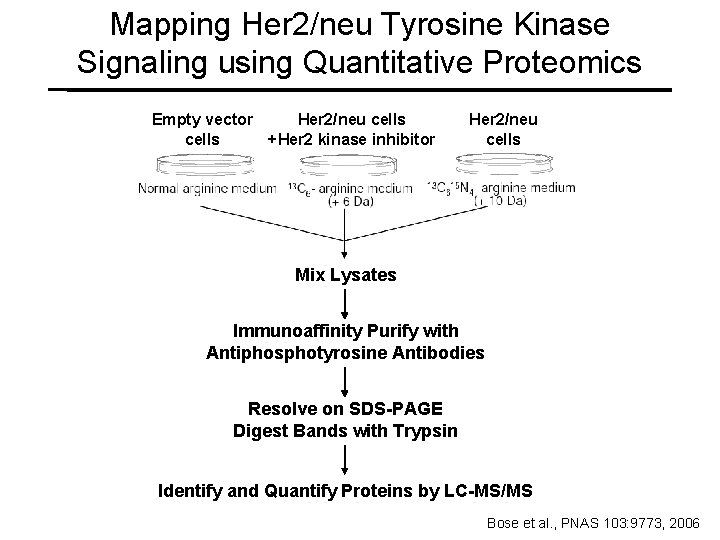
Mapping Her 2/neu Tyrosine Kinase Signaling using Quantitative Proteomics Empty vector Her 2/neu cells +Her 2 kinase inhibitor Her 2/neu cells Mix Lysates Immunoaffinity Purify with Antiphosphotyrosine Antibodies Resolve on SDS-PAGE Digest Bands with Trypsin Identify and Quantify Proteins by LC-MS/MS Bose et al. , PNAS 103: 9773, 2006
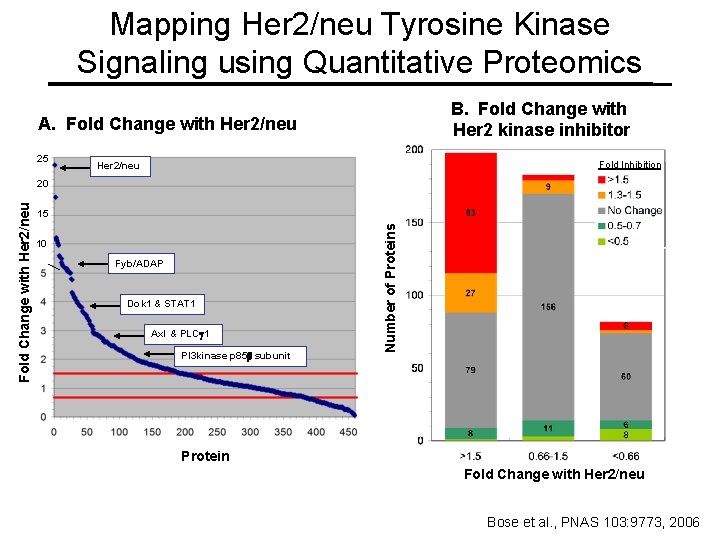
Mapping Her 2/neu Tyrosine Kinase Signaling using Quantitative Proteomics B. Fold Change with Her 2 kinase inhibitor A. Fold Change with Her 2/neu 25 Fold Inhibition Her 2/neu 15 10 Fyb/ADAP Dok 1 & STAT 1 Axl & PLCg 1 PI 3 kinase p 85 b subunit Number of Proteins Fold Change with Her 2/neu 20 Protein Fold Change with Her 2/neu Bose et al. , PNAS 103: 9773, 2006
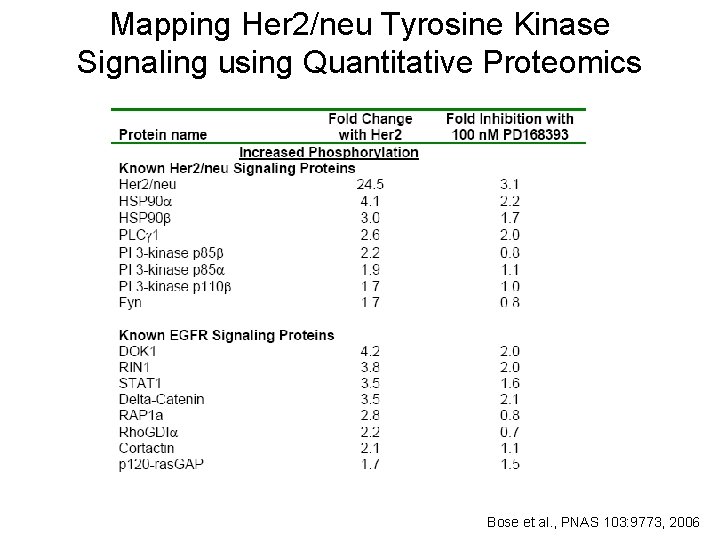
Mapping Her 2/neu Tyrosine Kinase Signaling using Quantitative Proteomics Bose et al. , PNAS 103: 9773, 2006
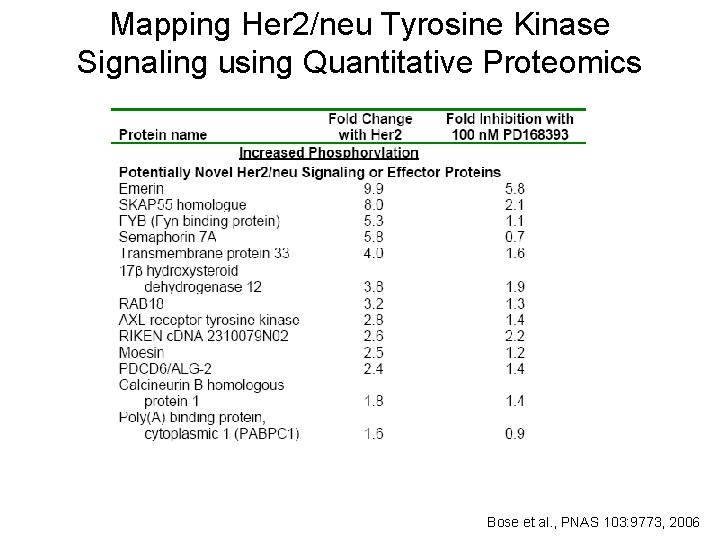
Mapping Her 2/neu Tyrosine Kinase Signaling using Quantitative Proteomics Bose et al. , PNAS 103: 9773, 2006
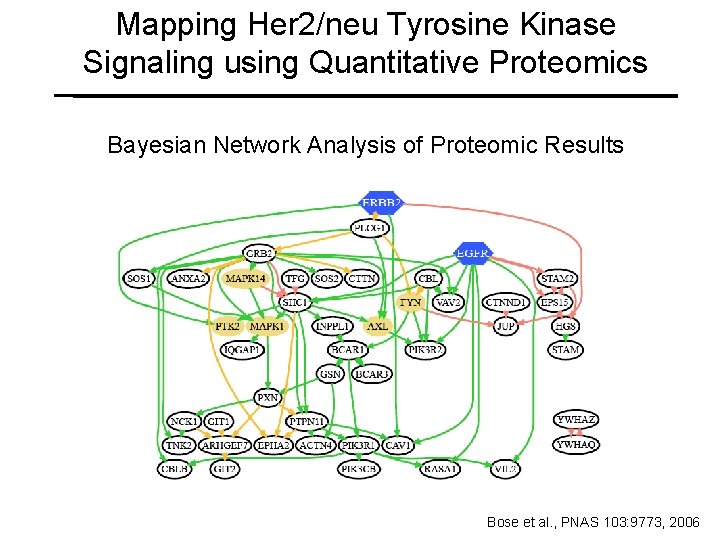
Mapping Her 2/neu Tyrosine Kinase Signaling using Quantitative Proteomics Bayesian Network Analysis of Proteomic Results Bose et al. , PNAS 103: 9773, 2006
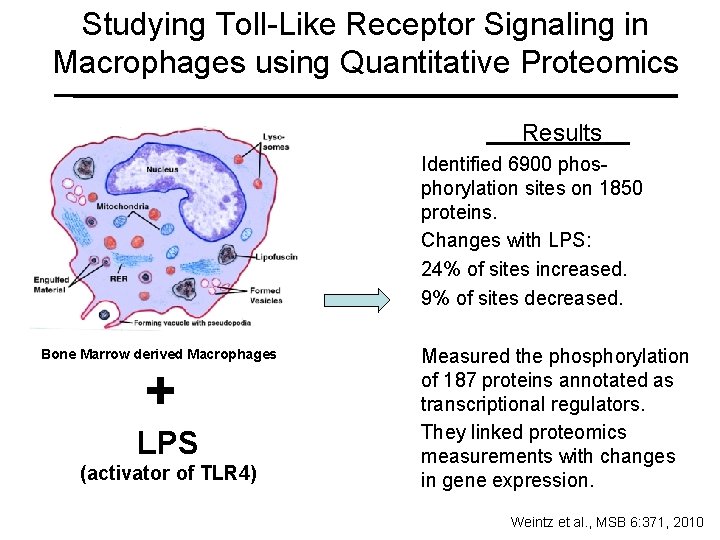
Studying Toll-Like Receptor Signaling in Macrophages using Quantitative Proteomics Results Identified 6900 phosphorylation sites on 1850 proteins. Changes with LPS: 24% of sites increased. 9% of sites decreased. Bone Marrow derived Macrophages + LPS (activator of TLR 4) Measured the phosphorylation of 187 proteins annotated as transcriptional regulators. They linked proteomics measurements with changes in gene expression. Weintz et al. , MSB 6: 371, 2010
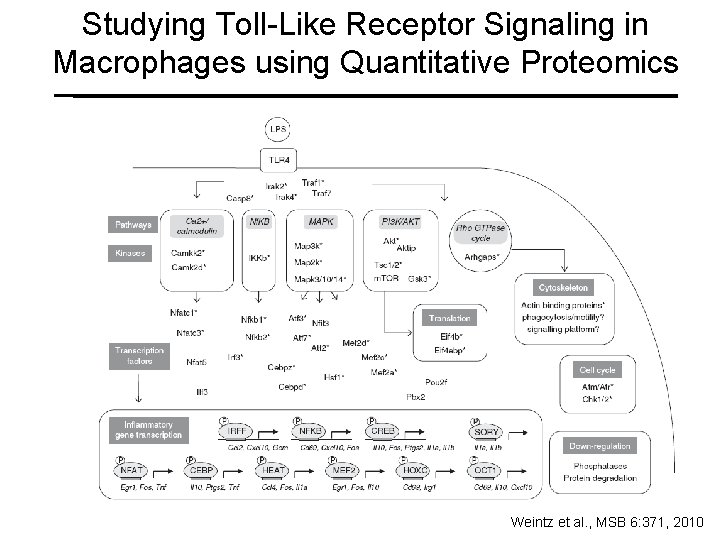
Studying Toll-Like Receptor Signaling in Macrophages using Quantitative Proteomics Weintz et al. , MSB 6: 371, 2010
Limitations and Cautions: Sizes of Proteomic Experiments A Medium sized Proteomic Experiment: Several hundred proteins – time required: Months A Large Proteomic Experiment: A few thousand proteins – time required: 1 -3 YEARS. Proteomics cannot currently analyze as many genes as DNA sequencing technology can ! Proteomics is also highly technically demanding and often requires a lot of optimization and small scale testing before performing a large experiment.
Mass Spectrometry at Washington University • Wash U receives NIH funding for the Biological and Biomedical Mass Spectrometry Research Resource. • At least 8 labs at Wash U. perform biological mass spectrometry experiments. • Available instruments on the Wash U medical campus, Wash U Danforth campus, and the Danforth Plant Science Center include: – At least 30 mass spectrometers. – 5 LTQ-Orbi. Trap mass spectrometers (some of the latest and highest performance instruments).
Summary (Part 1) 1. There is wide spread use of mass spectrometry in both the biological and physical sciences. 2. Proteins are usually digested into peptides. Peptide sequence is determined by fragmentation in the Mass Spectrometer. 3. Protein abundance and enrichment or fractionation methods are critical to consider in the planning of proteomic experiments. 4. Proteomics can identify proteins and map their post-translational modifications. Components of protein complexes and intracellular pathways can be analyzed by proteomics.
Summary (Part 2) 5. Quantitative proteomics can be performed by incorporating stable isotopes into proteins or by using label-free quantitation methods. 5. Proteomics cannot analyze as many genes as DNA microarray technology. Further, proteomics is highly technically demanding and often requires a lot of optimization. 5. Many labs at Wash U. use mass spec and proteomics. Wash U. has a lot of the necessary equipment and expertise to conduct mass spectrometry experiments.
- Slides: 63