
Molecular Biology of the Gene DNA n Identification
Molecular Biology of the Gene DNA
n Identification of Genetic Material Structure of DNA n DNA Replication n
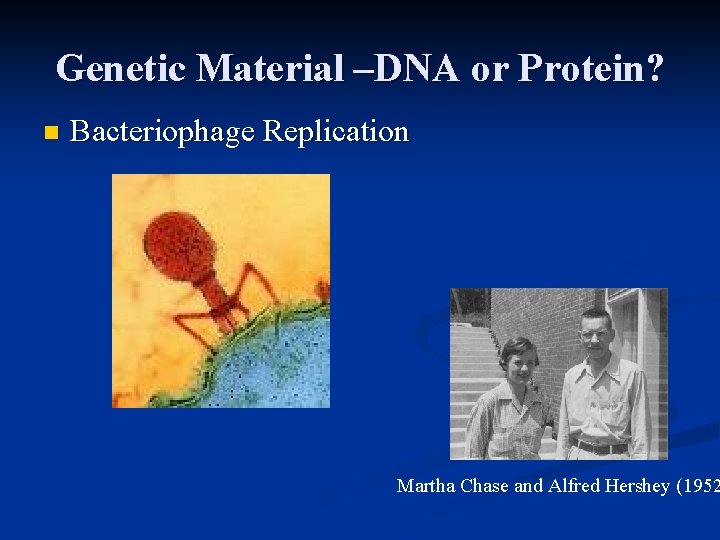
Genetic Material –DNA or Protein? n Bacteriophage Replication Martha Chase and Alfred Hershey (1952
Roles of the Genetic Material “A genetic material must carry out two jobs: duplicate itself and control the development of the rest of the cell in a specific way. ” -Francis Crick
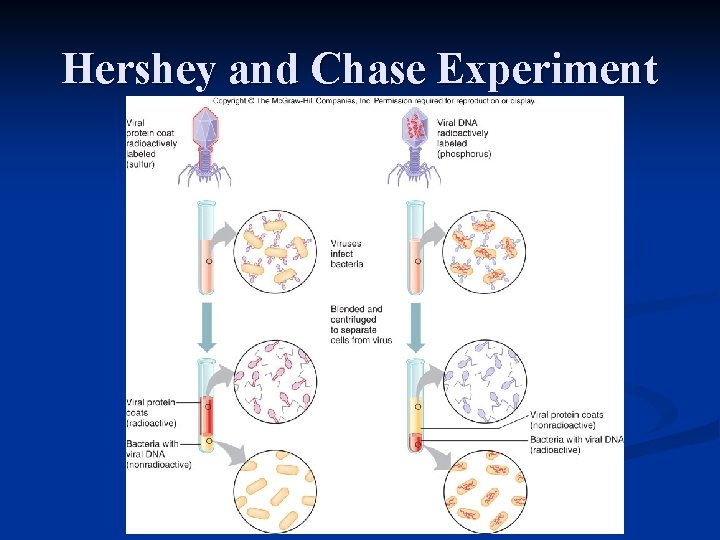
Hershey and Chase Experiment
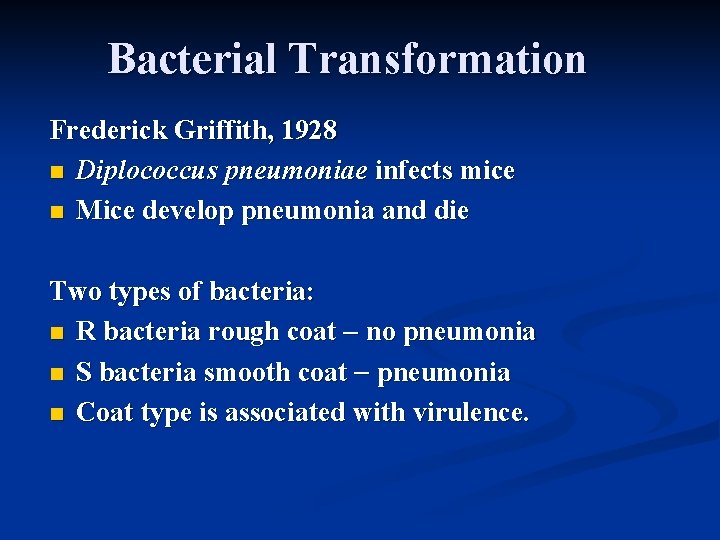
Bacterial Transformation Frederick Griffith, 1928 n Diplococcus pneumoniae infects mice n Mice develop pneumonia and die Two types of bacteria: n R bacteria rough coat no pneumonia n S bacteria smooth coat pneumonia n Coat type is associated with virulence.
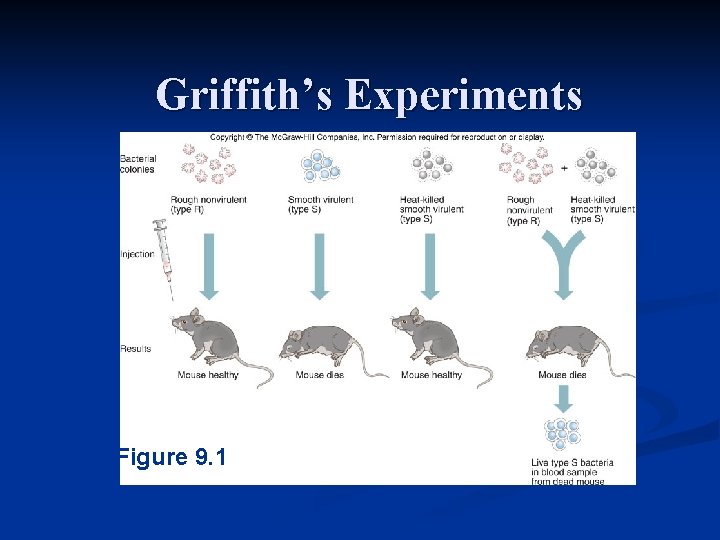
Griffith’s Experiments Figure 9. 1
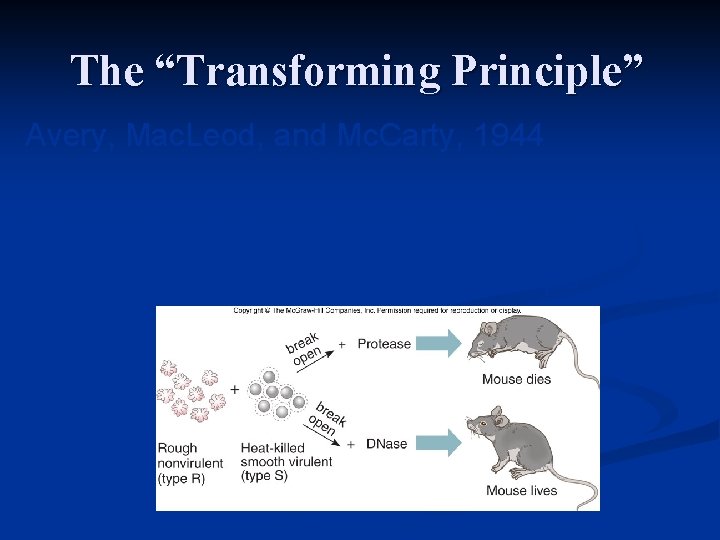
The “Transforming Principle” Avery, Mac. Leod, and Mc. Carty, 1944 • Treated lysed S bacteria with protease and DNase • DNase prevented transformation • Therefore DNA is the transforming principle Figure 9. 2
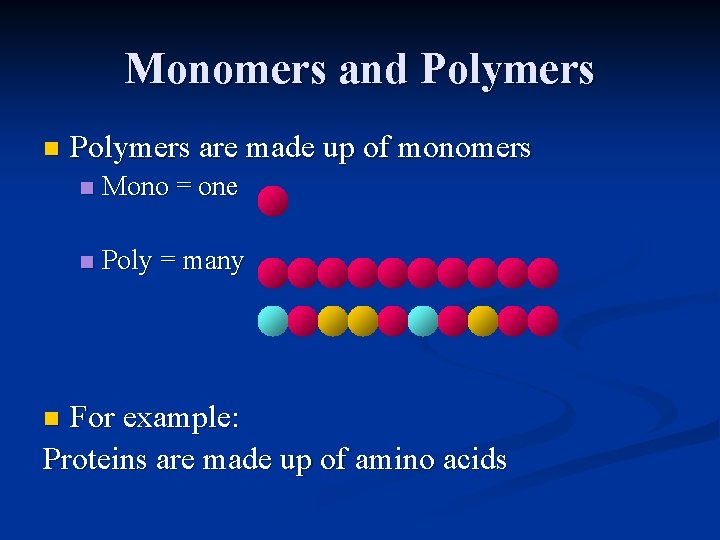
Monomers and Polymers n Polymers are made up of monomers n Mono = one n Poly = many For example: Proteins are made up of amino acids n
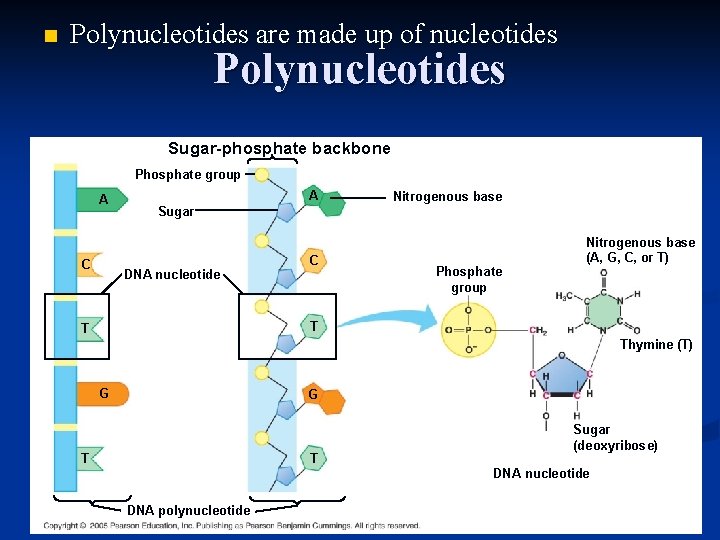
n Polynucleotides are made up of nucleotides Polynucleotides Sugar-phosphate backbone Phosphate group A C A Sugar DNA nucleotide C Nitrogenous base Phosphate group Nitrogenous base (A, G, C, or T) T T Thymine (T) G G T T Sugar (deoxyribose) DNA nucleotide DNA polynucleotide
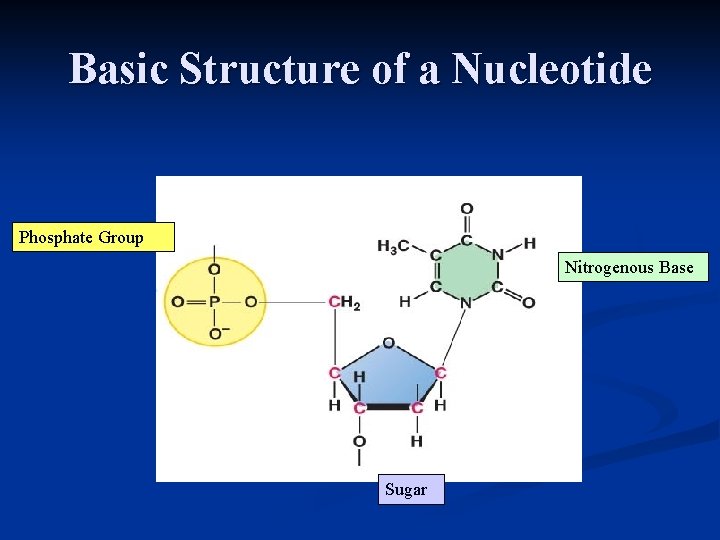
Basic Structure of a Nucleotide Phosphate Group Nitrogenous Base Sugar
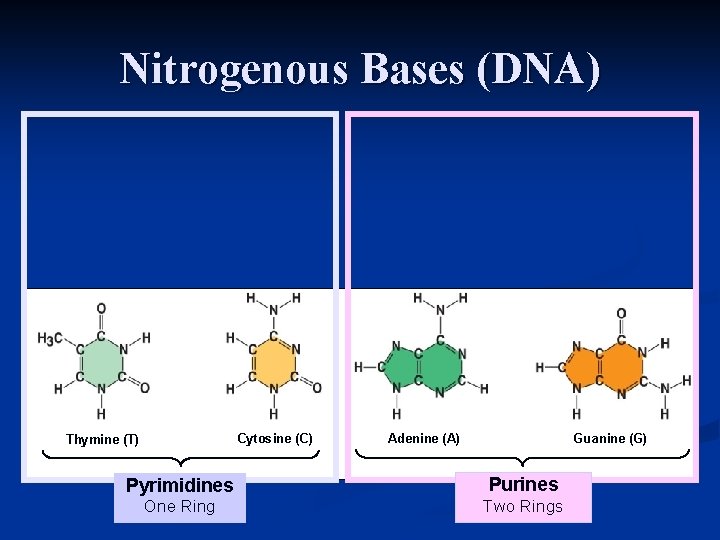
Nitrogenous Bases (DNA) Cytosine (C) Thymine (T) Adenine (A) Guanine (G) Pyrimidines Purines One Ring Two Rings
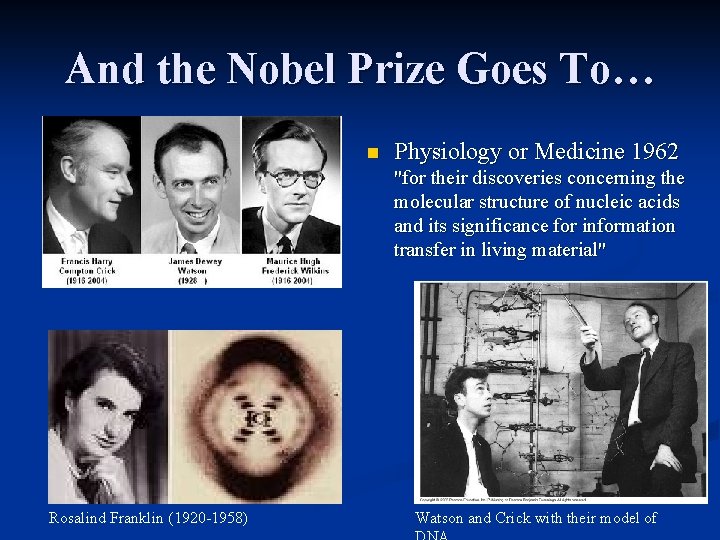
And the Nobel Prize Goes To… n Physiology or Medicine 1962 "for their discoveries concerning the molecular structure of nucleic acids and its significance for information transfer in living material" Rosalind Franklin (1920 -1958) Watson and Crick with their model of
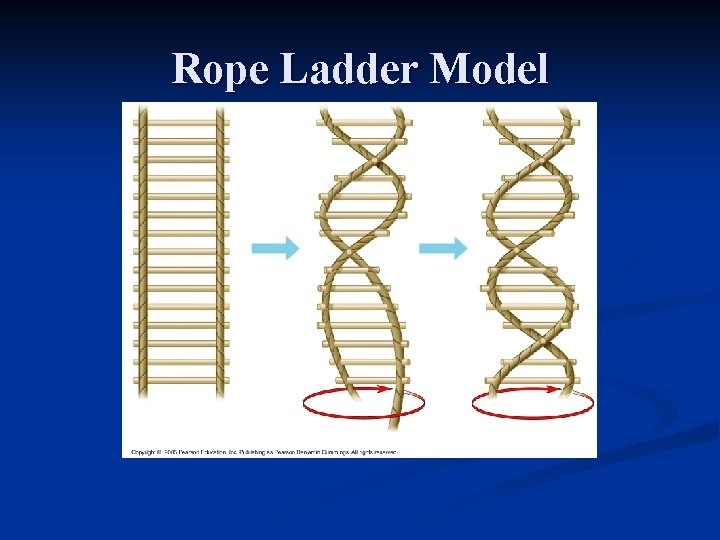
Rope Ladder Model
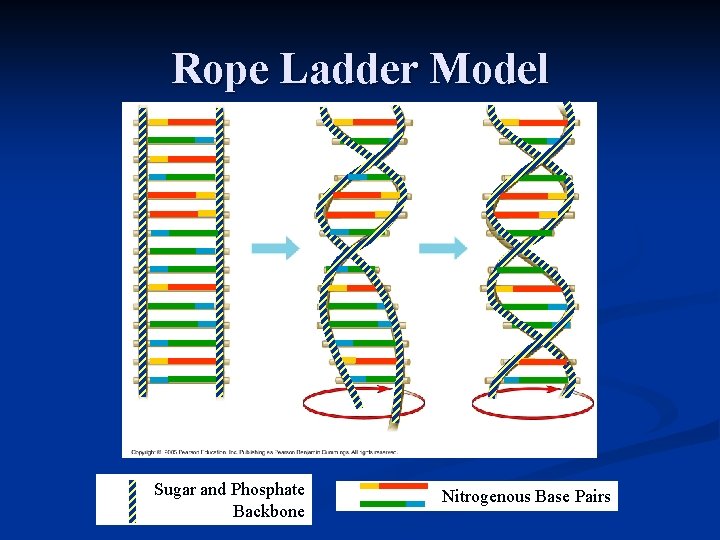
Rope Ladder Model Sugar and Phosphate Backbone Nitrogenous Base Pairs
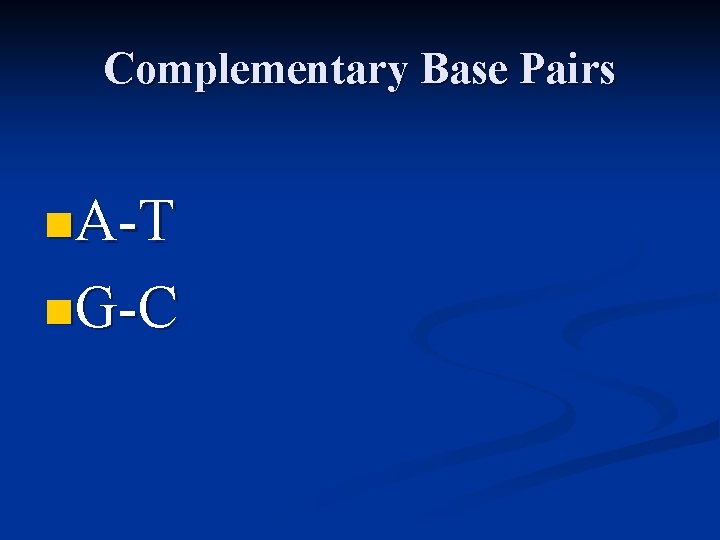
Complementary Base Pairs n. A-T n. G-C
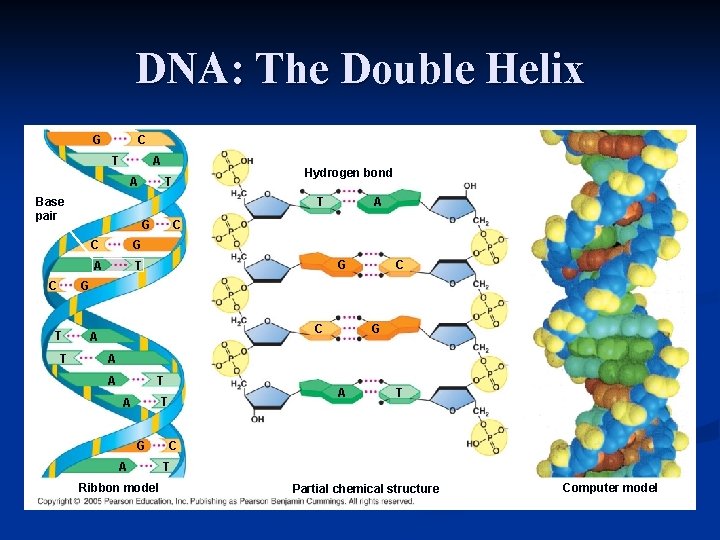
DNA: The Double Helix C G T A Base pair C Hydrogen bond T G C G A T A C G T T C A G A A T A G A Ribbon model T C T Partial chemical structure Computer model
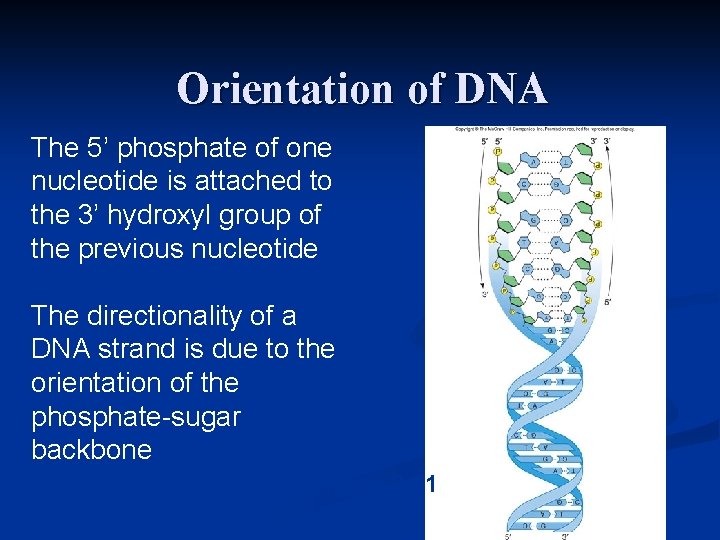
Orientation of DNA The 5’ phosphate of one nucleotide is attached to the 3’ hydroxyl group of the previous nucleotide The directionality of a DNA strand is due to the orientation of the phosphate-sugar backbone Figure 9. 11
n Structure of DNA n DNA Replication n DNA vs. RNA
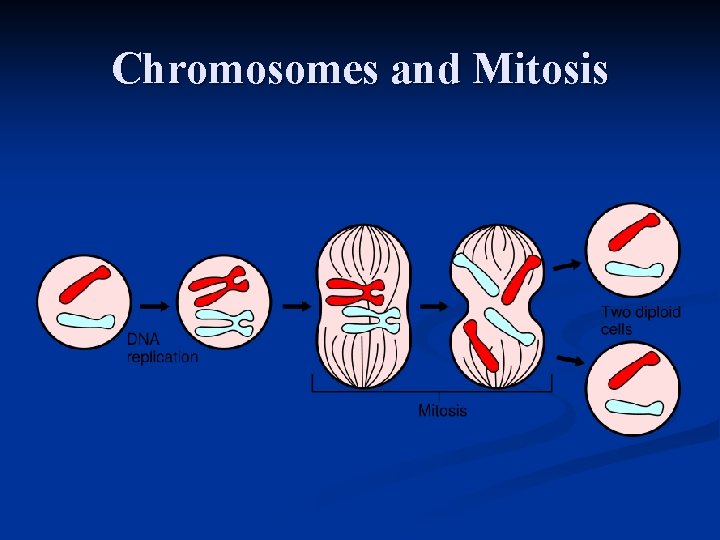
Chromosomes and Mitosis
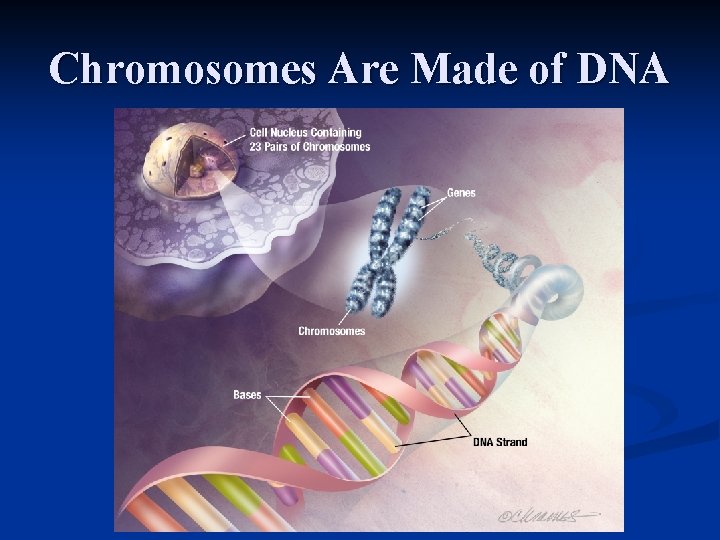
Chromosomes Are Made of DNA

DNA Replication n DNA Replication is Semiconservative A T C G G C G A T A T Parental molecule of DNA C A Nucleotides Both parental strands serve as templates T A T G C G C G C T A T A T A Two identical daughter molecules of DNA Each new double helix contains one parental strand one daughter strand
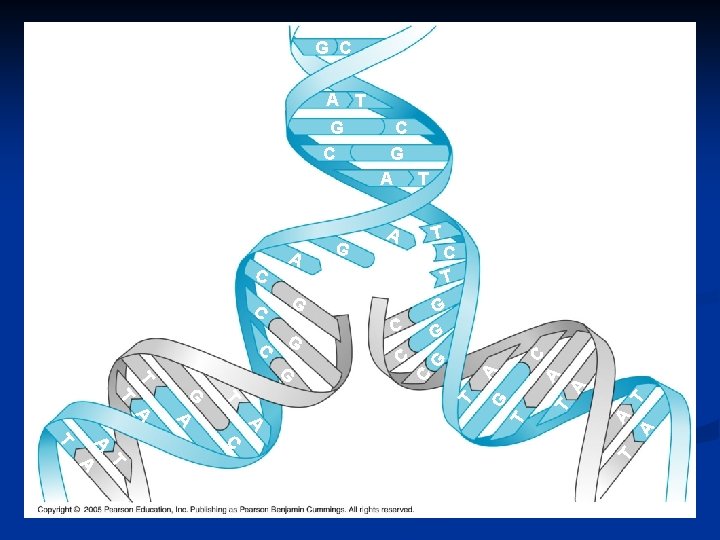
G C T T A A C A T T G A A C T G C C G G C G A C C A G C G A T A A T G C
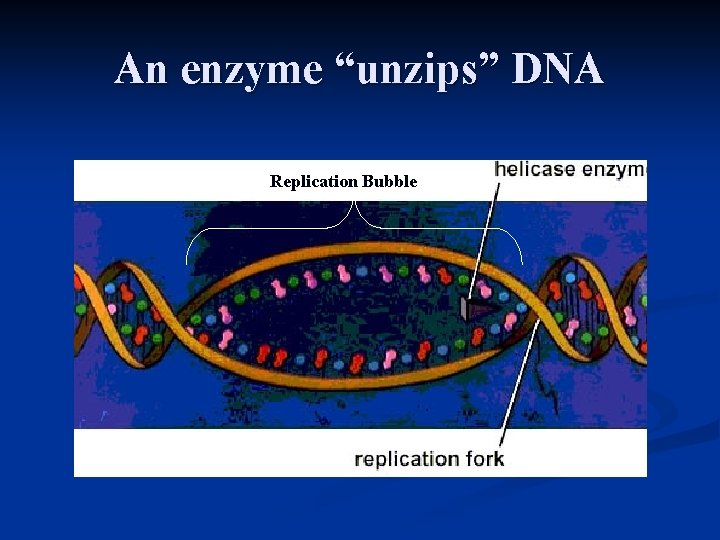
An enzyme “unzips” DNA Replication Bubble
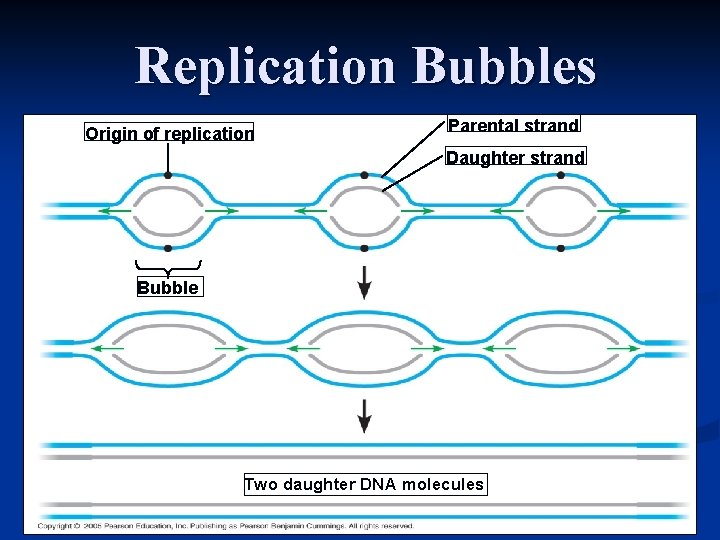
Replication Bubbles Origin of replication Parental strand Daughter strand Bubble Two daughter DNA molecules
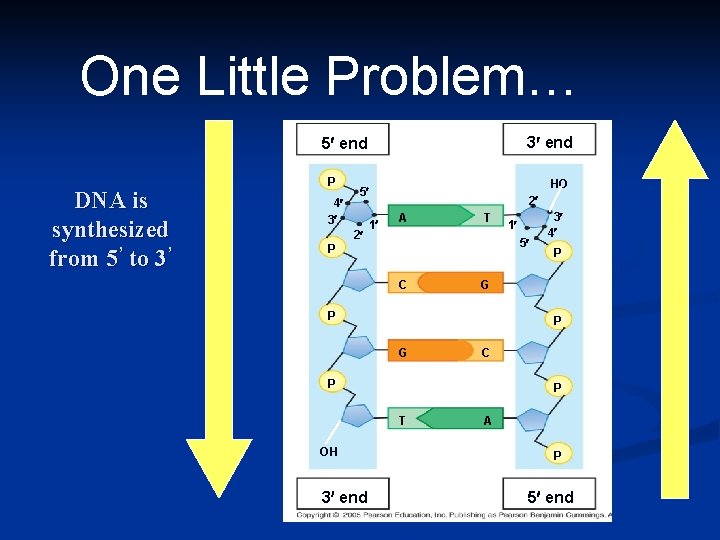
One Little Problem… 3 end 5 end DNA is synthesized from 5’ to 3’ P 4 3 HO 5 2 2 1 A T 5 P C P P G C P P T 3 end 3 4 G P OH 1 A P 5 end
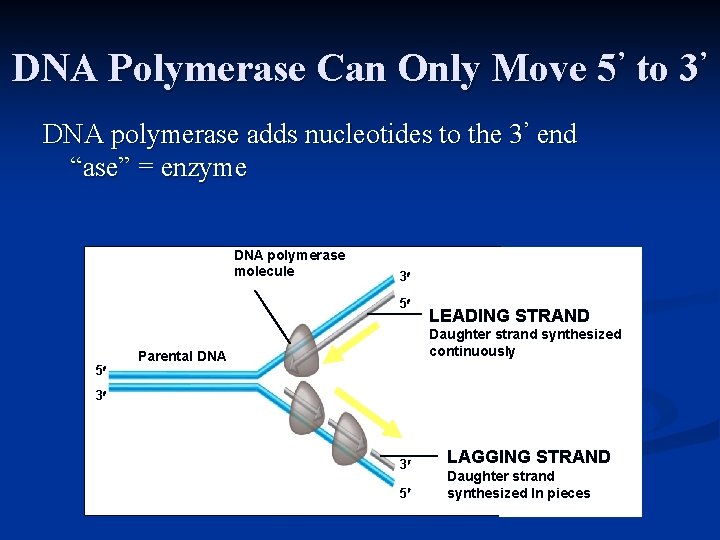
DNA Polymerase Can Only Move 5’ to 3’ DNA polymerase adds nucleotides to the 3’ end “ase” = enzyme DNA polymerase molecule 3 5 5 LEADING STRAND Daughter strand synthesized continuously Parental DNA 3 3 5 LAGGING STRAND Daughter strand synthesized In pieces
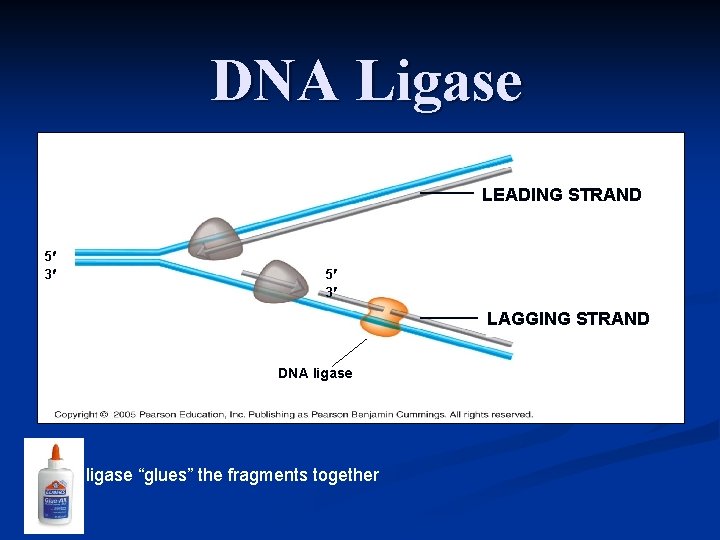
DNA Ligase LEADING STRAND 5 3 LAGGING STRAND DNA ligase “glues” the fragments together
Structure of DNA n DNA Replication n n DNA vs. RNA
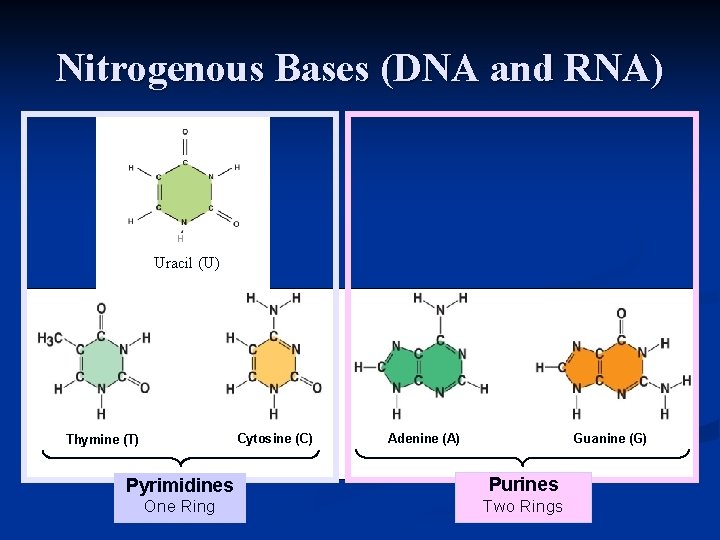
Nitrogenous Bases (DNA and RNA) H Uracil (U) Cytosine (C) Thymine (T) Adenine (A) Guanine (G) Pyrimidines Purines One Ring Two Rings
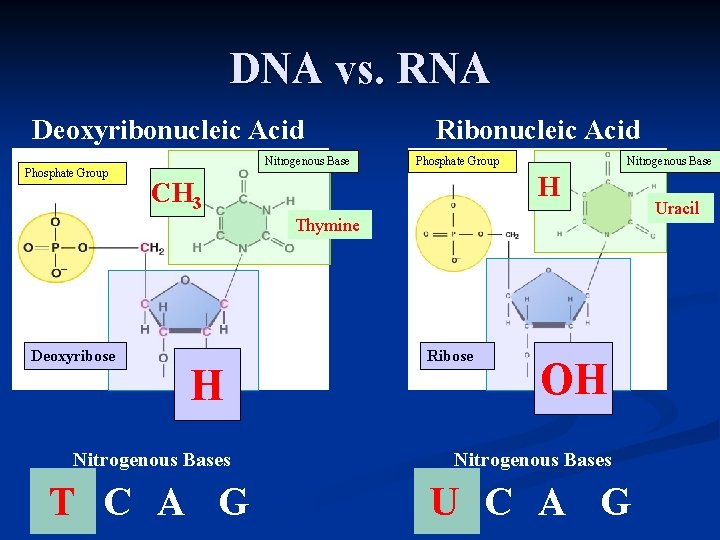
DNA vs. RNA Deoxyribonucleic Acid Phosphate Group Nitrogenous Base Ribonucleic Acid Phosphate Group Nitrogenous Base H CH 3 Thymine Deoxyribose H Ribose OH Nitrogenous Bases T C A G Uracil

- Slides: 32