
Molecular Basis of Heredity Relationship between DNA Genes
Molecular Basis of Heredity Relationship between DNA, Genes, and Chromosomes B-4. 2
DNA � Composed of nucleotides, provides the blueprint for proteins by the order of it’s nitrogen containing bases � The sequence of 3 base pairs on a molecule of DNA codes for a specific amino acid
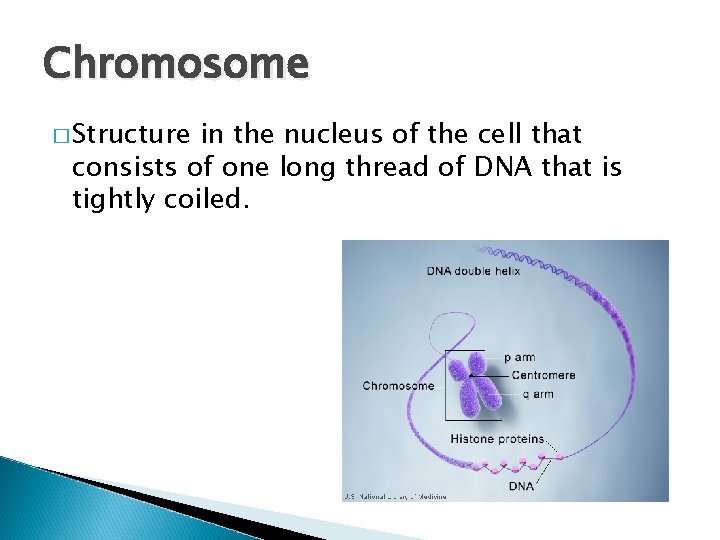
Chromosome � Structure in the nucleus of the cell that consists of one long thread of DNA that is tightly coiled.
Gene � Specific location on a chromosome, consisting of a segment of DNA that codes for a specific protein.
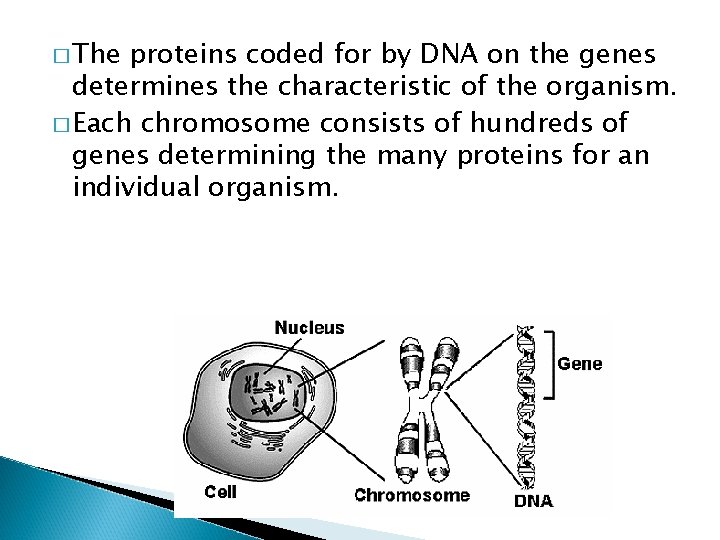
� The proteins coded for by DNA on the genes determines the characteristic of the organism. � Each chromosome consists of hundreds of genes determining the many proteins for an individual organism.
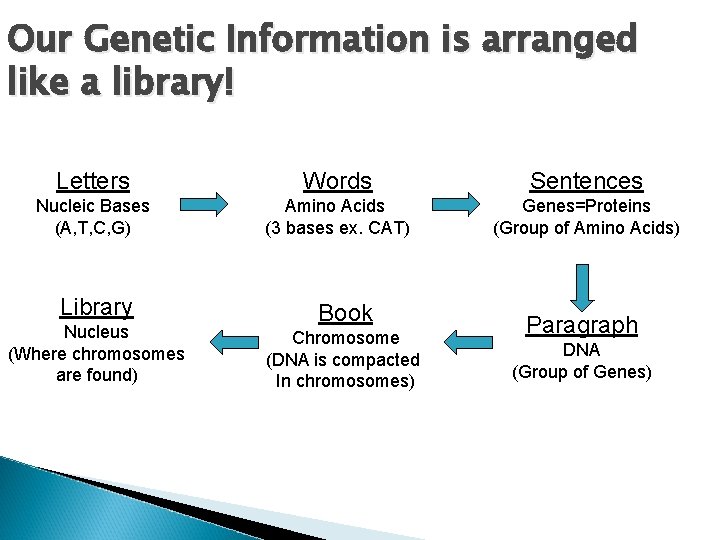
Our Genetic Information is arranged like a library! Letters Words Sentences Nucleic Bases (A, T, C, G) Amino Acids (3 bases ex. CAT) Genes=Proteins (Group of Amino Acids) Library Nucleus (Where chromosomes are found) Book Chromosome (DNA is compacted In chromosomes) Paragraph DNA (Group of Genes)
DNA is the “code of life” � The “code of life” means our genetic code � DNA comprises an organism’s chromosomes � Contains code for each protein an organism needs
Specific proteins determined by the order of nitrogen bases in DNA � 1 gene = 1 protein � In order to make specific proteins for specific purposes , cells must have blueprint that reveals correct order of amino acids for each protein found in an organism.
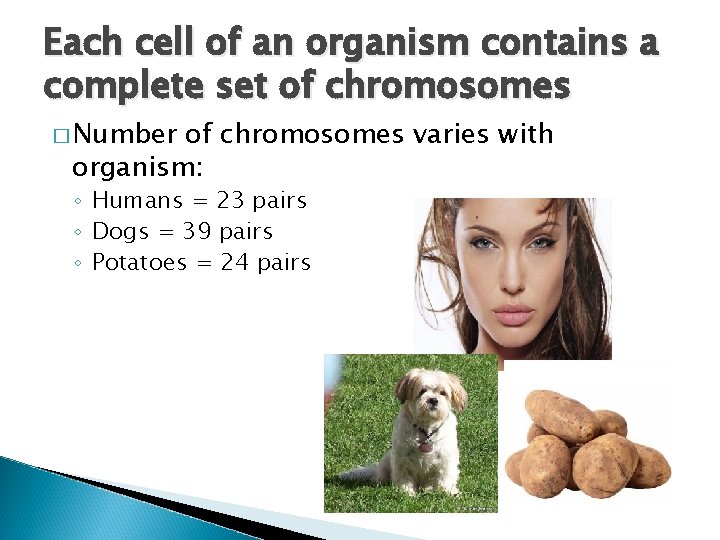
Each cell of an organism contains a complete set of chromosomes � Number of chromosomes varies with organism: ◦ Humans = 23 pairs ◦ Dogs = 39 pairs ◦ Potatoes = 24 pairs
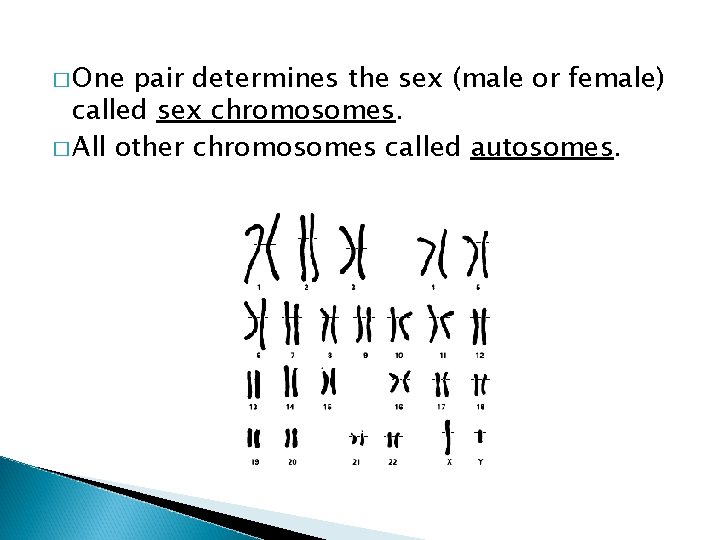
� One pair determines the sex (male or female) called sex chromosomes. � All other chromosomes called autosomes.
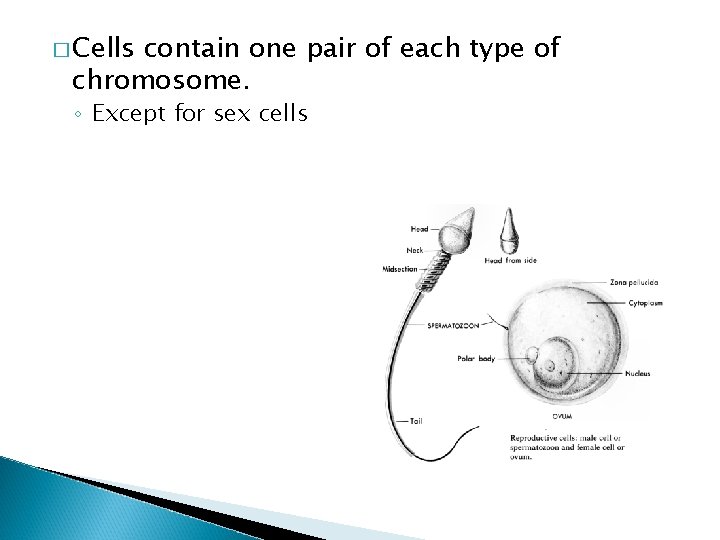
� Cells contain one pair of each type of chromosome. ◦ Except for sex cells
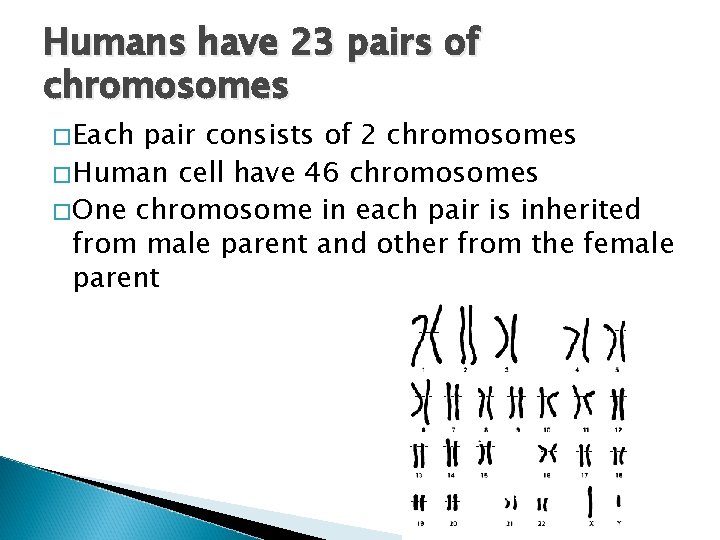
Humans have 23 pairs of chromosomes �Each pair consists of 2 chromosomes �Human cell have 46 chromosomes �One chromosome in each pair is inherited from male parent and other from the female parent
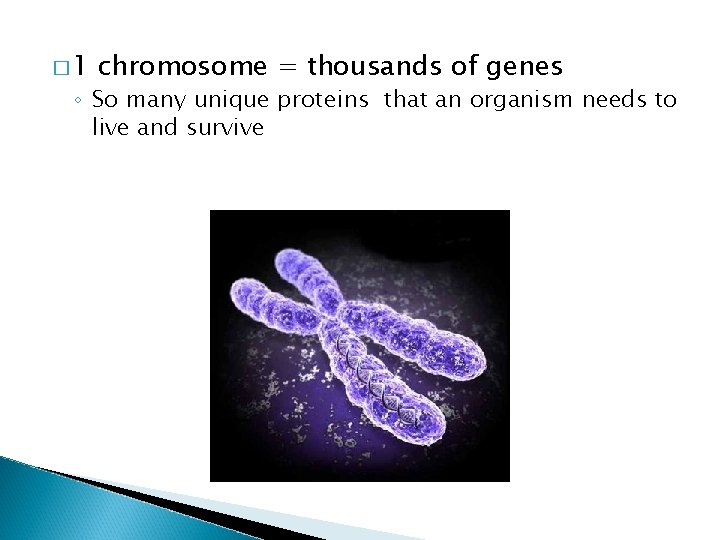
� 1 chromosome = thousands of genes ◦ So many unique proteins that an organism needs to live and survive
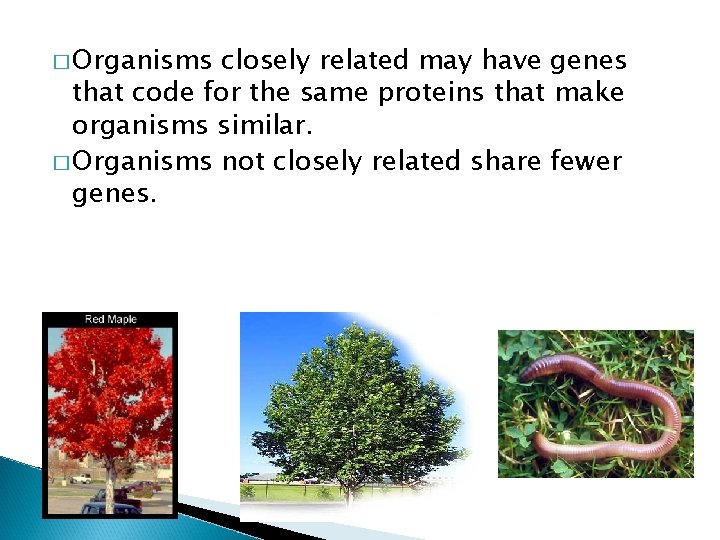
� Organisms closely related may have genes that code for the same proteins that make organisms similar. � Organisms not closely related share fewer genes.
� Each individual organism has unique characteristics and they are due to the different proteins that the organism produces.
- Slides: 15