
Molecular basis of carcinogenesis Dr Ganesh Kadam Cell
Molecular basis of carcinogenesis Dr Ganesh Kadam
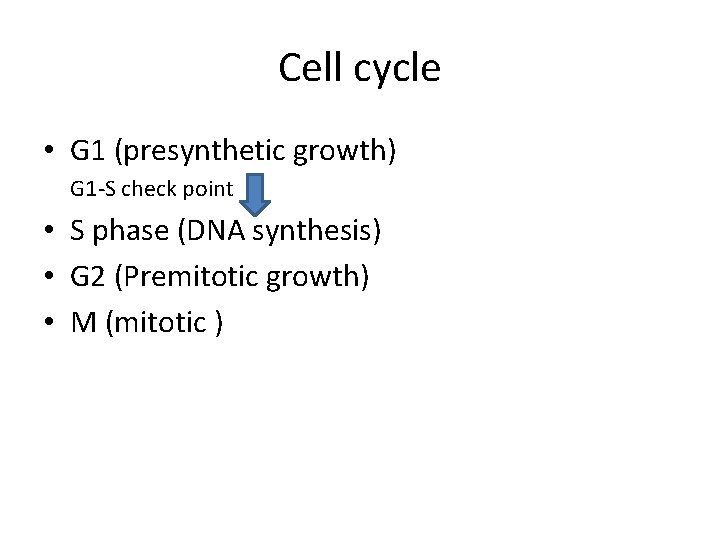
Cell cycle • G 1 (presynthetic growth) G 1 -S check point • S phase (DNA synthesis) • G 2 (Premitotic growth) • M (mitotic )
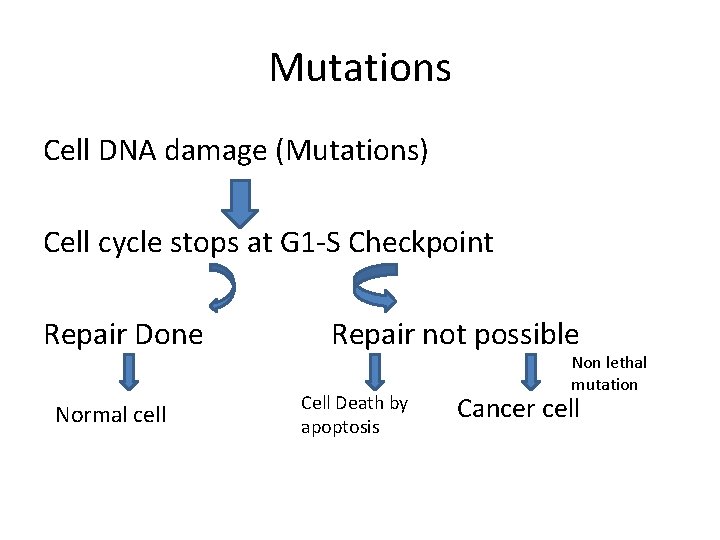
Mutations Cell DNA damage (Mutations) Cell cycle stops at G 1 -S Checkpoint Repair Done Normal cell Repair not possible Cell Death by apoptosis Non lethal mutation Cancer cell
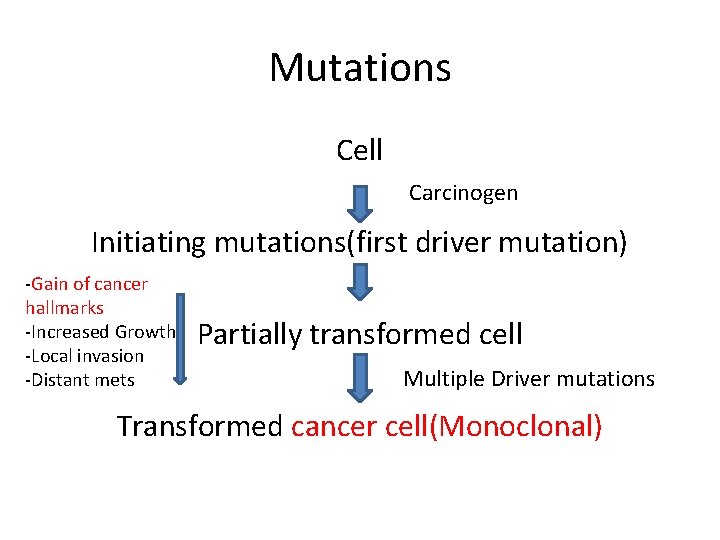
Mutations Cell Carcinogen Initiating mutations(first driver mutation) -Gain of cancer hallmarks -Increased Growth -Local invasion -Distant mets Partially transformed cell Multiple Driver mutations Transformed cancer cell(Monoclonal)
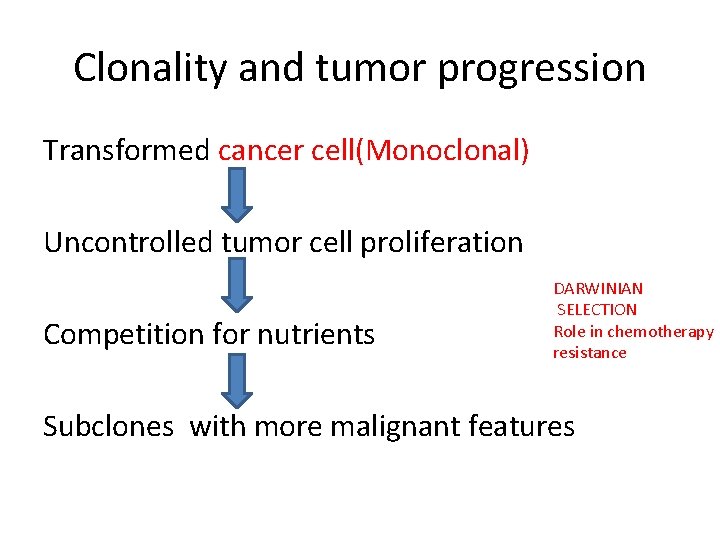
Clonality and tumor progression Transformed cancer cell(Monoclonal) Uncontrolled tumor cell proliferation Competition for nutrients DARWINIAN SELECTION Role in chemotherapy resistance Subclones with more malignant features
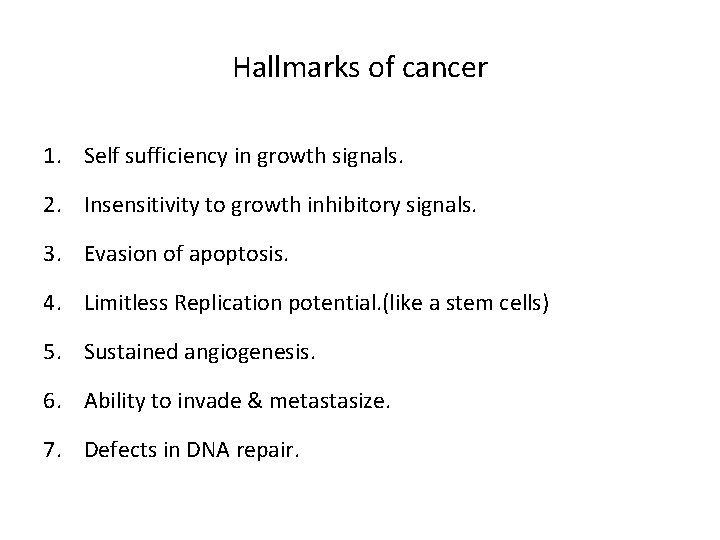
Hallmarks of cancer 1. Self sufficiency in growth signals. 2. Insensitivity to growth inhibitory signals. 3. Evasion of apoptosis. 4. Limitless Replication potential. (like a stem cells) 5. Sustained angiogenesis. 6. Ability to invade & metastasize. 7. Defects in DNA repair.
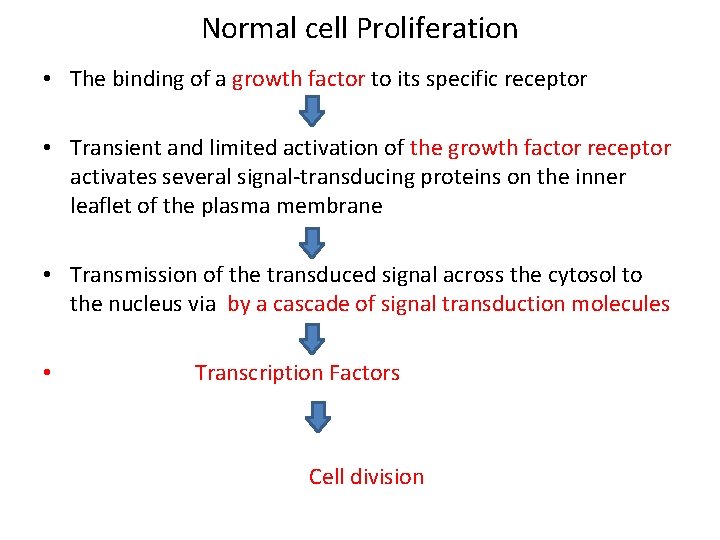
Normal cell Proliferation • The binding of a growth factor to its specific receptor • Transient and limited activation of the growth factor receptor activates several signal-transducing proteins on the inner leaflet of the plasma membrane • Transmission of the transduced signal across the cytosol to the nucleus via by a cascade of signal transduction molecules • Transcription Factors Cell division
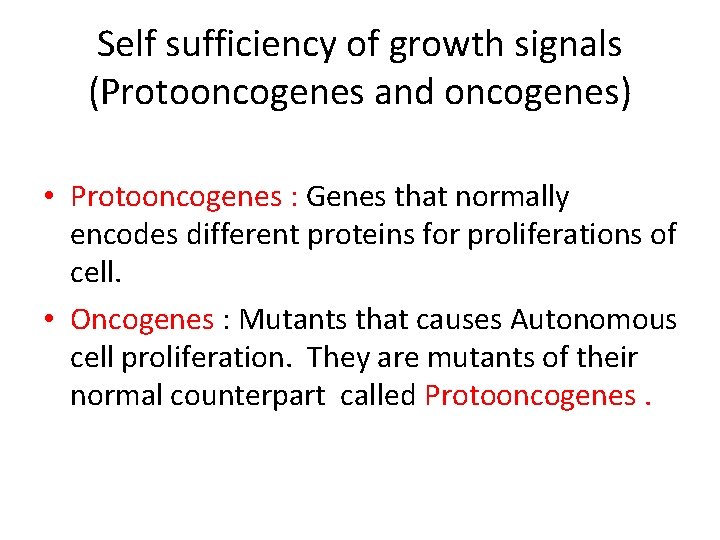
Self sufficiency of growth signals (Protooncogenes and oncogenes) • Protooncogenes : Genes that normally encodes different proteins for proliferations of cell. • Oncogenes : Mutants that causes Autonomous cell proliferation. They are mutants of their normal counterpart called Protooncogenes.
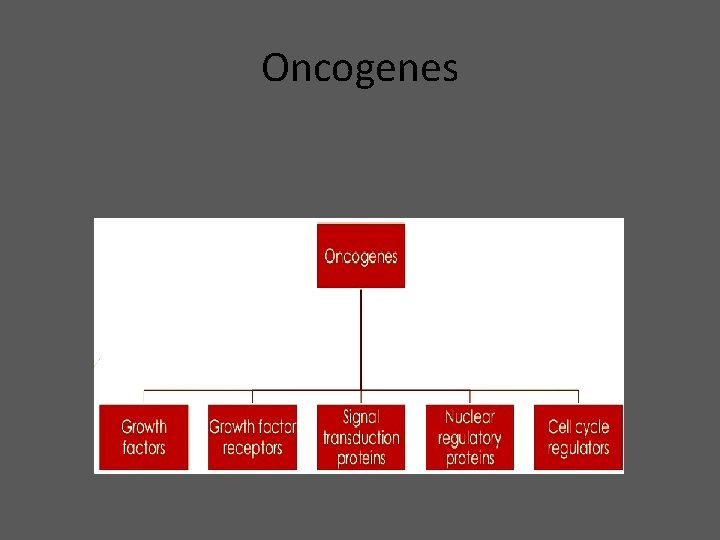
Oncogenes
Oncogenes • Mutation of protooncogenes forms oncogenes. • Mutation causes either increased normal function or gains new function • Dominant mutations
Examples of oncogenes encoding Growth factors • • Paracrine secretion : Normal cell Autocrine secretion : Cancer cell SIS oncogenes – PDGF-Astrocytoma, Osteosarcoma RAS Oncogene-TGFalfa-Astrocytoma
Examples of oncogenes encoding Growth factors Receptor • Tyrosine kinase receptor family(TKRs) Growth factors attaches to TKR Auto. Phosphorylation activates signal transducer like RAS/PIK 3 Cell division -ERBB 1 And ERBB 2
Examples of oncogenes encoding Growth factors Receptor • ERBB 2 Or HER 2 neu point mutations causes overexpression of HER 2 receptors which are TKR family receptors • Seen in ca breast , theraputically important • ERBB 1 mutations in Adenoca Lung
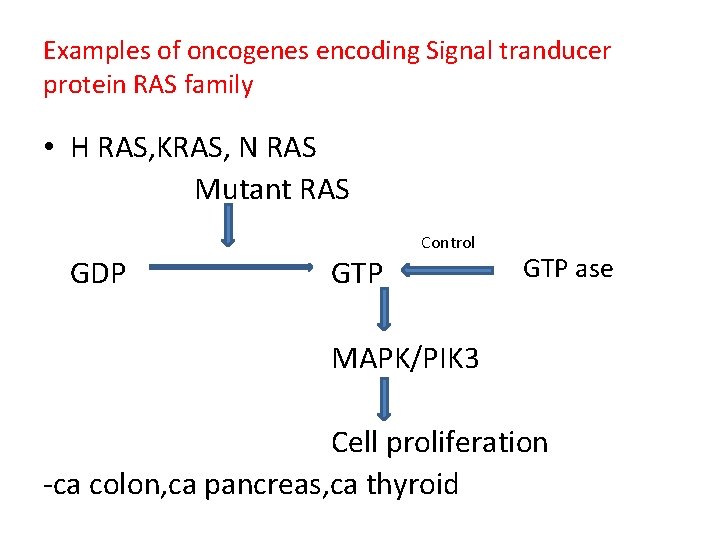
Examples of oncogenes encoding Signal tranducer protein RAS family • H RAS, KRAS, N RAS Mutant RAS GDP GTP Control GTP ase MAPK/PIK 3 Cell proliferation -ca colon, ca pancreas, ca thyroid
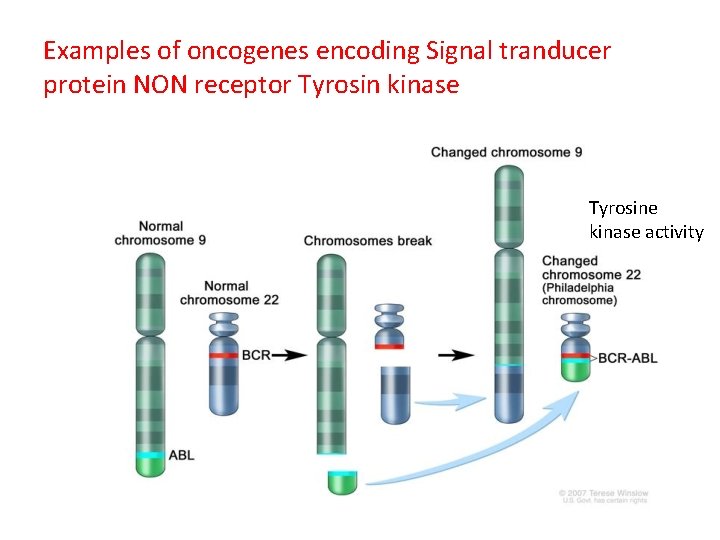
Examples of oncogenes encoding Signal tranducer protein NON receptor Tyrosin kinase Tyrosine kinase activity
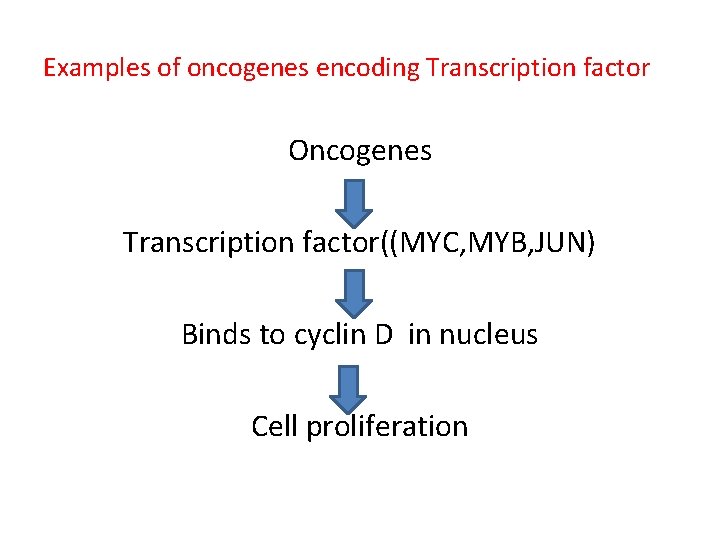
Examples of oncogenes encoding Transcription factor Oncogenes Transcription factor((MYC, MYB, JUN) Binds to cyclin D in nucleus Cell proliferation
Examples of oncogenes encoding Transcription factor MYC • - MYC acts by following mechanisms Binds cyclin D r. RNA synthesis –Protein synthesis Cell metabolism glycolytic pathway Increase telomerase activity Burkitt lymphoma Neuroblastma Small cell ca lung
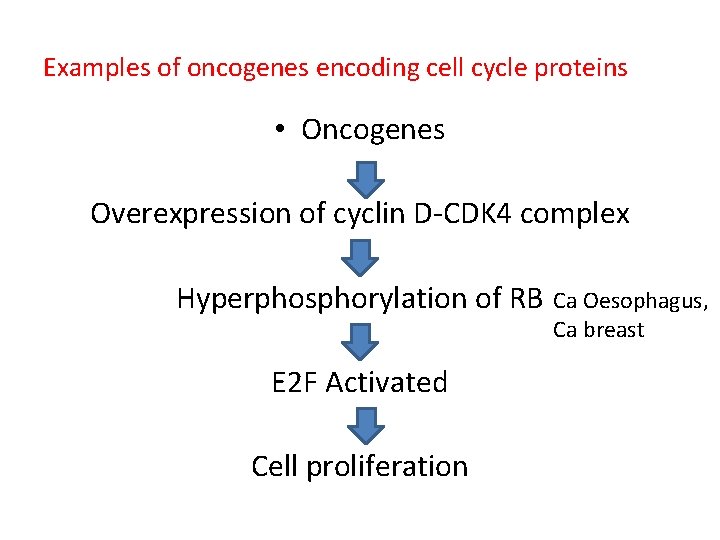
Examples of oncogenes encoding cell cycle proteins • Oncogenes Overexpression of cyclin D-CDK 4 complex Hyperphosphorylation of RB E 2 F Activated Cell proliferation Ca Oesophagus, Ca breast
Examples of oncogenes encoding cell cycle proteins • Mutations of cyclin D inhibitors and CDK 4 inhibitors • Glioblastoma multiforme • ALL
Insensitivity to Growth-Inhibitory Signals (Tumor Suppressor Gene) • Failure of growth inhibition is one of the fundamental alterations in the process of carcinogenesis. • oncogenes - proliferation of cells • Tumor suppressor genes -brakes to cell proliferation. • Similar to mitogenic signals, growth-inhibitory signals also originate outside the cell and use receptors, signal transducers, and nuclear transcription regulators to accomplish their effects.
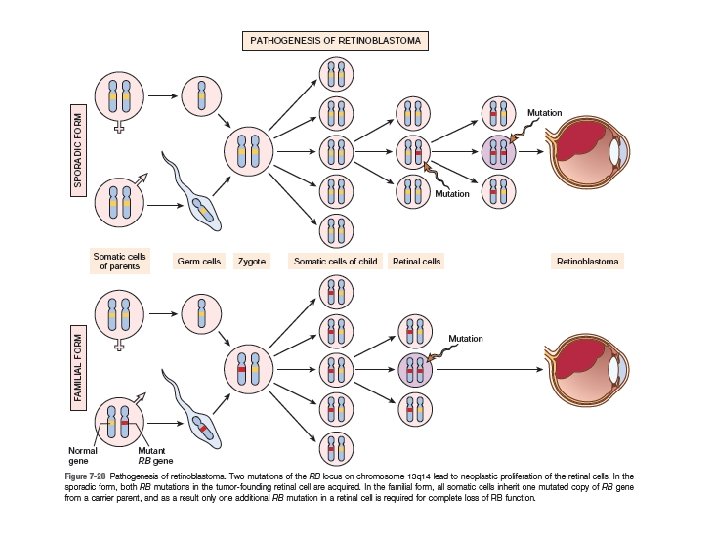
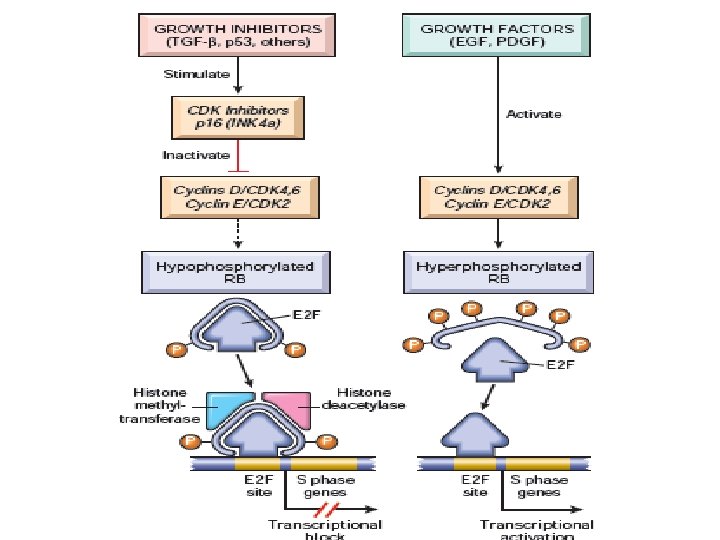
RB- governer of cell cycle • When hypophosphorylated, RB exerts antiproliferative effects by binding and inhibiting E 2 F transcription factors that regulate genes required for cells to pass through the G 1 -S phase cell cycle checkpoint. Normal growth factor signaling leads to RB hyperphosphorylation and inactivation, thus promoting cell cycle progression. • The antiproliferative effect of RB is abrogated in cancers through a variety of mechanisms, including: 1. Loss-of-function mutations affecting RB 2. Gene amplifications of CDK 4 and cyclin D genes 3. Loss of cyclin-dependent kinase inhibitors (p 16/INK 4 a) 4. Viral oncoproteins that bind and inhibit RB (E 7 protein of HPV.
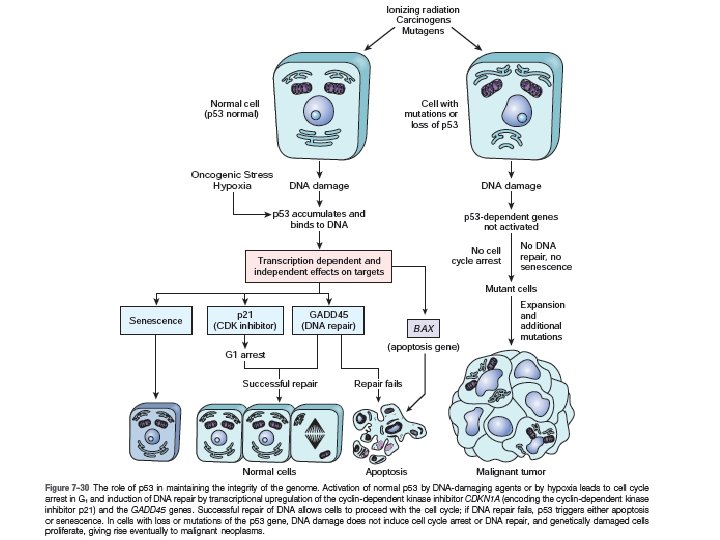
P 53, Guardian of genome • The p 53 protein is the central monitor of stress in the cell and can be activated by anoxia, inappropriate signaling by mutated oncoproteins, or DNA damage. • p 53 controls the expression and activity of proteins involved in cell cycle arrest, DNA repair, cellular senescence, and apoptosis. • If DNA damage cannot be repaired, p 53 induces additional events that lead to cellular senescence or apoptosis.
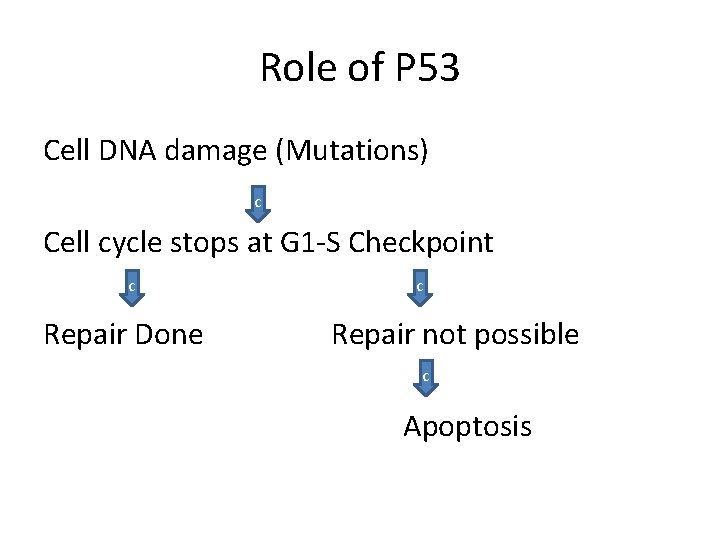
Role of P 53 Cell DNA damage (Mutations) c Cell cycle stops at G 1 -S Checkpoint c Repair Done c Repair not possible c Apoptosis
- Slides: 26