
Molecular Basis for Relationship between Genotype and Phenotype
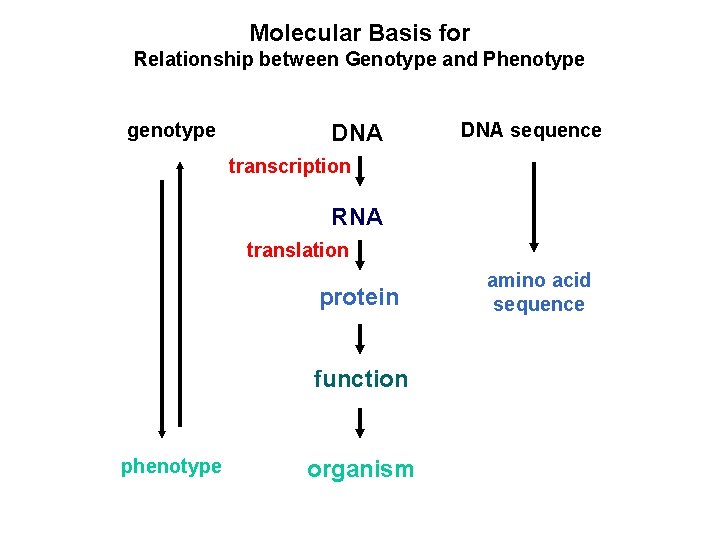
Molecular Basis for Relationship between Genotype and Phenotype genotype DNA sequence transcription RNA translation protein function phenotype organism amino acid sequence

Molecular Basis for Relationship between Genotype and Phenotype genotype DNA sequence transcription RNA translation protein function phenotype organism amino acid sequence
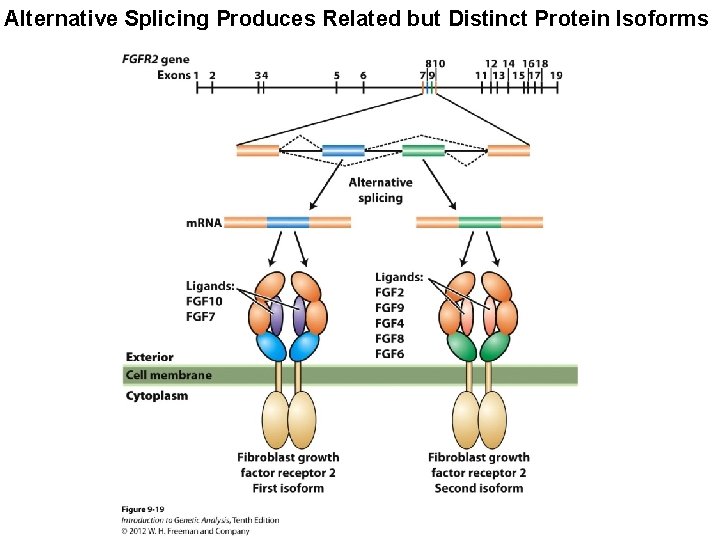
Alternative Splicing Produces Related but Distinct Protein Isoforms
Posttranslational Events Protein Folding: Translational product (polypeptide) achieves appropriate folding by aid of chaperone proteins. Modification of Amino Acids: * Phosphorylation/dephosphorylation * Ubiquitination Protein Targeting: Directing proteins to specific locations (for example, nucleus, mitochondria, or cell membrane) is accomplished by tagging of proteins (signal sequence for secreted proteins, nuclear localization sequences for nuclear proteins).
Posttranslational Events Protein Folding: Translational product (polypeptide) achieves appropriate folding by aid of chaperone proteins. Modification of Amino Acids: * Phosphorylation/dephosphorylation * Ubiquitination Protein Targeting: Directing proteins to specific locations (for example, nucleus, mitochondria, or cell membrane) is accomplished by tagging of proteins (signal sequence for secreted proteins, nuclear localization sequences for nuclear proteins).
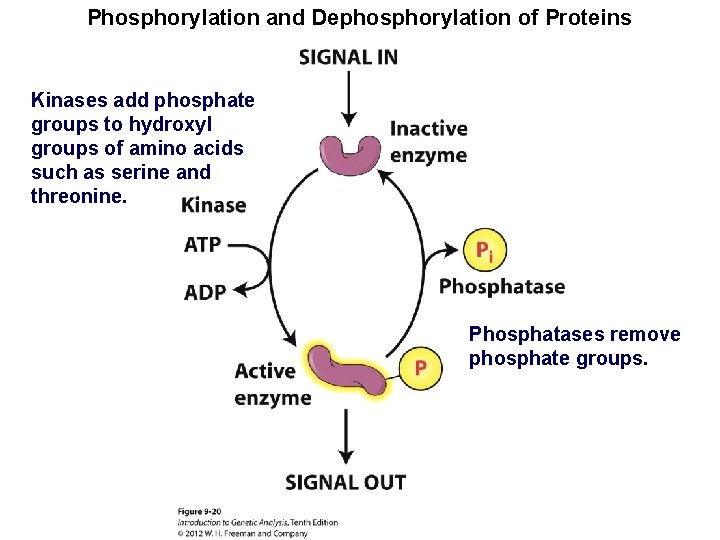
Phosphorylation and Dephosphorylation of Proteins Kinases add phosphate groups to hydroxyl groups of amino acids such as serine and threonine. Phosphatases remove phosphate groups.
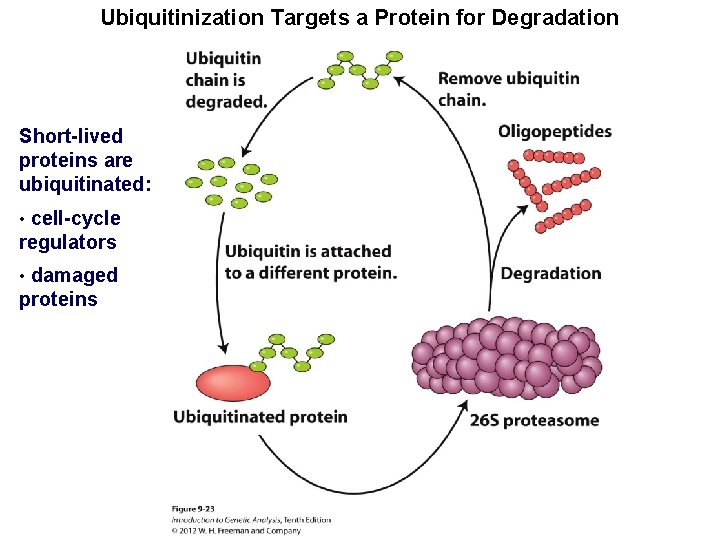
Ubiquitinization Targets a Protein for Degradation Short-lived proteins are ubiquitinated: • cell-cycle regulators • damaged proteins
Posttranslational Events Protein Folding: Translational product (polypeptide) achieves appropriate folding by aid of chaperone proteins. Modification of Amino Acids: * Phosphorylation/dephosphorylation * Ubiquitination Protein Targeting: Directing proteins to specific locations (for example, nucleus, mitochondria, or cell membrane) is accomplished by tagging of proteins (signal sequence for secreted proteins, nuclear localization sequences for nuclear proteins).
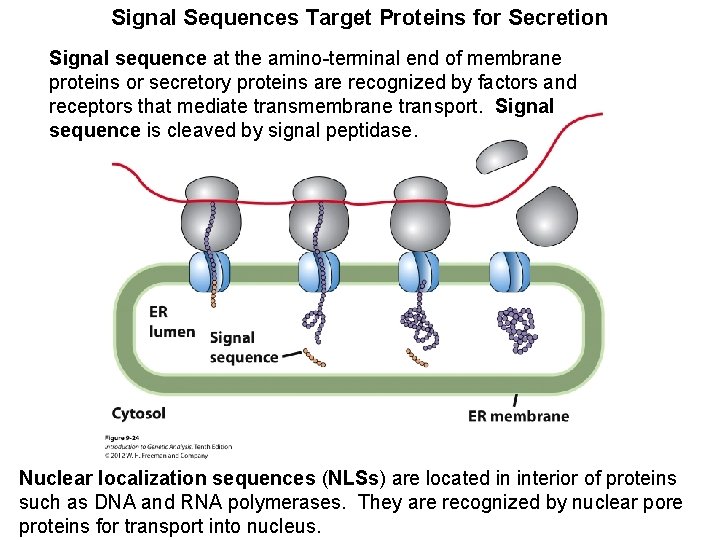
Signal Sequences Target Proteins for Secretion Signal sequence at the amino-terminal end of membrane proteins or secretory proteins are recognized by factors and receptors that mediate transmembrane transport. Signal sequence is cleaved by signal peptidase. Nuclear localization sequences (NLSs) are located in interior of proteins such as DNA and RNA polymerases. They are recognized by nuclear pore proteins for transport into nucleus.
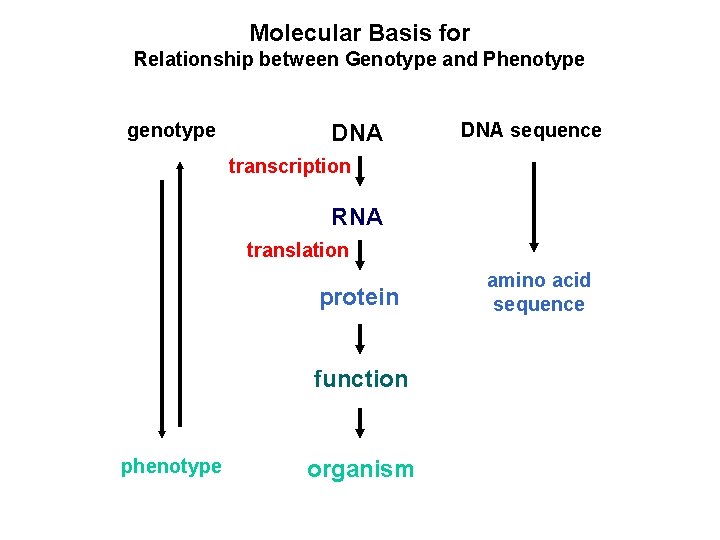
Molecular Basis for Relationship between Genotype and Phenotype genotype DNA sequence transcription RNA translation protein function phenotype organism amino acid sequence
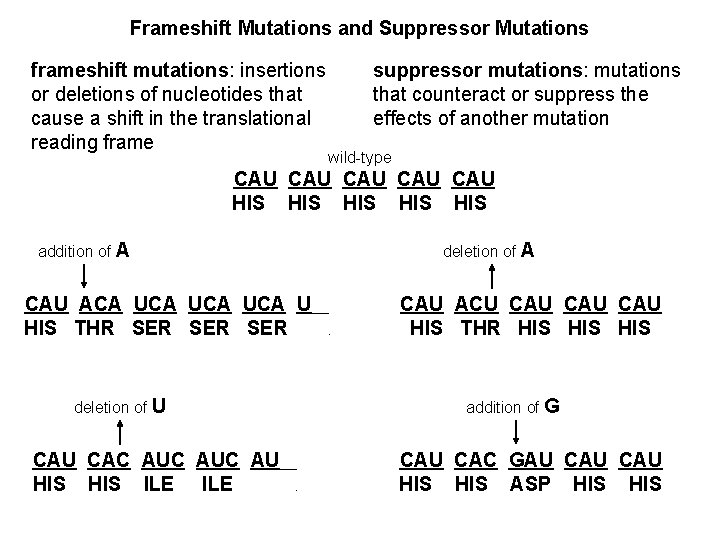
Frameshift Mutations and Suppressor Mutations frameshift mutations: insertions or deletions of nucleotides that cause a shift in the translational reading frame suppressor mutations: mutations that counteract or suppress the effects of another mutation wild-type CAU CAU CAU HIS HIS HIS addition of A deletion of A CAU ACA UCA U__ HIS THR SER SER . deletion of U CAU ACU CAU CAU HIS THR HIS HIS addition of G CAU CAC AUC AU__ HIS ILE . CAU CAC GAU CAU HIS ASP HIS
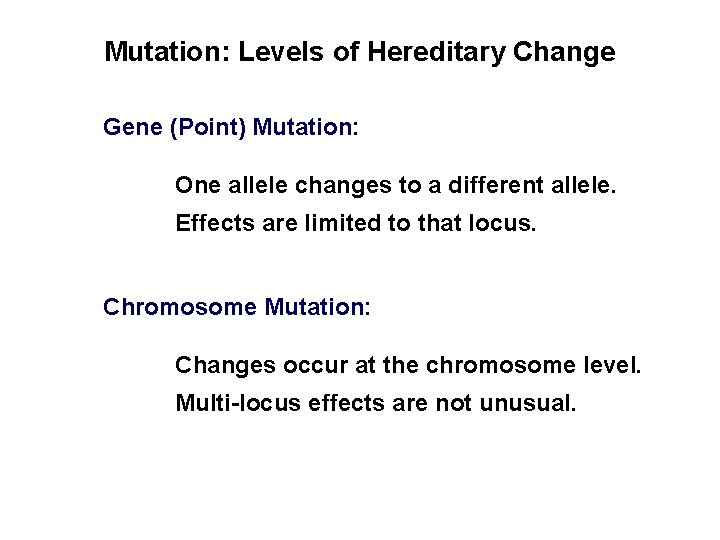
Mutation: Levels of Hereditary Change Gene (Point) Mutation: One allele changes to a different allele. Effects are limited to that locus. Chromosome Mutation: Changes occur at the chromosome level. Multi-locus effects are not unusual.
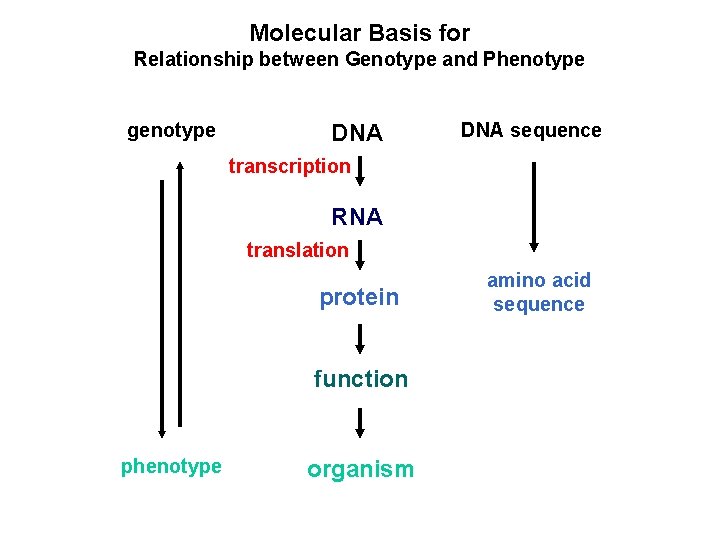
Molecular Basis for Relationship between Genotype and Phenotype genotype DNA sequence transcription RNA translation protein function phenotype organism amino acid sequence
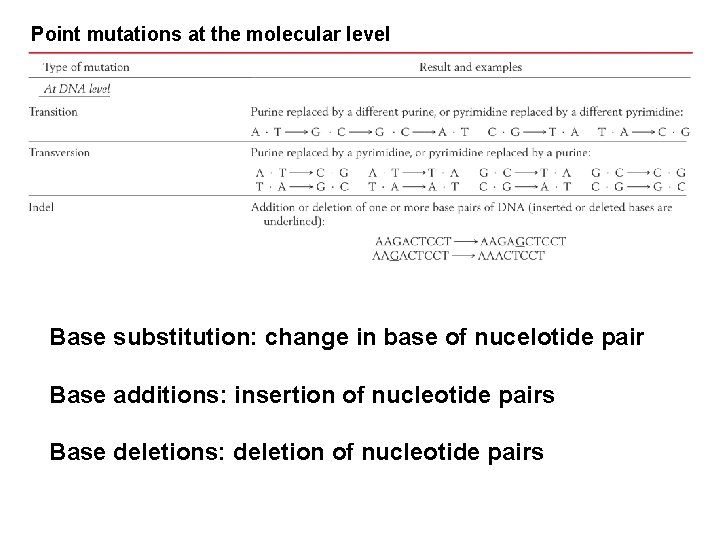
Point mutations at the molecular level Base substitution: change in base of nucelotide pair Base additions: insertion of nucleotide pairs Base deletions: deletion of nucleotide pairs
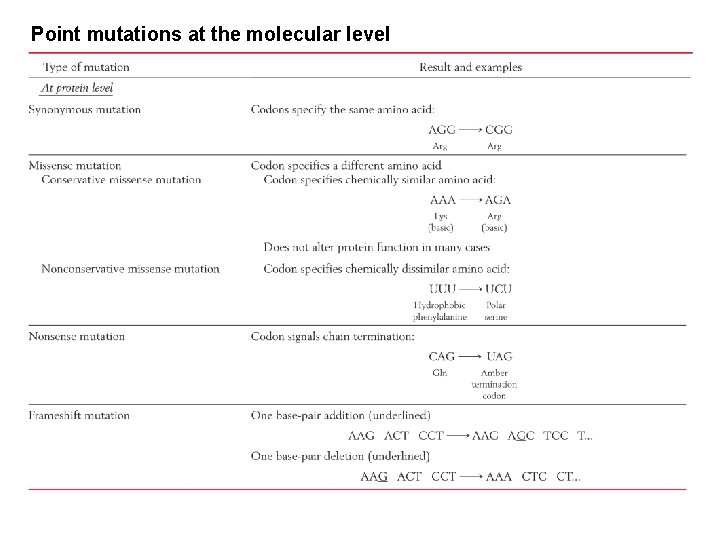
Point mutations at the molecular level

Consequences of Point Mutations within Genes
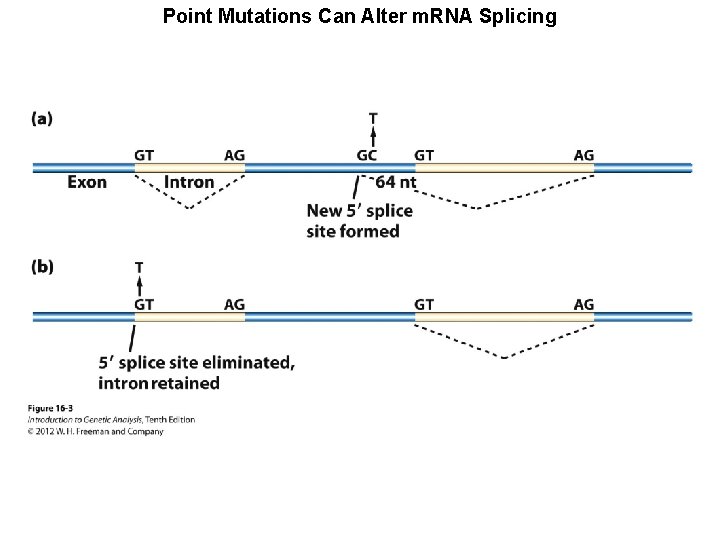
Point Mutations Can Alter m. RNA Splicing
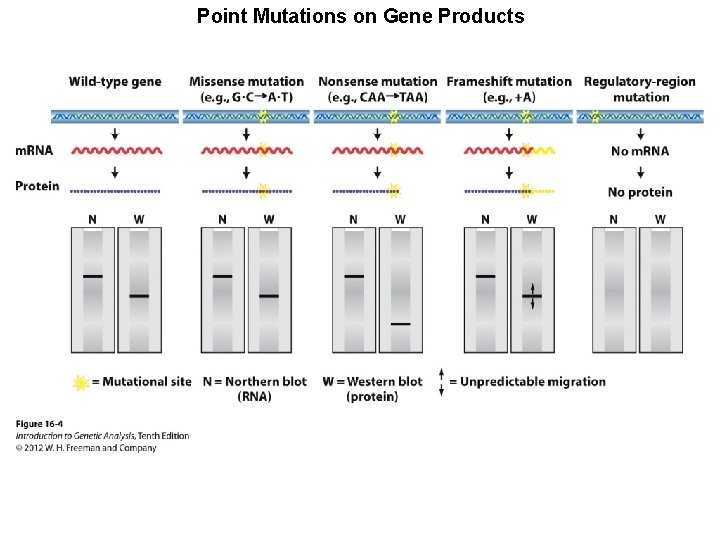
Point Mutations on Gene Products
- Slides: 18