
Molecular basis for gastrulation Formation differentiation and derivatives
Molecular basis for gastrulation. Formation, differentiation and derivatives of the germinal layers. Dr. Károly Altdorfer
Seka. semmelweis. hu

2. week: 3. week: embryonic disc 2 layers: Epiblast + Hypoblast gastrulation (trilamination): 3 germ layers

GASTRULATION = formation of the three germinal layers from the epiblast: ● ECTODERM ● MESODERM ● ENDODERM https: //www. youtube. com/watch? v=3 AOoik. TEfeo

Primitive streak formation of primitive streak is initiated by Nodal (TGF-β member)
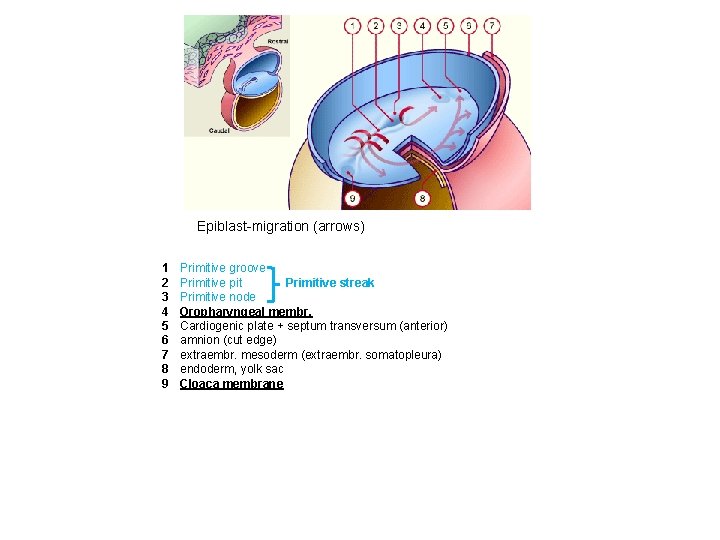
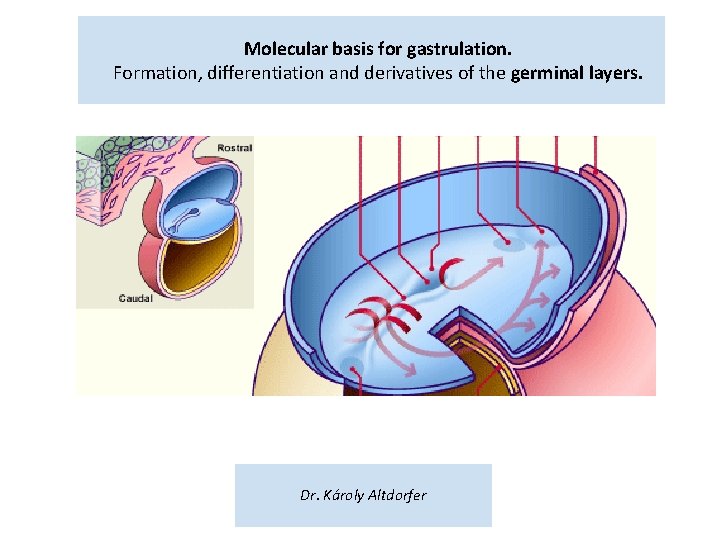
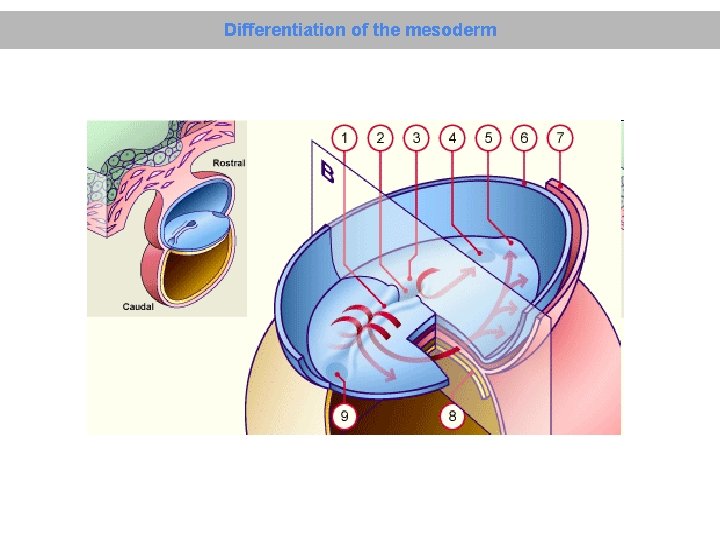
Epiblast-migration (arrows) 1 2 3 4 5 6 7 8 9 Primitive groove Primitive pit Primitive streak Primitive node Oropharyngeal membr. Cardiogenic plate + septum transversum (anterior) amnion (cut edge) extraembr. mesoderm (extraembr. somatopleura) endoderm, yolk sac Cloaca membrane
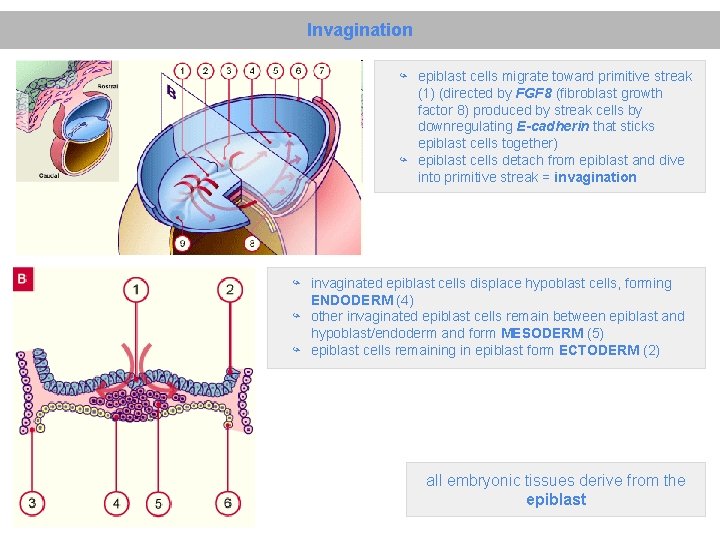
Invagination ↪ epiblast cells migrate toward primitive streak (1) (directed by FGF 8 (fibroblast growth factor 8) produced by streak cells by downregulating E-cadherin that sticks epiblast cells together) ↪ epiblast cells detach from epiblast and dive into primitive streak = invagination ↪ invaginated epiblast cells displace hypoblast cells, forming ENDODERM (4) ↪ other invaginated epiblast cells remain between epiblast and hypoblast/endoderm and form MESODERM (5) ↪ epiblast cells remaining in epiblast form ECTODERM (2) all embryonic tissues derive from the epiblast
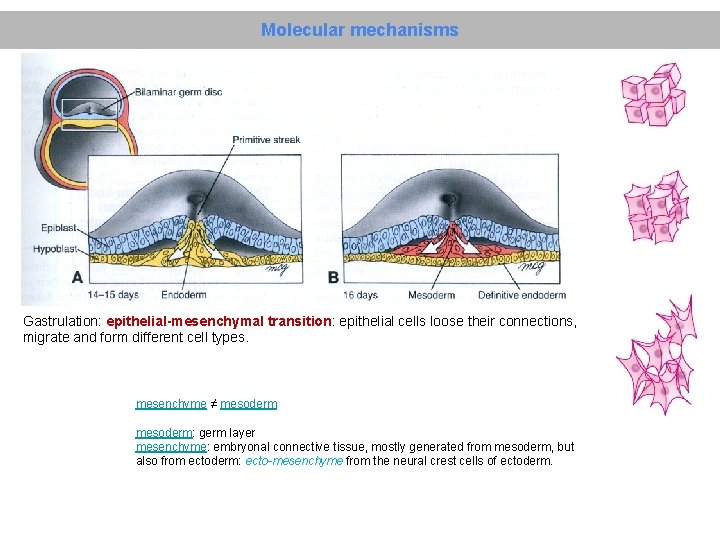
Molecular mechanisms Gastrulation: epithelial-mesenchymal transition: epithelial cells loose their connections, migrate and form different cell types. mesenchyme ≠ mesoderm: germ layer mesenchyme: embryonal connective tissue, mostly generated from mesoderm, but also from ectoderm: ecto-mesenchyme from the neural crest cells of ectoderm.
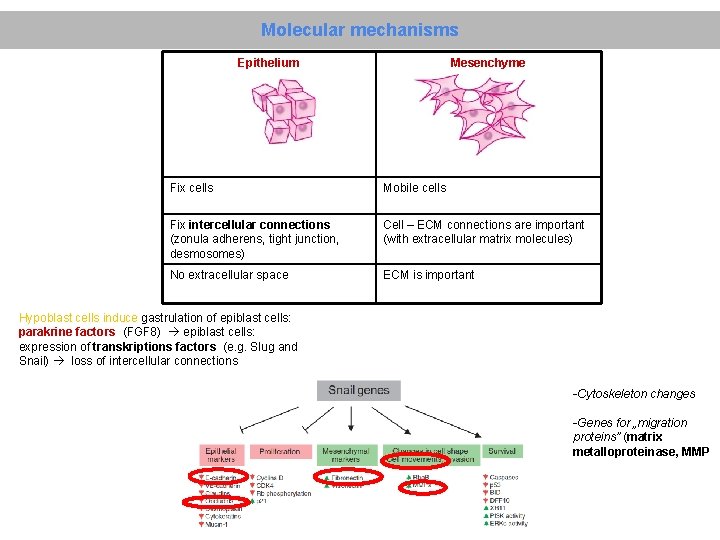
Molecular mechanisms Epithelium Mesenchyme Fix cells Mobile cells Fix intercellular connections (zonula adherens, tight junction, desmosomes) Cell – ECM connections are important (with extracellular matrix molecules) No extracellular space ECM is important Hypoblast cells induce gastrulation of epiblast cells: parakrine factors (FGF 8) epiblast cells: expression of transkriptions factors (e. g. Slug and Snail) loss of intercellular connections -Cytoskeleton changes -Genes for „migration proteins” (matrix metalloproteinase, MMP
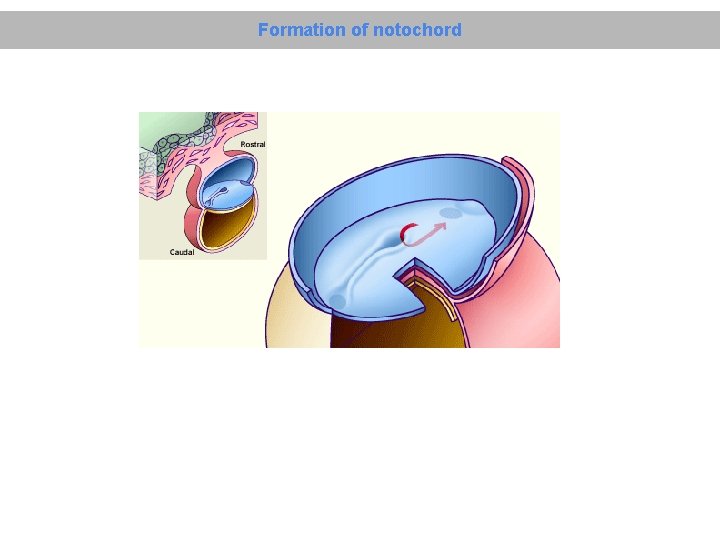
Formation of notochord

Invagination ↪ prenotochordal cells invaginate at primitive node, get intercalated in hypoblast and form notochordal plate
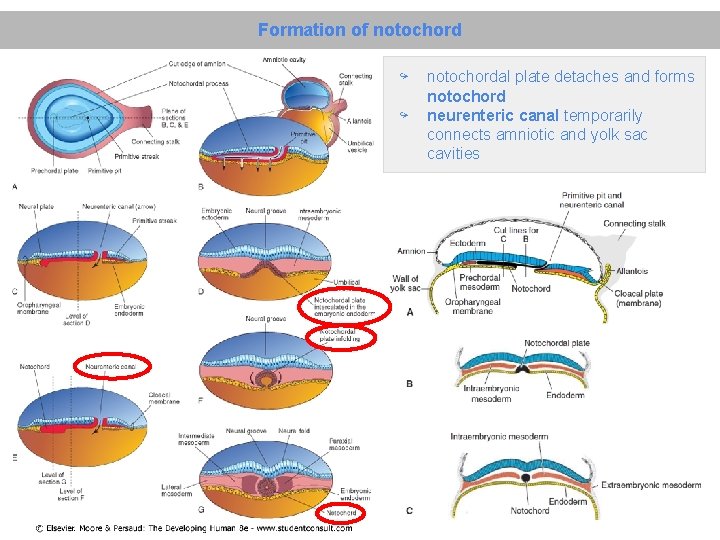
Formation of notochord ↪ ↪ notochordal plate detaches and forms notochord neurenteric canal temporarily connects amniotic and yolk sac cavities
Differentiation of the mesoderm
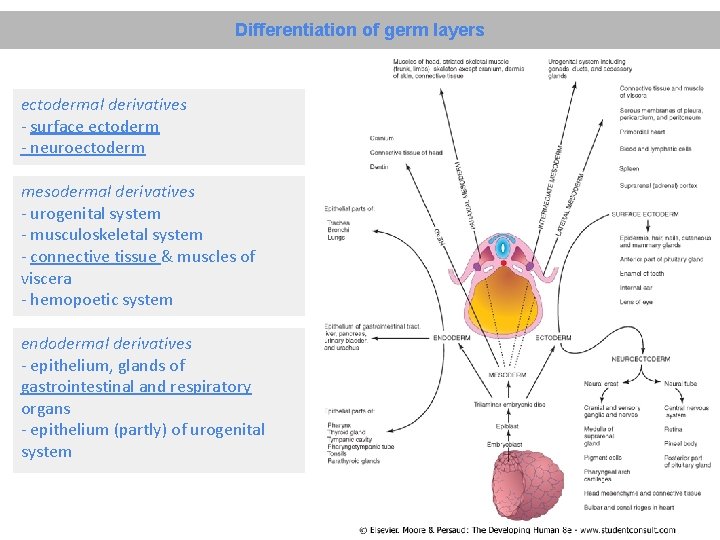
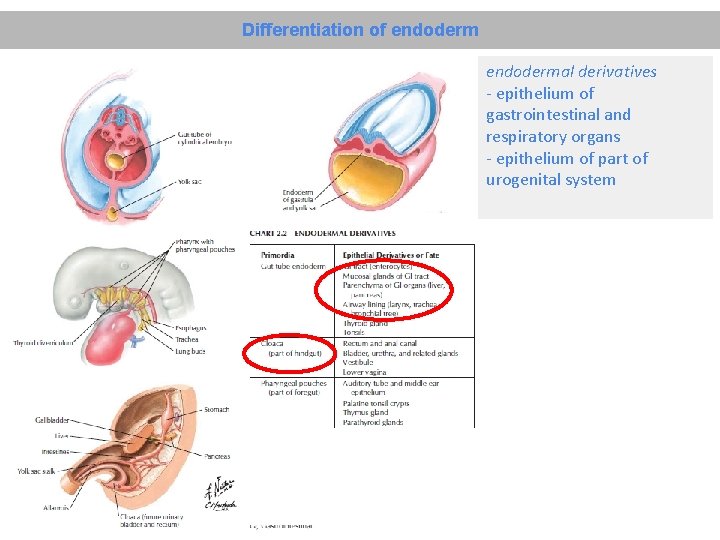
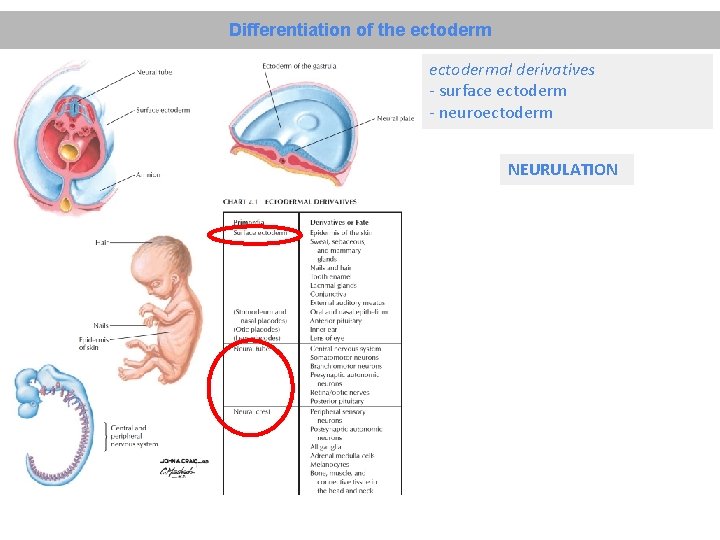
Differentiation of germ layers ectodermal derivatives - surface ectoderm - neuroectoderm mesodermal derivatives - urogenital system - musculoskeletal system - connective tissue & muscles of viscera - hemopoetic system endodermal derivatives - epithelium, glands of gastrointestinal and respiratory organs - epithelium (partly) of urogenital system
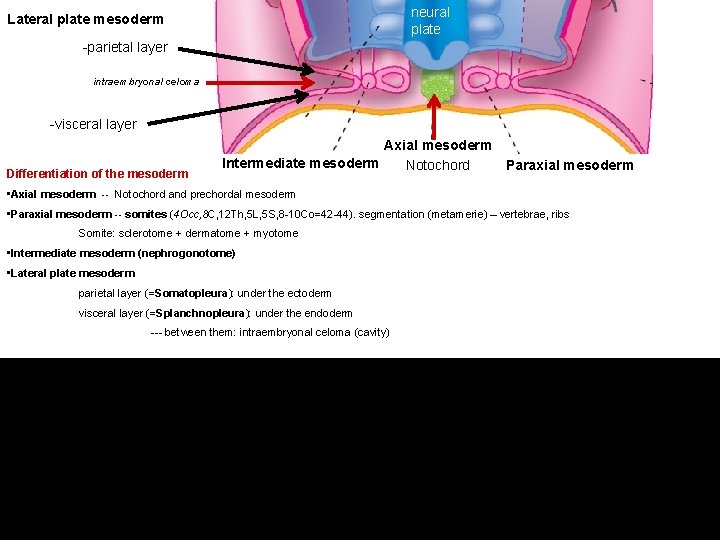
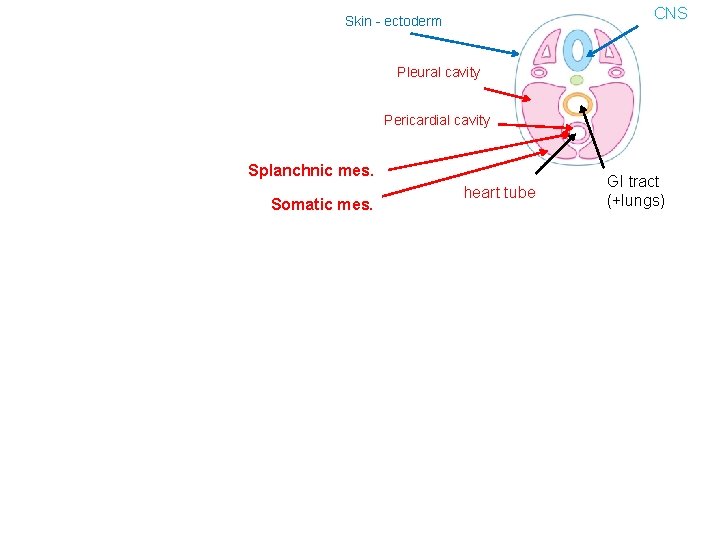
neural plate Lateral plate mesoderm -parietal layer intraembryonal celoma -visceral layer Differentiation of the mesoderm Axial mesoderm Intermediate mesoderm Notochord Paraxial mesoderm • Axial mesoderm -- Notochord and prechordal mesoderm • Paraxial mesoderm -- somites (4 Occ, 8 C, 12 Th, 5 L, 5 S, 8 -10 Co=42 -44). segmentation (metamerie) – vertebrae, ribs Somite: sclerotome + dermatome + myotome • Intermediate mesoderm (nephrogonotome) • Lateral plate mesoderm parietal layer (=Somatopleura): under the ectoderm visceral layer (=Splanchnopleura): under the endoderm --- between them: intraembryonal celoma (cavity)
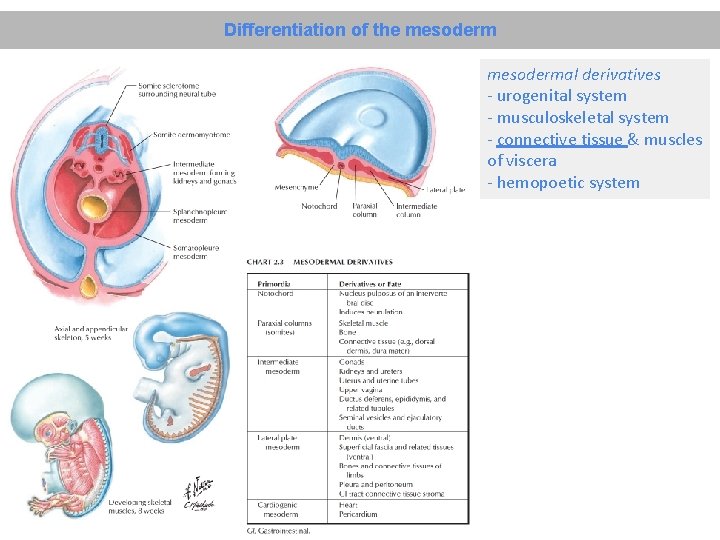
Differentiation of the mesodermal derivatives - urogenital system - musculoskeletal system - connective tissue & muscles of viscera - hemopoetic system
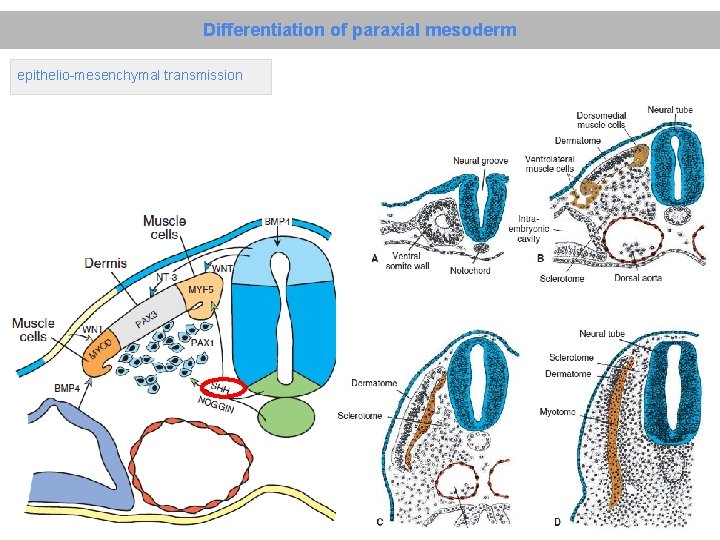
Differentiation of paraxial mesoderm epithelio-mesenchymal transmission
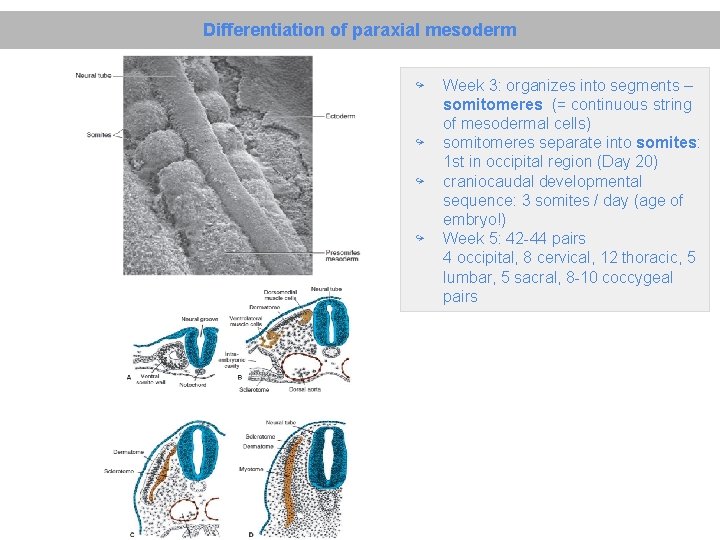
Differentiation of paraxial mesoderm ↪ ↪ Week 3: organizes into segments – somitomeres (= continuous string of mesodermal cells) somitomeres separate into somites: 1 st in occipital region (Day 20) craniocaudal developmental sequence: 3 somites / day (age of embryo!) Week 5: 42 -44 pairs 4 occipital, 8 cervical, 12 thoracic, 5 lumbar, 5 sacral, 8 -10 coccygeal pairs
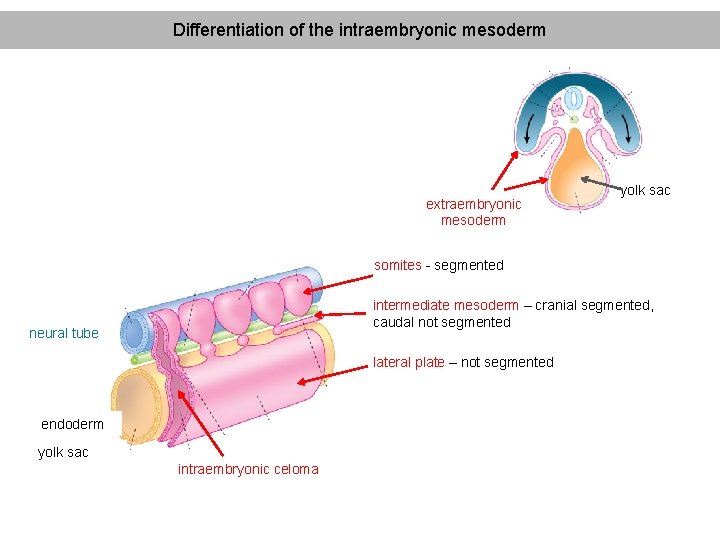
Differentiation of the intraembryonic mesoderm extraembryonic mesoderm yolk sac somites - segmented intermediate mesoderm – cranial segmented, caudal not segmented neural tube lateral plate – not segmented endoderm yolk sac intraembryonic celoma
CNS Skin - ectoderm Pleural cavity Pericardial cavity Splanchnic mes. Somatic mes. heart tube GI tract (+lungs)
Differentiation of endodermal derivatives - epithelium of gastrointestinal and respiratory organs - epithelium of part of urogenital system
Differentiation of the ectodermal derivatives - surface ectoderm - neuroectoderm NEURULATION
Source of images: Dr. Szilvia Mezey Prof. Miklós Réthelyi Dr. Attila Magyar www. embryology. ch https: //amboss. miamed. de/wissen/Embryonalentwicklung https: //www. youtube. com/watch? v=3 AOoik. TEfeo
- Slides: 24