
MOLDLFOW PLASTICS LABS Moldflow Plastics Labs Material Testing

MOLDLFOW PLASTICS LABS Moldflow Plastics Labs Material Testing & Research
Moldflow Plastics Labs is the world leader in … § § § Material Material PLASTICS LABS testing for plastics CAE analysis databases for CAE software testing innovations datafitting services testing support
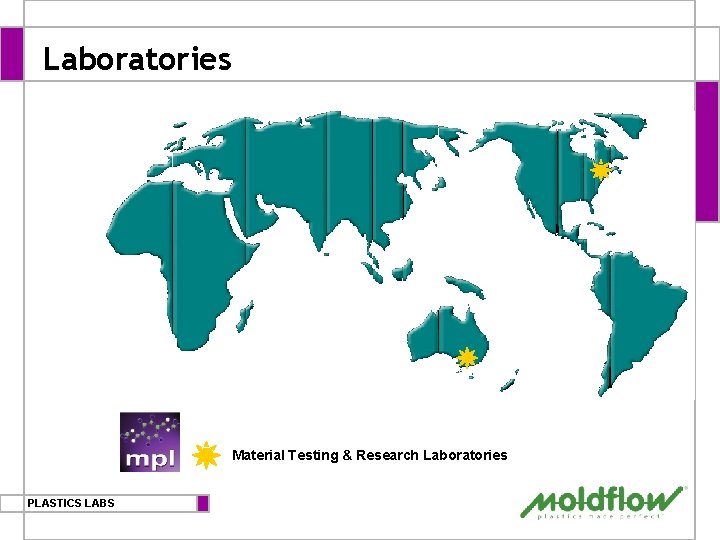
Laboratories Material Testing & Research Laboratories PLASTICS LABS
Moldflow Plastics Labs Material testing for plastics CAE processing § Two locations § Ithaca, NY, USA § Melbourne, VIC, Australia § Experts in test methods for CAE processing § Injection Molding Rheology [IMR] § Shrinkage testing § Mold verification testing PLASTICS LABS

Moldflow Group Tests: § MPI / MPA Filling and Packing § MPI Filling, Packing and Shrinkage § MPI Filling, Packing, Shrinkage and Mechanical Properties § MPI Reactive Molding § MPI Underfill Encapsulation Moldflow group tests include formatted and tested material data files for Moldflow software PLASTICS LABS
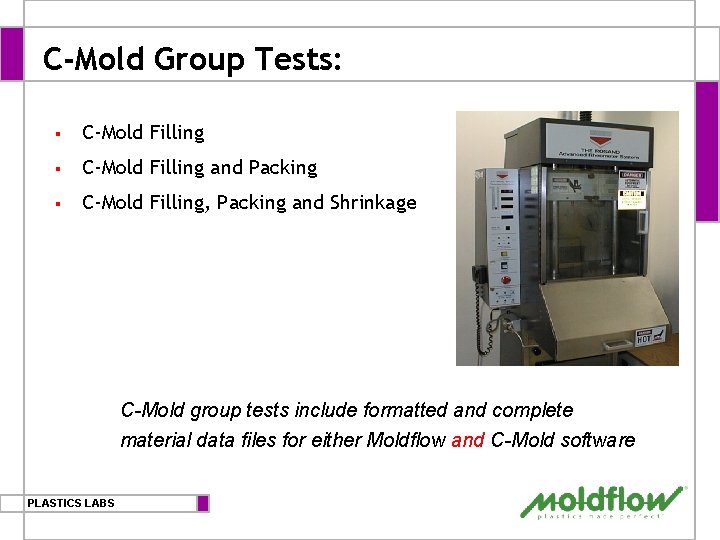
C-Mold Group Tests: § C-Mold Filling and Packing § C-Mold Filling, Packing and Shrinkage C-Mold group tests include formatted and complete material data files for either Moldflow and C-Mold software PLASTICS LABS
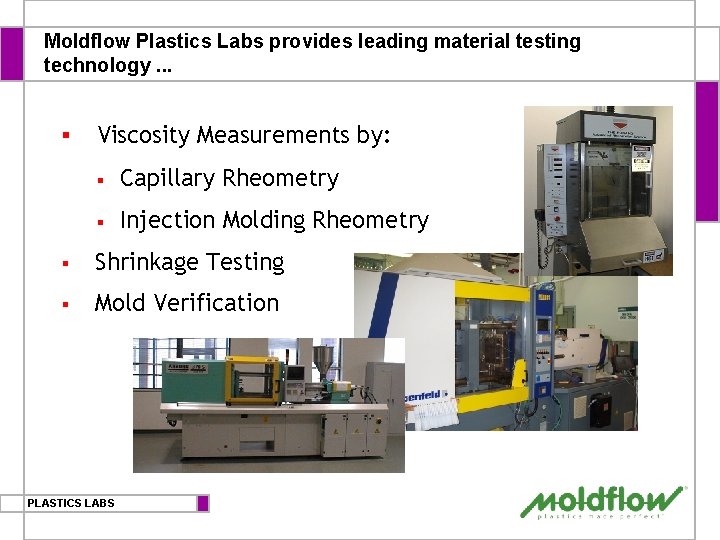
Moldflow Plastics Labs provides leading material testing technology. . . § Viscosity Measurements by: § Capillary Rheometry § Injection Molding Rheometry § Shrinkage Testing § Mold Verification PLASTICS LABS
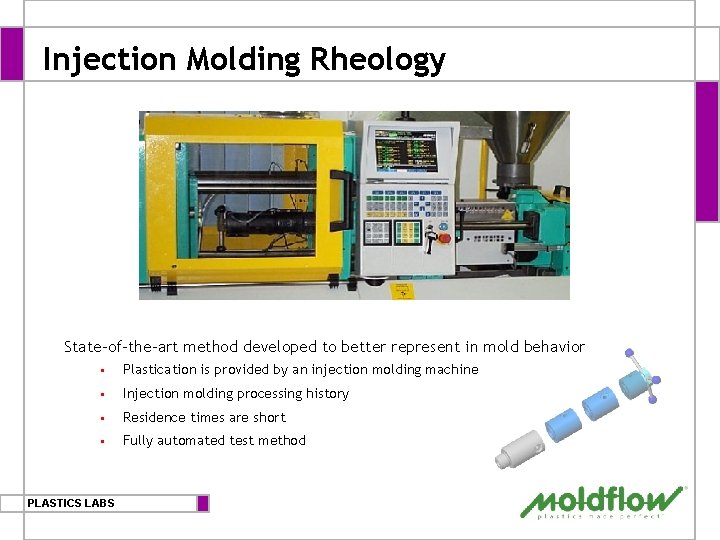
Injection Molding Rheology State-of-the-art method developed to better represent in mold behavior § Plastication is provided by an injection molding machine § Injection molding processing history § Residence times are short § Fully automated test method PLASTICS LABS
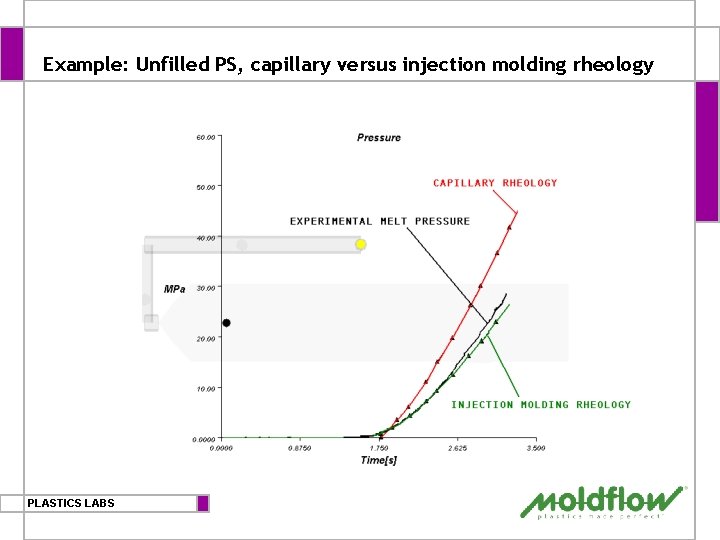
Example: Unfilled PS, capillary versus injection molding rheology PLASTICS LABS
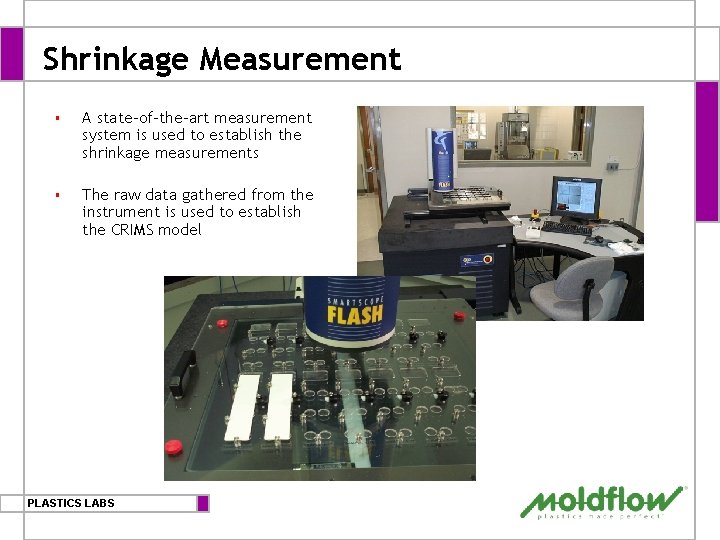
Shrinkage Measurement § A state-of-the-art measurement system is used to establish the shrinkage measurements § The raw data gathered from the instrument is used to establish the CRIMS model PLASTICS LABS
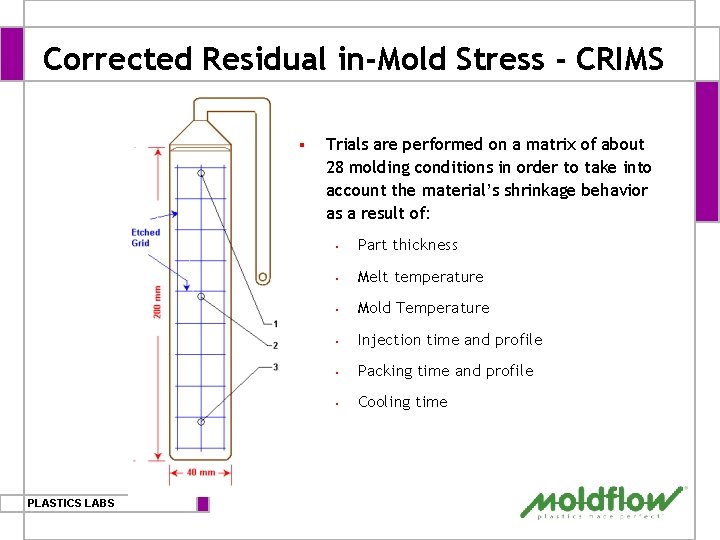
Corrected Residual in-Mold Stress - CRIMS § PLASTICS LABS Trials are performed on a matrix of about 28 molding conditions in order to take into account the material’s shrinkage behavior as a result of: § Part thickness § Melt temperature § Mold Temperature § Injection time and profile § Packing time and profile § Cooling time
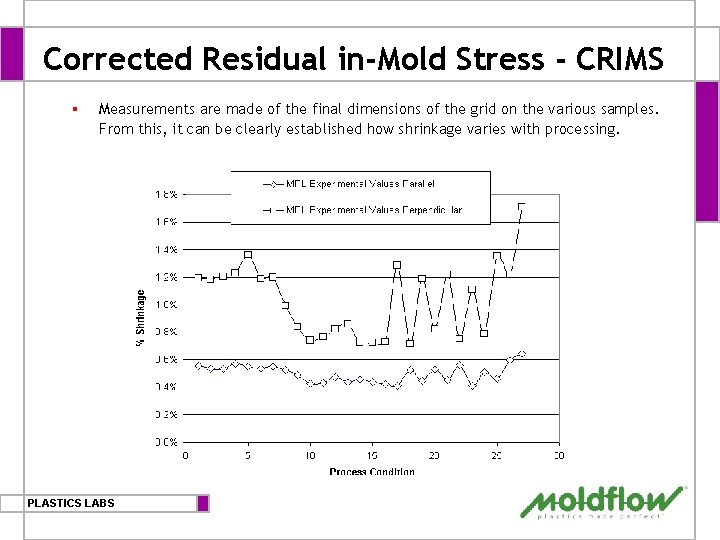
Corrected Residual in-Mold Stress - CRIMS § Measurements are made of the final dimensions of the grid on the various samples. From this, it can be clearly established how shrinkage varies with processing. PLASTICS LABS
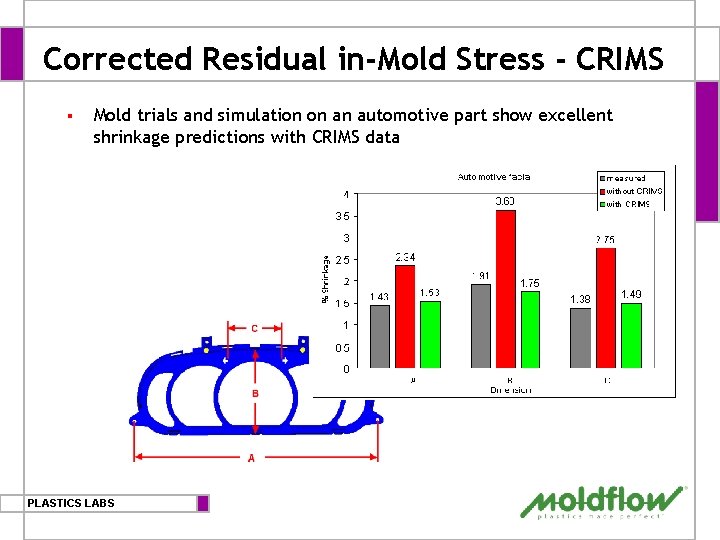
Corrected Residual in-Mold Stress - CRIMS § Mold trials and simulation on an automotive part show excellent shrinkage predictions with CRIMS data PLASTICS LABS
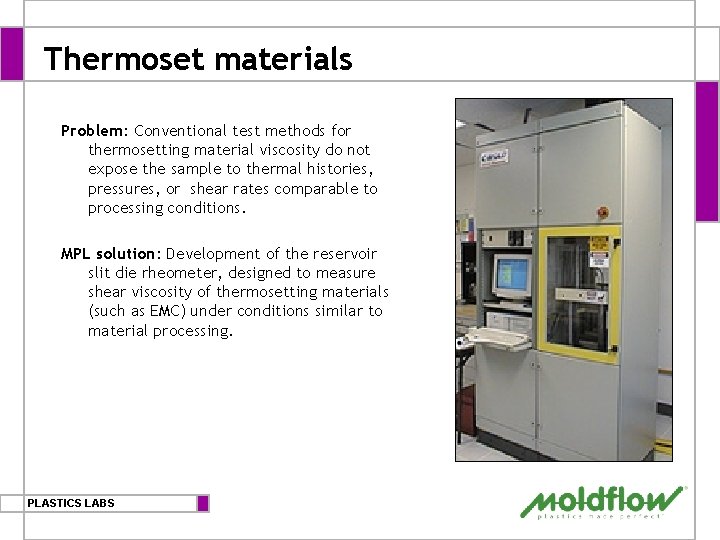
Thermoset materials Problem: Conventional test methods for thermosetting material viscosity do not expose the sample to thermal histories, pressures, or shear rates comparable to processing conditions. MPL solution: Development of the reservoir slit die rheometer, designed to measure shear viscosity of thermosetting materials (such as EMC) under conditions similar to material processing. PLASTICS LABS
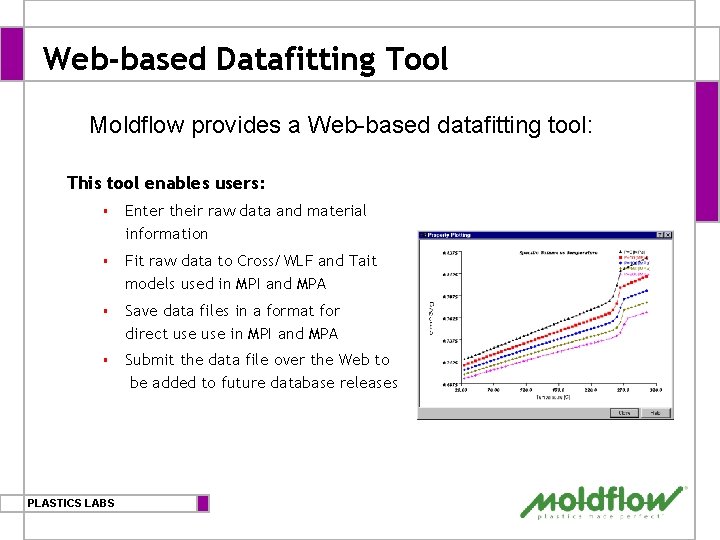
Web-based Datafitting Tool Moldflow provides a Web-based datafitting tool: This tool enables users: § Enter their raw data and material information § Fit raw data to Cross/WLF and Tait models used in MPI and MPA § Save data files in a format for direct use in MPI and MPA § Submit the data file over the Web to be added to future database releases PLASTICS LABS
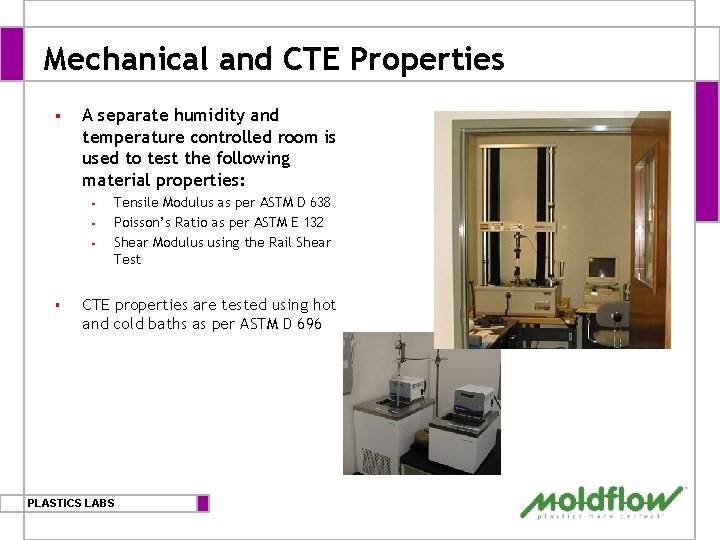
Mechanical and CTE Properties § A separate humidity and temperature controlled room is used to test the following material properties: § § Tensile Modulus as per ASTM D 638 Poisson’s Ratio as per ASTM E 132 Shear Modulus using the Rail Shear Test CTE properties are tested using hot and cold baths as per ASTM D 696 PLASTICS LABS
Accuracy Injection molding simulation requires: § accurate model of molded part, runner and cooling systems § accurate solver technologies § accurate models of material behavior § accurate material information PLASTICS LABS
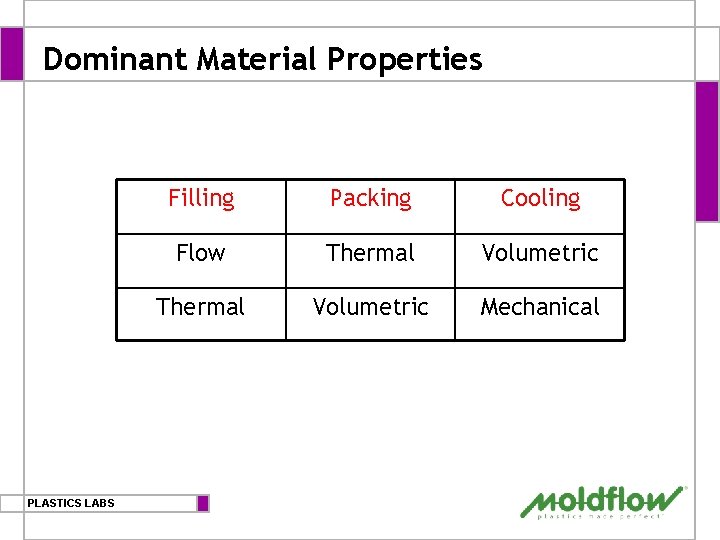
Dominant Material Properties PLASTICS LABS Filling Packing Cooling Flow Thermal Volumetric Mechanical
Moldflows Thermoplastic Database Updates: § § newly tested materials newly data-fitted materials Material manufacturers changes > 8000 materials to manage “Material Database Integrity is Essential” PLASTICS LABS
Database Material Quality Assurance Requirements: QA process for the full database QA process for new materials an automated process MPI integrity checks § MPI API § Quotable references § Fixed measures § § PLASTICS LABS
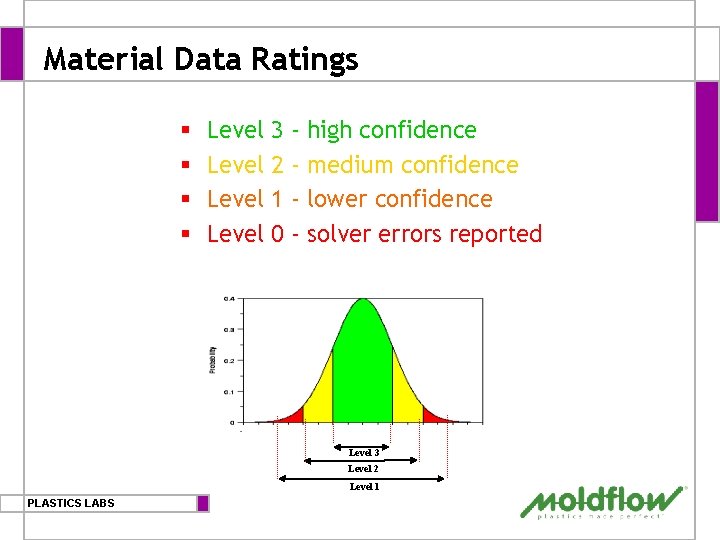
Material Data Ratings § § Level 3 2 1 0 - high confidence medium confidence lower confidence solver errors reported Level 3 Level 2 Level 1 PLASTICS LABS
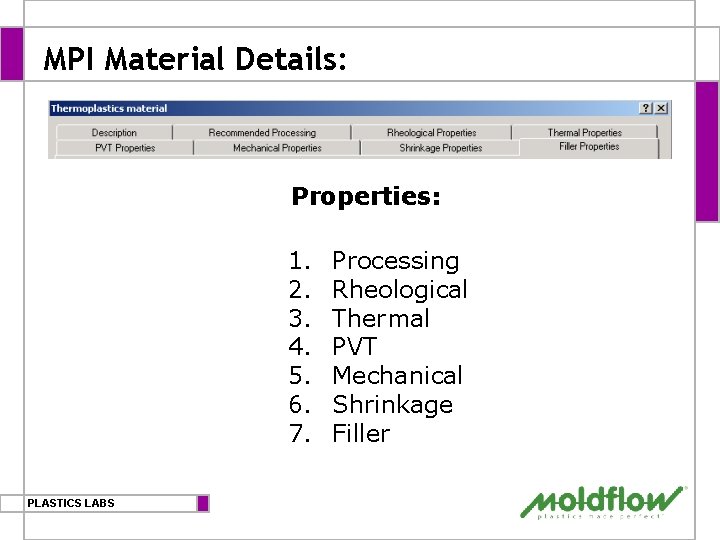
MPI Material Details: Properties: 1. 2. 3. 4. 5. 6. 7. PLASTICS LABS Processing Rheological Thermal PVT Mechanical Shrinkage Filler
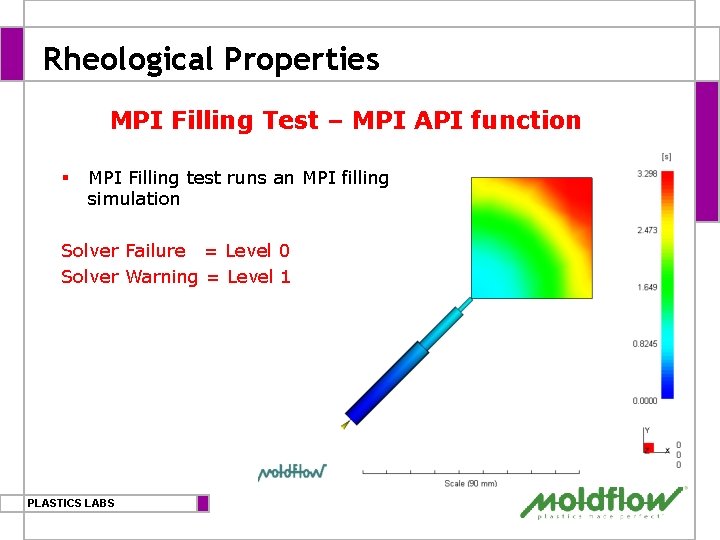
Rheological Properties MPI Filling Test – MPI API function § MPI Filling test runs an MPI filling simulation Solver Failure = Level 0 Solver Warning = Level 1 PLASTICS LABS
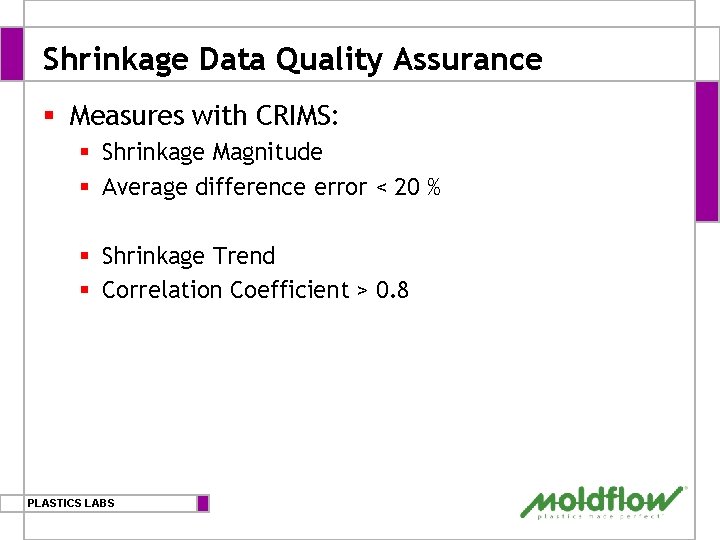
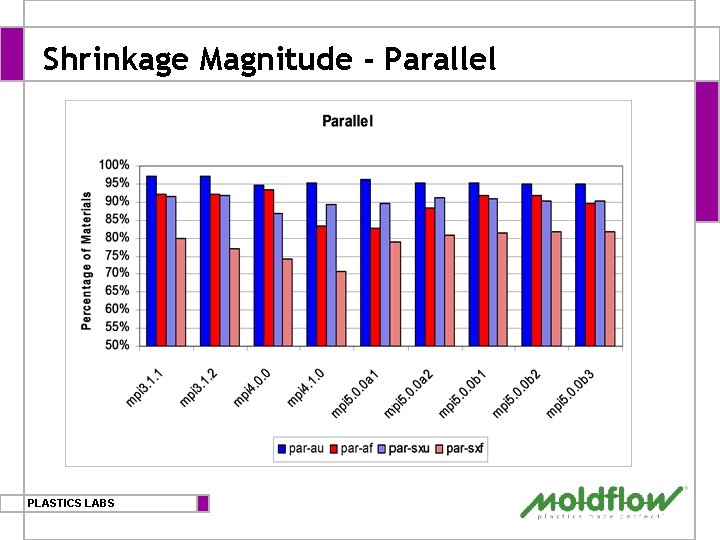
Shrinkage Data Quality Assurance § Measures with CRIMS: § Shrinkage Magnitude § Average difference error < 20 % § Shrinkage Trend § Correlation Coefficient > 0. 8 PLASTICS LABS
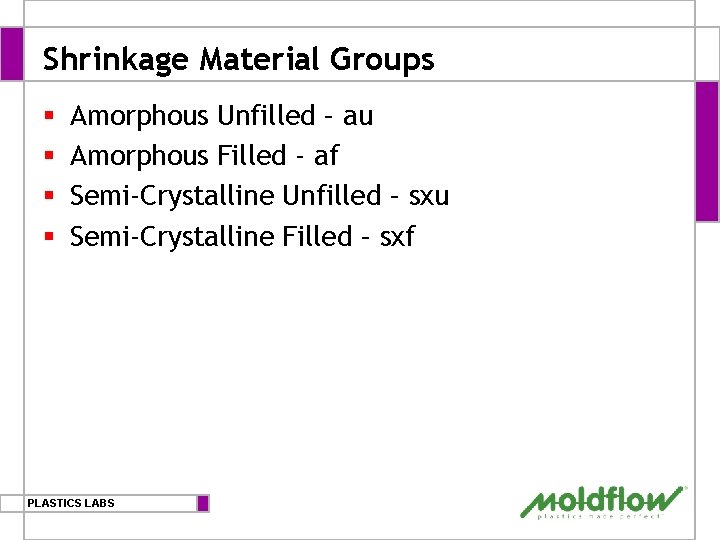
Shrinkage Material Groups § § Amorphous Unfilled – au Amorphous Filled - af Semi-Crystalline Unfilled – sxu Semi-Crystalline Filled – sxf PLASTICS LABS
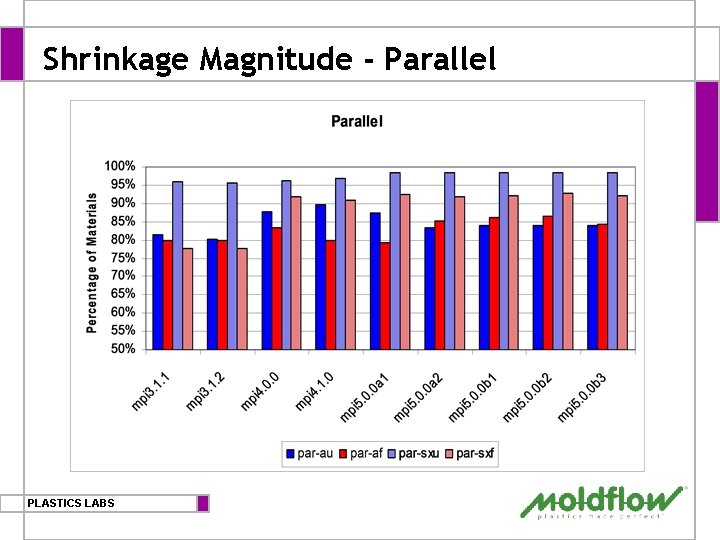
Shrinkage Magnitude - Parallel PLASTICS LABS
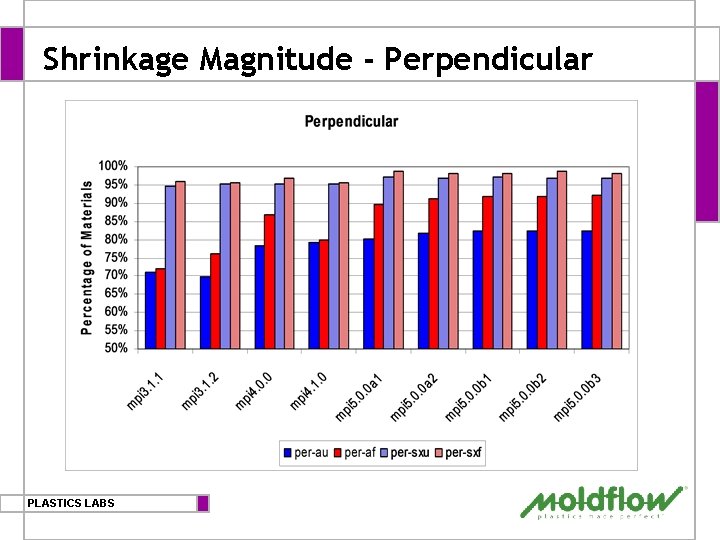
Shrinkage Magnitude - Perpendicular PLASTICS LABS
Shrinkage Magnitude - Parallel PLASTICS LABS
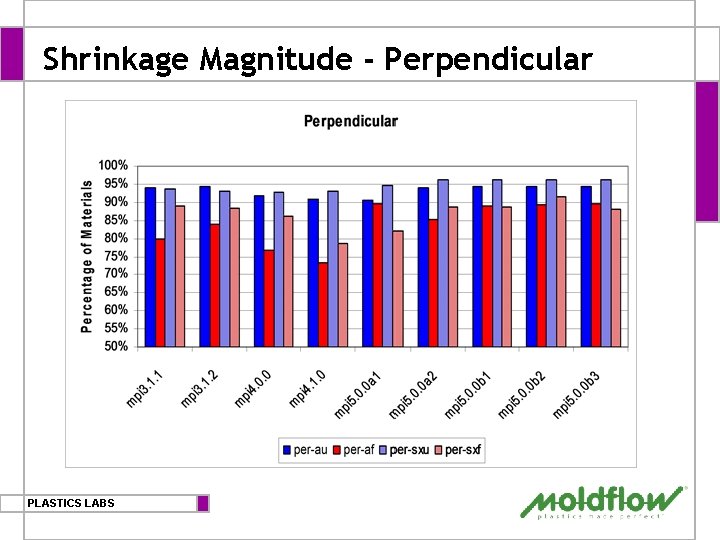
Shrinkage Magnitude - Perpendicular PLASTICS LABS
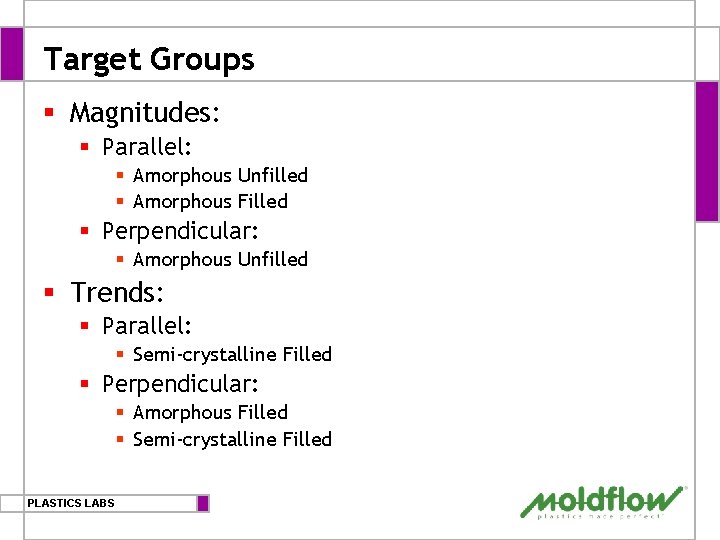
Target Groups § Magnitudes: § Parallel: § Amorphous Unfilled § Amorphous Filled § Perpendicular: § Amorphous Unfilled § Trends: § Parallel: § Semi-crystalline Filled § Perpendicular: § Amorphous Filled § Semi-crystalline Filled PLASTICS LABS
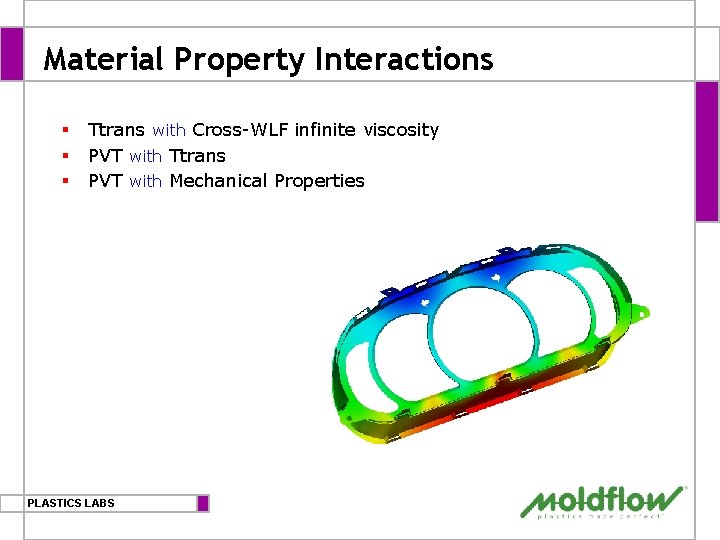
Material Property Interactions § § § Ttrans with Cross-WLF infinite viscosity PVT with Ttrans PVT with Mechanical Properties PLASTICS LABS
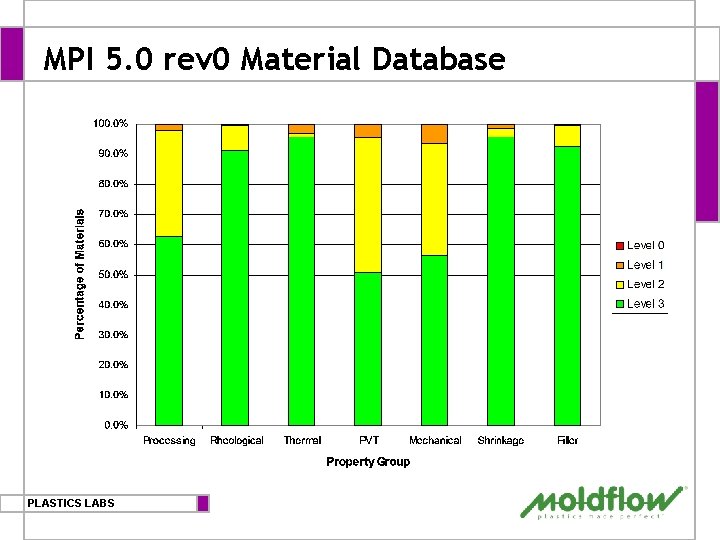
MPI 5. 0 rev 0 Material Database PLASTICS LABS
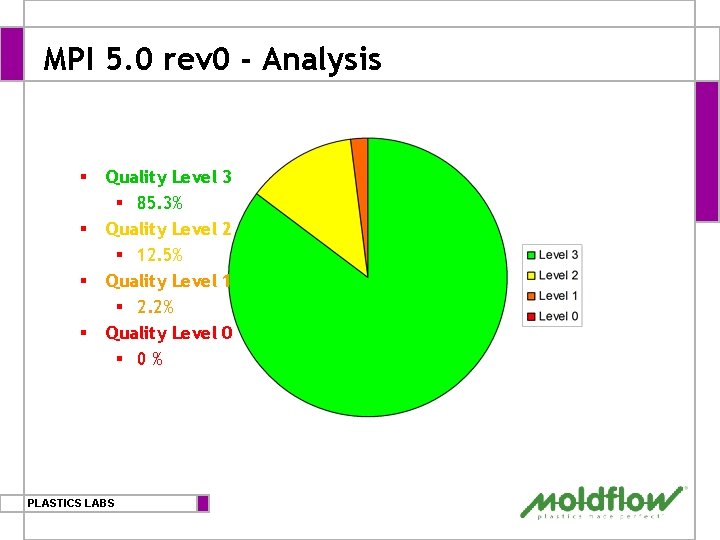
MPI 5. 0 rev 0 - Analysis § § Quality Level § 85. 3% Quality Level § 12. 5% Quality Level § 2. 2% Quality Level § 0% PLASTICS LABS 3 2 1 0
Continual Improvement § MPI 4. 0 > MPI 5. 0 § targeted all level 0 issues § targeted Rheological properties § targeted PVT properties PLASTICS LABS
Future § Target generic material data: § Processing Properties § PVT Properties § Mechanical Properties § Highest accuracy requires grade specific data: § Rheological Properties § PVT Properties § Mechanical Properties PLASTICS LABS
- Slides: 35