
Mold Texturing Trevor Thorwart Andrew Meier Josh Hoover


- Slides: 24
Mold Texturing Trevor Thorwart Andrew Meier Josh Hoover
Introduction • What is Mold Texturing? – Process of applying textures to a mold • What Mold Texturing Can Do – More flexibility in final part appearance – Provide a pleasing look to the final part • Easier to keep clean – More aesthetic feel
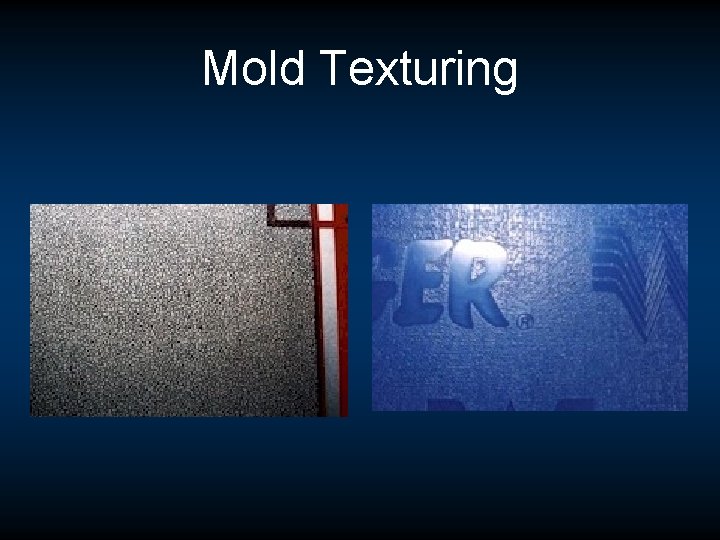
Mold Texturing
Types of Mold Texturing • Mechanical – Computer Numerical Control (CNC) – Abrasive Blasting • Electrical – Electrical Discharge Machining (EDM) • Chemical Engraving
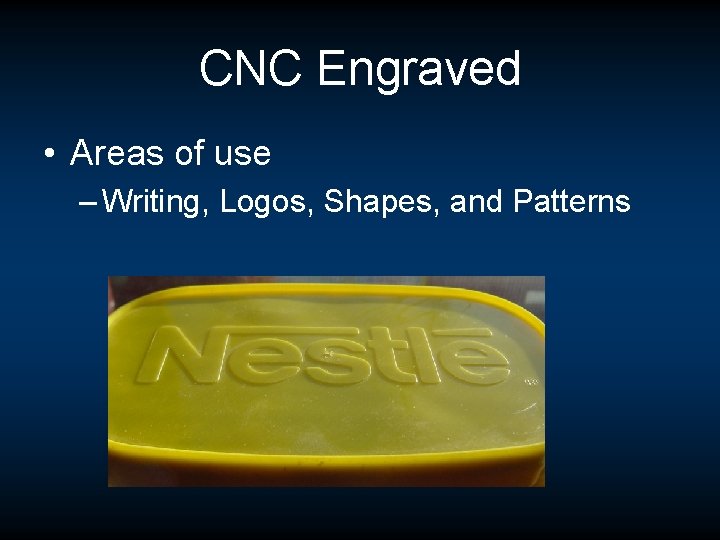
CNC Engraved • Areas of use – Writing, Logos, Shapes, and Patterns
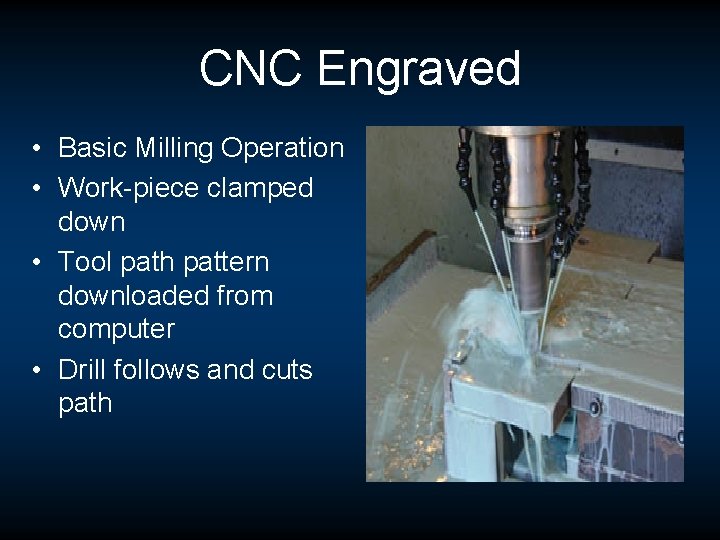
CNC Engraved • Basic Milling Operation • Work-piece clamped down • Tool path pattern downloaded from computer • Drill follows and cuts path
Abrasive Blasting Method • High velocity abrasive particles etch tool – Commonly sand • Creates a matte, decorative, and textured finish
Abrasive Blasting • Advantages – Cheap – Quick • Disadvantages – Only good for matte surface textures – Inconsistent surface finish
Abrasive Blasting
Electrical Discharge Machining (EDM) • Patterning process created using electrodes – Shaped tool or wire graphite • Plasma Etched in CNC pattern
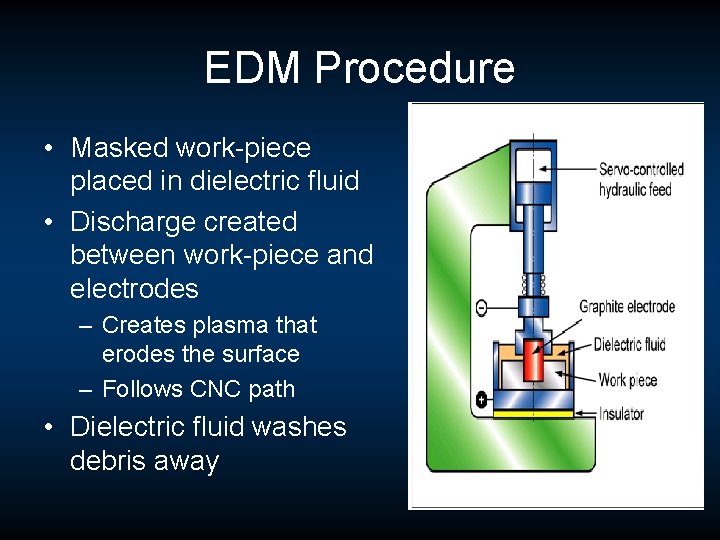
EDM Procedure • Masked work-piece placed in dielectric fluid • Discharge created between work-piece and electrodes – Creates plasma that erodes the surface – Follows CNC path • Dielectric fluid washes debris away
EDM • Advantages – Good with complex and simple surfaces – Dimensional Accuracy (+/-. 0005 in) – High Range of Materials • Soft and Hard Mold Steels – Can be fully automated
EDM • Disadvantages – Low production volume • Slow cutting – EDM scale • Must be post-polished – Blind holes • Difficult Debris Removal
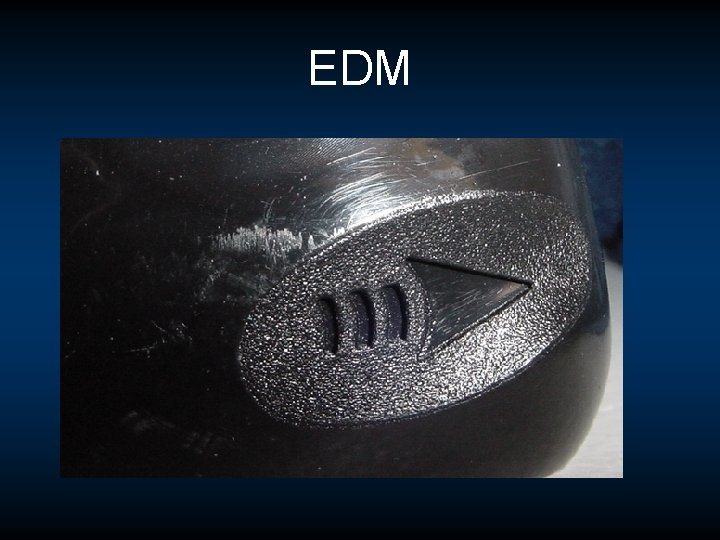
EDM
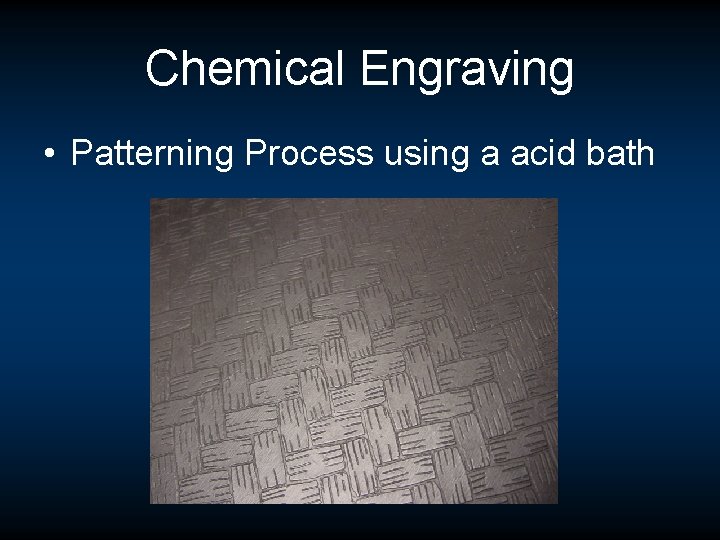
Chemical Engraving • Patterning Process using a acid bath
Chemical Engraving Procedure • Acid resistant stencil printed • Mold is masked with stencil – Leaving only area to be engraved • Mold is submerged in acid bath • Acid dissolves tooling
Chemical Engraving • Advantages – High Dimensional Accuracy – Burr Free Textured Surface – Low cost tooling – Retention of tooling properties – Easily Repeated – High Range of Materials
Chemical Engraving • Disadvantages – Mostly useful with flat surfaces – Secondary cleaning operation • Acid residue – Entire insert/mold needs masking
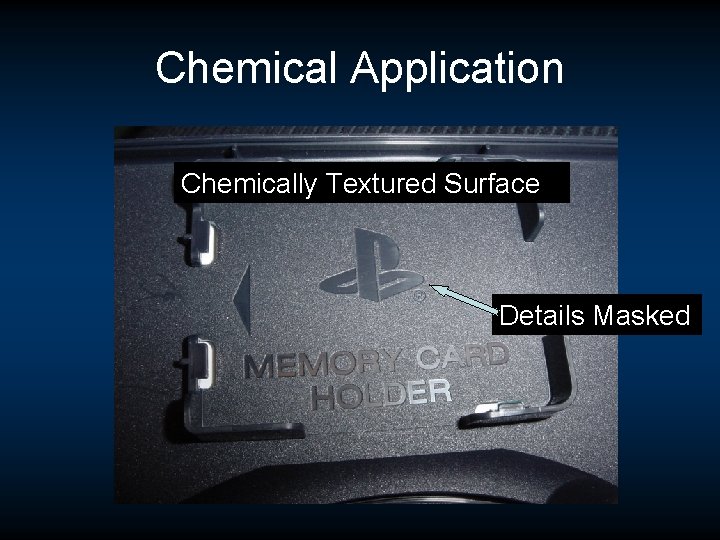
Chemical Application Chemically Textured Surface Details Masked
Mold Texturing Areas of Use • • Injection Molding Blow Molding Compression Molding / Thermoforming Rotational Molding
Guidelines • Draft Angles – 1 - 1½ ˚ draft for every. 001” • Clean Mold – Free of water connectors, sprue inserts • Helps seal • Direction of Pull
Texture Costs • • • Area to be textured Size of the tool Tool components Complexity of surfaces Accessibility of textured area Mold material
Mold Repair • Welding – Avoid aluminum • Patching • Polish out – Retexture
Conclusion