
Molar Review Maxillary Molars Three roots L MB

Molar Review
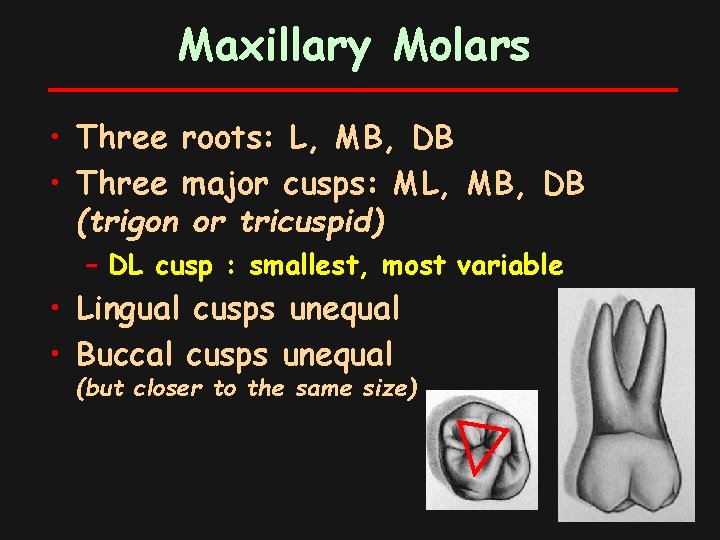
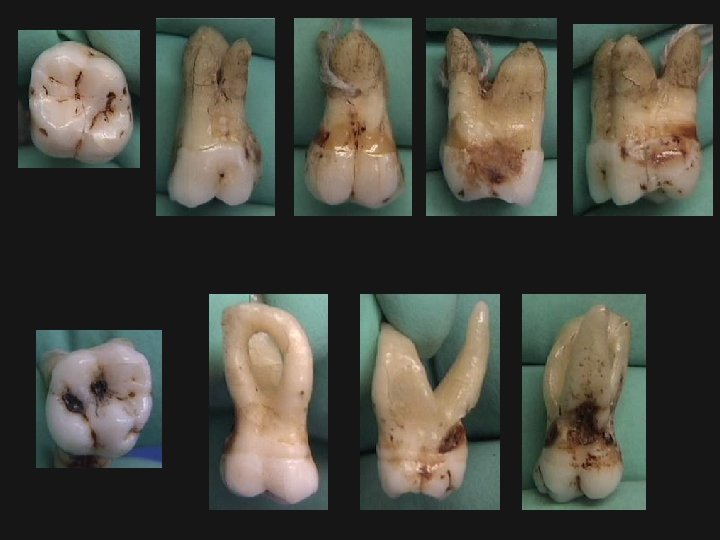
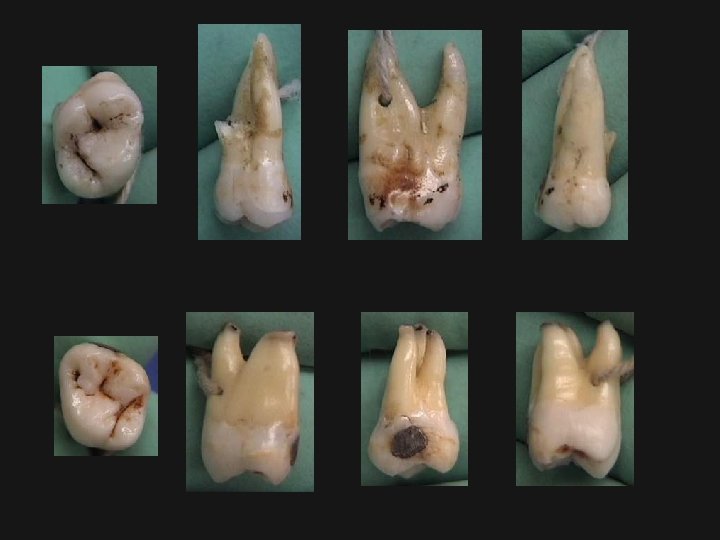
Maxillary Molars • Three roots: L, MB, DB • Three major cusps: ML, MB, DB (trigon or tricuspid) – DL cusp : smallest, most variable • Lingual cusps unequal • Buccal cusps unequal (but closer to the same size)

Maxillary molars… • Occlusal table centered over root • Lingual HOC at middle third • More of buccal surface visible from distal view
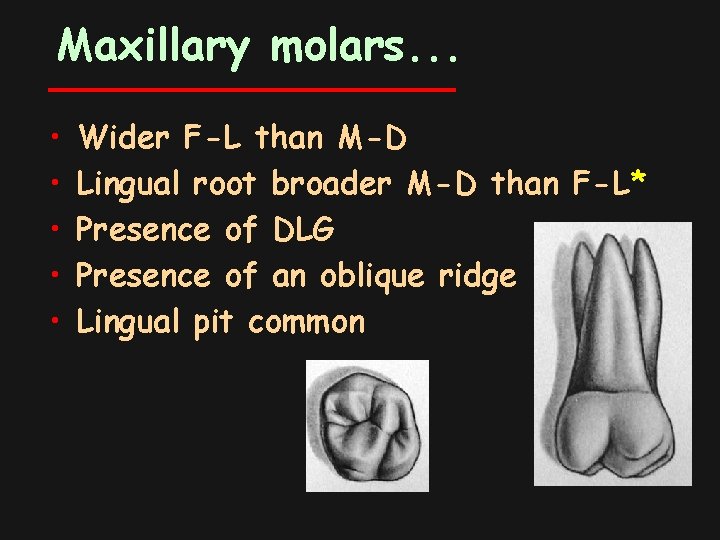
Maxillary molars. . . • • • Wider F-L than M-D Lingual root broader M-D than F-L* Presence of DLG Presence of an oblique ridge Lingual pit common

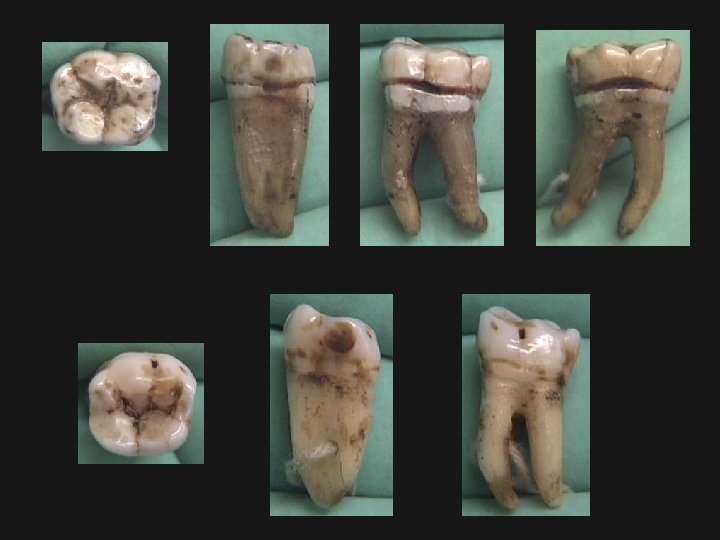
Mandibular Molars • Two roots: M and D (three pulp canals - MB, ML, D) • Four major cusps: MB, ML, DB • Buccal cusps more equal • Lingual cusps more equal
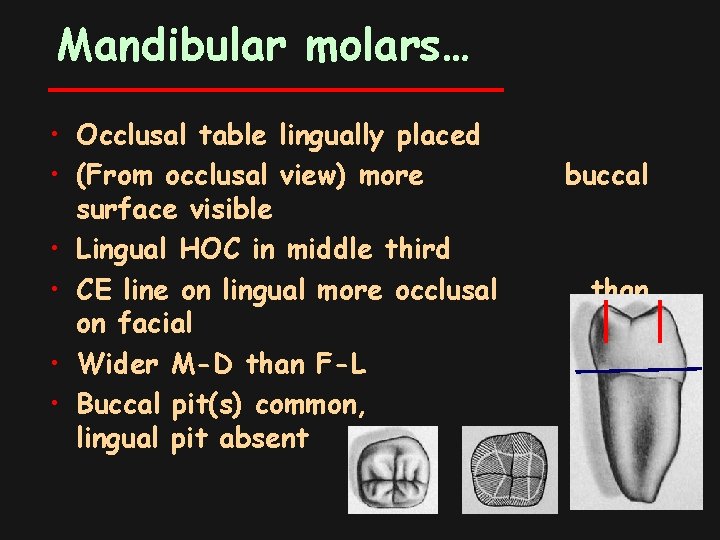
Mandibular molars… • Occlusal table lingually placed • (From occlusal view) more surface visible • Lingual HOC in middle third • CE line on lingual more occlusal on facial • Wider M-D than F-L • Buccal pit(s) common, lingual pit absent buccal than

How to differentiate between MAXILLARY first, second, and third molars…
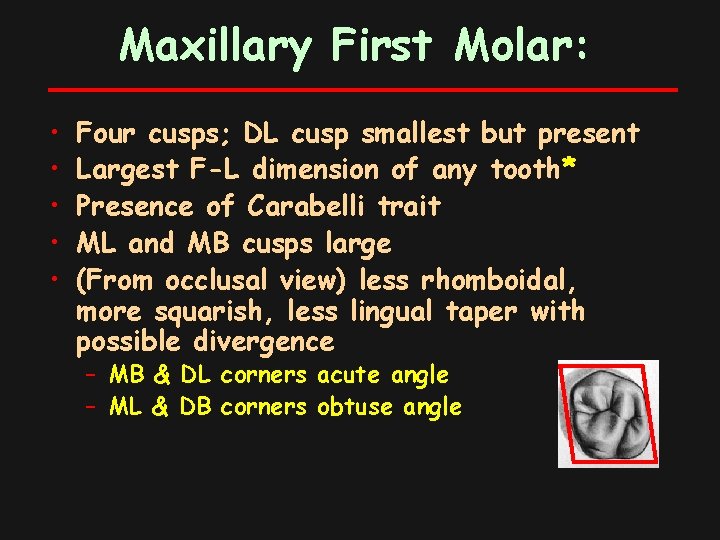
Maxillary First Molar: • • • Four cusps; DL cusp smallest but present Largest F-L dimension of any tooth* Presence of Carabelli trait ML and MB cusps large (From occlusal view) less rhomboidal, more squarish, less lingual taper with possible divergence – MB & DL corners acute angle – ML & DB corners obtuse angle

Maxillary first molar… • Buccal roots appear “plier-handled” • MB root apex in line with MB cusp • Lingual root in line with long axis of tooth and buccal groove • Lingual root depression

Maxillary Second Molar: • Usually four cusps; 3 cusps possible: – DL diminished - heart-shaped • No Cusp of Carabelli • (From occlusal view) more rhomboidal than 1 st: MB and DL angles acute, ML and DB obtuse

Maxillary second molar… • All roots more distally inclined than first, less flared • MB root apex in line with buccal groove
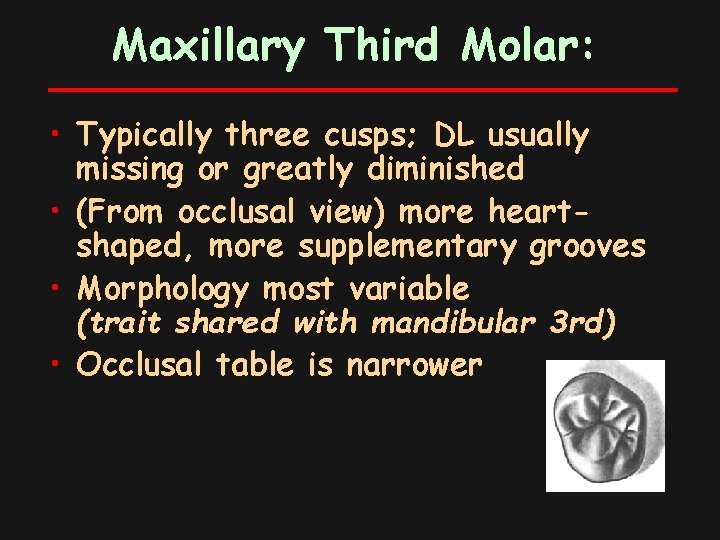
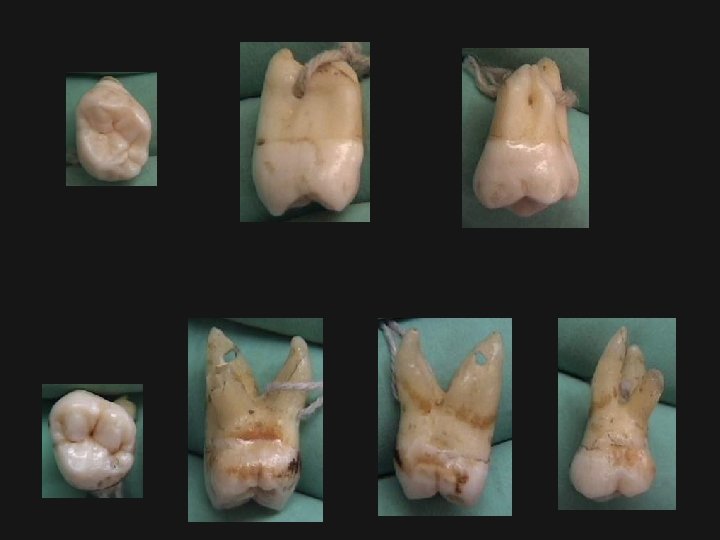
Maxillary Third Molar: • Typically three cusps; DL usually missing or greatly diminished • (From occlusal view) more heartshaped, more supplementary grooves • Morphology most variable (trait shared with mandibular 3 rd) • Occlusal table is narrower

Maxillary third molar. . . • Shortest O-C dimension of any tooth* • Crown: root ratio nearly 1: 1 • Roots typically fused, very distally inclined

How to differentiate between MANDIBULAR first, second, and third molars…

Mandibular First Molar: • • Largest M-D dimension of any tooth* Five cusps; D smallest Five developmental pits (M, Cen, D, MB, DB) Four developmental grooves – 2 buccal (MB & DB), 1 central, 1 lingual • No transverse ridges (? )
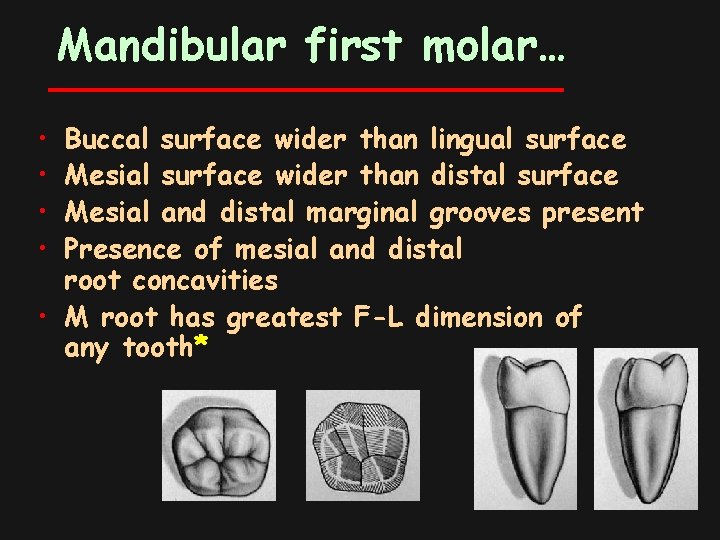
Mandibular first molar… • • Buccal surface wider than lingual surface Mesial surface wider than distal surface Mesial and distal marginal grooves present Presence of mesial and distal root concavities • M root has greatest F-L dimension of any tooth*
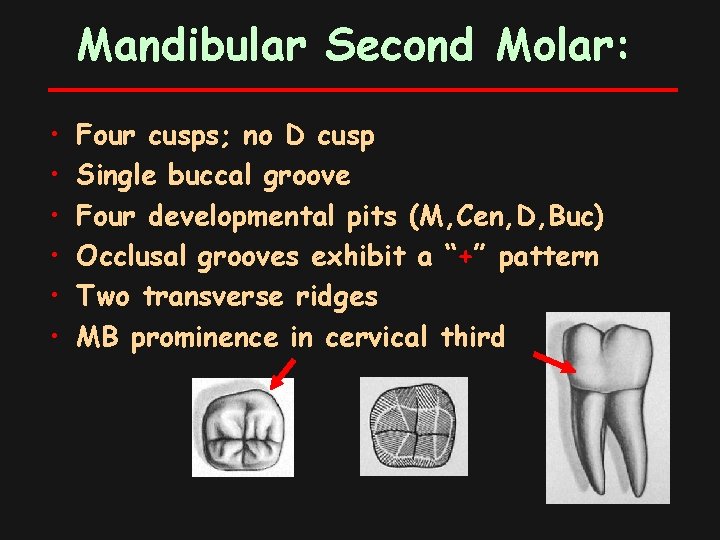
Mandibular Second Molar: • • • Four cusps; no D cusp Single buccal groove Four developmental pits (M, Cen, D, Buc) Occlusal grooves exhibit a “+” pattern Two transverse ridges MB prominence in cervical third

Mandibular second molar… • • • Buccal and lingual dimensions more equal Mesial and distal dimensions more equal No pronounced marginal grooves No root concavities Roots more distally inclined
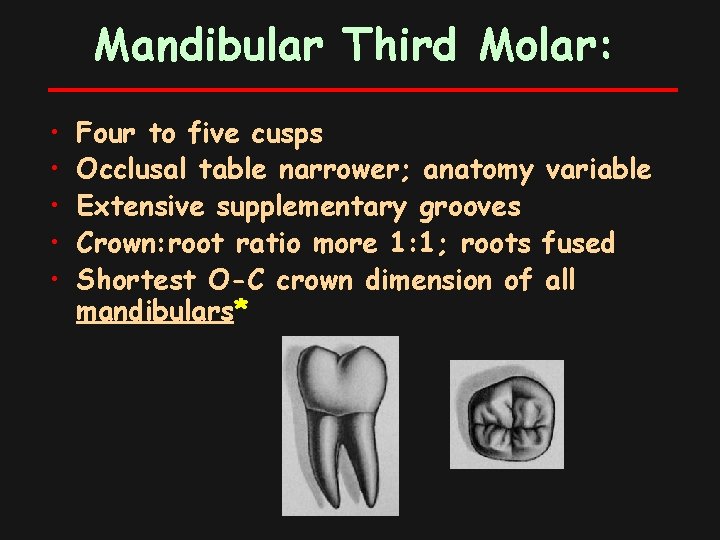
Mandibular Third Molar: • • • Four to five cusps Occlusal table narrower; anatomy variable Extensive supplementary grooves Crown: root ratio more 1: 1; roots fused Shortest O-C crown dimension of all mandibulars*

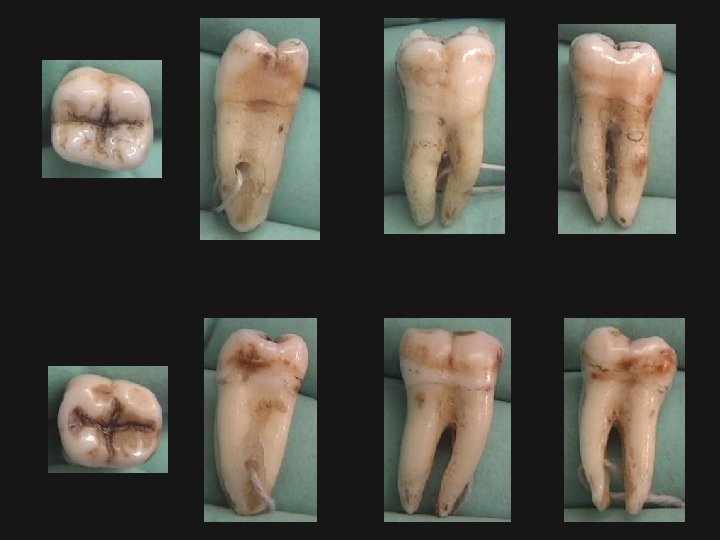
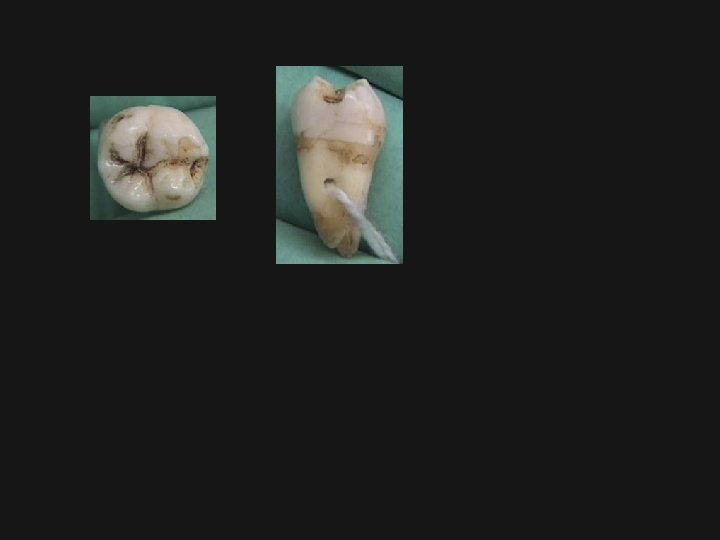
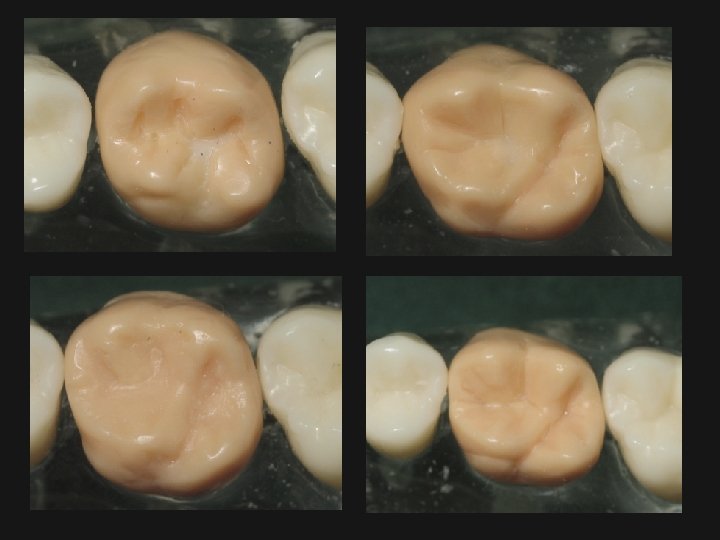
Let’s look at some examples. . .

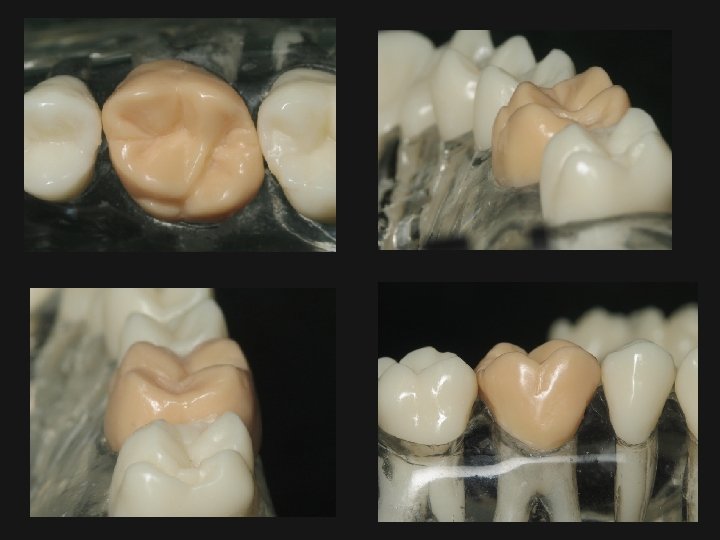
Final Wax Exam
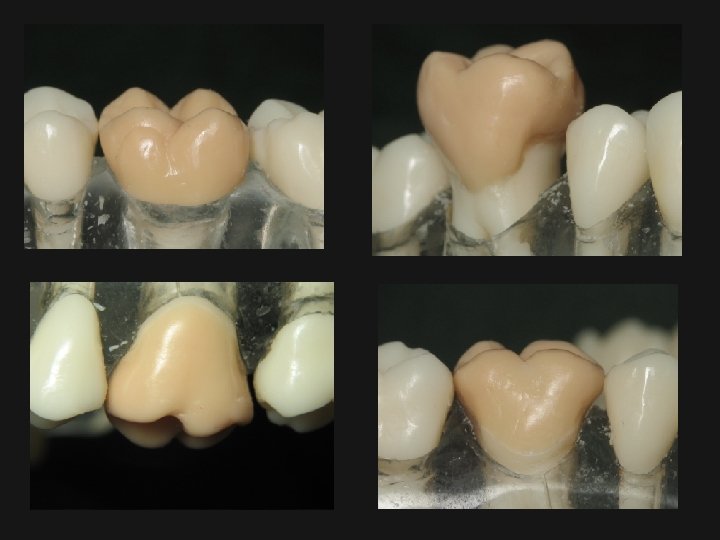

Lights!
- Slides: 31