
Moisture in the Atmosphere Moisture in the Atmosphere
- Slides: 57
Moisture in the Atmosphere
Moisture in the Atmosphere The primary source of moisture for the Evaporation of oceans atmosphere is the ______. Other sources include: Lakes, rivers, soil, plants __________________ - Moisture in the atmosphere exists in all three Solid, liquid and gas states/phases. (____________) Terms to Know: Humidity _______ is the general term used to describe the ______________ Amount of water vapor in the air Page 15
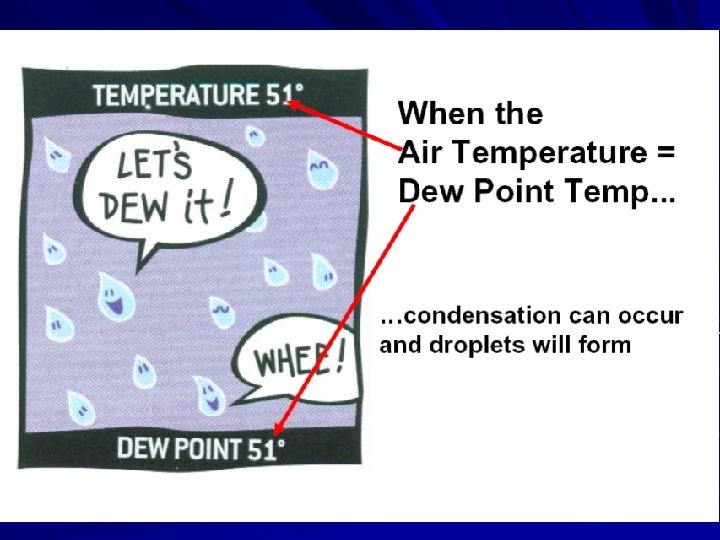
Page 15 The temperature which air must be cooled to for condensation to occur Ø Dew point Temperature: Ø Relative Humidity: The ratio between the actual amount of water vapor in the air to the maximum amount of water the air can hold l l l percent (%) Expressed as a ______ If air is holding half of its capacity- unsaturated _____ saturated Air cooled below the dewpoint- ________
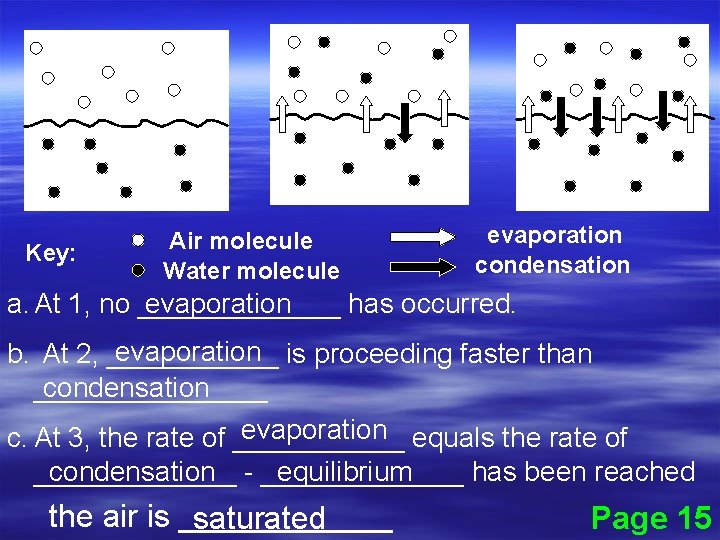
Page 15 Saturation- When air holds as much water as it can at a certain temperature Saturation occurs when: evaporation= condensation
Key: Air molecule Water molecule evaporation condensation a. At 1, no _______ evaporation has occurred. evaporation is proceeding faster than b. At 2, ______ condensation ________ evaporation equals the rate of c. At 3, the rate of ______ condensation - _______ equilibrium _______ has been reached the air is ______ saturated Page 15
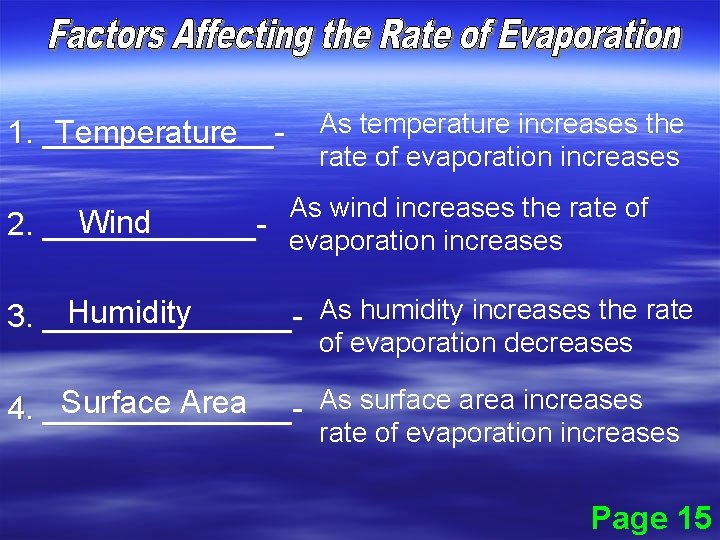
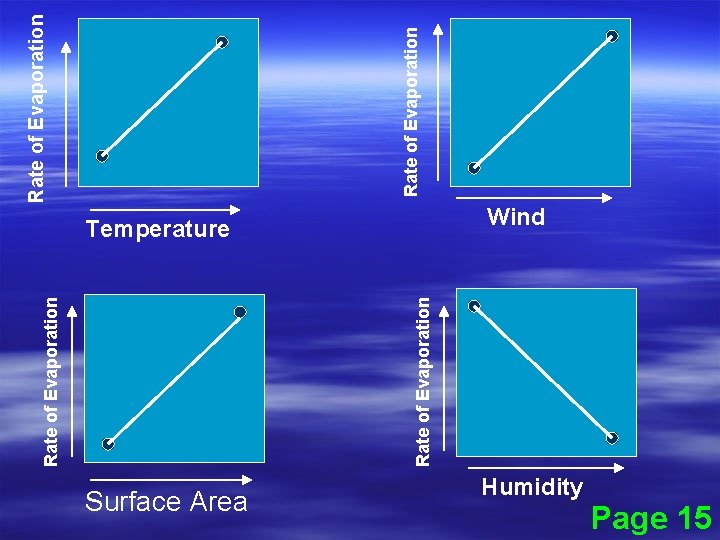
Temperature 1. _______- As temperature increases the rate of evaporation increases As wind increases the rate of Wind 2. ______evaporation increases As humidity increases the rate Humidity 3. _______of evaporation decreases As surface area increases Surface Area 4. _______- rate of evaporation increases Page 15
Rate of Evaporation Temperature Surface Area Wind Humidity Page 15 Rate of Evaporation
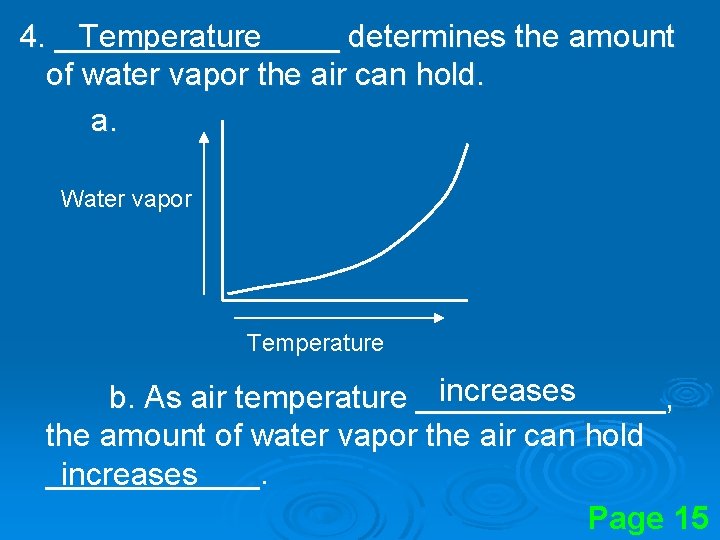
Temperature 4. ________ determines the amount of water vapor the air can hold. a. Water vapor Temperature increases b. As air temperature _______, the amount of water vapor the air can hold ______. increases Page 15
Purple Haze Cloud Demonstration 1. 2. 3. 4. What are the ingredients for a clouds? Add the ingredients Show the class What do you need to form a cloud? Wear tye dye & glasses Page 16
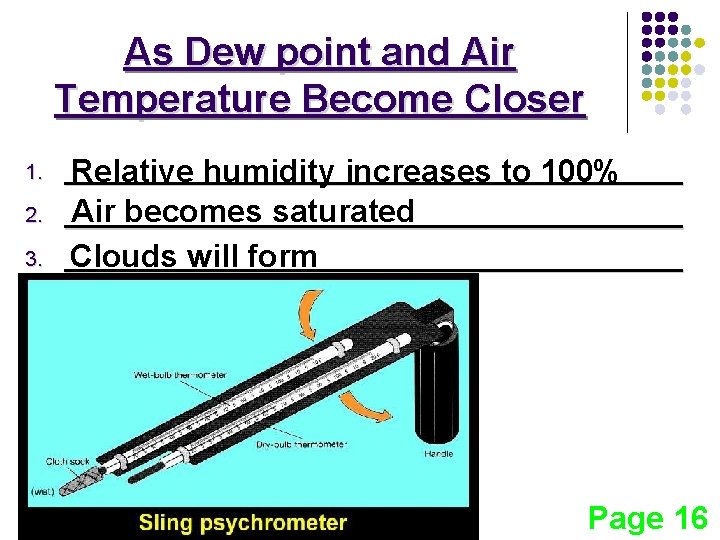
As Dew point and Air Temperature Become Closer 1. 2. 3. ___________________ Relative humidity increases to 100% Air becomes saturated _____________________________________ Clouds will form Page 16
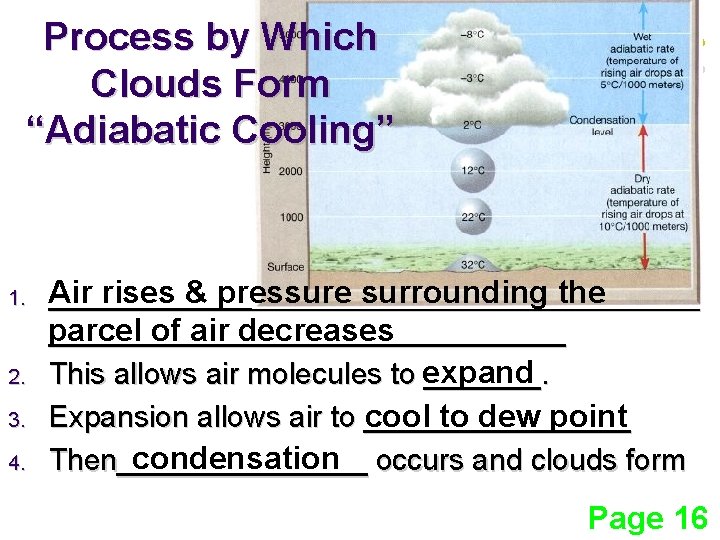
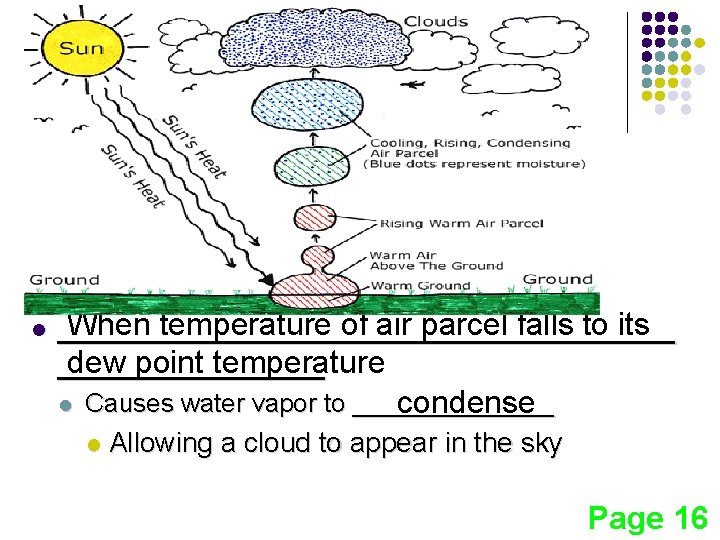
Process by Which Clouds Form “Adiabatic Cooling” 1. 2. 3. 4. Air rises & pressure surrounding the ____________________ parcel of air decreases This allows air molecules to expand _______. cool to dew point Expansion allows air to ________ condensation occurs and clouds form Then________ Page 16
l When temperature of air parcel falls to its ___________________ dew point temperature ________ l Causes water vapor to _______ condense l Allowing a cloud to appear in the sky Page 16
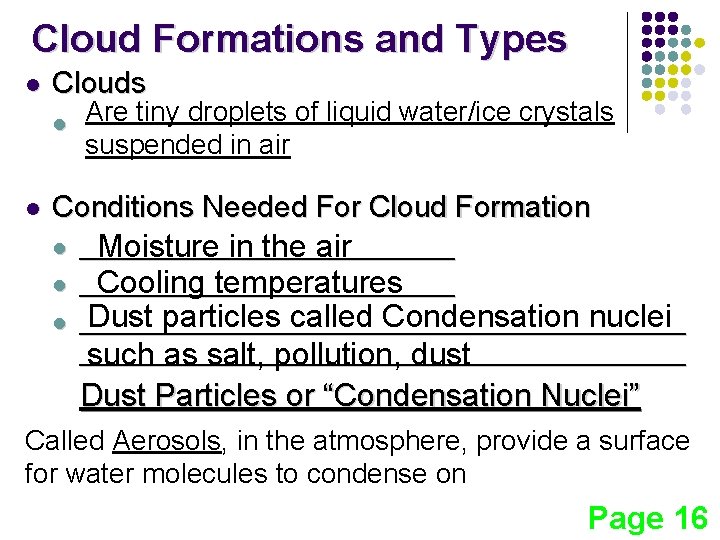
Cloud Formations and Types l Clouds l l Are tiny droplets of liquid water/ice crystals suspended in air Conditions Needed For Cloud Formation l l l _____________ Moisture in the air _____________ Cooling temperatures Dust particles called Condensation nuclei __________________________________________ such as salt, pollution, dust Dust Particles or “Condensation Nuclei” Called Aerosols, in the atmosphere, provide a surface for water molecules to condense on Page 16
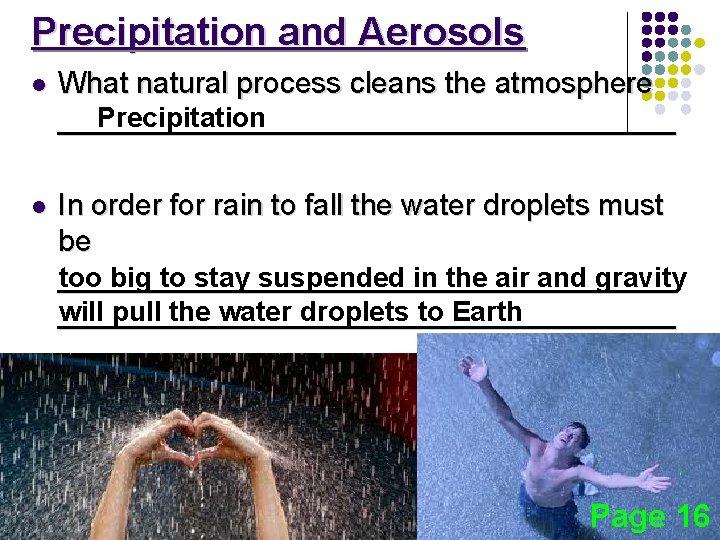
Precipitation and Aerosols l What natural process cleans the atmosphere Precipitation ___________________ l In order for rain to fall the water droplets must be ___________________ too big to stay suspended in the air and gravity will pull the water droplets to Earth ___________________ Page 16
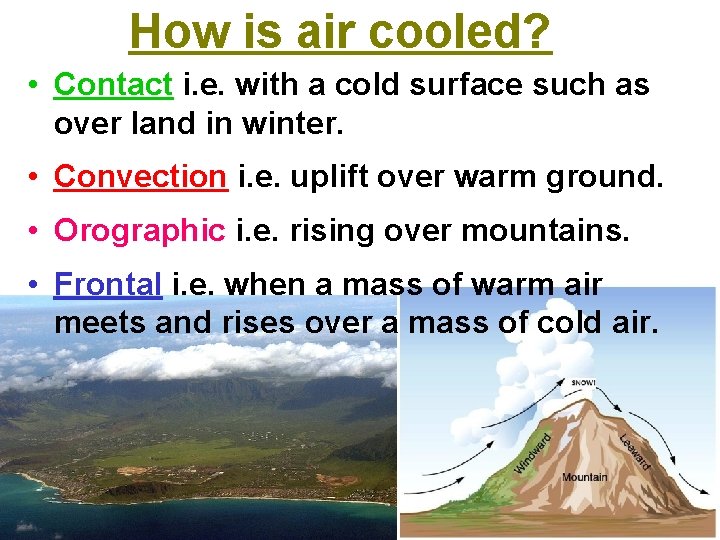
How is air cooled? • Contact i. e. with a cold surface such as over land in winter. • Convection i. e. uplift over warm ground. • Orographic i. e. rising over mountains. • Frontal i. e. when a mass of warm air meets and rises over a mass of cold air.
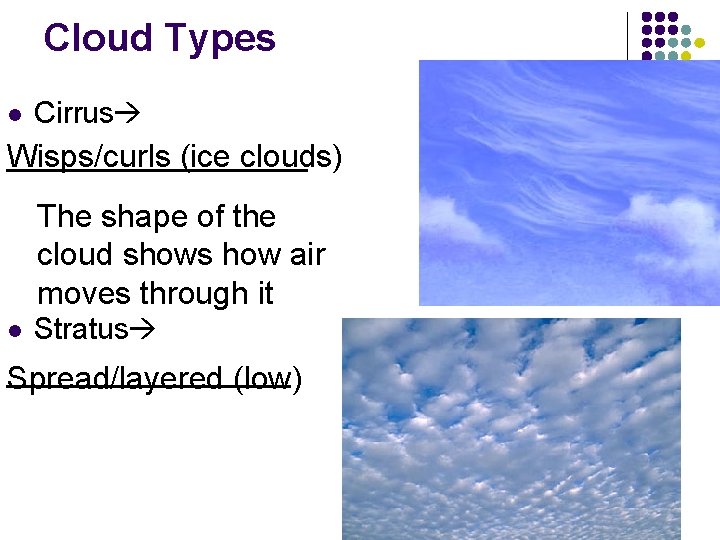
Cloud Types Cirrus _________ Wisps/curls (ice clouds) l The shape of the cloud shows how air moves through it Stratus _________ Spread/layered (low) l
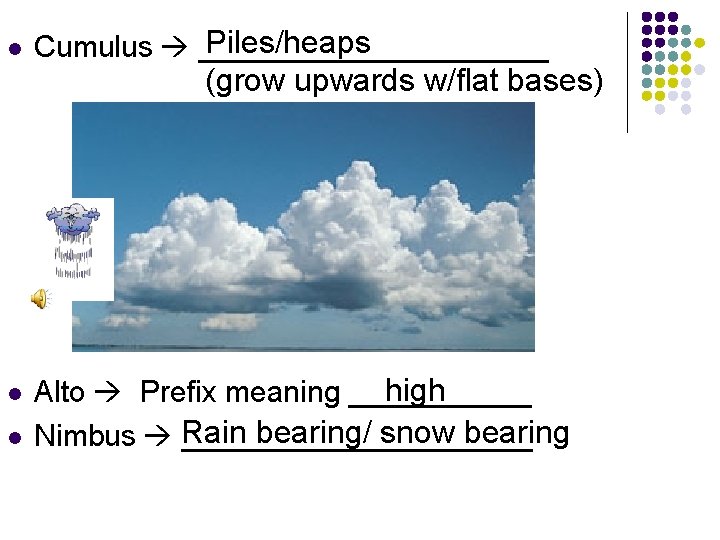
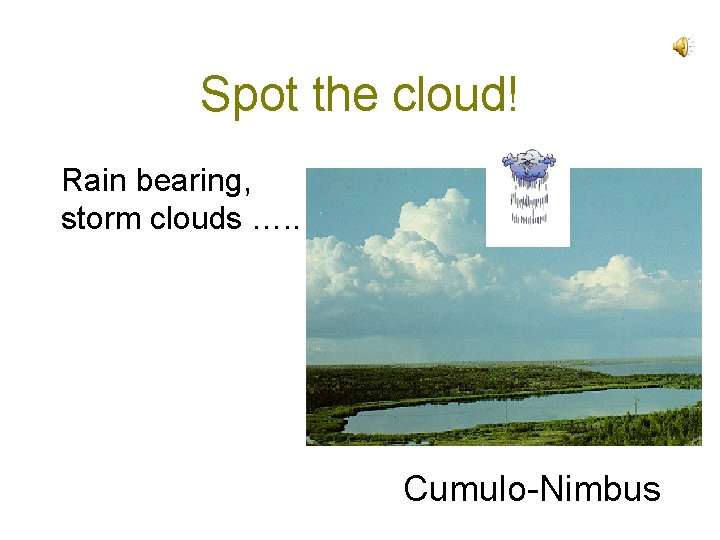
l Piles/heaps Cumulus ___________ (grow upwards w/flat bases) l l high Alto Prefix meaning ______ bearing/ snow bearing Nimbus Rain ___________
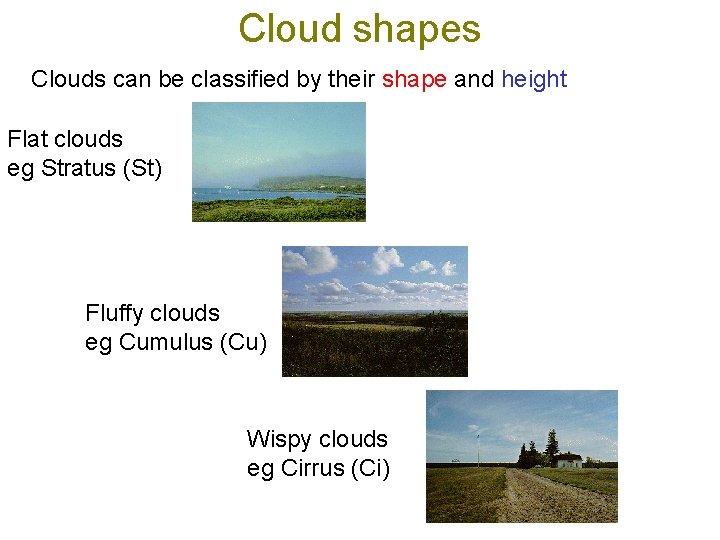
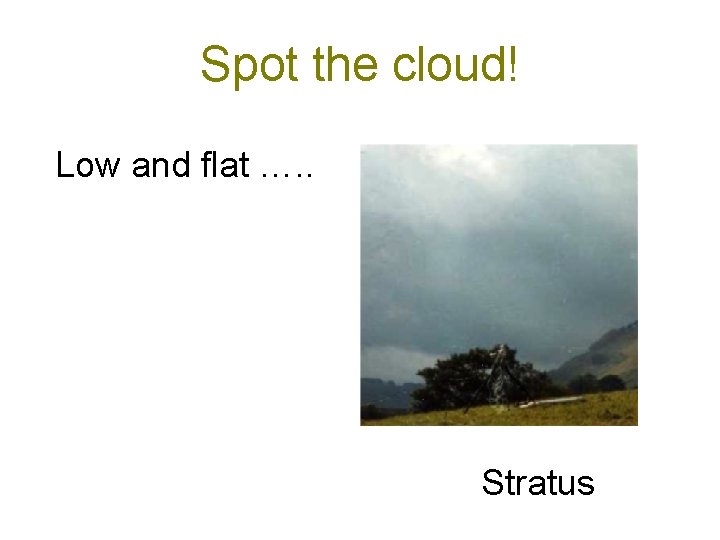
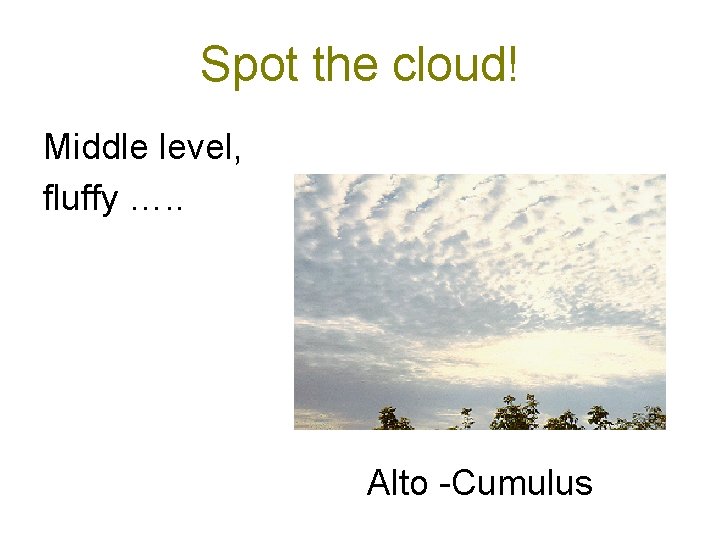
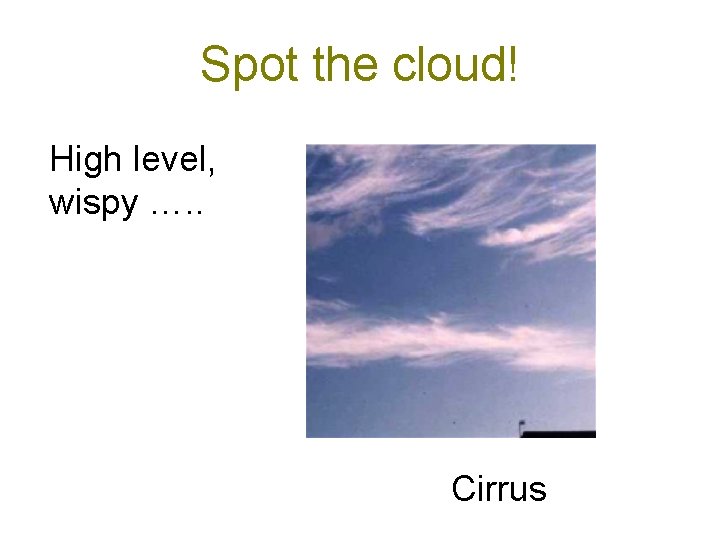
Cloud shapes Clouds can be classified by their shape and height Flat clouds eg Stratus (St) Fluffy clouds eg Cumulus (Cu) Wispy clouds eg Cirrus (Ci)
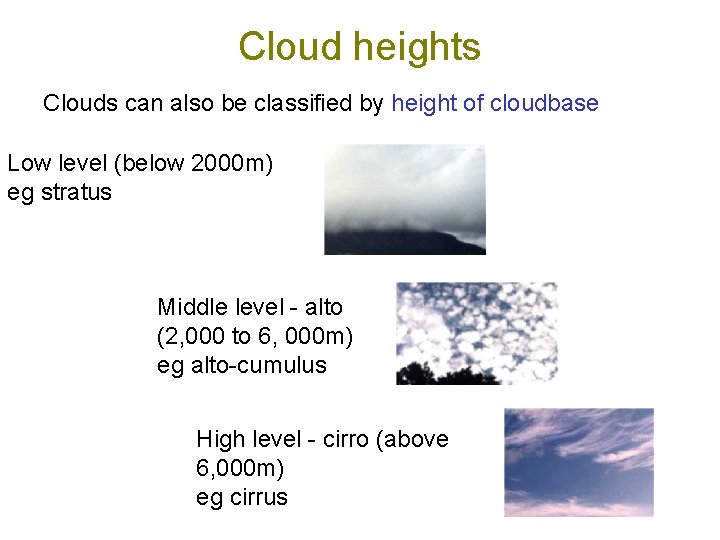
Cloud heights Clouds can also be classified by height of cloudbase Low level (below 2000 m) eg stratus Middle level - alto (2, 000 to 6, 000 m) eg alto-cumulus High level - cirro (above 6, 000 m) eg cirrus
Spot the cloud! Low and flat …. . Stratus
Spot the cloud! Middle level, fluffy …. . Alto -Cumulus
Spot the cloud! High level, wispy …. . Cirrus
Spot the cloud! Rain bearing, storm clouds …. . Cumulo-Nimbus
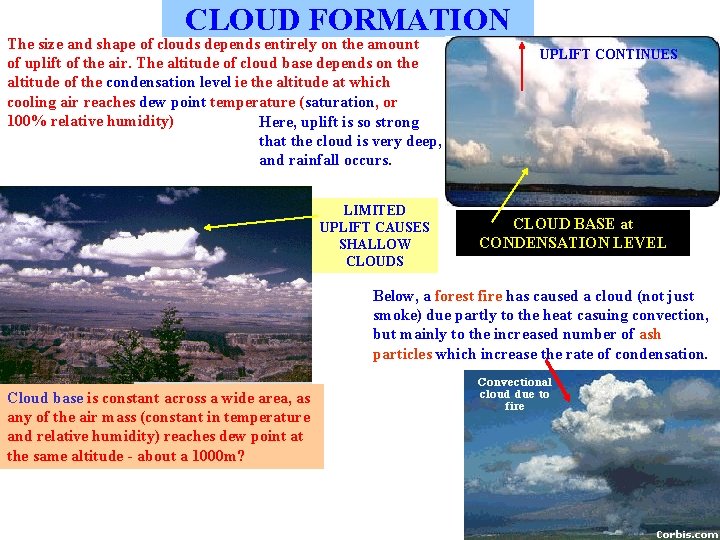
CLOUD FORMATION The size and shape of clouds depends entirely on the amount of uplift of the air. The altitude of cloud base depends on the altitude of the condensation level ie the altitude at which cooling air reaches dew point temperature (saturation, or 100% relative humidity) Here, uplift is so strong that the cloud is very deep, and rainfall occurs. LIMITED UPLIFT CAUSES SHALLOW CLOUDS UPLIFT CONTINUES CLOUD BASE at CONDENSATION LEVEL Below, a forest fire has caused a cloud (not just smoke) due partly to the heat casuing convection, but mainly to the increased number of ash particles which increase the rate of condensation. Cloud base is constant across a wide area, as any of the air mass (constant in temperature and relative humidity) reaches dew point at the same altitude - about a 1000 m?
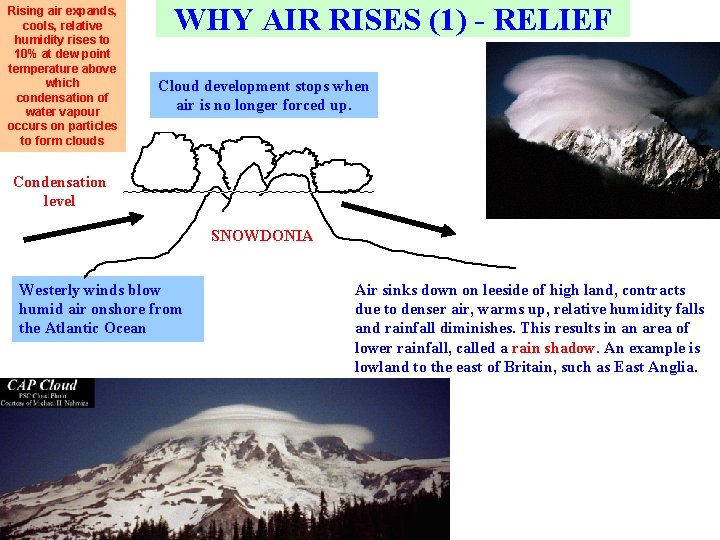
Rising air expands, cools, relative humidity rises to 10% at dew point temperature above which condensation of water vapour occurs on particles to form clouds WHY AIR RISES (1) - RELIEF Cloud development stops when air is no longer forced up. Condensation level SNOWDONIA Westerly winds blow humid air onshore from the Atlantic Ocean Air sinks down on leeside of high land, contracts due to denser air, warms up, relative humidity falls and rainfall diminishes. This results in an area of lower rainfall, called a rain shadow. An example is lowland to the east of Britain, such as East Anglia.
Page 17
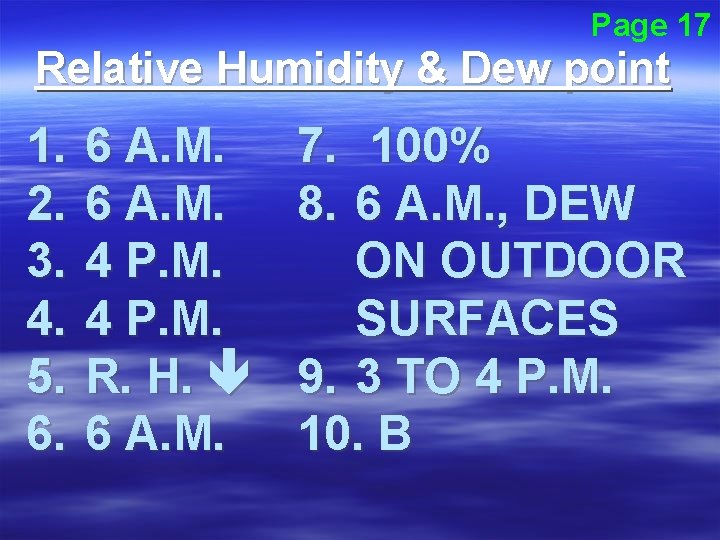
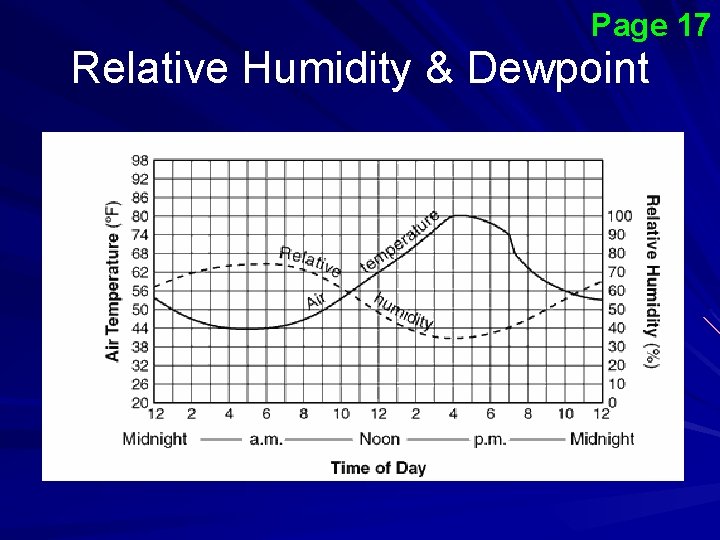
Page 17 Relative Humidity & Dew point 1. 2. 3. 4. 5. 6. 6 A. M. 4 P. M. R. H. 6 A. M. 7. 8. 100% 6 A. M. , DEW ON OUTDOOR SURFACES 9. 3 TO 4 P. M. 10. B
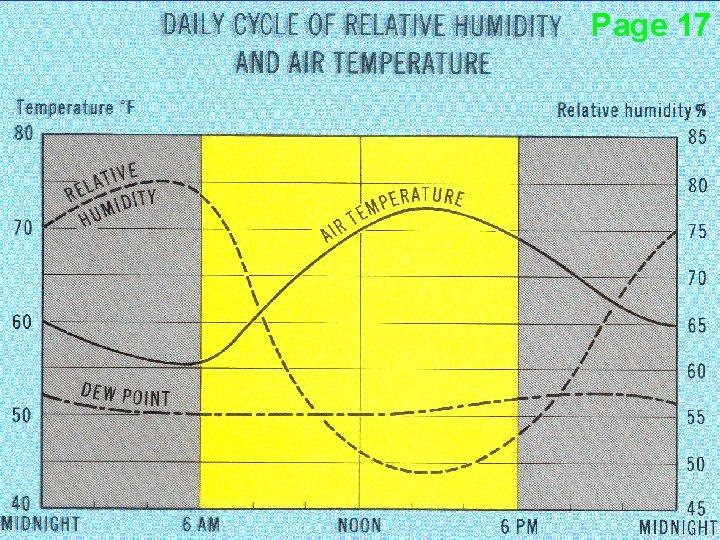
Page 17 Relative Humidity & Dewpoint
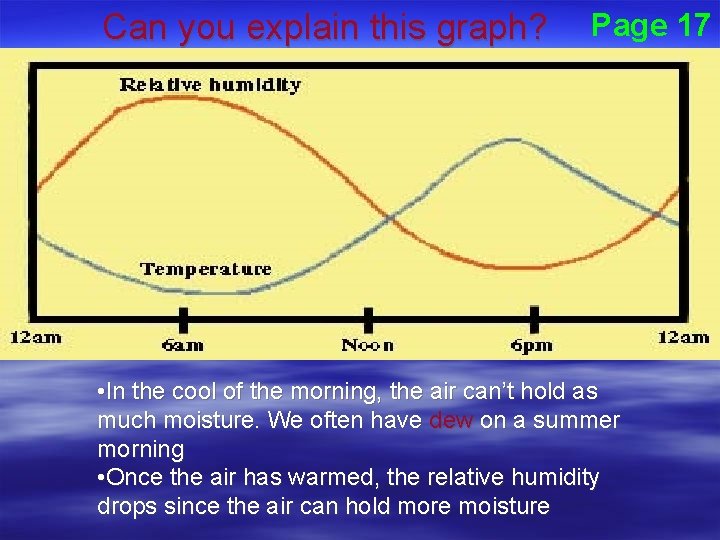
Can you explain this graph? Page 17 • In the cool of the morning, the air can’t hold as much moisture. We often have dew on a summer morning • Once the air has warmed, the relative humidity drops since the air can hold more moisture
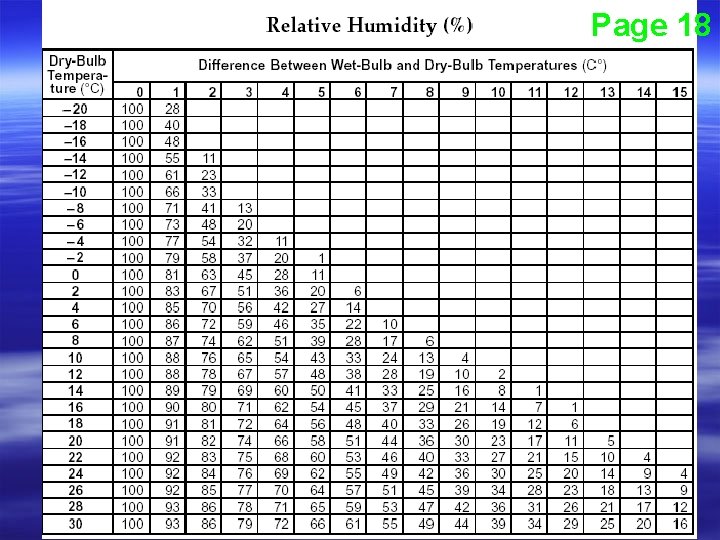
Page 18 DPT & Relative Humidity Charts Handy Dandy Earth Science Reference Tables Page 12
Page 18
Page 18
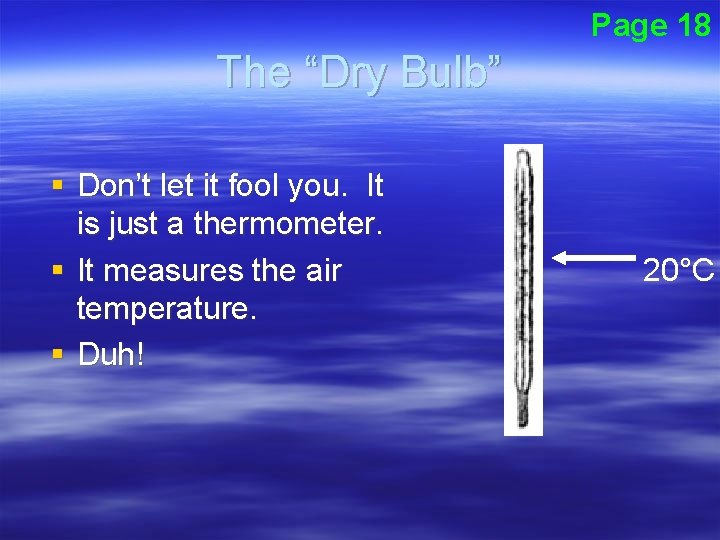
Page 18 The “Dry Bulb” § Don’t let it fool you. It is just a thermometer. § It measures the air temperature. § Duh! 20°C
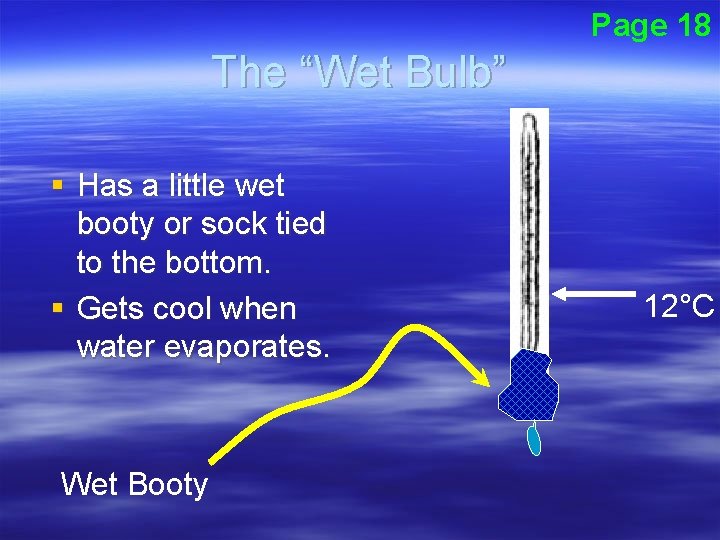
Page 18 The “Wet Bulb” § Has a little wet booty or sock tied to the bottom. § Gets cool when water evaporates. Wet Booty 12°C
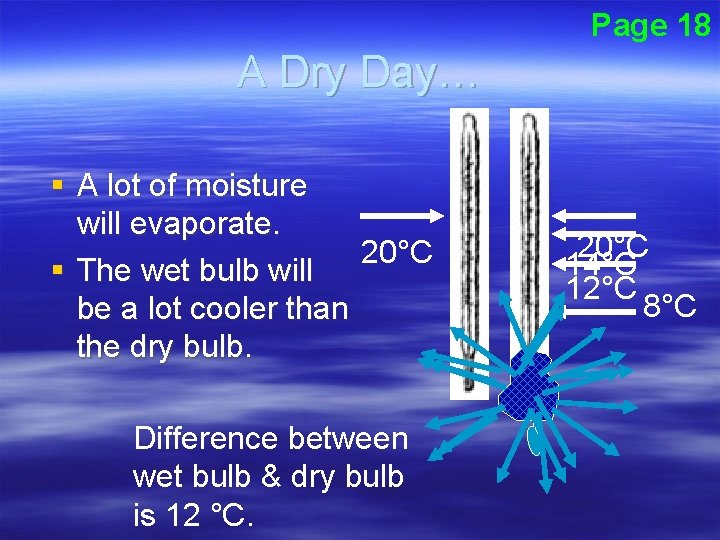
Page 18 A Dry Day… § A lot of moisture will evaporate. 20°C § The wet bulb will be a lot cooler than the dry bulb. Difference between wet bulb & dry bulb is 12 °C. 20°C 14°C 12°C 8°C
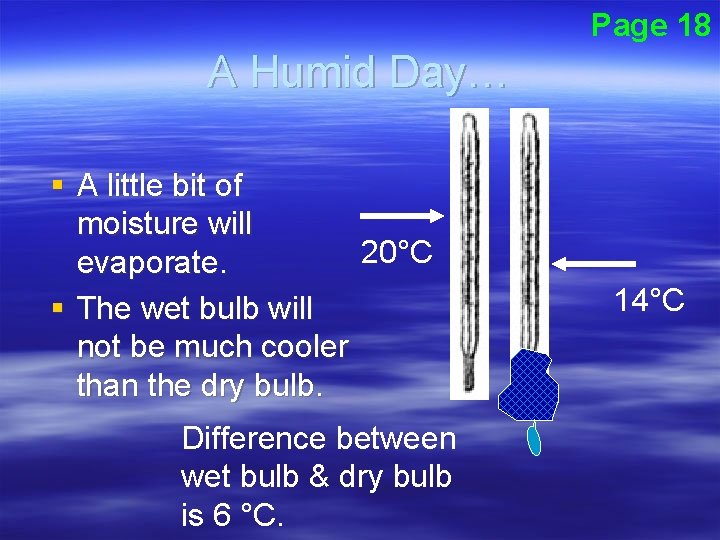
Page 18 A Humid Day… § A little bit of moisture will 20°C evaporate. § The wet bulb will not be much cooler than the dry bulb. Difference between wet bulb & dry bulb is 6 °C. 14°C
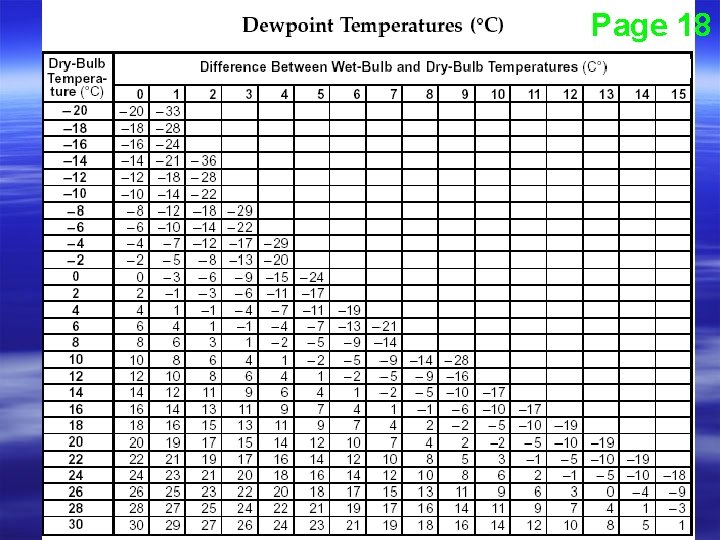
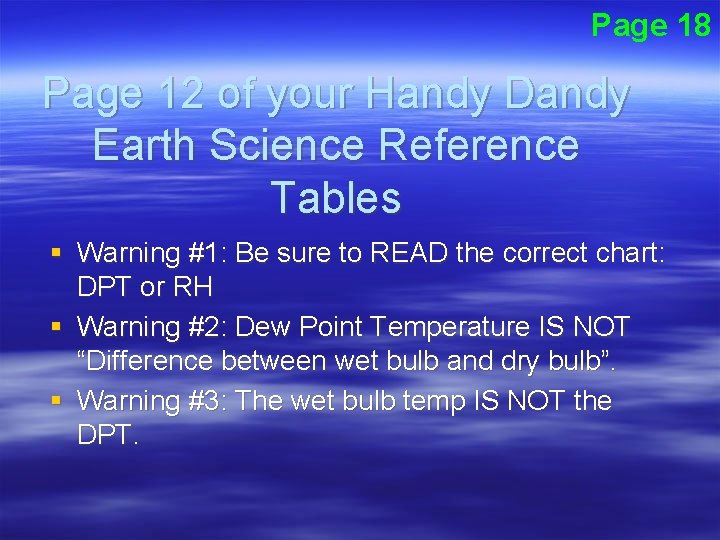
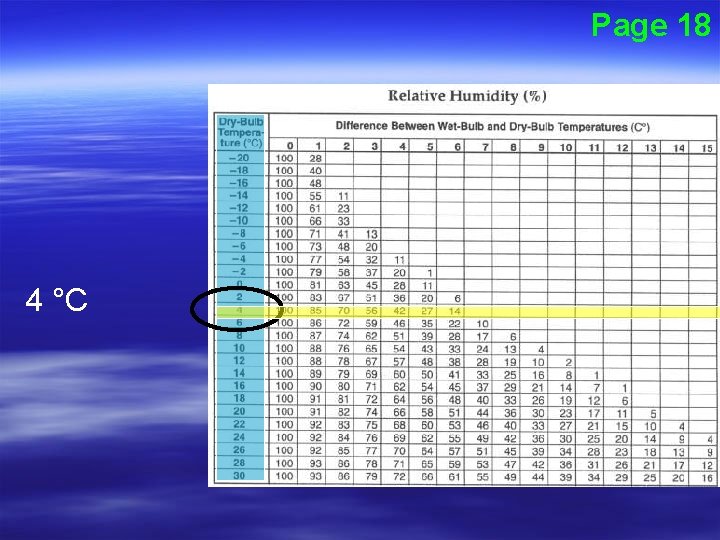
Page 18 Page 12 of your Handy Dandy Earth Science Reference Tables § Warning #1: Be sure to READ the correct chart: DPT or RH § Warning #2: Dew Point Temperature IS NOT “Difference between wet bulb and dry bulb”. § Warning #3: The wet bulb temp IS NOT the DPT.
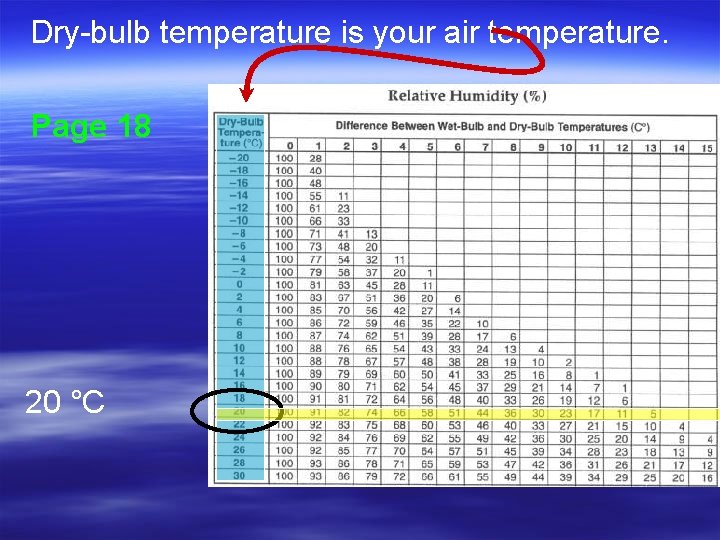
Dry-bulb temperature is your air temperature. Page 18 20 °C
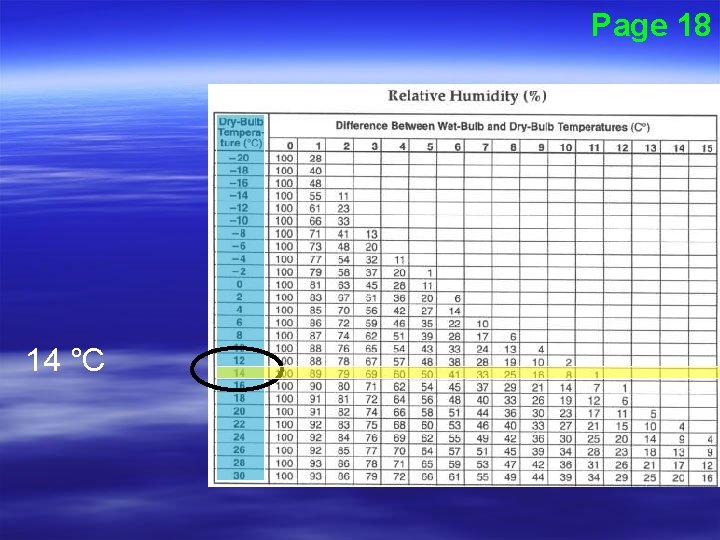
Page 18 14 °C
Page 18 4 °C
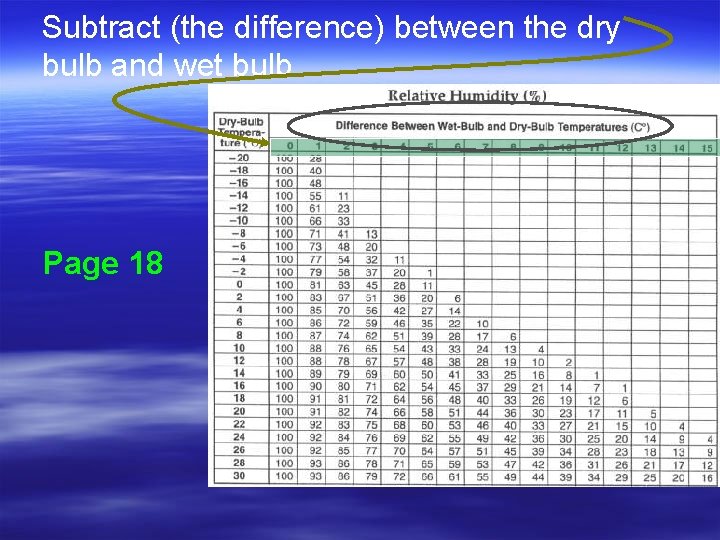
Subtract (the difference) between the dry bulb and wet bulb Page 18
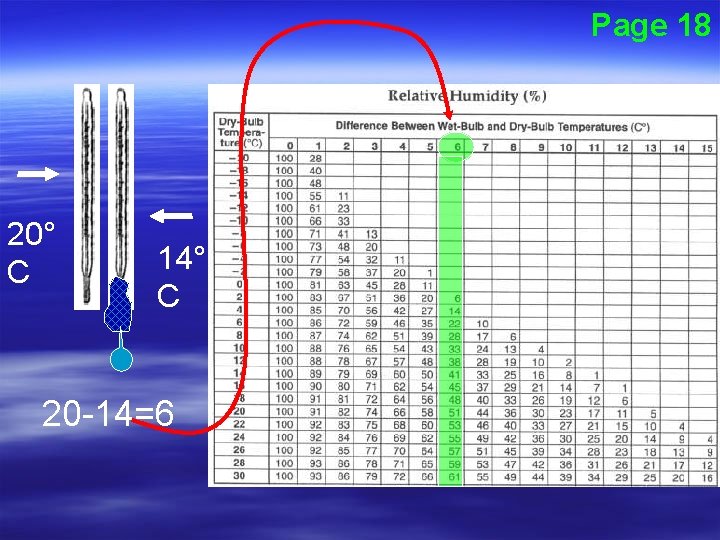
Page 18 20° C 14° C 20 -14=6
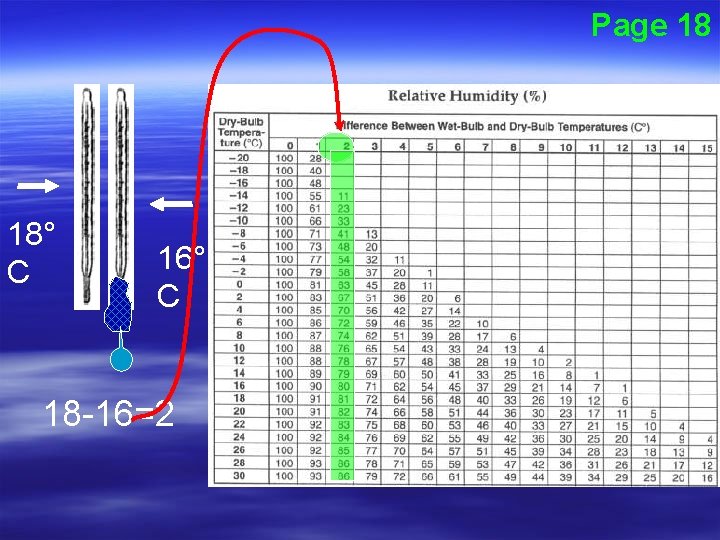
Page 18 18° C 16° C 18 -16=2
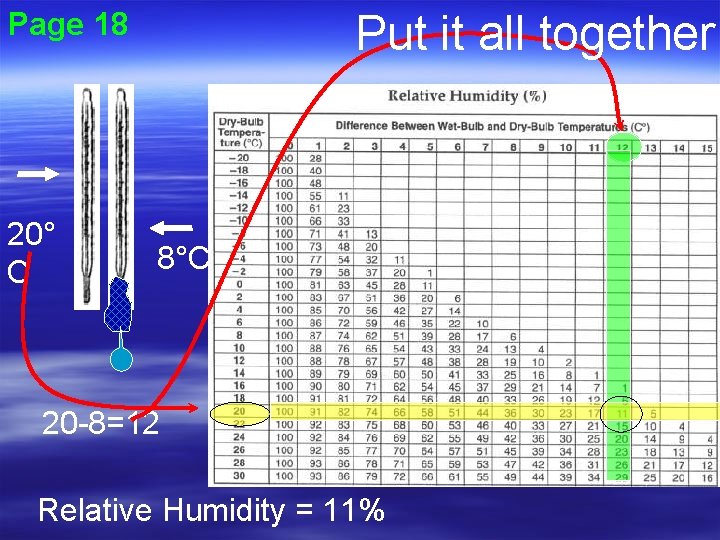
Page 18 20° C Put it all together 8°C 20 -8=12 Relative Humidity = 11%
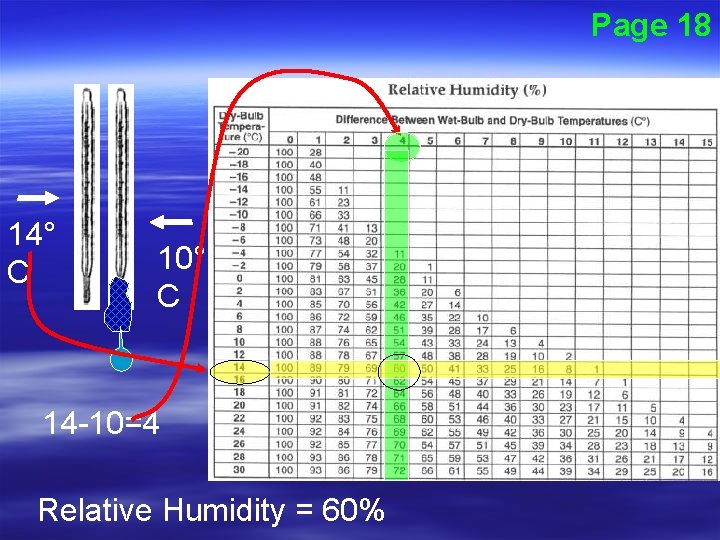
Page 18 14° C 10° C 14 -10=4 Relative Humidity = 60%
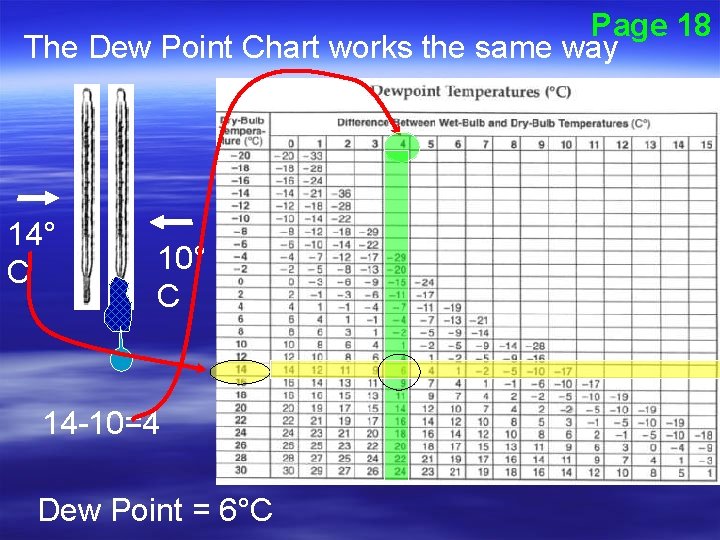
Page 18 The Dew Point Chart works the same way 14° C 10° C 14 -10=4 Dew Point = 6°C
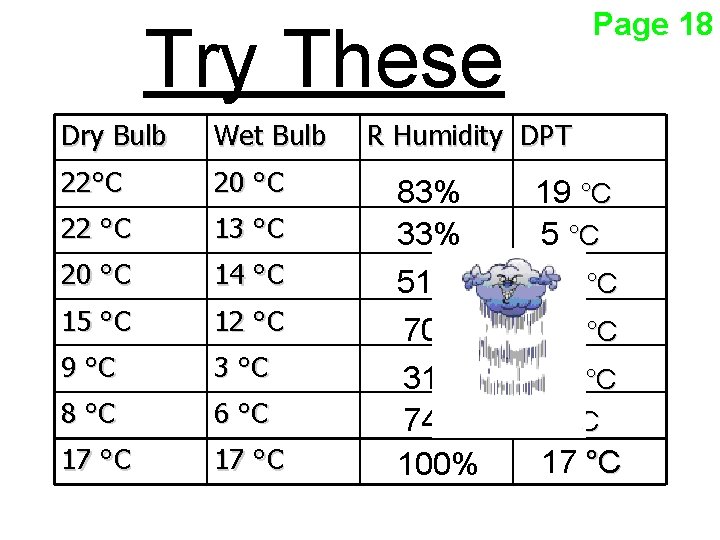
Page 18 Try These Dry Bulb Wet Bulb 22°C 20 °C 22 °C 13 °C 20 °C 14 °C 15 °C 12 °C 9 °C 3 °C 8 °C 6 °C 17 °C R Humidity DPT 83% 33% 51% 70% 31% 74% 100% 19 °C 5 °C 10 °C -7 °C 3 °C 17 °C
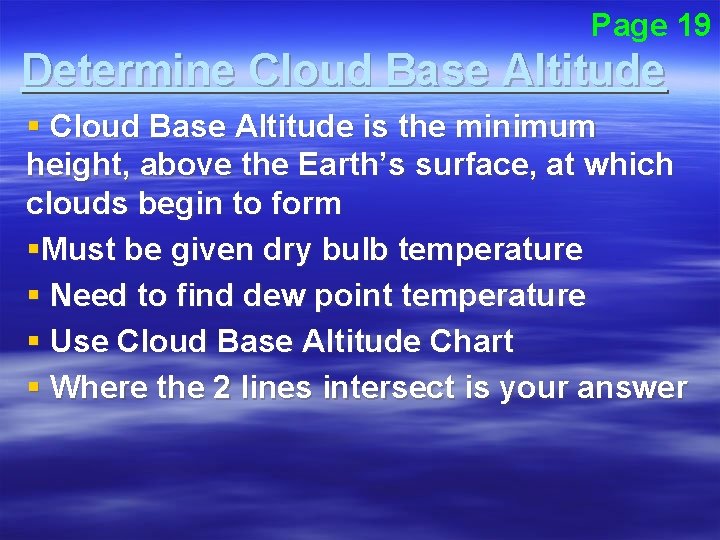
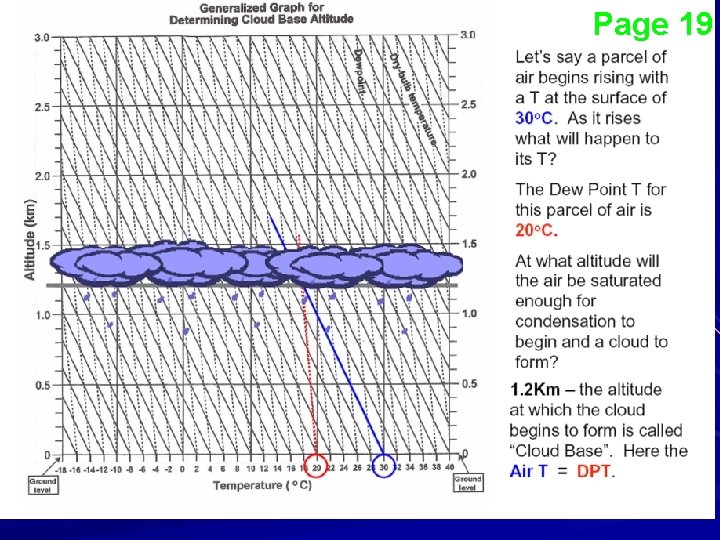
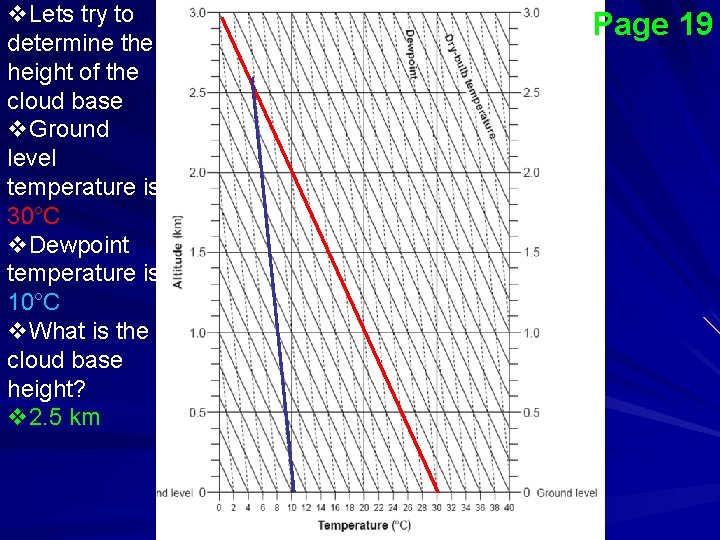
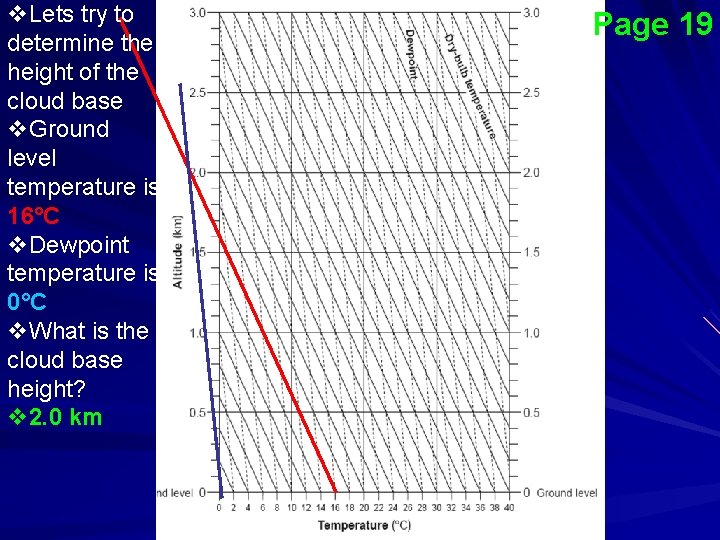
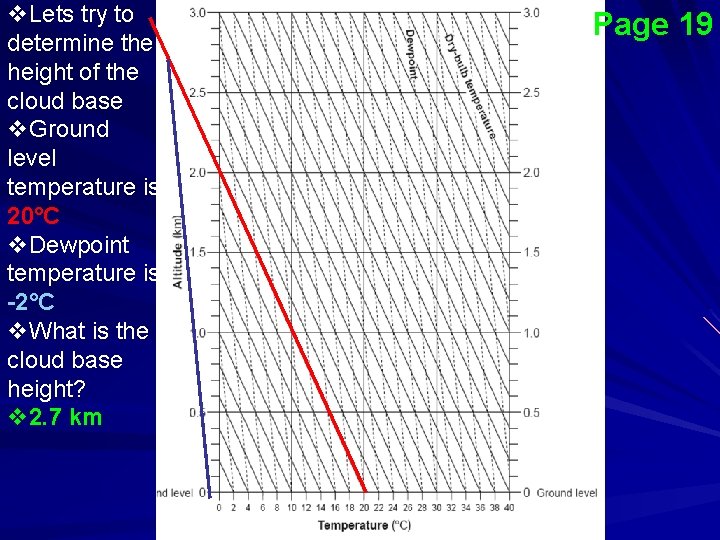
Page 19 Determine Cloud Base Altitude § Cloud Base Altitude is the minimum height, above the Earth’s surface, at which clouds begin to form §Must be given dry bulb temperature § Need to find dew point temperature § Use Cloud Base Altitude Chart § Where the 2 lines intersect is your answer
Page 19
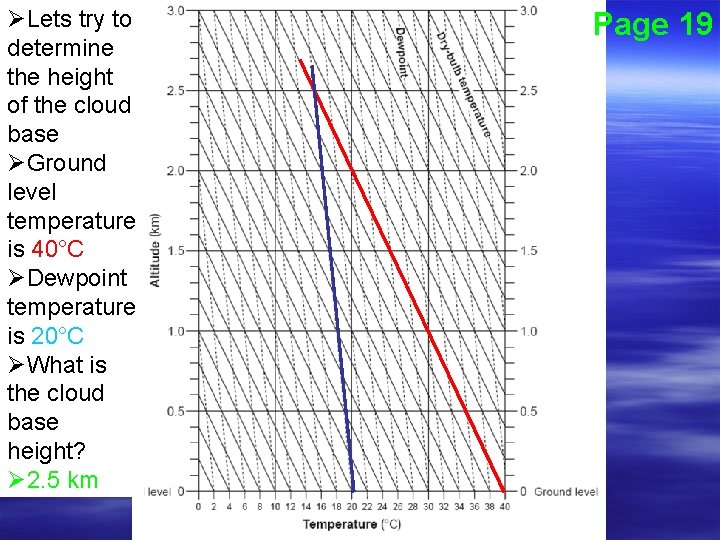
ØLets try to determine the height of the cloud base ØGround level temperature is 40°C ØDewpoint temperature is 20°C ØWhat is the cloud base height? Ø 2. 5 km Page 19
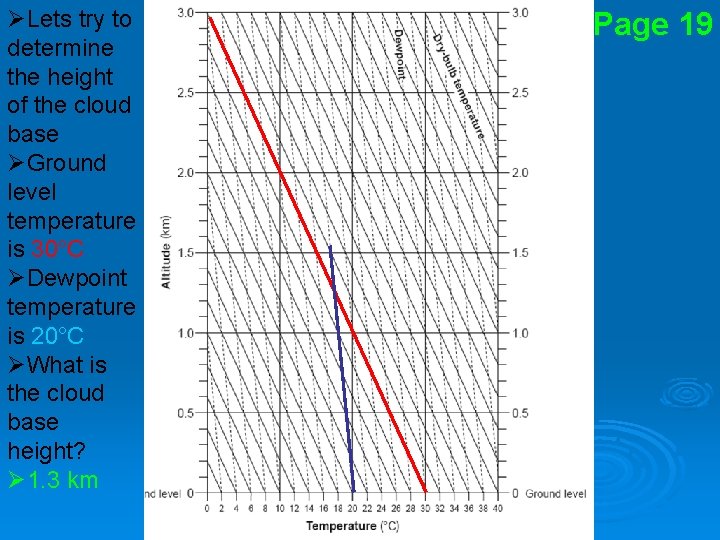
ØLets try to determine the height of the cloud base ØGround level temperature is 30°C ØDewpoint temperature is 20°C ØWhat is the cloud base height? Ø 1. 3 km Page 19
v. Lets try to determine the height of the cloud base v. Ground level temperature is 30°C v. Dewpoint temperature is 10°C v. What is the cloud base height? v 2. 5 km Page 19
v. Lets try to determine the height of the cloud base v. Ground level temperature is 16°C v. Dewpoint temperature is 0°C v. What is the cloud base height? v 2. 0 km Page 19
v. Lets try to determine the height of the cloud base v. Ground level temperature is 20°C v. Dewpoint temperature is -2°C v. What is the cloud base height? v 2. 7 km Page 19
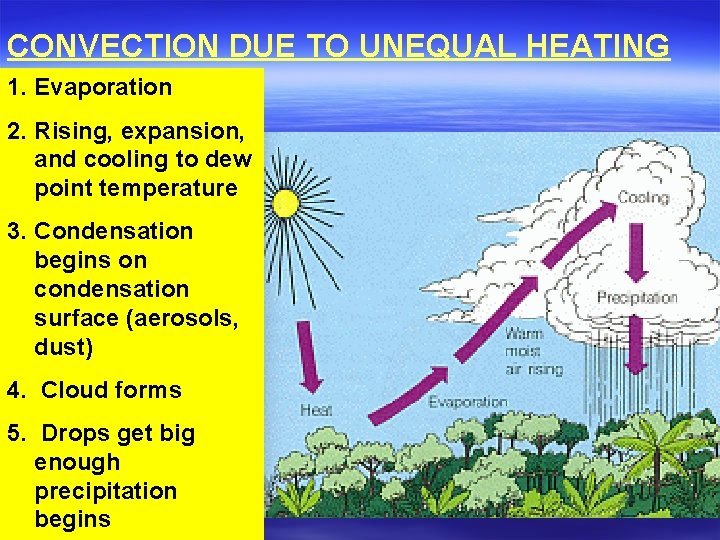
CONVECTION DUE TO UNEQUAL HEATING 1. Evaporation 2. Rising, expansion, and cooling to dew point temperature 3. Condensation begins on condensation surface (aerosols, dust) 4. Cloud forms 5. Drops get big enough precipitation begins
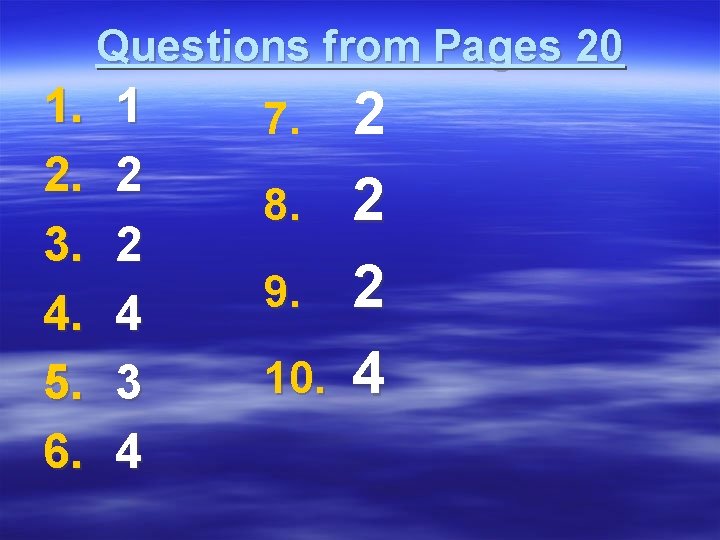
Questions from Pages 20 1. 2. 3. 4. 5. 6. 1 2 2 4 3 4 7. 8. 9. 10. 2 2 2 4