
Moisture in the Atmosphere Cloud Formation Clouds form

- Slides: 14
Moisture in the Atmosphere
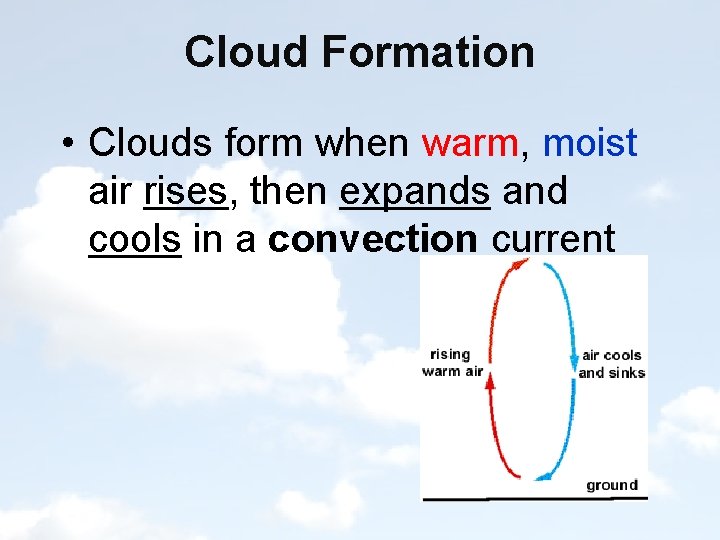
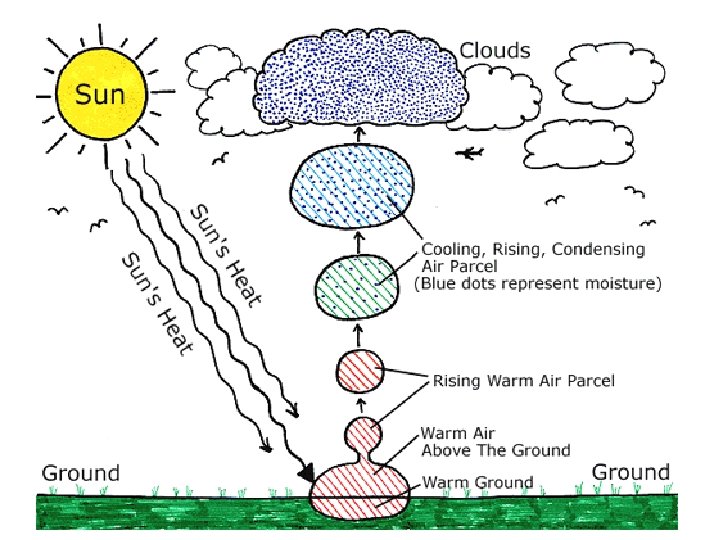
Cloud Formation • Clouds form when warm, moist air rises, then expands and cools in a convection current
As the air reaches it’s dew point, the water vapor in the air condenses around condensation nuclei. Condensation nuclei: small particles in the air where cloud droplets form When millions of these nuclei collect together, a cloud forms
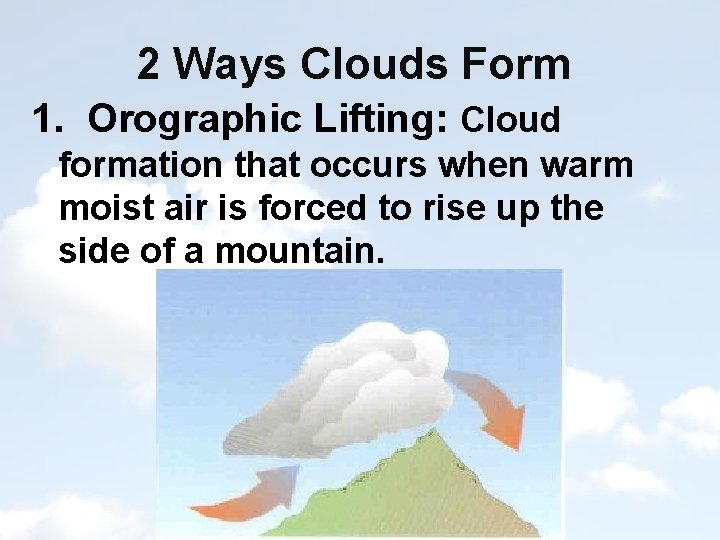
2 Ways Clouds Form 1. Orographic Lifting: Cloud formation that occurs when warm moist air is forced to rise up the side of a mountain.
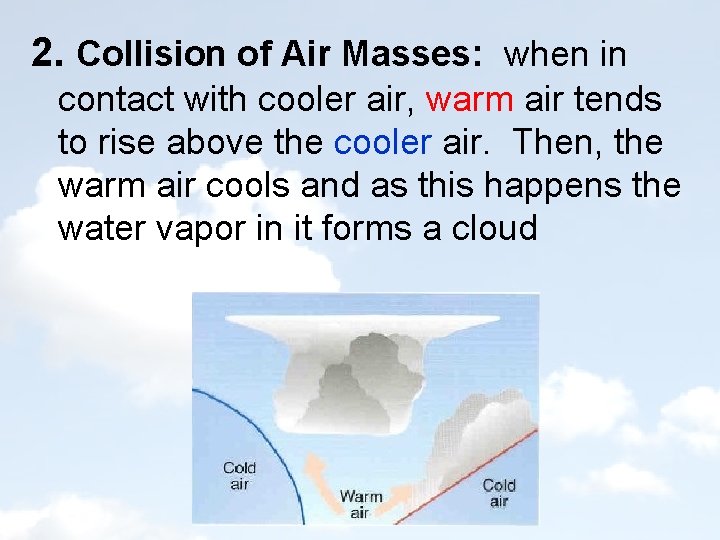
2. Collision of Air Masses: when in contact with cooler air, warm air tends to rise above the cooler air. Then, the warm air cools and as this happens the water vapor in it forms a cloud
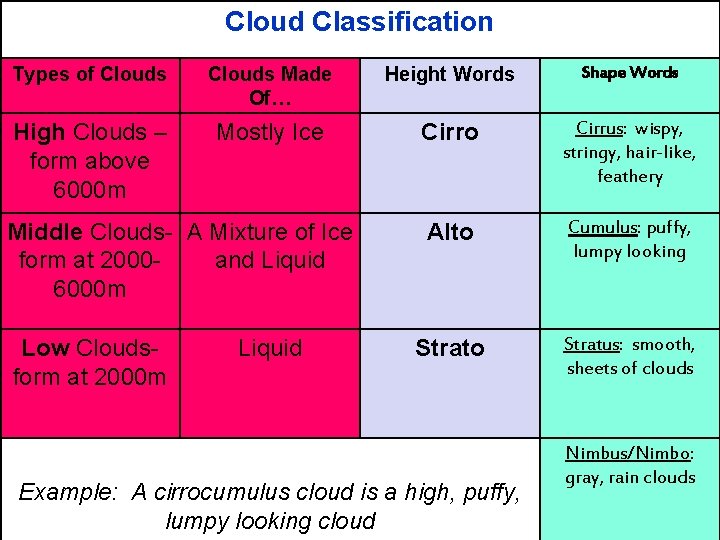
Cloud Classification Types of Clouds Made Of… Height Words Shape Words High Clouds – form above 6000 m Mostly Ice Cirro Cirrus: wispy, stringy, hair-like, feathery Alto Cumulus: puffy, lumpy looking Strato Stratus: smooth, sheets of clouds Middle Clouds- A Mixture of Ice form at 2000 and Liquid 6000 m Low Cloudsform at 2000 m Liquid Example: A cirrocumulus cloud is a high, puffy, lumpy looking cloud Nimbus/Nimbo: gray, rain clouds
Cloud Types
Precipitation • Clouds are made of water droplets that join together in a process called coalescence • If the process continues, the droplet becomes too heavy to stay in the cloud and it falls to Earth as precipitation – Precipiation includes both liquid and solid form – The main types are rain, snow, hail, and sleet
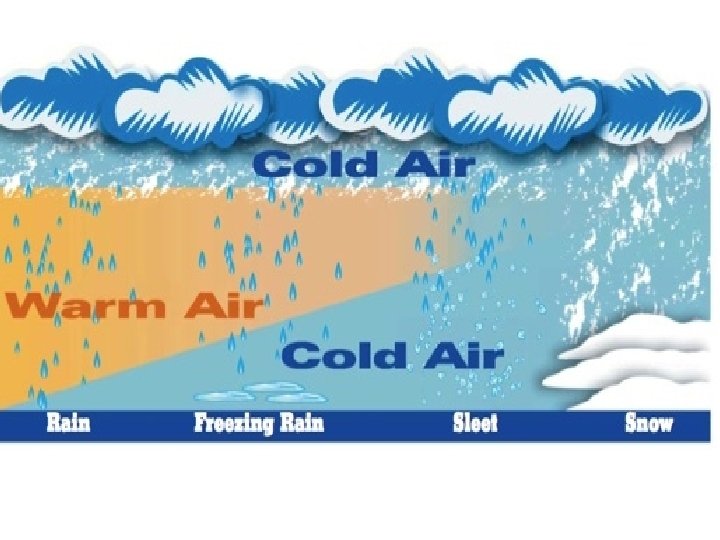
What Type of Precipitation Will Form? • High Clouds – Ice Crystals • Lower Clouds – Water Droplets • Warm Air = Rain • Cold Air = Freezing Rain, Sleet, or Snow
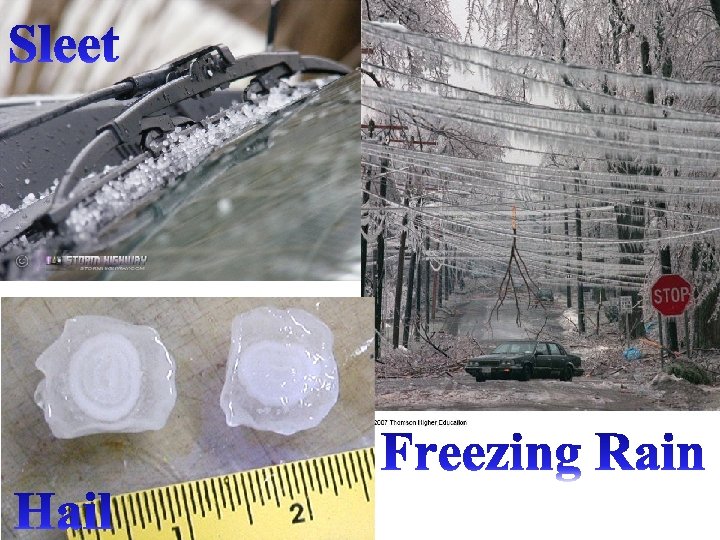
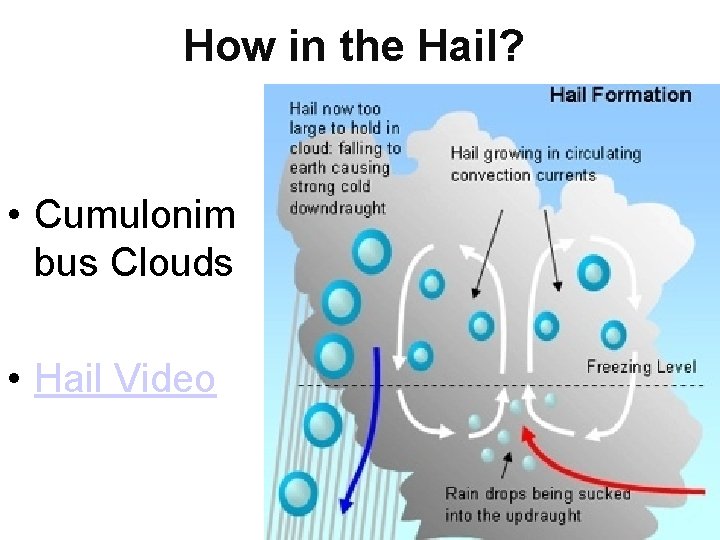
Types of Precipitation • Rain = Water Droplets • Sleet = Water Droplets that FREEZE into solid pellets in the air • Freezing Rain = Water droplets that FREEZE when they hit frozen surfaces • Snow = Ice crystals that stay frozen • Hail = layered frozen balls of ice
How in the Hail? • Cumulonim bus Clouds • Hail Video