
Moisture Associated Skin Damage Incontinence Periwound Peristomal Moisture
- Slides: 1
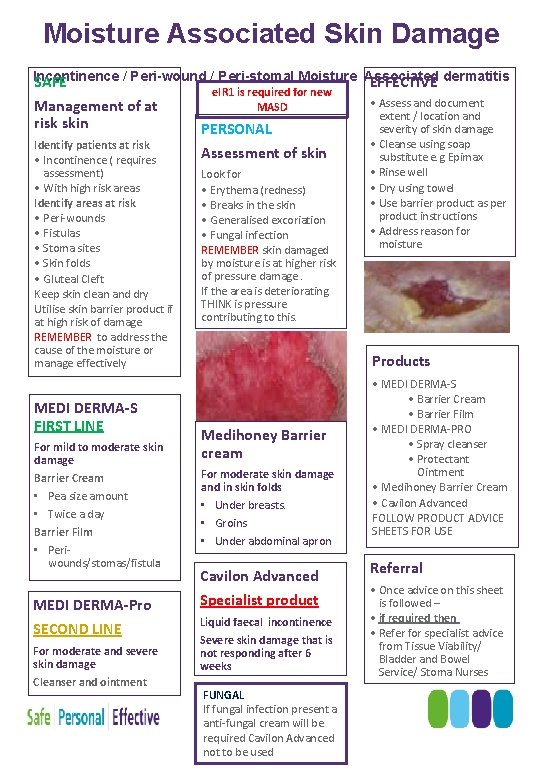
Moisture Associated Skin Damage Incontinence / Peri-wound / Peri-stomal Moisture Associated EFFECTIVE dermatitis SAFE Management of at risk skin Identify patients at risk • Incontinence ( requires assessment) • With high risk areas Identify areas at risk • Peri-wounds • Fistulas • Stoma sites • Skin folds • Gluteal Cleft Keep skin clean and dry Utilise skin barrier product if at high risk of damage REMEMBER to address the cause of the moisture or manage effectively MEDI DERMA-S FIRST LINE For mild to moderate skin damage Barrier Cream • Pea size amount • Twice a day Barrier Film • Periwounds/stomas/fistula MEDI DERMA-Pro SECOND LINE For moderate and severe skin damage Cleanser and ointment e. IR 1 is required for new MASD PERSONAL Assessment of skin Look for • Erythema (redness) • Breaks in the skin • Generalised excoriation • Fungal infection REMEMBER skin damaged by moisture is at higher risk of pressure damage. If the area is deteriorating THINK is pressure contributing to this. • Assess and document extent / location and severity of skin damage • Cleanse using soap substitute e. g Epimax • Rinse well • Dry using towel • Use barrier product as per product instructions • Address reason for moisture Products Medihoney Barrier cream For moderate skin damage and in skin folds • Under breasts. • Groins • Under abdominal apron Cavilon Advanced Specialist product Liquid faecal incontinence Severe skin damage that is not responding after 6 weeks FUNGAL If fungal infection present a anti-fungal cream will be required Cavilon Advanced not to be used • MEDI DERMA-S • Barrier Cream • Barrier Film • MEDI DERMA-PRO • Spray cleanser • Protectant Ointment • Medihoney Barrier Cream • Cavilon Advanced FOLLOW PRODUCT ADVICE SHEETS FOR USE Referral • Once advice on this sheet is followed – • if required then • Refer for specialist advice from Tissue Viability/ Bladder and Bowel Service/ Stoma Nurses