
MODULEIII Chapter4 Data Mining Overview and Techniques Dr


- Slides: 20
MODULE-III Chapter-4 Data Mining Overview and Techniques Dr. Anil Maheshwari
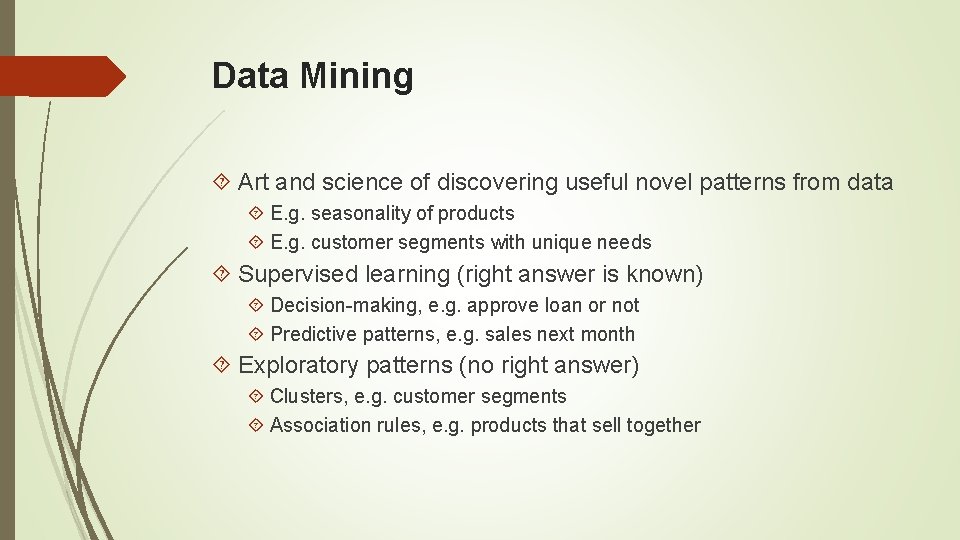
Data Mining Art and science of discovering useful novel patterns from data E. g. seasonality of products E. g. customer segments with unique needs Supervised learning (right answer is known) Decision-making, e. g. approve loan or not Predictive patterns, e. g. sales next month Exploratory patterns (no right answer) Clusters, e. g. customer segments Association rules, e. g. products that sell together
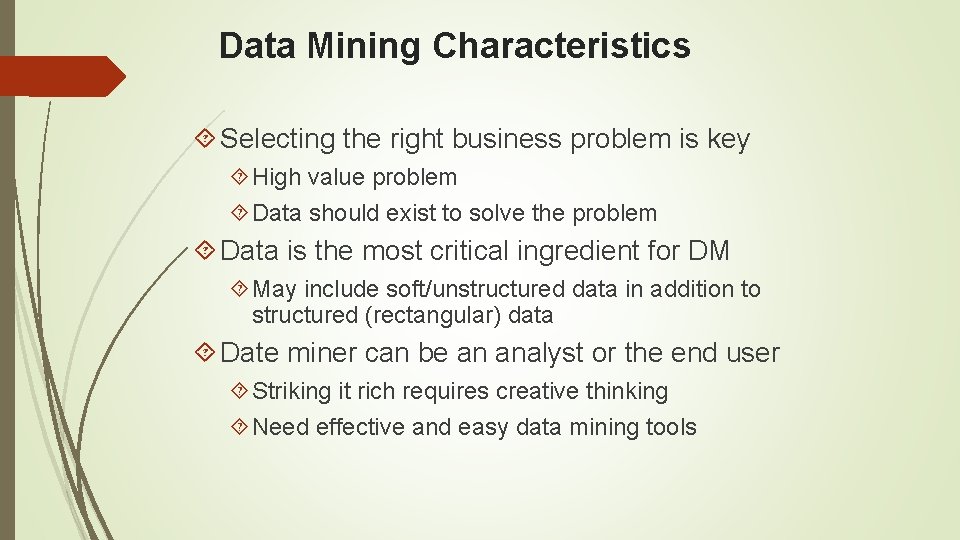
Data Mining Characteristics Selecting the right business problem is key High value problem Data should exist to solve the problem Data is the most critical ingredient for DM May include soft/unstructured data in addition to structured (rectangular) data Date miner can be an analyst or the end user Striking it rich requires creative thinking Need effective and easy data mining tools
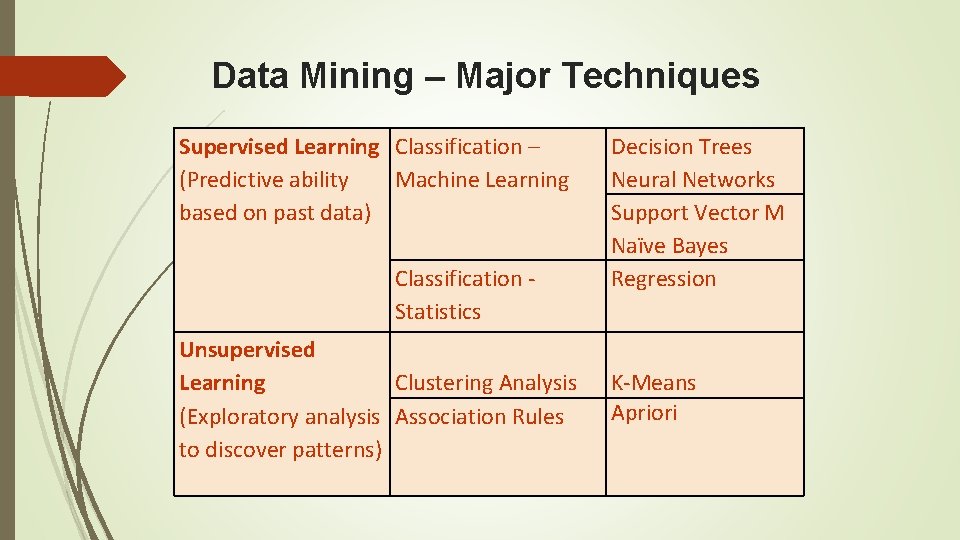
Data Mining – Major Techniques Supervised Learning Classification – (Predictive ability Machine Learning based on past data) Classification Statistics Unsupervised Learning Clustering Analysis (Exploratory analysis Association Rules to discover patterns) Decision Trees Neural Networks Support Vector M Naïve Bayes Regression K-Means Apriori
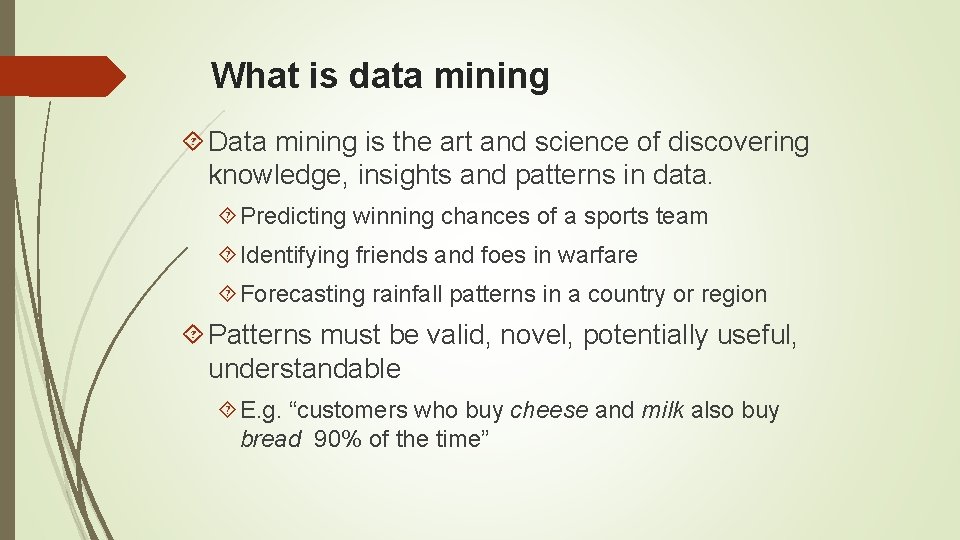
What is data mining Data mining is the art and science of discovering knowledge, insights and patterns in data. Predicting winning chances of a sports team Identifying friends and foes in warfare Forecasting rainfall patterns in a country or region Patterns must be valid, novel, potentially useful, understandable E. g. “customers who buy cheese and milk also buy bread 90% of the time”
Why Data Mining Recognition of hidden value in data Field developed to help in science and defense Evolved to help develop competitive advantage in business, fast, and at a global scale Ability to effectively gather quality data and efficiently process it Availability of vast amounts of data on customers, vendors, transactions, Web, machines, etc Technologies for consolidation and integration of data sources into data warehouses Exponential increase in computing and storage capabilities, and exponential decrease in costs
Supervised vs. unsupervised Learning Supervised learning: learning classification is seen as supervised learning from examples. Supervision: The data (observations, measurements, etc. ) are labeled with pre-defined classes. It is like that a “teacher” gives the classes. Test data are classified into these classes too, and predictive accuracy is checked. Unsupervised learning: learning e. g. clustering Class labels of the data are unknown Given a set of data, the task is to establish the existence of classes or clusters in the data
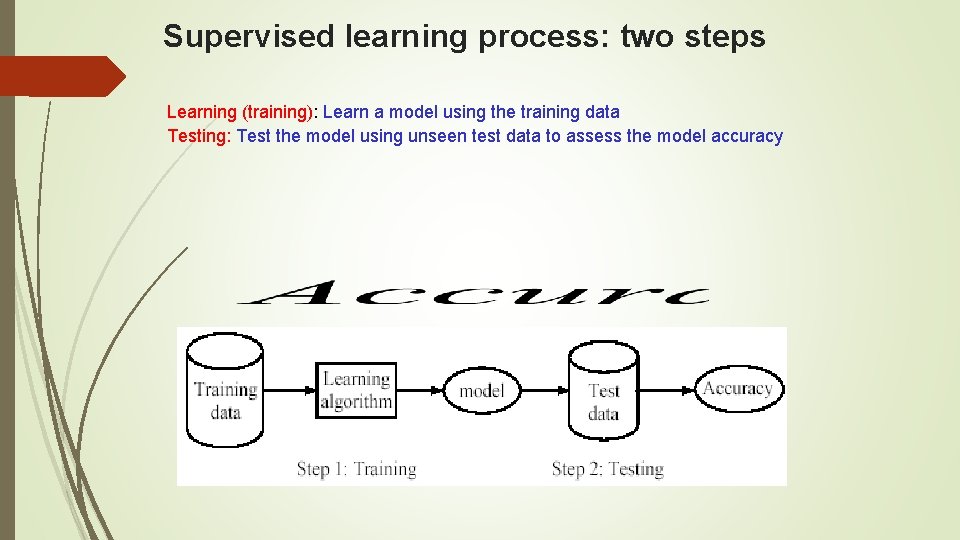
Supervised learning process: two steps Learning (training): Learn a model using the training data Testing: Test the model using unseen test data to assess the model accuracy
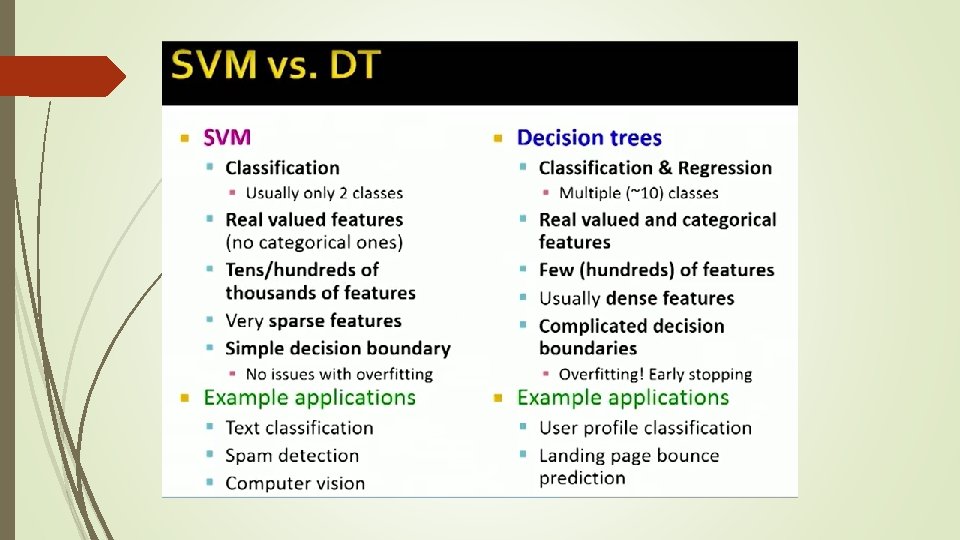
Data mining methods/goals Decision Trees Popular, easy to use, machine learning technique Regression Analysis Statistical Technique to predict Artificial Neural Networks Sophistical versatile machine-learning technique Clustering identifying a set of similarity groups in the data Association rules Discovering rules of the form X Y, where X and Y are sets of data items.
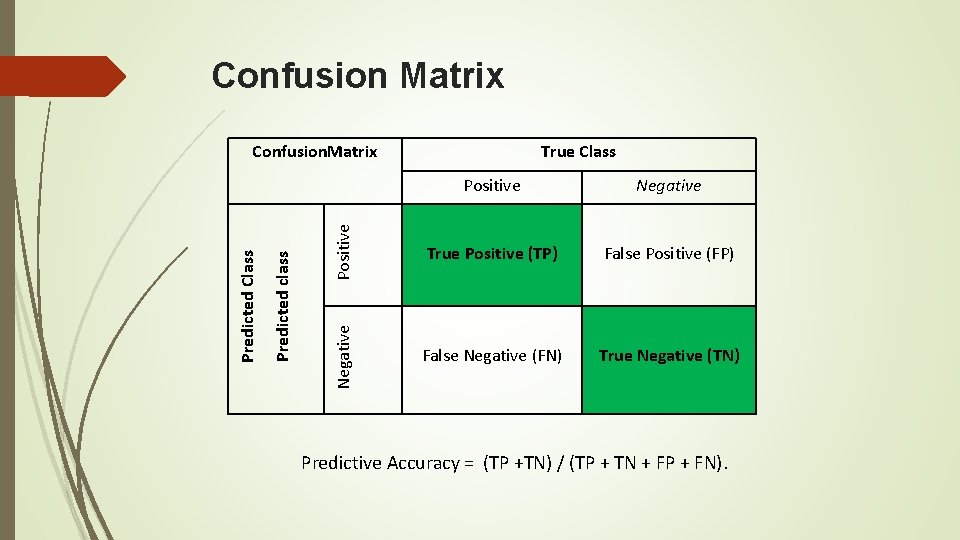
Confusion Matrix Positive Negative Positive True Class True Positive (TP) False Positive (FP) Negative Predicted class Predicted Class Confusion. Matrix False Negative (FN) True Negative (TN) Predictive Accuracy = (TP +TN) / (TP + TN + FP + FN).
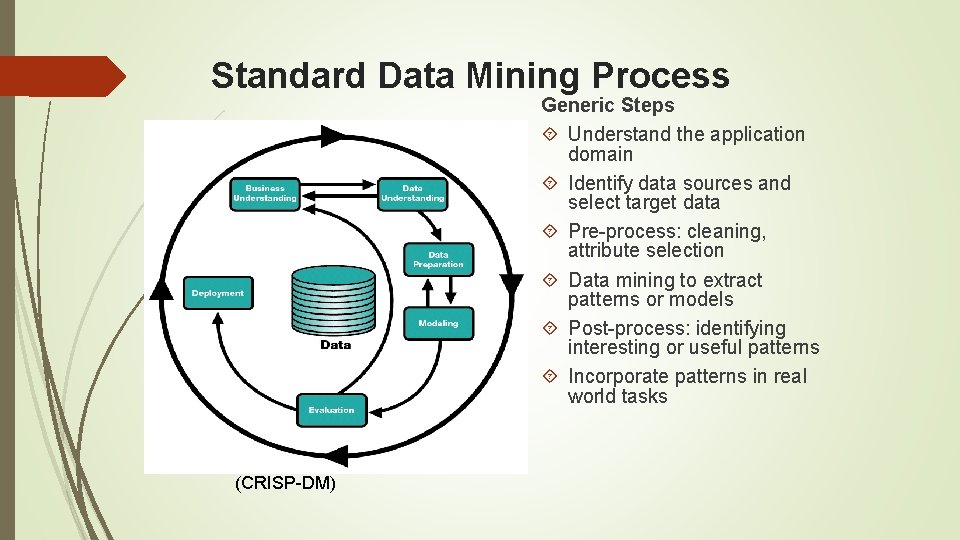
Standard Data Mining Process Generic Steps Understand the application domain Identify data sources and select target data Pre-process: cleaning, attribute selection Data mining to extract patterns or models Post-process: identifying interesting or useful patterns Incorporate patterns in real world tasks (CRISP-DM)
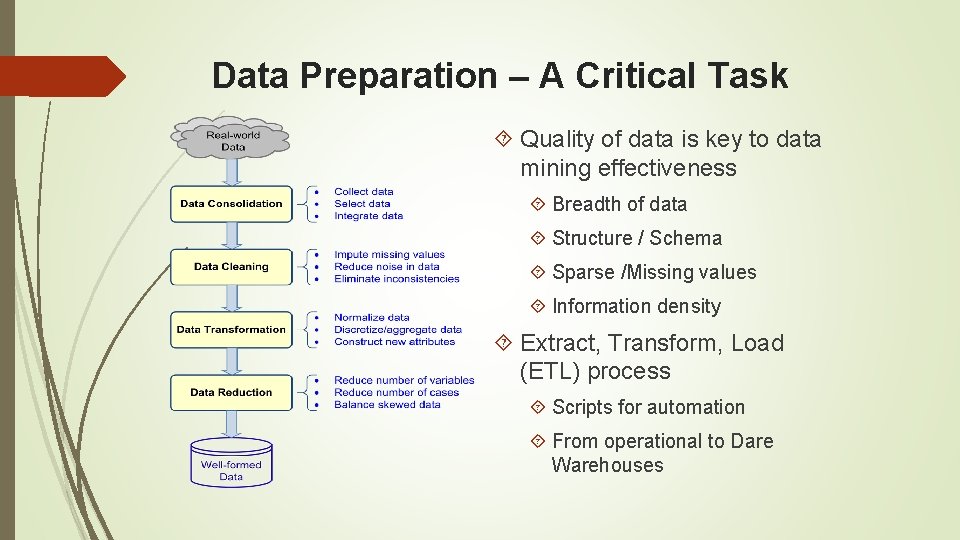
Data Preparation – A Critical Task Quality of data is key to data mining effectiveness Breadth of data Structure / Schema Sparse /Missing values Information density Extract, Transform, Load (ETL) process Scripts for automation From operational to Dare Warehouses
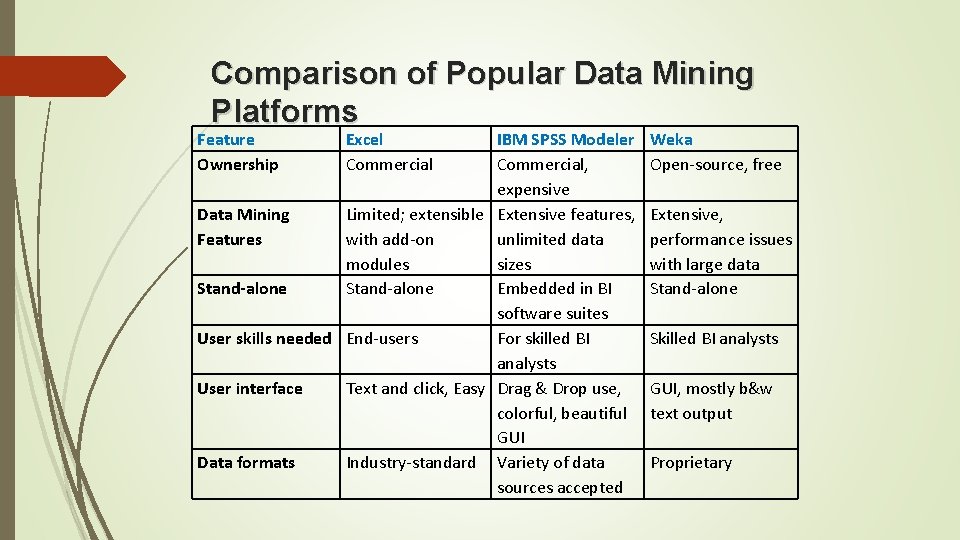
Comparison of Popular Data Mining Platforms Feature Ownership Excel Commercial IBM SPSS Modeler Commercial, expensive Data Mining Limited; extensible Extensive features, Features with add-on unlimited data modules sizes Stand-alone Embedded in BI software suites User skills needed End-users For skilled BI analysts User interface Text and click, Easy Drag & Drop use, colorful, beautiful GUI Data formats Industry-standard Variety of data sources accepted Weka Open-source, free Extensive, performance issues with large data Stand-alone Skilled BI analysts GUI, mostly b&w text output Proprietary
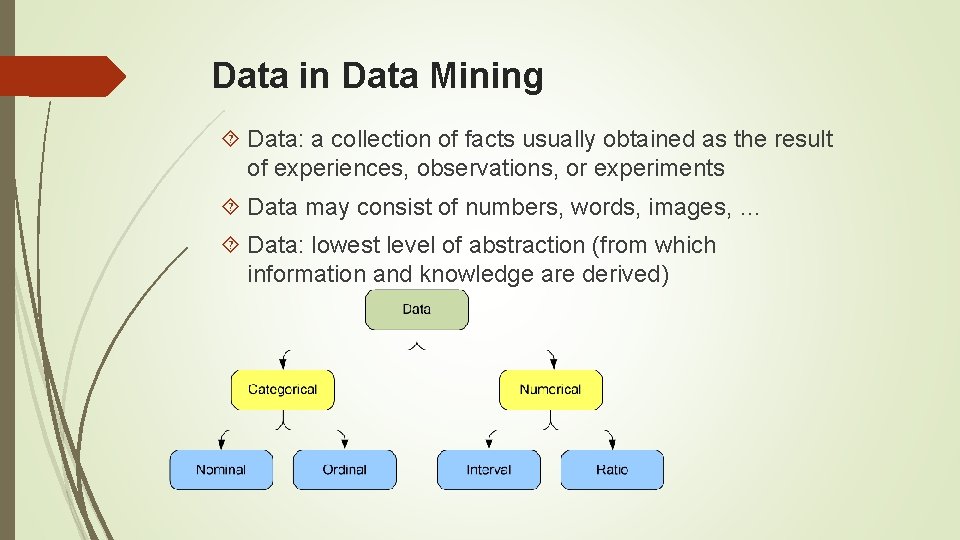
Data in Data Mining Data: a collection of facts usually obtained as the result of experiences, observations, or experiments Data may consist of numbers, words, images, … Data: lowest level of abstraction (from which information and knowledge are derived)
Data Mining Best Practices Asking the right business questions. Creative and open in proposing imaginative hypotheses Data should be clean and of high quality Continuously engaging with the data Dissemination and rollout of the solution
Data Mining Wisdom: Common Mistakes 1. Selecting the wrong problem for data mining 2. Ignoring what your sponsor thinks data mining is and what it really can/cannot do 3. Not leaving insufficient time for data acquisition, selection and preparation 4. Looking only at aggregated results and not at individual records/predictions 5. Being careless about keeping track of the data mining procedure and results
Data Mining Wisdom: Common Mistakes 6. Ignoring suspicious (good or bad) findings and quickly moving on 7. Running mining algorithms repeatedly and blindly, without thinking about the next stage 8. Naively believing everything you are told about the data 9. Measuring your results differently from the way your sponsor measures them
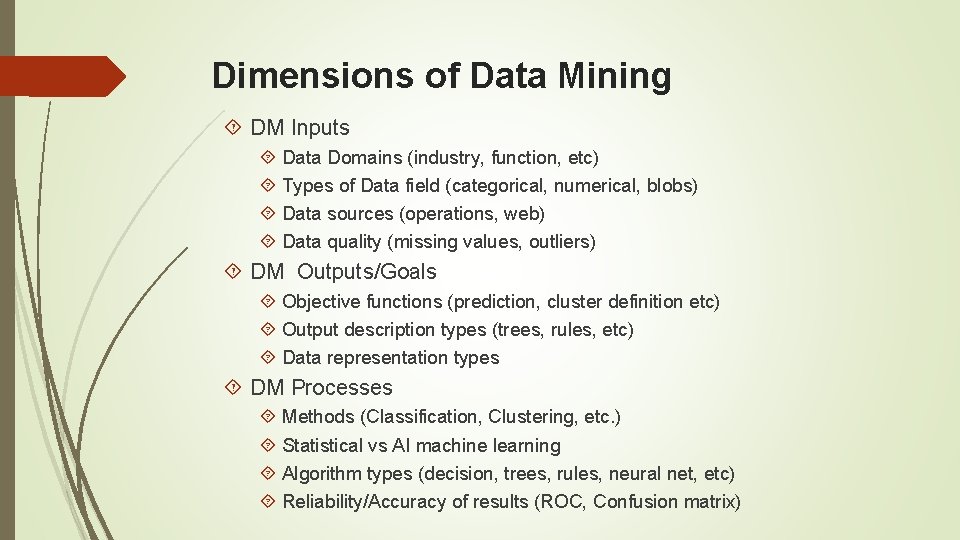
Dimensions of Data Mining DM Inputs Data Domains (industry, function, etc) Types of Data field (categorical, numerical, blobs) Data sources (operations, web) Data quality (missing values, outliers) DM Outputs/Goals Objective functions (prediction, cluster definition etc) Output description types (trees, rules, etc) Data representation types DM Processes Methods (Classification, Clustering, etc. ) Statistical vs AI machine learning Algorithm types (decision, trees, rules, neural net, etc) Reliability/Accuracy of results (ROC, Confusion matrix)