
Module I General Cosmetology Introduction to facial anatomy



- Slides: 47
Module I General Cosmetology
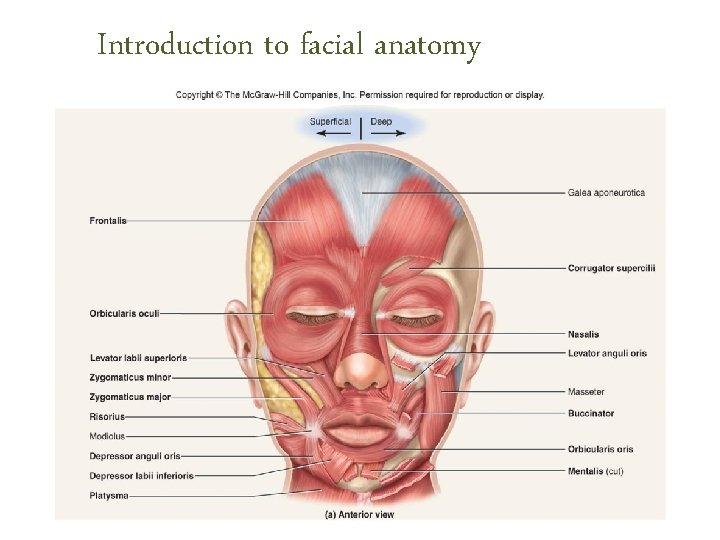
Introduction to facial anatomy Module 1 Introduction to facial anatomy
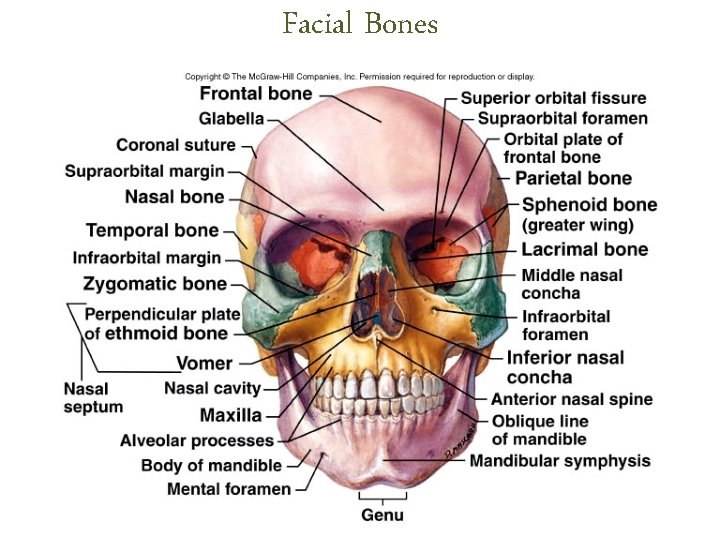
Facial Bones
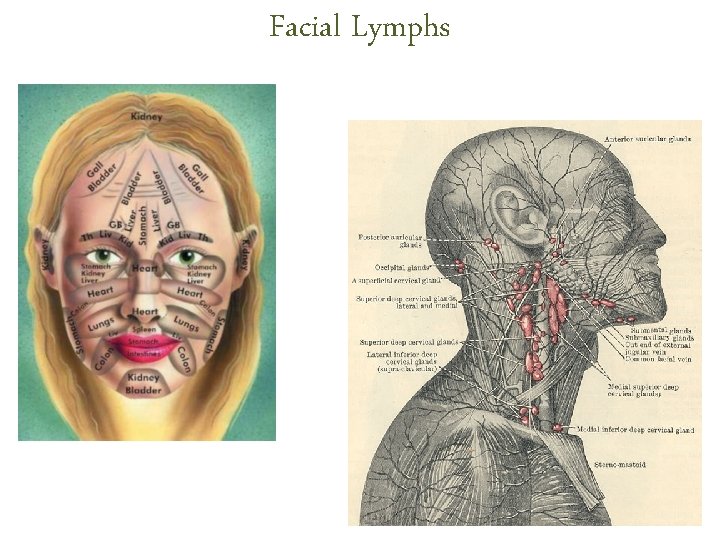
Facial Lymphs
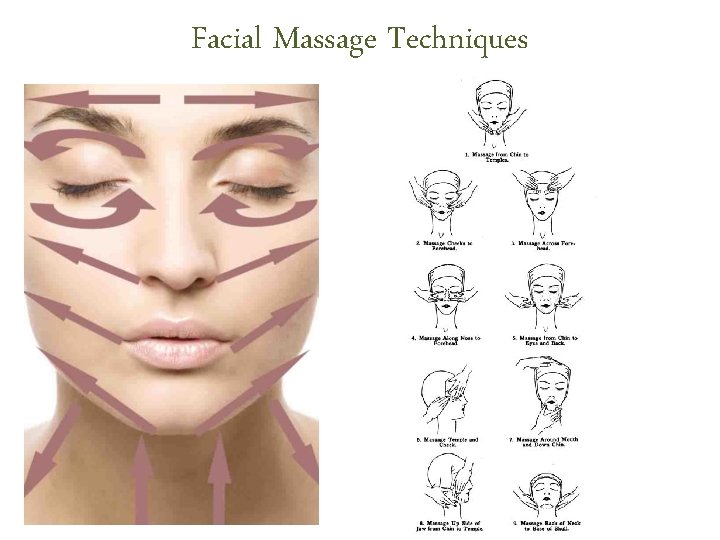
Facial Massage Techniques
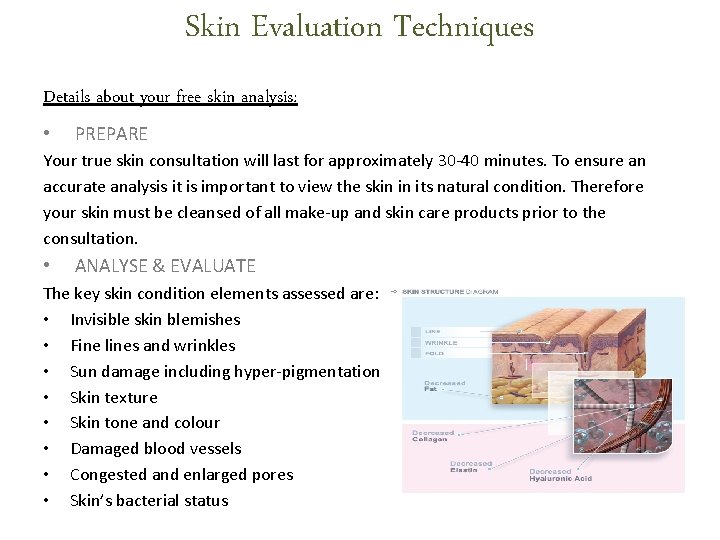
Skin Evaluation Techniques Details about your free skin analysis: • PREPARE Your true skin consultation will last for approximately 30 -40 minutes. To ensure an accurate analysis it is important to view the skin in its natural condition. Therefore your skin must be cleansed of all make-up and skin care products prior to the consultation. • ANALYSE & EVALUATE The key skin condition elements assessed are: • Invisible skin blemishes • Fine lines and wrinkles • Sun damage including hyper-pigmentation • Skin texture • Skin tone and colour • Damaged blood vessels • Congested and enlarged pores • Skin’s bacterial status
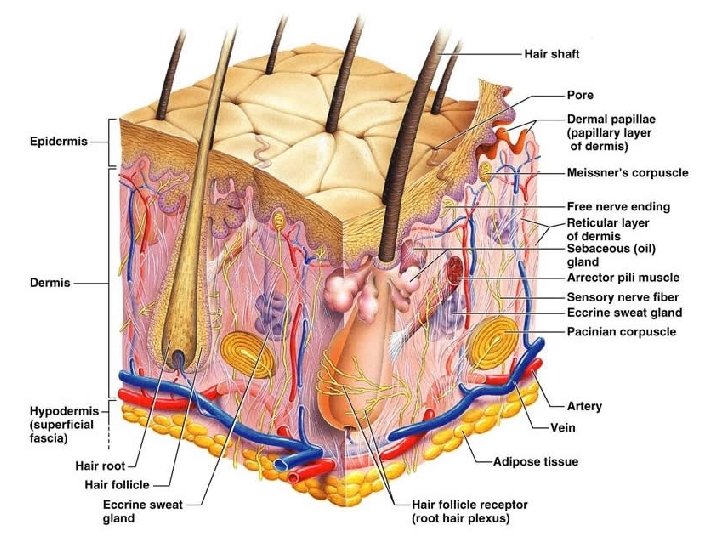
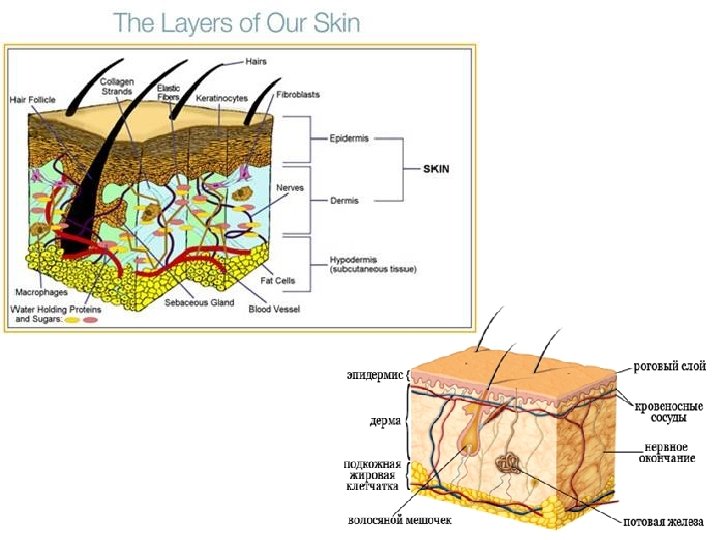
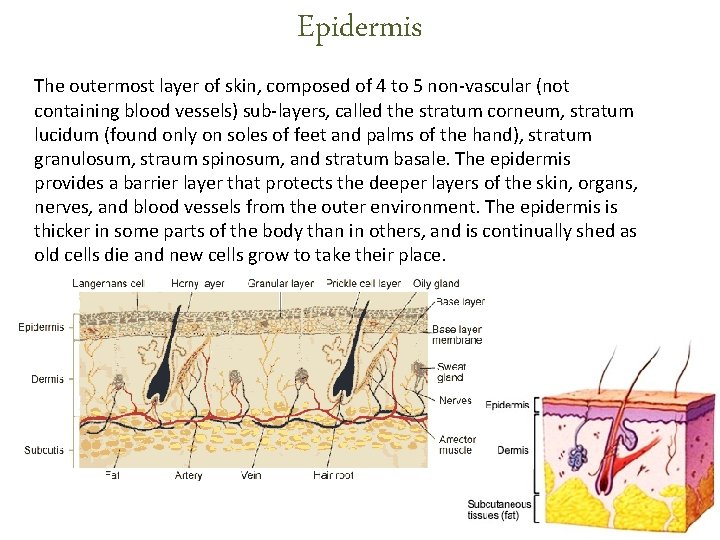
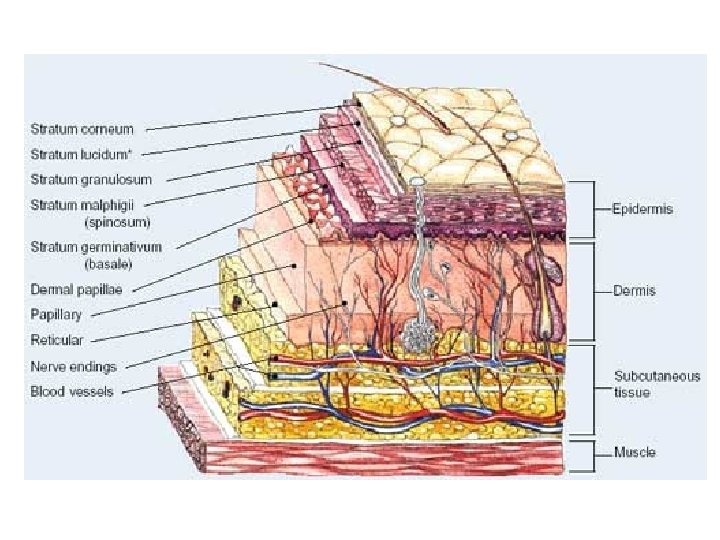
Epidermis The outermost layer of skin, composed of 4 to 5 non-vascular (not containing blood vessels) sub-layers, called the stratum corneum, stratum lucidum (found only on soles of feet and palms of the hand), stratum granulosum, straum spinosum, and stratum basale. The epidermis provides a barrier layer that protects the deeper layers of the skin, organs, nerves, and blood vessels from the outer environment. The epidermis is thicker in some parts of the body than in others, and is continually shed as old cells die and new cells grow to take their place.
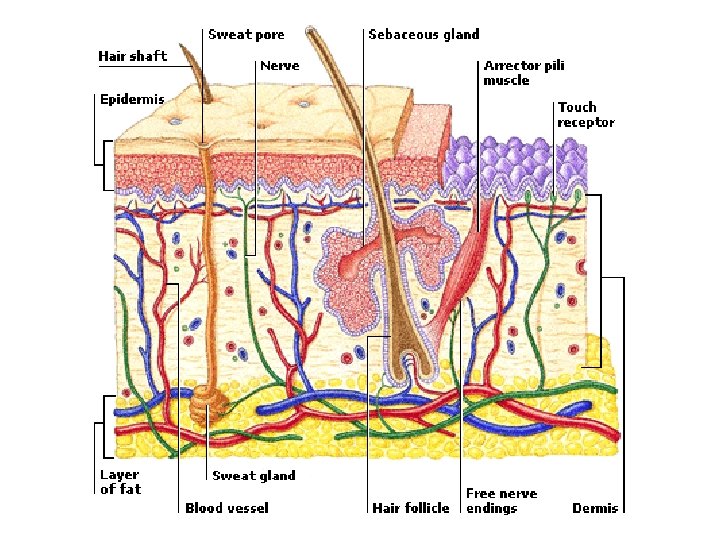
Dermis The middle layer of skin, deep to the epidermis and superficial to the subcutaneous layer. The dermis is composed of cells, connective tissue, and ground substance and can contain blood and lymphatic vessels, nerves, glands, and hair follicles. It ranges from 1 -4 mm in thickness, making it much thicker than the epidermis. The dermis is divided into two layers: the papillary dermis and the reticular dermis. The papillary dermis is the region closest to the epidermis with papillae interdigitating with the epidermis; here, collagen fibers are thinner and loosely packed. In the deeper reticular dermis, collagen fibers are thicker and more densely and irregularly arranged. Elastin fibers are found in both the papillary and the reticular dermis, but they are more numerous within the latter. Cutaneous appendages, like hair follicles, originate from the dermis. Blood vessels and nerves course through the dermis which supplies strength to the skin by its collagen and elastic fiber network. The vasculature to the skin is arranged in two plexi, the superficial plexus, located within the papillary dermis, and the deep plexus, located within the reticular dermis.
Hypodermis The hypodermis is the innermost and thickest layer of the skin. It invaginates into the dermis and is attached to the latter, immediately above it, by collagen and Elastin fibres. It is essentially composed of a type of cells specialised in accumulating and storing fats, known as adipocytes. These cells are grouped together in lobules separated by connective tissue. The hypodermis acts as an energy reserve. The fats contained in the adipocytes can be put back into circulation, via the venous route, during intense effort or when there is a lack of energy providing substances, and are then transformed into energy. When we speak of "burning up calories", we are burning up fats in particular. The hypodermis participates, passively at least, in thermoregulation since fat is a heat insulator. The anatomical position of the hypodermis is clearly a sexual characteristic. Whilst the hypodermis is distributed over the entire body, it has a tendency to accumulate above the belt over the abdomen and shoulders in men, and in women, below the waist around the thighs, hips and buttocks.
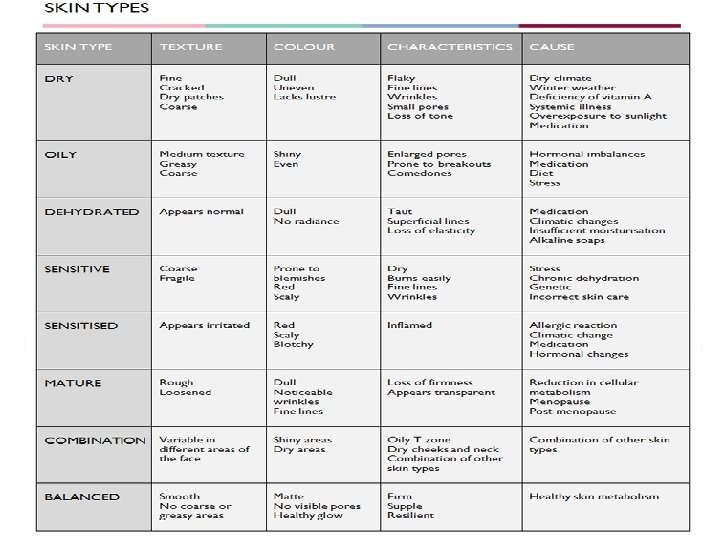
Skin types • Normal: Normal skin is not too dry and not too oily. It has: No or few imperfections No severe sensitivity Barely visible pores A radiant complexion • Combination (including combination to oily and normal to dry): A combination skin type can be dry or normal in some areas and oily in others, such as the T-zone (nose, forehead, and chin). Many people have combination skin, which may benefit from slightly different types of skin care in different areas. Combination skin can produce: Overly dilated pores Blackheads Shiny skin
Skin types Dry: When exposed to drying factors, skin can crack, peel, or become itchy, irritated, or inflamed. If your skin is very dry, it can become rough and scaly, especially on the backs of your hands, arms, and legs. Dry skin can produce: Almost invisible pores Dull, rough complexion Red patches Less elasticity More visible lines • Oily: Oiliness can change depending upon the time of year or the weather. Oily skin can produce: Enlarged pores Dull or shiny, thick complexion Blackheads, pimples, or other blemishes
Skin types • Dehydrated: Well-hydrated skin contains 70% moisture: around two-thirds inside the cell and one-third on the surface. When the skin suffers stresses (wind, sun, pollution, differences in temperature etc. ), this ideal level of moisture or "osmotic balance" is upset. Characteristic: Tightness Rough skin texture Dull skin Fine surface lines Tight pores Matte, dry Sometimes sensitive (irritated) Sensitive: Sensitive skin reacts more than normal skin, in fact it is hyperreactive. It experiences: Prickling Overheating Itching
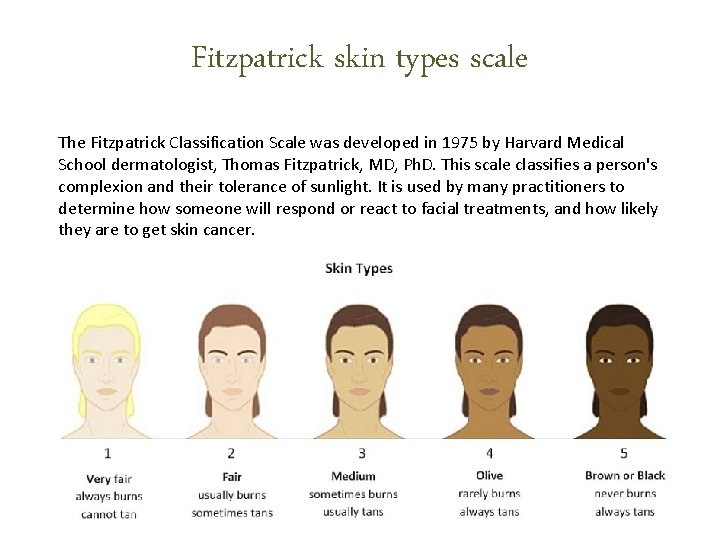
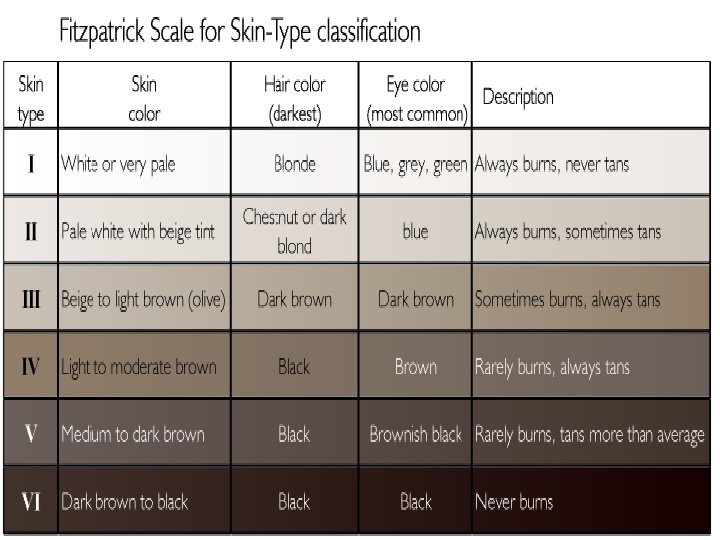
Fitzpatrick skin types scale The Fitzpatrick Classification Scale was developed in 1975 by Harvard Medical School dermatologist, Thomas Fitzpatrick, MD, Ph. D. This scale classifies a person's complexion and their tolerance of sunlight. It is used by many practitioners to determine how someone will respond or react to facial treatments, and how likely they are to get skin cancer.
Workspace and personal hygiene • Disinfect all the equipment (i. e. laser machine, instruments) and surrounding areas ( i. e. tables, door knobs, etc. ) with Cavi Cide. • Use gloves. • Wear a mask (when necessary). • Wash hands often. • Change sheets after each client. • All instruments must be kept in metal containers dedicated to that purpose. • All instruments must be sterilized in a special solution for at least 30 min. after each use. Then washed with soap and dried. • Beds should have one spare clean sheet under it and a clean towel on the headrest. • Wash floors before and after your shift (more often, if necessary). • Please, avoid eating food with strong odors ( i. e. onion, garlic, fish, etc. ) prior to a contact with a client.
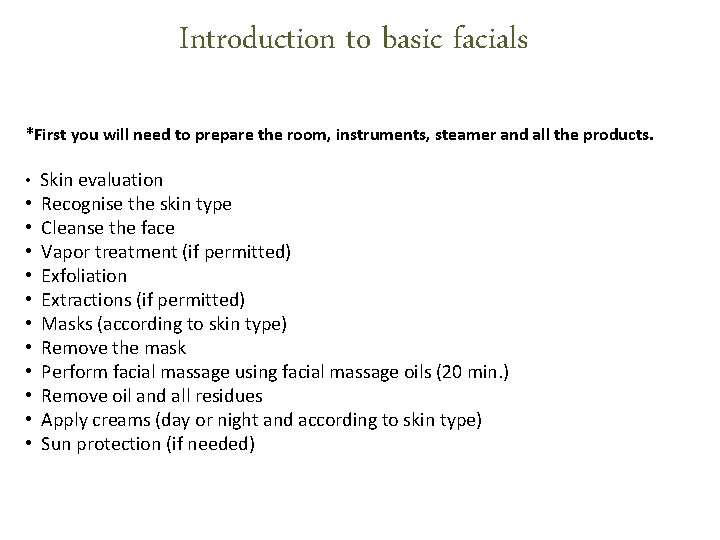
Introduction to basic facials *First you will need to prepare the room, instruments, steamer and all the products. • Skin evaluation • • • Recognise the skin type Cleanse the face Vapor treatment (if permitted) Exfoliation Extractions (if permitted) Masks (according to skin type) Remove the mask Perform facial massage using facial massage oils (20 min. ) Remove oil and all residues Apply creams (day or night and according to skin type) Sun protection (if needed)
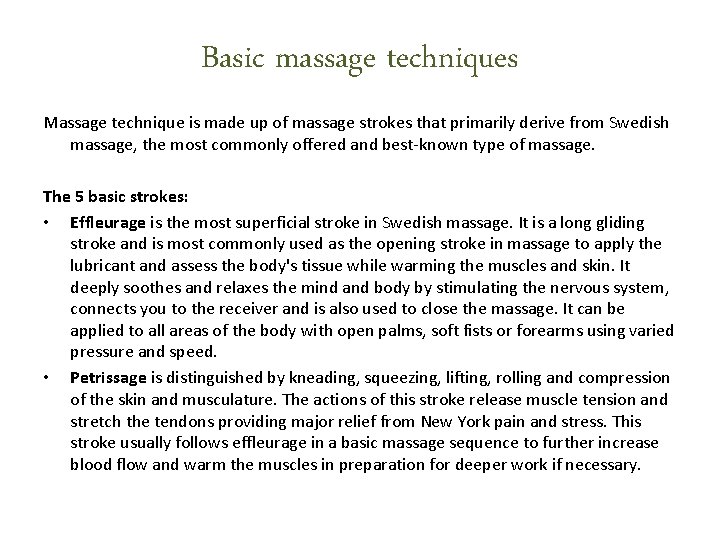
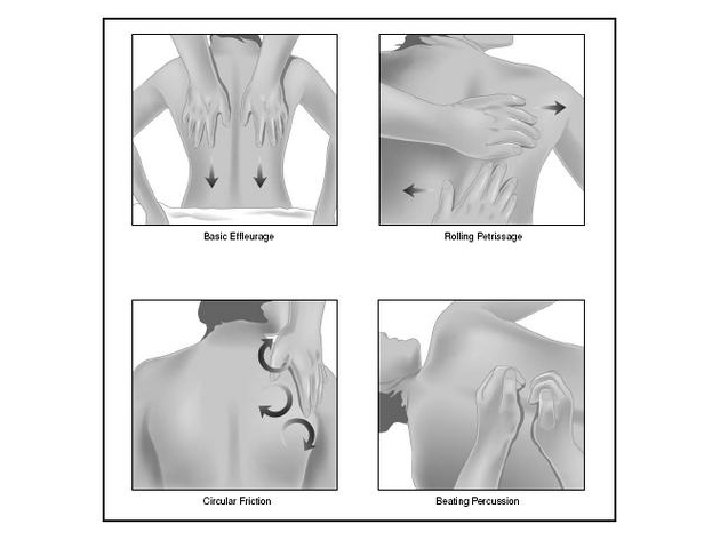
Basic massage techniques Massage technique is made up of massage strokes that primarily derive from Swedish massage, the most commonly offered and best-known type of massage. The 5 basic strokes: • Effleurage is the most superficial stroke in Swedish massage. It is a long gliding stroke and is most commonly used as the opening stroke in massage to apply the lubricant and assess the body's tissue while warming the muscles and skin. It deeply soothes and relaxes the mind and body by stimulating the nervous system, connects you to the receiver and is also used to close the massage. It can be applied to all areas of the body with open palms, soft fists or forearms using varied pressure and speed. • Petrissage is distinguished by kneading, squeezing, lifting, rolling and compression of the skin and musculature. The actions of this stroke release muscle tension and stretch the tendons providing major relief from New York pain and stress. This stroke usually follows effleurage in a basic massage sequence to further increase blood flow and warm the muscles in preparation for deeper work if necessary.
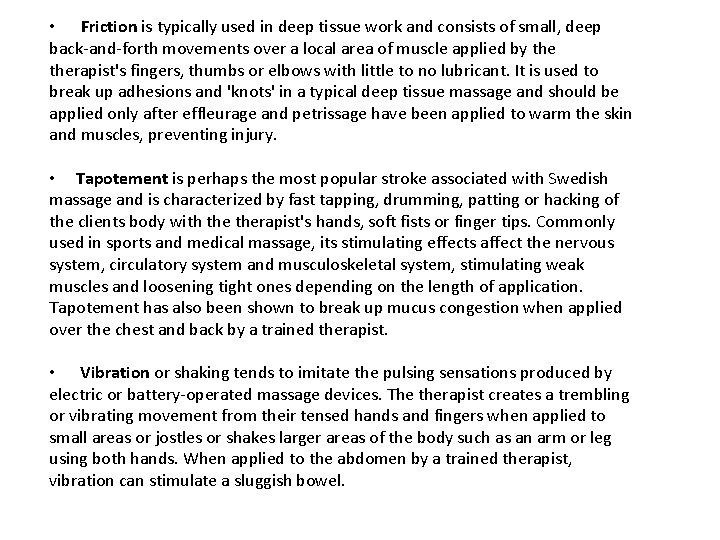
• Friction is typically used in deep tissue work and consists of small, deep back-and-forth movements over a local area of muscle applied by therapist's fingers, thumbs or elbows with little to no lubricant. It is used to break up adhesions and 'knots' in a typical deep tissue massage and should be applied only after effleurage and petrissage have been applied to warm the skin and muscles, preventing injury. • Tapotement is perhaps the most popular stroke associated with Swedish massage and is characterized by fast tapping, drumming, patting or hacking of the clients body with therapist's hands, soft fists or finger tips. Commonly used in sports and medical massage, its stimulating effects affect the nervous system, circulatory system and musculoskeletal system, stimulating weak muscles and loosening tight ones depending on the length of application. Tapotement has also been shown to break up mucus congestion when applied over the chest and back by a trained therapist. • Vibration or shaking tends to imitate the pulsing sensations produced by electric or battery-operated massage devices. The therapist creates a trembling or vibrating movement from their tensed hands and fingers when applied to small areas or jostles or shakes larger areas of the body such as an arm or leg using both hands. When applied to the abdomen by a trained therapist, vibration can stimulate a sluggish bowel.
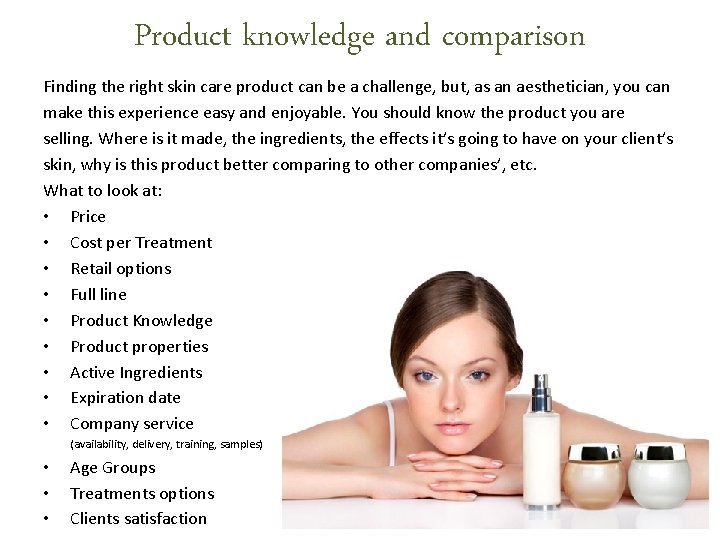
Product knowledge and comparison Finding the right skin care product can be a challenge, but, as an aesthetician, you can make this experience easy and enjoyable. You should know the product you are selling. Where is it made, the ingredients, the effects it’s going to have on your client’s skin, why is this product better comparing to other companies’, etc. What to look at: • Price • Cost per Treatment • Retail options • Full line • Product Knowledge • Product properties • Active Ingredients • Expiration date • Company service (availability, delivery, training, samples) • • • Age Groups Treatments options Clients satisfaction
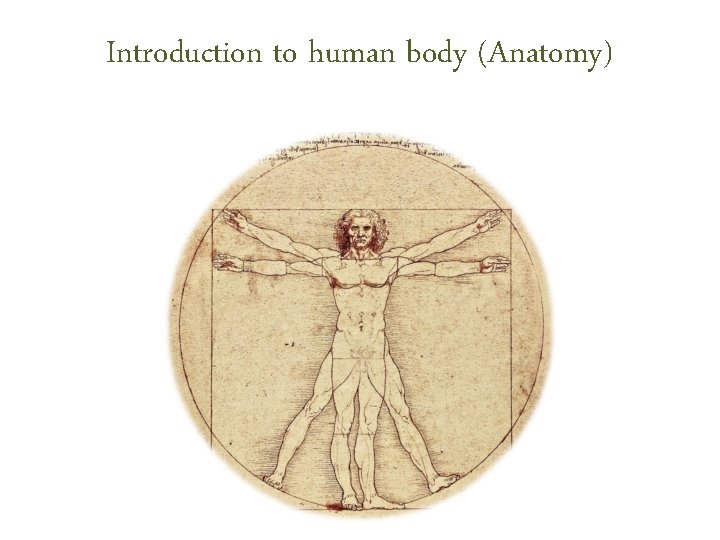
Introduction to human body (Anatomy)
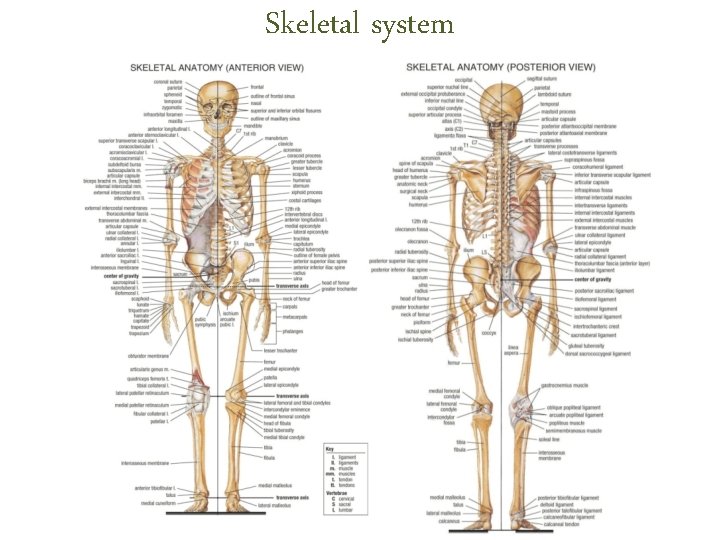
Skeletal system
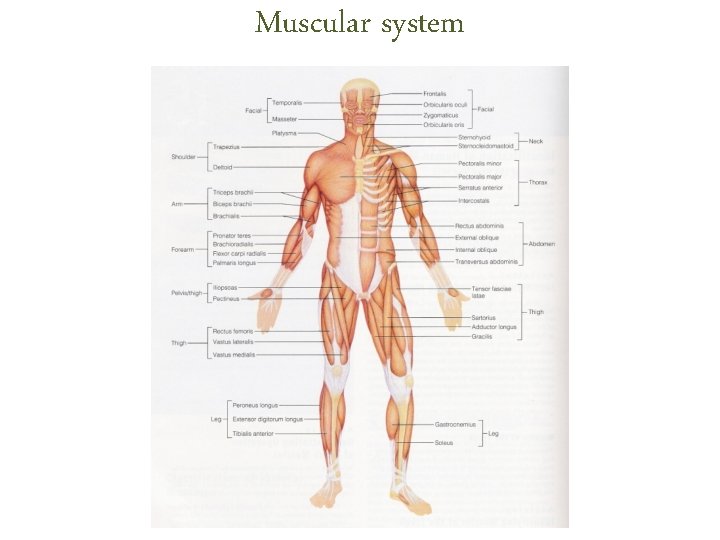
Muscular system
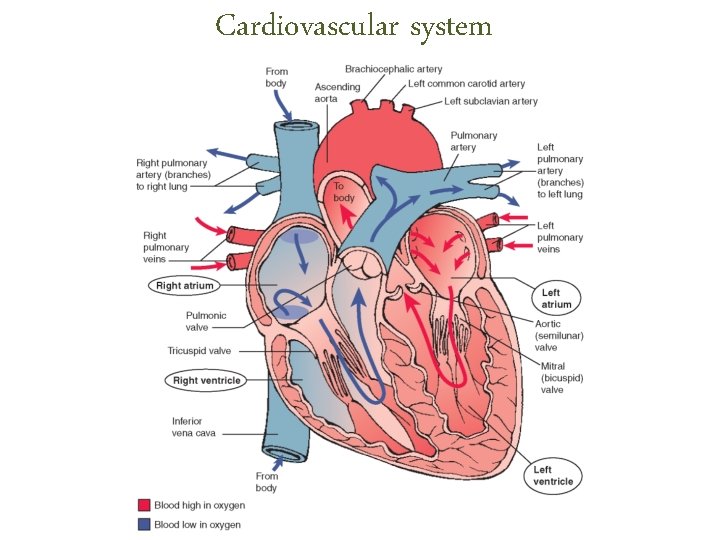
Cardiovascular system
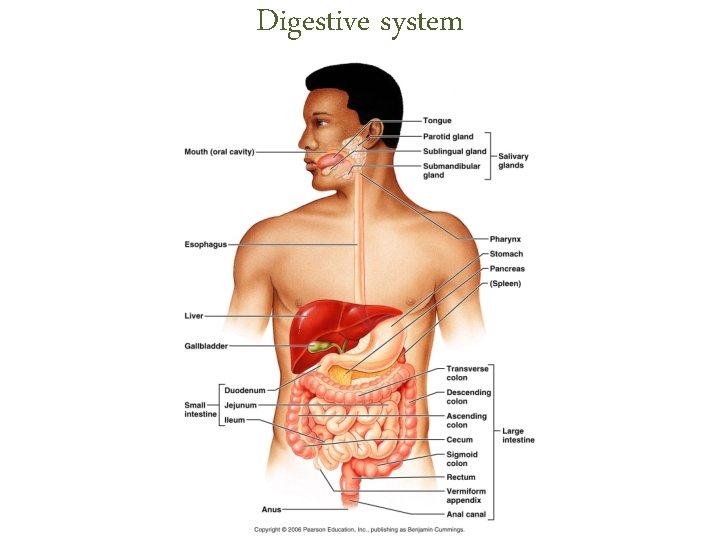
Digestive system
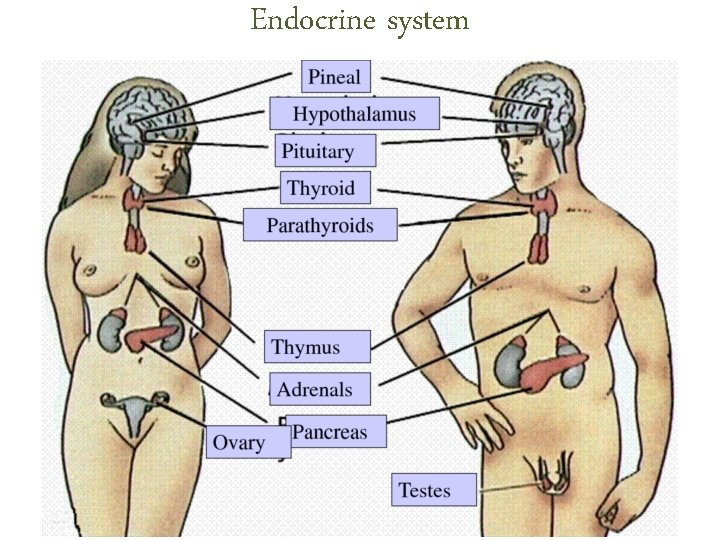
Endocrine system
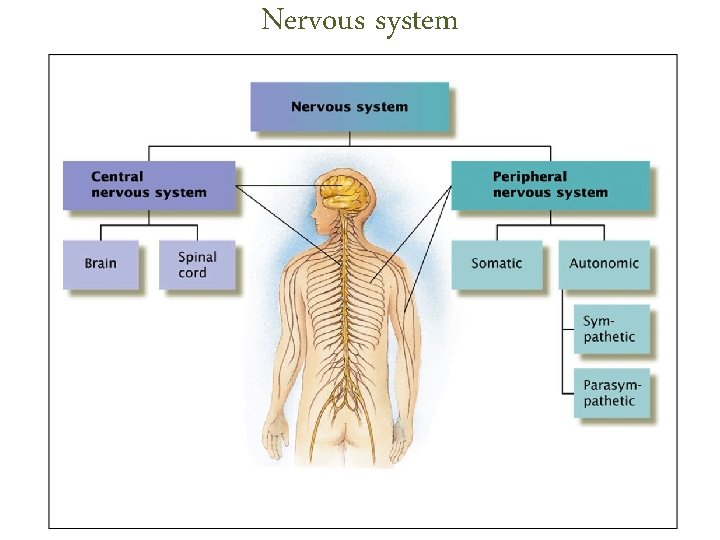
Nervous system
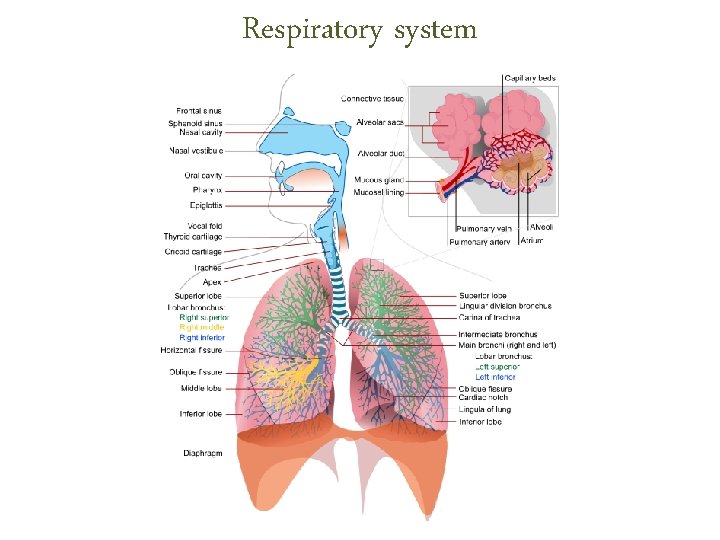
Respiratory system
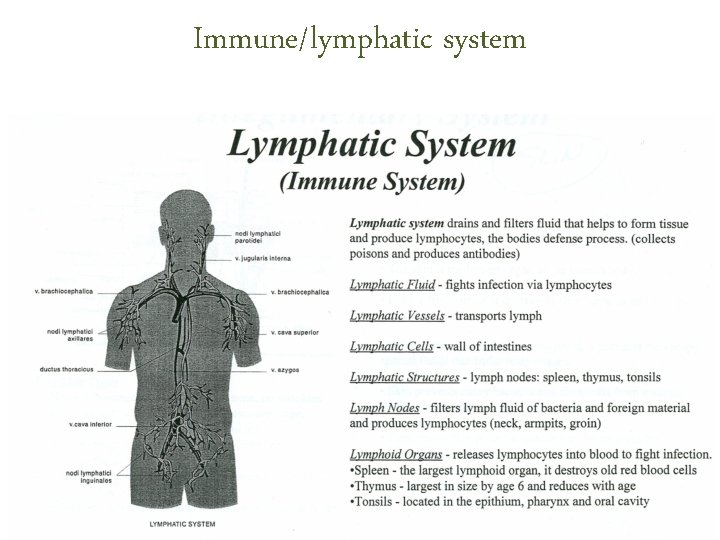
Immune/lymphatic system
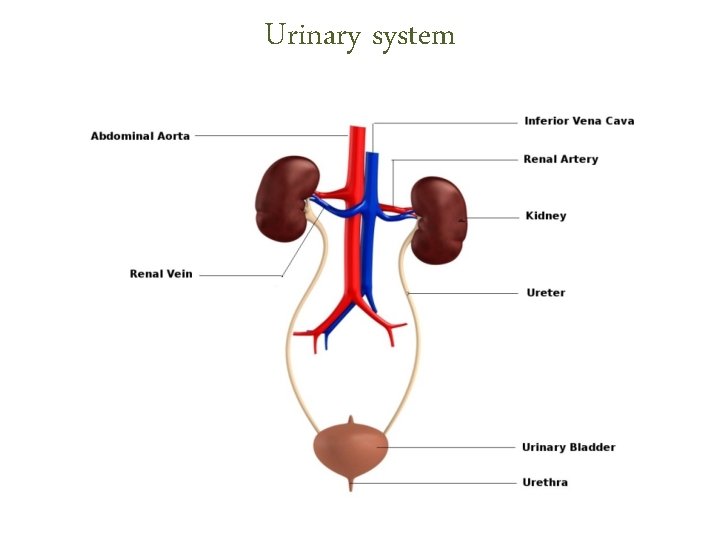
Urinary system
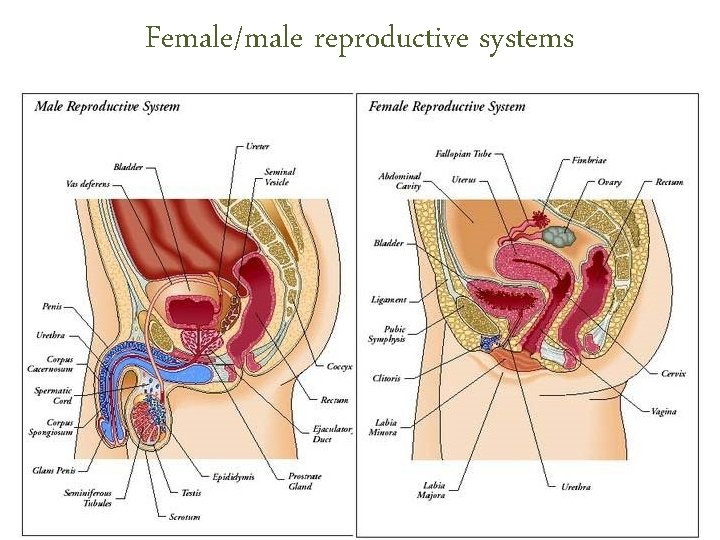
Female/male reproductive systems
Introduction to body treatments Body skin care When it comes to skin care, don't forget the skin on your body. Many people take excellent care of their face, but forget all about the skin on their body. Your body needs to be exfoliated, hydrated and moisturised. To do so, you better start with opening the pores with heat, then unclogging them with scrubs and finish with lotions and creams. Don’t forget to protect your skin with sun screens! • Steam sauna or dry sauna (to open pores) • Take a warm shower • Exfoliation (salt, glove or any exfoliation product) • Wrapping (mud, chocolate, herbal, etc. ) • Apply lotions (according to the skin type) • Sun protection (if needed)
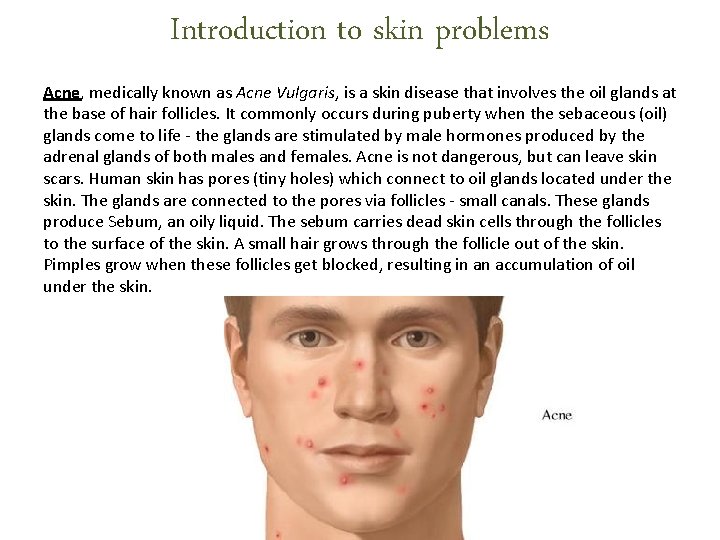
Introduction to skin problems Acne, medically known as Acne Vulgaris, is a skin disease that involves the oil glands at the base of hair follicles. It commonly occurs during puberty when the sebaceous (oil) glands come to life - the glands are stimulated by male hormones produced by the adrenal glands of both males and females. Acne is not dangerous, but can leave skin scars. Human skin has pores (tiny holes) which connect to oil glands located under the skin. The glands are connected to the pores via follicles - small canals. These glands produce Sebum, an oily liquid. The sebum carries dead skin cells through the follicles to the surface of the skin. A small hair grows through the follicle out of the skin. Pimples grow when these follicles get blocked, resulting in an accumulation of oil under the skin.
Introduction to body treatments Body skin care When it comes to skin care, don't forget the skin on your body. Many people take excellent care of their face, but forget all about the skin on their body. Your body needs to be exfoliated, hydrated and moisturised. To do so, you better start with opening the pores with heat, then unclogging them with scrubs and finish with lotions and creams. Don’t forget to protect your skin with sun screens! • Steam sauna or dry sauna (to open pores) • Take a warm shower • Exfoliation (salt, glove or any exfoliation product) • Wrapping (mud, chocolate, herbal, etc. ) • Apply lotions (according to the skin type) • Sun protection (if needed)
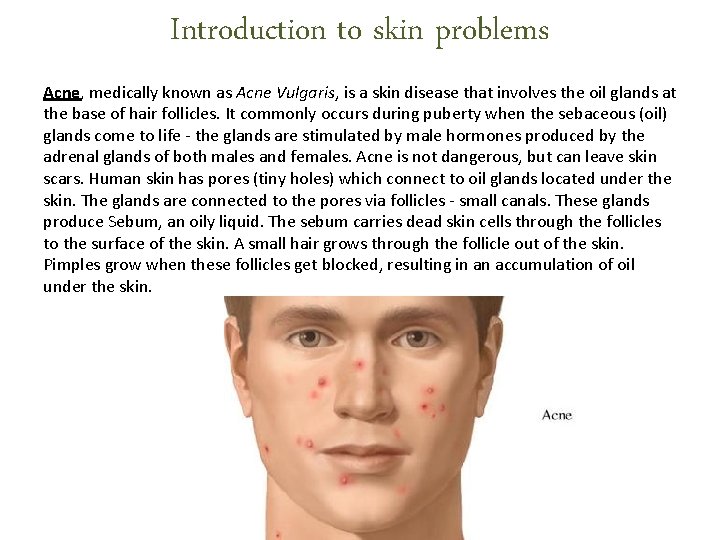
Introduction to skin problems Acne, medically known as Acne Vulgaris, is a skin disease that involves the oil glands at the base of hair follicles. It commonly occurs during puberty when the sebaceous (oil) glands come to life - the glands are stimulated by male hormones produced by the adrenal glands of both males and females. Acne is not dangerous, but can leave skin scars. Human skin has pores (tiny holes) which connect to oil glands located under the skin. The glands are connected to the pores via follicles - small canals. These glands produce Sebum, an oily liquid. The sebum carries dead skin cells through the follicles to the surface of the skin. A small hair grows through the follicle out of the skin. Pimples grow when these follicles get blocked, resulting in an accumulation of oil under the skin.
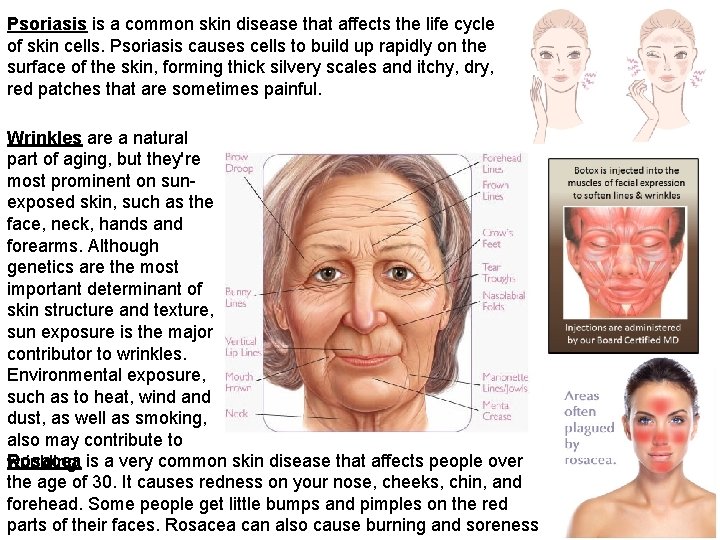
Psoriasis is a common skin disease that affects the life cycle of skin cells. Psoriasis causes cells to build up rapidly on the surface of the skin, forming thick silvery scales and itchy, dry, red patches that are sometimes painful. Wrinkles are a natural part of aging, but they're most prominent on sunexposed skin, such as the face, neck, hands and forearms. Although genetics are the most important determinant of skin structure and texture, sun exposure is the major contributor to wrinkles. Environmental exposure, such as to heat, wind and dust, as well as smoking, also may contribute to Rosacea is a very common skin disease that affects people over wrinkling. the age of 30. It causes redness on your nose, cheeks, chin, and forehead. Some people get little bumps and pimples on the red parts of their faces. Rosacea can also cause burning and soreness
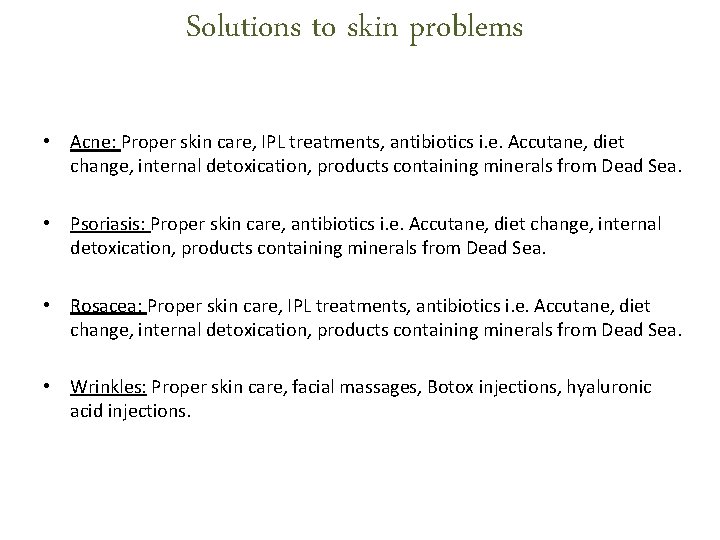
Solutions to skin problems • Acne: Proper skin care, IPL treatments, antibiotics i. e. Accutane, diet change, internal detoxication, products containing minerals from Dead Sea. • Psoriasis: Proper skin care, antibiotics i. e. Accutane, diet change, internal detoxication, products containing minerals from Dead Sea. • Rosacea: Proper skin care, IPL treatments, antibiotics i. e. Accutane, diet change, internal detoxication, products containing minerals from Dead Sea. • Wrinkles: Proper skin care, facial massages, Botox injections, hyaluronic acid injections.
Introduction to consultation process • Greet the client: be polite, speak his/hers language (French/English), be tactful. • Make the client fill the forms. • Listen to the client’s concerns. • Skin evaluation (never tell the client about a problem he/she didn’t ask you about except in the case he/she asked for your general opinion). • Recommend all available treatments to the client – give him/her a choice. Combine treatments if necessary.
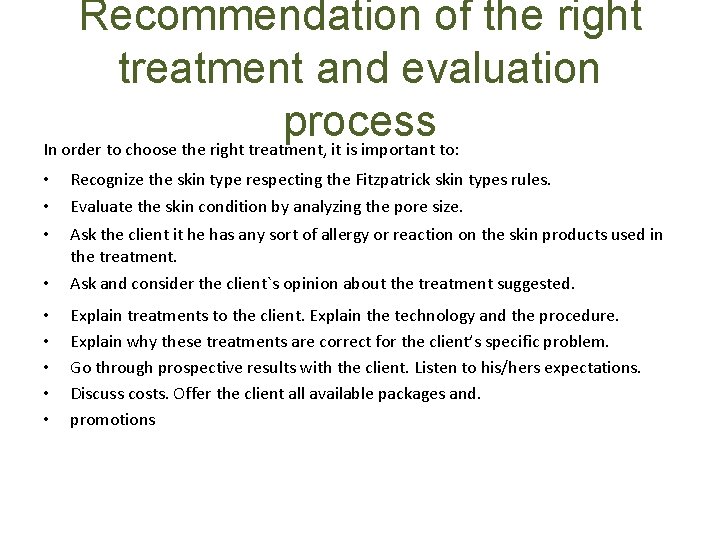
Recommendation of the right treatment and evaluation process In order to choose the right treatment, it is important to: • • • Recognize the skin type respecting the Fitzpatrick skin types rules. • Ask and consider the client`s opinion about the treatment suggested. • • • Explain treatments to the client. Explain the technology and the procedure. Explain why these treatments are correct for the client’s specific problem. Go through prospective results with the client. Listen to his/hers expectations. Discuss costs. Offer the client all available packages and. promotions Evaluate the skin condition by analyzing the pore size. Ask the client it he has any sort of allergy or reaction on the skin products used in the treatment.
Pre and post care instructions • • • Warn the client about all possible effects a treatment may have. Let him/her be prepared to take few days of work if necessary. Tactfully recommend the client to change his/hers life style and diet by explaining how most of the skin conditions are the result of internal problems. Advise the client to detoxify his/hers body before the treatment. Consult the client on the right day/night home care. Recommend the necessary products.
Files, notes and database process • • • Make the client fill the Health Status. Make sure he/she fills all the fields about allergies, any health issues and medications. Make the client read and sign the consent form. Go through possible second effects caused by the treatment with the client. Very important that the client understands and signs a consent form for every treatment! Open a new client’s file. Write carefully the whole process in the file.
Marketing and sales techniques • Traditional marketing: newspapers, radio, television. Has a high cost and low response. Low return on investments for small businesses. Good for big businesses and for recognition. • Direct marketing: “Word for word” – providing reward for recommending a friend, mass mail i. e. Fliers. Low cost, good response. • Social media marketing: Internet, Social networking sites i. e. Facebook, Tweeter, Websites, Mobile apps, Keyword. Low cost, high response.