
Module I Fundamentals of Information Systems This module

- Slides: 25
Module I. Fundamentals of Information Systems: ØThis module explores the Systems approach to Problem Solving and Developing IS Solutions.
LECTURE 1 Ø Information Concepts Ø System Performance and Standards Ø What is an Information System? Ø Computer-Based Information Systems
An Introduction to Information Systems
Why Learn About Information Systems? Information systems used in most professions ◦ Sales representatives ◦ Managers ◦ Financial planners Indispensable for achieving career goals 4
Introduction Information system (IS) ◦ A set of interrelated components that collect, manipulate, and disseminate data and information, and provide feedback to meet an objective ◦ Businesses Can use information systems to increase revenues and reduce costs 5
Information Concepts Information ◦ One of an organization’s most valuable resources ◦ Often confused with the term data 6
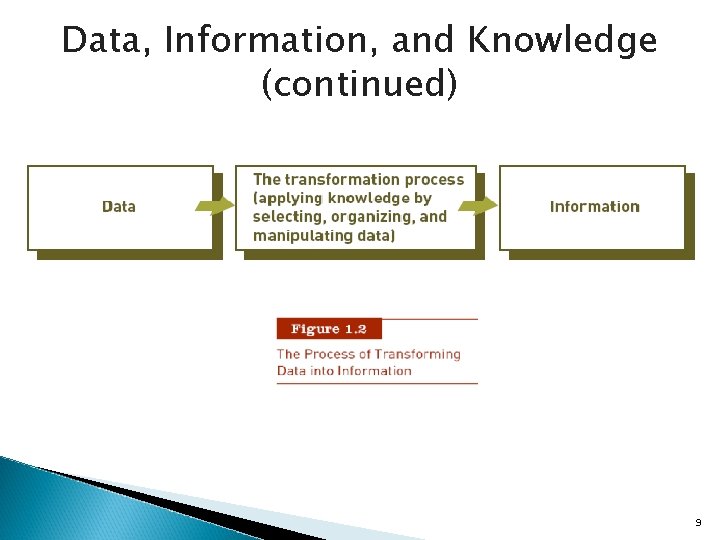
Data, Information, and Knowledge Data ◦ Raw facts Information ◦ Collection of facts organized in such a way that they have value beyond the facts themselves Process ◦ Set of logically related tasks Knowledge ◦ Awareness and understanding of a set of information 7
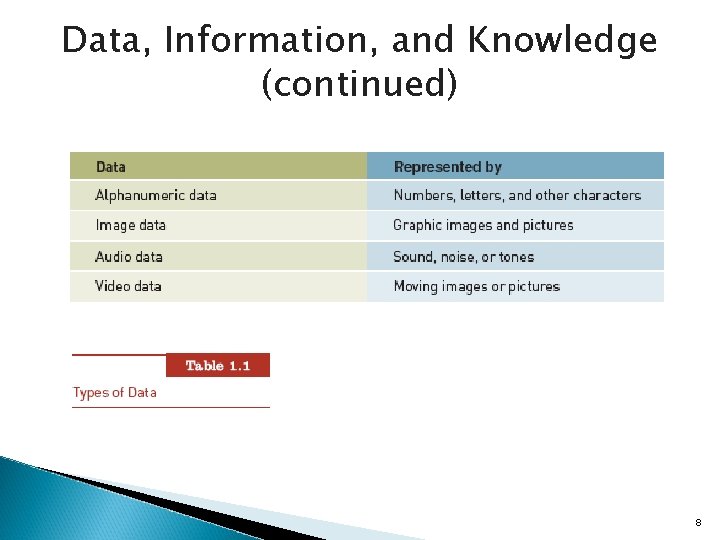
Data, Information, and Knowledge (continued) 8
Data, Information, and Knowledge (continued) 9
The Characteristics of Valuable Information If an organization’s information is not accurate or complete ◦ People can make poor decisions, costing thousands, or even millions, of dollars Depending on the type of data you need ◦ Some characteristics become more valuable than others 10
The Value of Information Directly linked to how it helps decision makers achieve their organization’s goals Valuable information ◦ Can help people and their organizations perform tasks more efficiently and effectively 11
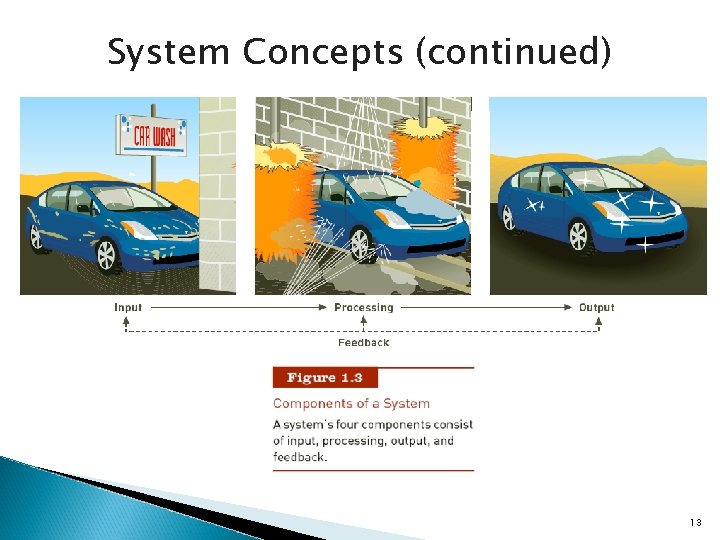
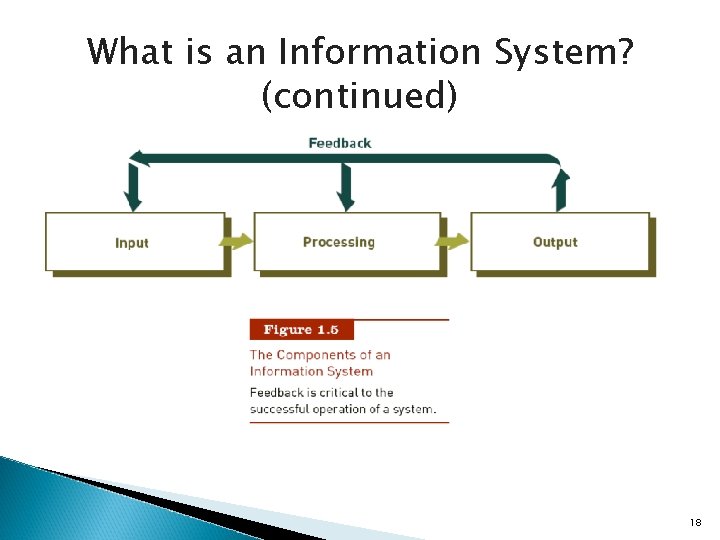
System Concepts System ◦ Set of elements or components that interact to accomplish goals Components of a system ◦ ◦ Inputs Processing mechanisms Outputs Feedback 12
System Concepts (continued) 13
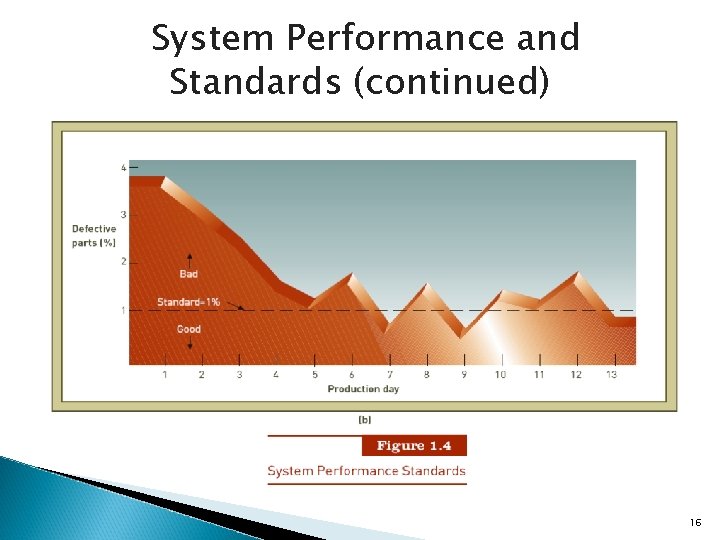
System Performance and Standards Efficiency ◦ Measure of what is produced divided by what is consumed Effectiveness ◦ Extent to which system attains its goals System performance standard ◦ Specific objective of the system 14
System Performance and Standards (continued) 15
System Performance and Standards (continued) 16
What is an Information System? Information system (IS) is a set of interrelated elements that ◦ Collect (input), manipulate (process), store, and disseminate (output) data and information, and provide a corrective reaction (feedback mechanism) to meet an objective Principles of Information Systems, Ninth Edition 17
What is an Information System? (continued) 18
Input, Processing, Output, Feedback Input ◦ Activity of gathering and capturing raw data Processing ◦ Converting data into useful outputs Output ◦ Production of useful information, usually in the form of documents and reports Feedback ◦ Information from the system that is used to make changes to input or processing activities 19
Manual and Computerized Information Systems An information system can be: ◦ Manual ◦ Computerized 20
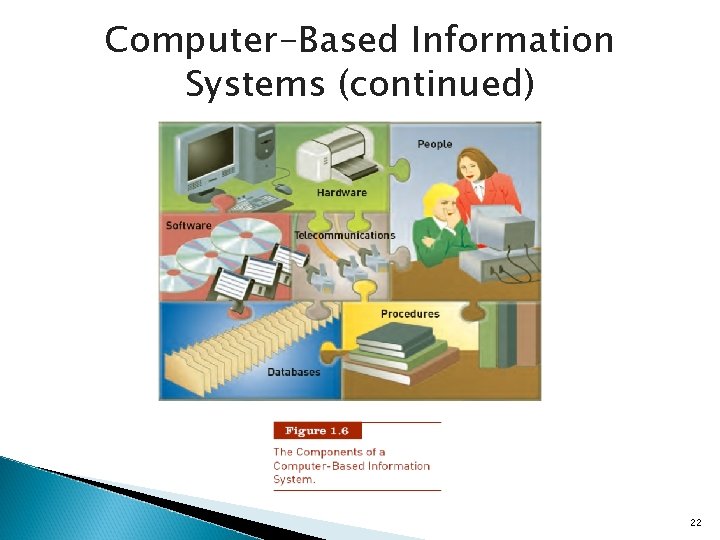
Computer-Based Information Systems Single set of hardware, software, databases, telecommunications, people, and procedures ◦ That are configured to collect, manipulate, store, and process data into information Technology infrastructure ◦ Includes all hardware, software, databases, telecommunications, people, and procedures Configured to collect, manipulate, store, and process data into information 21
Computer-Based Information Systems (continued) 22
Computer-Based Information Systems (continued) Hardware ◦ Consists of computer equipment used to perform input, processing, and output activities Software ◦ Consists of the computer programs that govern the operation of the computer Database ◦ Organized collection of facts and information, typically consisting of two or more related data files 23
Computer-Based Information Systems (continued) Telecommunications, networks, and the Internet ◦ The electronic transmission of signals for communications Networks ◦ Connect computers and equipment to enable electronic communication Internet ◦ World’s largest computer network, consisting of thousands of interconnected networks, all freely exchanging information 24
Computer-Based Information Systems (continued) People ◦ Can be the most important element in most computer-based information systems Procedures ◦ Include strategies, policies, methods, and rules for using the CBIS 25