
Module H Unit 1 Matter Lesson 1 Introduction
- Slides: 59
Module H Unit 1: Matter Lesson 1: Introduction to Matter
Matter- anything that has mass and takes up space. Matter makes up the materials around you. Mass- the amount of matter in an object. Even air has mass. Weight- the measure of gravitational force on an object. * The standard scientific unit for weight is grams. 100 grams = approx. 1 N on Earth. (1 N is about 0. 25 lbs. ) Volume- the amount of space that an object takes up. Density- The amount of mass in a volume.
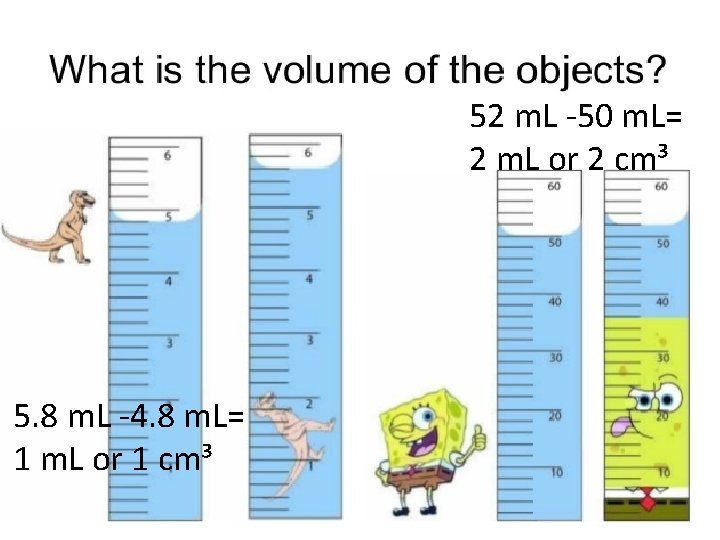
Water displacement to find volume: 52 m. L -50 m. L= 2 m. L or 2 cm³ 5. 8 m. L -4. 8 m. L= 1 m. L or 1 cm³
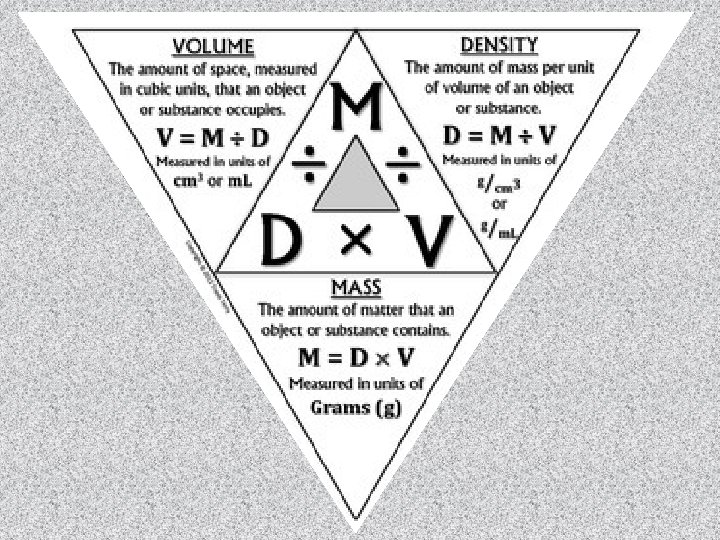
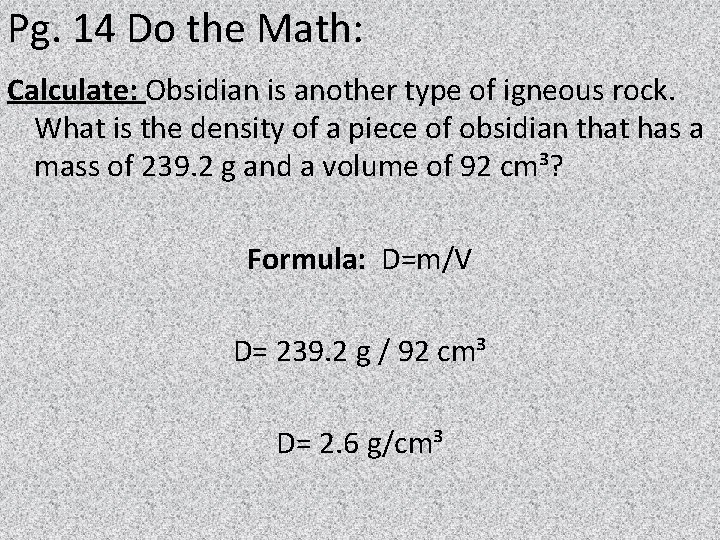
Pg. 14 Do the Math: Calculate: Obsidian is another type of igneous rock. What is the density of a piece of obsidian that has a mass of 239. 2 g and a volume of 92 cm³? Formula: D=m/V D= 239. 2 g / 92 cm³ D= 2. 6 g/cm³
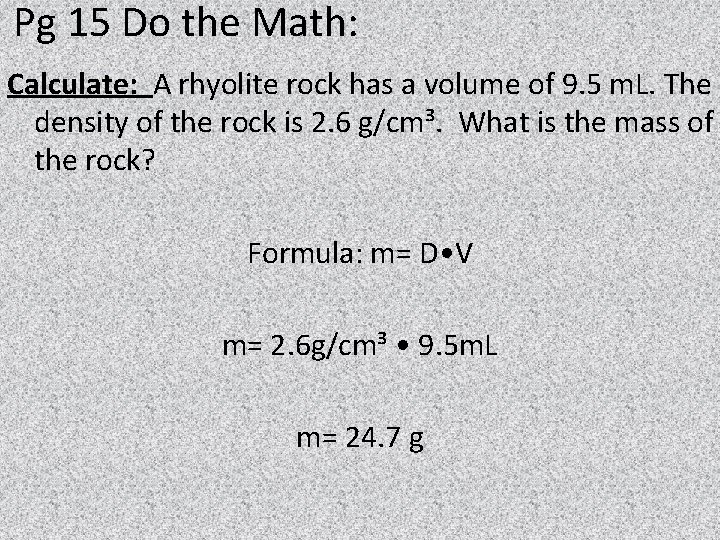
Pg 15 Do the Math: Calculate: A rhyolite rock has a volume of 9. 5 m. L. The density of the rock is 2. 6 g/cm³. What is the mass of the rock? Formula: m= D • V m= 2. 6 g/cm³ • 9. 5 m. L m= 24. 7 g
Module H Unit 1: Matter Lesson 2: Properties of Matter
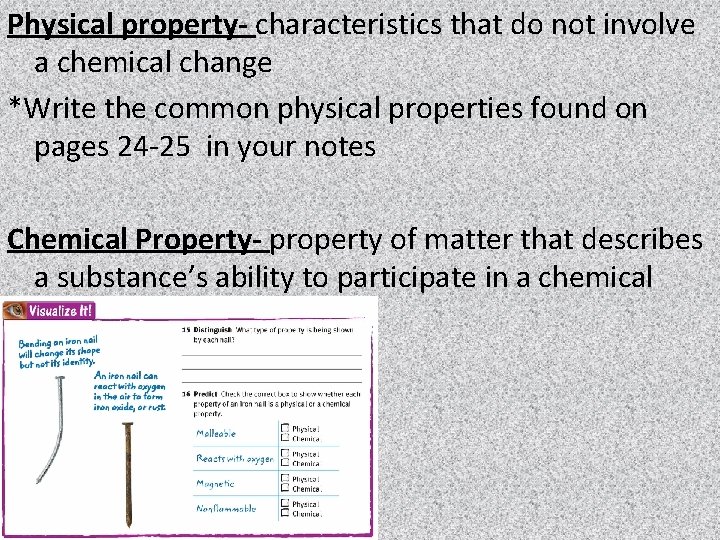
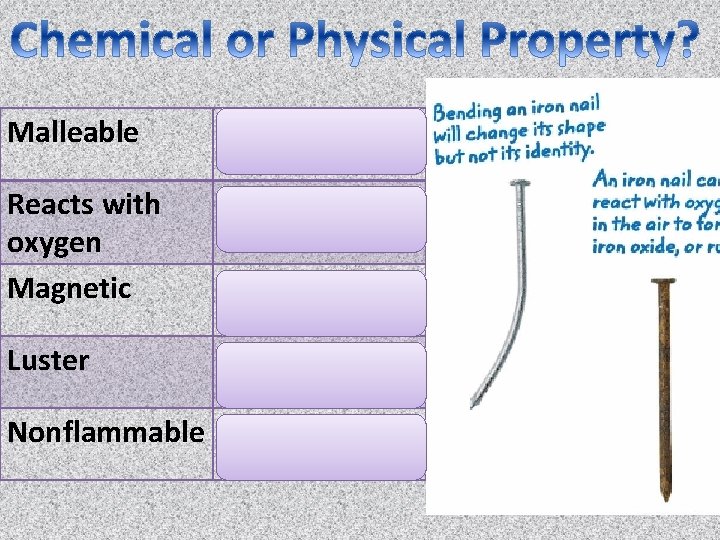
Physical property- characteristics that do not involve a chemical change *Write the common physical properties found on pages 24 -25 in your notes Chemical Property- property of matter that describes a substance’s ability to participate in a chemical reaction.
Malleable Physical Reacts with oxygen Magnetic Chemical Luster Physical Nonflammable Chemical
Module H Unit 1: Matter Lesson 3: Physical and Chemical Changes
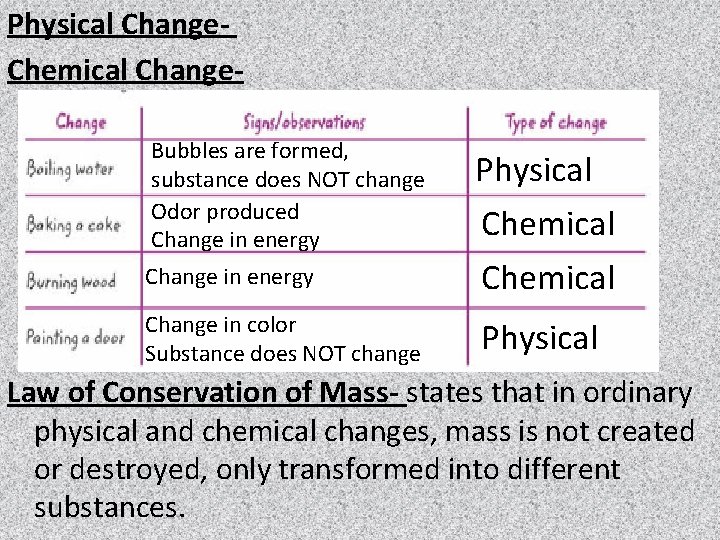
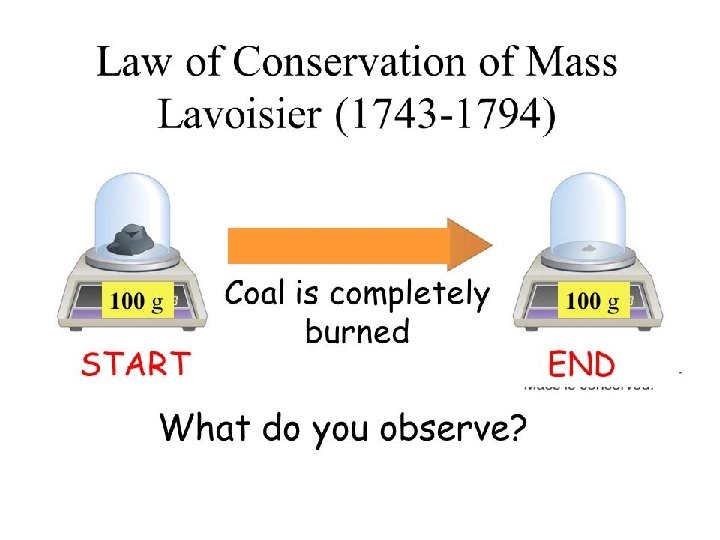
Physical Change. Chemical Change. Bubbles are formed, substance does NOT change Odor produced Change in energy Physical Chemical Change in color Substance does NOT change Physical Law of Conservation of Mass- states that in ordinary physical and chemical changes, mass is not created or destroyed, only transformed into different substances.
Module H Unit 1: Matter Lesson 4: Pure Substance and Mixtures
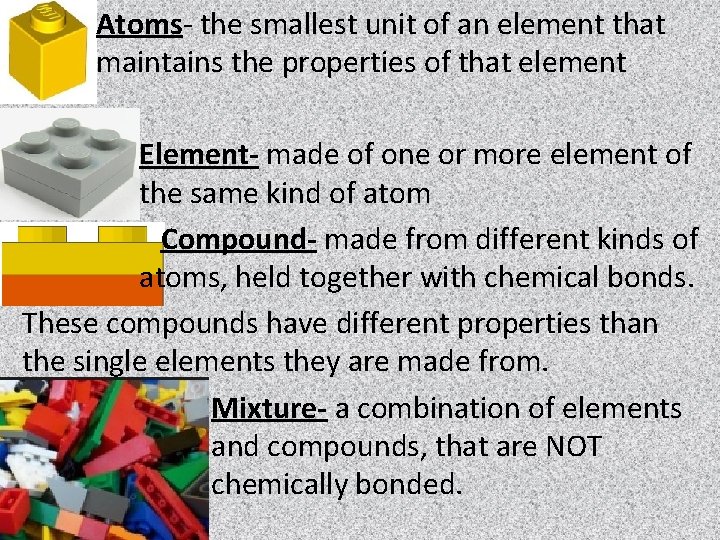
Atoms- the smallest unit of an element that maintains the properties of that element Element- made of one or more element of the same kind of atom Compound- made from different kinds of atoms, held together with chemical bonds. These compounds have different properties than the single elements they are made from. Mixture- a combination of elements and compounds, that are NOT chemically bonded.
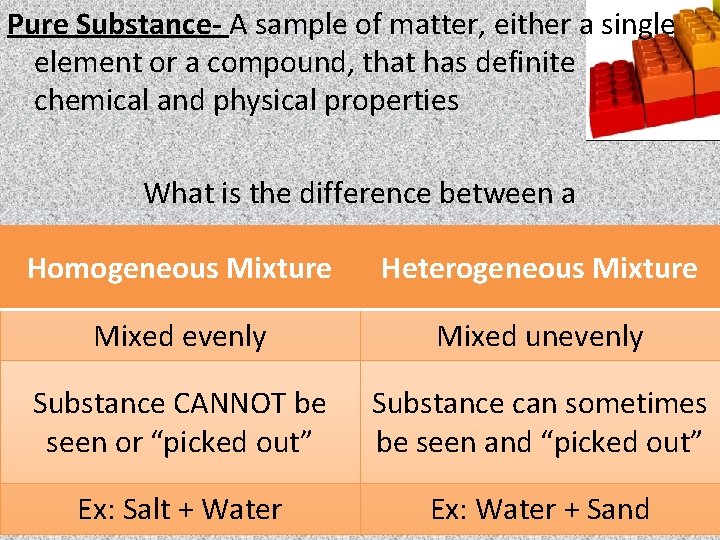
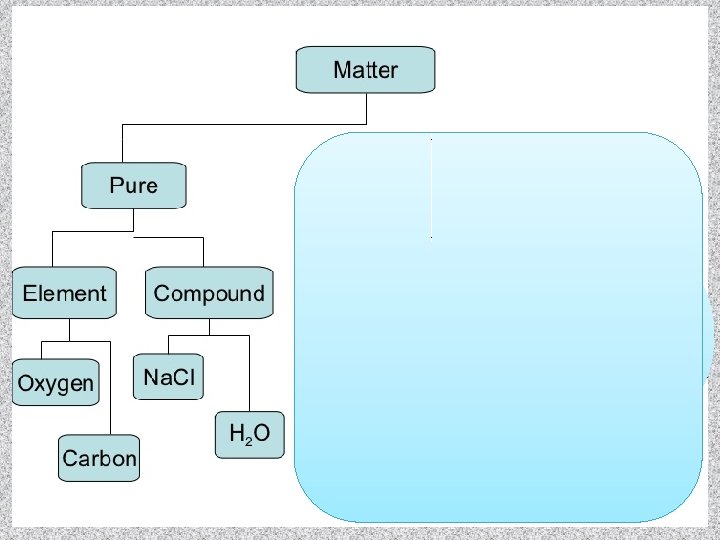
Pure Substance- A sample of matter, either a single element or a compound, that has definite chemical and physical properties What is the difference between a Homogeneous Mixture Heterogeneous Mixture Mixed evenly Mixed unevenly Substance CANNOT be seen or “picked out” Substance can sometimes be seen and “picked out” Ex: Salt + Water Ex: Water + Sand
Module H Unit 1: Matter Lesson 5: States of Matter
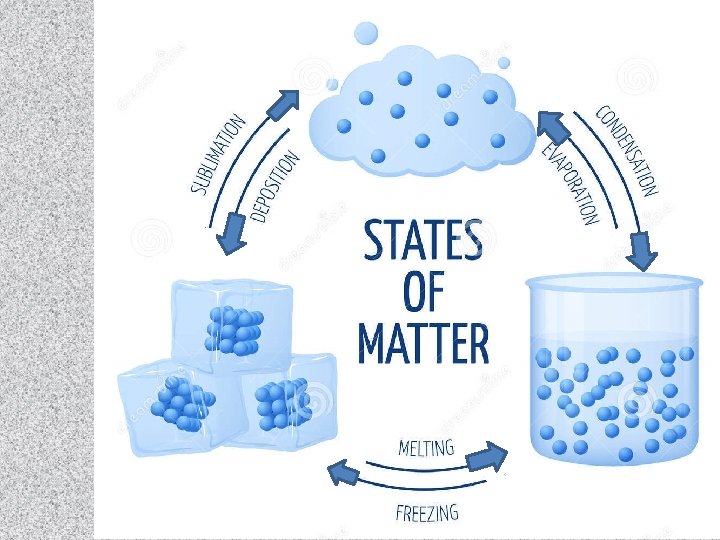
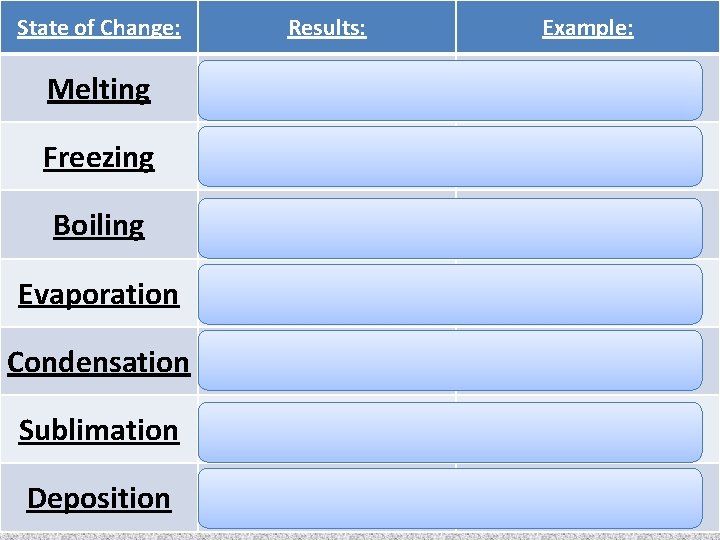
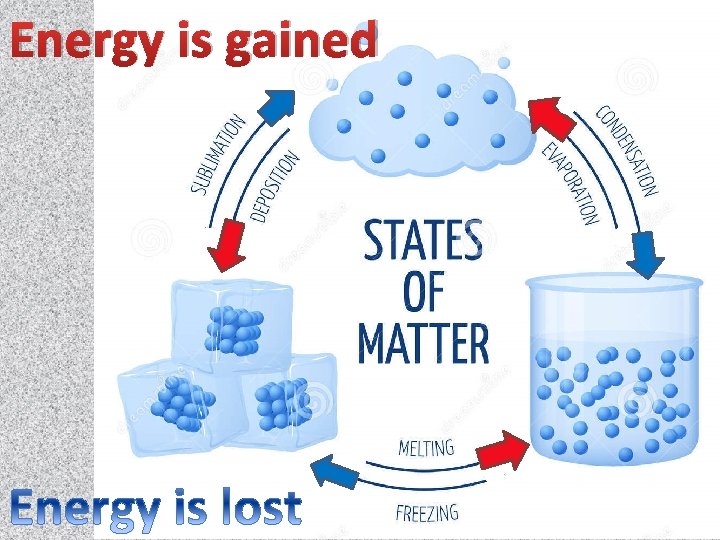
State of Change: Results: Example: Melting Butter melts in a warm A solid becomes a liquid pan. Freezing Molten lead hardens A liquid becomes a solid when cooled. Boiling A liquid becomes a gas (throughout) Water boils, giving off water vapor. Evaporation A liquid becomes a gas (on the surface) A puddle dries out. A gas becomes a liquid Water droplets form on the side of a cool glass. A solid becomes a gas Dry ice becomes a gas at room temperature. A gas becomes a solid Frost forms on a cold window pane. Condensation Sublimation Deposition
Module H Unit 1: Matter Lesson 6: Change in State
Energy is gained
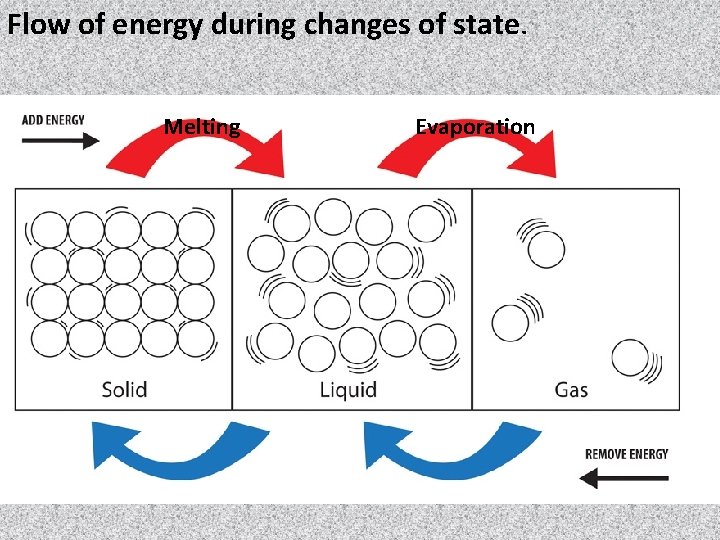
Flow of energy during changes of state. Melting Evaporation
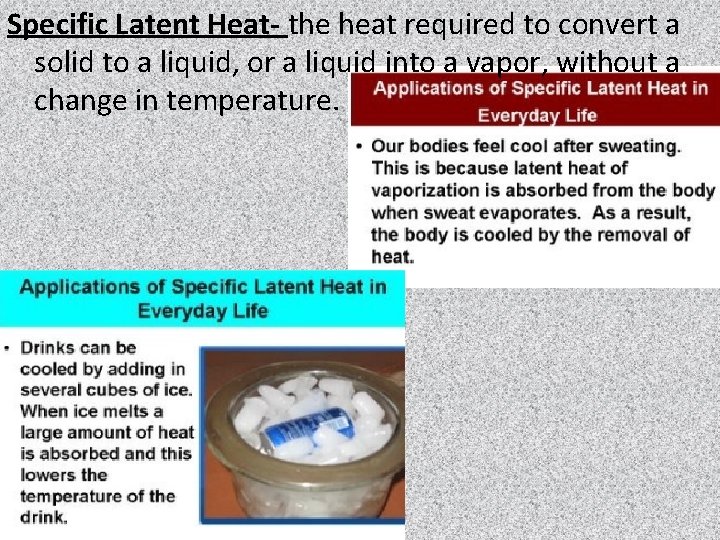
Specific Latent Heat- the heat required to convert a solid to a liquid, or a liquid into a vapor, without a change in temperature.
Unit 1 TEST Review How do you find volume of an odd shaped item? Place the item in a graduated cylinder and measure the amount of displaced water What tools do you need to determine the density of an item? You will need a graduated cylinder What are Physical Changes? Changes that can be observed without a change it the identity of the substance (magnetism, solubility, malleability) What are Chemical Changes? Changes the substance (example: cooking meat) How are Chemical and Physical changes alike? Both obey the law of conservation of mass Different? Physical: changes the way it may look, Chemical: changes the substance What are the chemical properties of water? Water reacts with metal Law of Conservation of Mass: Mass cannot be created or destroyed, only changed.
Pure Substance: includes elements and compounds Mixture: the parts keep their own properties Solution: allows light to pass through Example of a solution: salt water Suspension: looks cloudy, you may see tiny particle floating in it. Example of a suspension: sandy water Use the Law of Conversation of Mass to explain melting. although it may appear that you have less substance, the liquid has only changed from a solid to a liquid, the mass remains the same. sublimation? Same theory as melting, except the fluid goes from a solid to a gas without a change in mass Properties of a solid: has a definite shape What happens to the temperature during evaporation? It remains the same
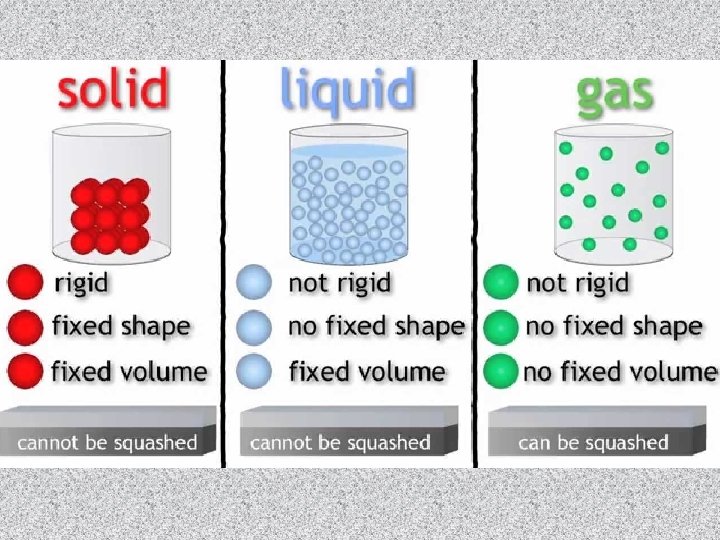
States of Matter: melting – A solid becomes a liquid Freezing- A liquid becomes a solid Boiling- A liquid becomes a gas (throughout) Evaporation- A liquid becomes a gas (on the surface) Condensation- A gas becomes a liquid Sublimation- A solid becomes a gas deposition- A gas becomes a solid
Module H Unit 2: Energy Lesson 1: Introduction to Energy
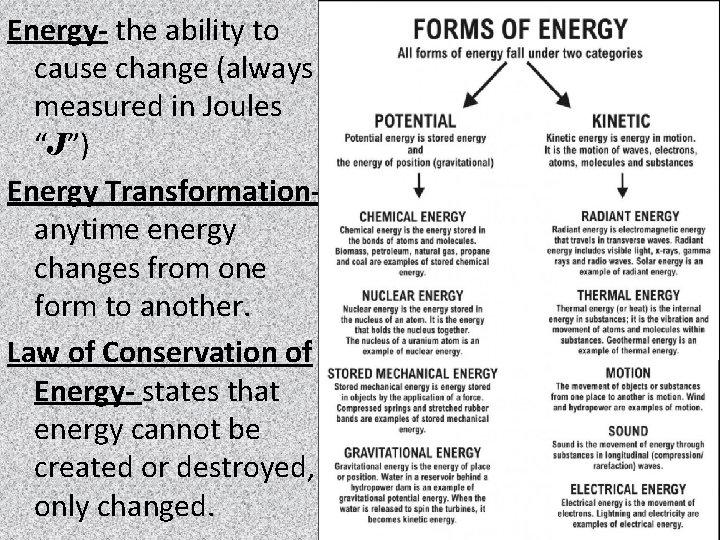
Energy- the ability to cause change (always measured in Joules “J”) Energy Transformationanytime energy changes from one form to another. Law of Conservation of Energy- states that energy cannot be created or destroyed, only changed.
Module H Unit 2: Energy Lesson 2: Temperature
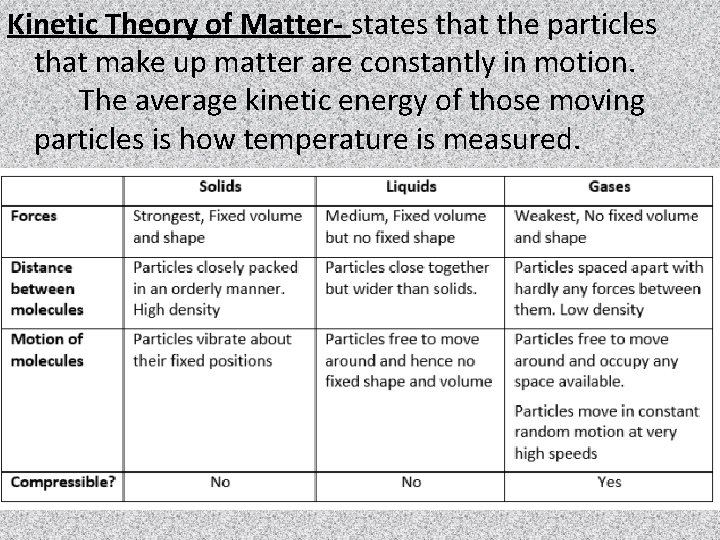
Kinetic Theory of Matter- states that the particles that make up matter are constantly in motion. The average kinetic energy of those moving particles is how temperature is measured.
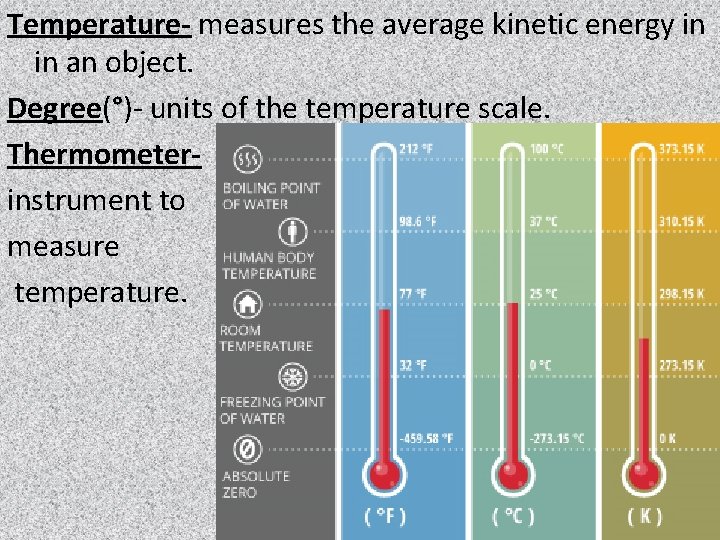
Temperature- measures the average kinetic energy in an object. Degree(°)- units of the temperature scale. Thermometerinstrument to measure temperature.
Module H Unit 2: Energy Lesson 3: Thermal Energy and Heat
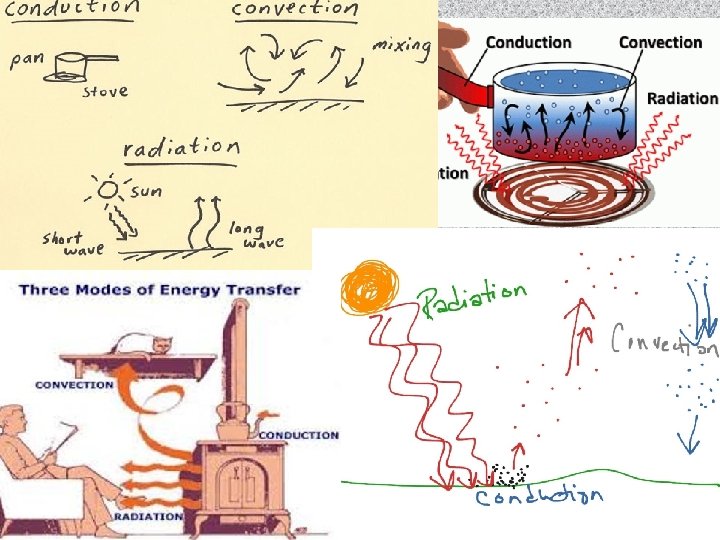
Thermal Energy- the kinetic energy of all particles in an object Heat- energy transferred from hot objects to cold objects Calorie (cal. )- the amount of energy needed to raise the temperature of 1 g of water 1 °C. Conduction- transfer of heat through direct touch Conductor- a material that transfers heat very well Insulator- a material that reduces or prevents the transfer of heat Convection- movement of matter due to differences in density. Radiation- transfer of energy as electromagnetic waves.
Module H Unit 2: Energy Lesson 4: Effects of Energy Transfer
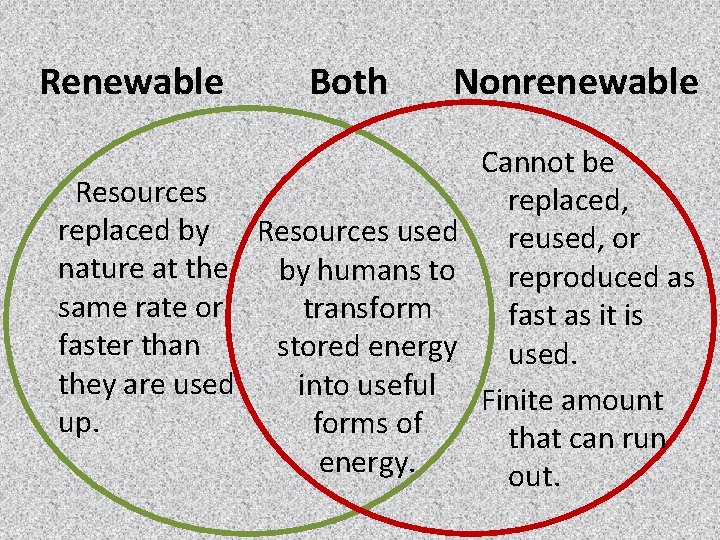
Renewable Both Nonrenewable Cannot be Resources replaced, replaced by Resources used reused, or nature at the by humans to reproduced as same rate or transform fast as it is faster than stored energy used. they are used into useful Finite amount up. forms of that can run energy. out.
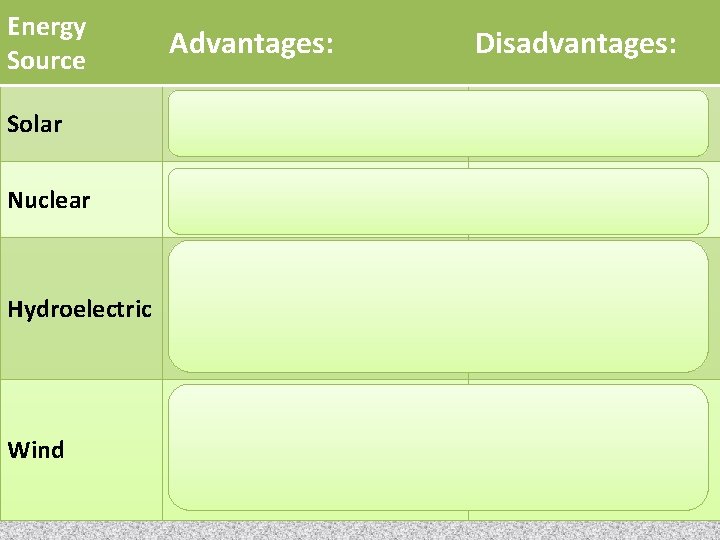
Energy Source Advantages: Disadvantages: Solar *renewable *nonpolluting *not available everywhere Nuclear *energy from small mass *no harmful gases *dangerous accidents *radioactive waste *renewable Hydroelectric *nonpolluting Wind *renewable *nonpolluting *changes landscapes and habitats *dam failure could endanger people *not available everywhere *noise pollution *threatens animals
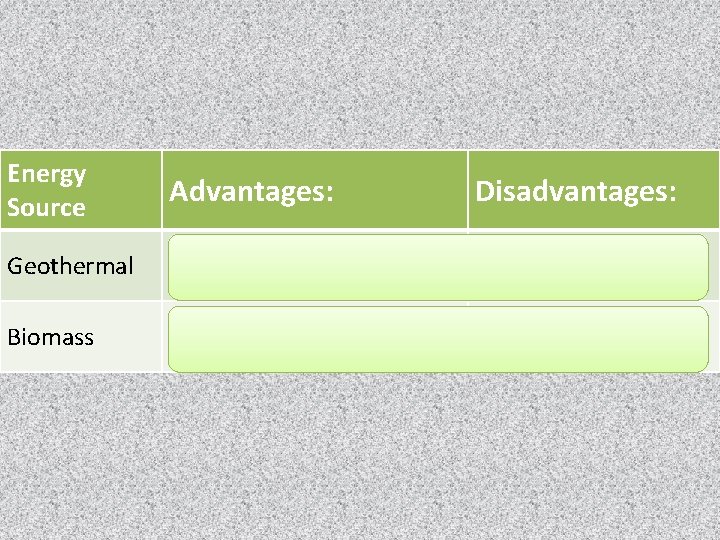
Energy Source Advantages: Disadvantages: Geothermal *renewable *nonpolluting *only available in certain places Biomass *renewable *reduces waste in landfills *produces carbon dioxide
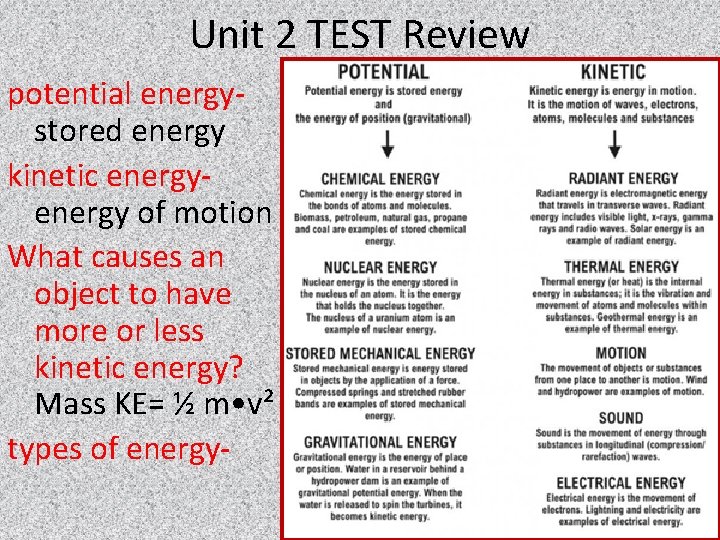
Unit 2 TEST Review potential energy- stored energy kinetic energy- energy of motion What causes an object to have more or less kinetic energy? Mass KE= ½ m • v² types of energy-
thermal energy- heat transfers from an object of higher temperature to an object of lower temperature renewable energy- Resources replaced as they are used up. nonrenewable energy- Cannot be reproduced as fast as it is used. Finite amount that can run out. calorie- the amount of energy needed to raise the temperature of 1 g of water 1 °C. (incorrect on test) How do the particles react at different temperatures? Particles have less energy at lower temperatures What type of energy do we mostly use in the USA? Fossil fuels
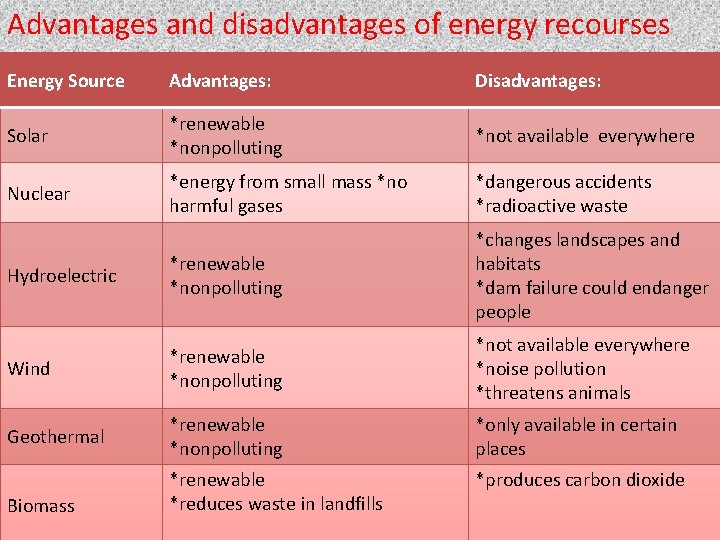
Advantages and disadvantages of energy recourses Energy Source Advantages: Disadvantages: Solar *renewable *nonpolluting *not available everywhere Nuclear *energy from small mass *no harmful gases *dangerous accidents *radioactive waste Hydroelectric *renewable *nonpolluting *changes landscapes and habitats *dam failure could endanger people Wind *renewable *nonpolluting *not available everywhere *noise pollution *threatens animals Geothermal *renewable *nonpolluting *only available in certain places *renewable *reduces waste in landfills *produces carbon dioxide Biomass
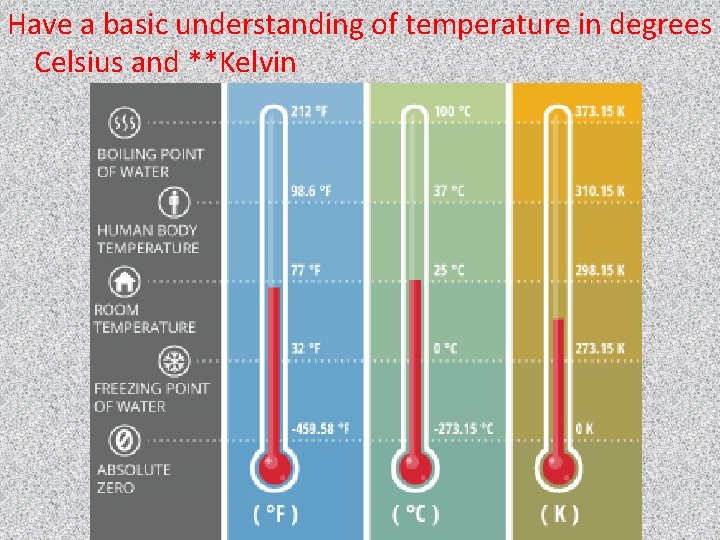
Have a basic understanding of temperature in degrees Celsius and **Kelvin
**Know types of heat transfer **Conductor **Insulator **Radiation
Module H Unit 3: Atoms and the Periodic Table Lesson 1: The Atom
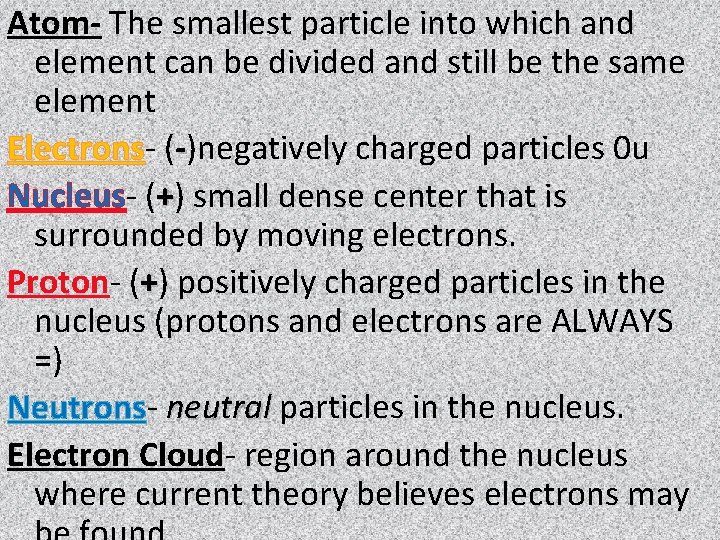
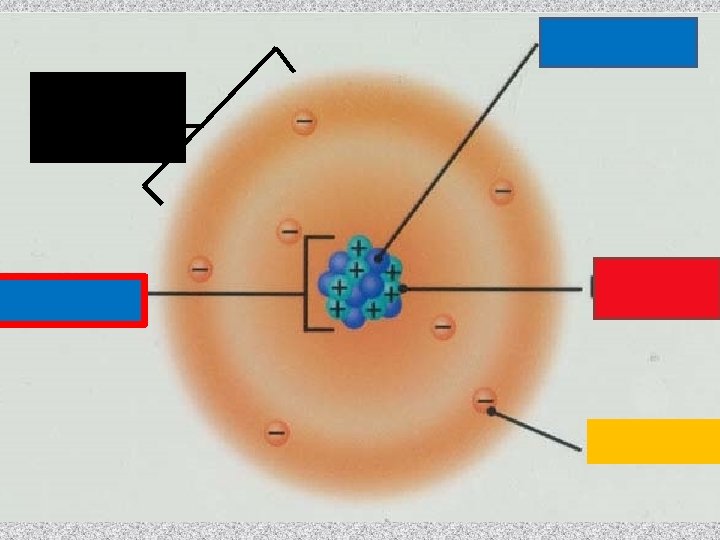
Atom- The smallest particle into which and element can be divided and still be the same element Electrons- (-)negatively charged particles 0 u Nucleus- (+) small dense center that is surrounded by moving electrons. Proton- (+) positively charged particles in the nucleus (protons and electrons are ALWAYS =) Neutrons- neutral particles in the nucleus. neutral Electron Cloud- region around the nucleus where current theory believes electrons may
Electron Cloud
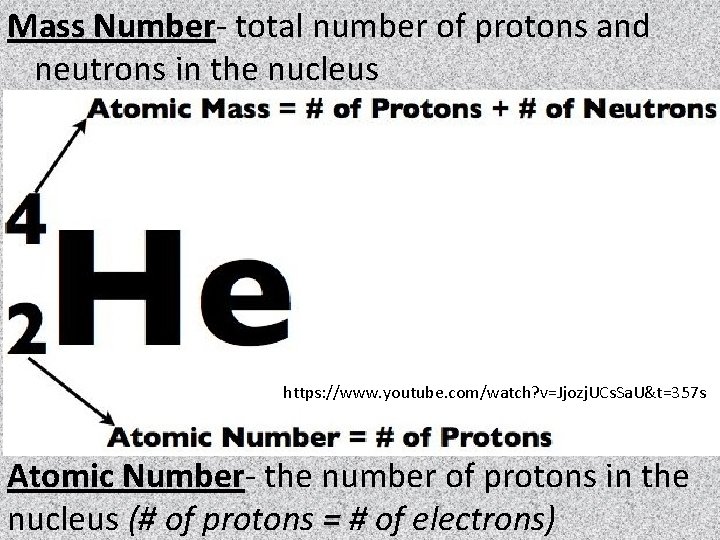
Mass Number- total number of protons and neutrons in the nucleus https: //www. youtube. com/watch? v=Jjozj. UCs. Sa. U&t=357 s Atomic Number- the number of protons in the nucleus (# of protons = # of electrons)
Module H Unit 3: Atoms and the Periodic Table Lesson 2: The Periodic Table
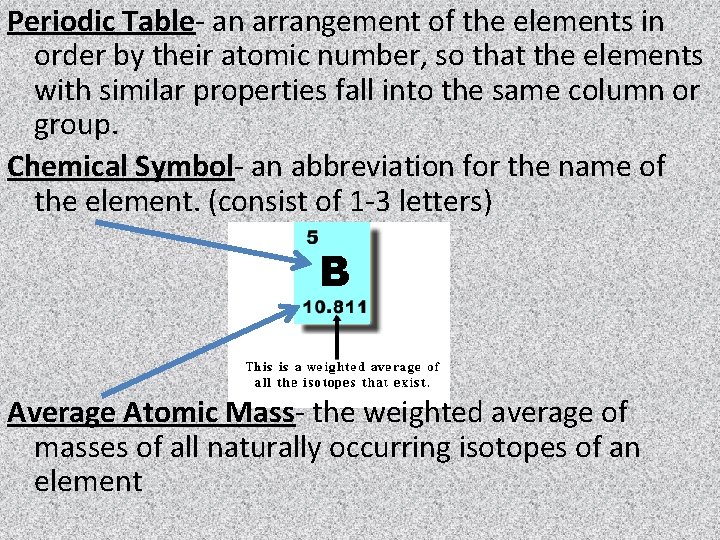
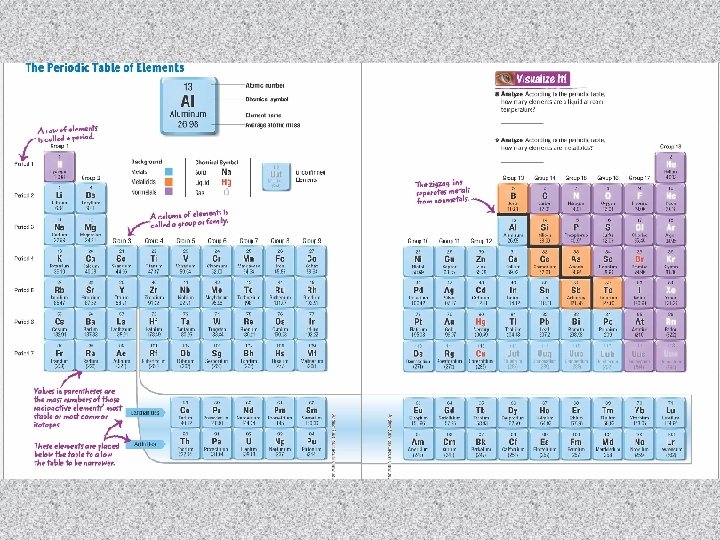
Periodic Table- an arrangement of the elements in order by their atomic number, so that the elements with similar properties fall into the same column or group. Chemical Symbol- an abbreviation for the name of the element. (consist of 1 -3 letters) Average Atomic Mass- the weighted average of masses of all naturally occurring isotopes of an element
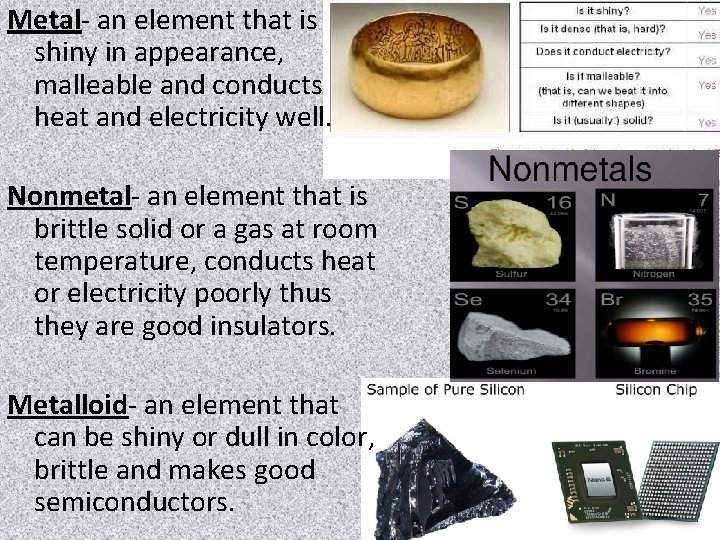
Metal- an element that is shiny in appearance, malleable and conducts heat and electricity well. Nonmetal- an element that is brittle solid or a gas at room temperature, conducts heat or electricity poorly thus they are good insulators. Metalloid- an element that can be shiny or dull in color, brittle and makes good semiconductors.
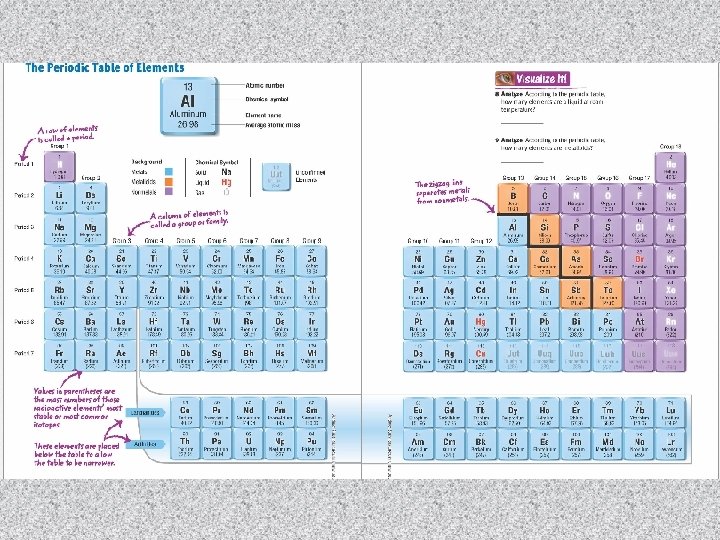
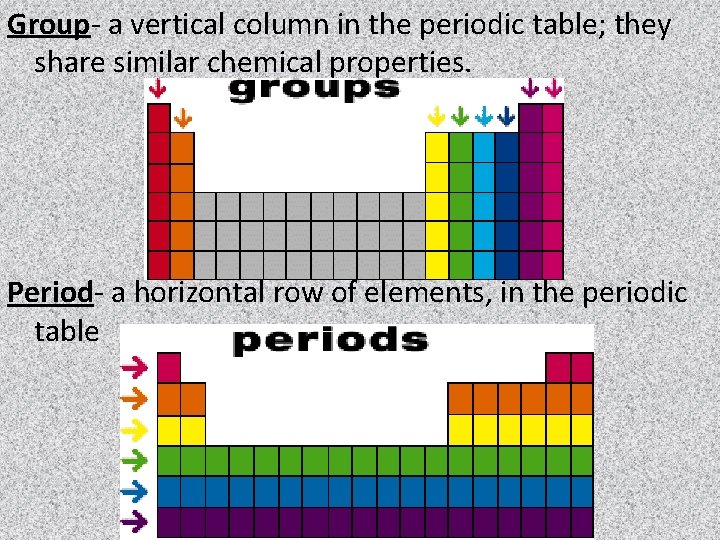
Group- a vertical column in the periodic table; they share similar chemical properties. Period- a horizontal row of elements, in the periodic table
Module H Unit 3: Atoms and the Periodic Table Lesson 3: Electrons and Chemical Bonding
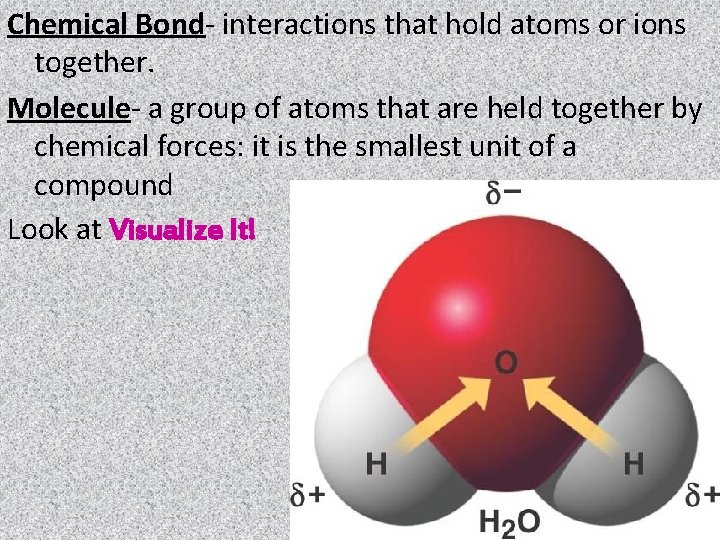
Chemical Bond- interactions that hold atoms or ions together. Molecule- a group of atoms that are held together by chemical forces: it is the smallest unit of a compound Look at Visualize It!
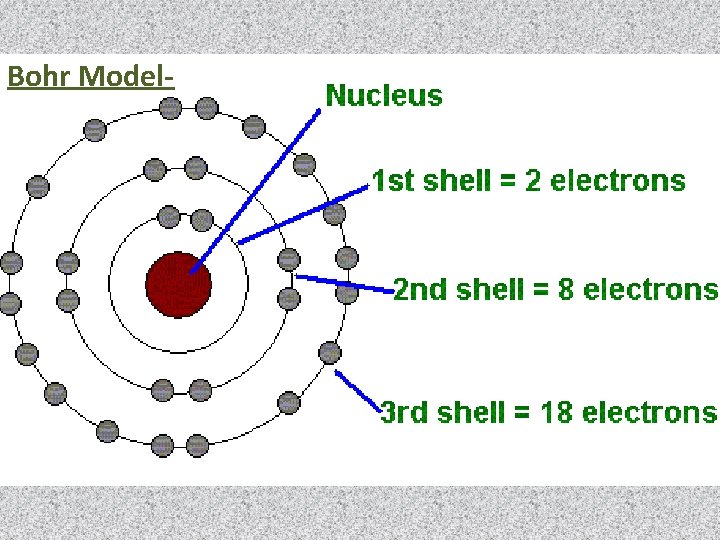
Bohr Model-
Valence Electrons- electrons found on the outmost energy level Ion- a charged particle that forms when an atom or group of atoms gains or loses one or more electrons. * An atom forms bonds when the outmost energy level is not full
Module H Unit 3: Atoms and the Periodic Table Lesson 4: Ionic, Covalent, and Metallic Bonding