
MODULE GOVERNMENT PROCESS REENGINEERING FOR EGOVERNANCE Mohan Karambelkar
MODULE: GOVERNMENT PROCESS REENGINEERING FOR EGOVERNANCE Mohan Karambelkar
WHY GPR? e-Government is Not about Computers and Website but about services to citizens & businesses e-Government is Not about translating processes but about transforming processes 2
NEED FOR GPR Just Automation � As-Is computerization � IT enabled processes with no improvement in the service levels Poor cost benefit ratio � Minimal impact / improvement in service delivery and administration Poor Accessibility � Minimal online or self services to the stakeholders Poor Governance � Not meeting requirements Solution is Government Process Reengineering
GPR/BPR In nutshell, GPR is undertaken to address ‘problems’ or ‘needs’ of the organization or its customers with an objective to improve the overall quality of the services 4
OBJECTIVES OF THE SESSION Knowledge � Understand steps for GPR Skills � How to prioritize the services � How to document the service processes � How to look for improvement in process Behaviour/ attitude � Views on transformation (instead of translation) 5
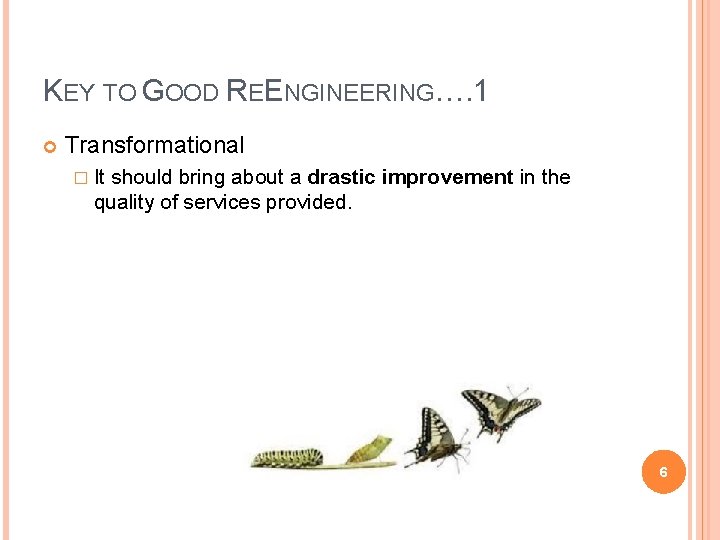
KEY TO GOOD REENGINEERING…. 1 Transformational � It should bring about a drastic improvement in the quality of services provided. 6
KEY TO GOOD REENGINEERING…. 2 Innovativeness � Innovatively and come up with solutions rather than replicating the manual system. 7
KEY TO GOOD REENGINEERING…. 3 Rationalization of Application form and data requirements � Very often the information asked for in the application is rarely used or is already available with the Government. A good BPR would question the need of all information sought. 8
KEY TO GOOD REENGINEERING…. 4 Usage of data available in Government domain efficiently � Very often the information sought is available in the Government domain. Date of birth is an example of commonly sought information. This is to be generally supported with a duly attested certificate as proof. This may be done away with as the Government already has the information through date of Birth records of the individual. Hence asking for a Birth Certificate is a redundant activity. 9
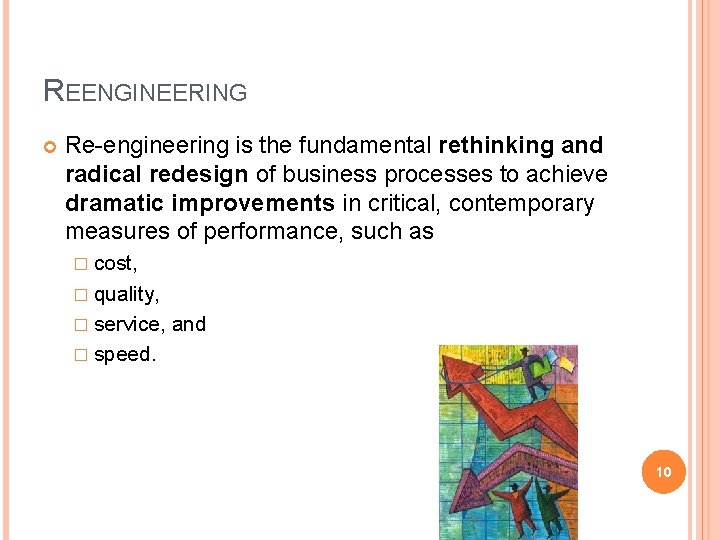
REENGINEERING Re-engineering is the fundamental rethinking and radical redesign of business processes to achieve dramatic improvements in critical, contemporary measures of performance, such as � cost, � quality, � service, and � speed. 10
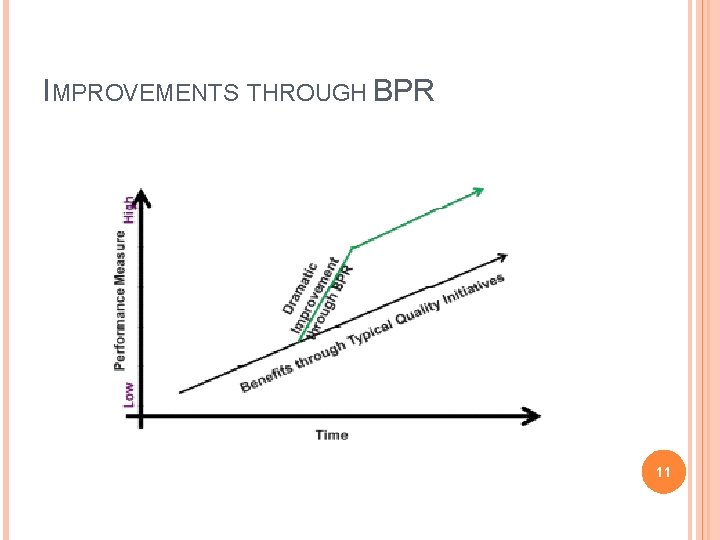
IMPROVEMENTS THROUGH BPR 11
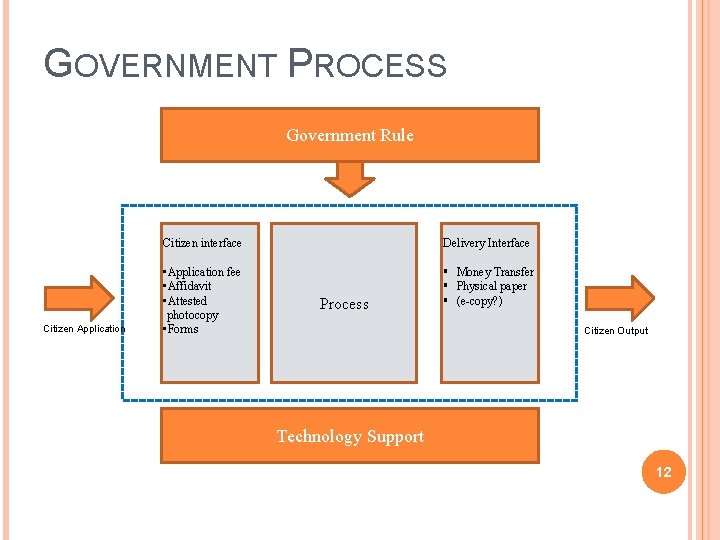
GOVERNMENT PROCESS Government Rule Citizen Application Citizen interface Delivery Interface • Application fee • Affidavit • Attested photocopy • Forms § Money Transfer § Physical paper § (e-copy? ) Process Citizen Output Technology Support 12
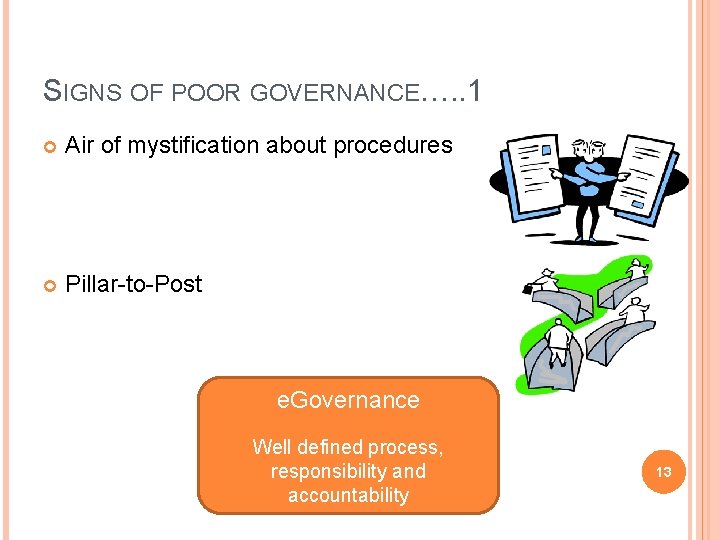
SIGNS OF POOR GOVERNANCE…. . 1 Air of mystification about procedures Pillar-to-Post e. Governance Well defined process, responsibility and accountability 13
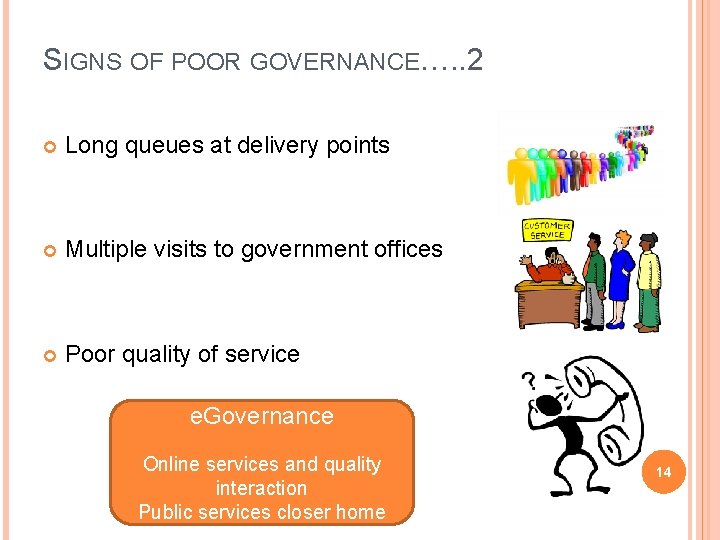
SIGNS OF POOR GOVERNANCE…. . 2 Long queues at delivery points Multiple visits to government offices Poor quality of service e. Governance Online services and quality interaction Public services closer home 14
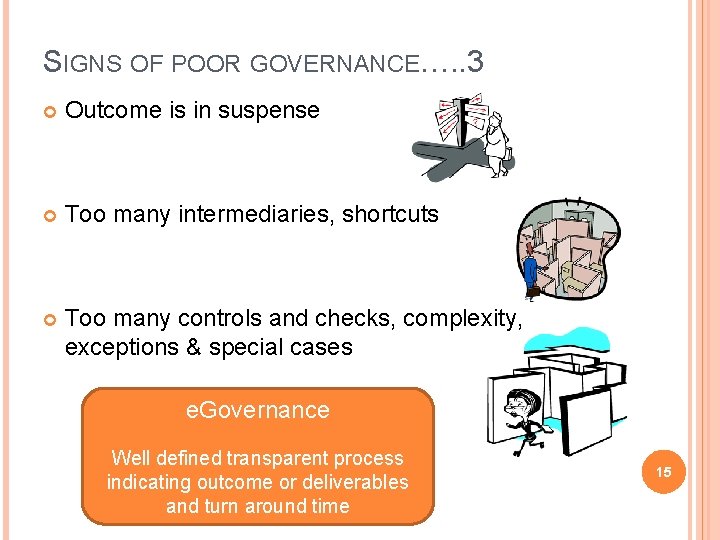
SIGNS OF POOR GOVERNANCE…. . 3 Outcome is in suspense Too many intermediaries, shortcuts Too many controls and checks, complexity, exceptions & special cases e. Governance Well defined transparent process indicating outcome or deliverables and turn around time 15
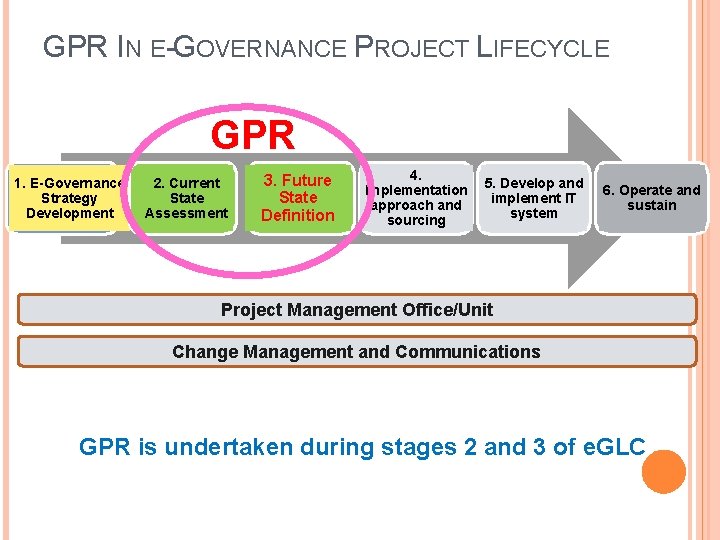
GPR IN E-GOVERNANCE PROJECT LIFECYCLE GPR 1. E-Governance Strategy Development 2. Current State Assessment 3. Future State Definition 4. Implementation approach and sourcing 5. Develop and implement IT system 6. Operate and sustain Project Management Office/Unit Change Management and Communications GPR is undertaken during stages 2 and 3 of e. GLC 16
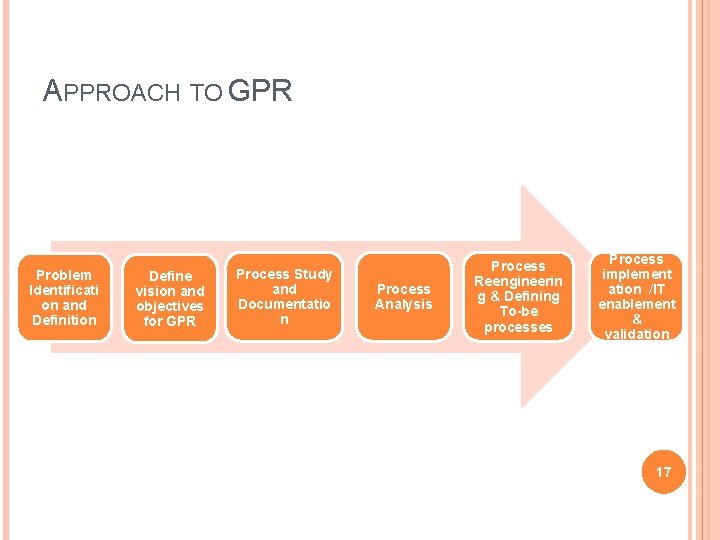
APPROACH TO GPR Problem Identificati on and Definition Define vision and objectives for GPR Process Study and Documentatio n Process Analysis Process Reengineerin g & Defining To-be processes Process implement ation /IT enablement & validation 17
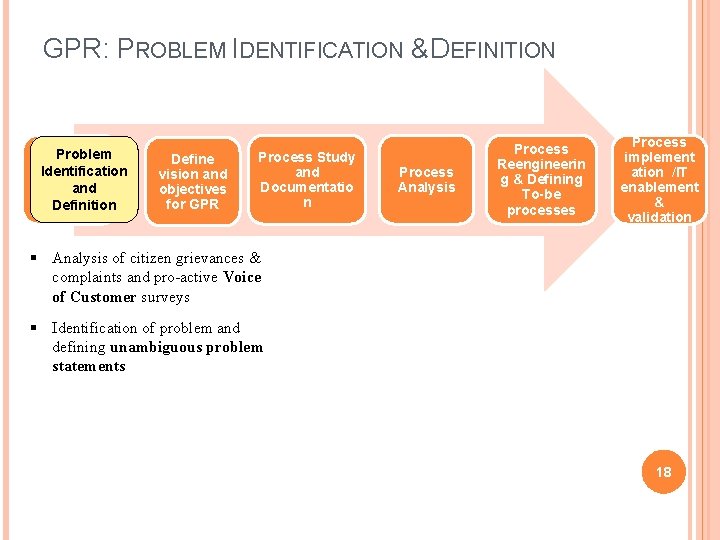
GPR: PROBLEM IDENTIFICATION & DEFINITION Problem Identification Identificati on and Definition Define vision and objectives for GPR Process Study and Documentatio n Process Analysis Process Reengineerin g & Defining To-be processes Process implement ation /IT enablement & validation § Analysis of citizen grievances & complaints and pro-active Voice of Customer surveys § Identification of problem and defining unambiguous problem statements 18
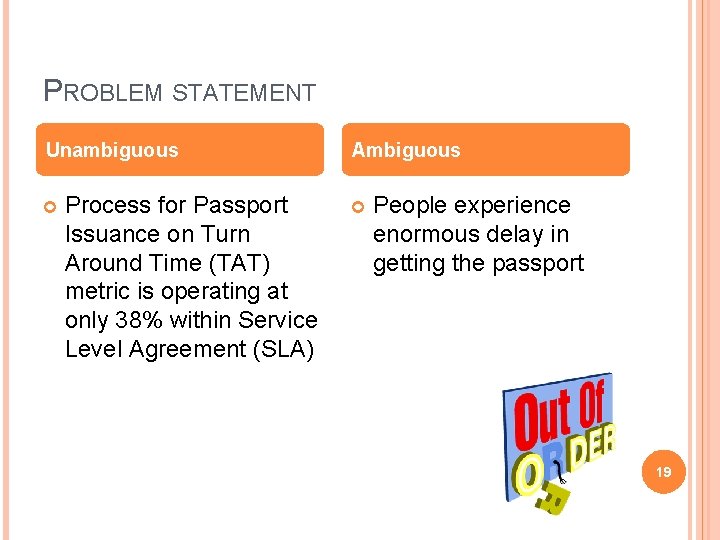
PROBLEM STATEMENT Unambiguous Process for Passport Issuance on Turn Around Time (TAT) metric is operating at only 38% within Service Level Agreement (SLA) Ambiguous People experience enormous delay in getting the passport 19
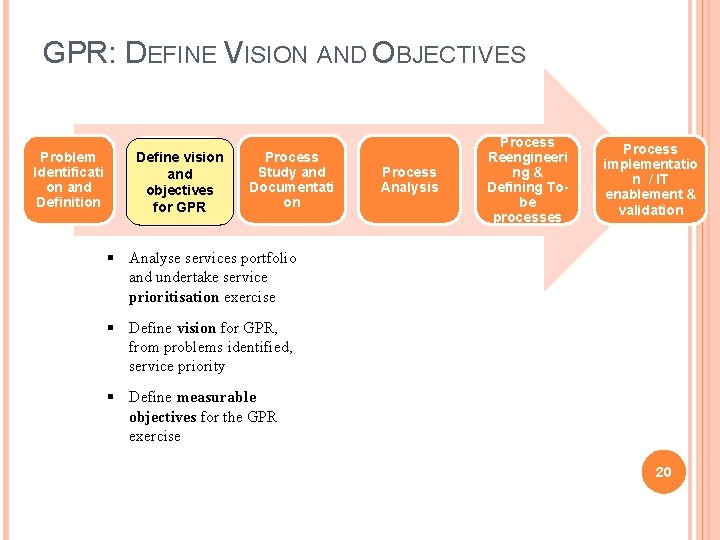
GPR: DEFINE VISION AND OBJECTIVES Problem Identificati on and Definition Define vision Define andand vision objectives for GPR Process Study and Documentati on Process Analysis Process Reengineeri ng & Defining Tobe processes Process implementatio n / IT enablement & validation § Analyse services portfolio and undertake service prioritisation exercise § Define vision for GPR, from problems identified, service priority § Define measurable objectives for the GPR exercise 20
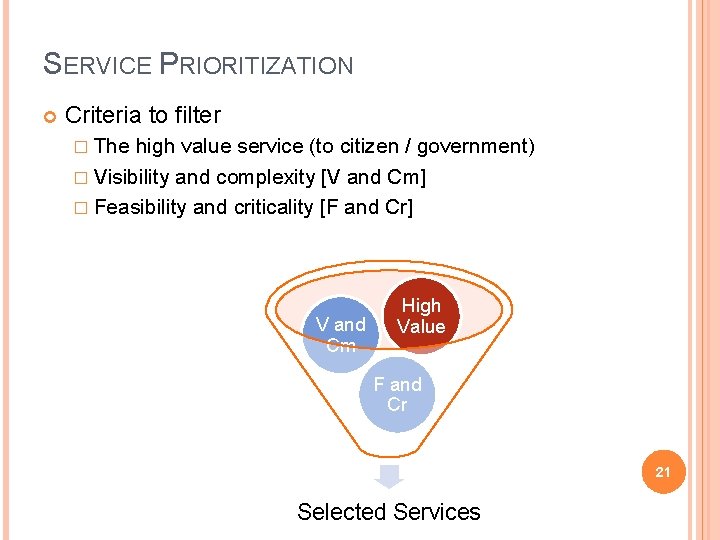
SERVICE PRIORITIZATION Criteria to filter � The high value service (to citizen / government) � Visibility and complexity [V and Cm] � Feasibility and criticality [F and Cr] V and Cm High Value F and Cr 21 Selected Services
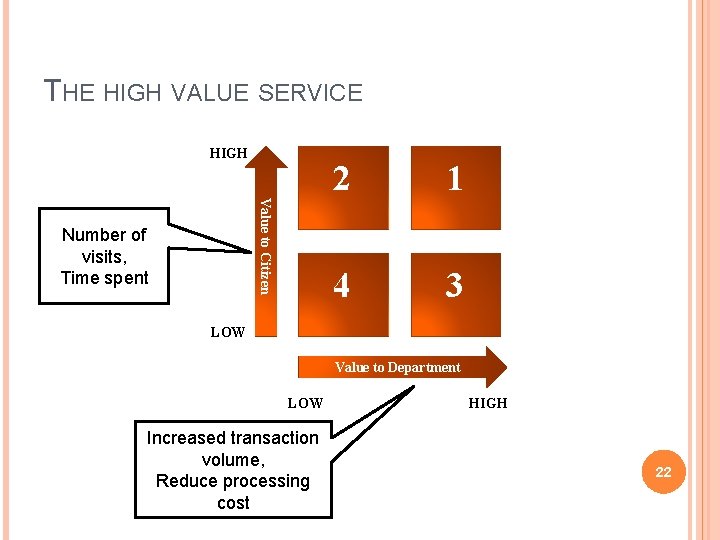
THE HIGH VALUE SERVICE HIGH Value to Citizen Number of visits, Time spent 2 1 4 3 LOW Value to Department LOW Increased transaction volume, Reduce processing cost HIGH 22
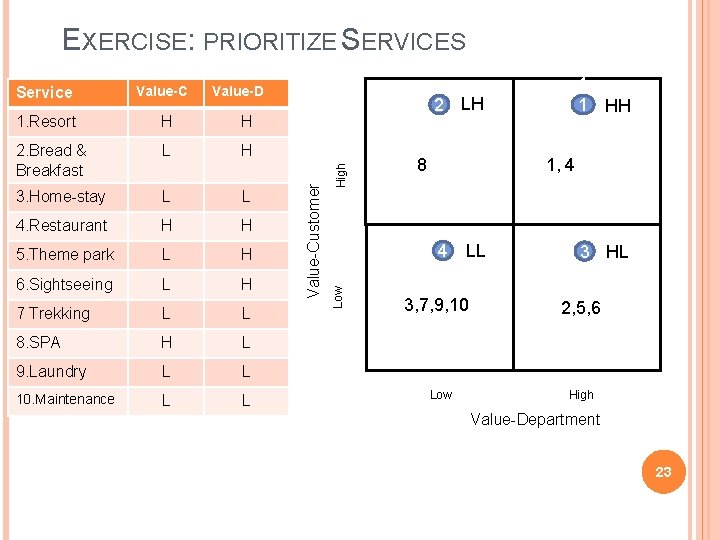
EXERCISE: PRIORITIZE SERVICES Value-D H H 2. Bread & Breakfast L H 3. Home-stay L L 4. Restaurant H H 5. Theme park L H 6. Sightseeing L H 7 Trekking L L 8. SPA H L 9. Laundry L L 10. Maintenance L L High 1. Resort 1 1 HH 2 LH 8 1, 4 4 Low Value-Customer Service LL 3, 7, 9, 10 Low 3 HL 2, 5, 6 High Value-Department 23
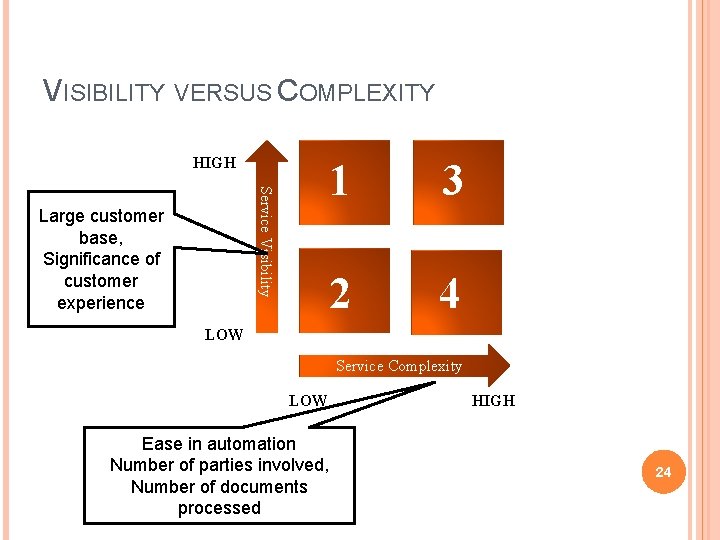
VISIBILITY VERSUS COMPLEXITY HIGH Service Visibility Large customer base, Significance of customer experience 1 3 2 4 LOW Service Complexity LOW Ease in automation Number of parties involved, Number of documents processed HIGH 24
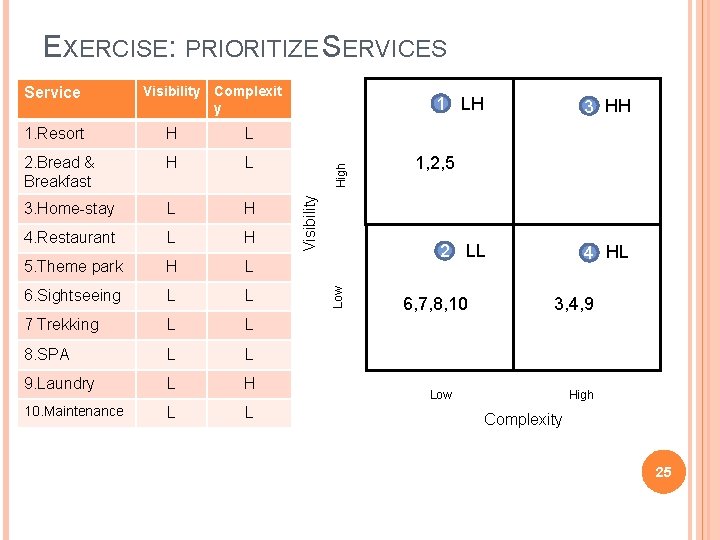
EXERCISE: PRIORITIZE SERVICES Visibility Complexit y L 2. Bread & Breakfast H L 3. Home-stay L H 4. Restaurant L H 5. Theme park H L 6. Sightseeing L L 7 Trekking L L 8. SPA L L 9. Laundry L H 10. Maintenance L L High H 3 HH 1, 2, 5 2 LL Low 1. Resort 1 LH Visibility Service 6, 7, 8, 10 4 HL 3, 4, 9 Low High Complexity 25
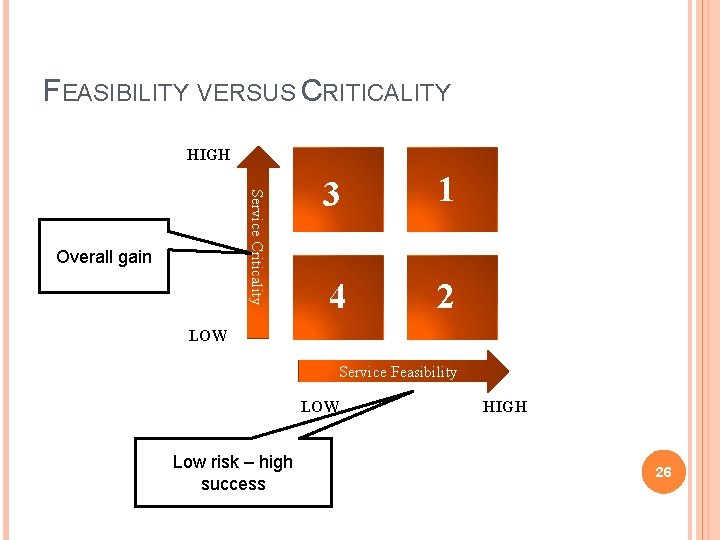
FEASIBILITY VERSUS CRITICALITY HIGH Service Criticality Overall gain 3 1 4 2 LOW Service Feasibility LOW Low risk – high success HIGH 26
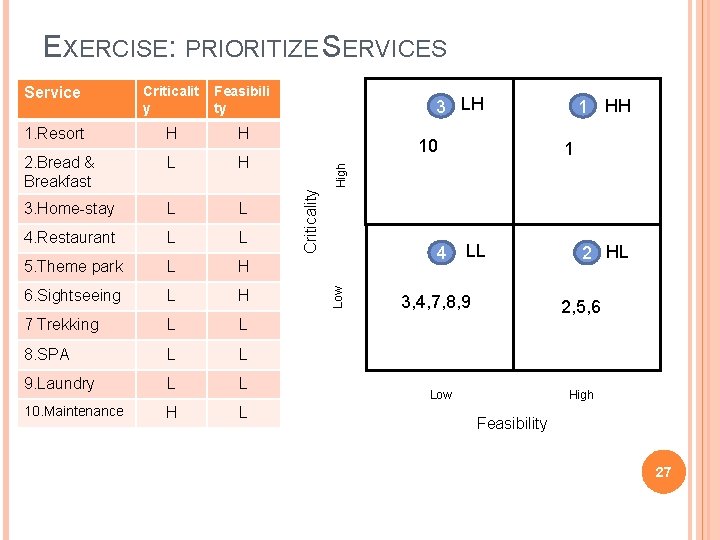
EXERCISE: PRIORITIZE SERVICES 1. Resort H H 2. Bread & Breakfast L H 3. Home-stay L L 4. Restaurant L L 5. Theme park L H 6. Sightseeing L H 7 Trekking L L 8. SPA L L 9. Laundry L L 10. Maintenance H L 3 LH 10 1 HH 1 High Feasibili ty 4 Low Criticalit y Criticality Service LL 3, 4, 7, 8, 9 2 HL 2, 5, 6 Low High Feasibility 27
SERVICE PRIORITIZATION: VALIDATE & RATIONALIZE THE RESULT Validate the identified services/projects for e. Governance through department’s survey, experience and knowledge of the customers Verify that the high-value services can deliver benefits through e-governance Verify the feasibility of the implementation priorities assigned to the high-value services 28
VISION FOR GPR Based on � problems identified, � service priority � Consider needs and opportunities � State what will be and will not be done Involve consensus building by stakeholders Be clear, intuitive and simple Be aligned with overall development strategy Reflect the specific conditions and ambitions of the organization 29
OBJECTIVES FOR GPR An objective � is a specific and usually quantifiable statement of program achievement and � is a statement of measurable outcome which can be used to determine program progress towards the goal Objectives should flow from e-Governance vision. Two dimensions � Adding benefits to the customers and � Adding benefits to the organization itself 30
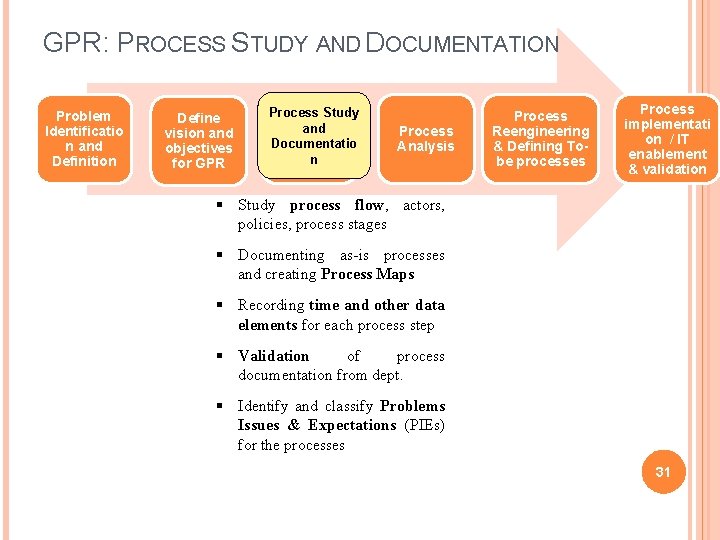
GPR: PROCESS STUDY AND DOCUMENTATION Problem Identificatio n and Definition Define vision and objectives for GPR Process Study Process and Study and Documentatio Documenta n tion Process Analysis Process Reengineering & Defining Tobe processes Process implementati on / IT enablement & validation § Study process flow, actors, policies, process stages § Documenting as-is processes and creating Process Maps § Recording time and other data elements for each process step § Validation of process documentation from dept. § Identify and classify Problems Issues & Expectations (PIEs) for the processes 31
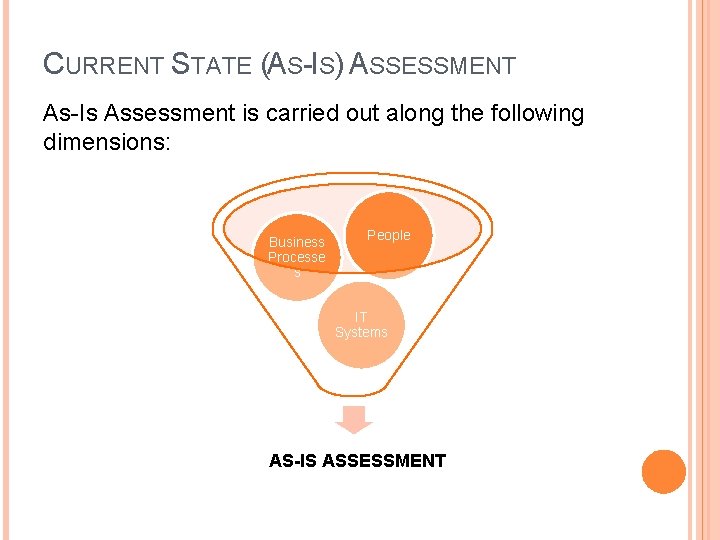
CURRENT STATE (AS-IS) ASSESSMENT As-Is Assessment is carried out along the following dimensions: Business Processe s People IT Systems AS-IS ASSESSMENT 32
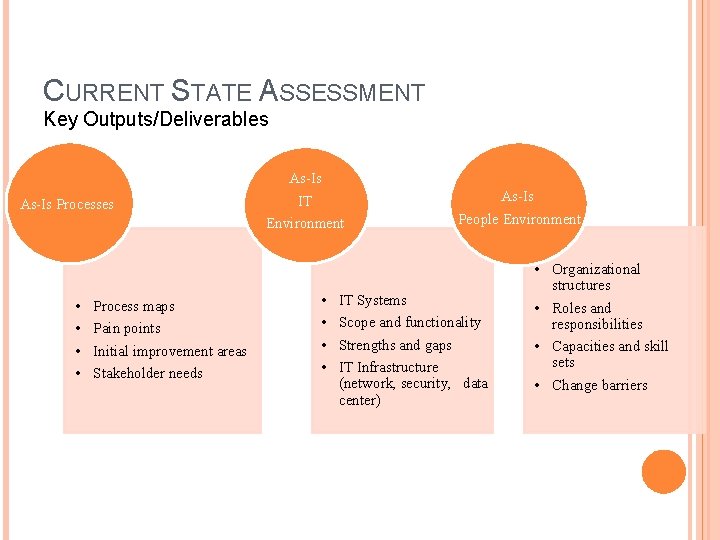
CURRENT STATE ASSESSMENT Key Outputs/Deliverables As-Is Processes • • Process maps Pain points Initial improvement areas Stakeholder needs As-Is IT Environment • • As-Is People Environment IT Systems Scope and functionality Strengths and gaps IT Infrastructure (network, security, data center) • Organizational structures • Roles and responsibilities • Capacities and skill sets • Change barriers 33
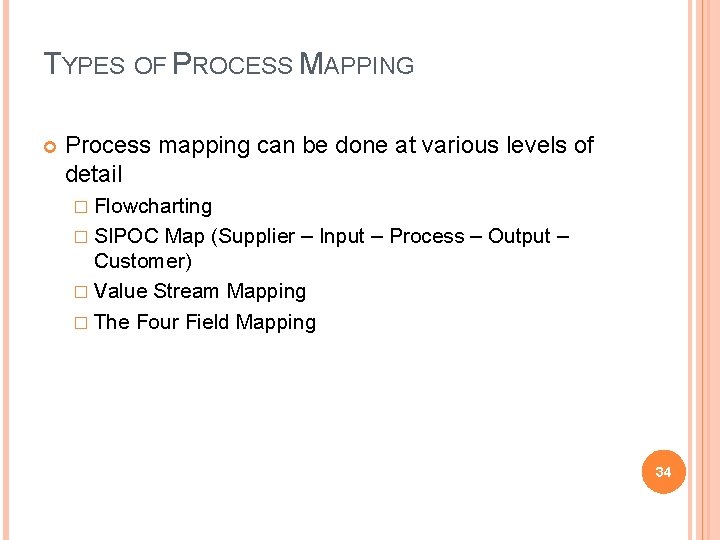
TYPES OF PROCESS MAPPING Process mapping can be done at various levels of detail � Flowcharting � SIPOC Map (Supplier – Input – Process – Output – Customer) � Value Stream Mapping � The Four Field Mapping 34
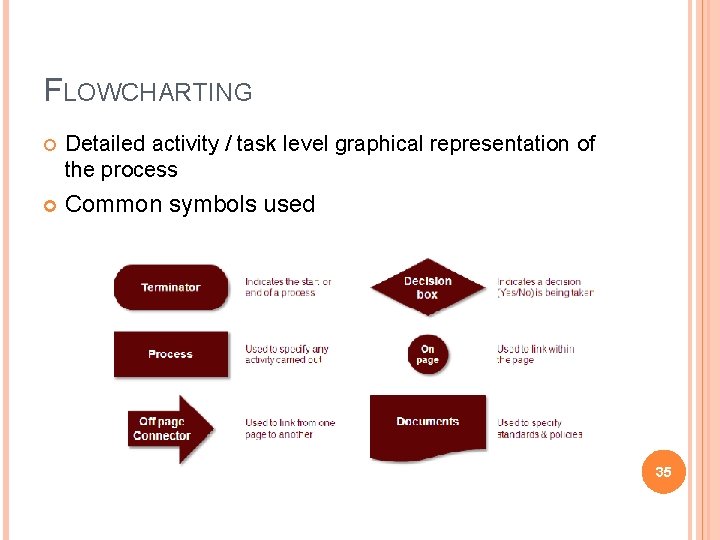
FLOWCHARTING Detailed activity / task level graphical representation of the process Common symbols used 35
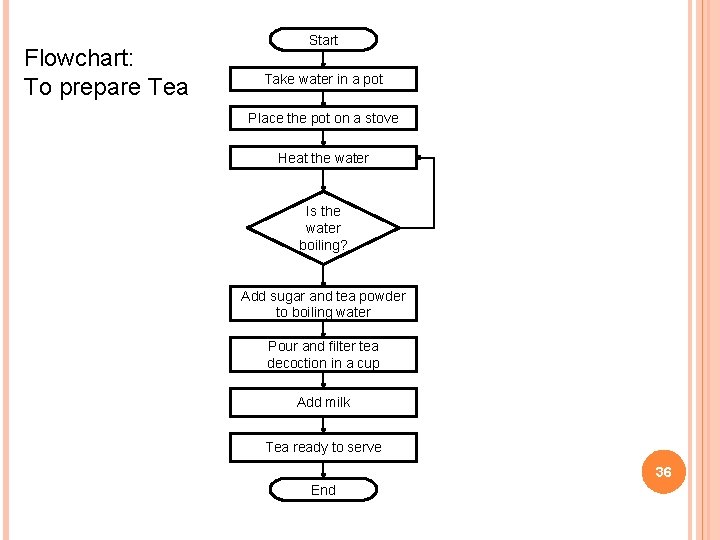
Flowchart: To prepare Tea Start Take water in a pot Place the pot on a stove Heat the water Is the water boiling? Add sugar and tea powder to boiling water Pour and filter tea decoction in a cup Add milk Tea ready to serve 36 End
SIPOC MAP (SUPPLIER , INPUT , PROCESS , OUTPUT , CUSTOMER) Mapping the key constituents of the process and their interactions Lists the following The suppliers of these inputs (S) The inputs required to these processes (I) The processes that deliver these outputs (P) The outputs provided to them (O) All the customers (C) 37
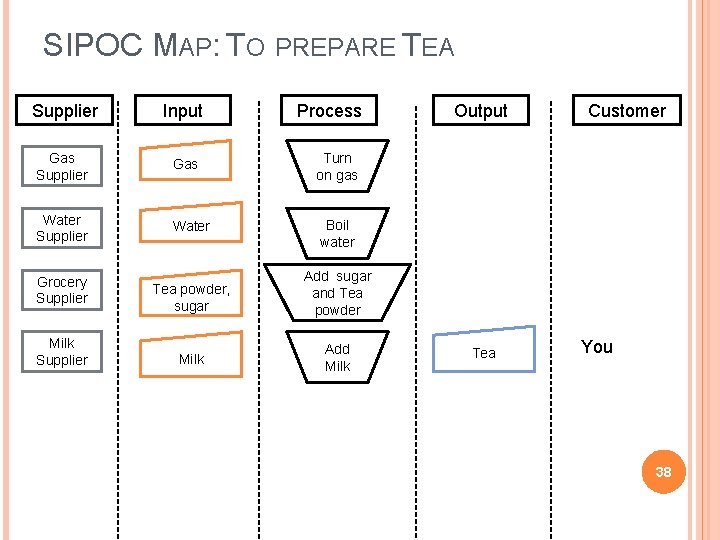
SIPOC MAP: TO PREPARE TEA Supplier Input Gas Supplier Gas Turn on gas Water Supplier Water Boil water Grocery Supplier Milk Supplier Process Tea powder, sugar Add sugar and Tea powder Milk Add Milk Output Tea Customer You 38
VALUE STREAM MAPPING Mapping the entire value stream of the process on a single page Analyze the flow of materials and information required to bring a product or service to a consumer. The different steps with the actual Hands on Time (Ho. T) and waiting time before the next step The total Turn Around Time 39
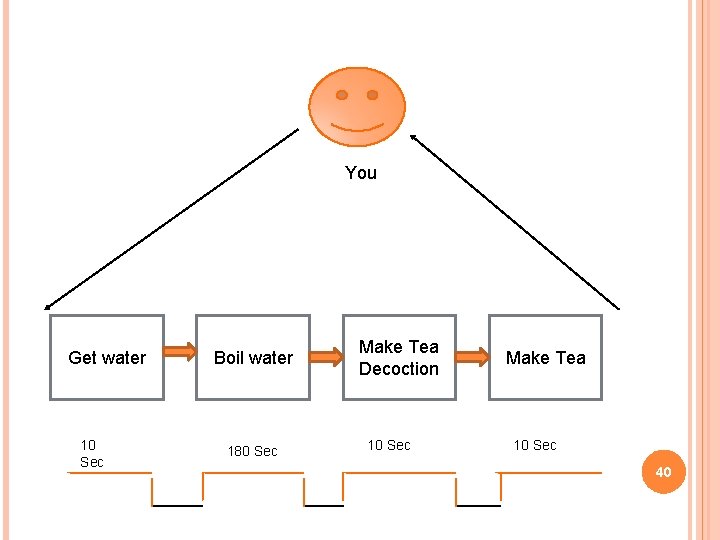
You Get water 10 Sec Boil water 180 Sec Make Tea Decoction 10 Sec Make Tea 10 Sec 40
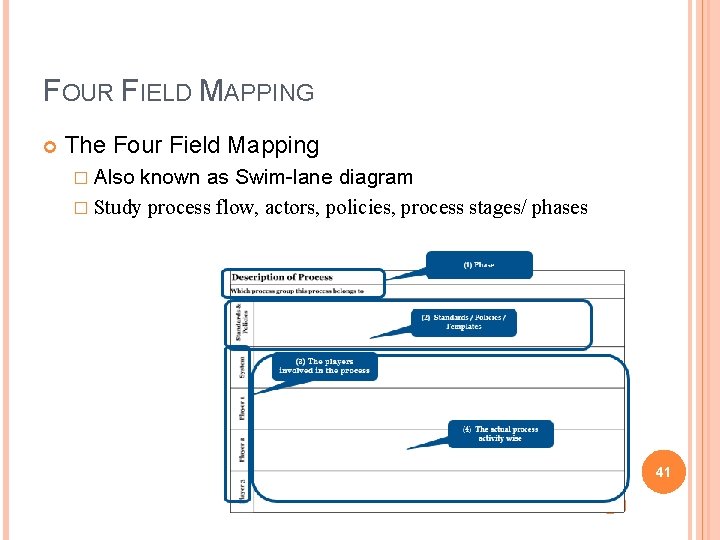
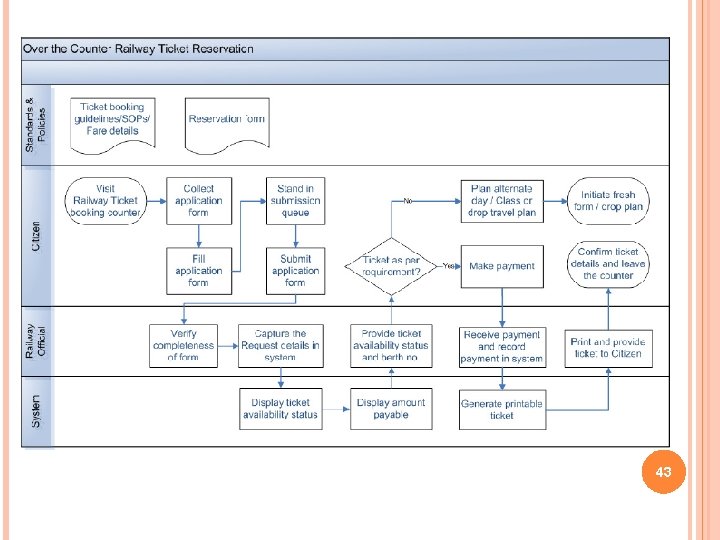
FOUR FIELD MAPPING The Four Field Mapping � Also known as Swim-lane diagram � Study process flow, actors, policies, process stages/ phases 41
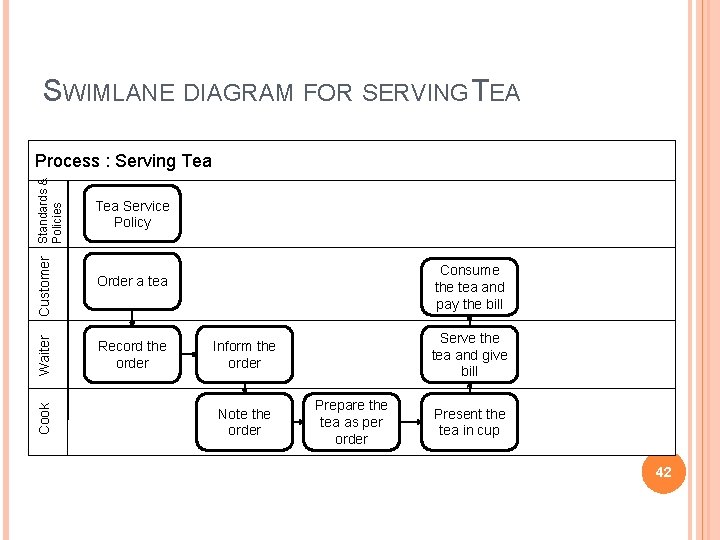
SWIMLANE DIAGRAM FOR SERVING TEA Cook Waiter Policies Customer Standards & Process : Serving Tea Service Policy Consume the tea and pay the bill Order a tea Record the order Serve the tea and give bill Inform the order Note the order Prepare the tea as per order Present the tea in cup 42
43
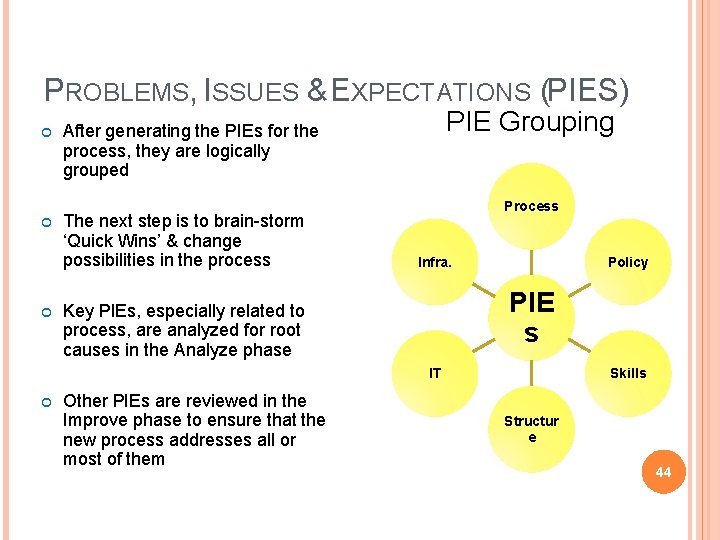
PROBLEMS, ISSUES & EXPECTATIONS (PIES) PIE Grouping After generating the PIEs for the process, they are logically grouped The next step is to brain-storm ‘Quick Wins’ & change possibilities in the process Process Infra. Policy PIE s Key PIEs, especially related to process, are analyzed for root causes in the Analyze phase IT Other PIEs are reviewed in the Improve phase to ensure that the new process addresses all or most of them Skills Structur e 44
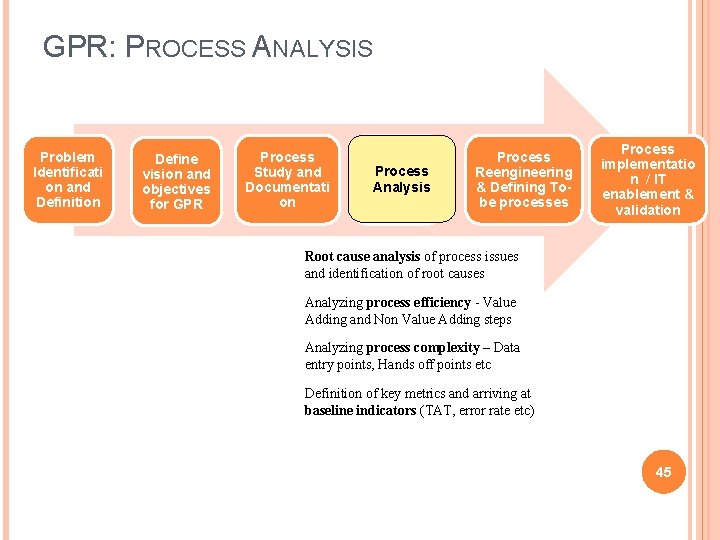
GPR: PROCESS ANALYSIS Problem Identificati on and Definition Define vision and objectives for GPR Process Study and Documentati on Process Analysis Process Reengineering & Defining Tobe processes Process implementatio n / IT enablement & validation Root cause analysis of process issues and identification of root causes Analyzing process efficiency - Value Adding and Non Value Adding steps Analyzing process complexity – Data entry points, Hands off points etc Definition of key metrics and arriving at baseline indicators (TAT, error rate etc) 45
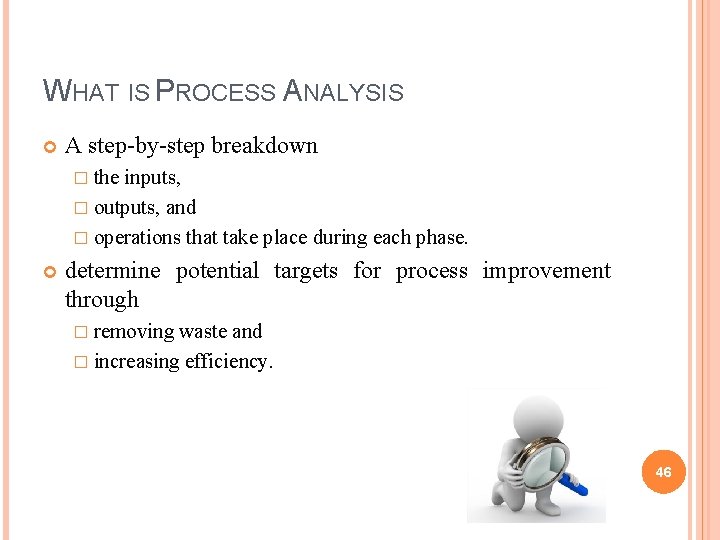
WHAT IS PROCESS ANALYSIS A step-by-step breakdown � the inputs, � outputs, and � operations that take place during each phase. determine potential targets for process improvement through � removing waste and � increasing efficiency. 46
INDICATORS OF POOR PROCESS The process is ‘MULTIPLE WINDOW’ Process has too much movement, too much reentry and or copying Process too much disintegrated Process needs many manual inputs requiring references from other documents Standard formats not easily available Customers need to provide same information and or data multiple times 47
QUESTIONS TO PONDER Can � Activities, information, data that does not serve any purpose be eliminated? � Activities, information, data, documents be integrated? � Activities, process be simplified? � Activities, process, information, data that be automated? � Independence from PLACE, TIME & PERSON be utilized? (major benefit of Information Technology) 48
IDENTIFY ROOT CAUSE Identifying the root cause of process dysfunction enables you to ensure that � the process redesign solves the root cause, � rather than simply addressing a symptom of a problem that will occur again It also allow you to determine how many processes are affected by a single root cause. The more process problems a root cause creates, the higher priority it is for being addresses quickly and effectively 49
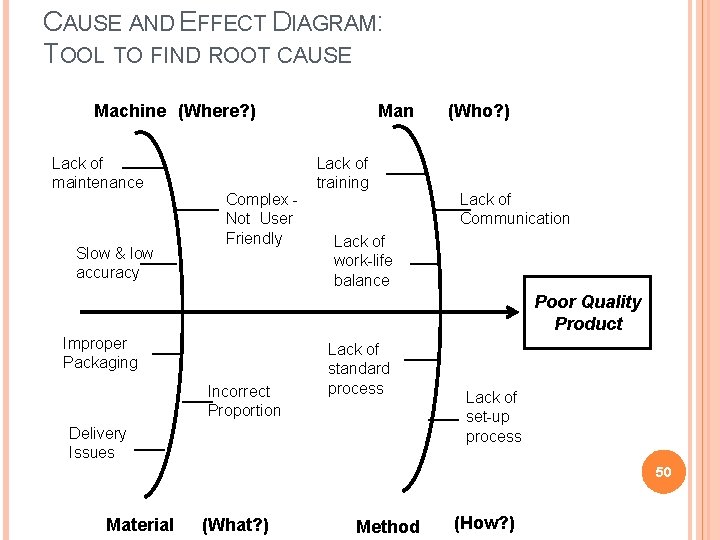
CAUSE AND EFFECT DIAGRAM: TOOL TO FIND ROOT CAUSE Man Machine (Where? ) Lack of maintenance Slow & low accuracy Complex Not User Friendly Lack of training (Who? ) Lack of Communication Lack of work-life balance Poor Quality Product Improper Packaging Incorrect Proportion Lack of standard process Delivery Issues Lack of set-up process 50 Material (What? ) Method (How? )
DO ALL THE PROCESS ACTIVITIES ADD VALUE? VA – Value Adding activity NVA – Non Value Adding activity Measuring process efficiency – VA/ NVA activities 51
PROCESS COMPLEXITY Identifying process complexity – � Data Entry Points (DEPs) / � Hand off Points (HOPs) etc 52
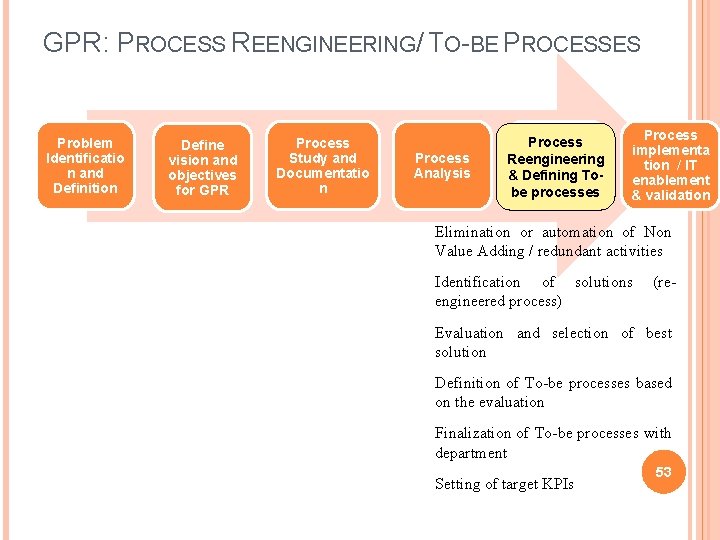
GPR: PROCESS REENGINEERING/ TO-BE PROCESSES Problem Identificatio n and Definition Define vision and objectives for GPR Process Study and Documentatio n Process Analysis Process Reengineeri ng & Reengineering &Defining. Tobe be processes Process implementa tion / IT enablement & validation Elimination or automation of Non Value Adding / redundant activities Identification of solutions engineered process) (re- Evaluation and selection of best solution Definition of To-be processes based on the evaluation Finalization of To-be processes with department Setting of target KPIs 53
DEFINE FUTURE STATE (TO-BE DEFINITION) To define how the identified business functions and services shall be performed going forward To define the new business processes To define IT solutions and services for automation of new business processes To define people change management, capacity building and communication requirements for project implementation 54
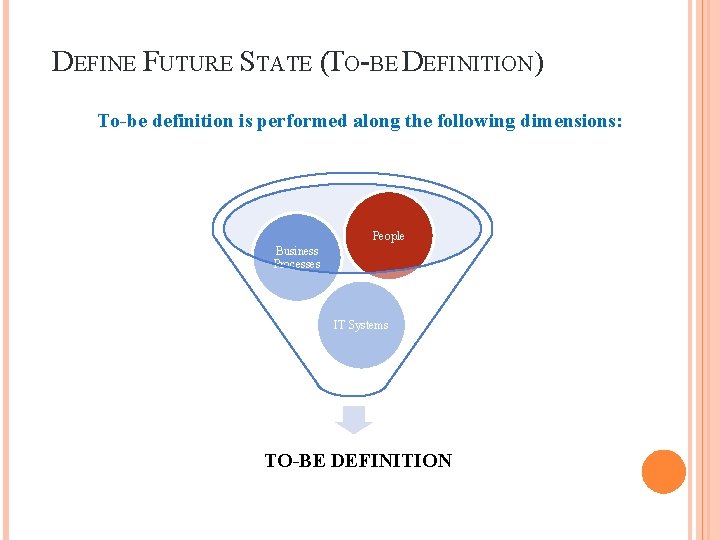
DEFINE FUTURE STATE (TO-BE DEFINITION) To-be definition is performed along the following dimensions: People Business Processes IT Systems TO-BE DEFINITION 55
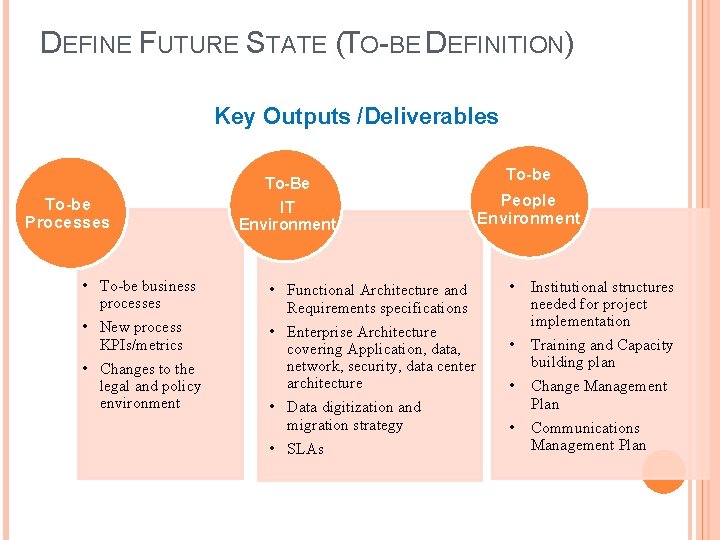
DEFINE FUTURE STATE (TO-BE DEFINITION) Key Outputs /Deliverables To-be Processes • To-be business processes • New process KPIs/metrics • Changes to the legal and policy environment To-Be IT Environment • Functional Architecture and Requirements specifications • Enterprise Architecture covering Application, data, network, security, data center architecture • Data digitization and migration strategy • SLAs To-be People Environment • Institutional structures needed for project implementation • Training and Capacity building plan Change Management Plan • • Communications Management Plan 56
PROCESS REENGINEERING PRINCIPLES Redesigning existing processes: � Elimination of non-value added activities � Organize the process around the outcomes � Building quality in the source Replacing processes completely Removing the process Outsourcing the process Automate the process 57
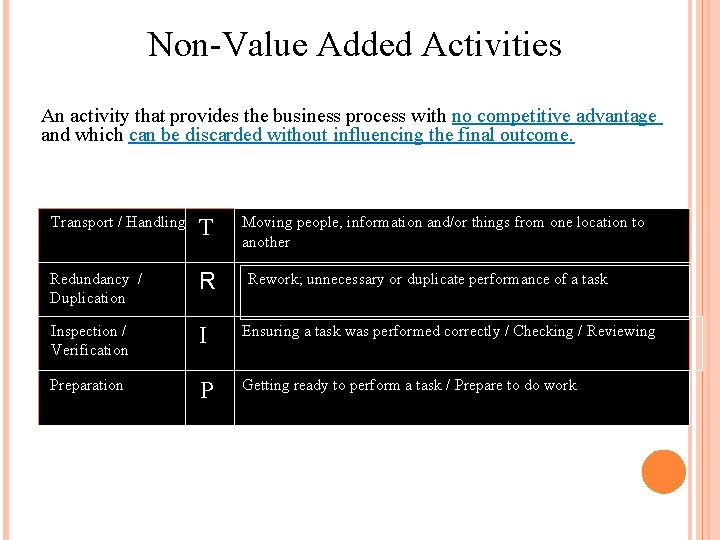
Non-Value Added Activities An activity that provides the business process with no competitive advantage and which can be discarded without influencing the final outcome. Transport / Handling T Moving people, information and/or things from one location to another Redundancy / Duplication R Inspection / Verification I Ensuring a task was performed correctly / Checking / Reviewing Preparation P Getting ready to perform a task / Prepare to do work Rework; unnecessary or duplicate performance of a task
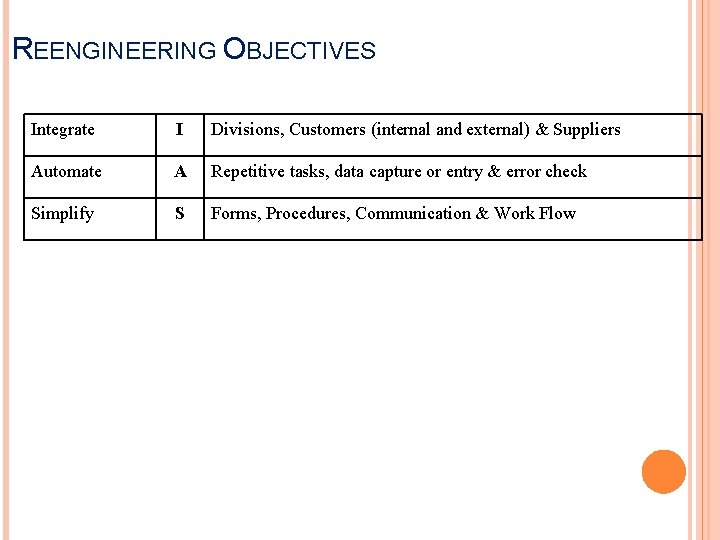
REENGINEERING OBJECTIVES Integrate I Divisions, Customers (internal and external) & Suppliers Automate A Repetitive tasks, data capture or entry & error check Simplify S Forms, Procedures, Communication & Work Flow
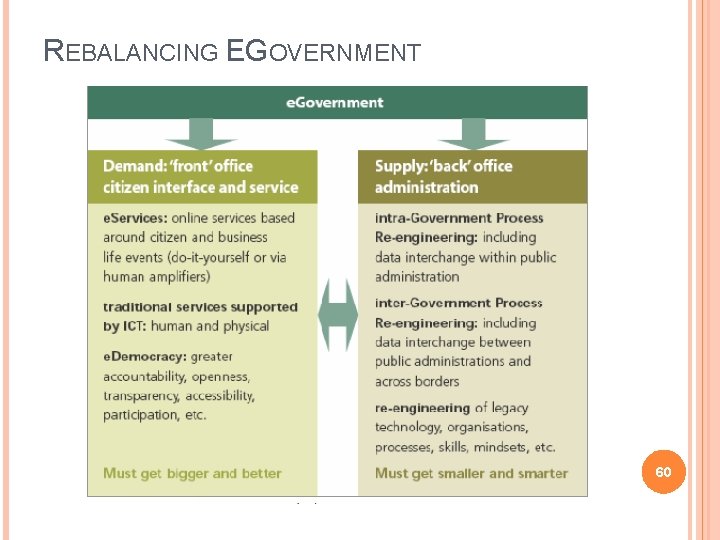
REBALANCING EGOVERNMENT 60
PERFORMANCE INDICATORS v Cost indicator v Time indicator v Demand indicator v Productivity indicator A comparison of these measures for the old and redesigned process will show the improvement achieved in performance.
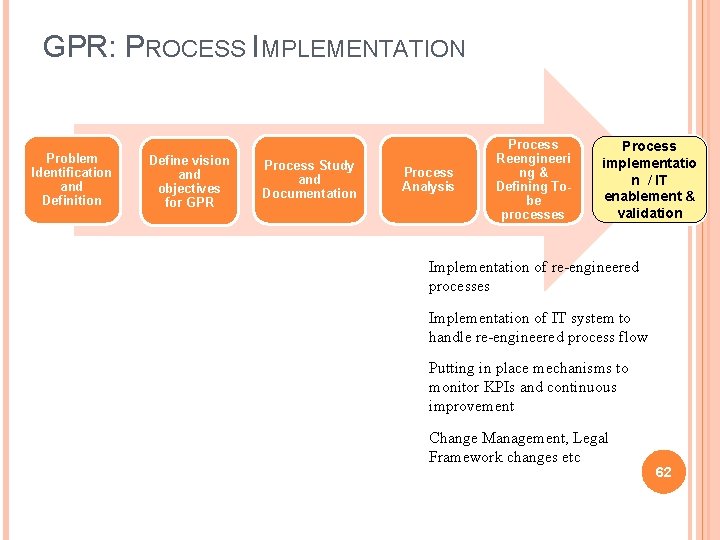
GPR: PROCESS IMPLEMENTATION Problem Identification and Definition Define vision and objectives for GPR Process Study and Documentation Process Analysis Process Reengineeri ng & Defining Tobe processes Process implementatio implementati / IT non/ IT enablement & & validation Implementation of re-engineered processes Implementation of IT system to handle re-engineered process flow Putting in place mechanisms to monitor KPIs and continuous improvement Change Management, Legal Framework changes etc 62
PROCESS IMPLEMENTATION / IT ENABLEMENT AND VALIDATION Implementation of re-engineered processes Implementation of IT system to handle reengineered process flow Mechanisms to monitor KPIs and continuous improvement � Monitoring and Evaluation Change Management � Stakeholders management , communication Legal Framework changes � For example, Recognition of Electronic Transactions 63
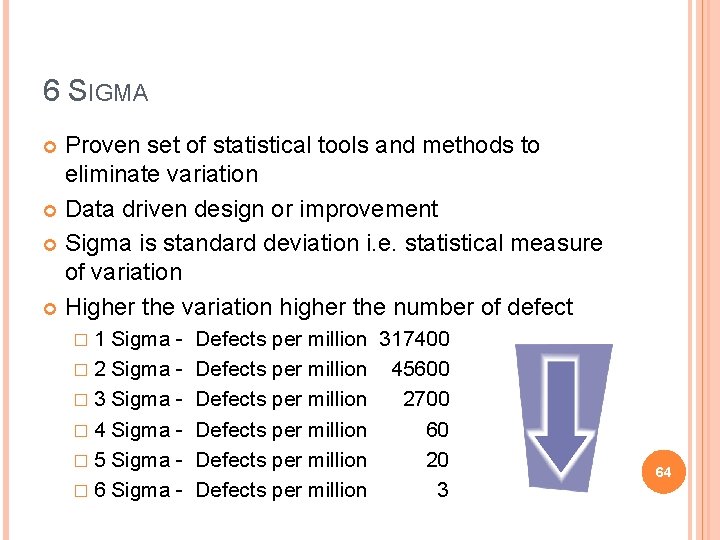
6 SIGMA Proven set of statistical tools and methods to eliminate variation Data driven design or improvement Sigma is standard deviation i. e. statistical measure of variation Higher the variation higher the number of defect � 1 Sigma � 2 Sigma � 3 Sigma � 4 Sigma � 5 Sigma � 6 Sigma - Defects per million 317400 Defects per million 45600 Defects per million 2700 Defects per million 60 Defects per million 20 Defects per million 3 64

QUESTIONS Contact: mohandkk@yahoo. com 65
- Slides: 65