
Module 9 Sensation The Visual System The Nature
- Slides: 39
Module 9: Sensation The Visual System: The Nature of Light
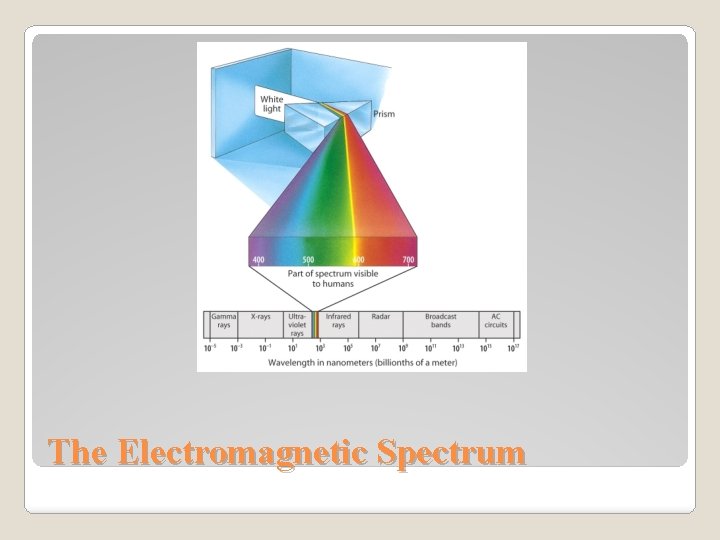
�An energy spectrum that includes X-rays, radar, and radio waves �A small portion of the spectrum includes light visible to the human eye Electromagnetic Energy
The Electromagnetic Spectrum
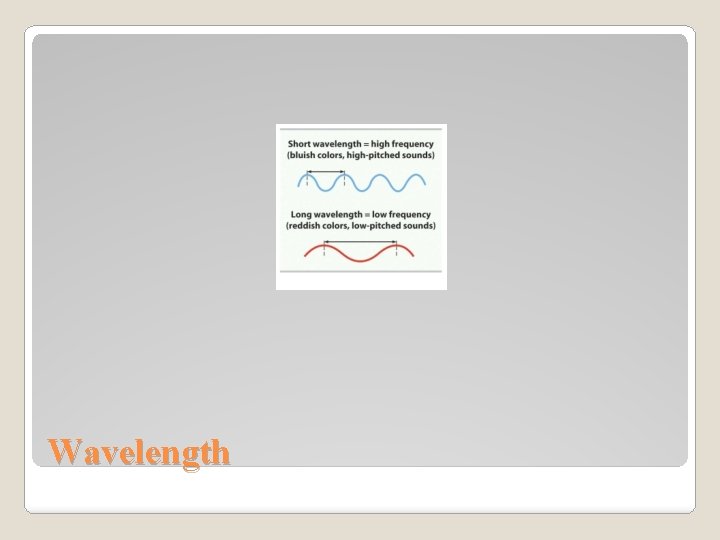
�The color of light as determined by the wavelength Includes: red, orange, yellow, green, blue, indigo and violet (ROY G BIV) Hue
Wavelength
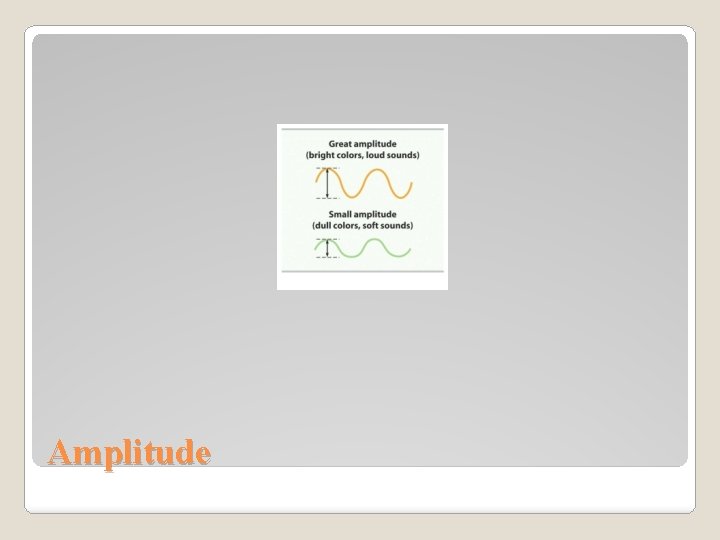
�The brightness of light as determined by height of the wave Amplitude
Amplitude
Module 9: Sensation The Visual System: The Structure of the Visual System
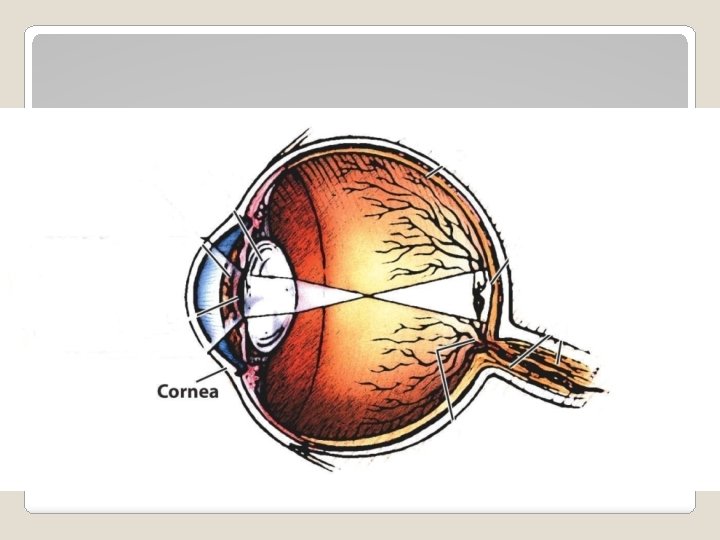
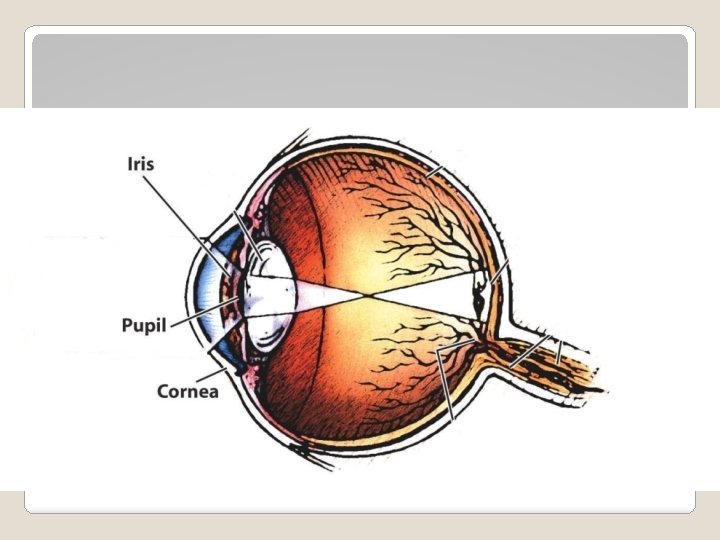
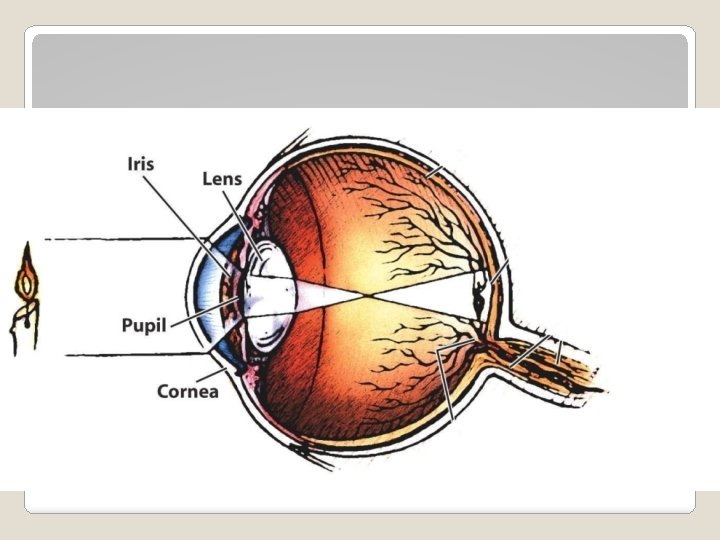
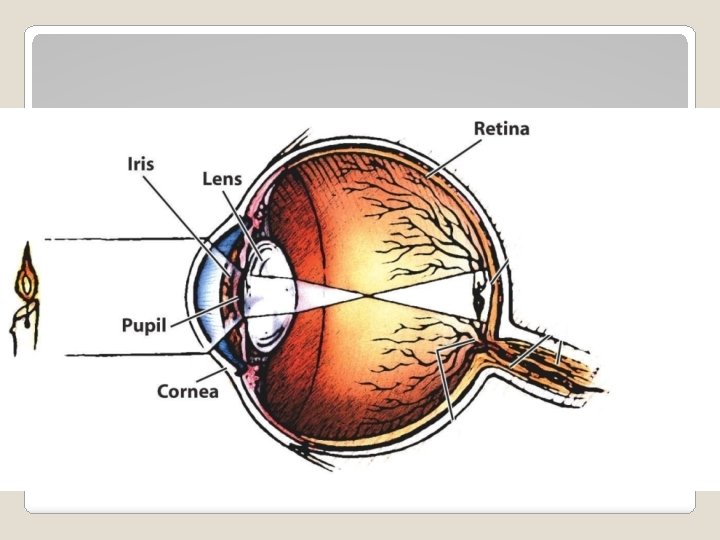
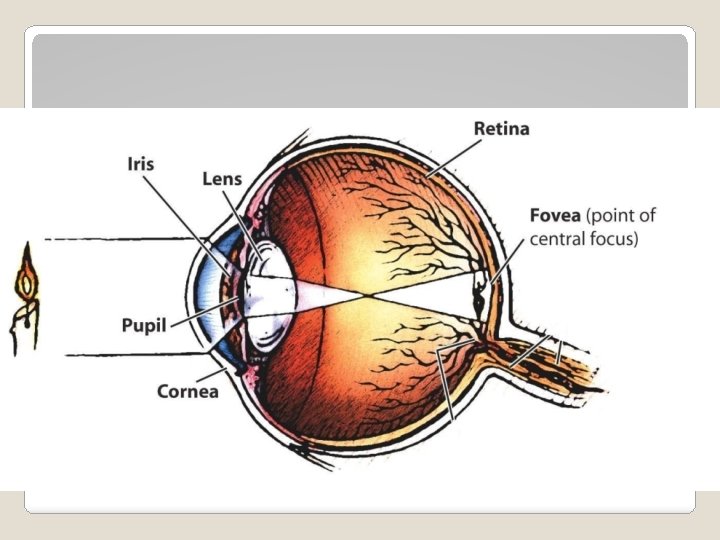
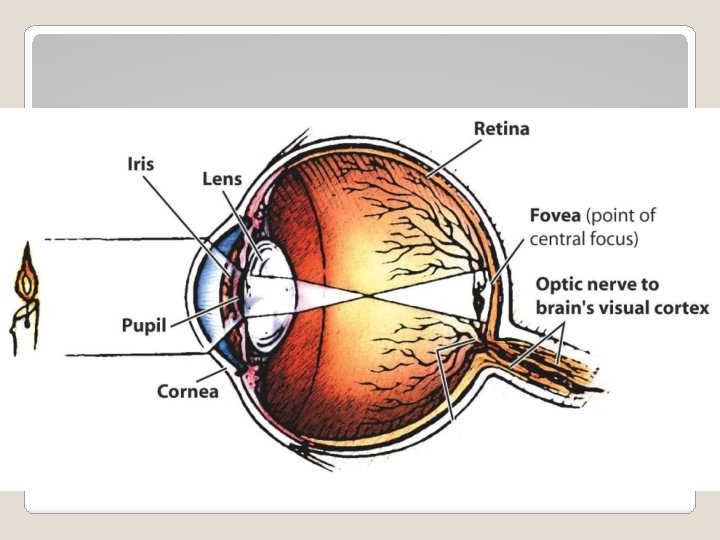
�The clear bulge on the front of the eyeball �Begins to focus the light by bending it toward a central focal point �Protects the eye Cornea
Parts of the Eye – Cornea
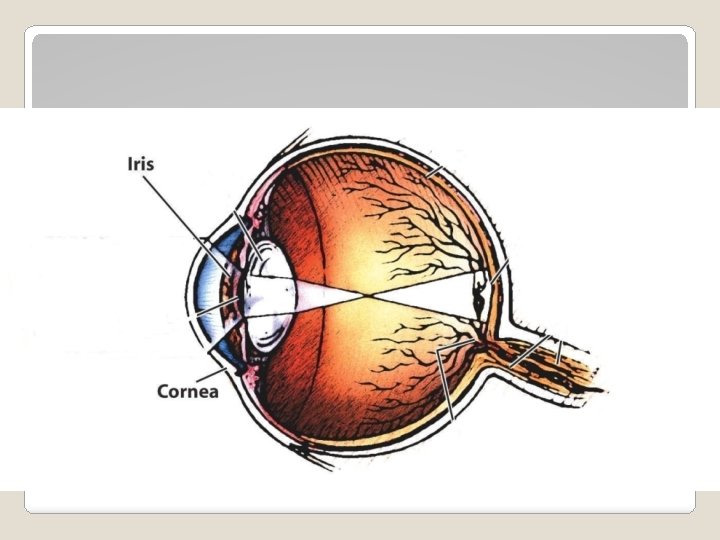
�forms the colored portion of the eye; creates a hole in the center of the iris (pupil) �Regulates the size of the pupil by changing its size--allowing more or less light to enter the eye (camera demo) Iris
Parts of the Eye - Iris
�The adjustable opening in the center of the eye that controls the amount of light entering the eye (surrounded by the iris) Pupil
�In bright conditions the iris expands, making the pupil smaller. �In dark conditions the iris contracts, making the pupil larger. Pupil
Parts of the Eye - Pupil
�A transparent structure behind the pupil; focuses the image on the back of the eye (retina) Lens
Parts of the Eye - Lens
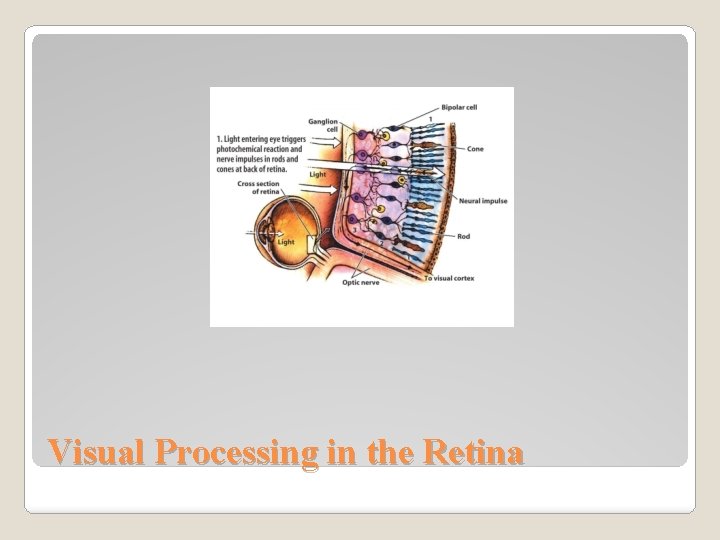
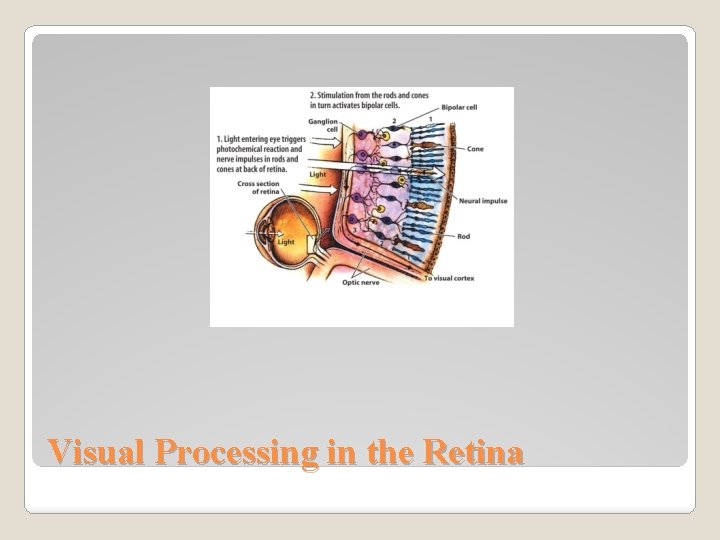
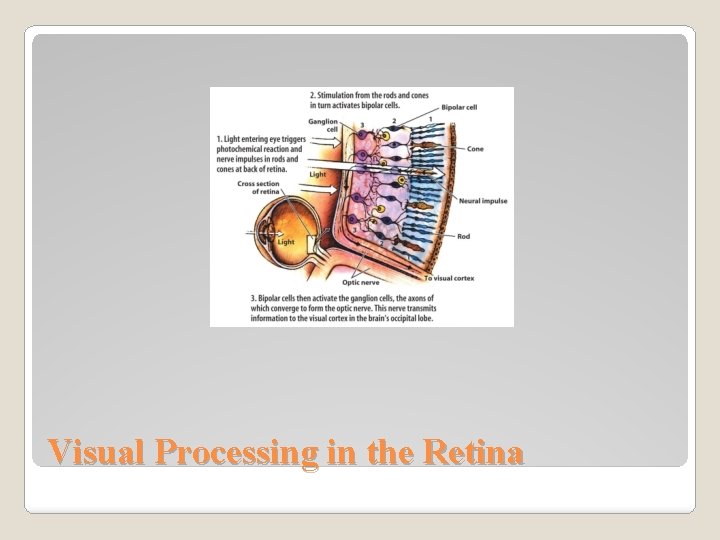
�Light-sensitive surface with cells that convert light energy to nerve impulses �At the back of the eyeball Retina
�Made up of three layers of cells ◦Receptor cells Retina
Parts of the Eye - Retina
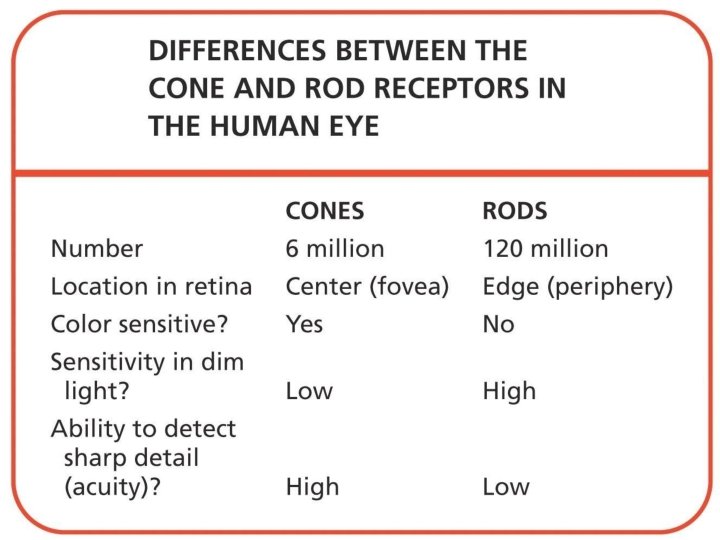
�These cells are present in every sensory system to change (transduce) some other form of energy into neural impulses. �In sight they change light into neural impulses the brain can understand. �Visual system has two types of receptor cells – rods and cones Receptor Cells
�Visual receptor cells located in the retina �Can only detect black and white �Respond to less light than do cones Rods
�Visual receptor cells located in the retina �Can detect sharp images and color �Need more light than the rods �Many cones are clustered in the fovea. Cones
�The central focal point of the retina �The spot where vision is best (most detailed) Fovea
Parts of the Eye - Fovea
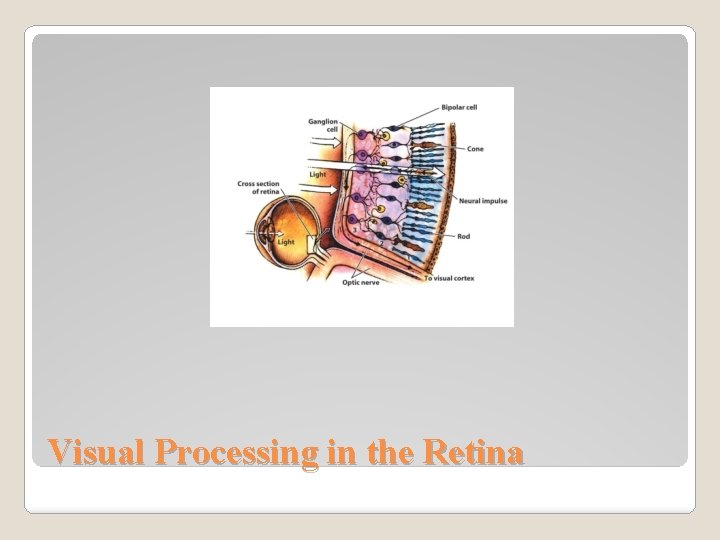
�Gather information from the rods and cones and pass it on to the ganglion cells �Cells that form the middle layer in the retina Bipolar Cells
�Pass the information from the bipolar cells through their axons �Together these cells form the optic nerve. �The top layer of the cells in the retina Ganglion Cells
Visual Processing in the Retina
Visual Processing in the Retina
Visual Processing in the Retina
Visual Processing in the Retina
�The nerve that carries visual information from the eye to the occipital lobes of the brain Optic Nerve
Parts of the Eye – Optic Nerve
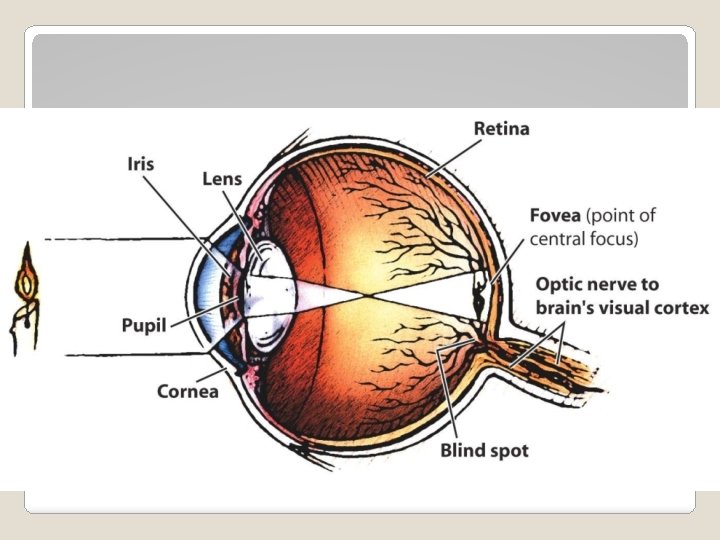
�The point at which the optic nerve travels through the retina to exit the eye �There are no rods and cones at this point, so there is a small blind spot in vision. Blind Spot
Parts of the Eye – Blind Spot