
MODULE 7 INFECTION CONTROL OBJECTIVES Define vocabulary words
MODULE 7: INFECTION CONTROL

OBJECTIVES Define vocabulary words related to infection control Describe the history of infection control Discuss the importance of infection control measures Demonstrate good handwashing technique 2

OBJECTIVES Recognize how germs spread Describe each link in the chain of infection Relate the chain of infection to the work of nurse aides Describe the signs and symptoms of infection to report to the nurse Compare standard precautions and transmission-based precautions 3
INFECTIONS…INTERESTING FACTS More than 2 million infections occur in a health care setting each year. The leading cause of death in nursing homes is infection. Infection is also the most frequent reason a person is moved from a nursing home to a hospital for care. 4
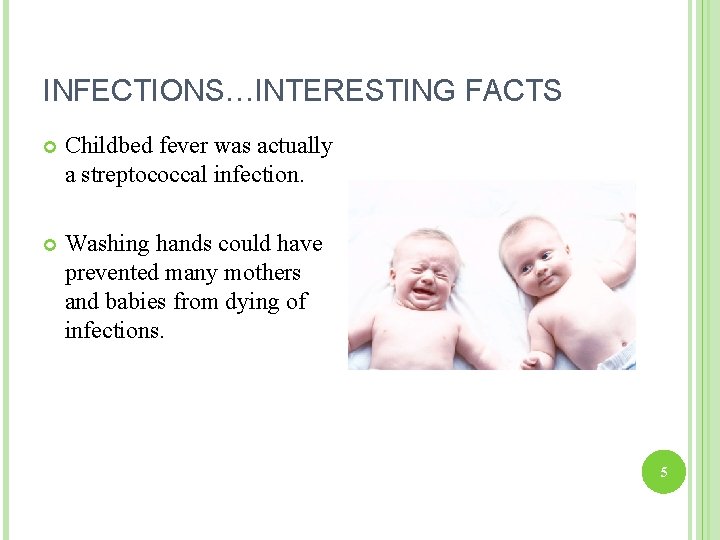
INFECTIONS…INTERESTING FACTS Childbed fever was actually a streptococcal infection. Washing hands could have prevented many mothers and babies from dying of infections. 5
HANDOUT 1 AND 1 A Infection Control Vocabulary List Fictional Obituary 6
PERSONAL HYGIENE HABITS 7
PERSONAL HYGIENE HABITS Do’s Practice good personal grooming – bathe, brush teeth, etc. Wear clean, unwrinkled clothes Cover your mouth and nose when coughing & sneezing Wash hands frequently Do Not’s Wear your uniform that you have worked in around your own home Take personal belongings into a patient’s home Eat or drink after other people 8
OPTIONAL – CLASS DISCUSSION Discuss the importance of good hygiene. Discuss what the class thinks is good personal hygiene. 9
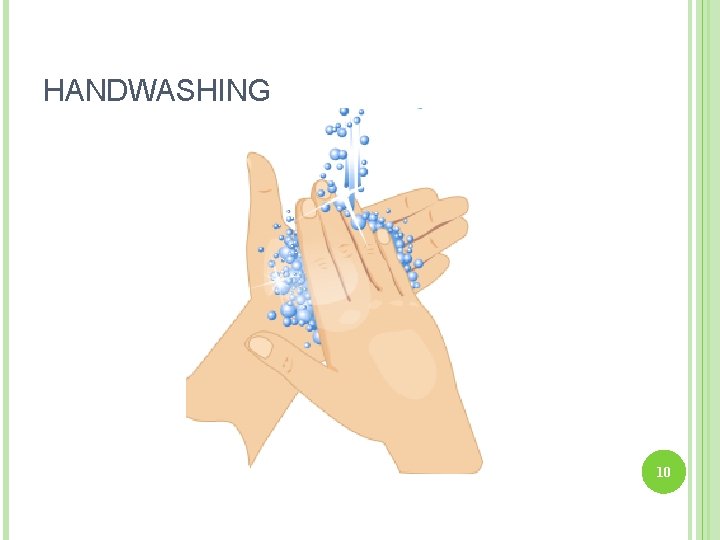
HANDWASHING 10
HANDOUT 2 Hand Hygiene Guidelines Fact Sheet 11
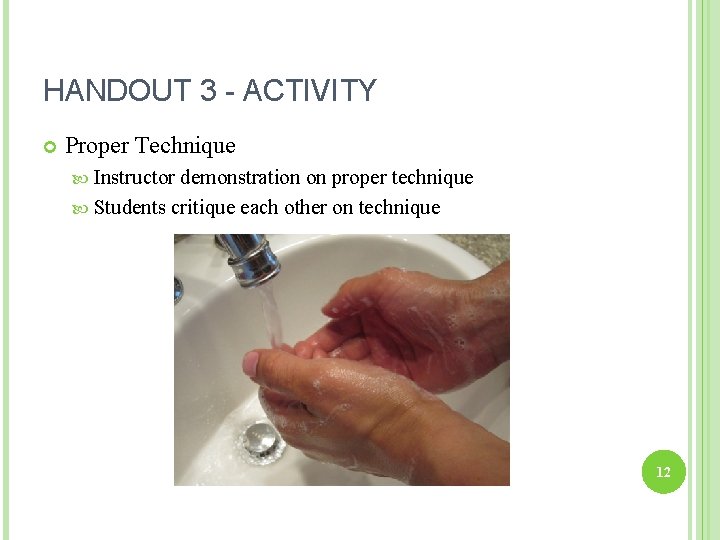
HANDOUT 3 - ACTIVITY Proper Technique Instructor demonstration on proper technique Students critique each other on technique 12
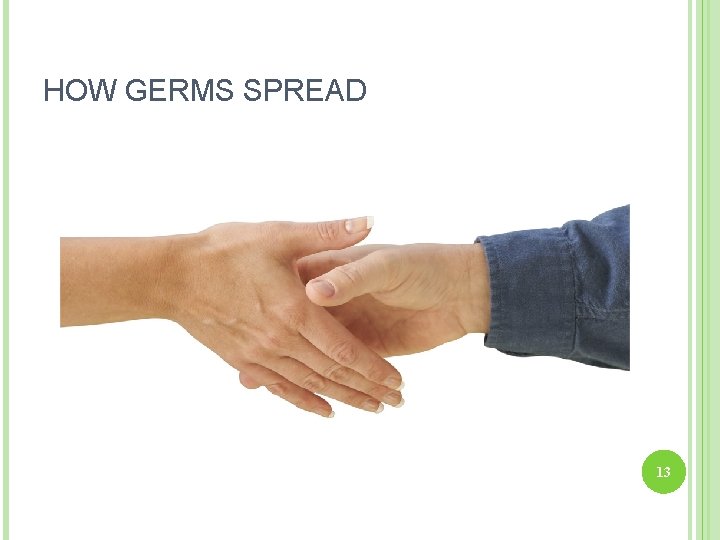
HOW GERMS SPREAD 13
HANDOUT 4 Confidential Self-Assessment 14
HANDOUT 5 Optional – Glitter Bug or Glo Germ Activity 15
CHAIN OF INFECTION INFECTIOUS AGENT 16
CHAIN OF INFECTION RESERVOIR 17
CHAIN OF INFECTION PORTAL OF EXIT 18
CHAIN OF INFECTION MODE OF TRANSMISSION 19
CHAIN OF INFECTION PORTAL OF ENTRY 20
CHAIN OF INFECTION SUSCEPTIBLE HOST 21
HANDOUT 6 CHAIN OF INFECTION ACTIVITY Match each word in the middle of the chain of infection to it’s corresponding link. 22
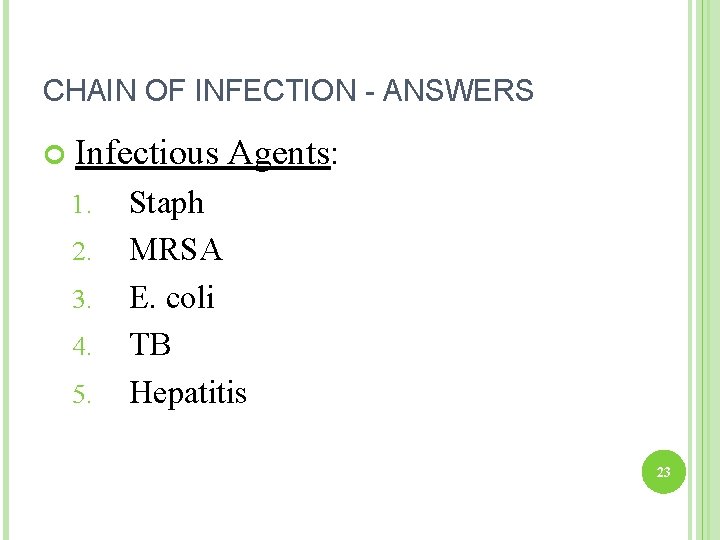
CHAIN OF INFECTION - ANSWERS Infectious Agents: 1. 2. 3. 4. 5. Staph MRSA E. coli TB Hepatitis 23

CHAIN OF INFECTION - ANSWERS Reservoir: 1. 2. 3. 4. 5. Blood Potato Salad Soil Raw Meat Ticks 24
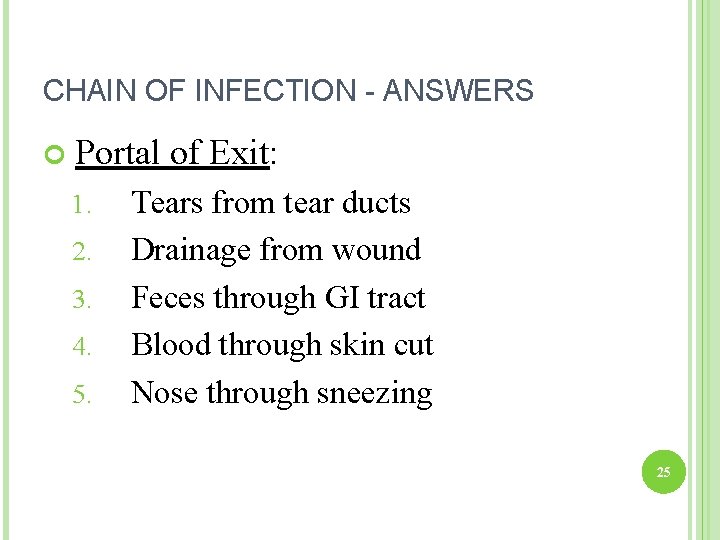
CHAIN OF INFECTION - ANSWERS Portal of Exit: 1. 2. 3. 4. 5. Tears from tear ducts Drainage from wound Feces through GI tract Blood through skin cut Nose through sneezing 25
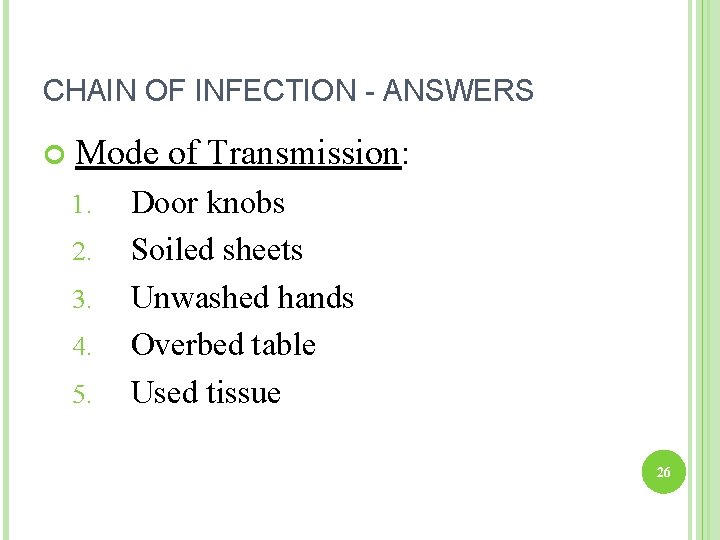
CHAIN OF INFECTION - ANSWERS Mode of Transmission: 1. 2. 3. 4. 5. Door knobs Soiled sheets Unwashed hands Overbed table Used tissue 26
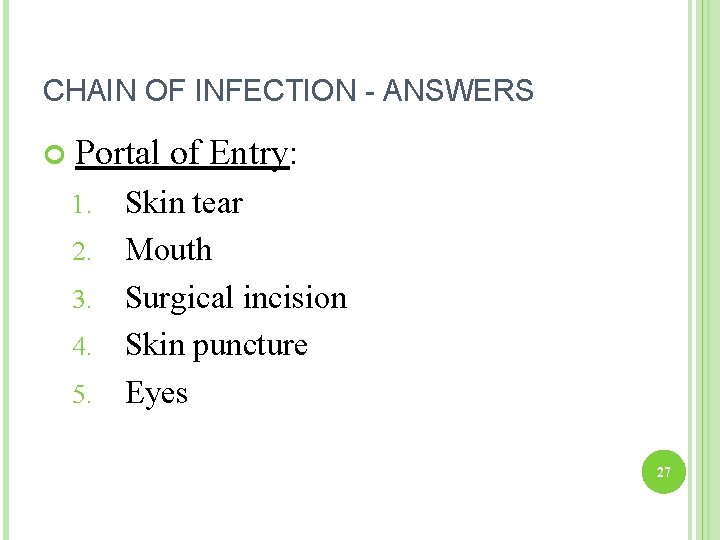
CHAIN OF INFECTION - ANSWERS Portal of Entry: 1. 2. 3. 4. 5. Skin tear Mouth Surgical incision Skin puncture Eyes 27
CHAIN OF INFECTION - ANSWERS Susceptible Host: 1. 2. 3. 4. 5. Person with diabetes Frail elderly Person who’s had surgery Person with catheter Person with poor nutrition 28
HANDOUT 7 - BREAKING THE CHAIN OF INFECTION ACTIVITY Match each word in the middle to it’s corresponding link to show where to break the chain of infection. 29
BREAKING THE CHAIN OF INFECTION ANSWERS Infectious Agents: 1. 2. Antibiotics Immunizations 30
BREAKING THE CHAIN OF INFECTION ANSWERS Reservoir: 1. 2. 3. 4. 5. Clean dish towels every day Staying home when sick Bathing daily Wearing clean uniforms every day Handwashing 31
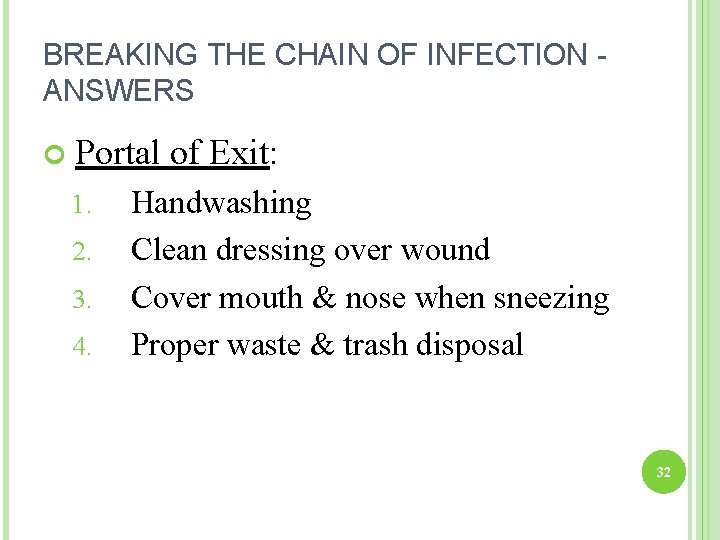
BREAKING THE CHAIN OF INFECTION ANSWERS Portal of Exit: 1. 2. 3. 4. Handwashing Clean dressing over wound Cover mouth & nose when sneezing Proper waste & trash disposal 32
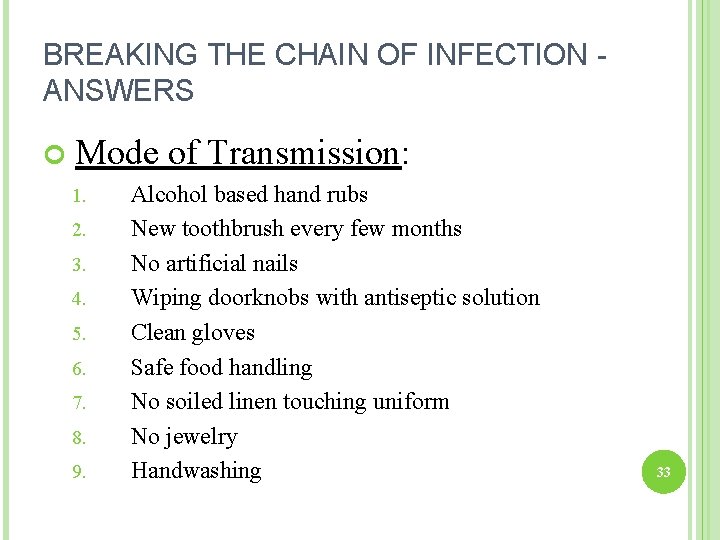
BREAKING THE CHAIN OF INFECTION ANSWERS Mode of Transmission: 1. 2. 3. 4. 5. 6. 7. 8. 9. Alcohol based hand rubs New toothbrush every few months No artificial nails Wiping doorknobs with antiseptic solution Clean gloves Safe food handling No soiled linen touching uniform No jewelry Handwashing 33
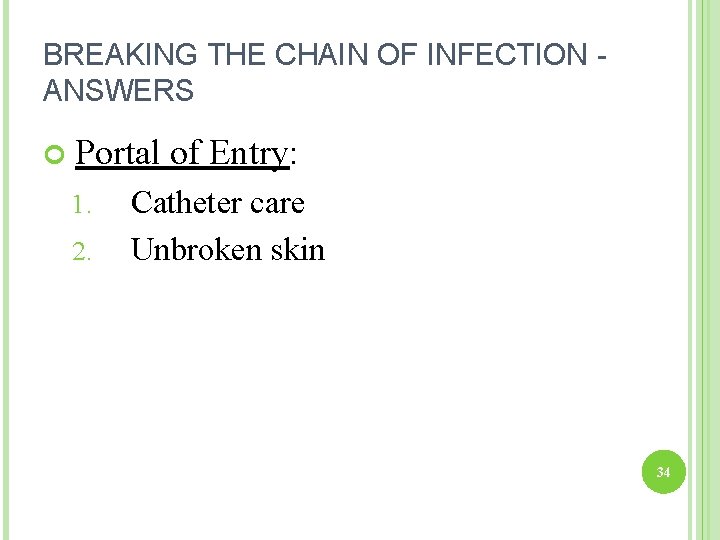
BREAKING THE CHAIN OF INFECTION ANSWERS Portal of Entry: 1. 2. Catheter care Unbroken skin 34
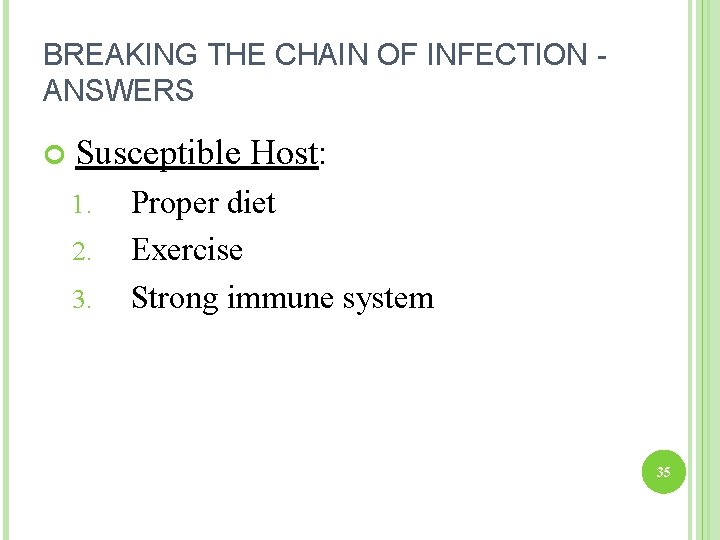
BREAKING THE CHAIN OF INFECTION ANSWERS Susceptible Host: 1. 2. 3. Proper diet Exercise Strong immune system 35
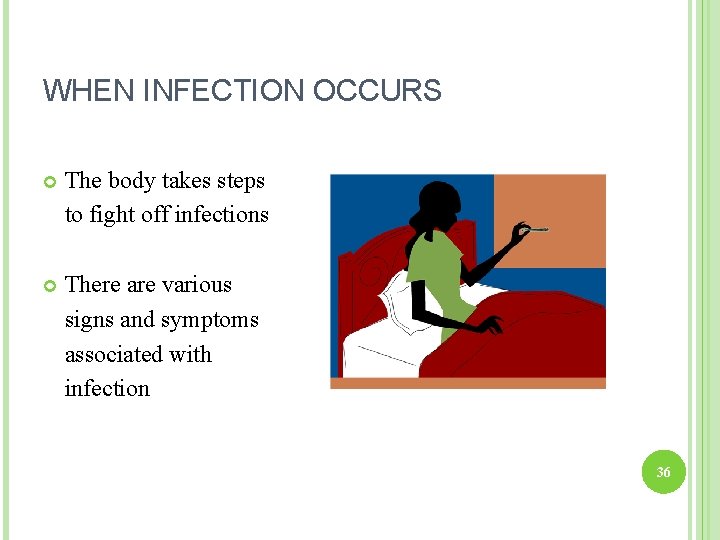
WHEN INFECTION OCCURS The body takes steps to fight off infections There are various signs and symptoms associated with infection 36
CLASS DISCUSSION Name signs and symptoms of infections that you have known of, seen, or even experienced. 37
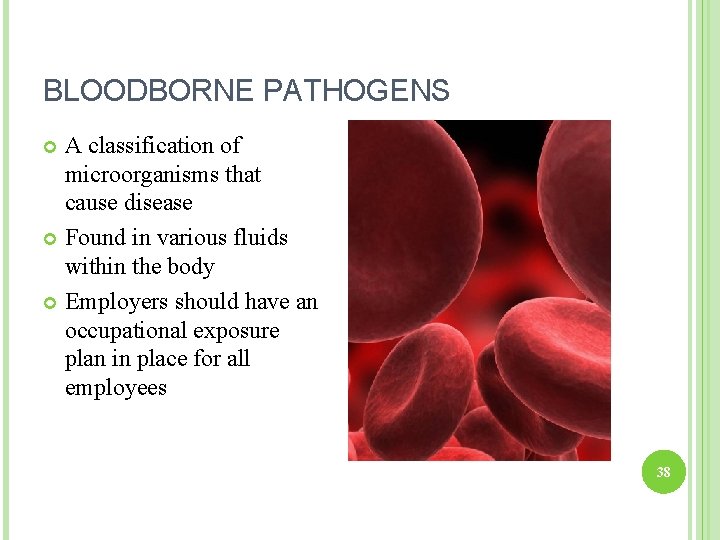
BLOODBORNE PATHOGENS A classification of microorganisms that cause disease Found in various fluids within the body Employers should have an occupational exposure plan in place for all employees 38
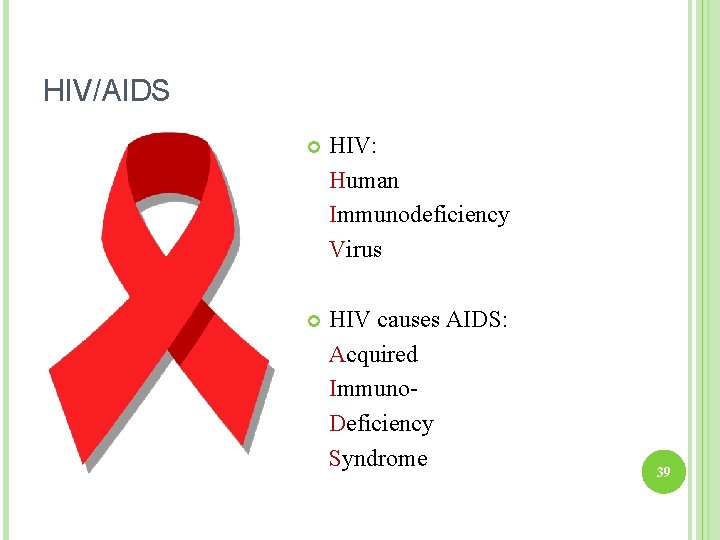
HIV/AIDS HIV: Human Immunodeficiency Virus HIV causes AIDS: Acquired Immuno. Deficiency Syndrome 39
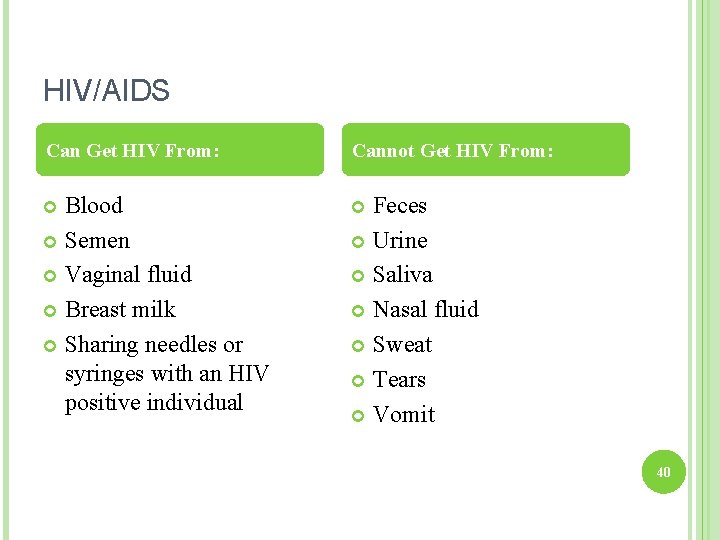
HIV/AIDS Can Get HIV From: Cannot Get HIV From: Blood Semen Vaginal fluid Breast milk Sharing needles or syringes with an HIV positive individual Feces Urine Saliva Nasal fluid Sweat Tears Vomit 40
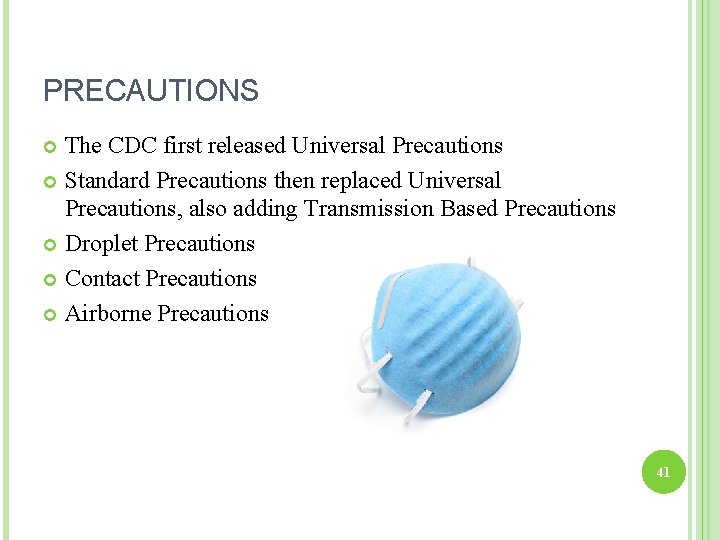
PRECAUTIONS The CDC first released Universal Precautions Standard Precautions then replaced Universal Precautions, also adding Transmission Based Precautions Droplet Precautions Contact Precautions Airborne Precautions 41
HANDOUT 8 Standard Precautions and Transmission Based Precautions Chart 42
HANDOUT 9 Which Precaution Would You Use? 43
OPTIONAL - CLASS DISCUSSION Give examples of work experiences where you had to take care of a patient with a possible infectious disease…How did you protect yourself? 44
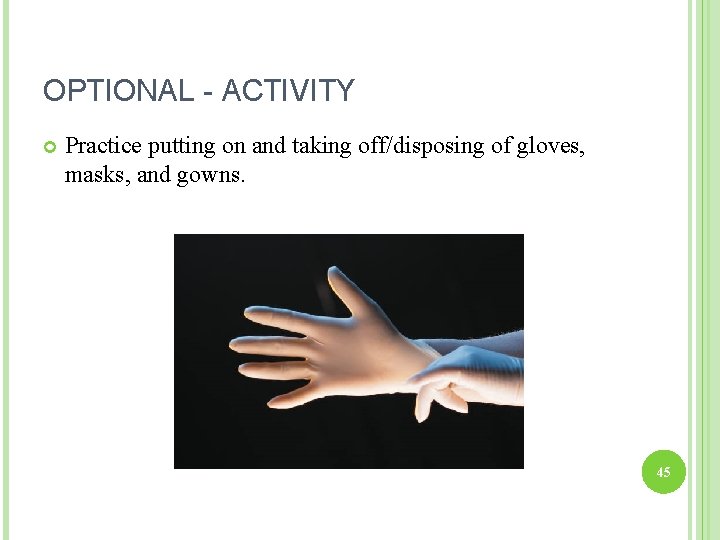
OPTIONAL - ACTIVITY Practice putting on and taking off/disposing of gloves, masks, and gowns. 45
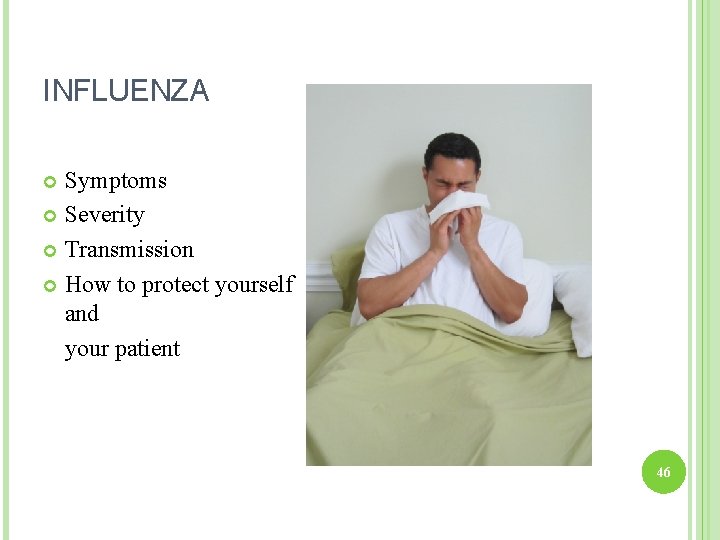
INFLUENZA Symptoms Severity Transmission How to protect yourself and your patient 46
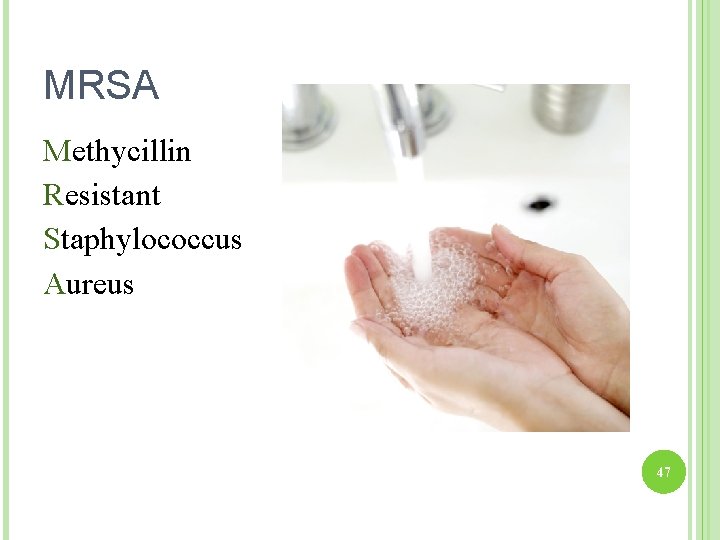
MRSA Methycillin Resistant Staphylococcus Aureus 47
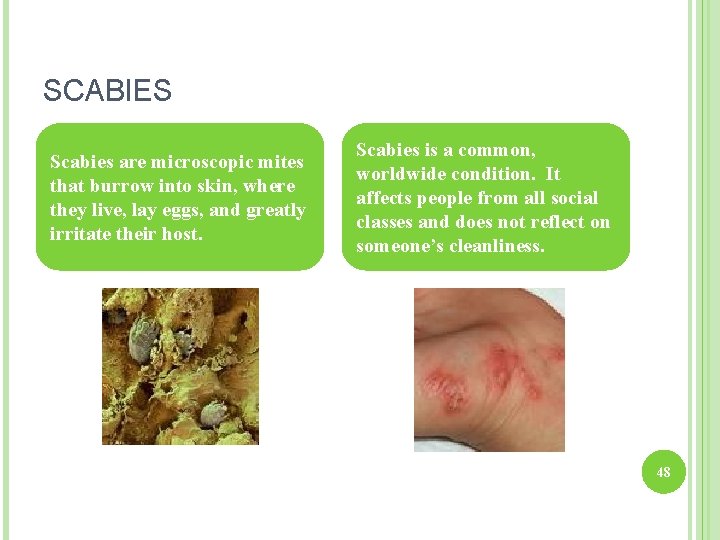
SCABIES Scabies are microscopic mites that burrow into skin, where they live, lay eggs, and greatly irritate their host. Scabies is a common, worldwide condition. It affects people from all social classes and does not reflect on someone’s cleanliness. 48
HOW TO KILL GERMS Disinfection Sterilization Incineration 49
BAG TECHNIQUE There are important safety precautions regarding proper bag technique Make sure the bag you have has easily accessible, open outside pockets, and a large, zipper closed section as well Never put your bag on the floor 50
ACTIVITY Instructor demonstration of proper bag technique 51
RODENTS AND OTHER PESTS Look for telltale signs of rodents or pests Signs or findings should be reported to your supervisor 52
THE EMPLOYERS ROLE IN INFECTION CONTROL Inform Provide, maintain, replace Train For more information, go to: www. osha. gov 53

THE END 54
- Slides: 54