
Module 7 General Health and Safety Considerations 1

- Slides: 11
Module 7: General Health and Safety Considerations 1
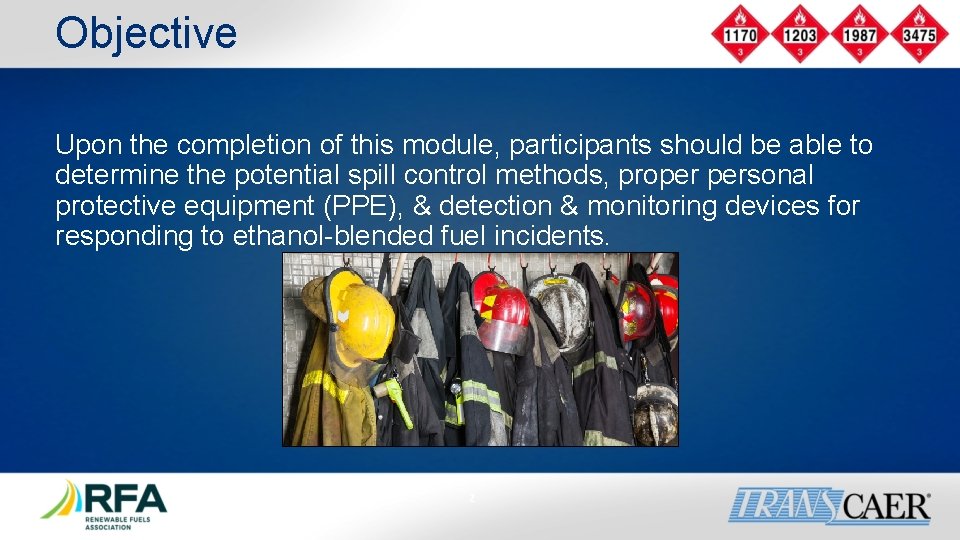
Objective Upon the completion of this module, participants should be able to determine the potential spill control methods, proper personal protective equipment (PPE), & detection & monitoring devices for responding to ethanol-blended fuel incidents. 2
Introduction Understanding the properties & characteristics – E 10 retains hydrocarbon/ gasoline characteristics • Absorbents/ booms that are designed to pick up oil-type substances are effective – Blends with greater than 10% ethanol start to take on polar solvent characteristics • Absorbents/ booms designed for polar solvents should be used – When water is introduced, phase separation of the water/ ethanol solution may take place 3
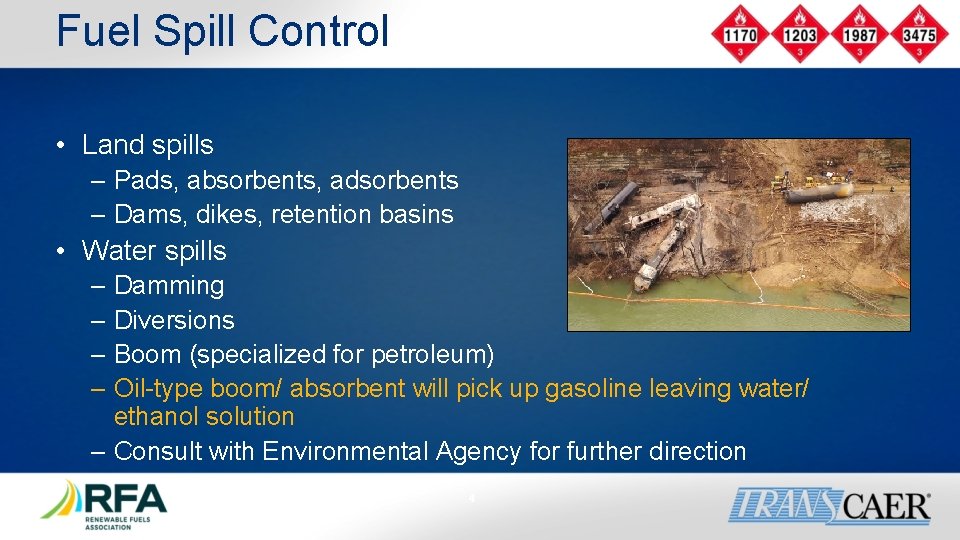
Fuel Spill Control • Land spills – Pads, absorbents, adsorbents – Dams, dikes, retention basins • Water spills – Damming – Diversions – Boom (specialized for petroleum) – Oil-type boom/ absorbent will pick up gasoline leaving water/ ethanol solution – Consult with Environmental Agency for further direction 4
Special Considerations • Keep in mind that if water absorbing booms and/ or absorbents are used to pick up ethanol/ water solutions, the absorbents may be flammable • If an AR foam blanket is used to control the vapors from ethanolblended fuel, remember a portion of the foam solution will absorb into ethanol-blended fuel 5
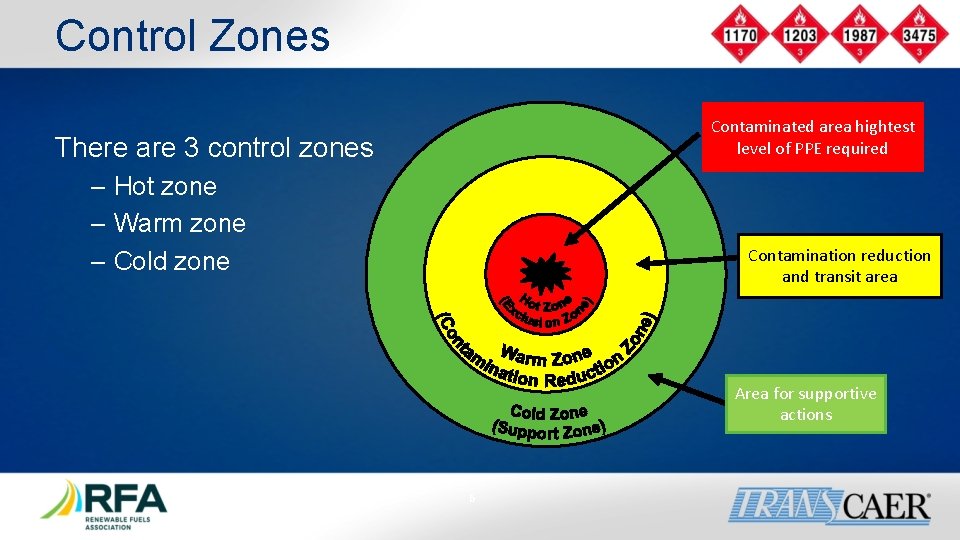
Control Zones Contaminated area hightest level of PPE required There are 3 control zones – Hot zone – Warm zone – Cold zone Contamination reduction and transit area Area for supportive actions 6
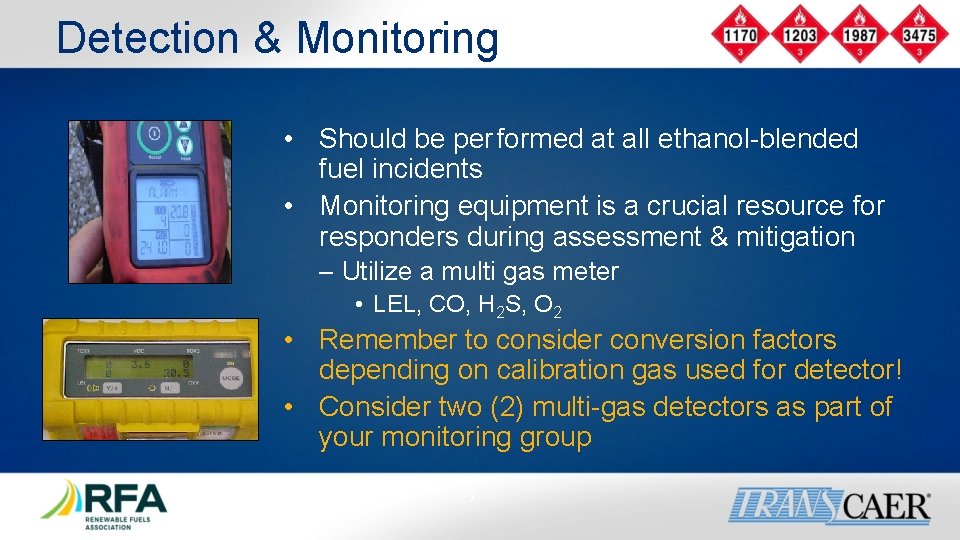
Detection & Monitoring • Should be per formed at all ethanol-blended fuel incidents • Monitoring equipment is a crucial resource for responders during assessment & mitigation – Utilize a multi gas meter • LEL, CO, H 2 S, O 2 • Remember to consider conversion factors depending on calibration gas used for detector! • Consider two (2) multi-gas detectors as part of your monitoring group 7
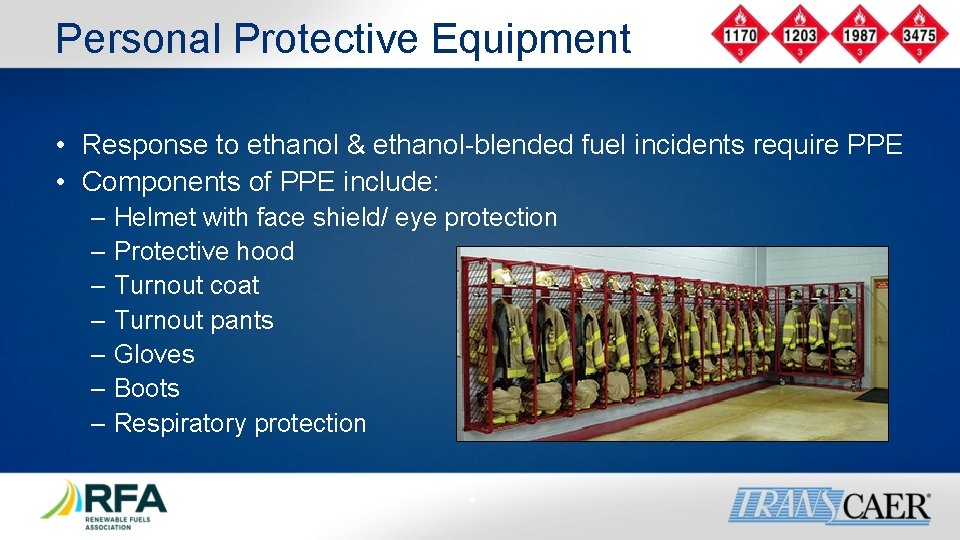
Personal Protective Equipment • Response to ethanol & ethanol-blended fuel incidents require PPE • Components of PPE include: – Helmet with face shield/ eye protection – Protective hood – Turnout coat – Turnout pants – Gloves – Boots – Respiratory protection 8
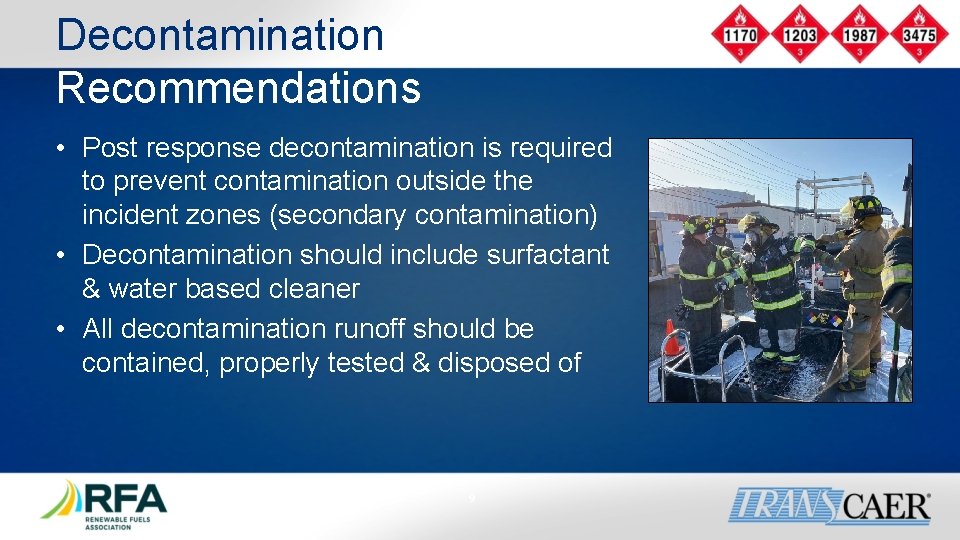
Decontamination Recommendations • Post response decontamination is required to prevent contamination outside the incident zones (secondary contamination) • Decontamination should include surfactant & water based cleaner • All decontamination runoff should be contained, properly tested & disposed of 9
Summary • Procedures to ensure safe incident management for fire/ spill • Know type of fuel spilled/ burning essential to success of operation • Take steps to contain incident & appropriately distribute proper foam • Critical that all responders wear appropriate PPE 10
Activity 7. 1: Incident Procedures Purpose: – To become familiar with the correct order of steps in the following procedures & the rationales behind them 11