
Module 7 Cleaning Disinfection WASH FIT 1 Overview

- Slides: 22
Module 7 Cleaning & Disinfection WASH FIT 1|
Overview 1. 2. 3. 4. 5. 2| Cleaning, disinfection, decontamination When to use cleaning, disinfection, or sterilization The cleaning, disinfection and sterilization process The safe management of used linen Cleaning of reusable PPE (Ebola)
What is decontamination? Decontamination is the process of making an object or area safe by removing contaminants such as microorganisms or hazardous materials, including chemicals, radioactive substances, and infectious substances. Decontamination process: Cleaning, Disinfection and Sterilization 3|
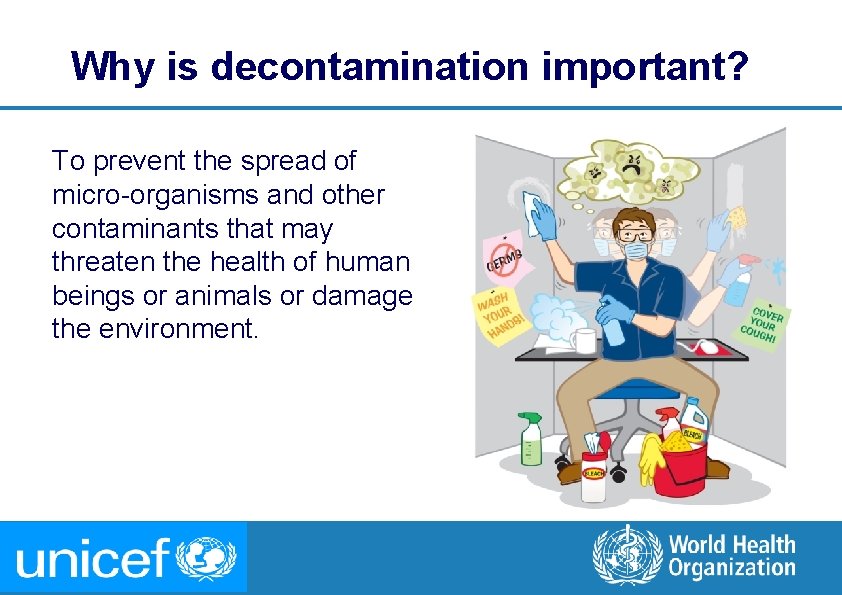
Why is decontamination important? To prevent the spread of micro-organisms and other contaminants that may threaten the health of human beings or animals or damage the environment. 4|
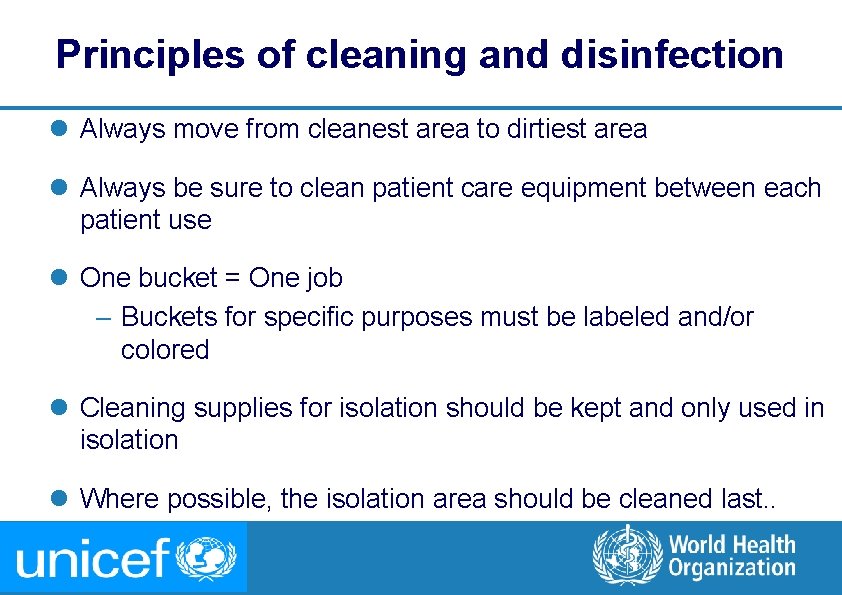
Principles of cleaning and disinfection l Always move from cleanest area to dirtiest area l Always be sure to clean patient care equipment between each patient use l One bucket = One job – Buckets for specific purposes must be labeled and/or colored l Cleaning supplies for isolation should be kept and only used in isolation l Where possible, the isolation area should be cleaned last. . 5|
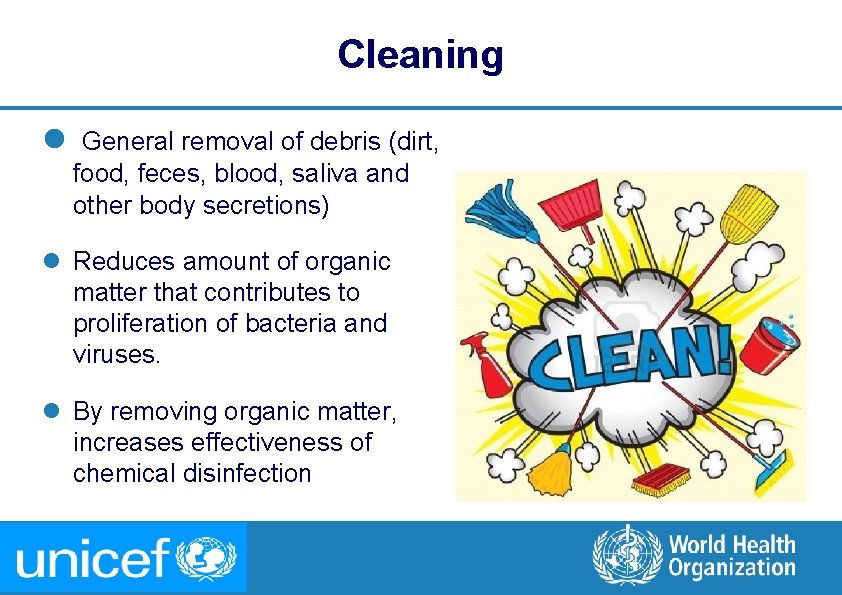
Cleaning l General removal of debris (dirt, food, feces, blood, saliva and other body secretions) l Reduces amount of organic matter that contributes to proliferation of bacteria and viruses. l By removing organic matter, increases effectiveness of chemical disinfection 6|
Cleaning process (6 steps) 1. Remove rubbish / Recycle – Remove liners and reline all waste containers. – Remove soiled linen. Change the bag when ¾ full or if the area is closed for the day. – Check sharp containers (change when ¾ full). – Clean waste containers. 2. Dust – Always use a wet cloth to dust – High dust everything above shoulder level or out of reach. Use an extension pole with duster head. Never high dust around people. 7|
Cleaning process (6 steps) 3. Damp wipe – Wipe everything you are able to reach. – Use germicide for all surfaces except glass. – Use a dry cloth or paper towel to polish interior and low-level glass to a streak free appearance. – Start with the door and work around the room in a circular pattern. – Be sure to include: wall spotting, light switches, call buttons, telephones, wall moldings, dispensers, windowsills, and furniture. 4. Clean bathrooms – Start at the door and end with the toilet. Use a bowl mop inside the bowl and wipe the outside with a disinfectant damp wiper. – Do not use the cleaning wiper on any other surface after cleaning the toilet. 8|
Cleaning process (6 steps) 5. Damp mop – Place a ‘Wet Floor’ sign at the entrance before you begin. – Start with the corner furthest from the door and work your way out. – Mop the corners to prevent build up of dust and dirt. 6. Inspect the room – Report any repairs that are needed. – Correct any deficiencies. – Is the room ready for another patient? 9|
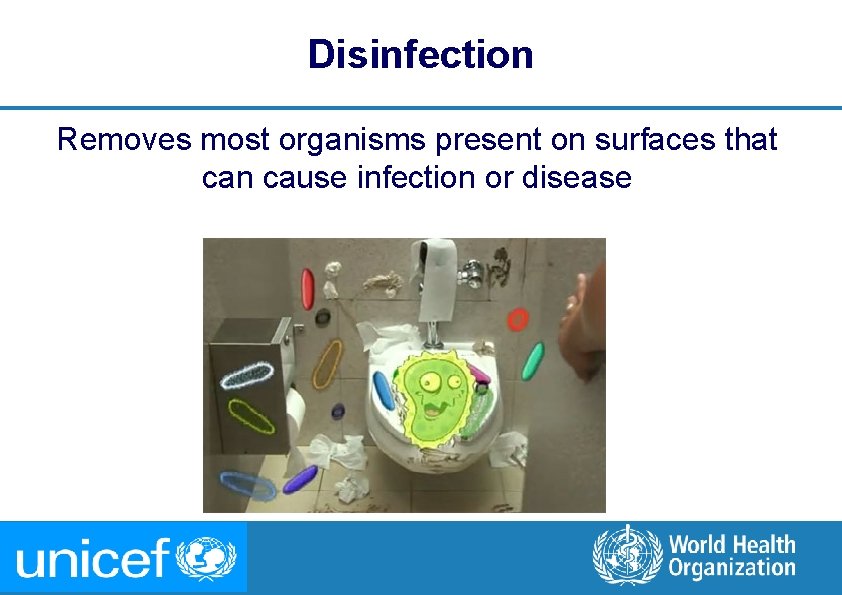
Disinfection Removes most organisms present on surfaces that can cause infection or disease 10 |
Disinfection process (4 steps) 1. CLEAN using soap or detergent and water – Remove visible soil – May need to disconnect or separate instrument parts – Avoid organic material drying on equipment by rinsing or soaking in an enzymatic solution 2. DISINFECT using an effective and approved disinfectant 3. WASH OFF any remaining disinfectant using clean water 4. Let air DRY or take outside to dry in the sun NEVER SPRAY disinfectant directly on spill body fluid, it can create splashes or make the spill bigger Use towel or cloth to remove any spill 11 |
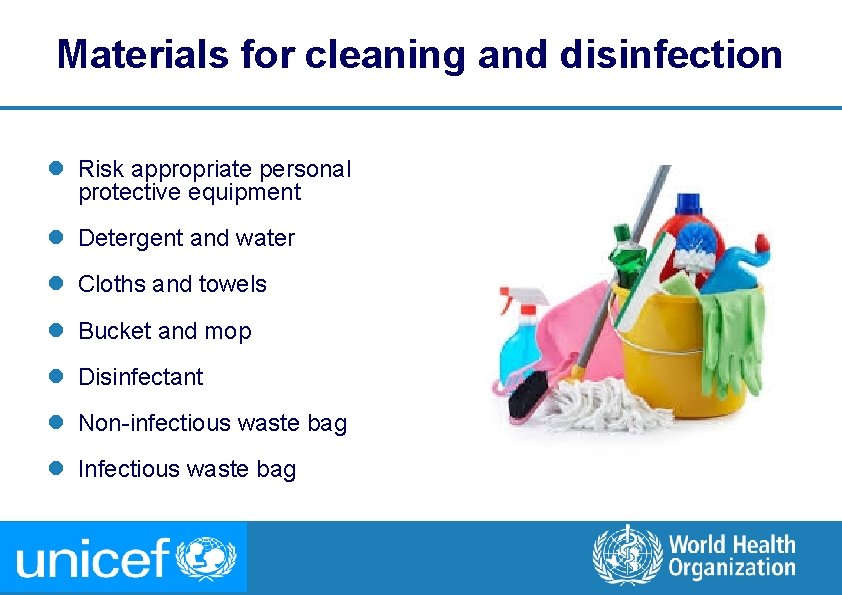
Materials for cleaning and disinfection l Risk appropriate personal protective equipment l Detergent and water l Cloths and towels l Bucket and mop l Disinfectant l Non-infectious waste bag l Infectious waste bag 12 |
Sterilization The killing or removal of all organisms 13 |
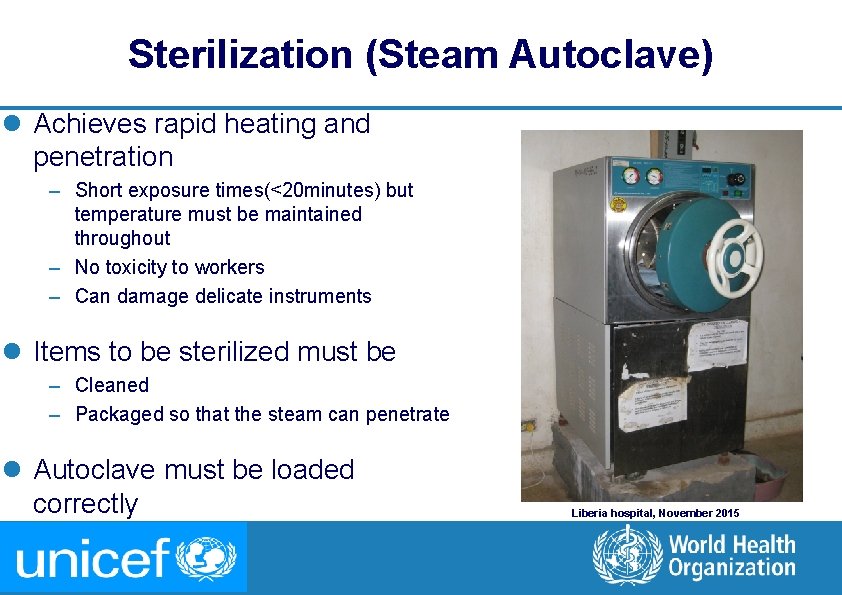
Sterilization (Steam Autoclave) l Achieves rapid heating and penetration – Short exposure times(<20 minutes) but temperature must be maintained throughout – No toxicity to workers – Can damage delicate instruments l Items to be sterilized must be – Cleaned – Packaged so that the steam can penetrate l Autoclave must be loaded correctly 14 | Liberia hospital, November 2015
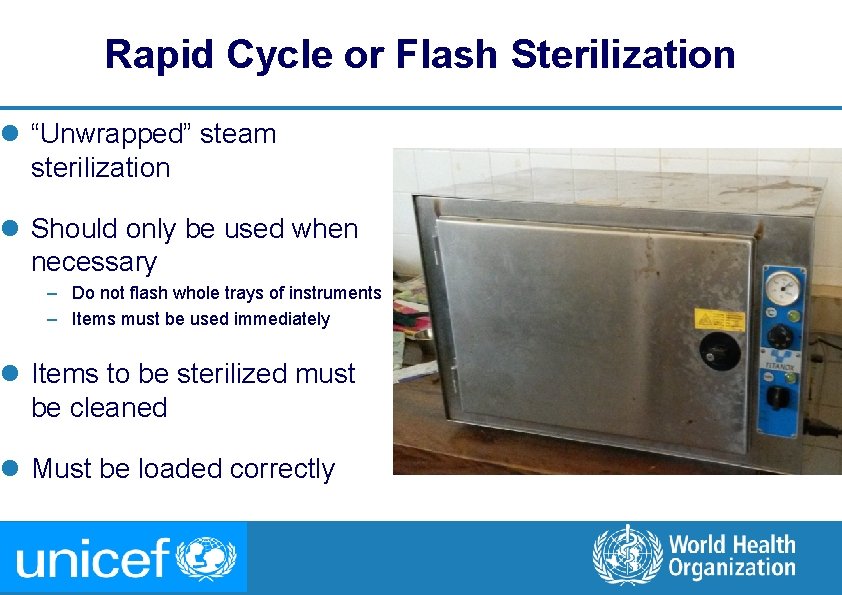
Rapid Cycle or Flash Sterilization l “Unwrapped” steam sterilization l Should only be used when necessary – Do not flash whole trays of instruments – Items must be used immediately l Items to be sterilized must be cleaned l Must be loaded correctly 15 |
Cleaning and disinfecting an Isolation Area l Cleaners should always wear the recommended PPE when cleaning the isolation area l Isolation areas should have their own cleaning supplies that are separate from clean patient care areas l All waste from the isolation area is considered infectious waste 16 |
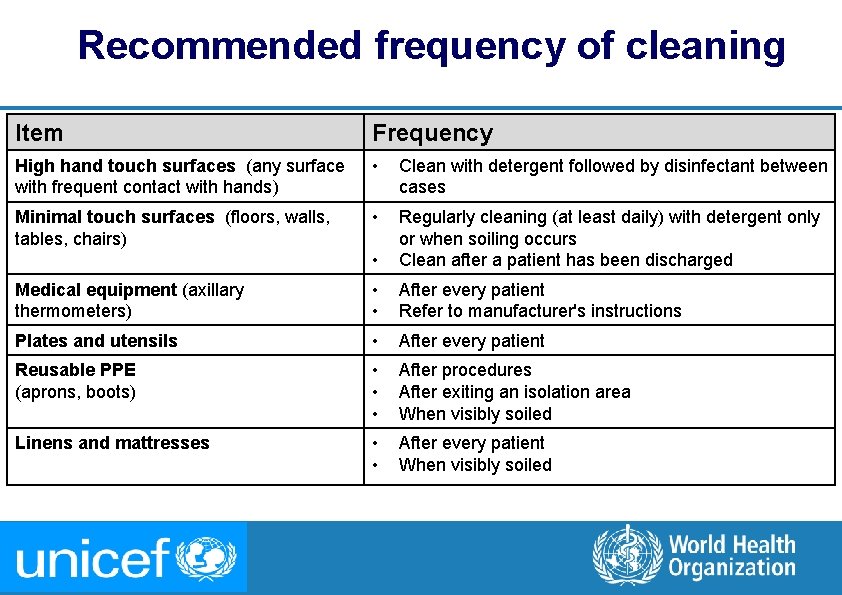
Recommended frequency of cleaning Item Frequency High hand touch surfaces (any surface with frequent contact with hands) • Clean with detergent followed by disinfectant between cases Minimal touch surfaces (floors, walls, tables, chairs) • • Regularly cleaning (at least daily) with detergent only or when soiling occurs Clean after a patient has been discharged Medical equipment (axillary thermometers) • • After every patient Refer to manufacturer's instructions Plates and utensils • After every patient Reusable PPE (aprons, boots) • • • After procedures After exiting an isolation area When visibly soiled Linens and mattresses • • After every patient When visibly soiled 19 |
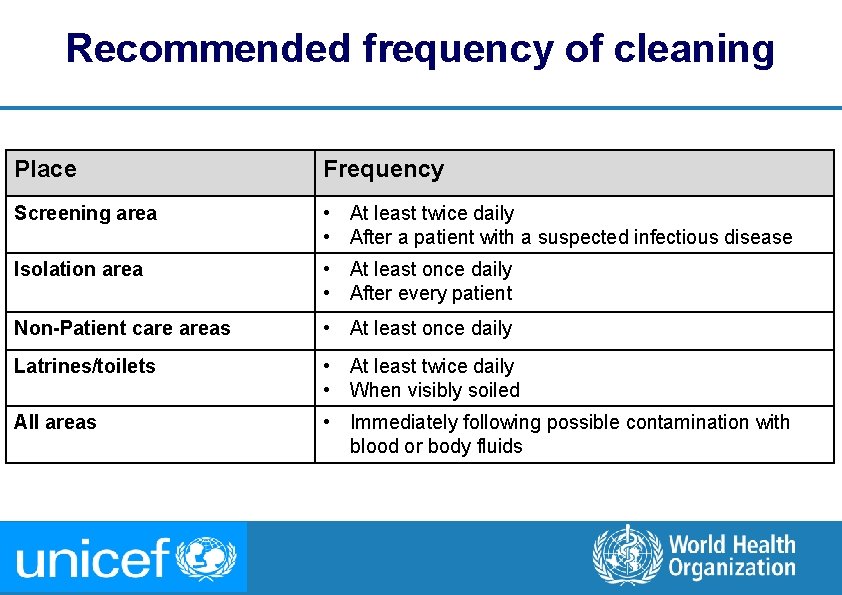
Recommended frequency of cleaning Place Frequency Screening area • At least twice daily • After a patient with a suspected infectious disease Isolation area • At least once daily • After every patient Non-Patient care areas • At least once daily Latrines/toilets • At least twice daily • When visibly soiled All areas • Immediately following possible contamination with blood or body fluids 20 |
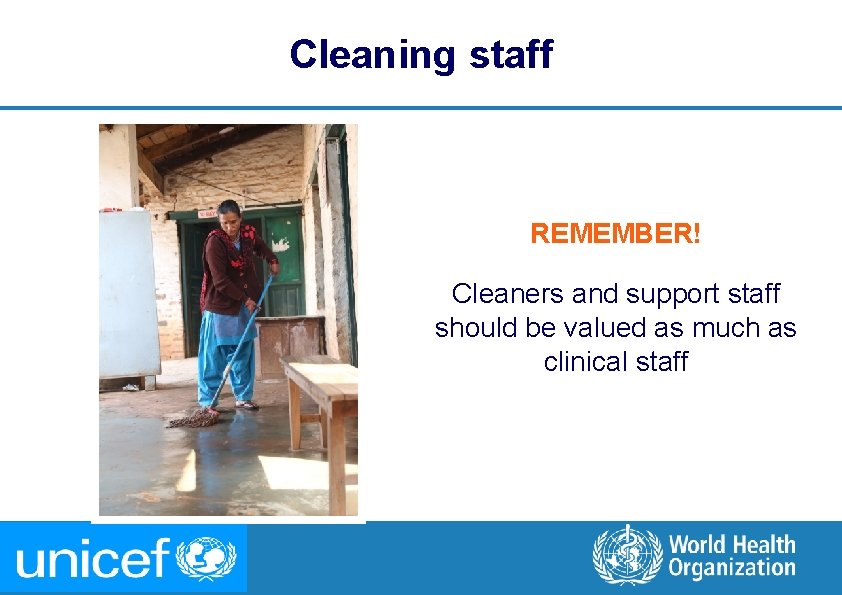
Cleaning staff REMEMBER! Cleaners and support staff should be valued as much as clinical staff 21 |
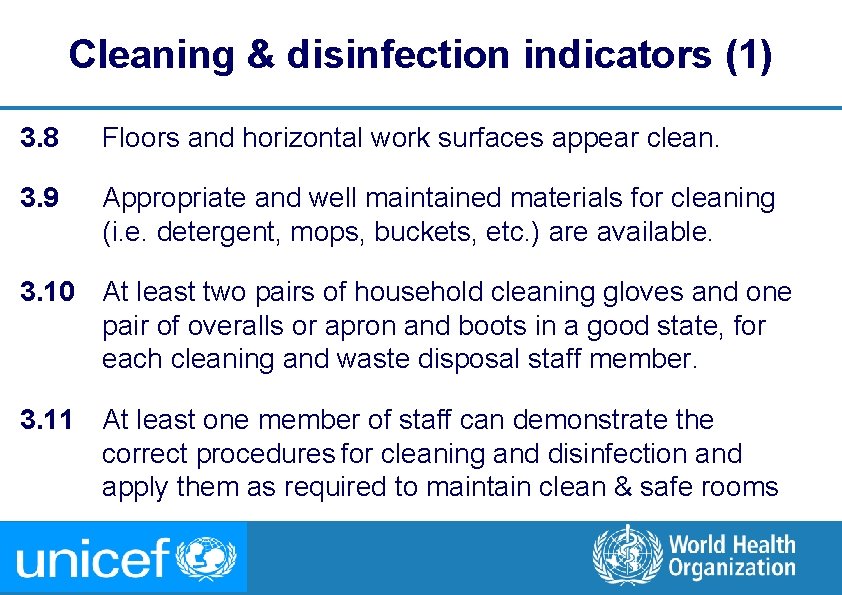
Cleaning & disinfection indicators (1) 3. 8 Floors and horizontal work surfaces appear clean. 3. 9 Appropriate and well maintained materials for cleaning (i. e. detergent, mops, buckets, etc. ) are available. 3. 10 At least two pairs of household cleaning gloves and one pair of overalls or apron and boots in a good state, for each cleaning and waste disposal staff member. 3. 11 At least one member of staff can demonstrate the correct procedures for cleaning and disinfection and apply them as required to maintain clean & safe rooms 22 |
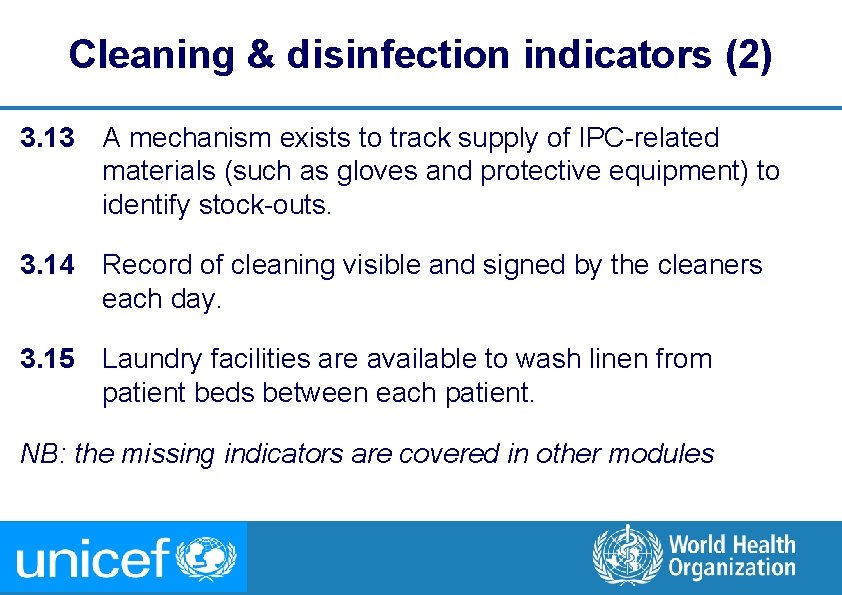
Cleaning & disinfection indicators (2) 3. 13 A mechanism exists to track supply of IPC-related materials (such as gloves and protective equipment) to identify stock-outs. 3. 14 Record of cleaning visible and signed by the cleaners each day. 3. 15 Laundry facilities are available to wash linen from patient beds between each patient. NB: the missing indicators are covered in other modules 23 |
Questions 24 |