
Module 5 More vegetable life cycles The Carrot
Module 5. More vegetable life cycles The Carrot Top Mystery
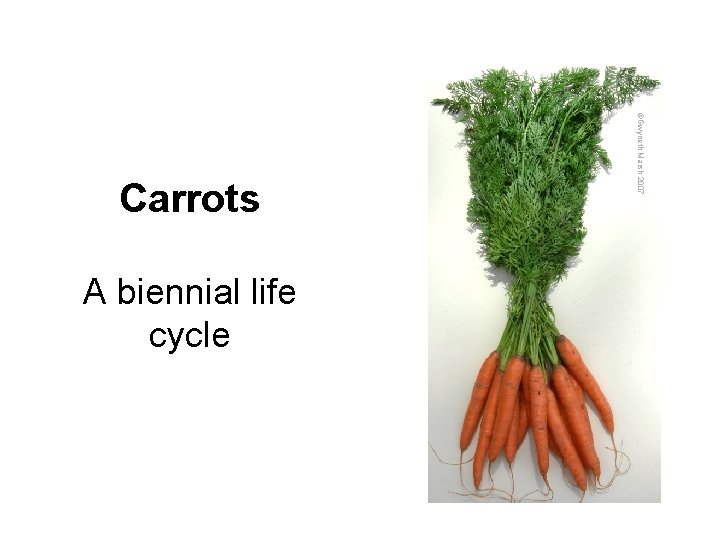
A biennial life cycle ©Gwyneth Marsh 2007 Carrots
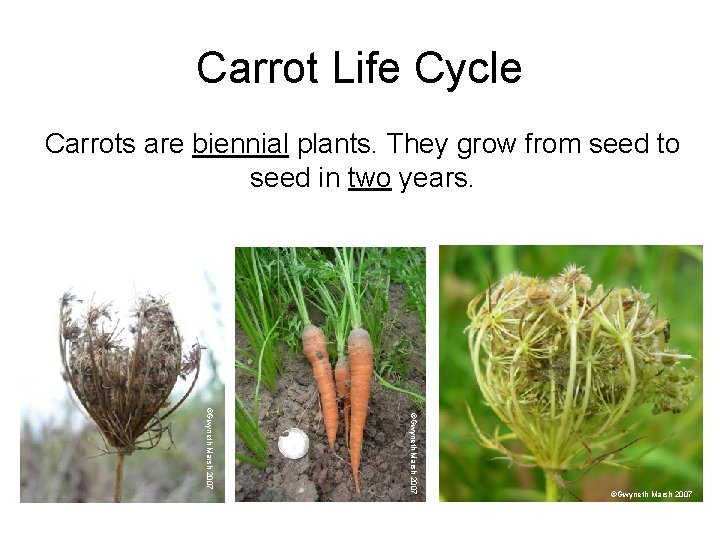
Carrot Life Cycle Carrots are biennial plants. They grow from seed to seed in two years. ©Gwyneth Marsh 2007
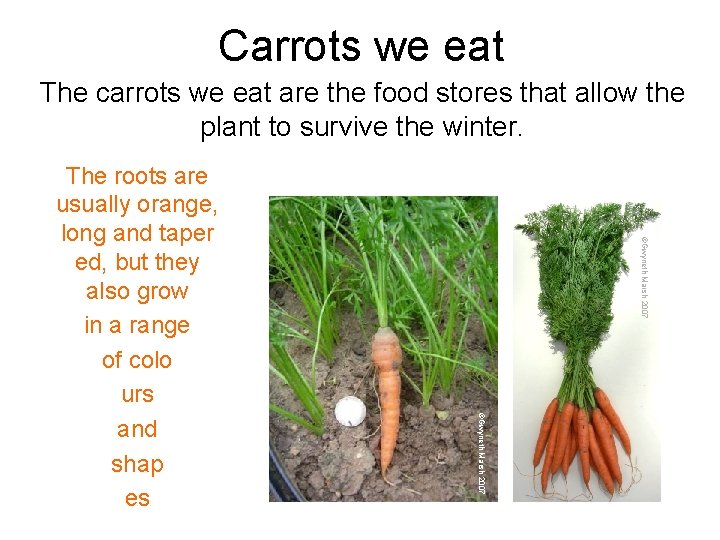
Carrots we eat The carrots we eat are the food stores that allow the plant to survive the winter. ©Gwyneth Marsh 2007 The roots are usually orange, long and taper ed, but they also grow in a range of colo urs and shap es
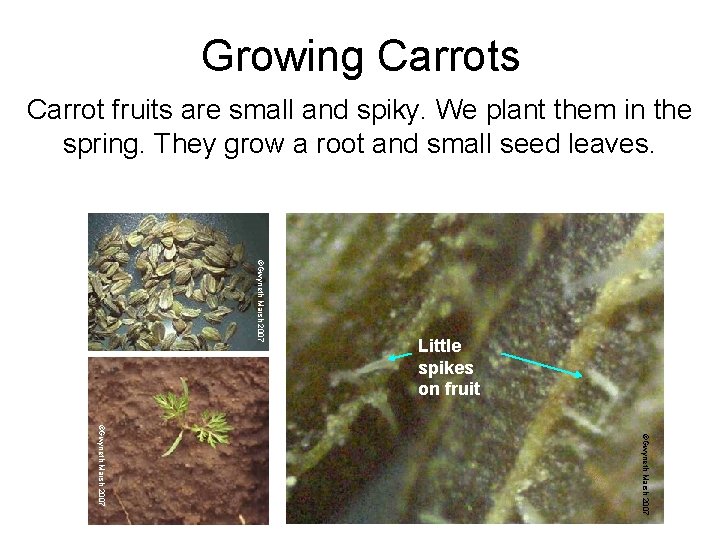
Growing Carrots Carrot fruits are small and spiky. We plant them in the spring. They grow a root and small seed leaves. ©Gwyneth Marsh 2007 Little spikes on fruit ©Gwyneth Marsh 2007
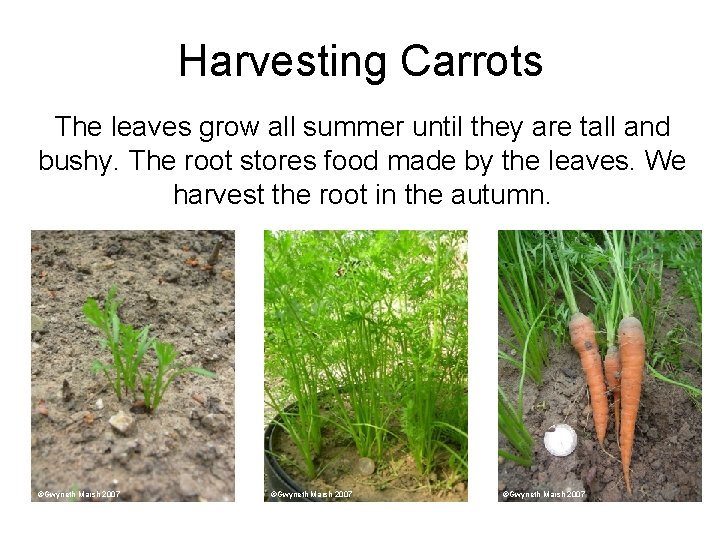
Harvesting Carrots The leaves grow all summer until they are tall and bushy. The root stores food made by the leaves. We harvest the root in the autumn. ©Gwyneth Marsh 2007
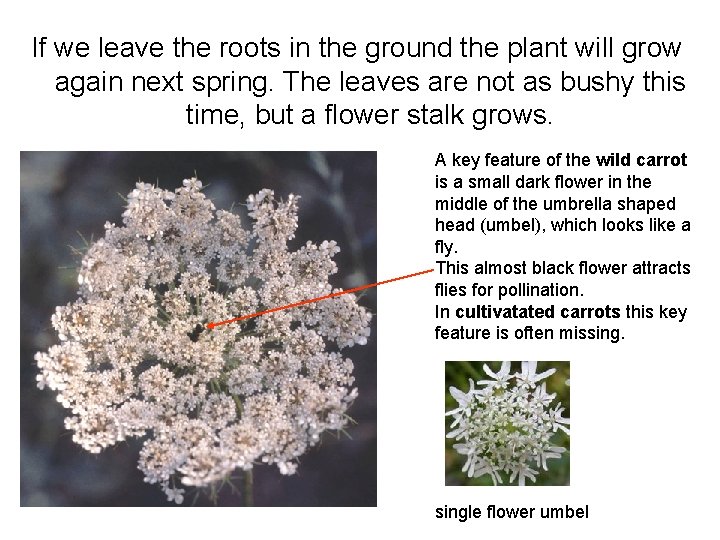
If we leave the roots in the ground the plant will grow again next spring. The leaves are not as bushy this time, but a flower stalk grows. A key feature of the wild carrot is a small dark flower in the middle of the umbrella shaped head (umbel), which looks like a fly. This almost black flower attracts flies for pollination. In cultivatated carrots this key feature is often missing. single flower umbel
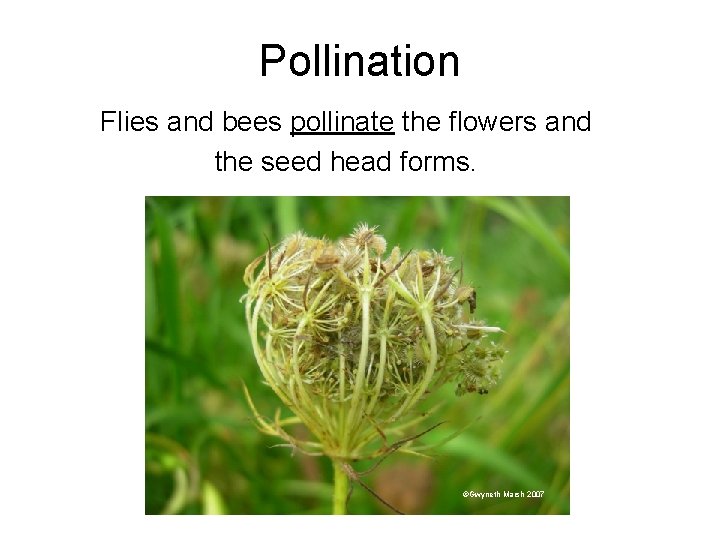
Pollination Flies and bees pollinate the flowers and the seed head forms. ©Gwyneth Marsh 2007
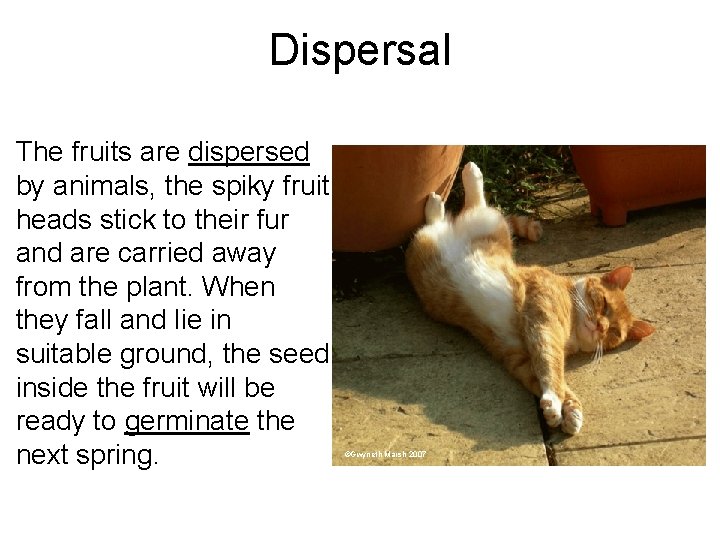
Dispersal The fruits are dispersed by animals, the spiky fruit heads stick to their fur and are carried away from the plant. When they fall and lie in suitable ground, the seed inside the fruit will be ready to germinate the next spring. ©Gwyneth Marsh 2007
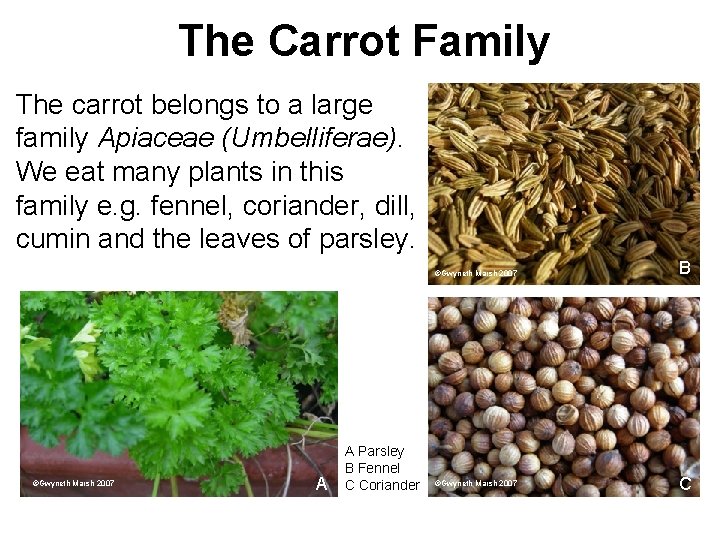
The Carrot Family The carrot belongs to a large family Apiaceae (Umbelliferae). We eat many plants in this family e. g. fennel, coriander, dill, cumin and the leaves of parsley. ©Gwyneth Marsh 2007 A A Parsley B Fennel C Coriander ©Gwyneth Marsh 2007 B C
- Slides: 10