
Module 5 Interpreting Evidence of Student Learning Social

- Slides: 39
Module 5: Interpreting Evidence of Student Learning Social Studies Kentucky Department of Education
Learning Goals (1) Participants will understand: } The role of evidence of student learning in monitoring and supporting student progress toward Learning Goals and Success Criteria } Strategies to engage students in interpreting their own progress toward Learning Goals and Success Criteria 2
Learning Goals (2) Participants will understand: } Strategies to interpret evidence of student learning to inform teaching and learning within specific disciplines 3
Success Criteria Participants will be able to: } Plan to interpret evidence of student learning throughout a lesson } Develop specific strategies to engage students in interpreting their own progress toward Learning Goals and Success Criteria 4
Review: Formative Assessment Process 5
Formative Assessment: A Definition Formative assessment is a planned, ongoing process used by all students and teachers during learning and teaching to elicit and use evidence of student learning to improve student understanding of intended disciplinary learning outcomes and support students to become self-directed learners. (CCSSO, 2018) 6
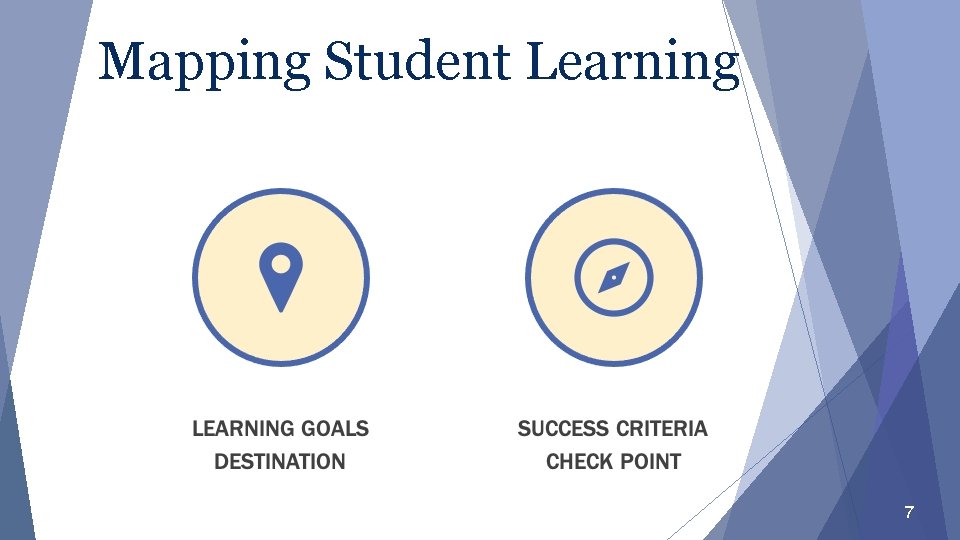
Mapping Student Learning 7
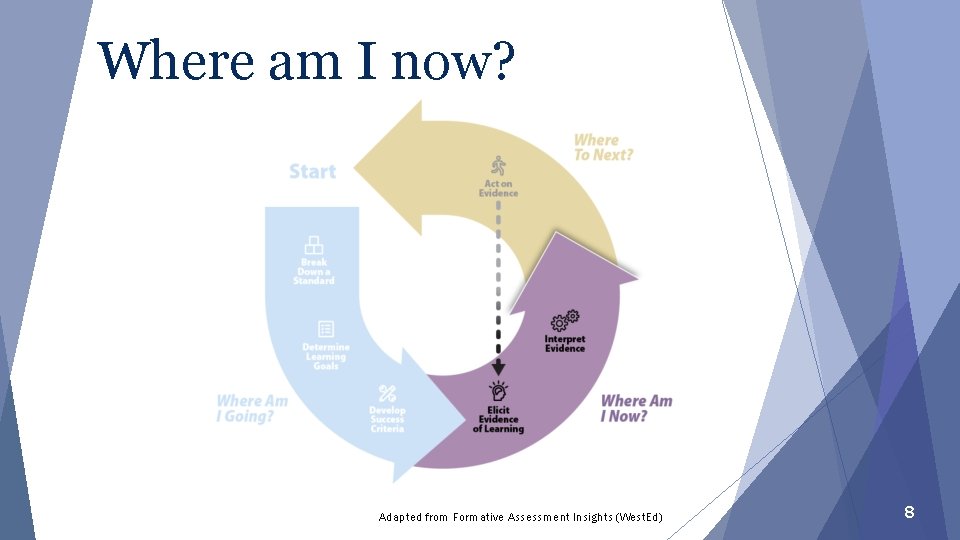
Where am I now? Adapted from Formative Assessment Insights (West. Ed) 8
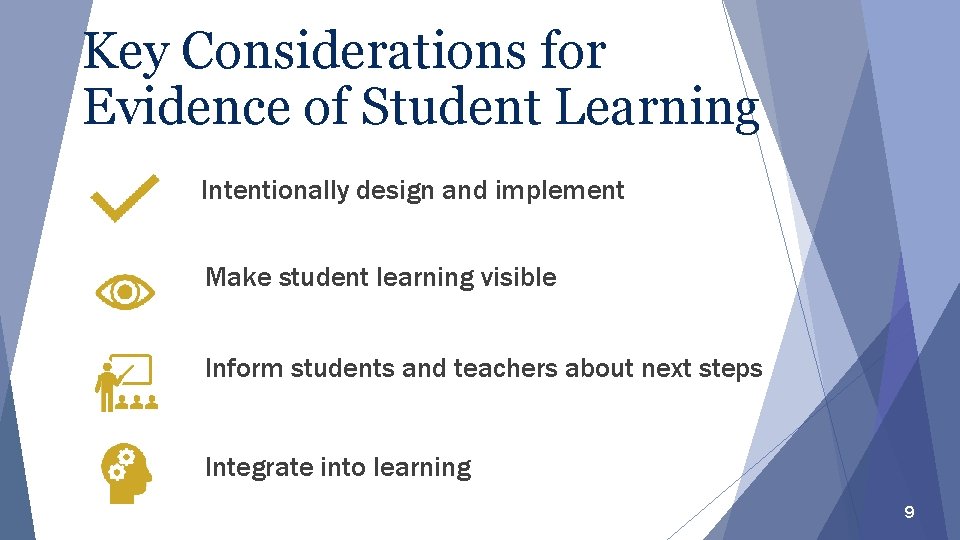
Key Considerations for Evidence of Student Learning Intentionally design and implement Make student learning visible Inform students and teachers about next steps Integrate into learning 9
Evidence-Based Interpretation 10
What is Evidence-Based Interpretation? (1) Students and teachers use evidence to guide an ongoing process of teaching and learning. Evidence is: • • • observable guided by learning in real time engaged in by teachers and students 11
What is Evidence-Based Interpretation? (2) Students and teachers: • Situate evidence in a progression of learning • • Interpret evidence of what students know and can do Interpretation of evidence is an ongoing process 12
What is Evidence-Based Interpretation? (3) Students and teachers: • Use evidence to identify nuances of learning (not simply right or wrong) to inform next steps • Deep knowledge and understanding of learning progressions 13
Engaging Students with Evidence of Learning 14
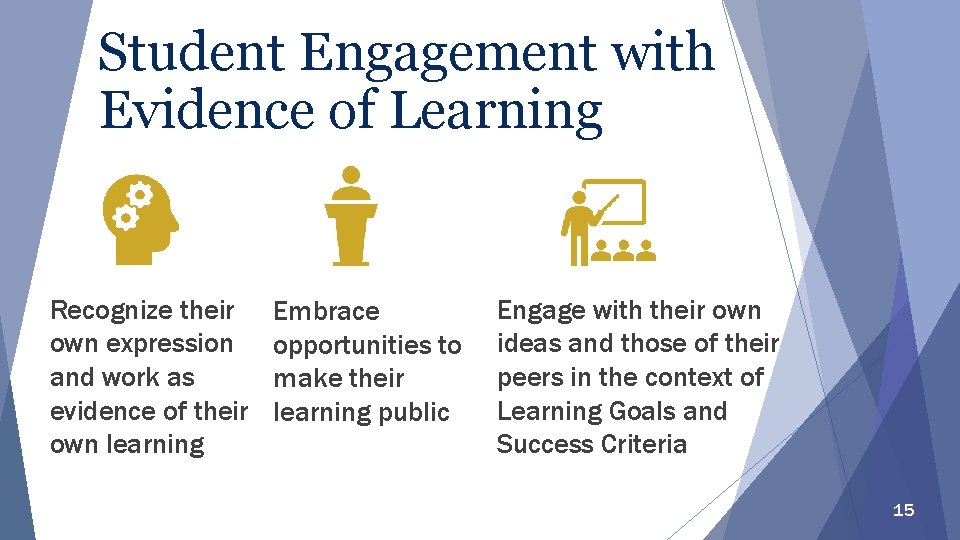
Student Engagement with Evidence of Learning Recognize their own expression and work as evidence of their own learning Embrace opportunities to make their learning public Engage with their own ideas and those of their peers in the context of Learning Goals and Success Criteria 15
Classroom Culture and Evidence How can classroom culture support students to use evidence of their own learning? • Making meaning • Manage learning • Participating and contributing 16
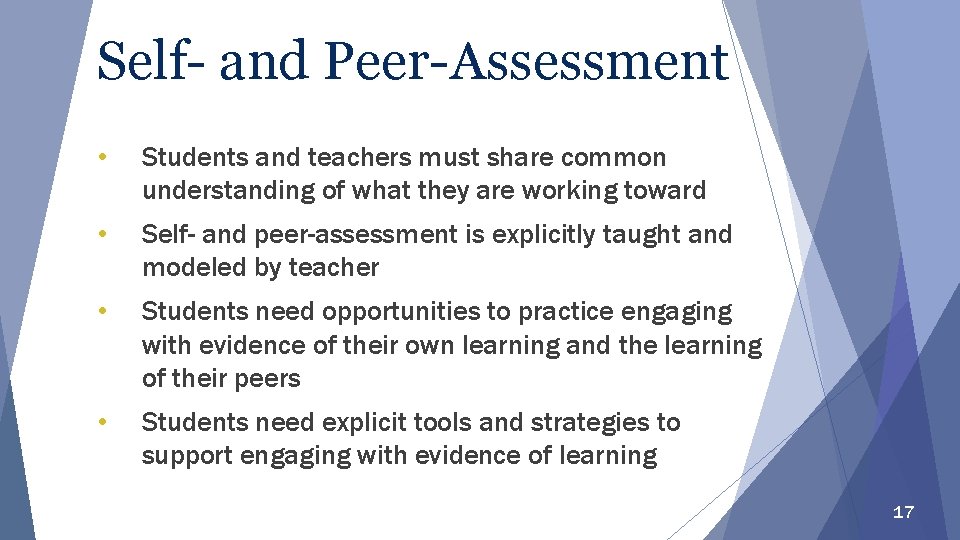
Self- and Peer-Assessment • Students and teachers must share common understanding of what they are working toward • Self- and peer-assessment is explicitly taught and modeled by teacher • Students need opportunities to practice engaging with evidence of their own learning and the learning of their peers • Students need explicit tools and strategies to support engaging with evidence of learning 17
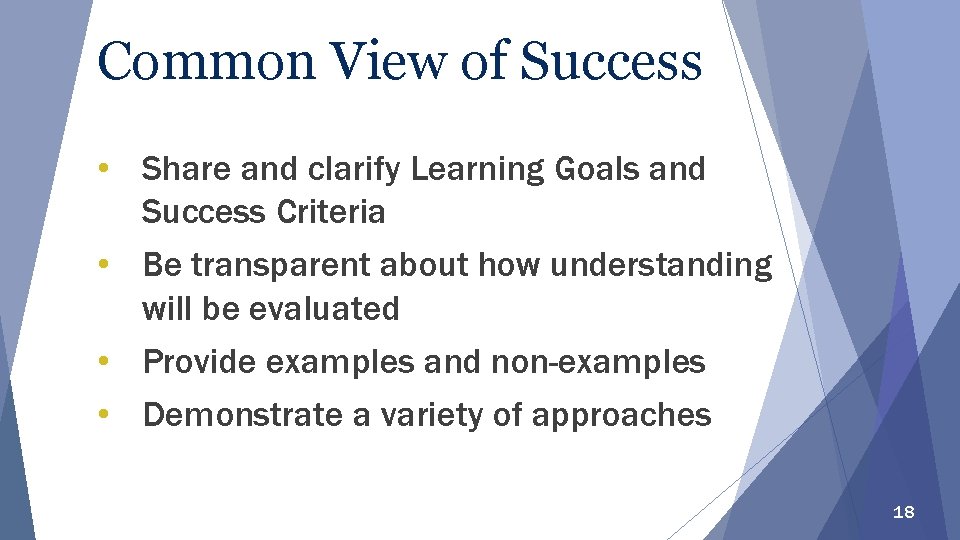
Common View of Success • Share and clarify Learning Goals and Success Criteria • Be transparent about how understanding will be evaluated • Provide examples and non-examples • Demonstrate a variety of approaches 18
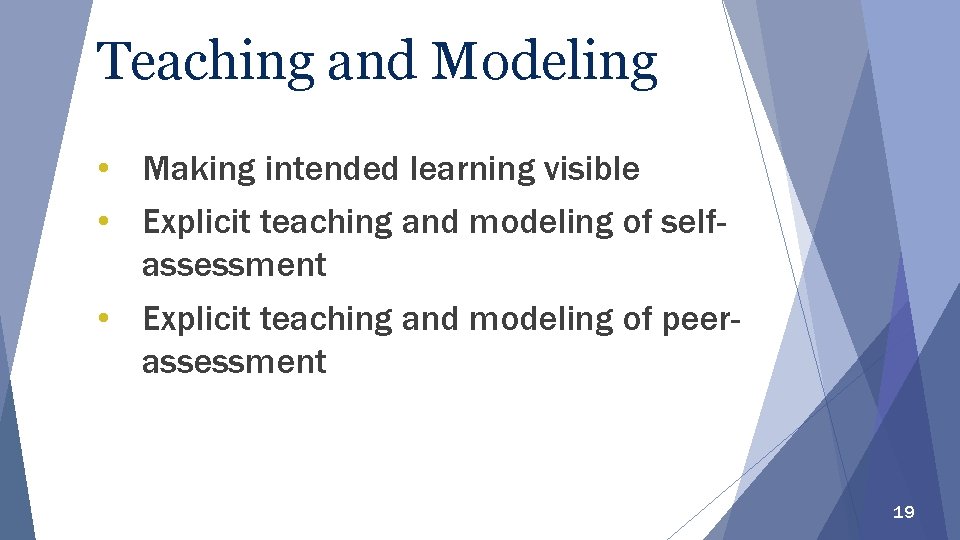
Teaching and Modeling • Making intended learning visible • Explicit teaching and modeling of selfassessment • Explicit teaching and modeling of peerassessment 19
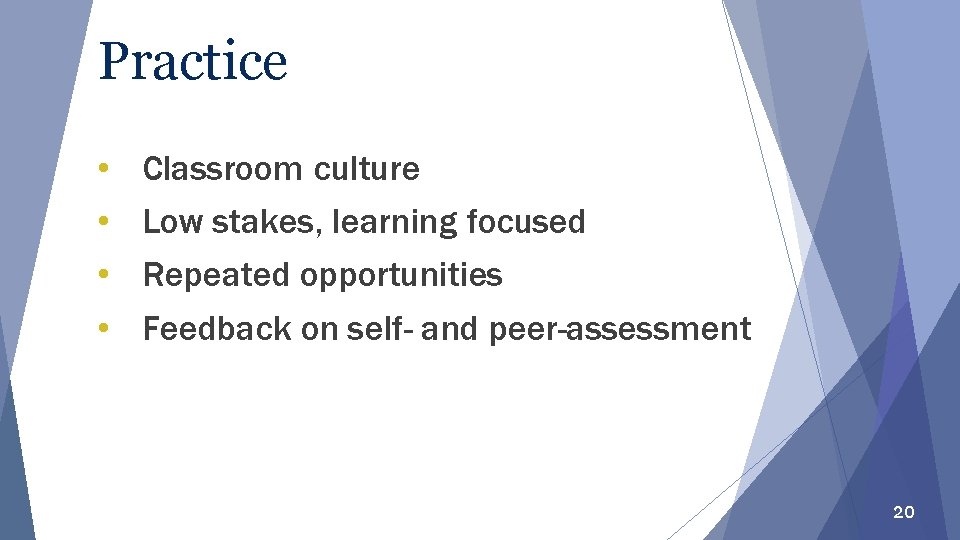
Practice • • Classroom culture Low stakes, learning focused Repeated opportunities Feedback on self- and peer-assessment 20
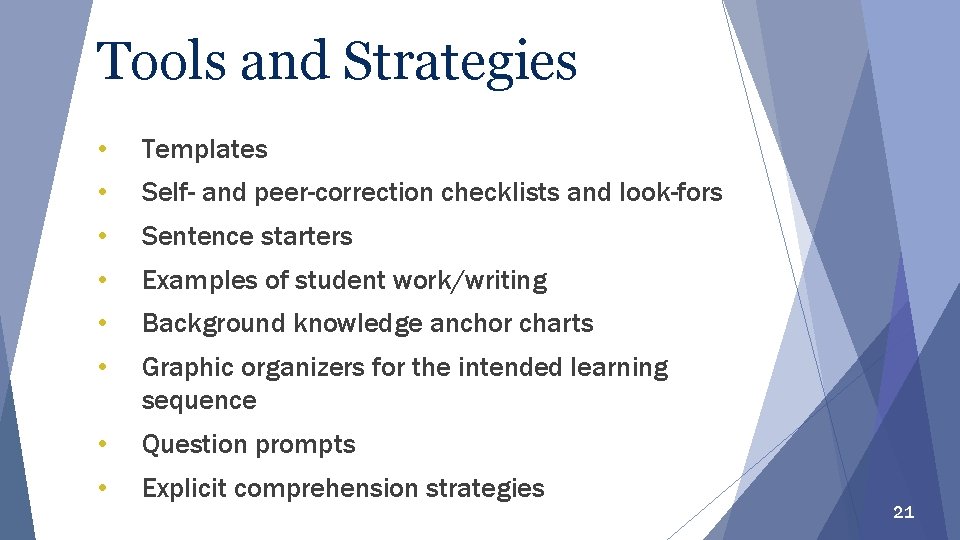
Tools and Strategies • Templates • Self- and peer-correction checklists and look-fors • Sentence starters • Examples of student work/writing • Background knowledge anchor charts • Graphic organizers for the intended learning sequence • Question prompts • Explicit comprehension strategies 21
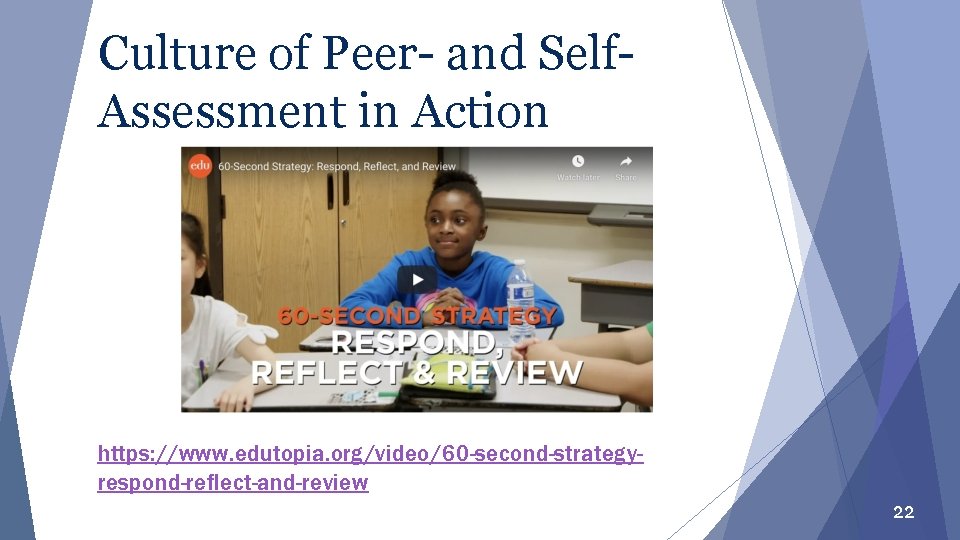
Culture of Peer- and Self. Assessment in Action https: //www. edutopia. org/video/60 -second-strategyrespond-reflect-and-review 22
Strategies for Interpreting Evidence of Student Thinking in Social Studies 23
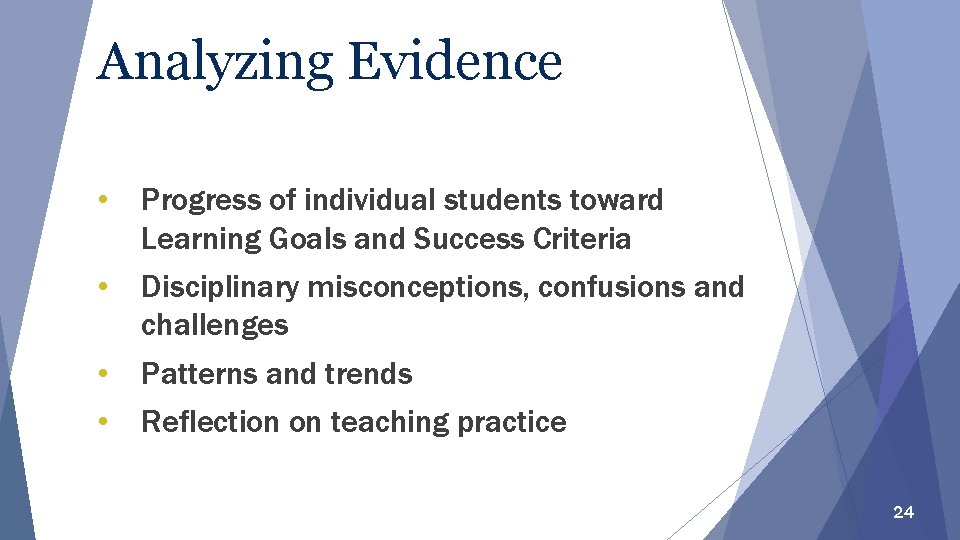
Analyzing Evidence • Progress of individual students toward Learning Goals and Success Criteria • Disciplinary misconceptions, confusions and challenges • • Patterns and trends Reflection on teaching practice 24
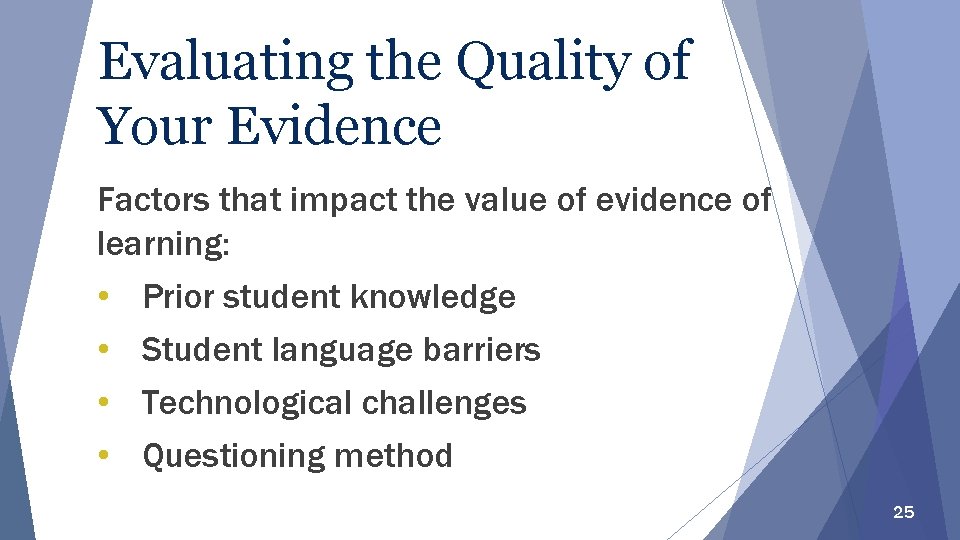
Evaluating the Quality of Your Evidence Factors that impact the value of evidence of learning: • Prior student knowledge • Student language barriers • Technological challenges • Questioning method 25
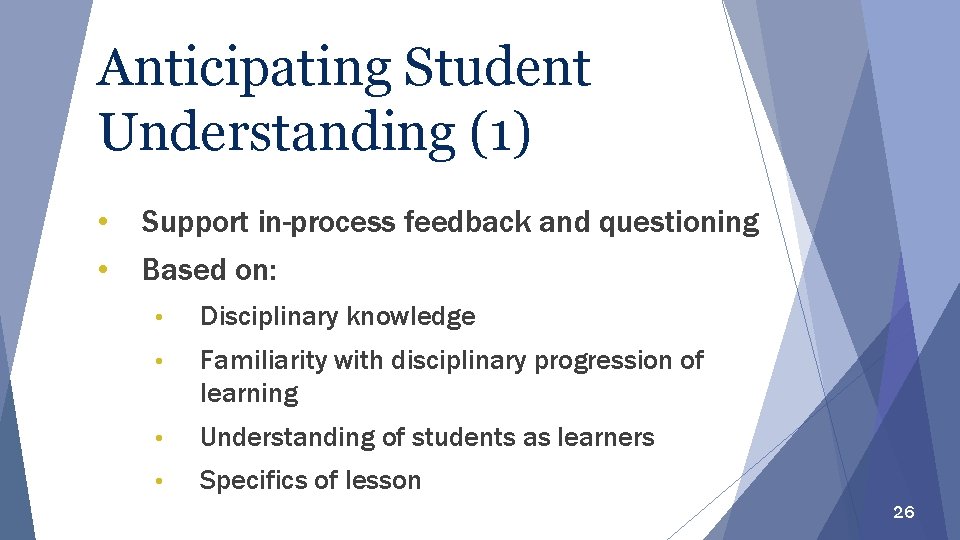
Anticipating Student Understanding (1) • • Support in-process feedback and questioning Based on: • Disciplinary knowledge • Familiarity with disciplinary progression of learning • Understanding of students as learners • Specifics of lesson 26
Anticipating Student Understanding (2) • In the next several slides, we will consider some examples of what it could look like to anticipate student understanding when planning a lesson. 27
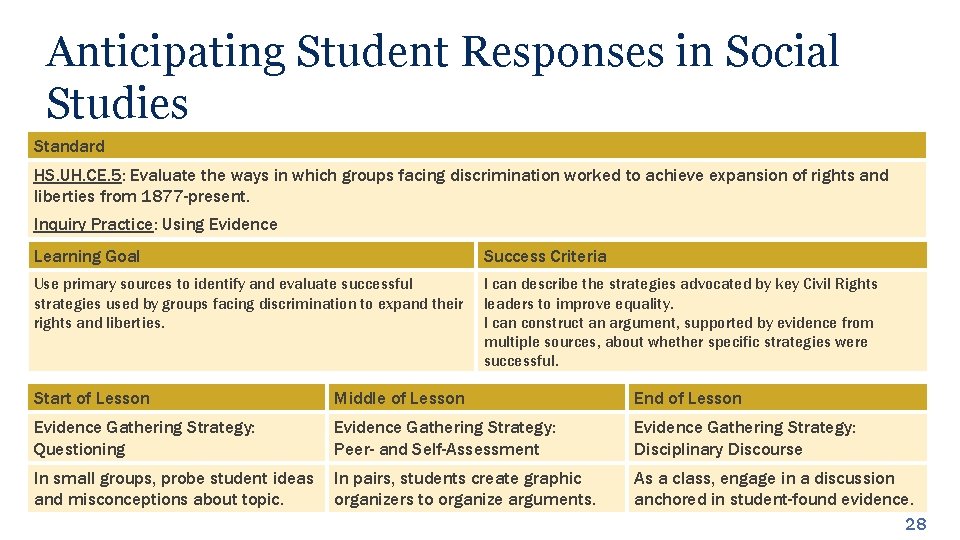
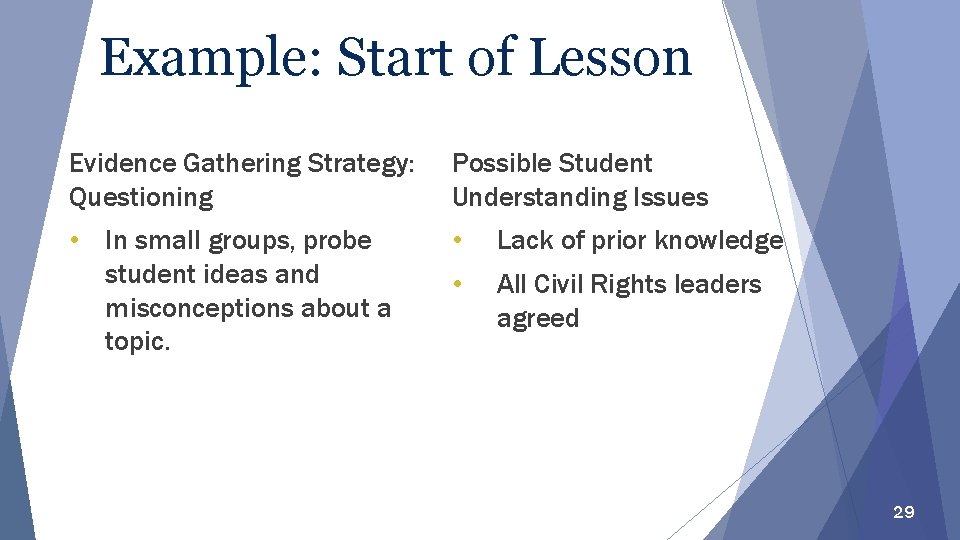
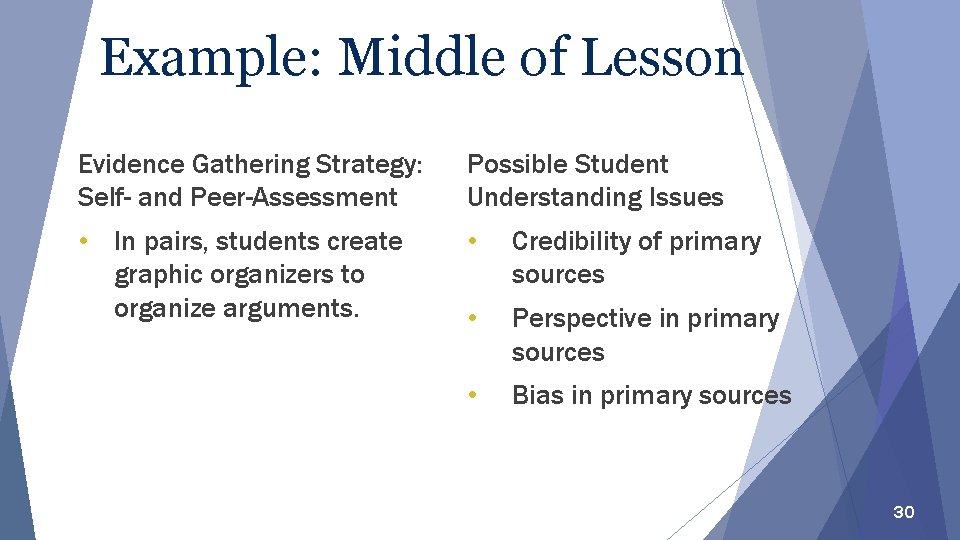
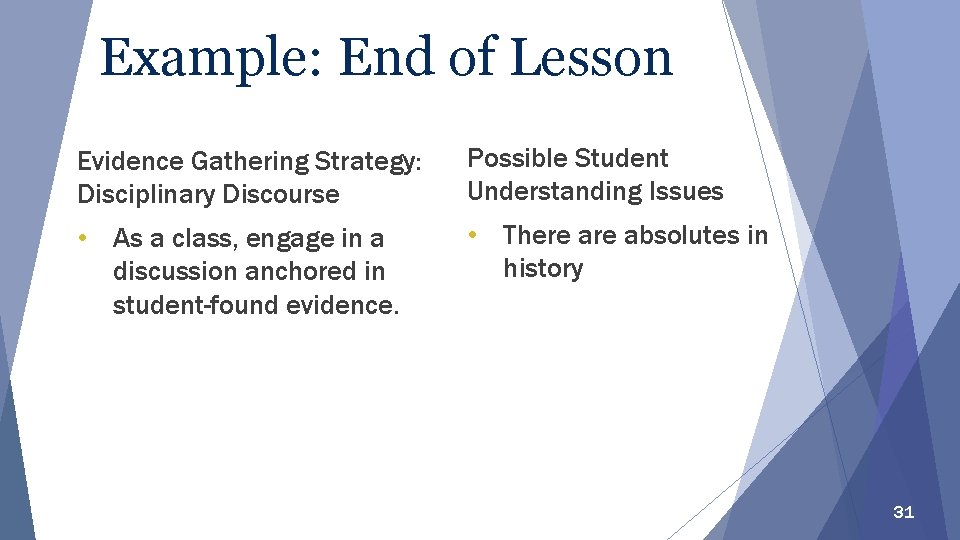
Anticipating Student Responses in Social Studies Standard HS. UH. CE. 5: Evaluate the ways in which groups facing discrimination worked to achieve expansion of rights and liberties from 1877 -present. Inquiry Practice: Using Evidence Learning Goal Success Criteria Use primary sources to identify and evaluate successful strategies used by groups facing discrimination to expand their rights and liberties. I can describe the strategies advocated by key Civil Rights leaders to improve equality. I can construct an argument, supported by evidence from multiple sources, about whether specific strategies were successful. Start of Lesson Middle of Lesson End of Lesson Evidence Gathering Strategy: Questioning Evidence Gathering Strategy: Peer- and Self-Assessment Evidence Gathering Strategy: Disciplinary Discourse In small groups, probe student ideas and misconceptions about topic. In pairs, students create graphic organizers to organize arguments. As a class, engage in a discussion anchored in student-found evidence. 28
Example: Start of Lesson Evidence Gathering Strategy: Questioning Possible Student Understanding Issues • In small groups, probe student ideas and misconceptions about a topic. • Lack of prior knowledge • All Civil Rights leaders agreed 29
Example: Middle of Lesson Evidence Gathering Strategy: Self- and Peer-Assessment Possible Student Understanding Issues • In pairs, students create graphic organizers to organize arguments. • Credibility of primary sources • Perspective in primary sources • Bias in primary sources 30
Example: End of Lesson Evidence Gathering Strategy: Disciplinary Discourse Possible Student Understanding Issues • As a class, engage in a discussion anchored in student-found evidence. • There absolutes in history 31
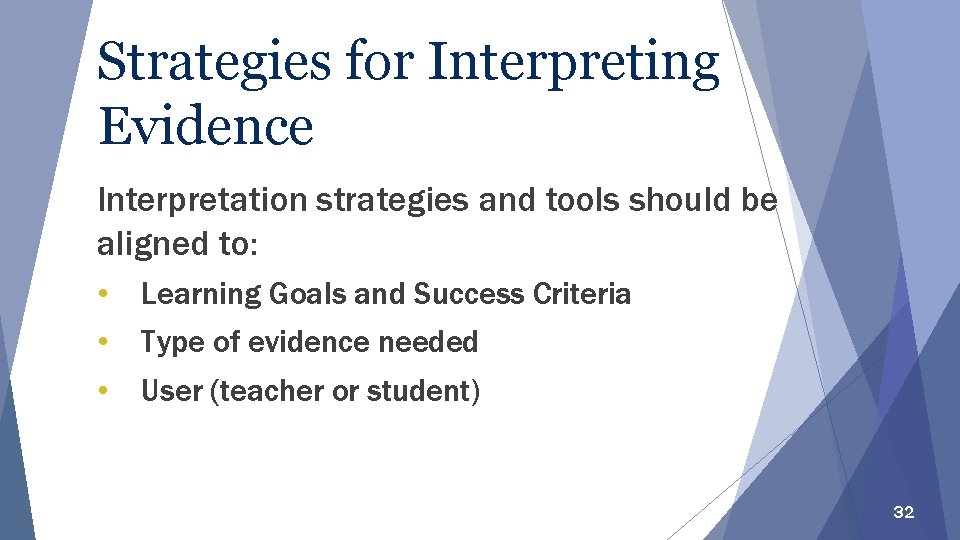
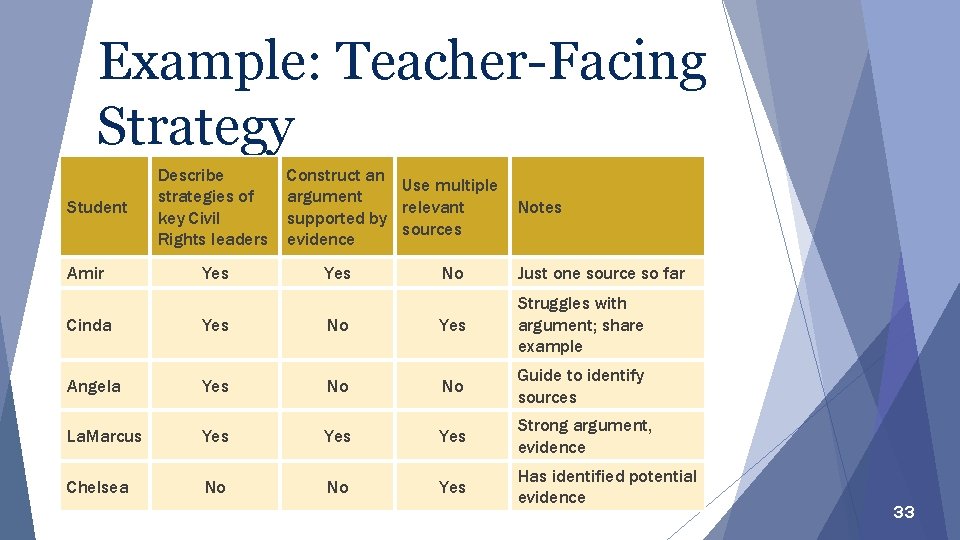
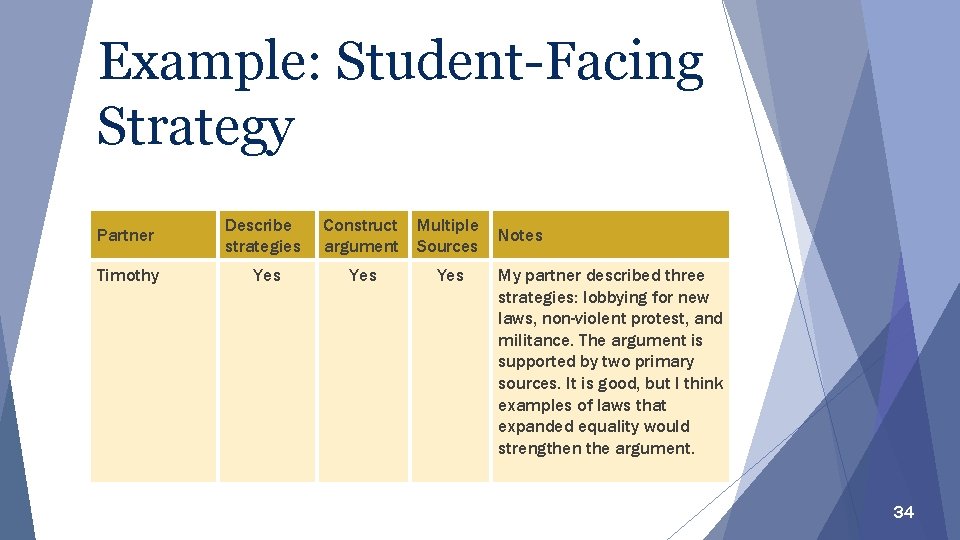
Strategies for Interpreting Evidence Interpretation strategies and tools should be aligned to: • • • Learning Goals and Success Criteria Type of evidence needed User (teacher or student) 32
Example: Teacher-Facing Strategy Student Amir Describe strategies of key Civil Rights leaders Yes Construct an Use multiple argument relevant supported by sources evidence Yes Notes No Just one source so far Cinda Yes No Yes Struggles with argument; share example Angela Yes No No Guide to identify sources La. Marcus Yes Yes Strong argument, evidence Chelsea No No Yes Has identified potential evidence 33
Example: Student-Facing Strategy Partner Describe strategies Timothy Yes Construct Multiple argument Sources Yes Notes My partner described three strategies: lobbying for new laws, non-violent protest, and militance. The argument is supported by two primary sources. It is good, but I think examples of laws that expanded equality would strengthen the argument. 34
Interpreting Evidence in Action 35
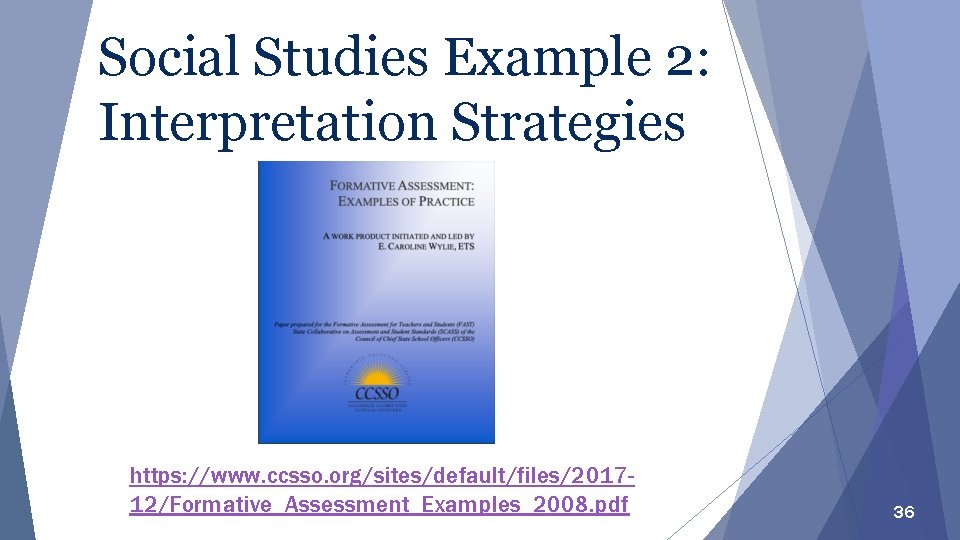
Social Studies Example 2: Interpretation Strategies https: //www. ccsso. org/sites/default/files/201712/Formative_Assessment_Examples_2008. pdf 36
Reflection • Moving forward, what strategies will you use to interpret evidence of student learning? In what context(s)? • How does evidence-based interpretation support the culture of formative assessment practice in your classroom? • In what ways will you engage students to interpret their own learning? 37
Feedback Survey Please take a few minutes to complete the feedback survey so we can continue to improve this module. EILA credit is available upon completion of the survey. https: //docs. google. com/forms/d/e/1 FAIp QLSfm 4 Inc. FTDVHMvp. Pk 2 TMZq 0 uag. DQLHa. NOKGn 2 Iy 8 Jp. C 8 DDg g/viewform 38