
Module 5 Interpreting Evidence of Student Learning Reading

- Slides: 39
Module 5: Interpreting Evidence of Student Learning Reading and Writing Kentucky Department of Education
Learning Goals (1) Participants will understand: } The role of evidence of student learning in monitoring and supporting student progress toward Learning Goals and Success Criteria } Strategies to engage students in interpreting their own progress toward Learning Goals and Success Criteria 2
Learning Goals (2) Participants will understand: } Strategies to interpret evidence of student learning to inform teaching and learning within specific disciplines 3
Success Criteria Participants will be able to: } Plan to interpret evidence of student learning throughout a lesson } Develop specific strategies to engage students in interpreting their own progress toward Learning Goals and Success Criteria 4
Review: Formative Assessment Process 5
Formative Assessment: A Definition Formative assessment is a planned, ongoing process used by all students and teachers during learning and teaching to elicit and use evidence of student learning to improve student understanding of intended disciplinary learning outcomes and support students to become self-directed learners. (CCSSO, 2018) 6
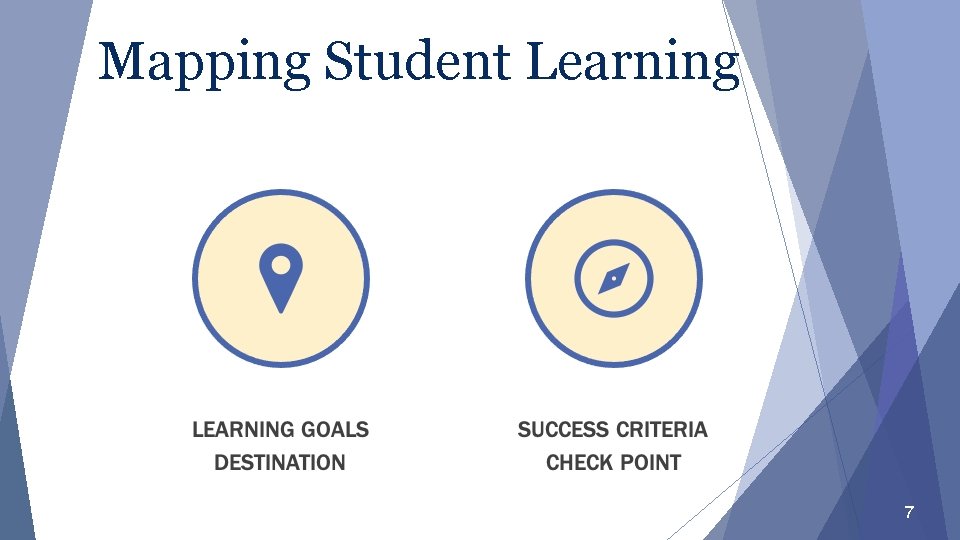
Mapping Student Learning 7
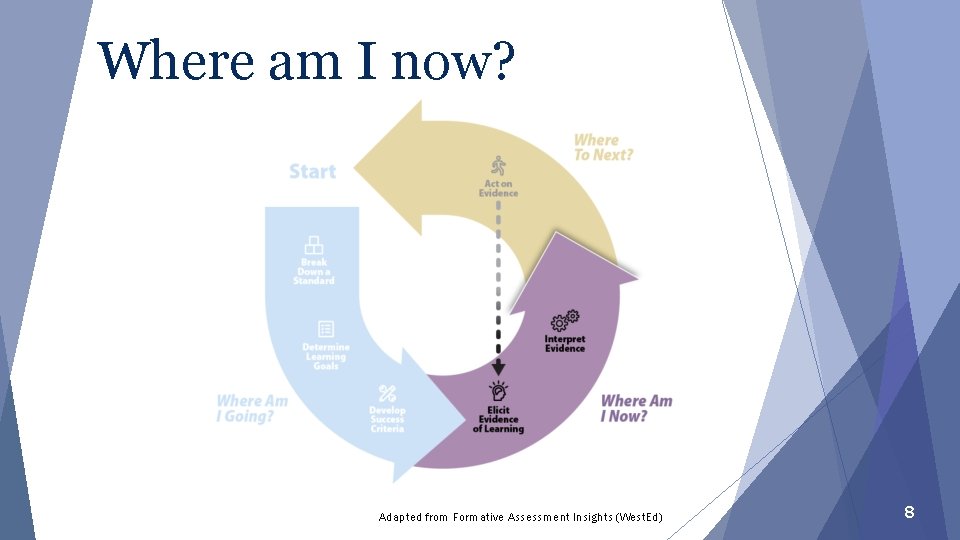
Where am I now? Adapted from Formative Assessment Insights (West. Ed) 8
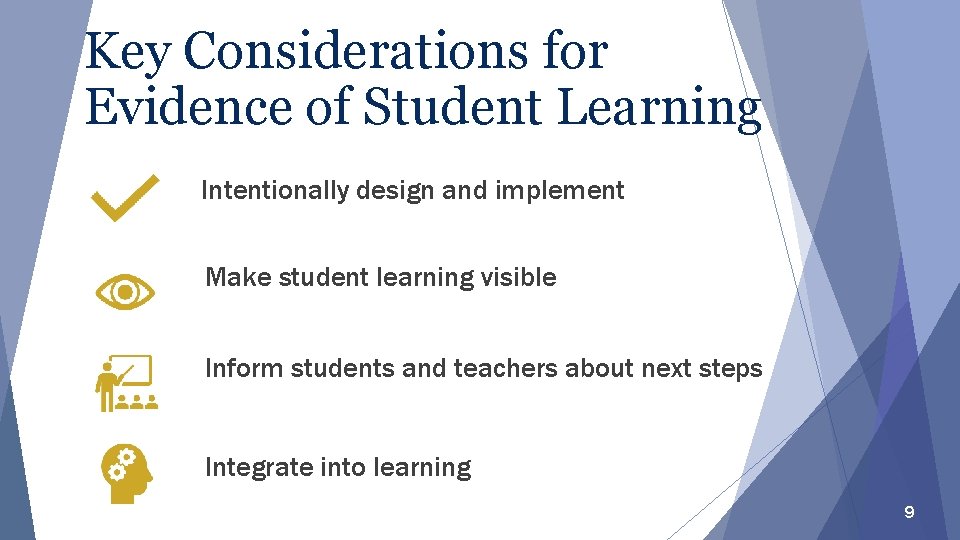
Key Considerations for Evidence of Student Learning Intentionally design and implement Make student learning visible Inform students and teachers about next steps Integrate into learning 9
Evidence-Based Interpretation 10
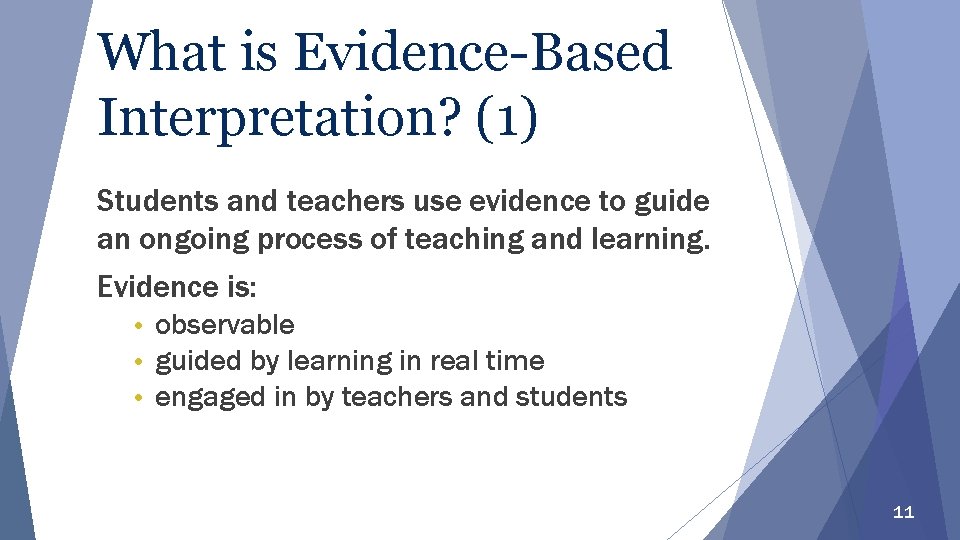
What is Evidence-Based Interpretation? (1) Students and teachers use evidence to guide an ongoing process of teaching and learning. Evidence is: • • • observable guided by learning in real time engaged in by teachers and students 11
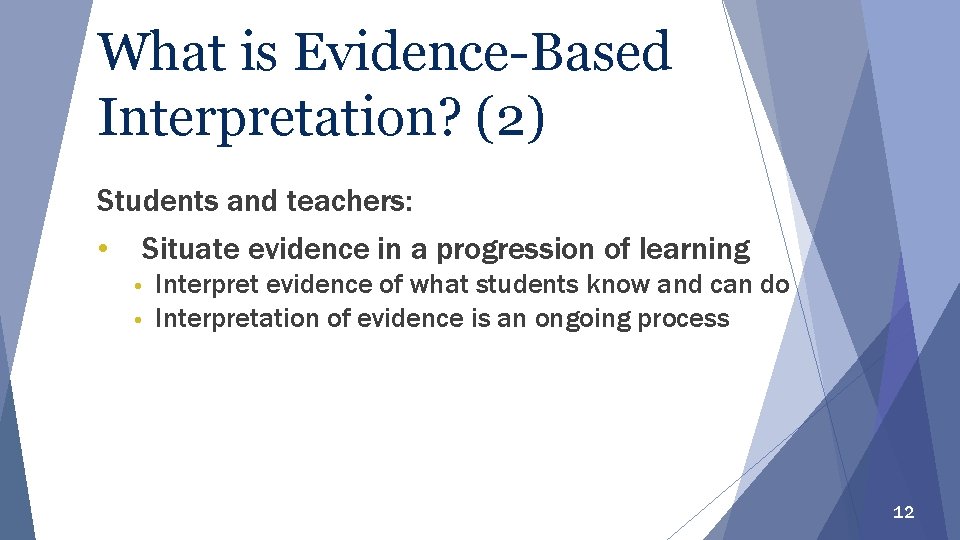
What is Evidence-Based Interpretation? (2) Students and teachers: • Situate evidence in a progression of learning • • Interpret evidence of what students know and can do Interpretation of evidence is an ongoing process 12
What is Evidence-Based Interpretation? (3) Students and teachers: • Use evidence to identify nuances of learning (not simply right or wrong) to inform next steps • Deep knowledge and understanding of learning progressions 13
Engaging Students with Evidence of Learning 14
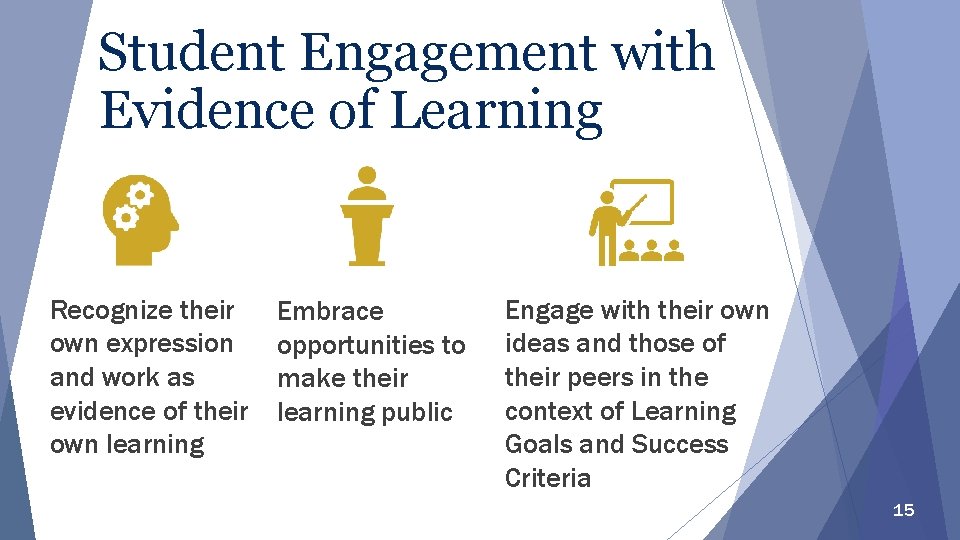
Student Engagement with Evidence of Learning Recognize their own expression and work as evidence of their own learning Embrace opportunities to make their learning public Engage with their own ideas and those of their peers in the context of Learning Goals and Success Criteria 15
Classroom Culture and Evidence How can classroom culture support students to use evidence of their own learning? • Make meaning • Manage learning • Participate and collaborate 16
Self- and Peer-Assessment • Students and teachers must share common understanding of what they are working toward • Self- and peer-assessment is explicitly taught and modeled by teacher • Students need opportunities to practice engaging with evidence of their own learning and the learning of their peers • Students need explicit tools and strategies to support engaging with evidence of learning 17
Common View of Success • Share and clarify Learning Goals and Success Criteria • Be transparent about how understanding will be evaluated • Provide examples and non-examples • Demonstrate a variety of approaches 18
Teaching and Modeling • Making intended learning visible • Explicit teaching and modeling of selfassessment • Explicit teaching and modeling of peerassessment 19
Practice • • Classroom culture Low stakes, learning focused Repeated opportunities Feedback on self- and peer-assessment 20
Tools and Strategies • Templates • Self- and peer-correction checklists and look-fors • Sentence starters • Examples of student work/writing • Background knowledge anchor charts • Graphic organizers for the intended learning sequence • Question prompts • Explicit comprehension strategies (e. g. , QRAC-thecode, Concrete-Representational-Abstract) • Sample writing models 21
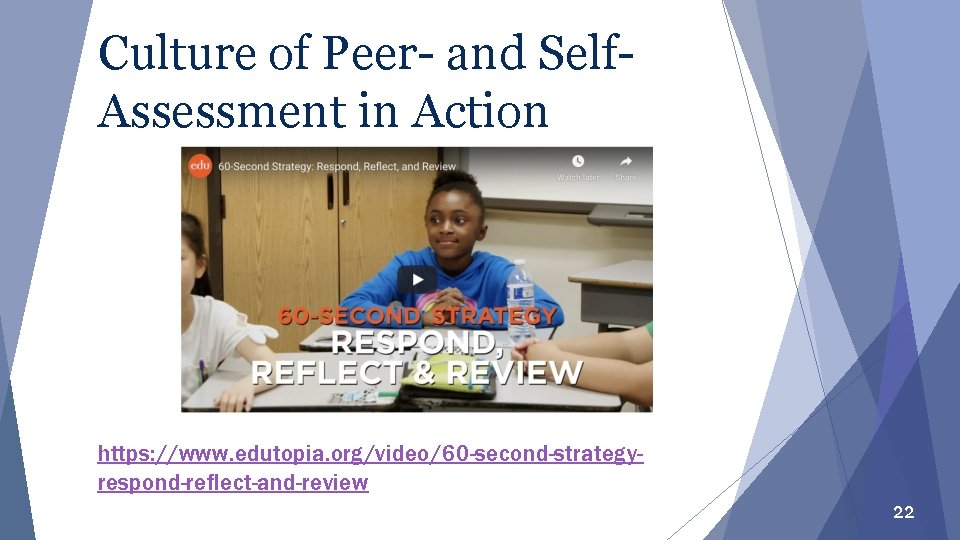
Culture of Peer- and Self. Assessment in Action https: //www. edutopia. org/video/60 -second-strategyrespond-reflect-and-review 22
Strategies for Interpreting Evidence of Student Thinking in Reading and Writing 23
Analyzing Evidence • Progress of individual students toward Learning Goals and Success Criteria • Disciplinary misconceptions, confusions and challenges • Patterns and trends • Reflections on teaching practice 24
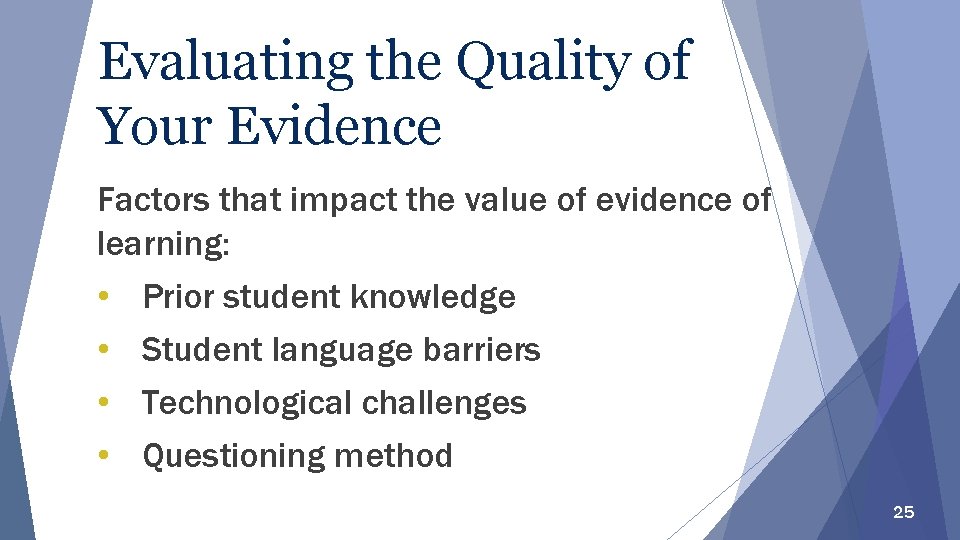
Evaluating the Quality of Your Evidence Factors that impact the value of evidence of learning: • Prior student knowledge • Student language barriers • Technological challenges • Questioning method 25
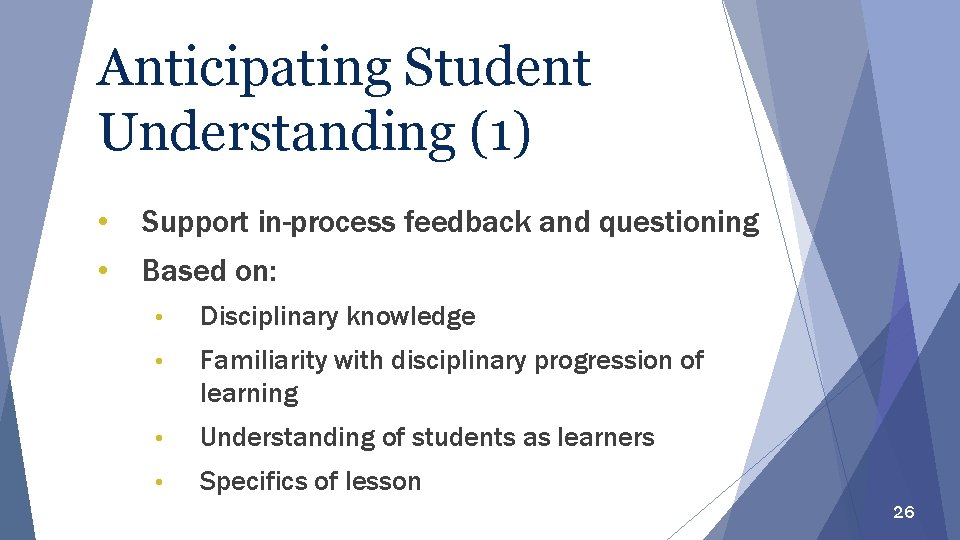
Anticipating Student Understanding (1) • • Support in-process feedback and questioning Based on: • Disciplinary knowledge • Familiarity with disciplinary progression of learning • Understanding of students as learners • Specifics of lesson 26
Anticipating Student Understanding (2) In the next several slides, we will consider some examples of what it could look like to anticipate student understanding when planning a lesson. 27
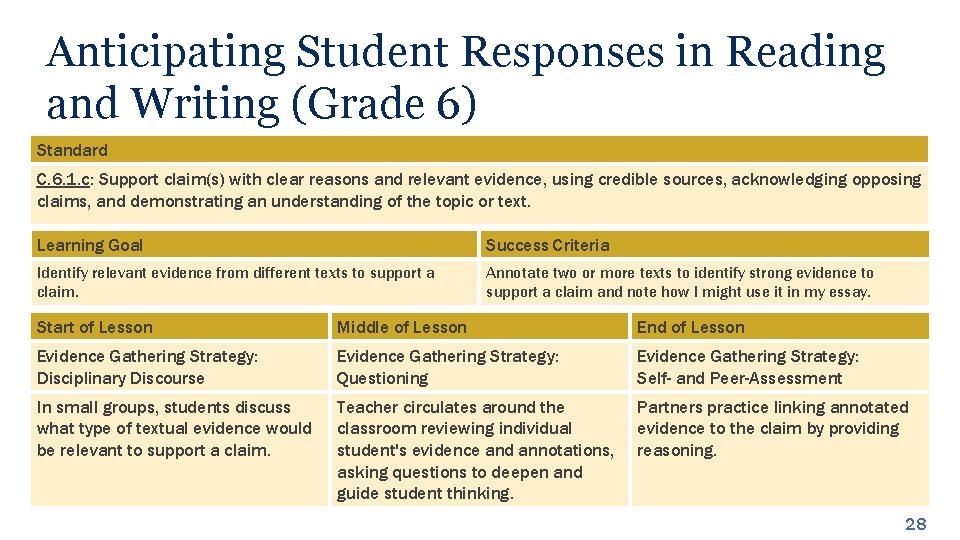
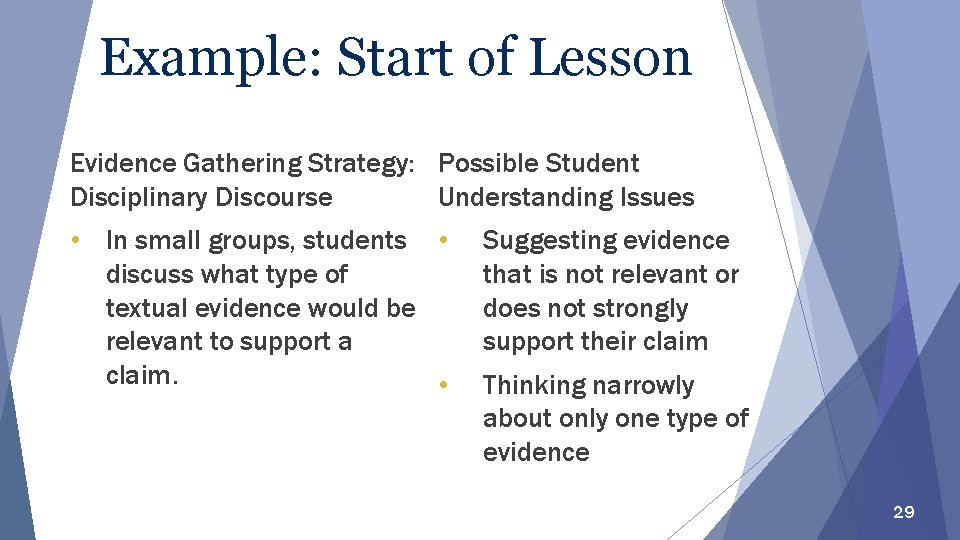
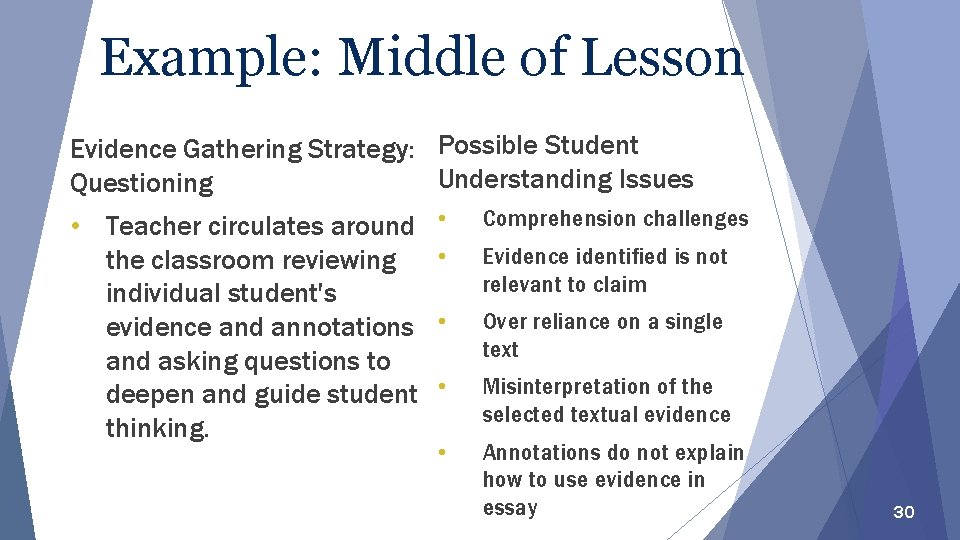
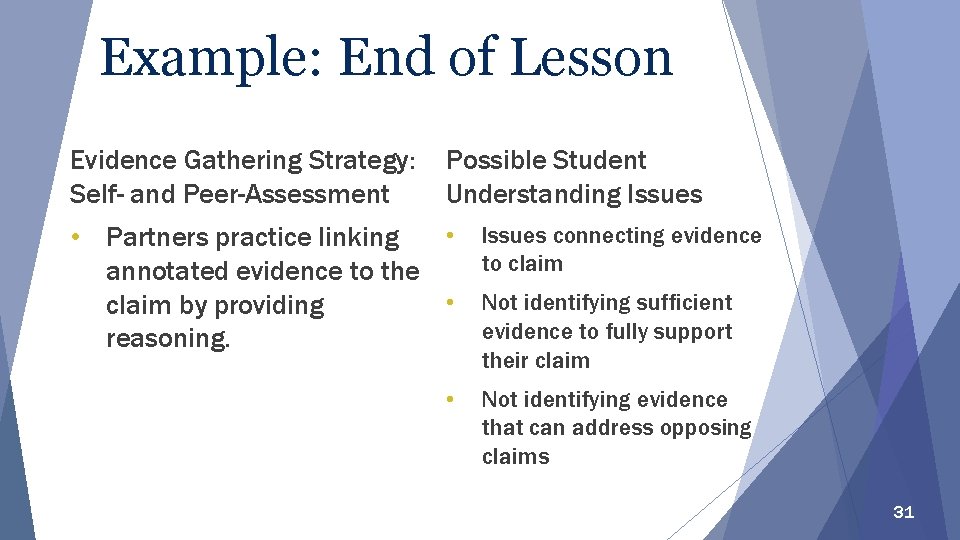
Anticipating Student Responses in Reading and Writing (Grade 6) Standard C. 6. 1. c: Support claim(s) with clear reasons and relevant evidence, using credible sources, acknowledging opposing claims, and demonstrating an understanding of the topic or text. Learning Goal Success Criteria Identify relevant evidence from different texts to support a claim. Annotate two or more texts to identify strong evidence to support a claim and note how I might use it in my essay. Start of Lesson Middle of Lesson End of Lesson Evidence Gathering Strategy: Disciplinary Discourse Evidence Gathering Strategy: Questioning Evidence Gathering Strategy: Self- and Peer-Assessment In small groups, students discuss what type of textual evidence would be relevant to support a claim. Teacher circulates around the classroom reviewing individual student's evidence and annotations, asking questions to deepen and guide student thinking. Partners practice linking annotated evidence to the claim by providing reasoning. 28
Example: Start of Lesson Evidence Gathering Strategy: Possible Student Disciplinary Discourse Understanding Issues • In small groups, students • discuss what type of textual evidence would be relevant to support a claim. • Suggesting evidence that is not relevant or does not strongly support their claim Thinking narrowly about only one type of evidence 29
Example: Middle of Lesson Evidence Gathering Strategy: Possible Student Understanding Issues Questioning • Teacher circulates around the classroom reviewing individual student's evidence and annotations and asking questions to deepen and guide student thinking. • Comprehension challenges • Evidence identified is not relevant to claim • Over reliance on a single text • Misinterpretation of the selected textual evidence • Annotations do not explain how to use evidence in essay 30
Example: End of Lesson Evidence Gathering Strategy: Self- and Peer-Assessment Possible Student Understanding Issues • Issues connecting evidence • Partners practice linking to claim annotated evidence to the • Not identifying sufficient claim by providing evidence to fully support reasoning. their claim • Not identifying evidence that can address opposing claims 31
Strategies for Interpreting Evidence Interpretation strategies and tools should be aligned to: • • • Learning Goals and Success Criteria Type of evidence needed User (teacher or student) 32
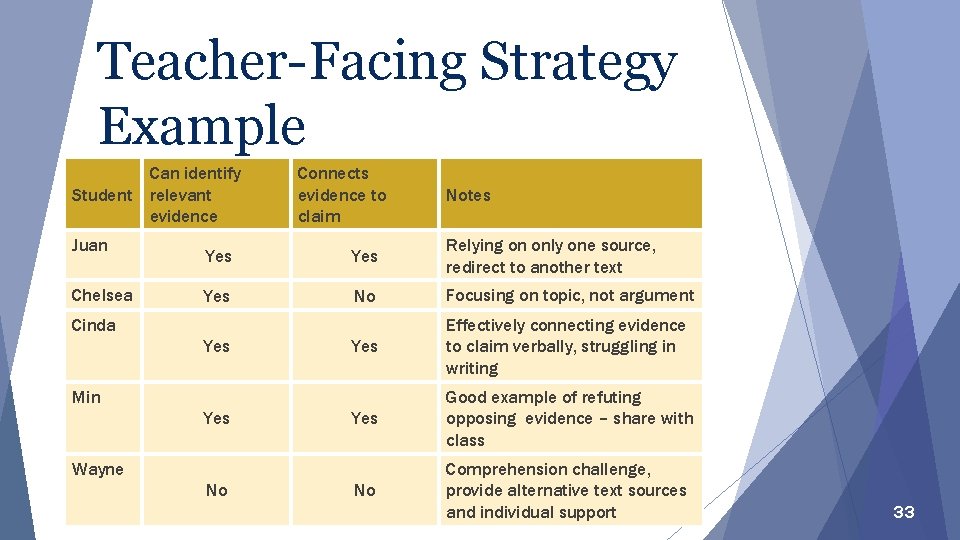
Teacher-Facing Strategy Example Can identify Student relevant evidence Juan Chelsea Connects evidence to claim Notes Yes Relying on only one source, redirect to another text Yes No Focusing on topic, not argument Yes Effectively connecting evidence to claim verbally, struggling in writing Yes Good example of refuting opposing evidence – share with class No Comprehension challenge, provide alternative text sources and individual support Cinda Yes Min Yes Wayne No 33
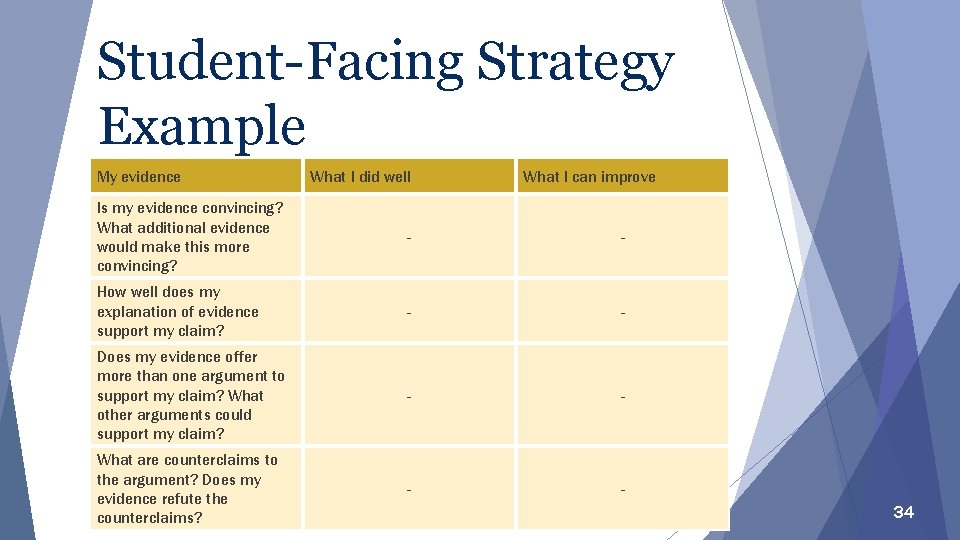
Student-Facing Strategy Example My evidence What I did well What I can improve Is my evidence convincing? What additional evidence would make this more convincing? - - How well does my explanation of evidence support my claim? - - Does my evidence offer more than one argument to support my claim? What other arguments could support my claim? - - What are counterclaims to the argument? Does my evidence refute the counterclaims? - - 34
Interpreting Evidence in Action 35
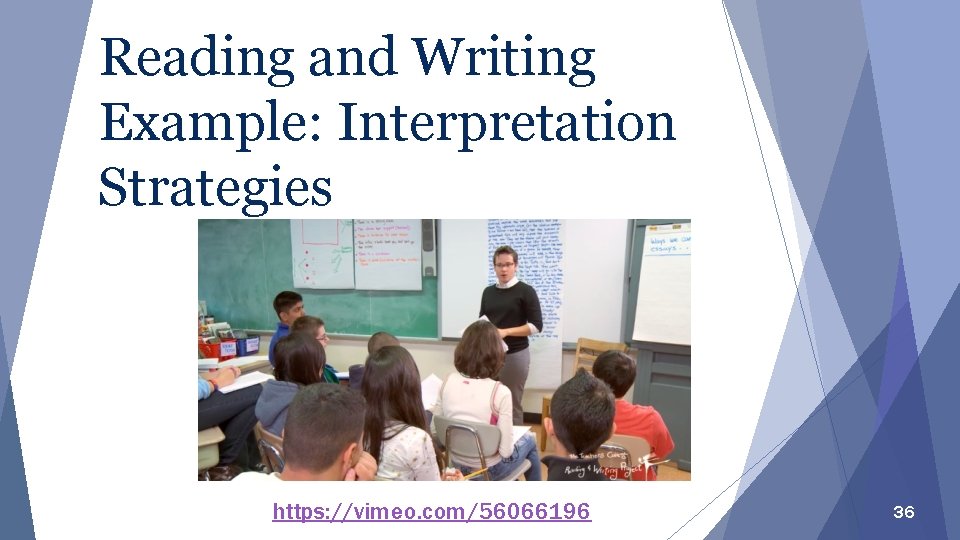
Reading and Writing Example: Interpretation Strategies https: //vimeo. com/56066196 36
Reflection • Moving forward, what strategies will you use to interpret evidence of student learning? In what context(s)? • How does evidence-based interpretation support students in managing their own learning? • In what ways will you engage students to interpret their own learning? 37
Feedback Survey Please take a few minutes to complete the feedback survey so we can continue to improve this module. EILA credit is available upon completion of the survey. https: //docs. google. com/forms/d/e/1 FAIp QLSfm 4 Inc. FTDVHMvp. Pk 2 TMZq 0 uag. DQLHa. NOKGn 2 Iy 8 Jp. C 8 DDg g/viewform 38