
Module 5 4 Major Minerals in Bone Protein
Module 5. 4 Major Minerals in Bone & Protein By Jennifer Turley and Joan Thompson © 2013 Cengage
Presentation Overview Functions, deficiency, toxicity & food sources of Ca, P, Mg as bone minerals Osteoporosis types & risk factors Functions, deficiency, toxicity & food sources of S as a protein based mineral

Functions of Calcium Bone & tooth structure Blood clotting, muscle contraction, and nerve conduction
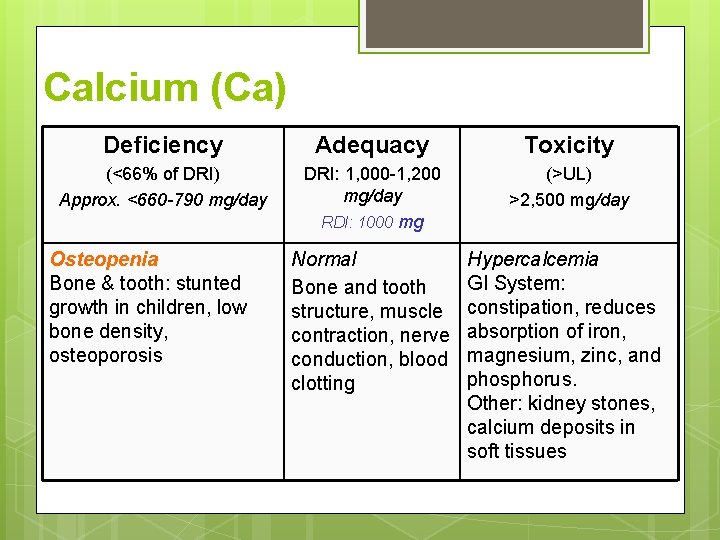
Calcium (Ca) Deficiency Adequacy Toxicity (<66% of DRI) Approx. <660 -790 mg/day DRI: 1, 000 -1, 200 mg/day RDI: 1000 mg (>UL) >2, 500 mg/day Normal Bone and tooth structure, muscle contraction, nerve conduction, blood clotting Hypercalcemia GI System: constipation, reduces absorption of iron, magnesium, zinc, and phosphorus. Other: kidney stones, calcium deposits in soft tissues Osteopenia Bone & tooth: stunted growth in children, low bone density, osteoporosis
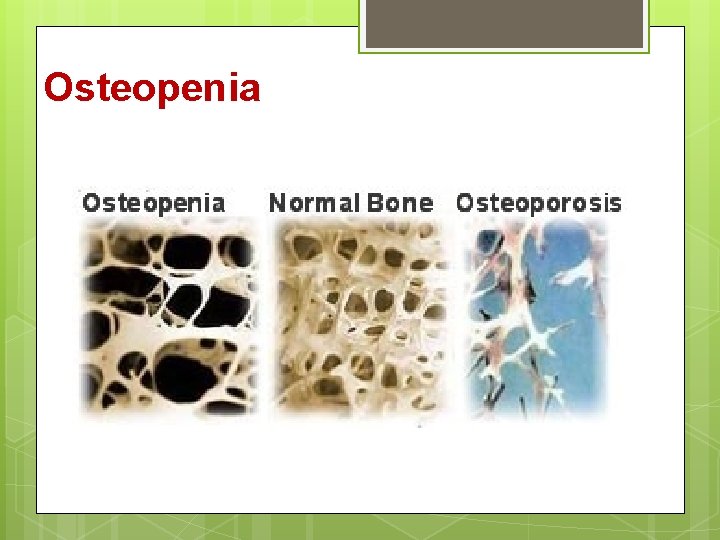
Osteopenia
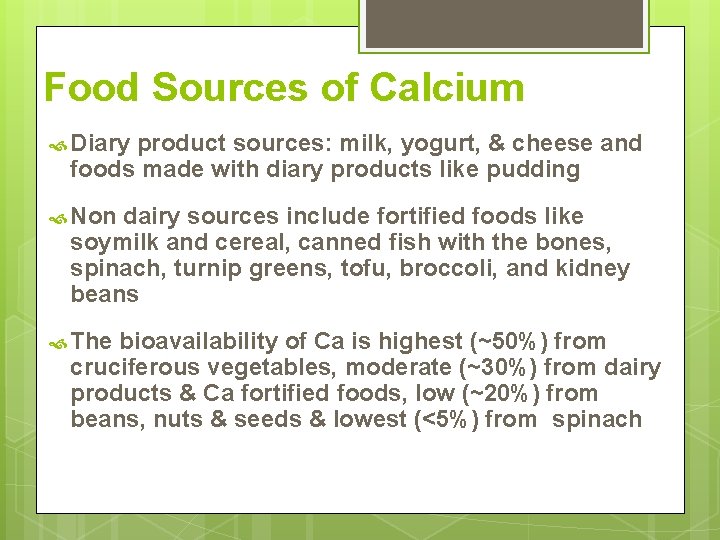
Food Sources of Calcium Diary product sources: milk, yogurt, & cheese and foods made with diary products like pudding Non dairy sources include fortified foods like soymilk and cereal, canned fish with the bones, spinach, turnip greens, tofu, broccoli, and kidney beans The bioavailability of Ca is highest (~50%) from cruciferous vegetables, moderate (~30%) from dairy products & Ca fortified foods, low (~20%) from beans, nuts & seeds & lowest (<5%) from spinach
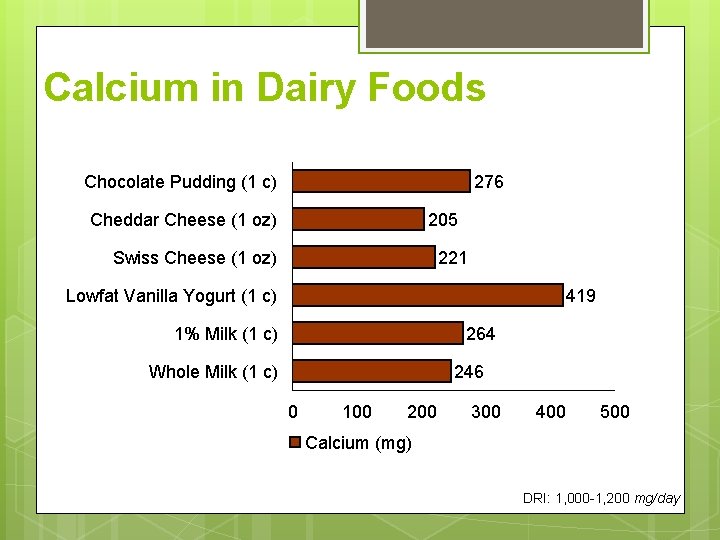
Calcium in Dairy Foods Chocolate Pudding (1 c) 276 205 Cheddar Cheese (1 oz) 221 Swiss Cheese (1 oz) Lowfat Vanilla Yogurt (1 c) 419 1% Milk (1 c) 264 Whole Milk (1 c) 246 0 100 200 300 400 500 Calcium (mg) DRI: 1, 000 -1, 200 mg/day
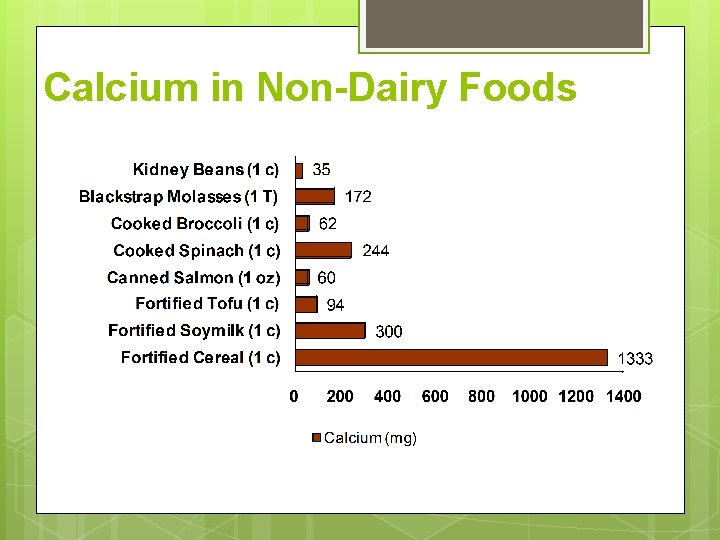
Calcium in Non-Dairy Foods
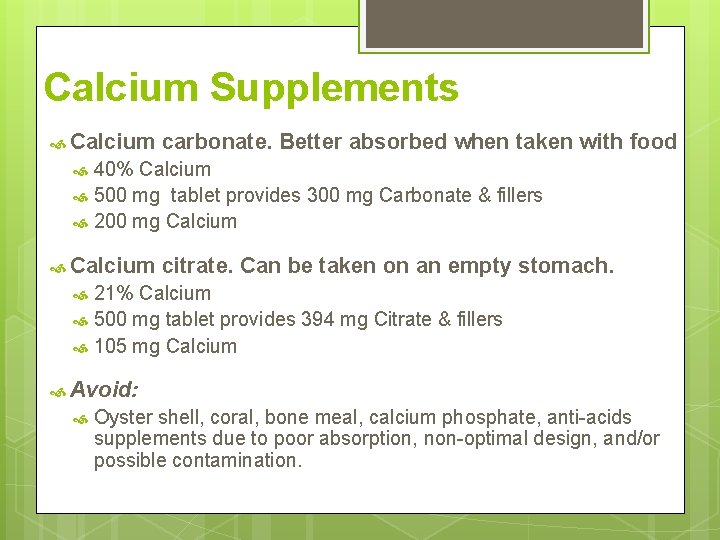
Calcium Supplements Calcium carbonate. Better absorbed when taken with food 40% Calcium 500 mg tablet provides 300 mg Carbonate & fillers 200 mg Calcium citrate. Can be taken on an empty stomach. 21% Calcium 500 mg tablet provides 394 mg Citrate & fillers 105 mg Calcium Avoid: Oyster shell, coral, bone meal, calcium phosphate, anti-acids supplements due to poor absorption, non-optimal design, and/or possible contamination.
Functions of Phosphorus Bone & tooth structure Important for the cells genetic material (DNA), phospholipids in cell membranes, energy transfer (ATP), phosphorylation reactions, & buffering systems (maintaining p. H)
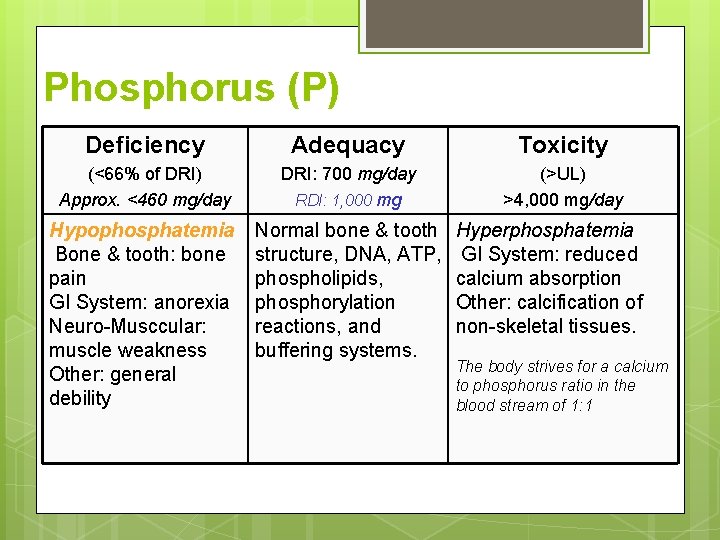
Phosphorus (P) Deficiency Adequacy Toxicity (<66% of DRI) Approx. <460 mg/day DRI: 700 mg/day RDI: 1, 000 mg (>UL) >4, 000 mg/day Hypophosphatemia Bone & tooth: bone pain GI System: anorexia Neuro-Musccular: muscle weakness Other: general debility Normal bone & tooth structure, DNA, ATP, phospholipids, phosphorylation reactions, and buffering systems. Hyperphosphatemia GI System: reduced calcium absorption Other: calcification of non-skeletal tissues. The body strives for a calcium to phosphorus ratio in the blood stream of 1: 1
Food Sources of Phosphorus Animal products Processed foods Preserved foods

Phosphorus in Foods Adult DRI: 700 mg/day
Functions of Magnesium Bone, teeth, & proteins Cofactor for more than 300 different enzymes Functions in muscular contraction, blood clotting, and nerve impulse transmission
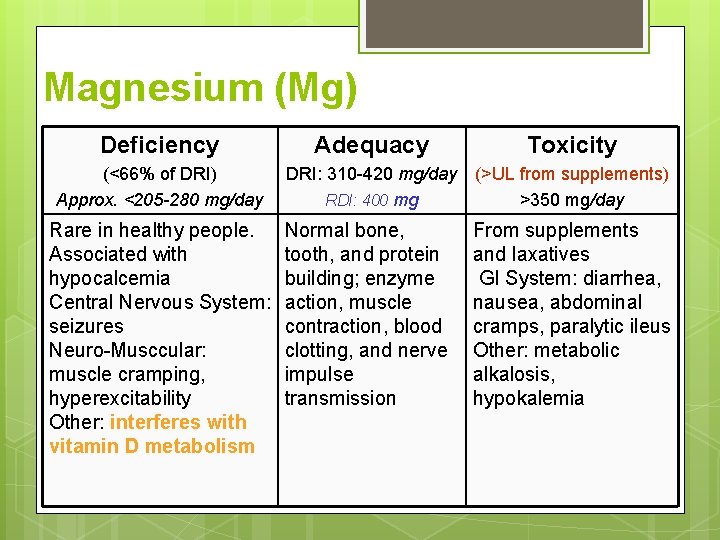
Magnesium (Mg) Deficiency (<66% of DRI) Approx. <205 -280 mg/day Rare in healthy people. Associated with hypocalcemia Central Nervous System: seizures Neuro-Musccular: muscle cramping, hyperexcitability Other: interferes with vitamin D metabolism Adequacy Toxicity DRI: 310 -420 mg/day (>UL from supplements) RDI: 400 mg >350 mg/day Normal bone, tooth, and protein building; enzyme action, muscle contraction, blood clotting, and nerve impulse transmission From supplements and laxatives GI System: diarrhea, nausea, abdominal cramps, paralytic ileus Other: metabolic alkalosis, hypokalemia
Food Sources of Magnesium Mostly plant foods: nuts, legumes, whole grains, dark green leafy vegetables, chocolate, and cocoa ~80% Is lost in grain processing not added back to processed foods
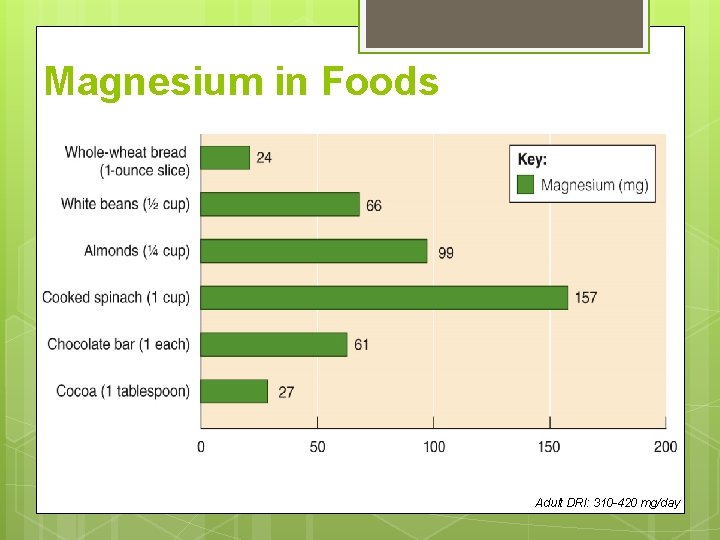
Magnesium in Foods Adult DRI: 310 -420 mg/day
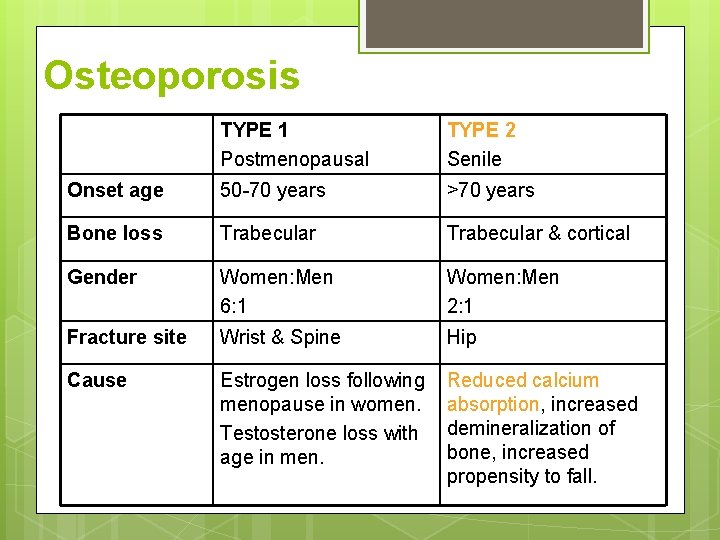
Osteoporosis TYPE 1 Postmenopausal TYPE 2 Senile Onset age 50 -70 years >70 years Bone loss Trabecular & cortical Gender Women: Men 6: 1 Women: Men 2: 1 Fracture site Wrist & Spine Hip Cause Estrogen loss following menopause in women. Testosterone loss with age in men. Reduced calcium absorption, increased demineralization of bone, increased propensity to fall.
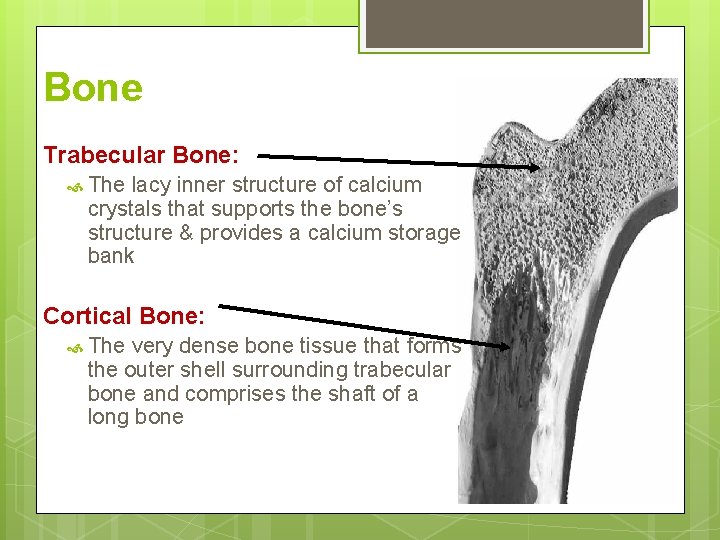
Bone Trabecular Bone: The lacy inner structure of calcium crystals that supports the bone’s structure & provides a calcium storage bank Cortical Bone: The very dense bone tissue that forms the outer shell surrounding trabecular bone and comprises the shaft of a long bone
Types of Fractures Wrists (least severe) Most occur at age 50 or older Is an early warning sign for osteoporosis Spinal vertebrae (chronic back pain) More likely at ages 55 -75 years Fractures occur from bending or lifting Several fractures leading to loss of height & spinal curvature Hips (most serious) Most occur at 70 years or older 20% die with in 4 months 50% become institutionalized
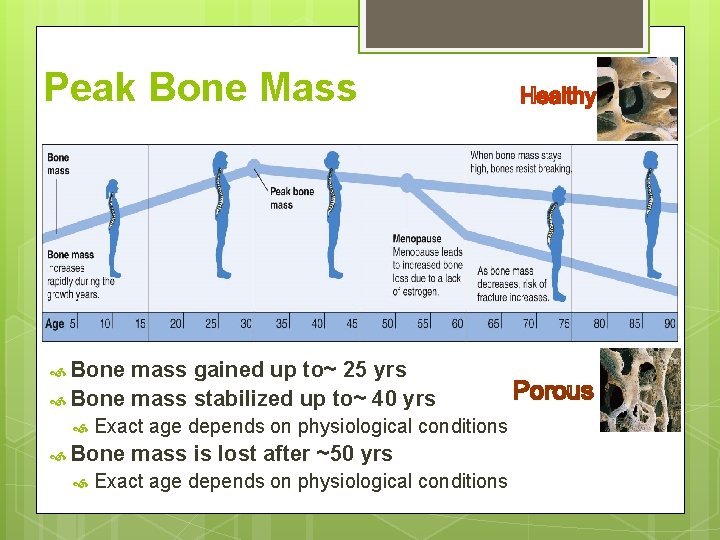
Peak Bone Mass Bone mass gained up to~ 25 yrs Bone mass stabilized up to~ 40 yrs Exact age depends on physiological conditions Bone mass is lost after ~50 yrs Exact age depends on physiological conditions
Risk Factors High Protein & Phosphorus intake Low calcium, vitamin D, magnesium, and fluoride intake Genetics (family history, small frame size) Lack of Exercise Very high fiber intake Smoking & Alcohol Menopause
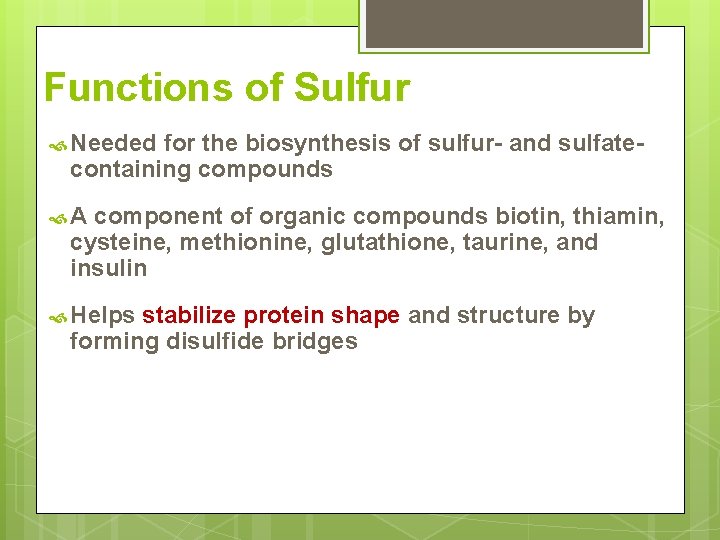
Functions of Sulfur Needed for the biosynthesis of sulfur- and sulfatecontaining compounds A component of organic compounds biotin, thiamin, cysteine, methionine, glutathione, taurine, and insulin Helps stabilize protein shape and structure by forming disulfide bridges
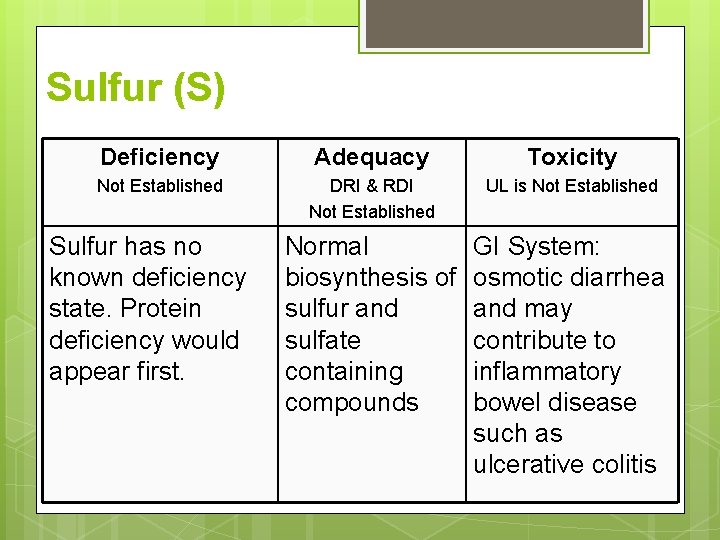
Sulfur (S) Deficiency Adequacy Toxicity Not Established DRI & RDI Not Established UL is Not Established Normal biosynthesis of sulfur and sulfate containing compounds GI System: osmotic diarrhea and may contribute to inflammatory bowel disease such as ulcerative colitis Sulfur has no known deficiency state. Protein deficiency would appear first.
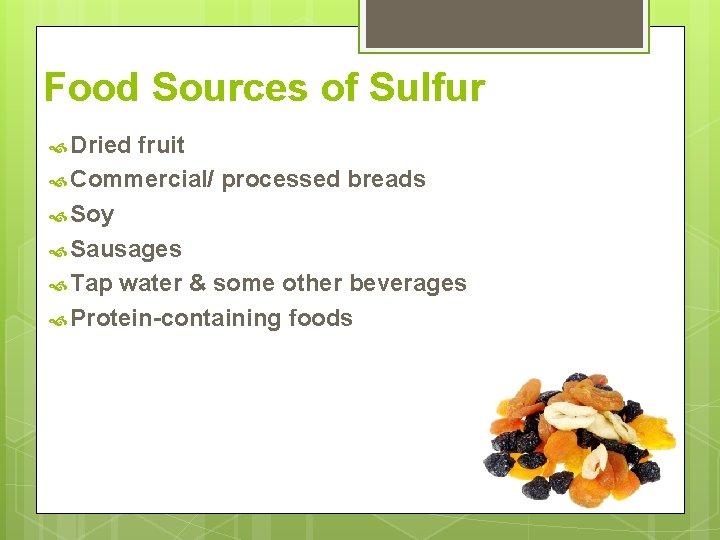
Food Sources of Sulfur Dried fruit Commercial/ processed breads Soy Sausages Tap water & some other beverages Protein-containing foods
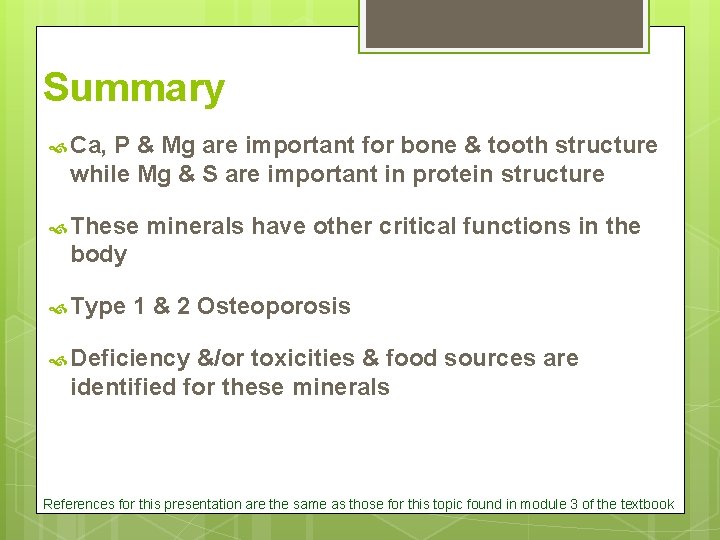
Summary Ca, P & Mg are important for bone & tooth structure while Mg & S are important in protein structure These minerals have other critical functions in the body Type 1 & 2 Osteoporosis Deficiency &/or toxicities & food sources are identified for these minerals References for this presentation are the same as those for this topic found in module 3 of the textbook
- Slides: 26