
Module 43 Exchange Rate Policy KRUGMANS MACROECONOMICS for


- Slides: 15
Module 43 Exchange Rate Policy KRUGMAN'S MACROECONOMICS for AP* Margaret Ray and David Anderson
What you will learn in this Module: • The difference between fixed exchange rates and floating exchange rates • Considerations that lead countries to choose different exchange rate regimes • This presentation covers Modules 4344.
Exchange Rate Policy • Governments have more power to influence nominal exchange rates than other prices • Exchange rates are important to countries where exports and imports are a large fraction of GDP
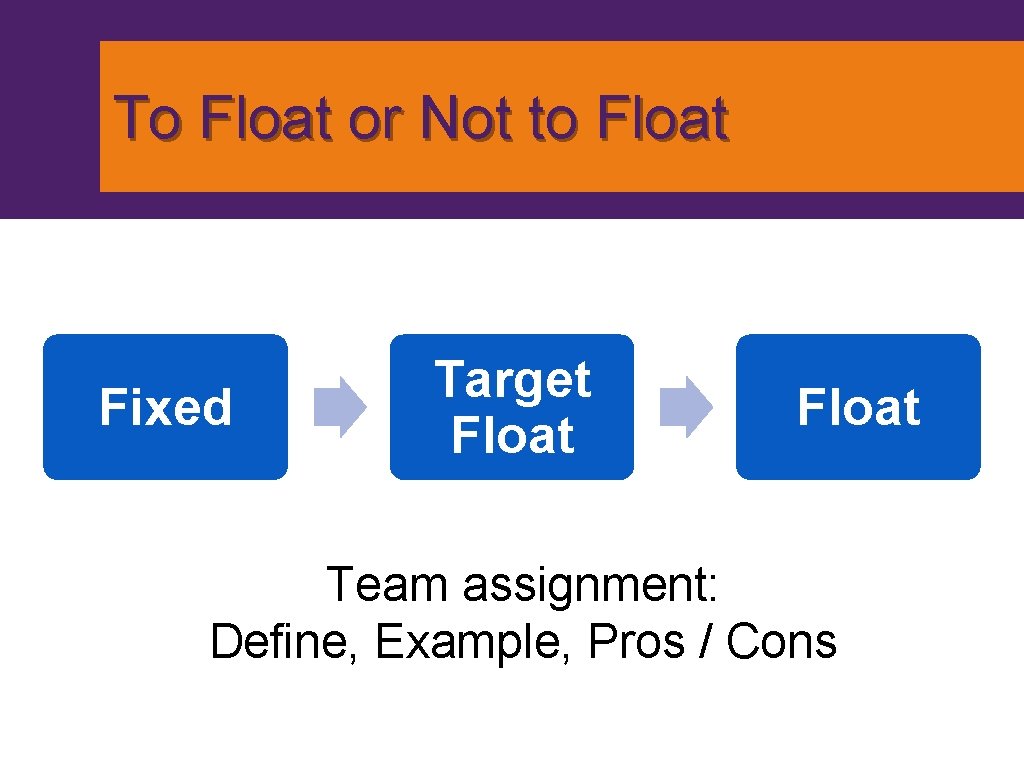
To Float or Not to Float Fixed Target Float Team assignment: Define, Example, Pros / Cons
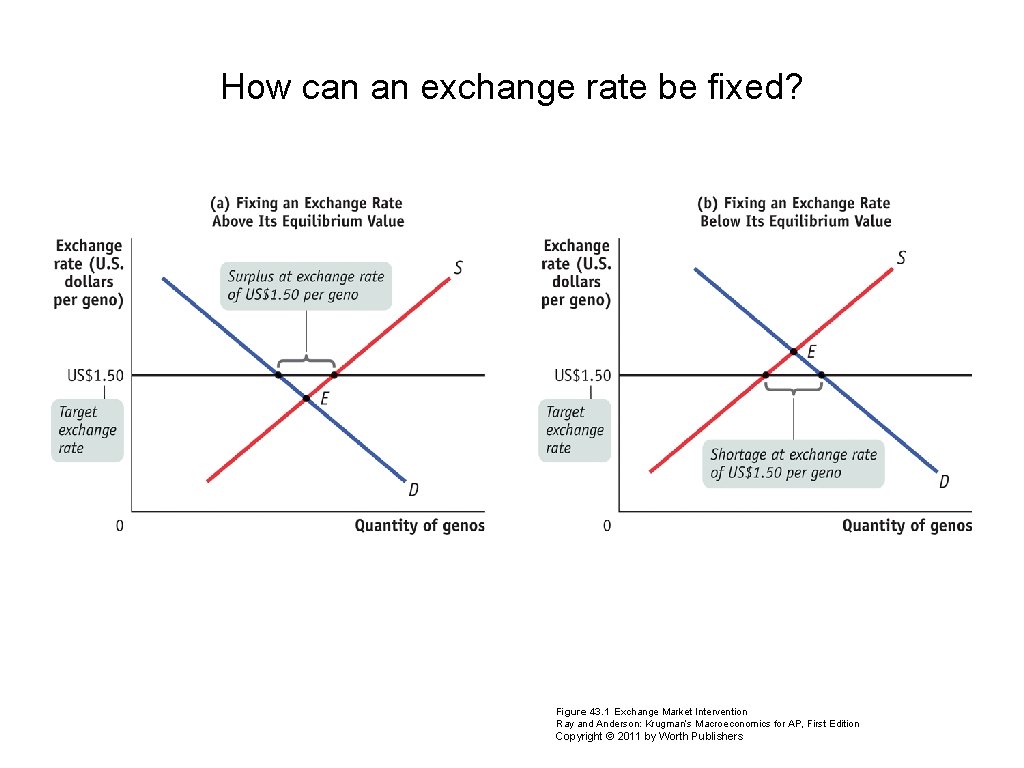
How can an exchange rate be fixed? Figure 43. 1 Exchange Market Intervention Ray and Anderson: Krugman’s Macroeconomics for AP, First Edition Copyright © 2011 by Worth Publishers
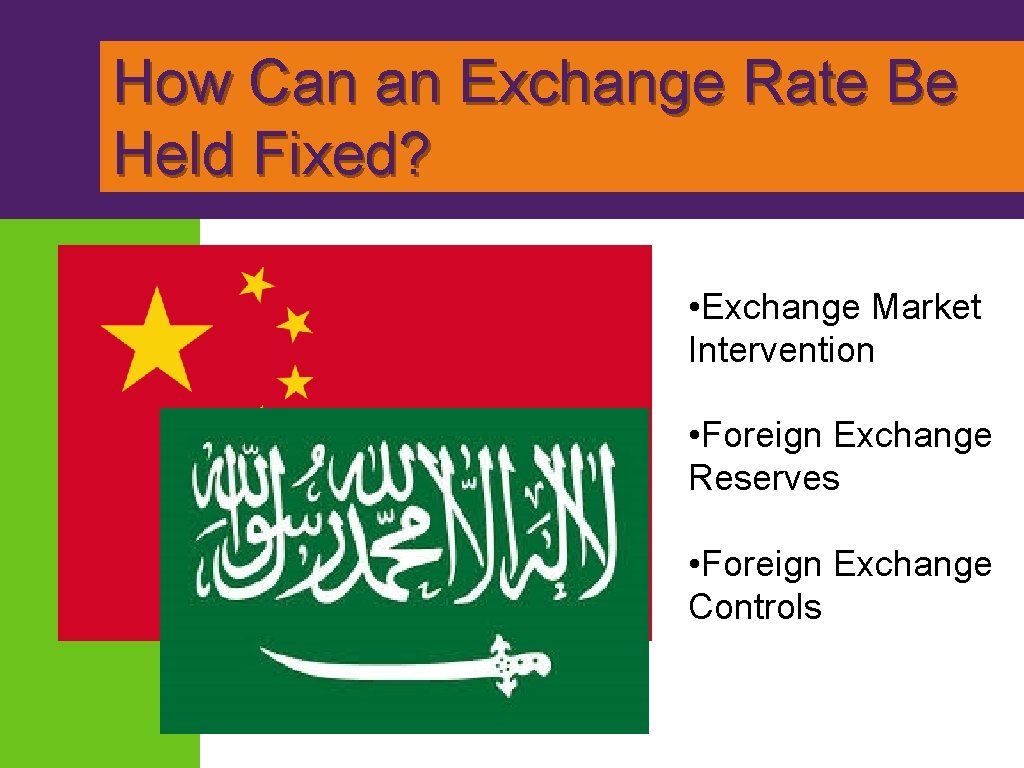
How Can an Exchange Rate Be Held Fixed? • Exchange Market Intervention • Foreign Exchange Reserves • Foreign Exchange Controls
Last Resort Devaluation: original fixed exchange rate above market equilbrium. Revaluation: original rate is below market equilibrium.
The Exchange Rate Regime Dilemma Pros of Fixed Exchange Rates • Facilitates trade by creating certainty about the exchange rate • Acts as a check on inflationary policies • Makes borrowing in foreign currency more predictable. • Undervalued currencies help exports.
The Exchange Rate Regime Dilemma Cons of Fixed Exchange Rates: • Requires large foreign currency reserves • May divert monetary policy • May lead to uncompetitive exports • And to over borrowing.
Defending a currency Albernian fixed rate problem Krugman page 454 # 12 Show solution graphically.
Floating Rates Let the market determine the FX rate. Most common regime – especially among large economies. No government intervention (officially)
Floating Rates – Pros and Cons Pros: § Frees up domestic monetary and fiscal policy. § May help export competitiveness. Cons: § Difficult to plan long-term trade or investment. § Companies bear cost of hedging the risk.
Managed Float Keep FX rate stable within a range. Pros: Many of the benefits of fixed rates at less cost. Cons: Many of the cons of fixed rates. Can break down in times of stress (e. g. Asian debt crisis of 1997).
Defending a currency Singaporian dollar intervention – FRQ 2011 B.
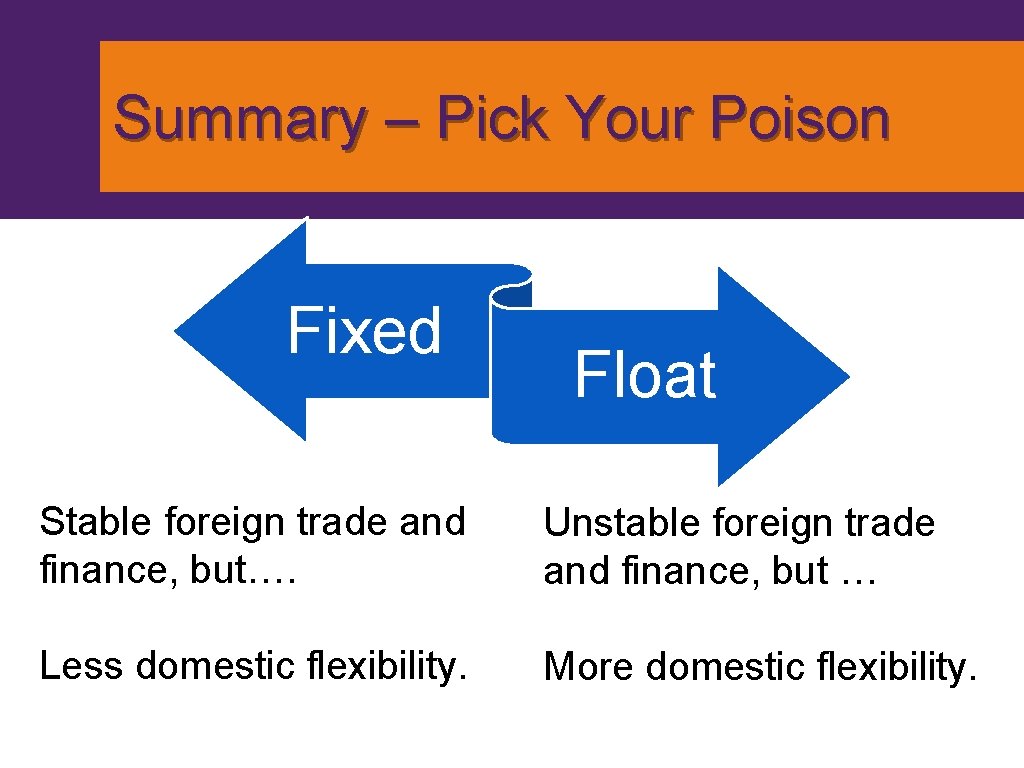
Summary – Pick Your Poison Fixed Float Stable foreign trade and finance, but…. Unstable foreign trade and finance, but … Less domestic flexibility. More domestic flexibility.