
Module 4 Topic D Learning Target I will




- Slides: 23
Module 4 Topic D
Learning Target I will be able to: Develop and apply the formula for midpoint.
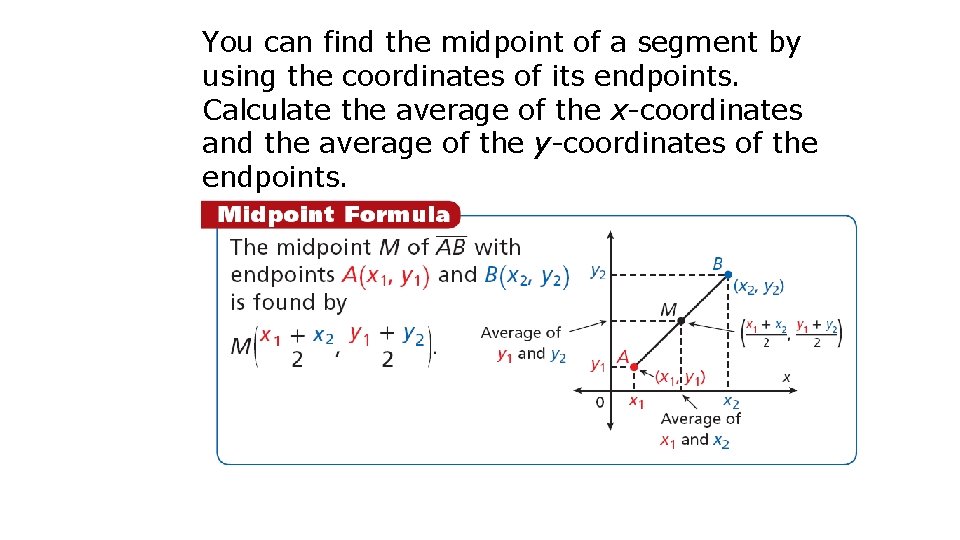
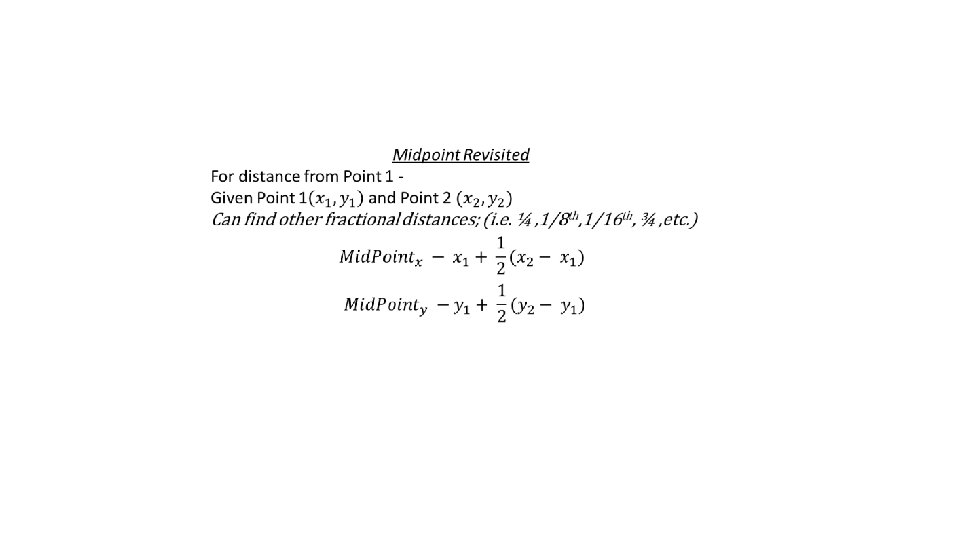
You can find the midpoint of a segment by using the coordinates of its endpoints. Calculate the average of the x-coordinates and the average of the y-coordinates of the endpoints.
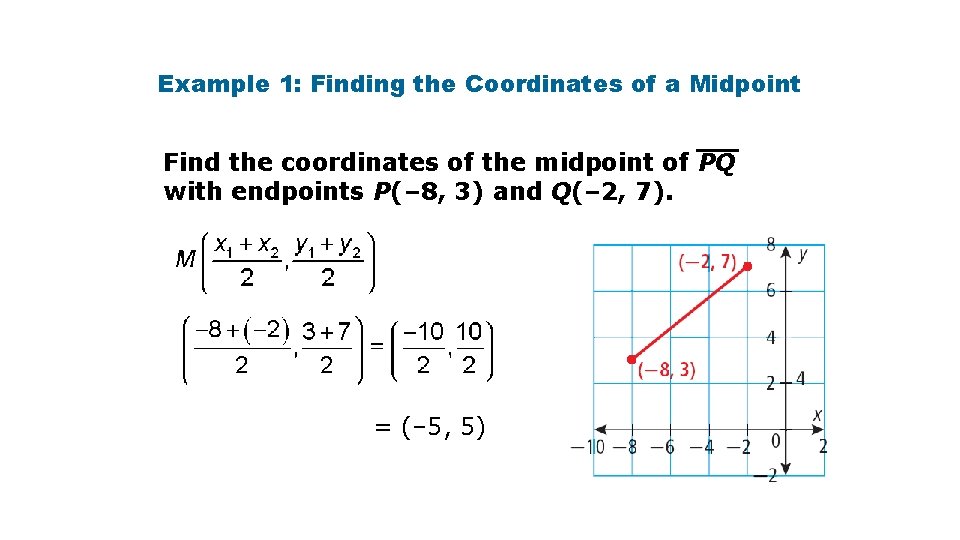
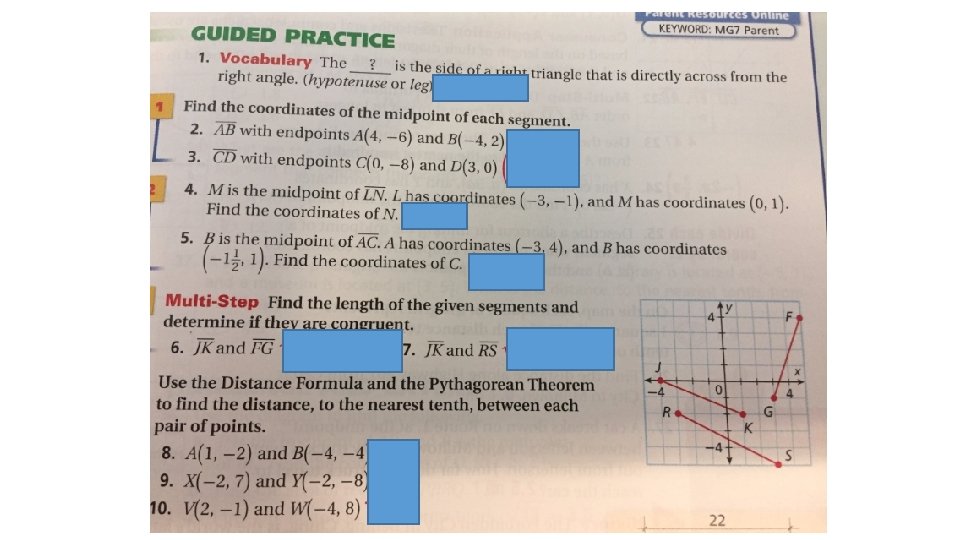
Example 1: Finding the Coordinates of a Midpoint Find the coordinates of the midpoint of PQ with endpoints P(– 8, 3) and Q(– 2, 7). = (– 5, 5)
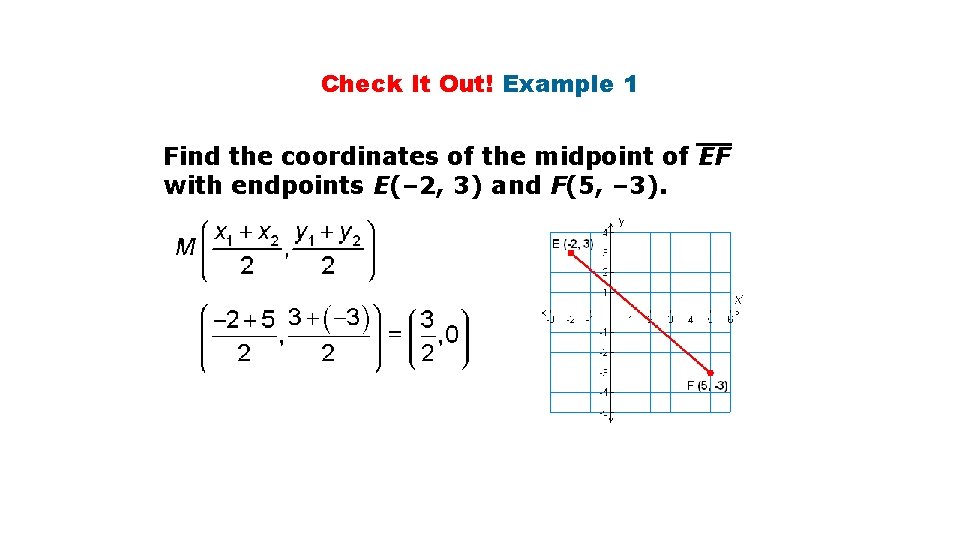
Check It Out! Example 1 Find the coordinates of the midpoint of EF with endpoints E(– 2, 3) and F(5, – 3).
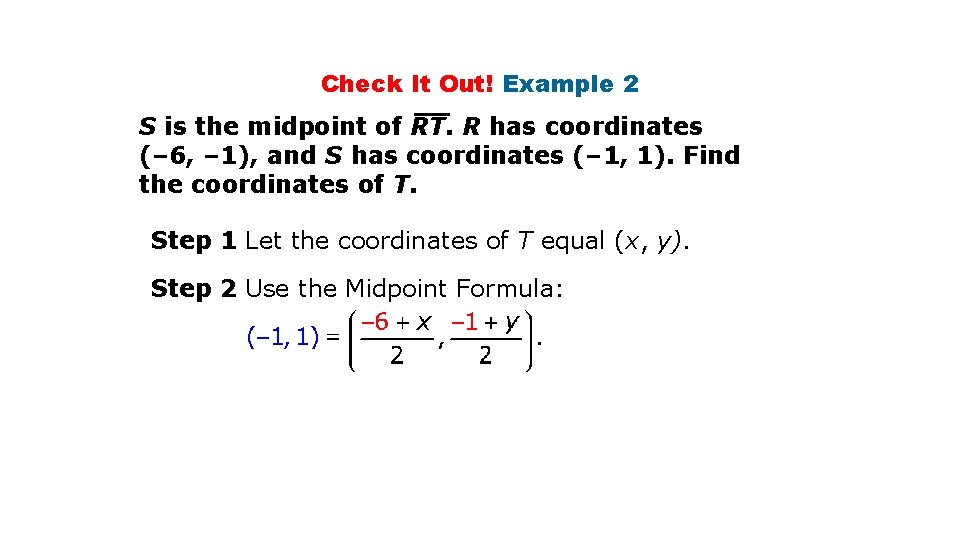
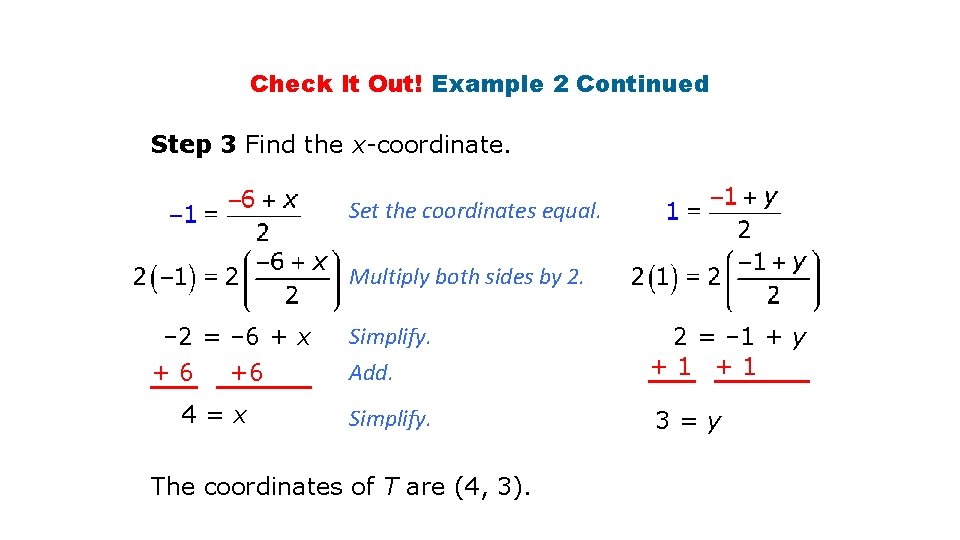
Check It Out! Example 2 S is the midpoint of RT. R has coordinates (– 6, – 1), and S has coordinates (– 1, 1). Find the coordinates of T. Step 1 Let the coordinates of T equal (x, y). Step 2 Use the Midpoint Formula:
Check It Out! Example 2 Continued Step 3 Find the x-coordinate. Set the coordinates equal. Multiply both sides by 2. – 2 = – 6 + x + 6 +6 4=x Simplify. Add. 2 = – 1 + y +1 +1 Simplify. 3=y The coordinates of T are (4, 3).
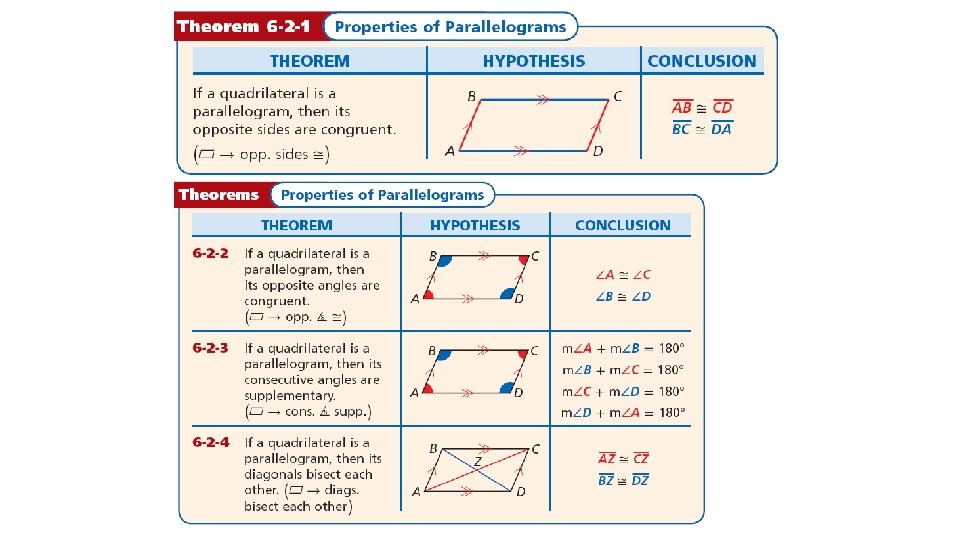
Learning Targets Students will be able to: Prove and apply properties of parallelograms. Use properties of parallelograms to solve problems.
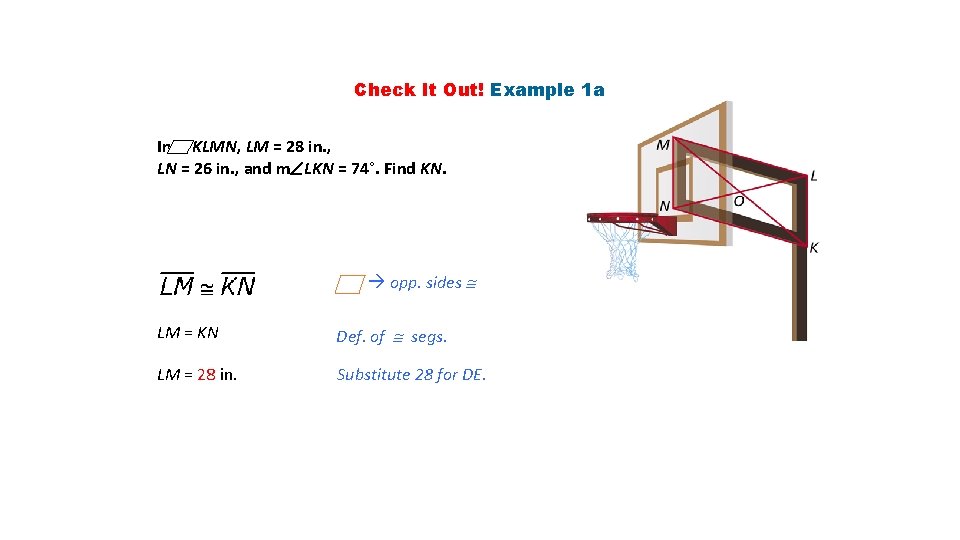
Check It Out! Example 1 a In KLMN, LM = 28 in. , LN = 26 in. , and m LKN = 74°. Find KN. opp. sides LM = KN Def. of segs. LM = 28 in. Substitute 28 for DE.
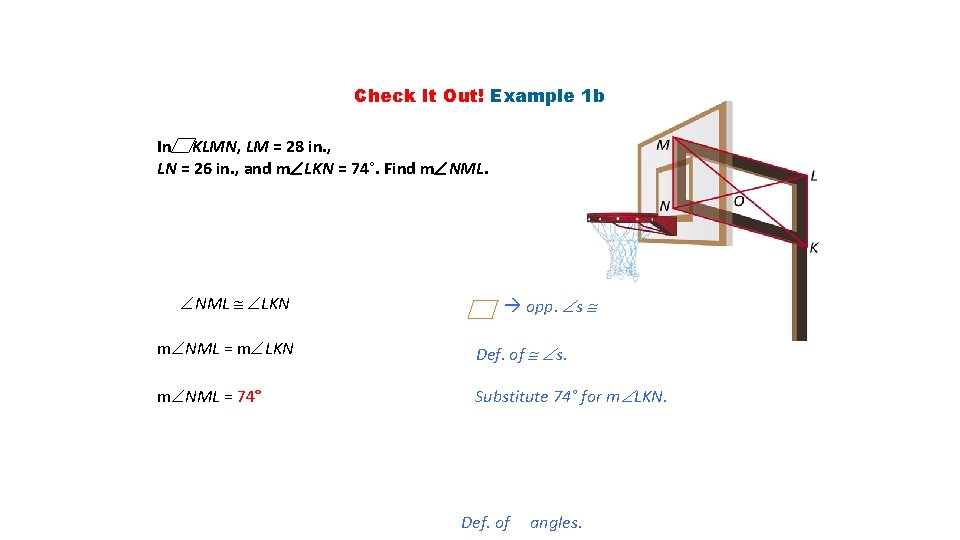
Check It Out! Example 1 b In KLMN, LM = 28 in. , LN = 26 in. , and m LKN = 74°. Find m NML LKN opp. s m NML = m LKN Def. of s. m NML = 74° Substitute 74° for m LKN. Def. of angles.
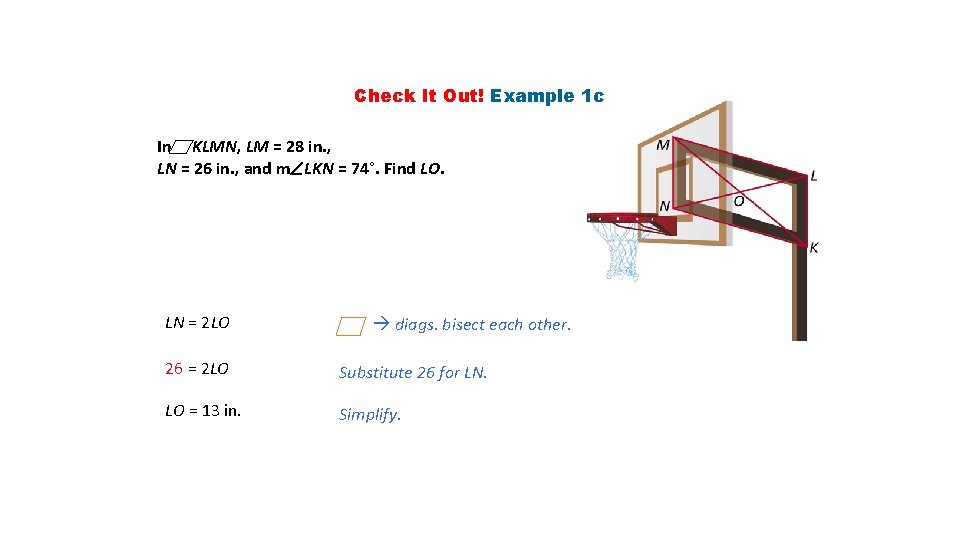
Check It Out! Example 1 c In KLMN, LM = 28 in. , LN = 26 in. , and m LKN = 74°. Find LO. LN = 2 LO diags. bisect each other. 26 = 2 LO Substitute 26 for LN. LO = 13 in. Simplify.
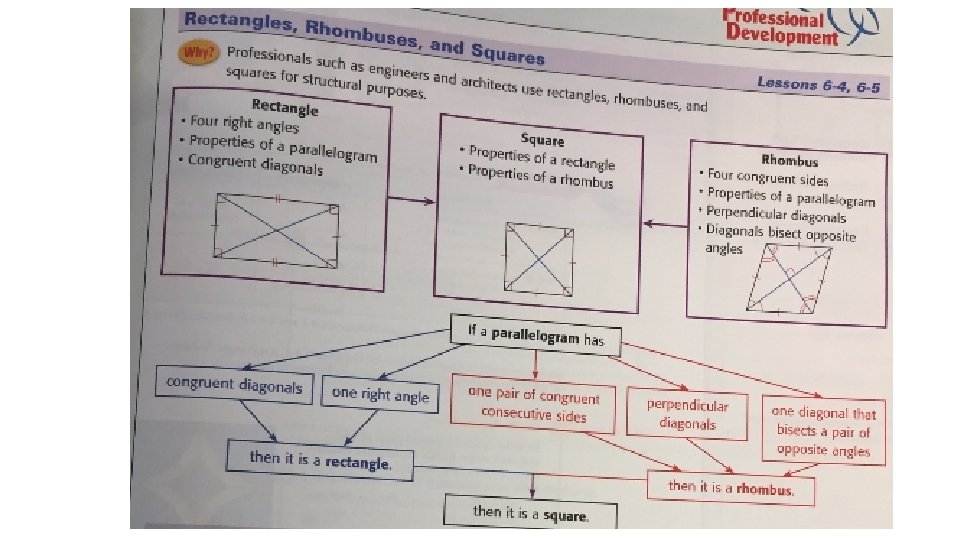
Learning Targets I will be able to: Prove and apply properties of rectangles, rhombuses, and squares. Use properties of rectangles, rhombuses, and squares to solve problems.
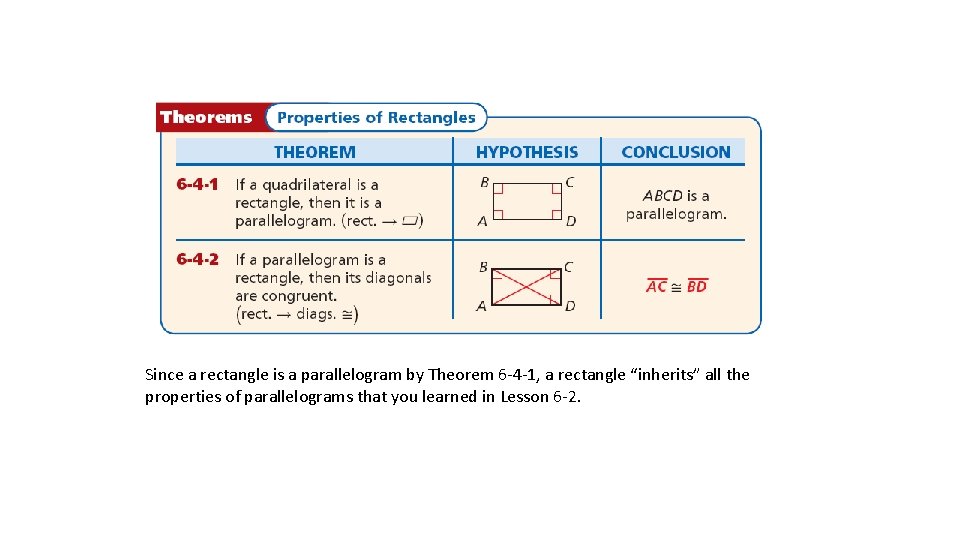
Since a rectangle is a parallelogram by Theorem 6 -4 -1, a rectangle “inherits” all the properties of parallelograms that you learned in Lesson 6 -2.
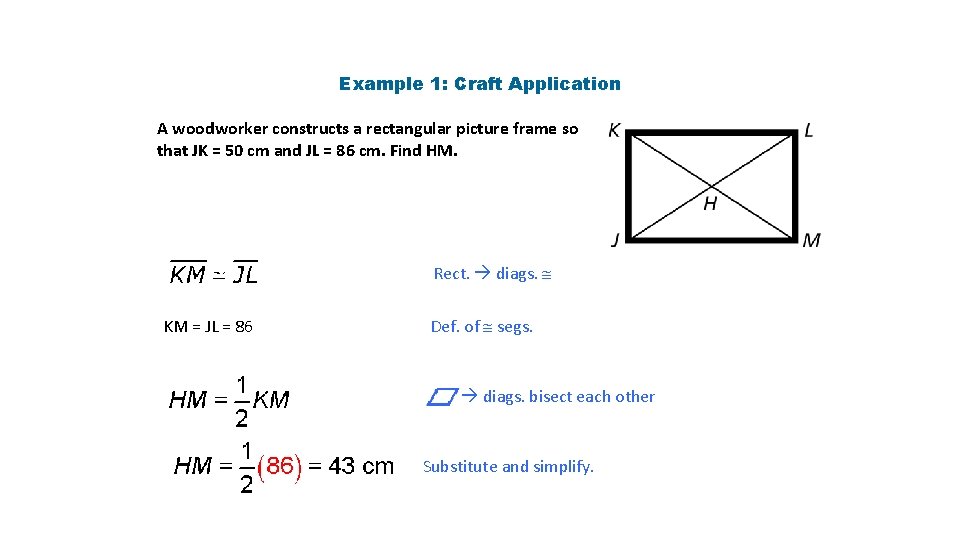
Example 1: Craft Application A woodworker constructs a rectangular picture frame so that JK = 50 cm and JL = 86 cm. Find HM. Rect. diags. KM = JL = 86 Def. of segs. diags. bisect each other Substitute and simplify.
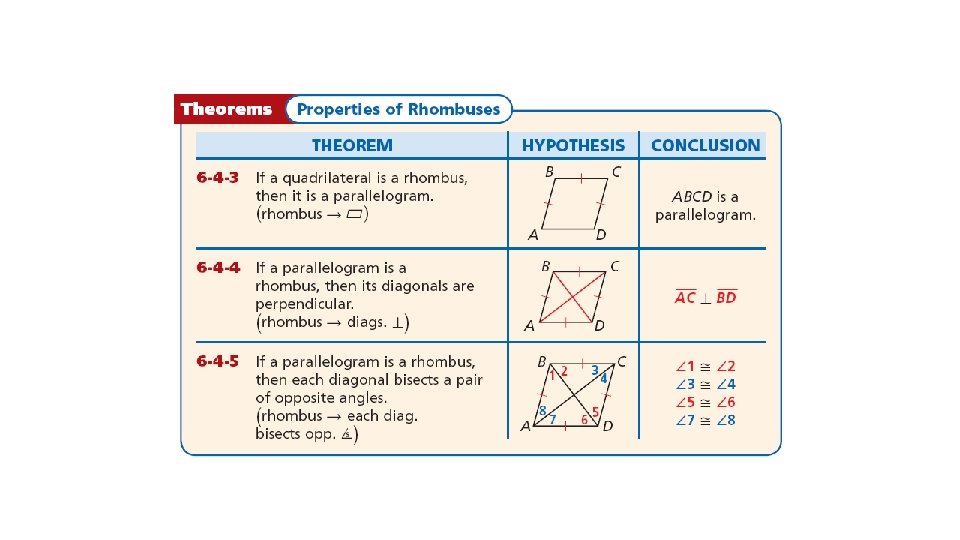
Like a rectangle, a rhombus is a parallelogram. So you can apply the properties of parallelograms to rhombuses.
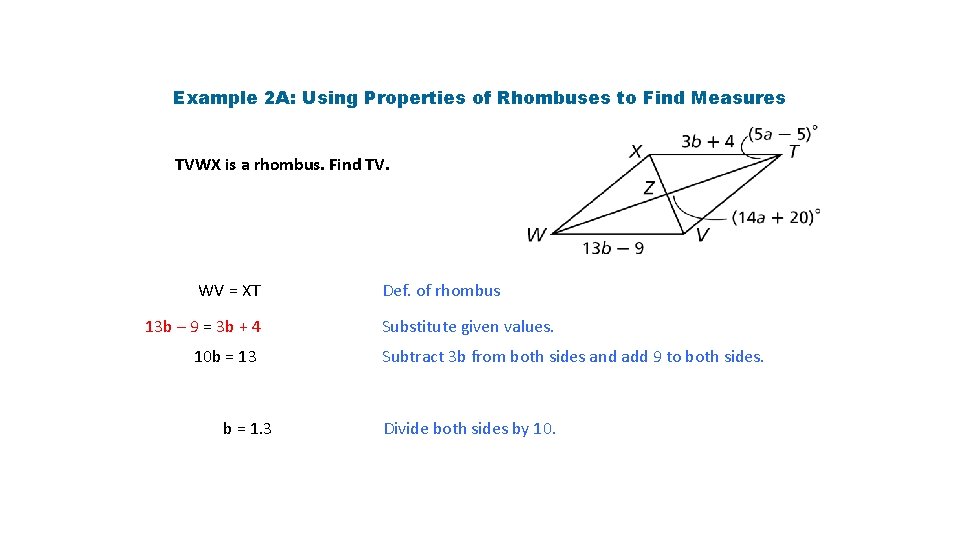
Example 2 A: Using Properties of Rhombuses to Find Measures TVWX is a rhombus. Find TV. WV = XT 13 b – 9 = 3 b + 4 10 b = 13 b = 1. 3 Def. of rhombus Substitute given values. Subtract 3 b from both sides and add 9 to both sides. Divide both sides by 10.
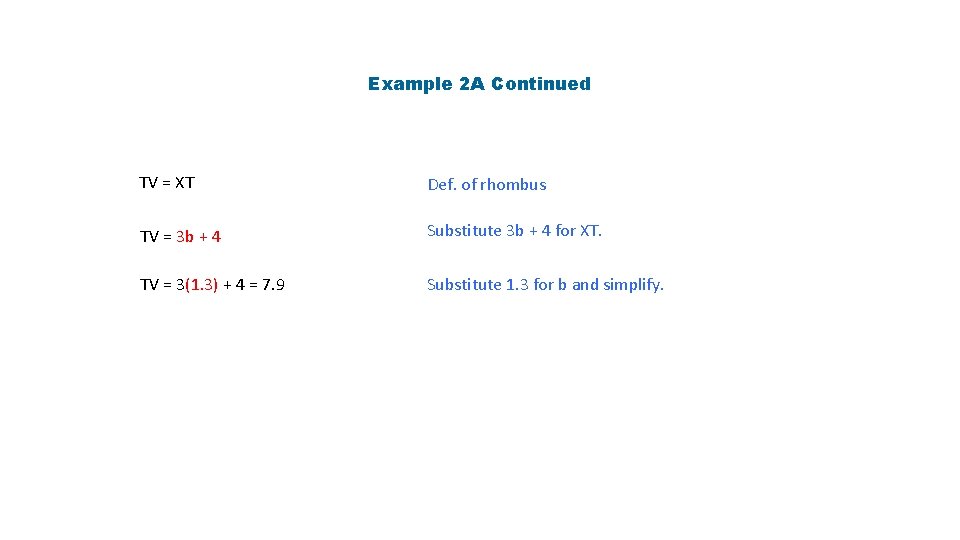
Example 2 A Continued TV = XT Def. of rhombus TV = 3 b + 4 Substitute 3 b + 4 for XT. TV = 3(1. 3) + 4 = 7. 9 Substitute 1. 3 for b and simplify.