
Module 4 Respiration 1 4 3 Glycolysis Learning

- Slides: 19
Module 4 Respiration 1. 4. 3. Glycolysis
Learning Objectives To understand Glycolysis Success Criteria State that Glycolysis takes place in the cytoplasm (Grade D) State that during aerobi c respiration in animals pyruvate is actively pumped into mitochondria (Grade C) Outline the process of Glycolysis (Grade B/A)
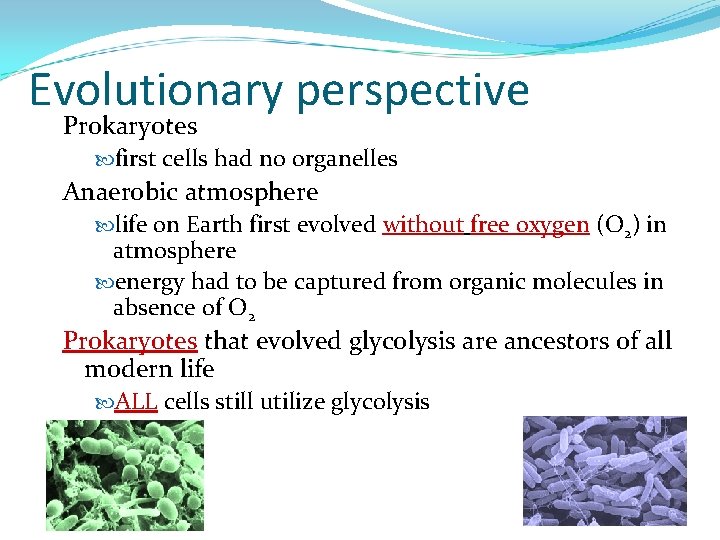
Evolutionary perspective Prokaryotes first cells had no organelles Anaerobic atmosphere life on Earth first evolved without free oxygen (O 2) in atmosphere energy had to be captured from organic molecules in absence of O 2 Prokaryotes that evolved glycolysis are ancestors of all modern life ALL cells still utilize glycolysis
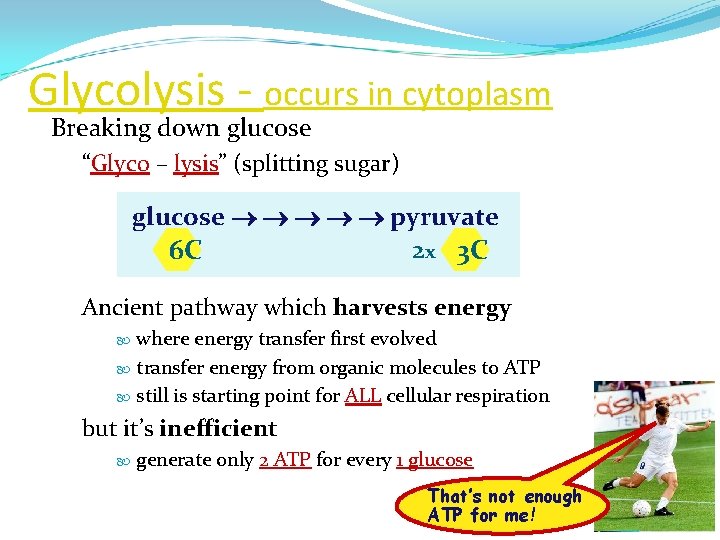
Glycolysis - occurs in cytoplasm Breaking down glucose “Glyco – lysis” (splitting sugar) glucose pyruvate 2 x 3 C 6 C Ancient pathway which harvests energy where energy transfer first evolved transfer energy from organic molecules to ATP still is starting point for ALL cellular respiration but it’s inefficient generate only 2 ATP for every 1 glucose That’s not enough ATP for me!
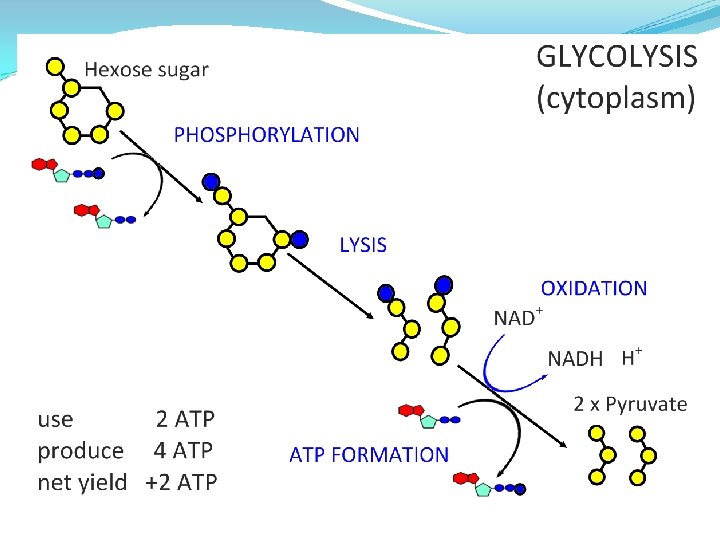
GLYCOLYSIS (carbohydrate splitting) First stage of aerobic respiration & anaerobic respiration. Doesn’t need O 2 – so this stage is anaerobic! Occurs in the cytoplasm of all living cells
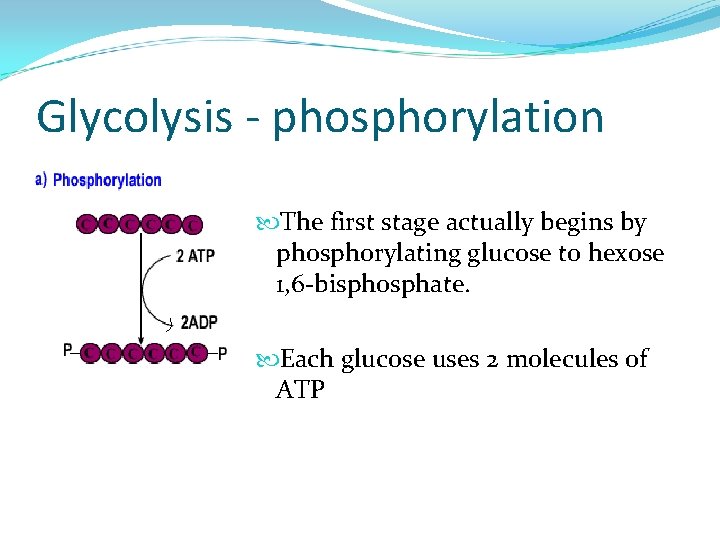
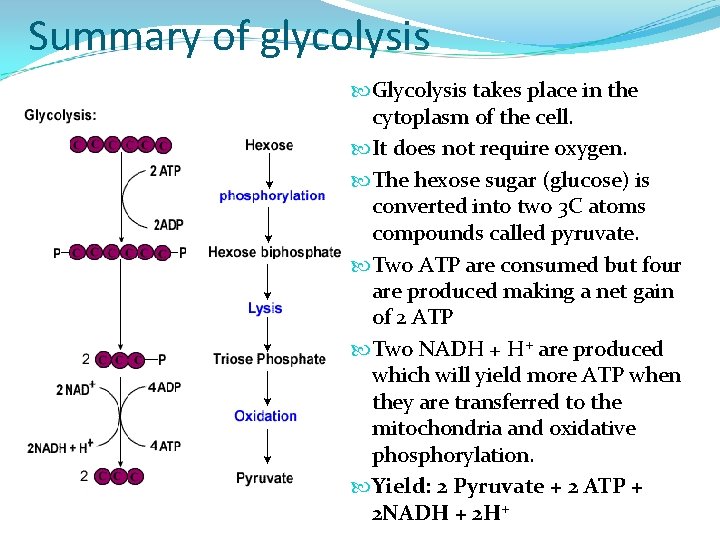
Glycolysis - phosphorylation The first stage actually begins by phosphorylating glucose to hexose 1, 6 -bisphosphate. Each glucose uses 2 molecules of ATP
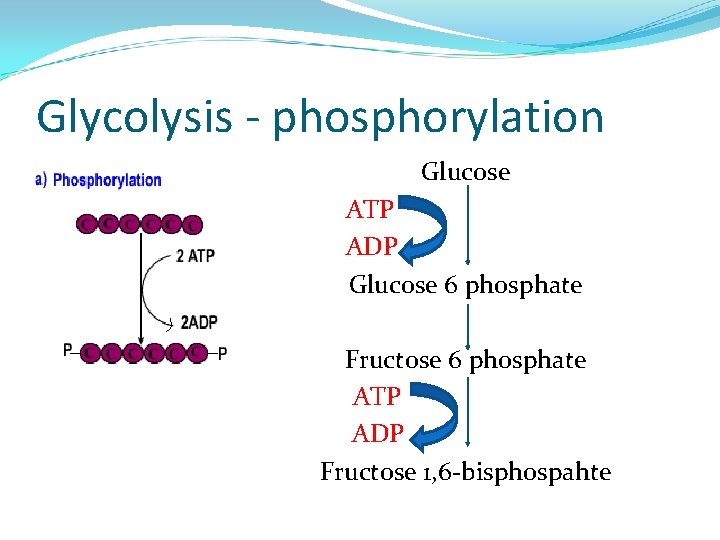
Glycolysis - phosphorylation Glucose ATP ADP Glucose 6 phosphate Fructose 6 phosphate ATP ADP Fructose 1, 6 -bisphospahte
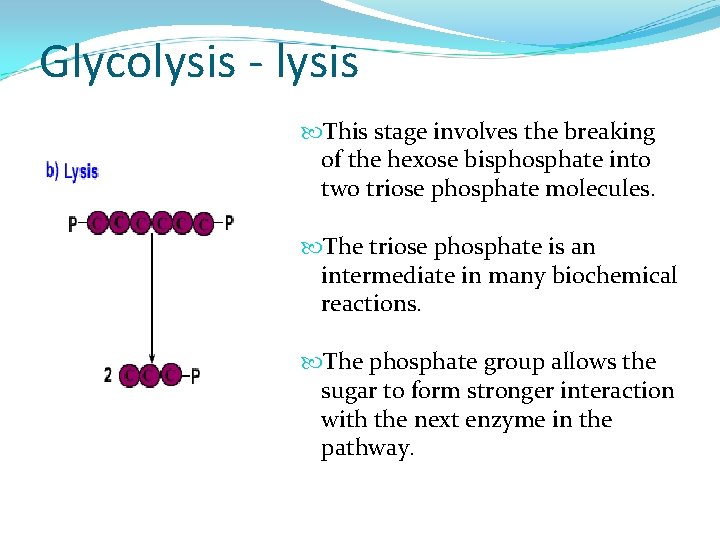
Glycolysis - lysis This stage involves the breaking of the hexose bisphosphate into two triose phosphate molecules. The triose phosphate is an intermediate in many biochemical reactions. The phosphate group allows the sugar to form stronger interaction with the next enzyme in the pathway.
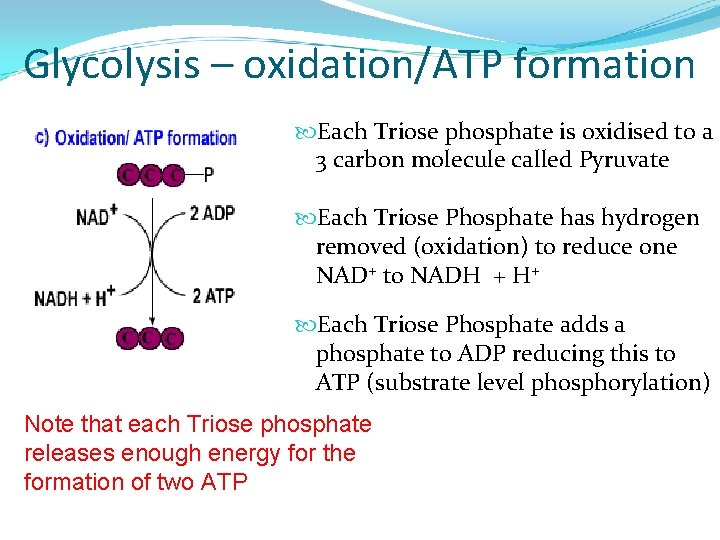
Glycolysis – oxidation/ATP formation Each Triose phosphate is oxidised to a 3 carbon molecule called Pyruvate Each Triose Phosphate has hydrogen removed (oxidation) to reduce one NAD+ to NADH + H+ Each Triose Phosphate adds a phosphate to ADP reducing this to ATP (substrate level phosphorylation) Note that each Triose phosphate releases enough energy for the formation of two ATP
Summary of glycolysis Glycolysis takes place in the cytoplasm of the cell. It does not require oxygen. The hexose sugar (glucose) is converted into two 3 C atoms compounds called pyruvate. Two ATP are consumed but four are produced making a net gain of 2 ATP Two NADH + H+ are produced which will yield more ATP when they are transferred to the mitochondria and oxidative phosphorylation. Yield: 2 Pyruvate + 2 ATP + 2 NADH + 2 H+
The first stage of respiration: glycolysis 12 of 39 © Boardworks Ltd 2009
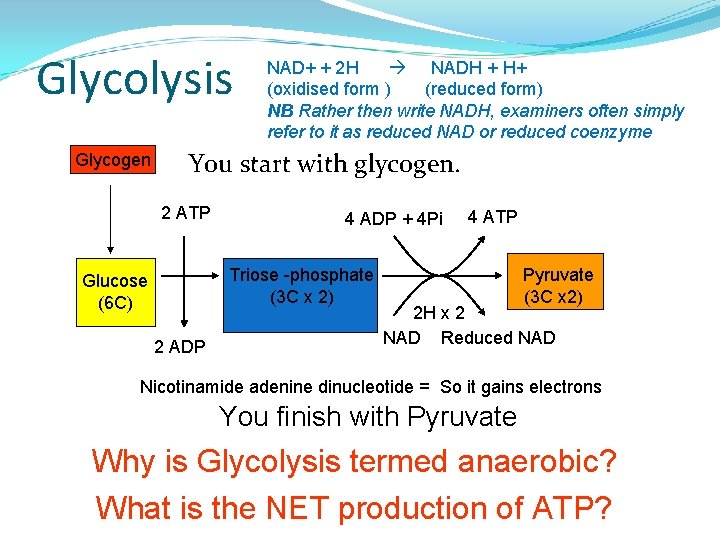
Glycolysis Glycogen NAD+ + 2 H NADH + H+ (oxidised form ) (reduced form) NB Rather then write NADH, examiners often simply refer to it as reduced NAD or reduced coenzyme You start with glycogen. 2 ATP 4 ADP + 4 Pi Triose -phosphate (3 C x 2) Glucose (6 C) 2 ADP 4 ATP Pyruvate (3 C x 2) 2 H x 2 NAD Reduced NAD Nicotinamide adenine dinucleotide = So it gains electrons You finish with Pyruvate Why is Glycolysis termed anaerobic? What is the NET production of ATP?
The sums The end products of glycolysis are pyruvate and reduced NAD Energy is released during this reaction. 4 molecules of ADP + Pi converted to 4 molecules of ATP. So net gain of 2 molecules of ATP 2 pairs of hydrogen atoms produced 2 Molecules of pyruvate.
Products of Glycolysis 2 reduced NAD (NADH + H+) 2 Pyruvate 2 ATP
The Fate of Pyruvate! THIS DEPENDS ON THE AVAILABILITY OF OXYGEN!!!
Task Complete exam questions (SA)
Plenary Make list of what is needed for glycolysis and what is produced Explain where oxidation occurs and substrate level phosphorylation
Learning Objectives To understand Glycolysis Success Criteria State that Glycolysis takes place in the cytoplasm (Grade D) State that during aerobi c respiration in animals pyruvate is actively pumped into mitochondria (Grade C) Outline the process of Glycolysis (Grade B/A)