
Module 4 Normal Gait 2 D Kinematics of


- Slides: 40
Module 4 Normal Gait 2 D: Kinematics of the Trunk and Pelvis During the Gait Cycle
References • Levangie, P. and Norkin, C. (2005). Joint Structure & Function: A Comprehensive Analysis 4 th Edition. Chapter 4, 141 to 192. • Perry, J and Burnfield, J. (2010). Gait Analysis: Normal and Pathological Function 2 nd Edition. Chapter. 7. • Winter, DA. (1995). Human balance and posture control during standing and walking. Gait & Posture, 3, 193 to 214. December. • • ALL DATA from Northwestern University - VACMARL Referenced Journal Articles Referenced Web sources Bio. Digital Human
Agenda • • • A. Pelvic Obliquity B. Pelvic Rotation C. Pelvic Tilt D. Trunk Flexion/Extension E. Trunk Rotation F. Review of Coronal and Transverse Motions
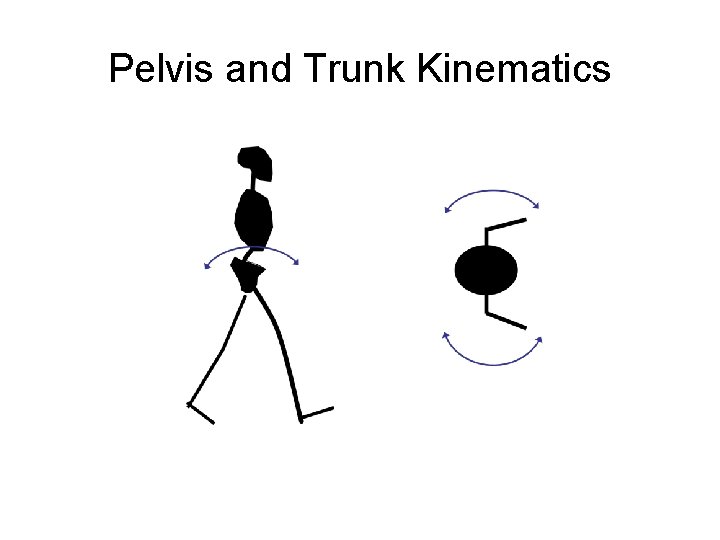
Pelvis and Trunk Kinematics
Pelvis and Trunk Kinematics, continued • Movement of the head, neck, trunk and pelvis is secondary to the function of the lower limbs • Significant events are impact of loading, the changing alignment of stance and swing limbs and the loss of bilateral support of the pelvis • Trunk and hip muscles decelerates the imposed forces • Magnitude and acceleration displacement are least at the HEAD!
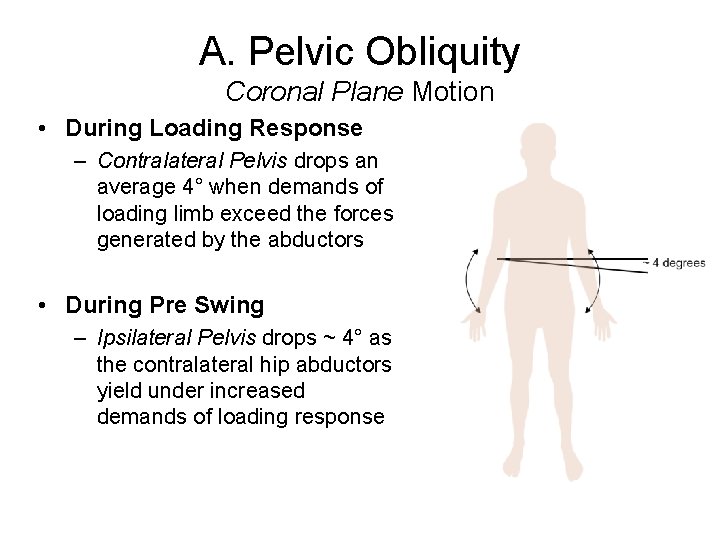
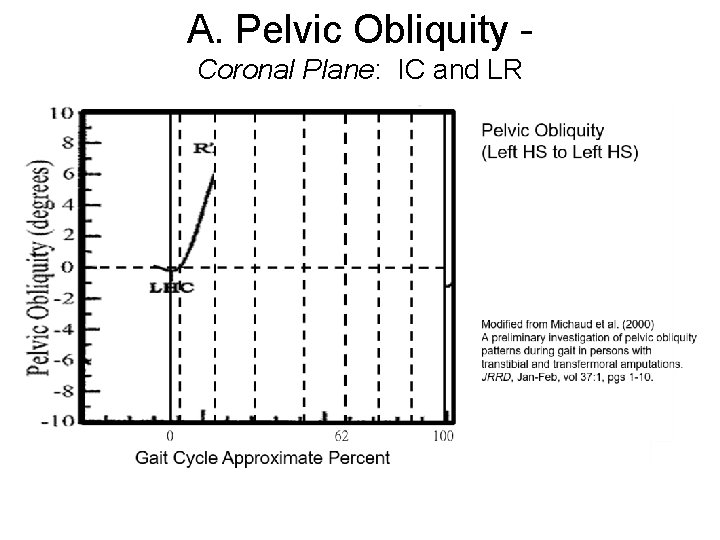
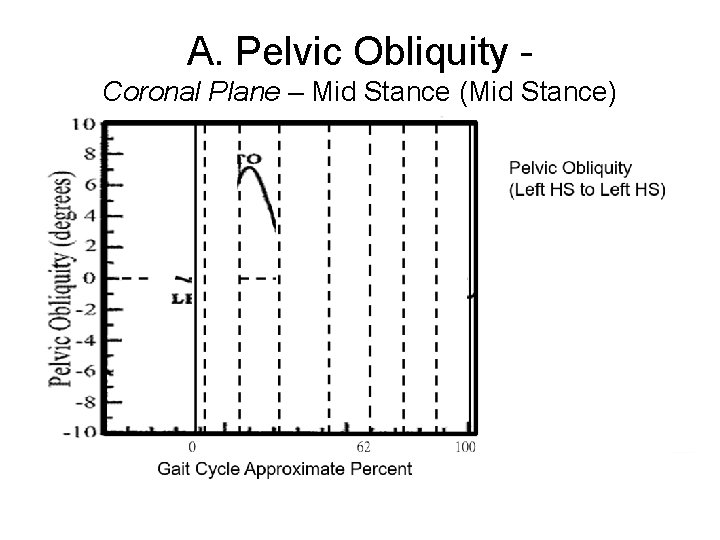
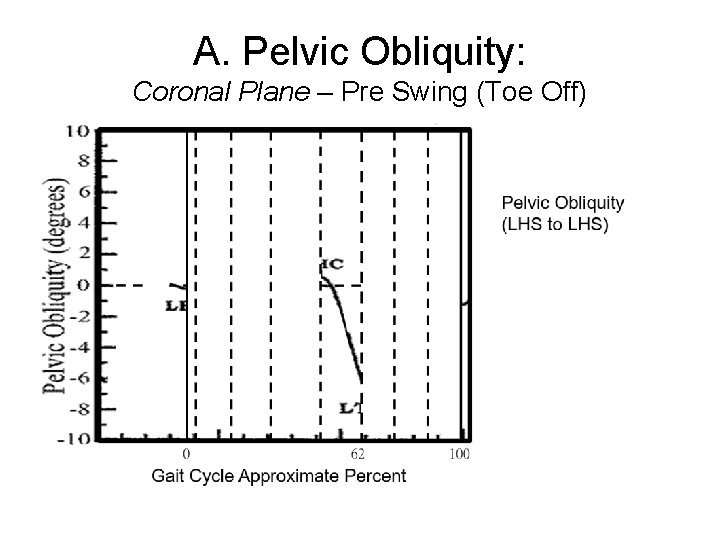
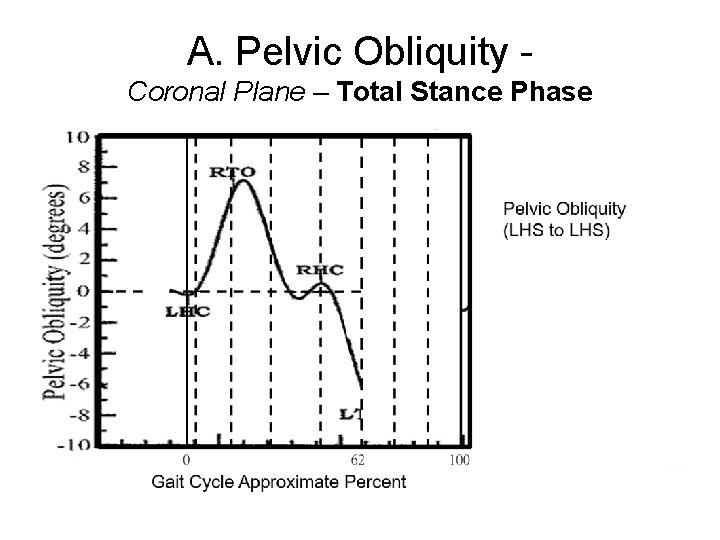
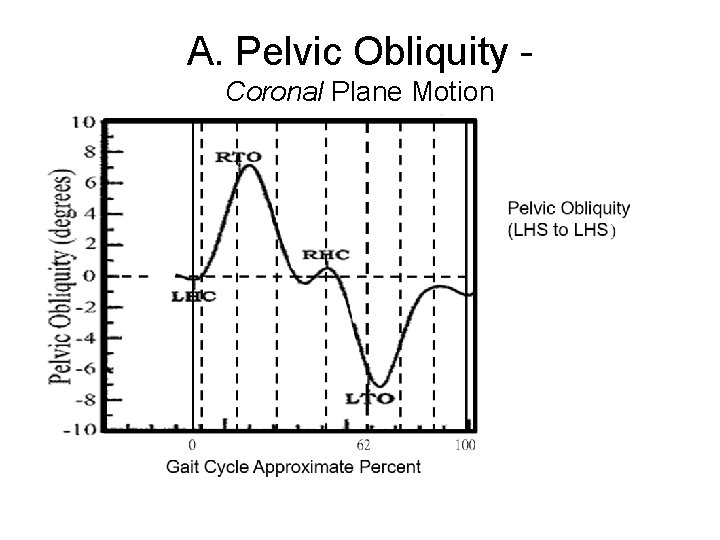
A. Pelvic Obliquity Coronal Plane Motion • During Loading Response – Contralateral Pelvis drops an average 4° when demands of loading limb exceed the forces generated by the abductors • During Pre Swing – Ipsilateral Pelvis drops ~ 4° as the contralateral hip abductors yield under increased demands of loading response
A. Pelvic Obliquity Coronal Plane: IC and LR
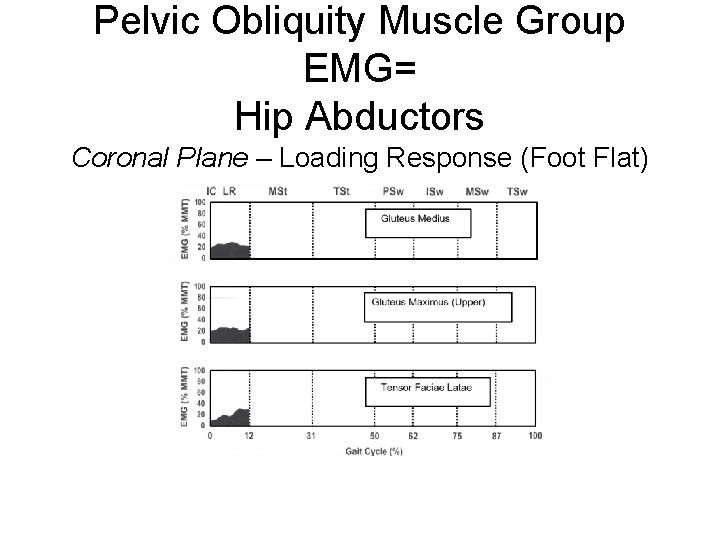
Pelvic Obliquity Muscle Group EMG= Hip Abductors Coronal Plane – Loading Response (Foot Flat)
A. Pelvic Obliquity Coronal Plane – Mid Stance (Mid Stance)
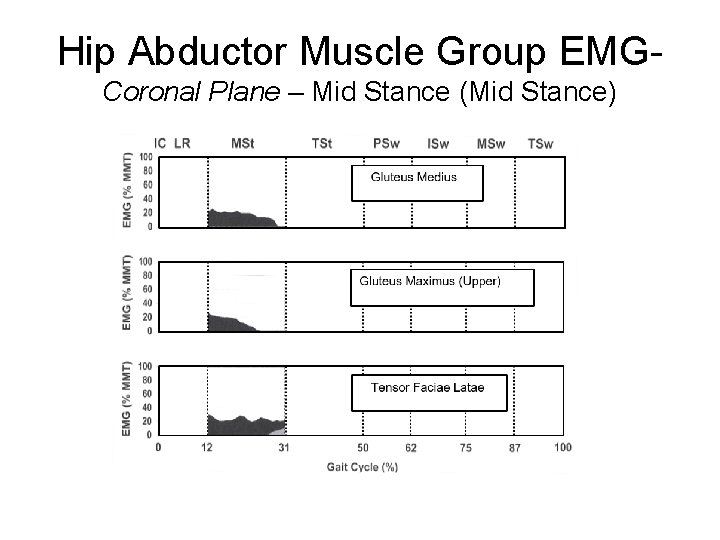
Hip Abductor Muscle Group EMGCoronal Plane – Mid Stance (Mid Stance)
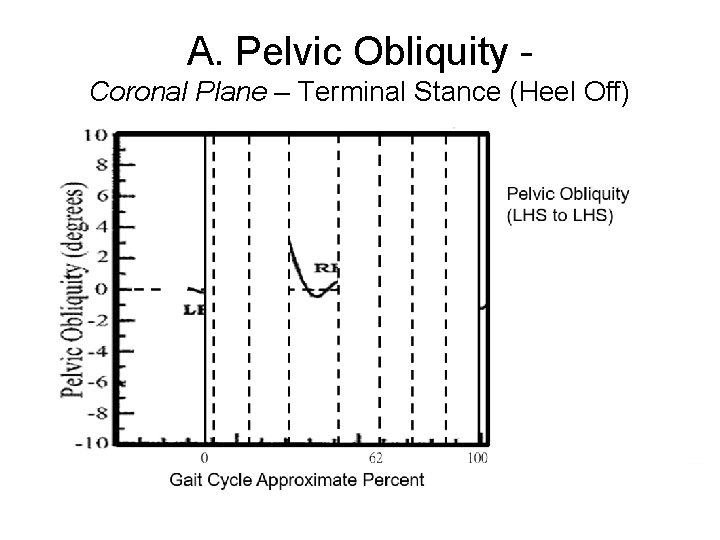
A. Pelvic Obliquity Coronal Plane – Terminal Stance (Heel Off)
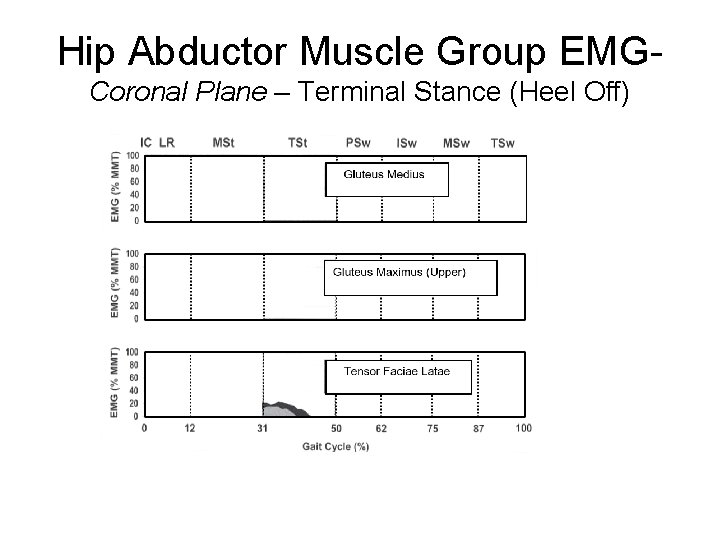
Hip Abductor Muscle Group EMGCoronal Plane – Terminal Stance (Heel Off)
A. Pelvic Obliquity: Coronal Plane – Pre Swing (Toe Off)
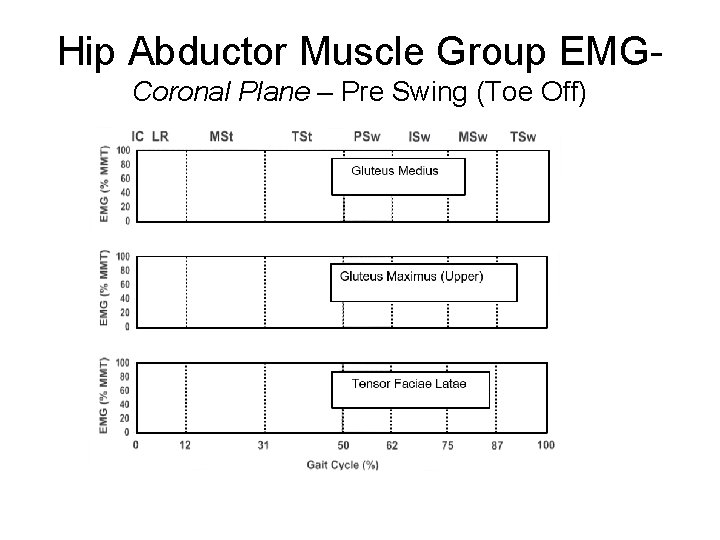
Hip Abductor Muscle Group EMGCoronal Plane – Pre Swing (Toe Off)
A. Pelvic Obliquity Coronal Plane – Total Stance Phase
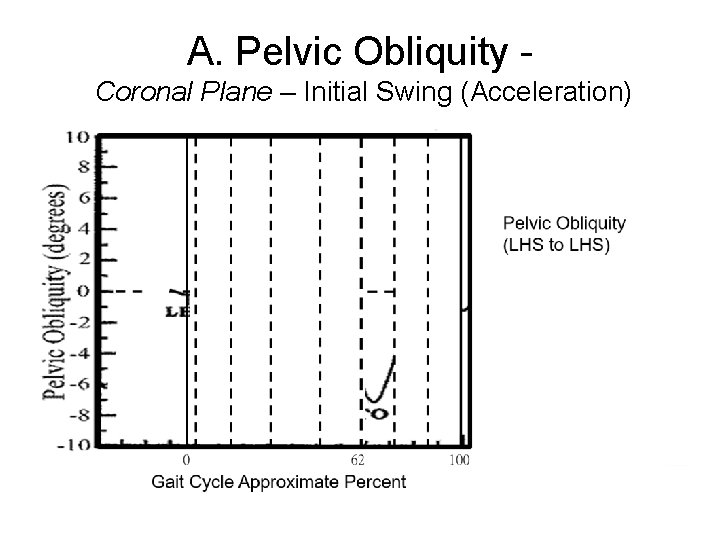
A. Pelvic Obliquity Coronal Plane – Initial Swing (Acceleration)
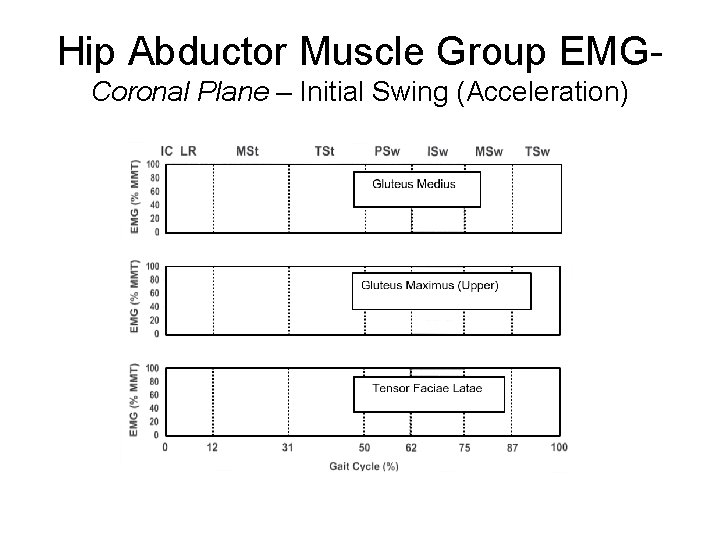
Hip Abductor Muscle Group EMGCoronal Plane – Initial Swing (Acceleration)
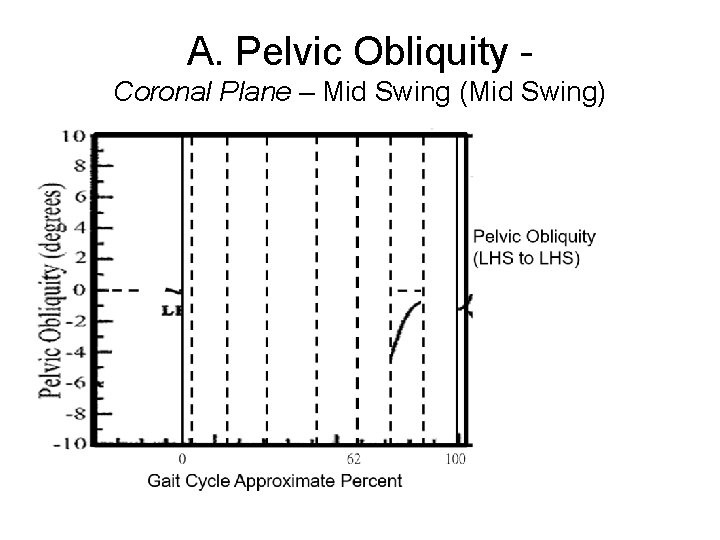
A. Pelvic Obliquity Coronal Plane – Mid Swing (Mid Swing)
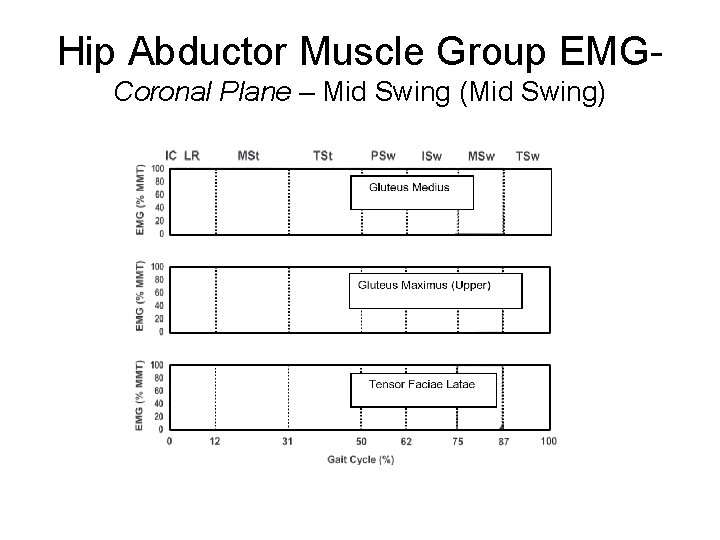
Hip Abductor Muscle Group EMGCoronal Plane – Mid Swing (Mid Swing)
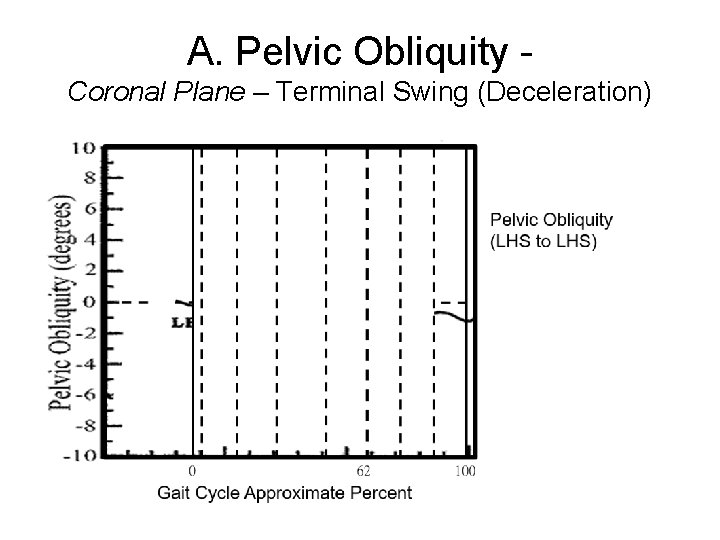
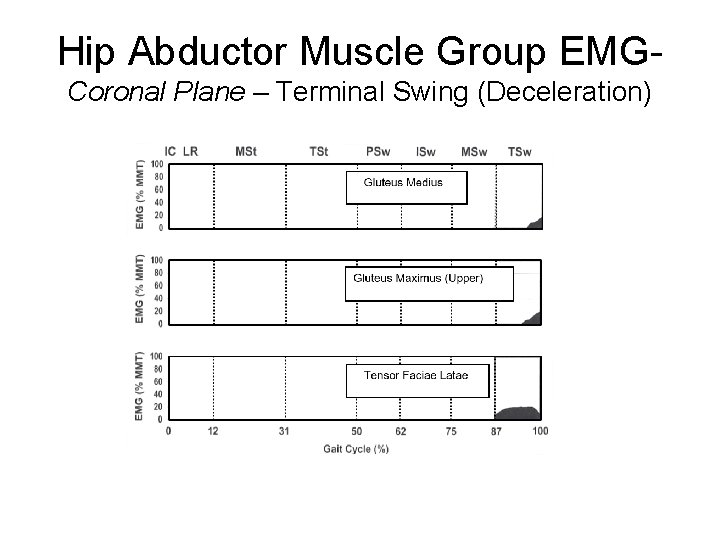
A. Pelvic Obliquity Coronal Plane – Terminal Swing (Deceleration)
Hip Abductor Muscle Group EMGCoronal Plane – Terminal Swing (Deceleration)
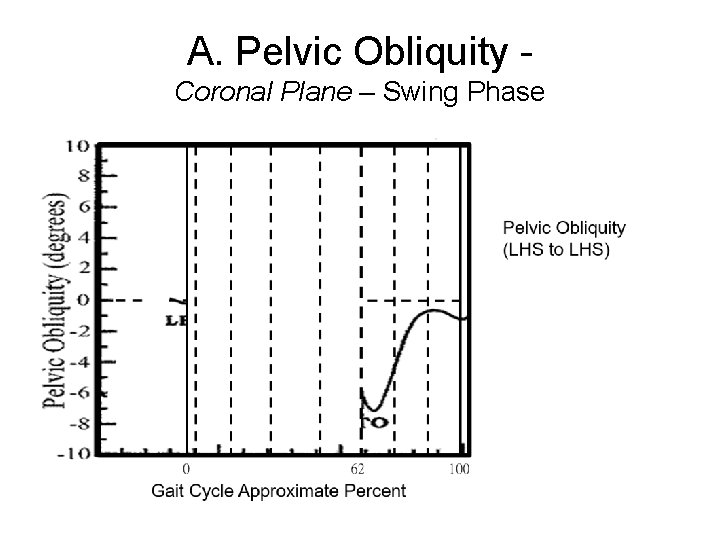
A. Pelvic Obliquity Coronal Plane – Swing Phase
A. Pelvic Obliquity Coronal Plane Motion
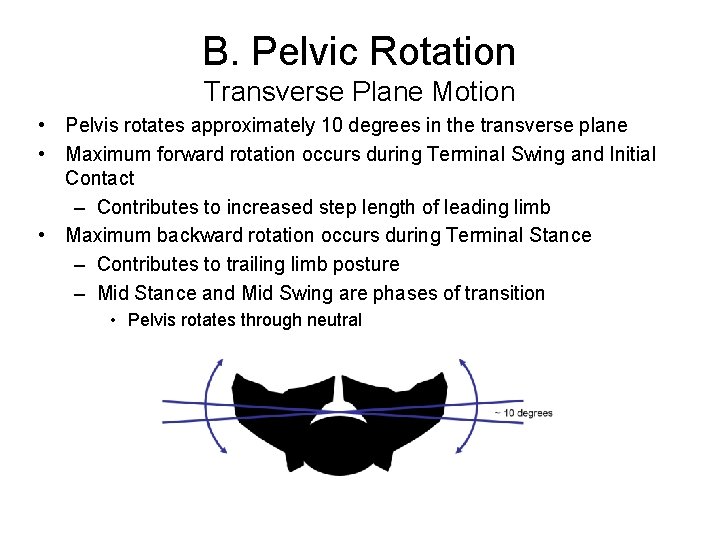
B. Pelvic Rotation Transverse Plane Motion • Pelvis rotates approximately 10 degrees in the transverse plane • Maximum forward rotation occurs during Terminal Swing and Initial Contact – Contributes to increased step length of leading limb • Maximum backward rotation occurs during Terminal Stance – Contributes to trailing limb posture – Mid Stance and Mid Swing are phases of transition • Pelvis rotates through neutral
B. Pelvic Rotation Transverse Plane Motion • No published plots of transverse pelvic rotation….
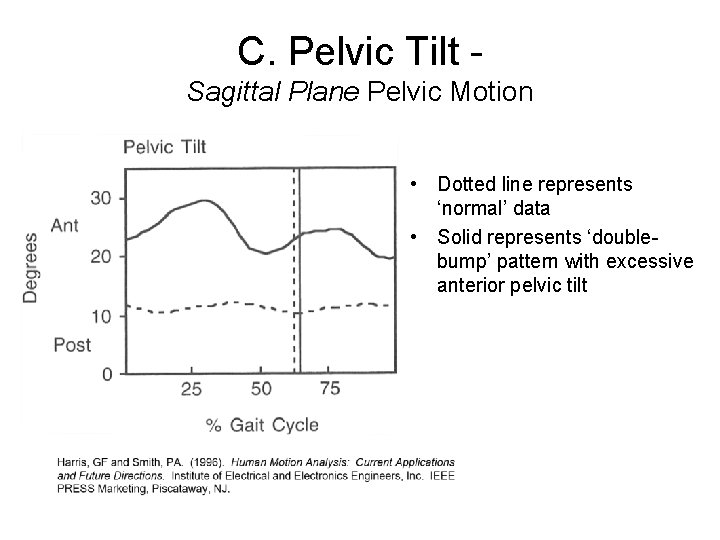
C. Pelvic Tilt Sagittal Plane Pelvic Motion • Approximately 10° anterior tilt (ASIS lower than PSIS) • Observationally, Pelvis appears neutral • Anterior/posterior Pelvic tilt during gait is approximately 4° – Posterior tilt during early single limb support as trunk assumes erect posture – Anterior tilt during terminal swing as trunk flexes anteriorly toward surface and during terminal stance as limb reaches maximum trailing limb posture
C. Pelvic Tilt Sagittal Plane Pelvic Motion • Dotted line represents ‘normal’ data • Solid represents ‘doublebump’ pattern with excessive anterior pelvic tilt
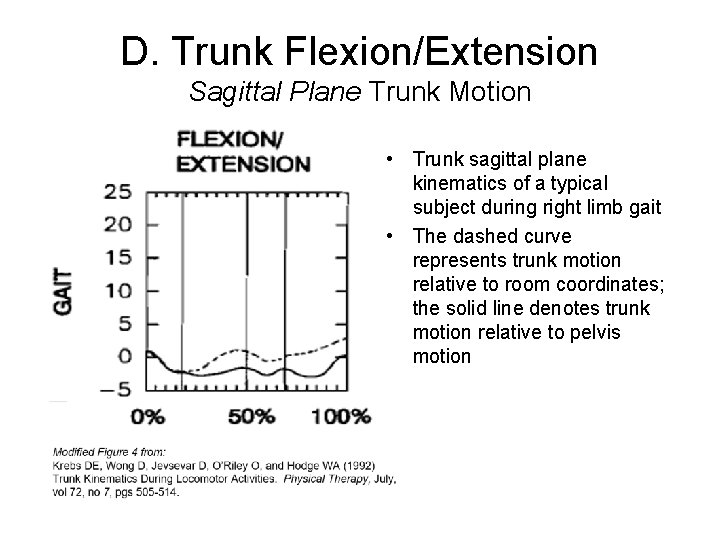
D. Trunk Flexion/Extension Sagittal Plane Trunk Motion • Trunk sagittal plane kinematics of a typical subject during right limb gait • The dashed curve represents trunk motion relative to room coordinates; the solid line denotes trunk motion relative to pelvis motion
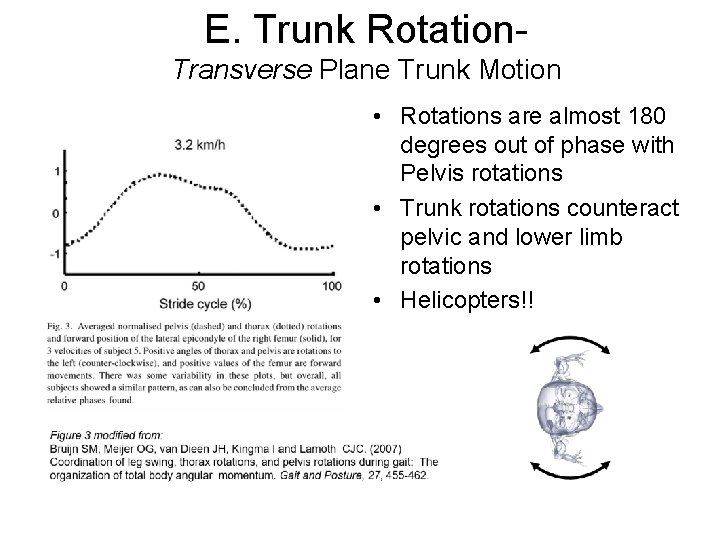
E. Trunk Rotation. Transverse Plane Trunk Motion • Rotations are almost 180 degrees out of phase with Pelvis rotations • Trunk rotations counteract pelvic and lower limb rotations • Helicopters!!
NORMAL TRUNK FUNCTION IN GAIT
Review of Pelvic Coronal and Transverse Plane motion broken down into phases of gait cycle REVIEW PELVIC MOTION
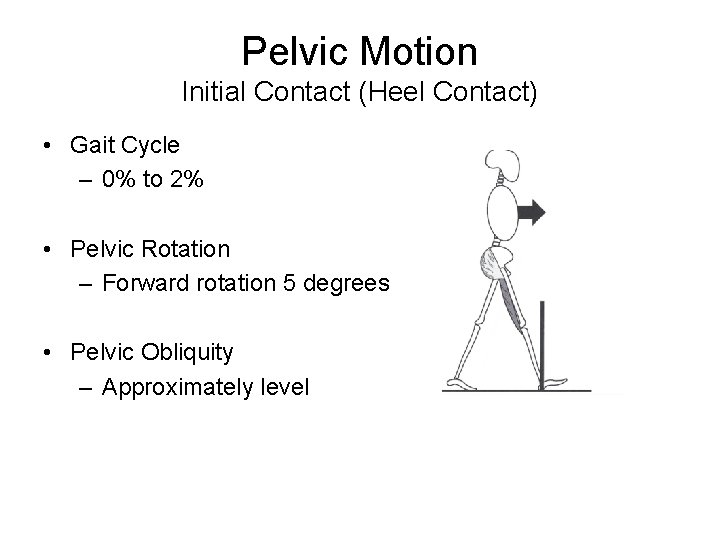
Pelvic Motion Initial Contact (Heel Contact) • Gait Cycle – 0% to 2% • Pelvic Rotation – Forward rotation 5 degrees • Pelvic Obliquity – Approximately level
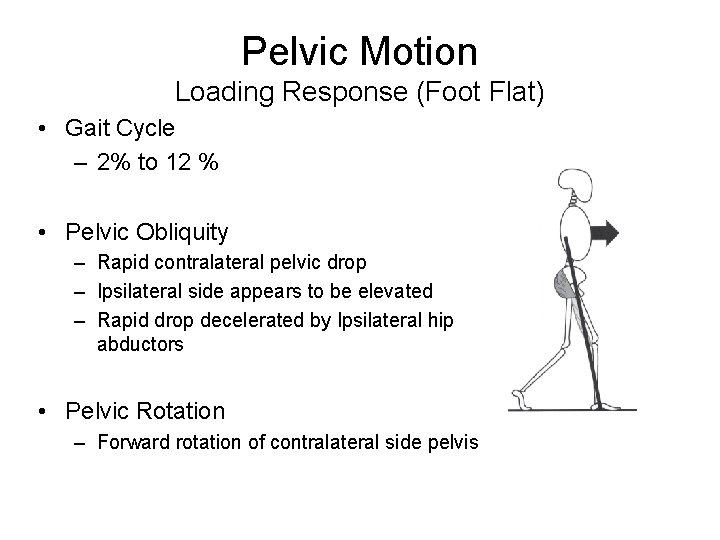
Pelvic Motion Loading Response (Foot Flat) • Gait Cycle – 2% to 12 % • Pelvic Obliquity – Rapid contralateral pelvic drop – Ipsilateral side appears to be elevated – Rapid drop decelerated by Ipsilateral hip abductors • Pelvic Rotation – Forward rotation of contralateral side pelvis
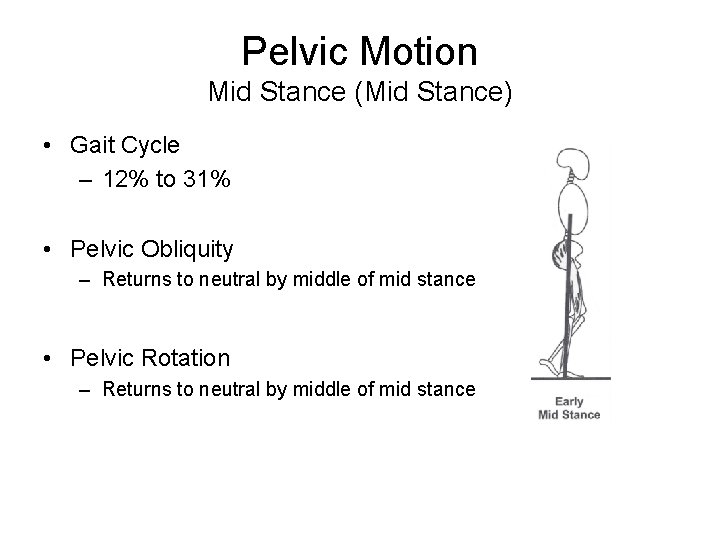
Pelvic Motion Mid Stance (Mid Stance) • Gait Cycle – 12% to 31% • Pelvic Obliquity – Returns to neutral by middle of mid stance • Pelvic Rotation – Returns to neutral by middle of mid stance
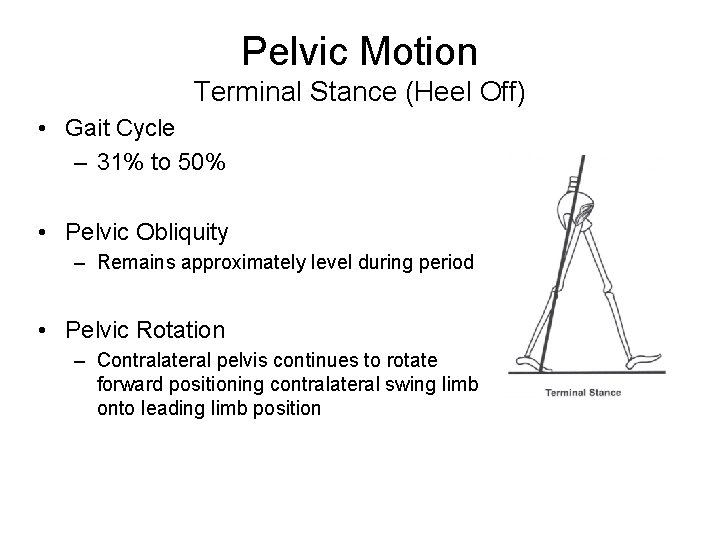
Pelvic Motion Terminal Stance (Heel Off) • Gait Cycle – 31% to 50% • Pelvic Obliquity – Remains approximately level during period • Pelvic Rotation – Contralateral pelvis continues to rotate forward positioning contralateral swing limb onto leading limb position
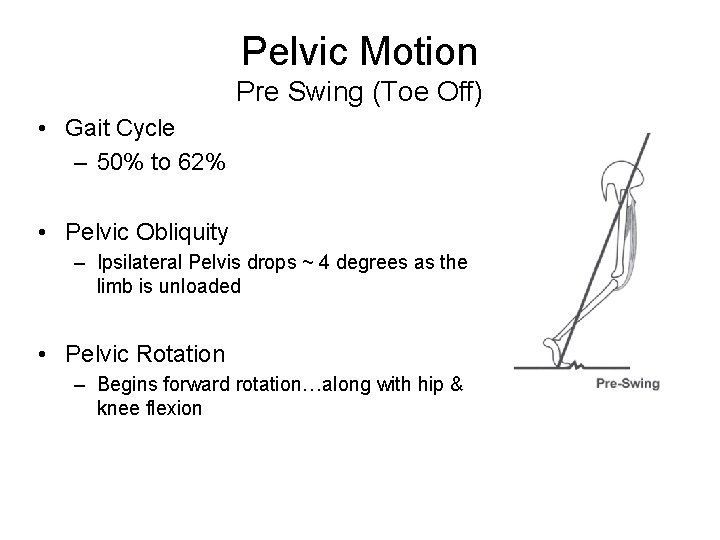
Pelvic Motion Pre Swing (Toe Off) • Gait Cycle – 50% to 62% • Pelvic Obliquity – Ipsilateral Pelvis drops ~ 4 degrees as the limb is unloaded • Pelvic Rotation – Begins forward rotation…along with hip & knee flexion
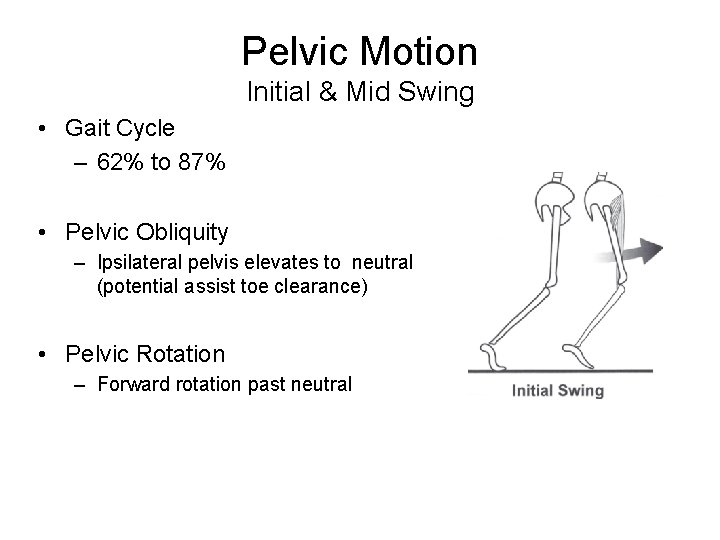
Pelvic Motion Initial & Mid Swing • Gait Cycle – 62% to 87% • Pelvic Obliquity – Ipsilateral pelvis elevates to neutral (potential assist toe clearance) • Pelvic Rotation – Forward rotation past neutral
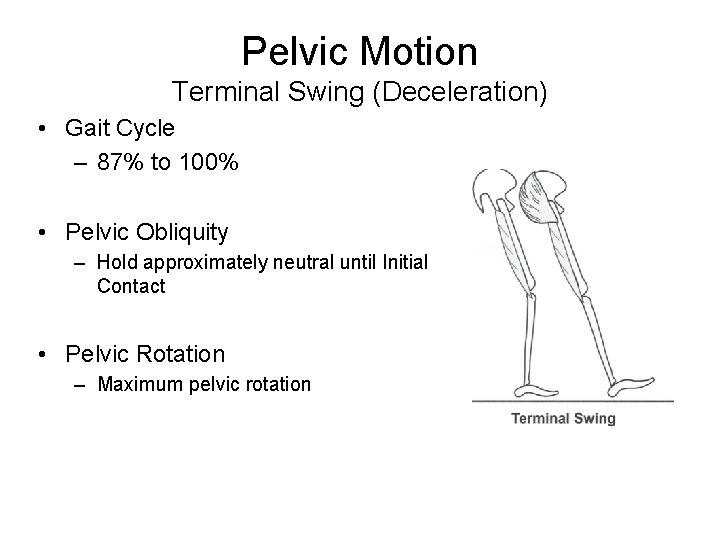
Pelvic Motion Terminal Swing (Deceleration) • Gait Cycle – 87% to 100% • Pelvic Obliquity – Hold approximately neutral until Initial Contact • Pelvic Rotation – Maximum pelvic rotation
The End
Pedorthic Program of Study This workforce product was funded by a grant awarded by the U. S. Department of Labor’s Employment and Training Administration. The product was created by the grantee and does not necessarily reflect the official position of the U. S. Department of Labor. The U. S. Department of Labor makes no guarantees, warranties, or assurances of any kind, express or implied, with respect to such information, including any information on linked sites and including, but not limited to, accuracy of the information or its completeness, timeliness, usefulness, adequacy, continued availability, or ownership. Produced 2016. HOPE Careers Consortium is a partnership of five institutions of higher education that is building exciting new programs that will provide valuable career education and training in the Orthotics, Prosthetics, and Pedorthics (O&P) sector. The five institutions are: Baker College—Flint, Michigan; Century College—White Bear Lake, Minnesota; Oklahoma State University Institute of Technology— Okmulgee, Oklahoma; Spokane Falls Community College—Spokane, Washington; and St. Petersburg College—St. Petersburg, Florida. Although the authoring institution of this educational resource has made every effort to ensure that the information presented is correct, the institution assumes no liability to any party for any loss, damage, or disruption caused by errors or omissions. Except where otherwise noted, this work by St. Petersburg College is licensed under the Creative Commons Attribution 4. 0 International License. To view a copy of this license, click on the following link: Creative Commons Licenses 4. 0.