
Module 4 Minimizing the Pollutant Load Stormwater System

- Slides: 43
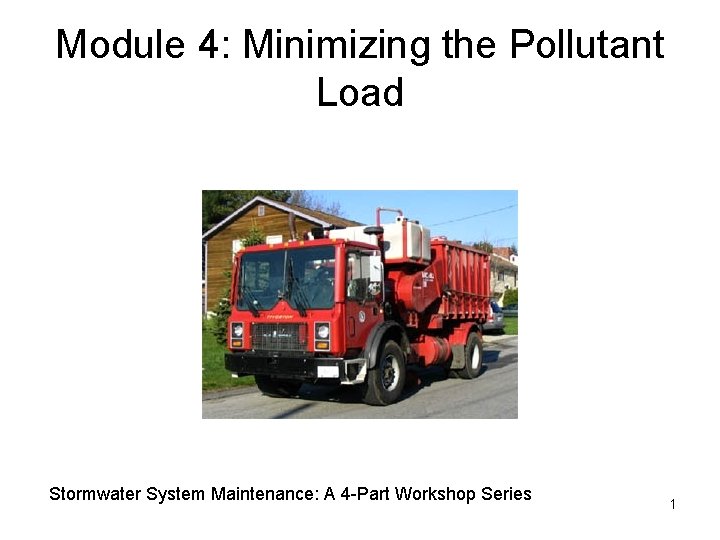
Module 4: Minimizing the Pollutant Load Stormwater System Maintenance: A 4 -Part Workshop Series 1
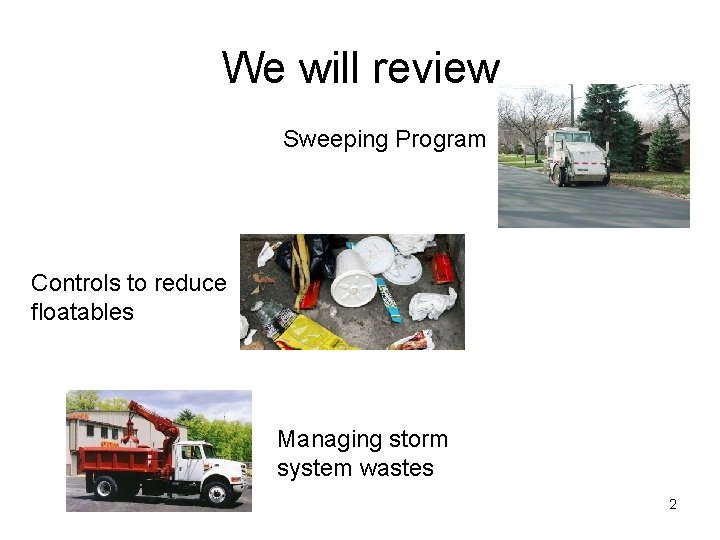
We will review Sweeping Program Controls to reduce floatables Managing storm system wastes 2
We will • Review the goals as written in the General Permit • Clarify or expand as needed • Review what we are doing now • Review how we report our activities • Look for ways to improve our effectiveness and/or efficiency 3
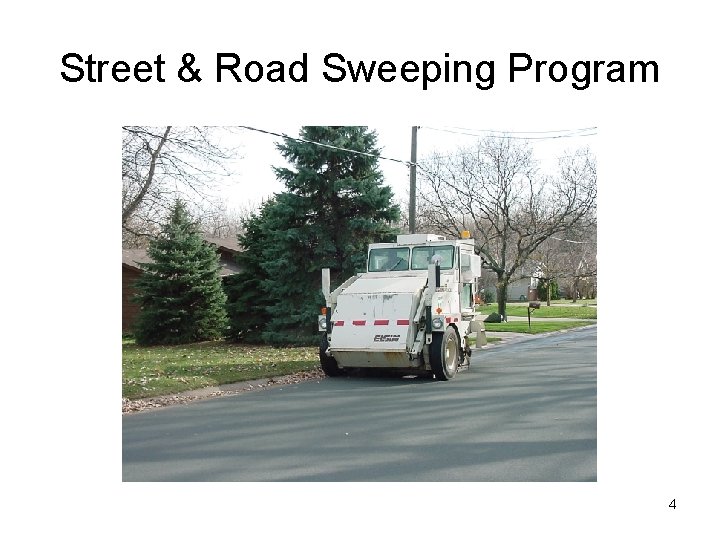
Street & Road Sweeping Program 4
O&M Program l Required Goal – Procedures for regular street/road sweeping program l l Annual sweeping Change frequency based on records Complaints – Filled catch basins – Plugged outfalls – 5
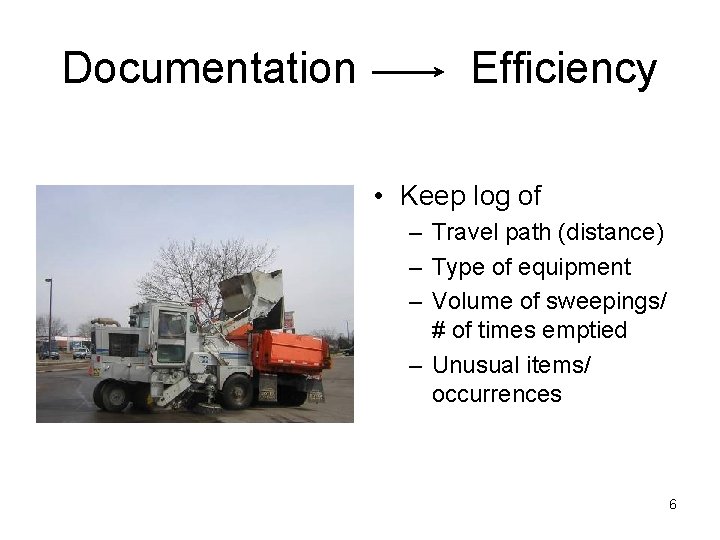
Documentation Efficiency • Keep log of – Travel path (distance) – Type of equipment – Volume of sweepings/ # of times emptied – Unusual items/ occurrences 6
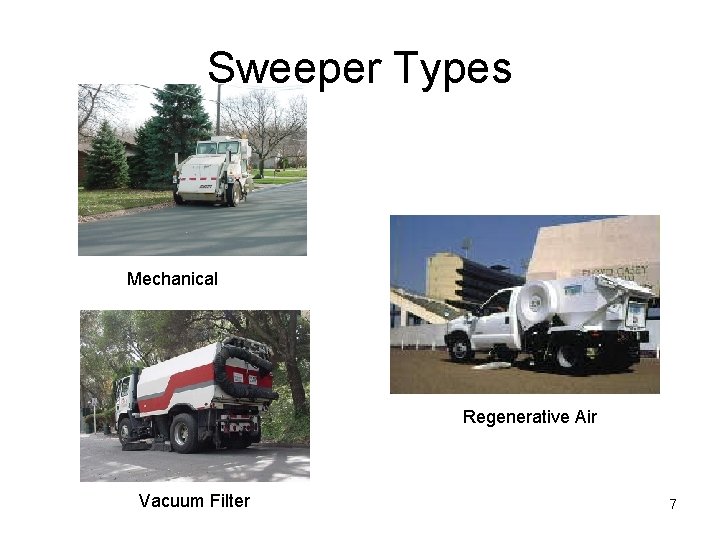
Sweeper Types Mechanical Regenerative Air Vacuum Filter 7
Our Sweeping Procedures • Maps • Sweeping frequency/schedule • Equipment • Forms and/or logs 8
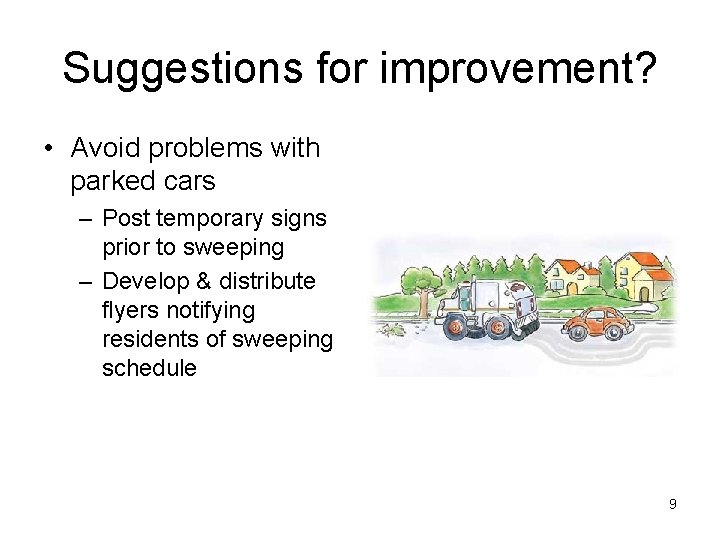
Suggestions for improvement? • Avoid problems with parked cars – Post temporary signs prior to sweeping – Develop & distribute flyers notifying residents of sweeping schedule 9
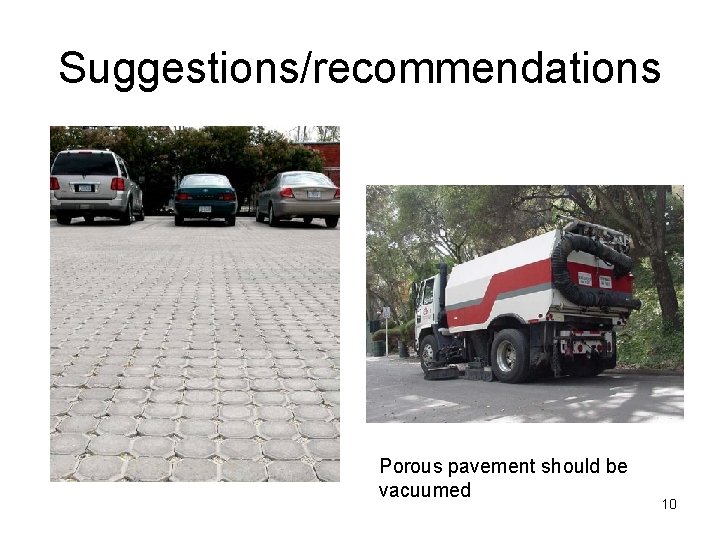
Suggestions/recommendations Porous pavement should be vacuumed 10
Scheduling Suggestions • Hit areas closest to sensitive waters earliest in spring • Coordinate with catch basin, roadside inspections • Try to coordinate with Water Department so sweeping is shortly before hydrant flushing when catch basins are near by 11
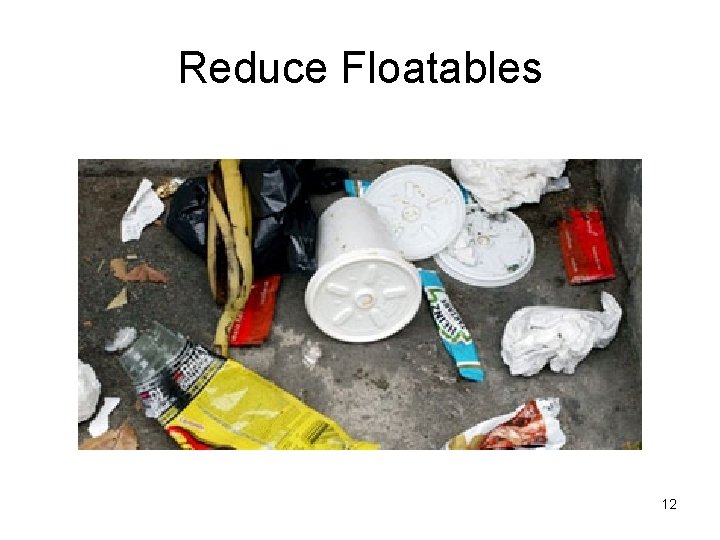
Reduce Floatables 12
O&M Program l Required Goal – Maintenance activities for floatables l l l 13 Schedules Long-term inspection procedures Control options
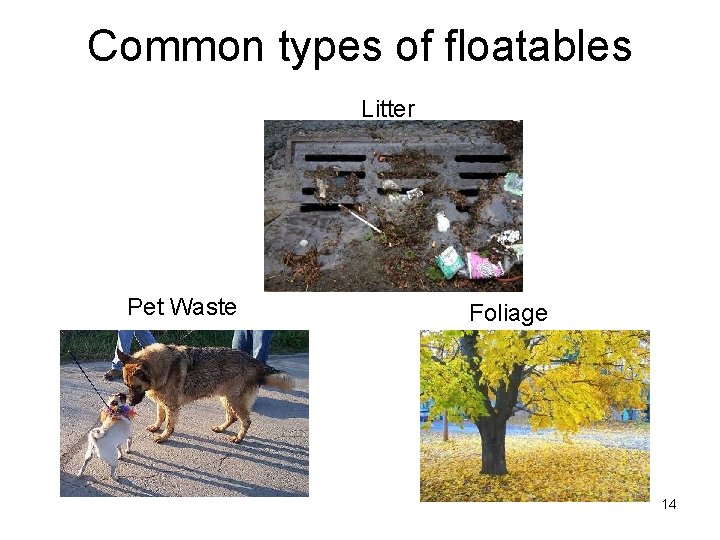
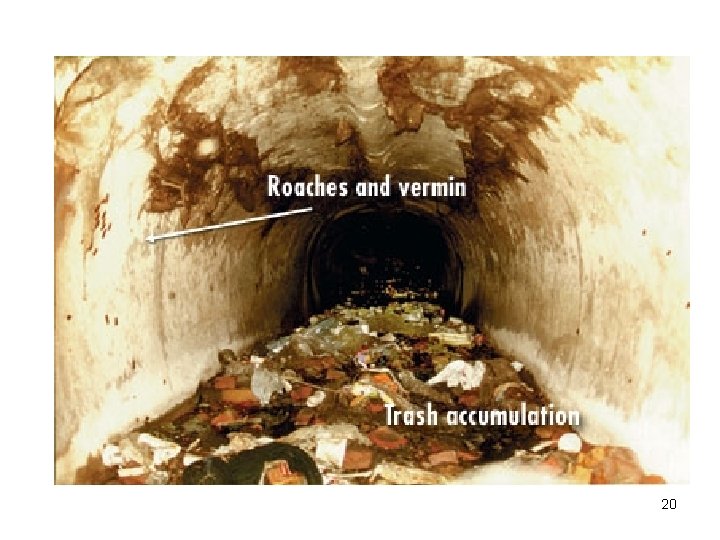
Common types of floatables Litter Pet Waste Foliage 14
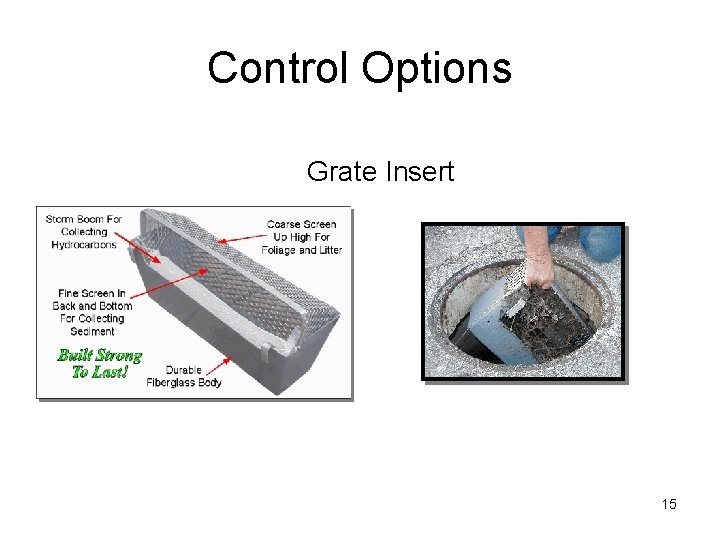
Control Options Grate Insert 15
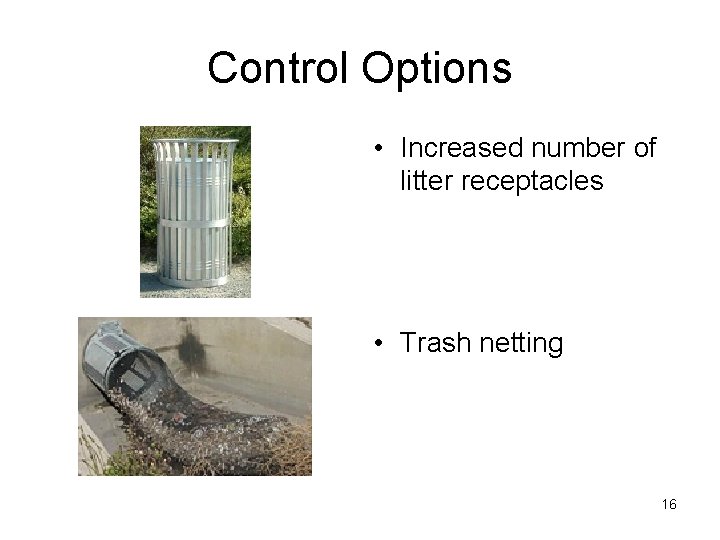
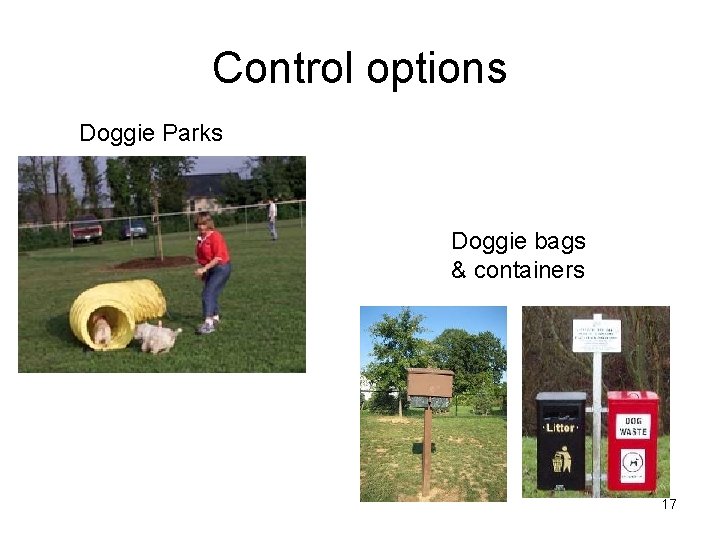
Control Options • Increased number of litter receptacles • Trash netting 16
Control options Doggie Parks Doggie bags & containers 17
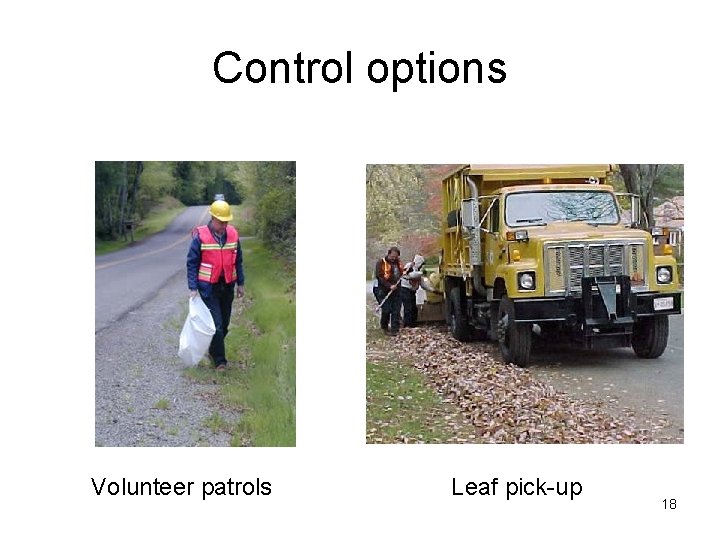
Control options Volunteer patrols Leaf pick-up 18
Our Procedures for Floatables • Maps • Schedule • Equipment • Forms and/or logs 19
20
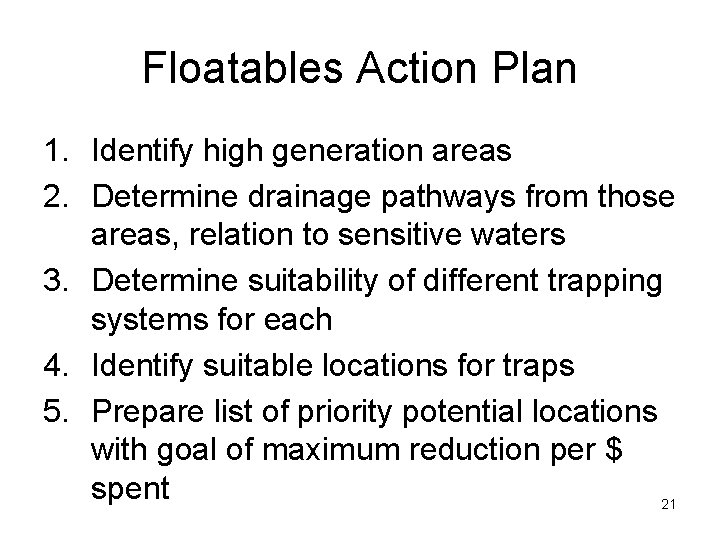
Floatables Action Plan 1. Identify high generation areas 2. Determine drainage pathways from those areas, relation to sensitive waters 3. Determine suitability of different trapping systems for each 4. Identify suitable locations for traps 5. Prepare list of priority potential locations with goal of maximum reduction per $ spent 21
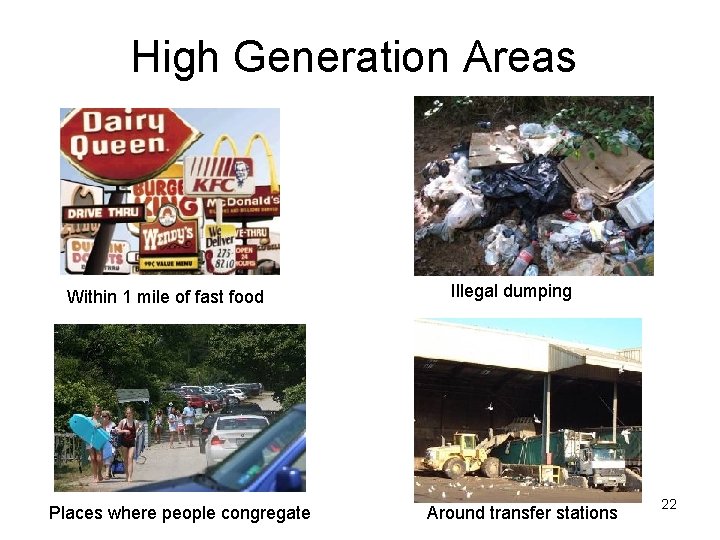
High Generation Areas Within 1 mile of fast food Places where people congregate Illegal dumping Around transfer stations 22
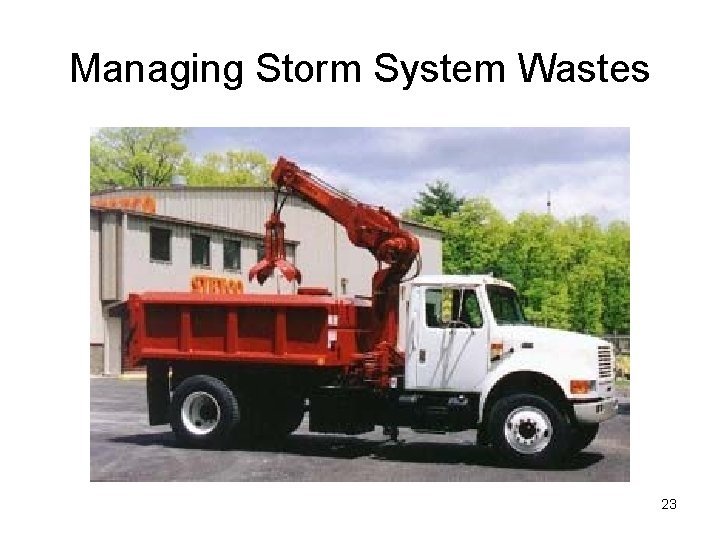
Managing Storm System Wastes 23
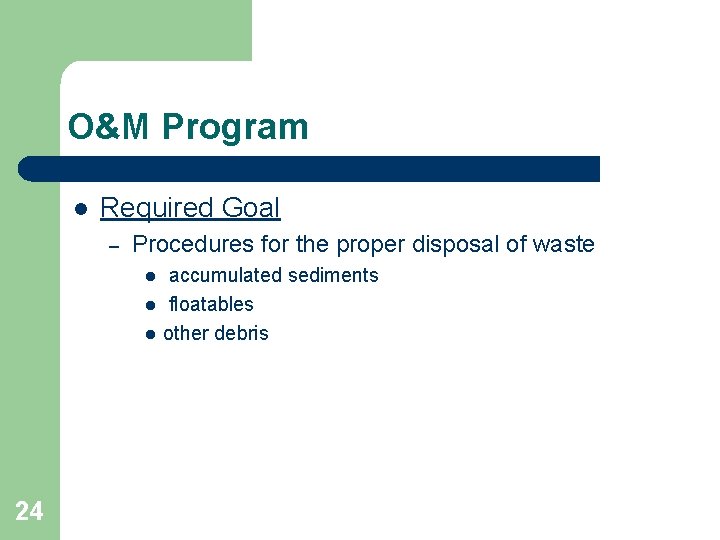
O&M Program l Required Goal – Procedures for the proper disposal of waste l l l 24 accumulated sediments floatables other debris
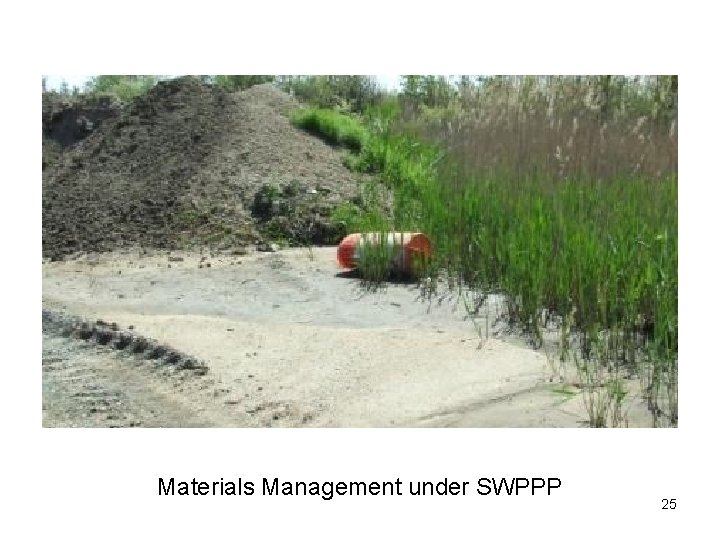
Materials Management under SWPPP 25
Types of Wastes • • • Leaves/vegetation Litter/floatables Sweepings Catch Basin cleanings Sediment from ditches Sediment from structural BMPs 26
Keep in mind potential for • Hazardous waste (especially petroleum products) • Sharps/biohazards • Invasive species 27
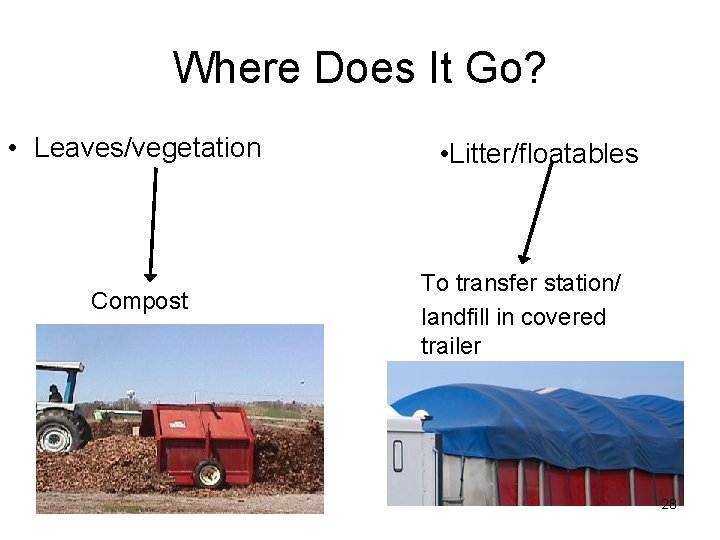
Where Does It Go? • Leaves/vegetation Compost • Litter/floatables To transfer station/ landfill in covered trailer 28
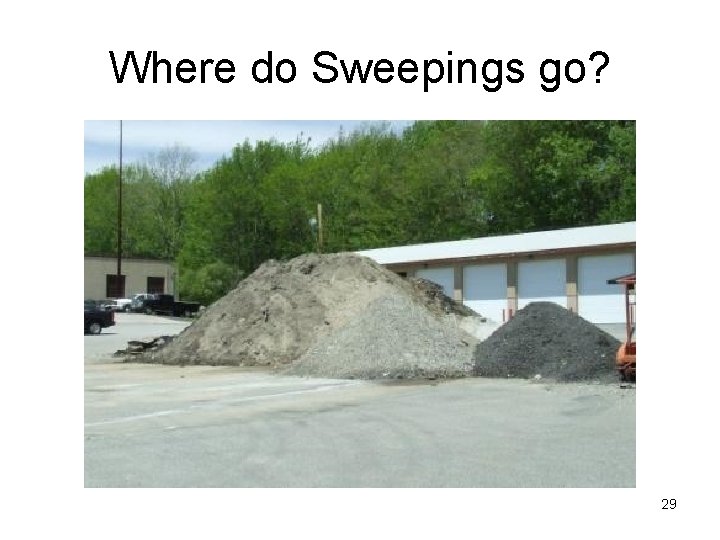
Where do Sweepings go? 29
Acceptable Uses for Sweepings • Landfill cover material (may require screening) • Base course to be covered with asphalt or concrete • Backfill for drain pipes, culverts • Mixed with new sand/salt and reapplied 30
Resource Recovery says • Will use as alternate cover – Must be screened – No fee for municipalities • In past year, received from – RIDOT – 12 municipalities 31
Our Procedures • Uses of sweepings • Temporary storage • Screening equipment • Forms and/or logs 32
Sometimes acceptable use • Clean fill, but… – Analytical testing for petroleum hydrocarbon content, Toxicity Characteristic Leaching Procedure, total lead content must prove no potential threat to human health or environment – Sampling plan and analytical results must be submitted to Office of Waste Management for review & approval 33
Recommendations for Temporary storage of sweepings • Area should be paved • At least 100 feet from wells, wetlands or watercourses • Contained and covered! • Recommended maximum height of 15’ • Size to store 1/3 to ½ avg. amount of sand purchased 34
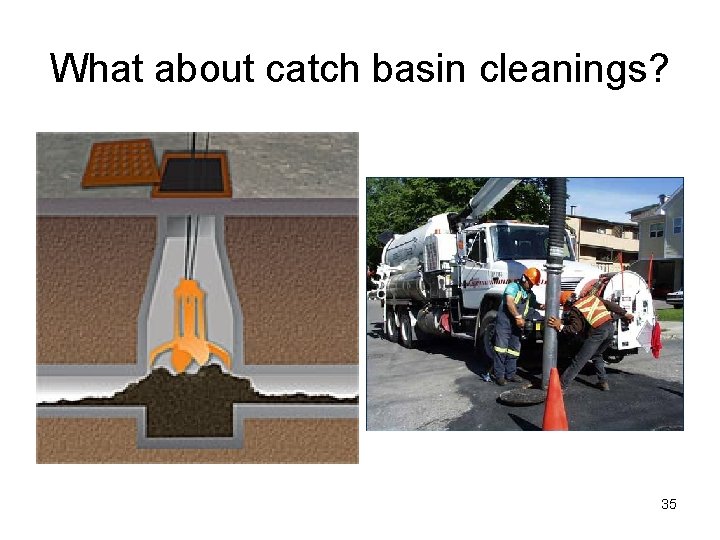
What about catch basin cleanings? 35
Our Procedures • Transport equipment • Temporary storage location • Dewatering • Testing & uses of cleanings • Forms and/or logs 36
Dewatering options • Vactor trucks decant to sanitary sewer (with permission) • Drying beds/dewatering facilities (may need separate RIPDES permit) 37
Dewatered solids • To landfill – Resource Recovery charges $15/ton (municipal fee) • Or test, apply to RIDEM Office of Waste Management for other uses 38
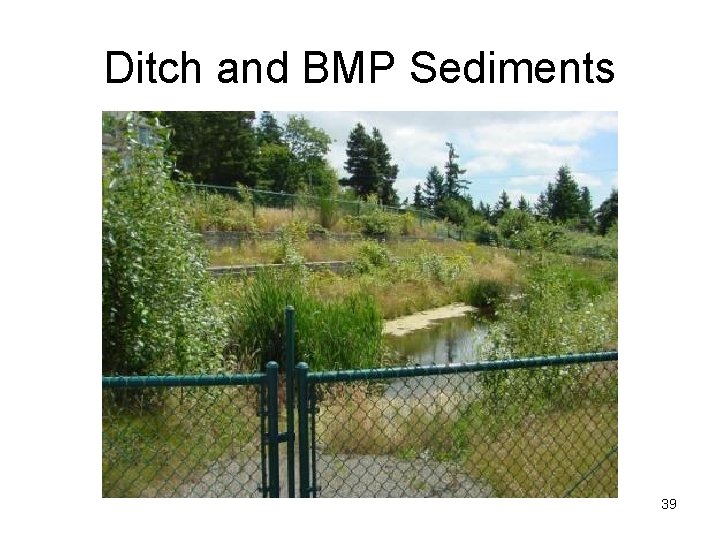
Ditch and BMP Sediments 39
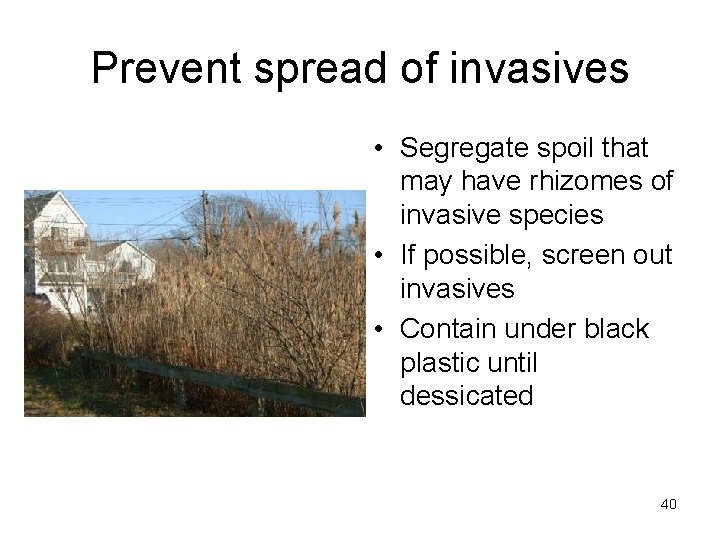
Prevent spread of invasives • Segregate spoil that may have rhizomes of invasive species • If possible, screen out invasives • Contain under black plastic until dessicated 40
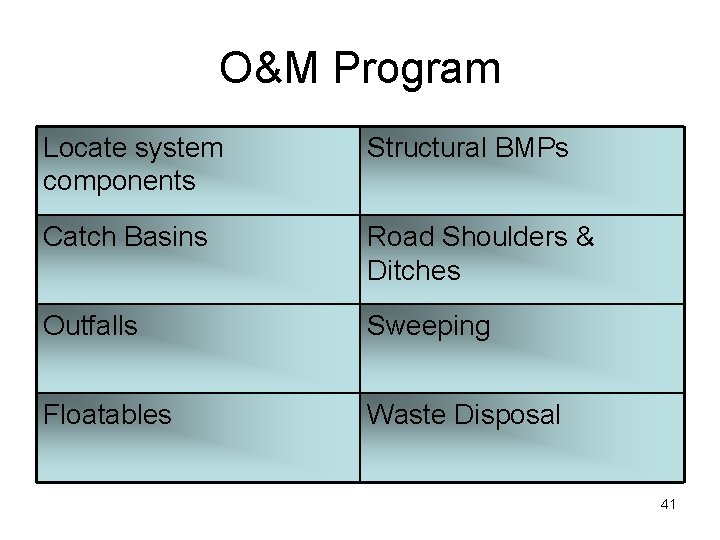
O&M Program Locate system components Structural BMPs Catch Basins Road Shoulders & Ditches Outfalls Sweeping Floatables Waste Disposal 41
42
Stormwater System Maintenance: Employee Training Brought to you by: This program was developed by the Southern Rhode Island Conservation District in partnership with the URI Cooperative Extension RI NEMO Program and the Rhode Island T 2 Center. Funding was provided by the RI Department of Environmental 43 Management and the RI Department of Transportation under the Phase II Stormwater Education and Outreach Project.