
Module 4 Manage your emotions and personal relationships


- Slides: 14
Module 4 Manage your emotions and personal relationships 1
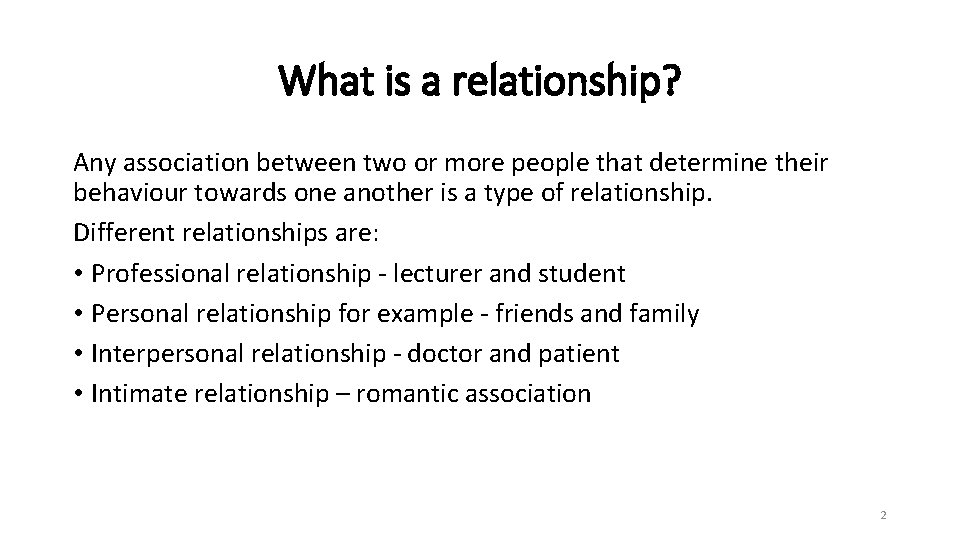
What is a relationship? Any association between two or more people that determine their behaviour towards one another is a type of relationship. Different relationships are: • Professional relationship - lecturer and student • Personal relationship for example - friends and family • Interpersonal relationship - doctor and patient • Intimate relationship – romantic association 2
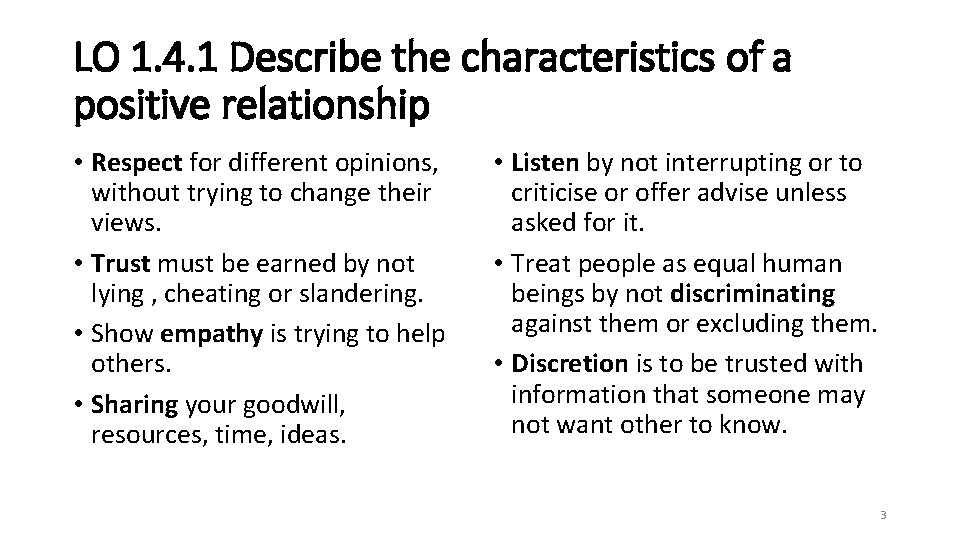
LO 1. 4. 1 Describe the characteristics of a positive relationship • Respect for different opinions, without trying to change their views. • Trust must be earned by not lying , cheating or slandering. • Show empathy is trying to help others. • Sharing your goodwill, resources, time, ideas. • Listen by not interrupting or to criticise or offer advise unless asked for it. • Treat people as equal human beings by not discriminating against them or excluding them. • Discretion is to be trusted with information that someone may not want other to know. 3
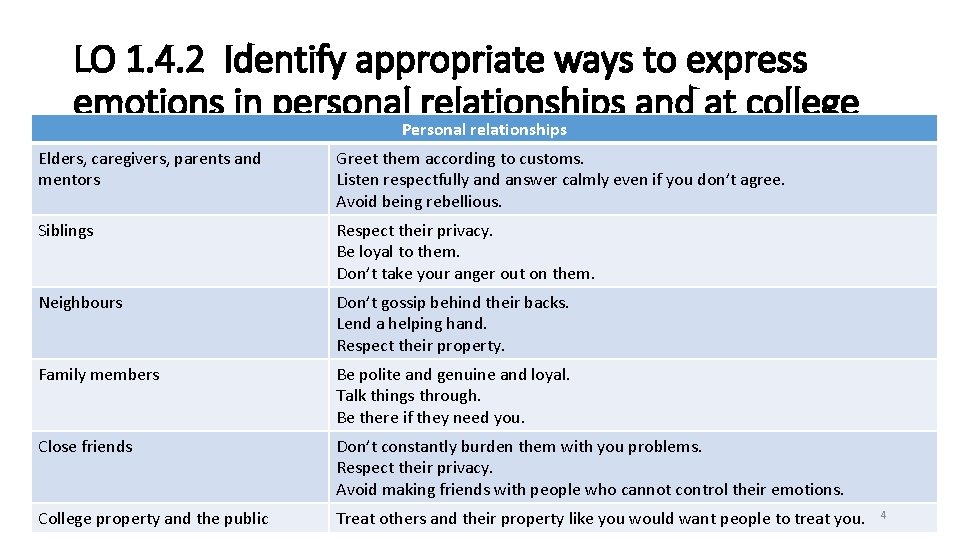
LO 1. 4. 2 Identify appropriate ways to express emotions in personal. Personal relationships and at college relationships Elders, caregivers, parents and mentors Greet them according to customs. Listen respectfully and answer calmly even if you don’t agree. Avoid being rebellious. Siblings Respect their privacy. Be loyal to them. Don’t take your anger out on them. Neighbours Don’t gossip behind their backs. Lend a helping hand. Respect their property. Family members Be polite and genuine and loyal. Talk things through. Be there if they need you. Close friends Don’t constantly burden them with you problems. Respect their privacy. Avoid making friends with people who cannot control their emotions. College property and the public Treat others and their property like you would want people to treat you. 4
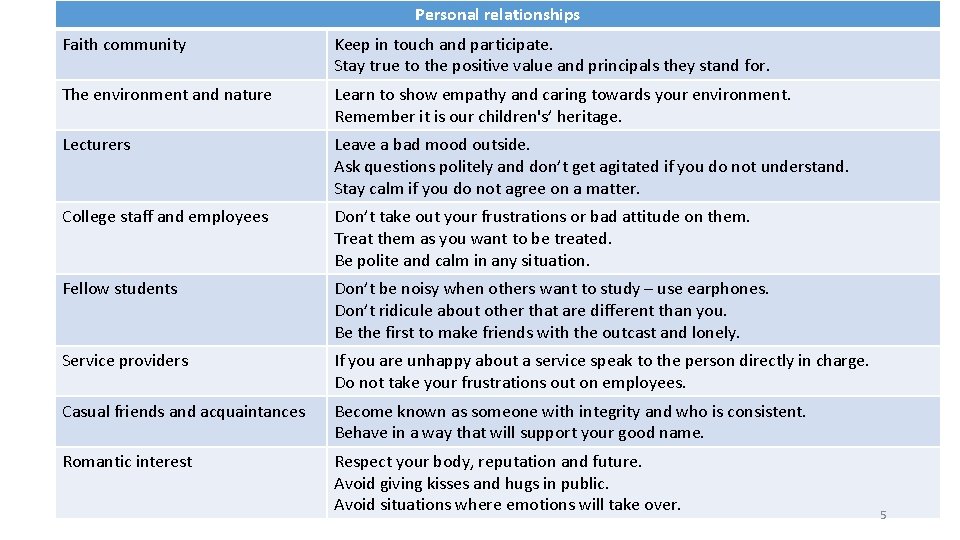
Personal relationships Faith community Keep in touch and participate. Stay true to the positive value and principals they stand for. The environment and nature Learn to show empathy and caring towards your environment. Remember it is our children's’ heritage. Lecturers Leave a bad mood outside. Ask questions politely and don’t get agitated if you do not understand. Stay calm if you do not agree on a matter. College staff and employees Don’t take out your frustrations or bad attitude on them. Treat them as you want to be treated. Be polite and calm in any situation. Fellow students Don’t be noisy when others want to study – use earphones. Don’t ridicule about other that are different than you. Be the first to make friends with the outcast and lonely. Service providers If you are unhappy about a service speak to the person directly in charge. Do not take your frustrations out on employees. Casual friends and acquaintances Become known as someone with integrity and who is consistent. Behave in a way that will support your good name. Romantic interest Respect your body, reputation and future. Avoid giving kisses and hugs in public. Avoid situations where emotions will take over. 5
1. 4. 3 Explain how to deal constructively with emotions such as anger, disappointment and sadness Disappointment: • Learn to be content and know that losses are not the end of the world. • Keep in mind that people with fewer privileges carry on courageously. • If tests of one's patience or endurance (trials) comes across your path make the choice to become better and not bitter. • If been treated unfairly formulate the facts clearly and to the right people. • Take your case to a higher level if you are not having success. For instance to a newspaper or a post on a blog. 6
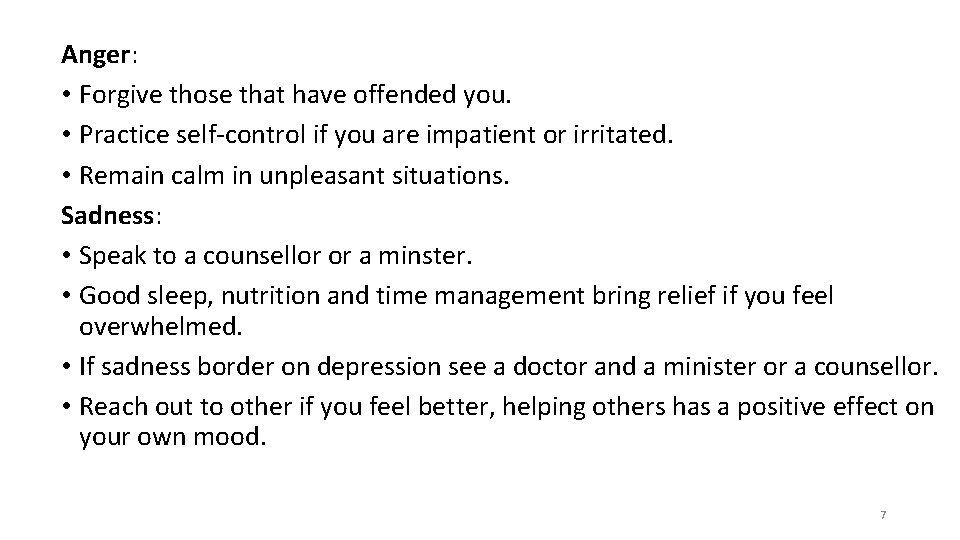
Anger: • Forgive those that have offended you. • Practice self-control if you are impatient or irritated. • Remain calm in unpleasant situations. Sadness: • Speak to a counsellor or a minster. • Good sleep, nutrition and time management bring relief if you feel overwhelmed. • If sadness border on depression see a doctor and a minister or a counsellor. • Reach out to other if you feel better, helping others has a positive effect on your own mood. 7
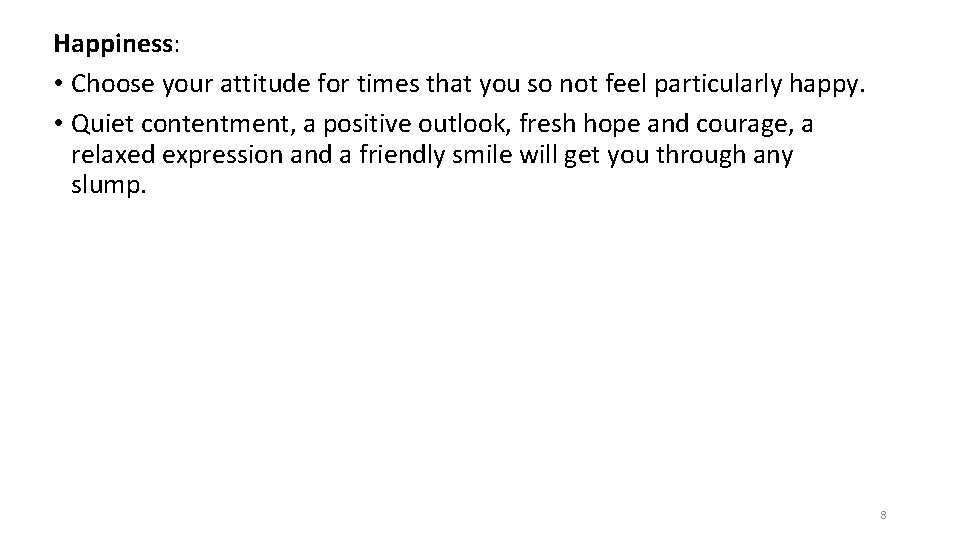
Happiness: • Choose your attitude for times that you so not feel particularly happy. • Quiet contentment, a positive outlook, fresh hope and courage, a relaxed expression and a friendly smile will get you through any slump. 8
What are healthy relationships? It is constructive and beneficial for not only you, but to the other person 9
1. 4. 4 Explore strategies to establish constructive and beneficial relationships 1. 2. 3. 4. 5. 6. 7. 8. 9. Prevention – Be very careful with whom you associate. Boundaries – Establish boundaries based on your values. Social skills – Be polite, punctual, discreet, considerate and respectful. Communication – Listen attentively, respect different viewpoints and show understanding. Conflict – Always keep your emotions under control and handle difficult situations immediately. Tolerance – Be tolerant of other cultures and individual differences. Attitude – Be happy for others and keep a positive attitude. Reciprocation (to give back) – Share goodwill, resources and experiences. Responsibility – Take responsibility for your actions and their consequences. 10
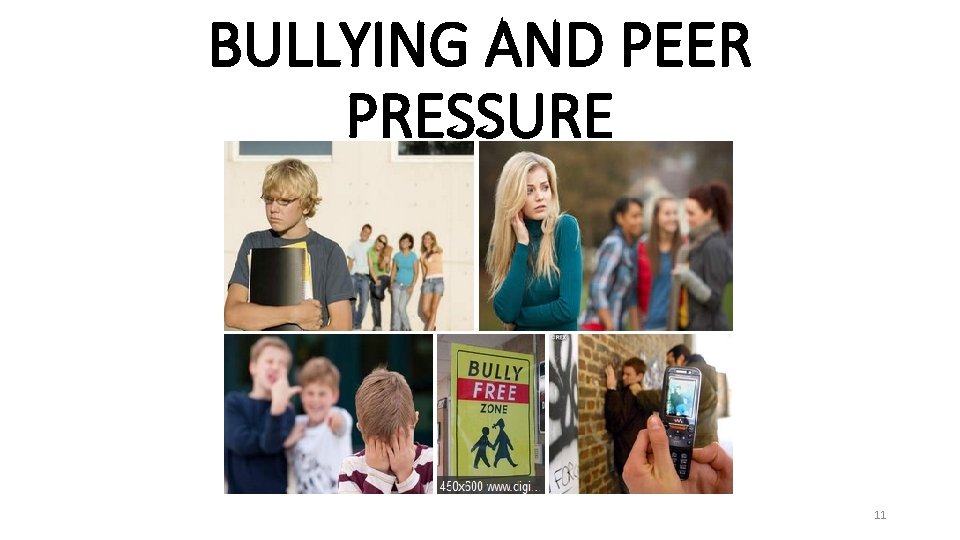
BULLYING AND PEER PRESSURE 11
What is peer pressure and bullying? Peer pressure is the influence applied on someone by his/her peer group. The person may feel pressurised to conform to their expectations to be accepted by them or to impress them. A peer group are people that are more or less the same age, the same social standing or with a shared interest. Bullies are individuals who intentionally use physical strength or verbal abuse to intimidate others who are smaller, weaker or different. Cyber bullying involves using electronic media to repeatedly to harass or express unfriendliness to someone. 12
LO 1. 4. 5 Describe how to resist negative peer pressure and bullying 1. Understand where the bully comes from, bullies are driven by shame and a low self-esteem. 2. Don’t feel pressurised into feeling shame. Be proud of who you are. 3. Stay calm and look confident in a confrontation. Don’t retaliate. 4. Talk to and get support from fellow students, family members or a lecturer. 5. Block a cyber-bully, save the evidence and do not pass the message or send messages of your own to the bully. 6. Learn to say ’no’ and choose friends with the same values as yours. 13
LO 1. 4. 6 Identify strategies to cope with the challenges of being a college student 1. 2. 3. 4. 5. 6. 7. Resilience – Focus on your strengths and goal and get support from your family and friends if you have to recover quickly from difficult situations. Positive attitude – Believe that difficult situations will pass and everything will work out at the end. Remind yourself how far you have come already. Decision-making skills – Weigh up the pros and cons and ask people who you can trust if you have to make a decision. Stay away from peer pressure. Coping with independence – Take responsibility and have self-control over your time and budget, how you socialize and follow a routine during the week. Coping with change – Eat well, sleep enough and exercise to cope with stress. Change is necessary for growth. Privacy – Set boundaries and report any form of abuse. Respect your own body and possessions. Safety – Avoid traveling or walking alone. Don’t be careless or advertise your possessions or body. 14