
Module 4 Continuum of Responses to Behavioral Error

Module 4: Continuum of Responses to Behavioral Error Section 4: Implicit Bias
The Wisconsin Rt. I Center/Wisconsin PBIS Network (CFDA #84. 027) acknowledges the support of the Wisconsin Department of Public Instruction in the development of this presentation and for the continued support of this federally-funded grant program. There are no copyright restrictions on this document; however, please credit the Wisconsin DPI and support of federal funds when copying all or part of this material.
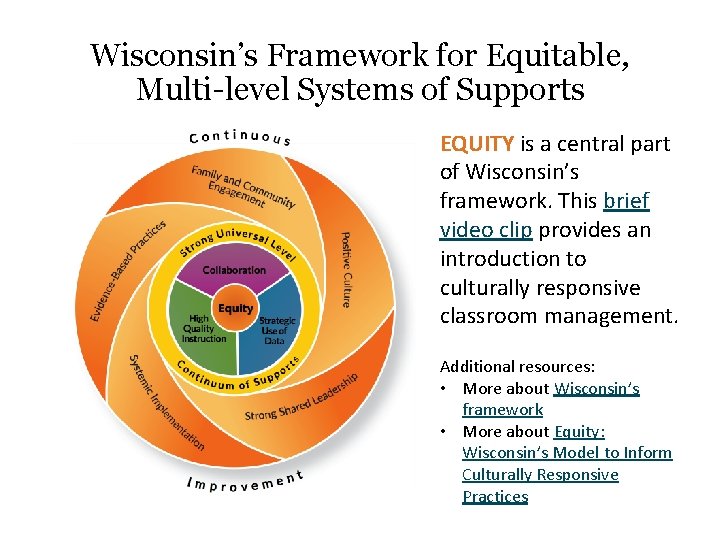
Wisconsin’s Framework for Equitable, Multi-level Systems of Supports EQUITY is a central part of Wisconsin’s framework. This brief video clip provides an introduction to culturally responsive classroom management. Additional resources: • More about Wisconsin’s framework • More about Equity: Wisconsin’s Model to Inform Culturally Responsive Practices
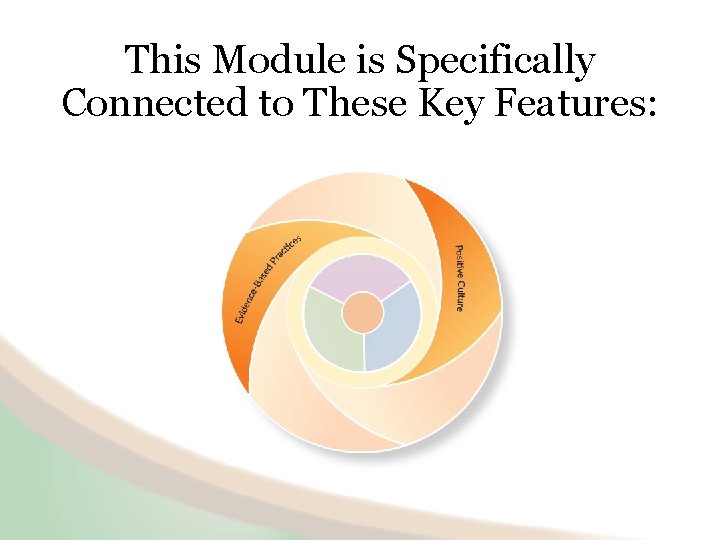
This Module is Specifically Connected to These Key Features:
Objectives and Outcomes As a result of viewing this module, participants will: Know and Understand: • Understand the hostility cycle • Understand how implicit bias impacts teacher decisions in the classroom Do: • Learn to distinguish between cultural mismatch and “wrong” behavior • Identify empathic defusing statements reflective of your voice • Identify personal vulnerable decision points • Test your mastery on Kahoot
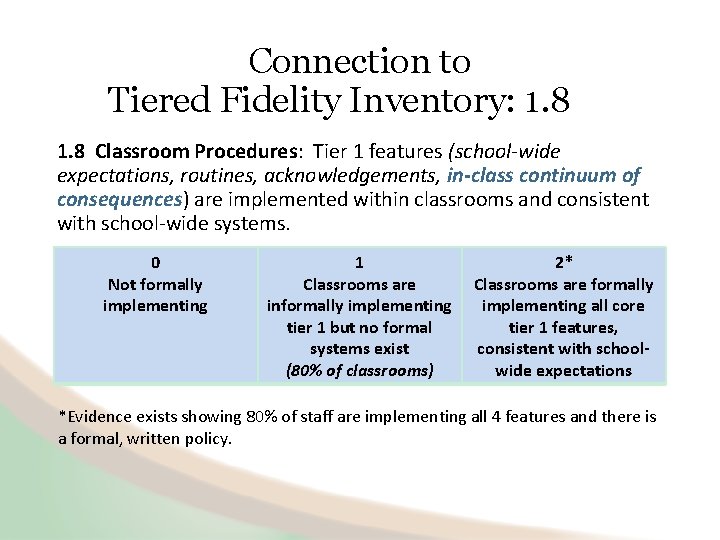
Connection to Tiered Fidelity Inventory: 1. 8 Classroom Procedures: Tier 1 features (school-wide expectations, routines, acknowledgements, in-class continuum of consequences) are implemented within classrooms and consistent with school-wide systems. 0 Not formally implementing 1 Classrooms are informally implementing tier 1 but no formal systems exist (80% of classrooms) 2* Classrooms are formally implementing all core tier 1 features, consistent with schoolwide expectations *Evidence exists showing 80% of staff are implementing all 4 features and there is a formal, written policy.
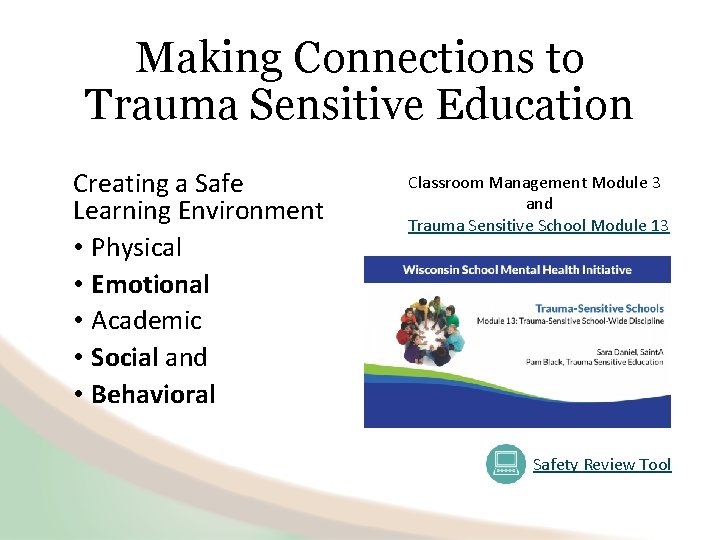
Making Connections to Trauma Sensitive Education Creating a Safe Learning Environment • Physical • Emotional • Academic • Social and • Behavioral Classroom Management Module 3 and Trauma Sensitive School Module 13 Safety Review Tool
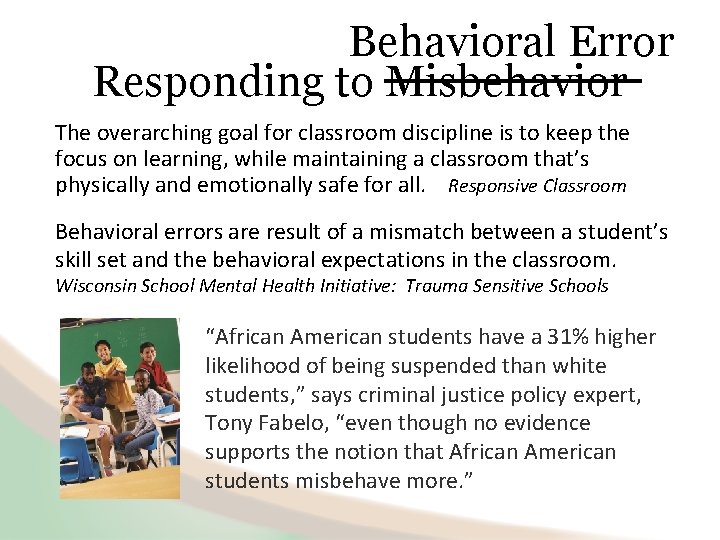
Behavioral Error Responding to Misbehavior The overarching goal for classroom discipline is to keep the focus on learning, while maintaining a classroom that’s physically and emotionally safe for all. Responsive Classroom Behavioral errors are result of a mismatch between a student’s skill set and the behavioral expectations in the classroom. Wisconsin School Mental Health Initiative: Trauma Sensitive Schools “African American students have a 31% higher likelihood of being suspended than white students, ” says criminal justice policy expert, Tony Fabelo, “even though no evidence supports the notion that African American students misbehave more. ”
Activity 4. 5 A What “hooks” you as an educator? Individual reflection:
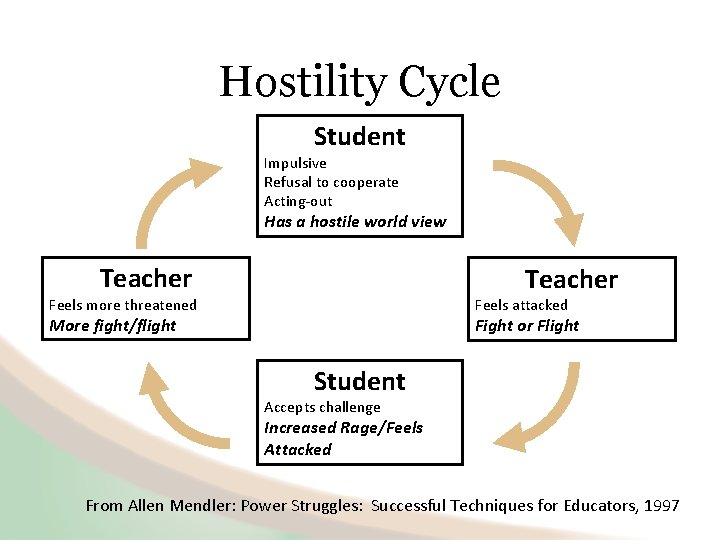
Hostility Cycle Student Impulsive Refusal to cooperate Acting-out Has a hostile world view Teacher Feels more threatened Feels attacked More fight/flight Fight or Flight Student Accepts challenge Increased Rage/Feels Attacked From Allen Mendler: Power Struggles: Successful Techniques for Educators, 1997
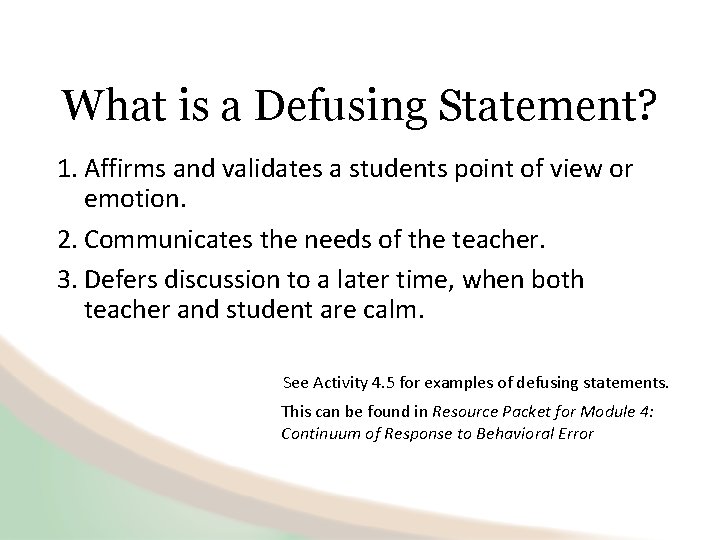
What is a Defusing Statement? 1. Affirms and validates a students point of view or emotion. 2. Communicates the needs of the teacher. 3. Defers discussion to a later time, when both teacher and student are calm. See Activity 4. 5 for examples of defusing statements. This can be found in Resource Packet for Module 4: Continuum of Response to Behavioral Error
Activity 4. 5 B What Statements Work for You? • Read the empathic, defusing statements, and circle a few you would use. • Feel free to edit to make the statement validating and affirming, and to reflect your voice. • Share Individual reflection:
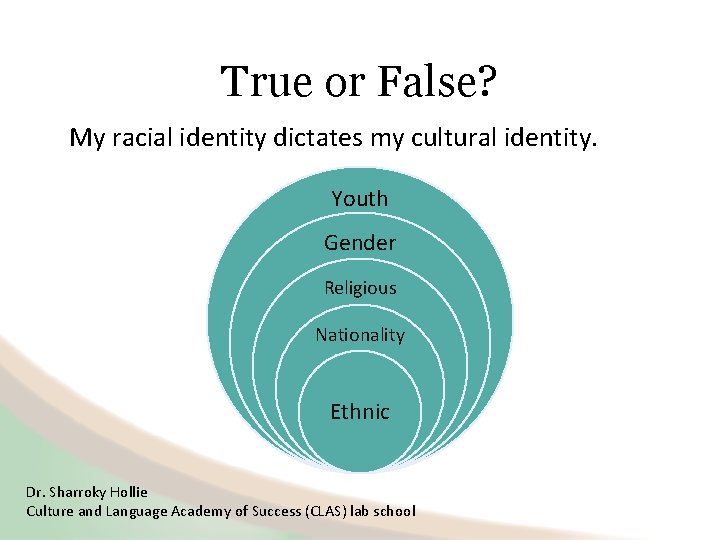
True or False? My racial identity dictates my cultural identity. Youth Gender Religious Nationality Ethnic Dr. Sharroky Hollie Culture and Language Academy of Success (CLAS) lab school
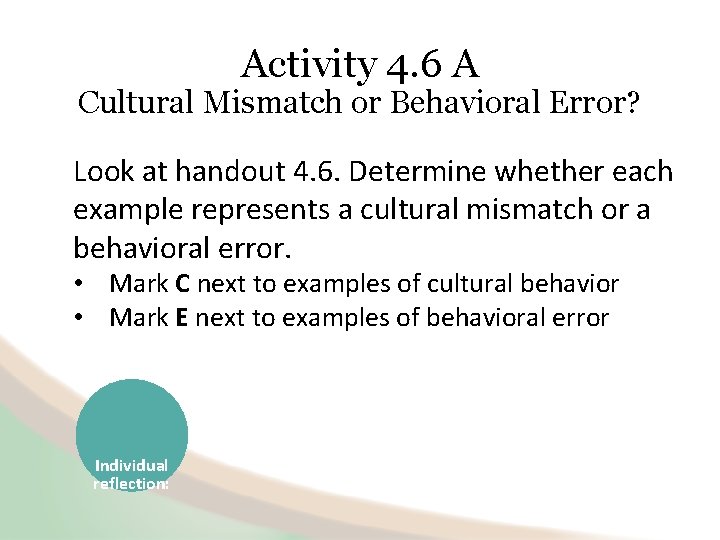
Activity 4. 6 A Cultural Mismatch or Behavioral Error? Look at handout 4. 6. Determine whether each example represents a cultural mismatch or a behavioral error. • Mark C next to examples of cultural behavior • Mark E next to examples of behavioral error Individual reflection:
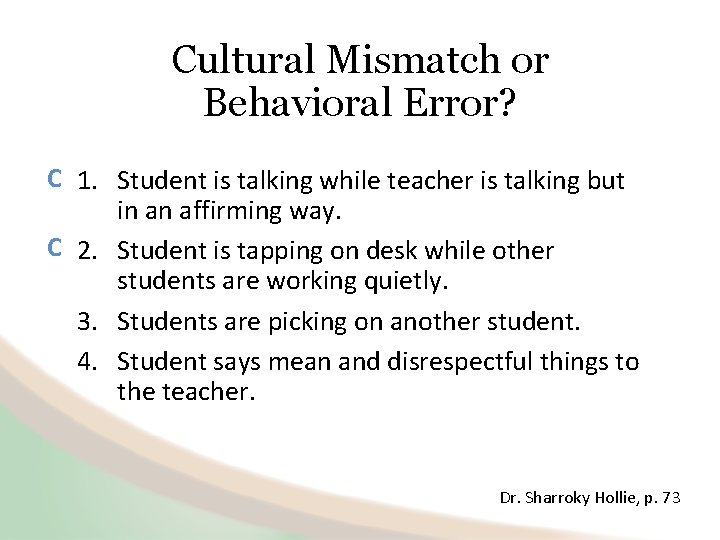
Cultural Mismatch or Behavioral Error? C 1. Student is talking while teacher is talking but in an affirming way. C 2. Student is tapping on desk while other students are working quietly. 3. Students are picking on another student. 4. Student says mean and disrespectful things to the teacher. Dr. Sharroky Hollie, p. 73
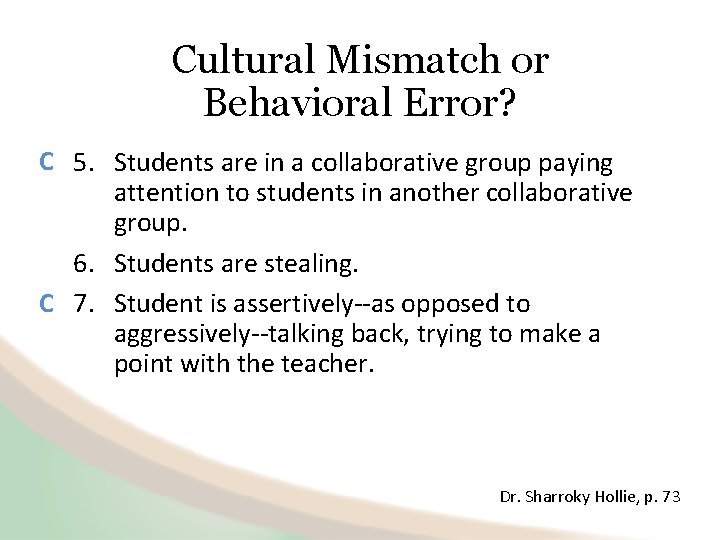
Cultural Mismatch or Behavioral Error? C 5. Students are in a collaborative group paying attention to students in another collaborative group. 6. Students are stealing. C 7. Student is assertively--as opposed to aggressively--talking back, trying to make a point with the teacher. Dr. Sharroky Hollie, p. 73
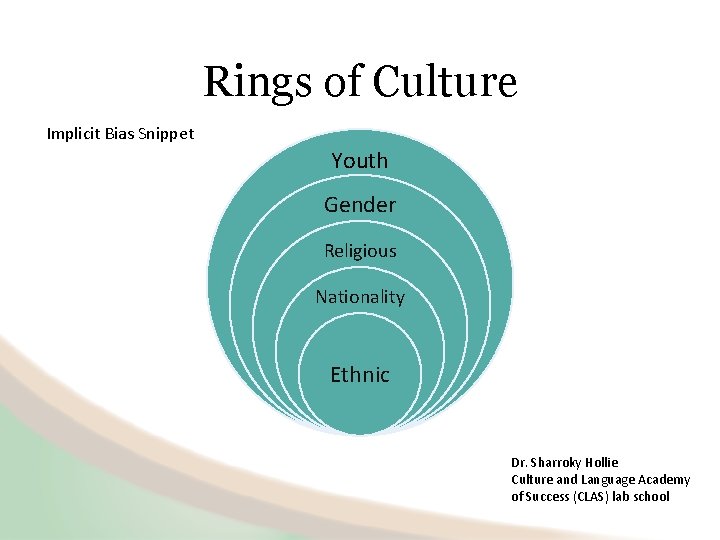
Rings of Culture Implicit Bias Snippet Youth Gender Religious Nationality Ethnic Dr. Sharroky Hollie Culture and Language Academy of Success (CLAS) lab school
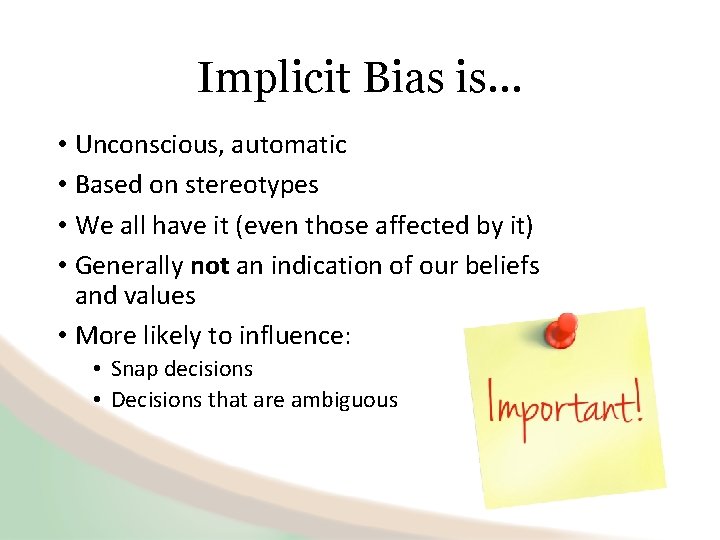
Implicit Bias is… • Unconscious, automatic • Based on stereotypes • We all have it (even those affected by it) • Generally not an indication of our beliefs and values • More likely to influence: • Snap decisions • Decisions that are ambiguous
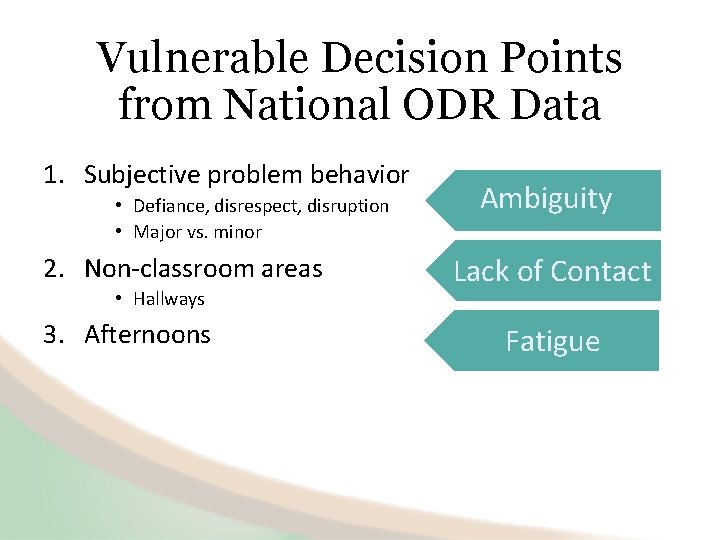
Vulnerable Decision Points from National ODR Data 1. Subjective problem behavior • Defiance, disrespect, disruption • Major vs. minor 2. Non-classroom areas • Hallways 3. Afternoons Ambiguity Lack of Contact Fatigue
Activity 4. 6 B Cultural Mismatch or Behavioral Error? Identify your vulnerable decision points. Individual reflection:

Two-Step Neutralizing Routine for Staff: When you see problem behavior, stop and ask yourself: 1. Is this a vulnerable decision point? • Situation • Decision state 2. Is the behavior cultural or is it a behavioral error? STOP
Your first thought may be…. But it shouldn’t be your last thought, the thought you act on. –Dr. Sharroky Hollie
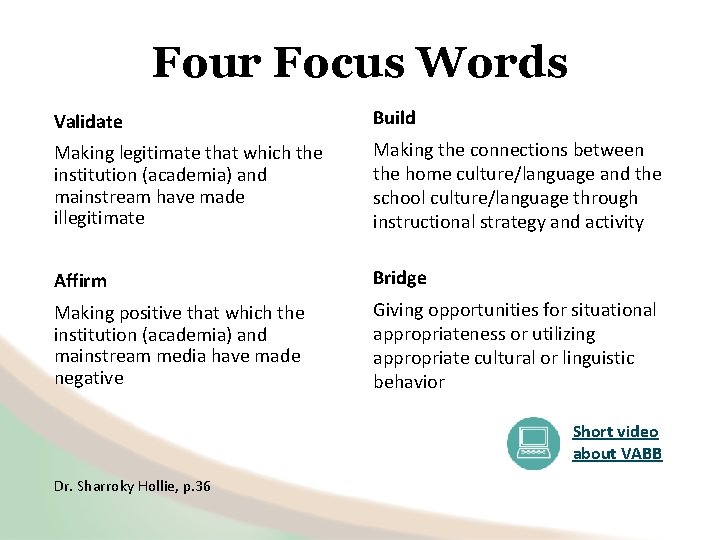
Four Focus Words Validate Build Making legitimate that which the institution (academia) and mainstream have made illegitimate Making the connections between the home culture/language and the school culture/language through instructional strategy and activity Affirm Bridge Making positive that which the institution (academia) and mainstream media have made negative Giving opportunities for situational appropriateness or utilizing appropriate cultural or linguistic behavior Short video about VABB Dr. Sharroky Hollie, p. 36
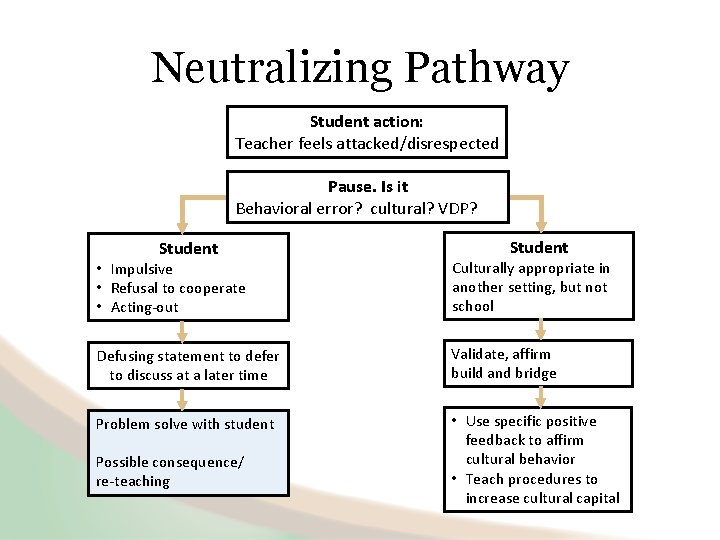
Neutralizing Pathway Student action: Teacher feels attacked/disrespected Pause. Is it Behavioral error? cultural? VDP? Student • Impulsive • Refusal to cooperate • Acting-out Culturally appropriate in another setting, but not school Defusing statement to defer to discuss at a later time Validate, affirm build and bridge Problem solve with student • Use specific positive feedback to affirm cultural behavior • Teach procedures to increase cultural capital Possible consequence/ re-teaching
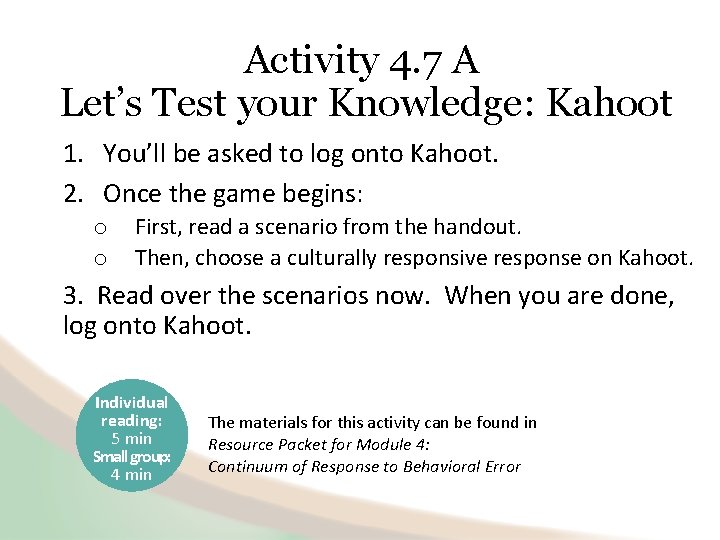
Activity 4. 7 A Let’s Test your Knowledge: Kahoot 1. You’ll be asked to log onto Kahoot. 2. Once the game begins: o o First, read a scenario from the handout. Then, choose a culturally responsive response on Kahoot. 3. Read over the scenarios now. When you are done, log onto Kahoot. Individual reading: 5 min Small group: 4 min The materials for this activity can be found in Resource Packet for Module 4: Continuum of Response to Behavioral Error
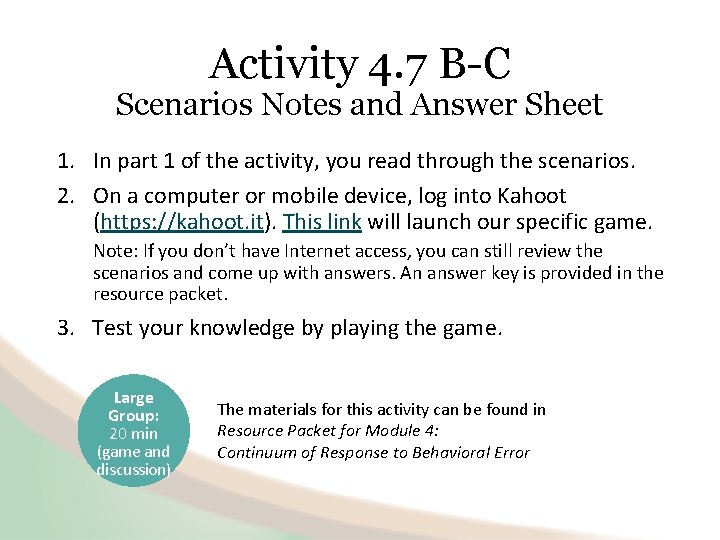
Activity 4. 7 B-C Scenarios Notes and Answer Sheet 1. In part 1 of the activity, you read through the scenarios. 2. On a computer or mobile device, log into Kahoot (https: //kahoot. it). This link will launch our specific game. Note: If you don’t have Internet access, you can still review the scenarios and come up with answers. An answer key is provided in the resource packet. 3. Test your knowledge by playing the game. Large Group: 20 min (game and discussion) The materials for this activity can be found in Resource Packet for Module 4: Continuum of Response to Behavioral Error
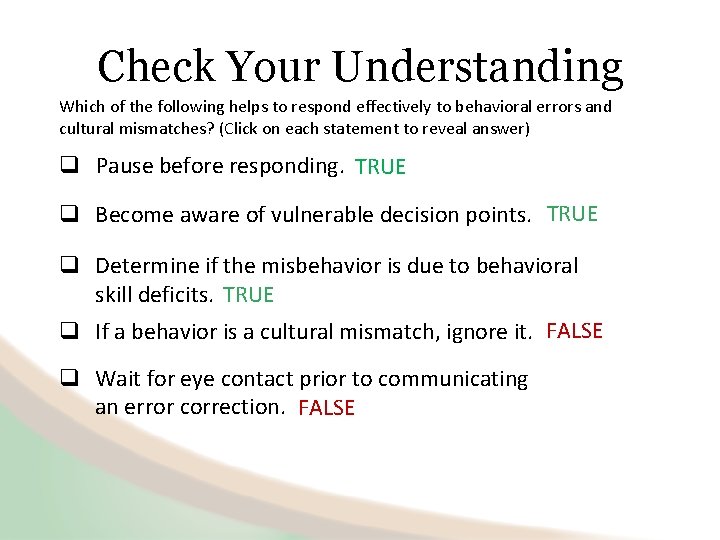
Check Your Understanding Which of the following helps to respond effectively to behavioral errors and cultural mismatches? (Click on each statement to reveal answer) q Pause before responding. TRUE q Become aware of vulnerable decision points. TRUE q Determine if the misbehavior is due to behavioral skill deficits. TRUE q If a behavior is a cultural mismatch, ignore it. FALSE q Wait for eye contact prior to communicating an error correction. FALSE
Self-Reflection: Implicit Bias • Complete the Self-Reflection Checklist items for this section of the module. • Identify one or two areas you would like to improve. Reflection The checklist for this activity can be found in Resource Packet for Module 4: Continuum of Response to Behavioral Error
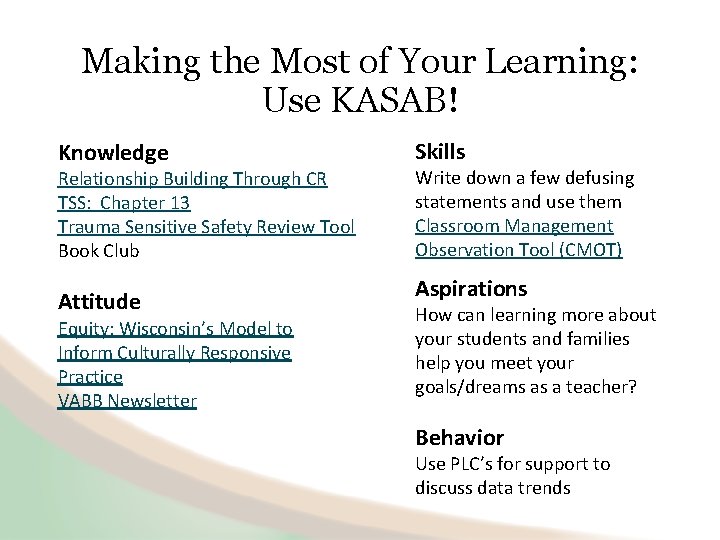
Making the Most of Your Learning: Use KASAB! Knowledge Relationship Building Through CR TSS: Chapter 13 Trauma Sensitive Safety Review Tool Book Club Attitude Equity: Wisconsin’s Model to Inform Culturally Responsive Practice VABB Newsletter Skills Write down a few defusing statements and use them Classroom Management Observation Tool (CMOT) Aspirations How can learning more about your students and families help you meet your goals/dreams as a teacher? Behavior Use PLC’s for support to discuss data trends
Wrapping Up: Twin Circles Identify 2 – 3 strategies you will put into place when you return to the classroom.
Acknowledgements Power Struggles: Successful Techniques for Educators 2 nd edition Mendler and Mendler A 5 -Point Intervention Approach for Enhancing Equity in School Discipline, February 2018, Kent Mc. Intosh, Erik J. Girvan, Robert H. Horner, Keith Smolkowski, & George Sugai Culture and Language Academy of Success (CLAS) lab school; Dr. Sharroky Hollie
- Slides: 31