
Module 4 Basic HydrologicHydraulic Calculations Impact of Urbanization
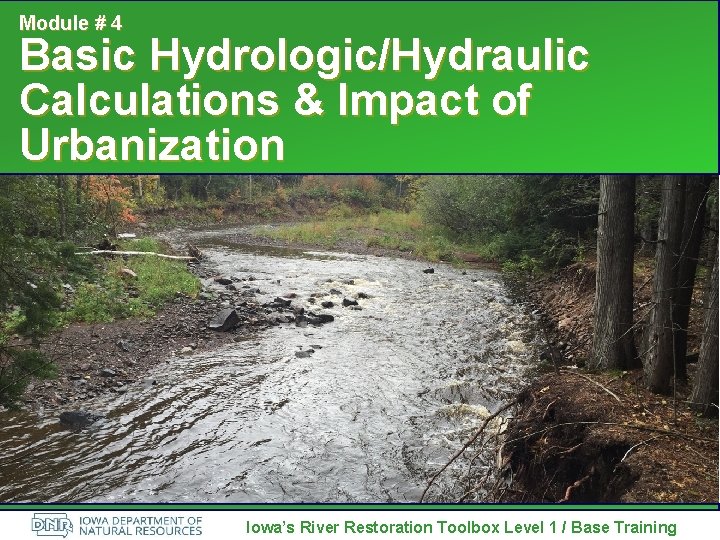
Module # 4 Basic Hydrologic/Hydraulic Calculations & Impact of Urbanization Iowa’s River Restoration Toolbox Level 1 / Base Training
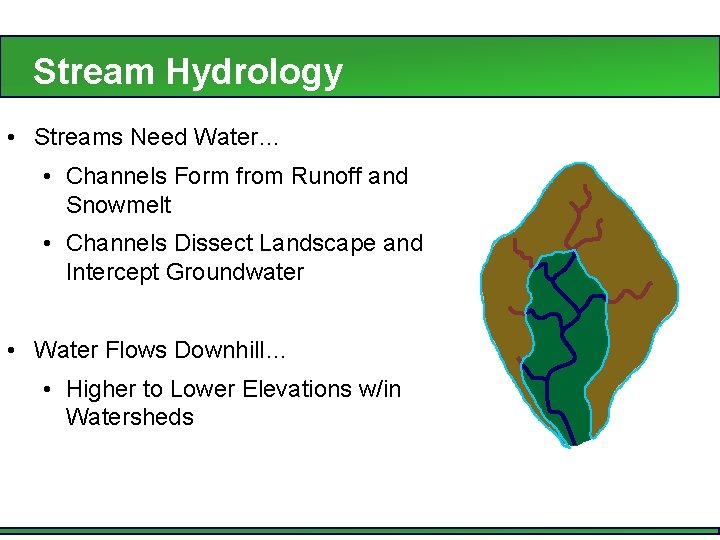
Stream Hydrology • Streams Need Water… • Channels Form from Runoff and Snowmelt • Channels Dissect Landscape and Intercept Groundwater • Water Flows Downhill… • Higher to Lower Elevations w/in Watersheds
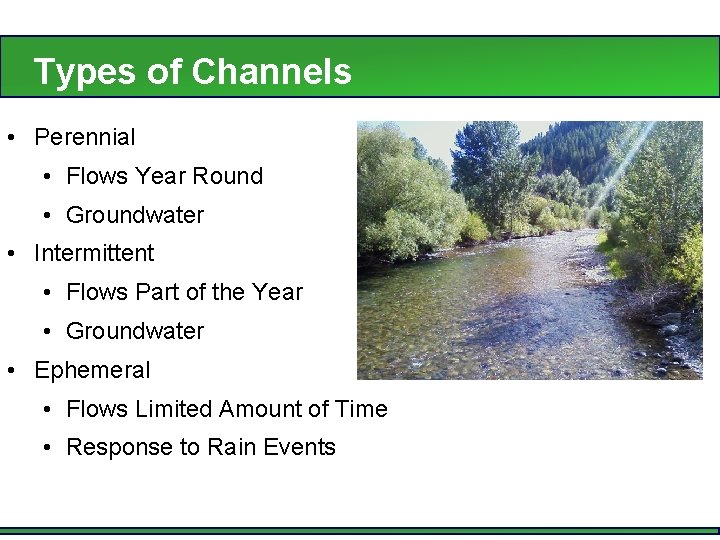
Types of Channels • Perennial • Flows Year Round • Groundwater • Intermittent • Flows Part of the Year • Groundwater • Ephemeral • Flows Limited Amount of Time • Response to Rain Events
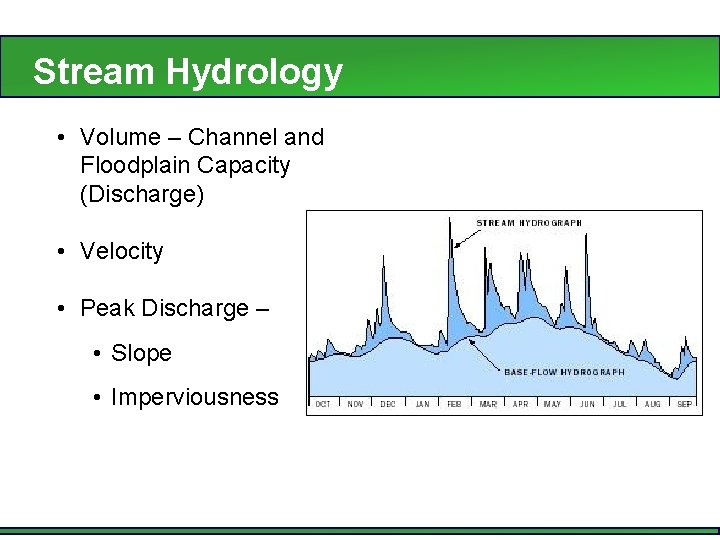
Stream Hydrology • Volume – Channel and Floodplain Capacity (Discharge) • Velocity • Peak Discharge – • Slope • Imperviousness
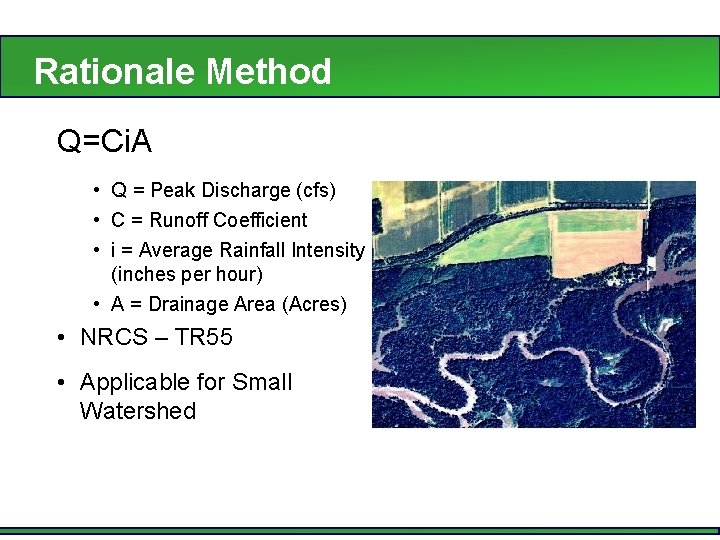
Rationale Method Q=Ci. A • Q = Peak Discharge (cfs) • C = Runoff Coefficient • i = Average Rainfall Intensity (inches per hour) • A = Drainage Area (Acres) • NRCS – TR 55 • Applicable for Small Watershed
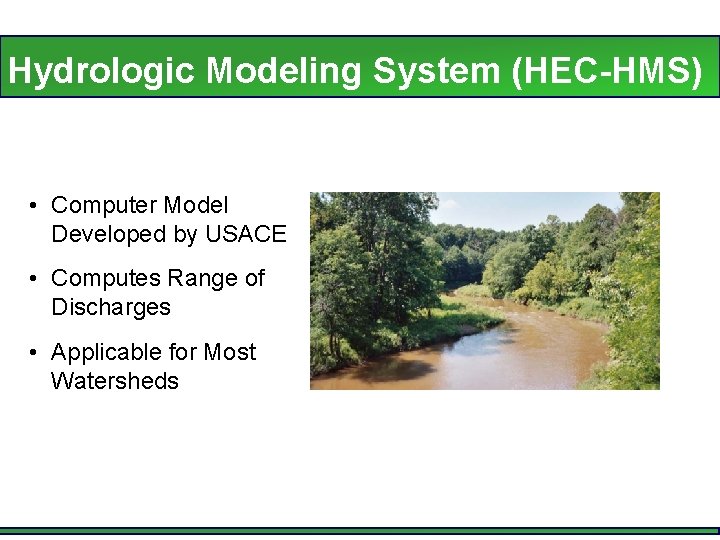
Hydrologic Modeling System (HEC-HMS) • Computer Model Developed by USACE • Computes Range of Discharges • Applicable for Most Watersheds
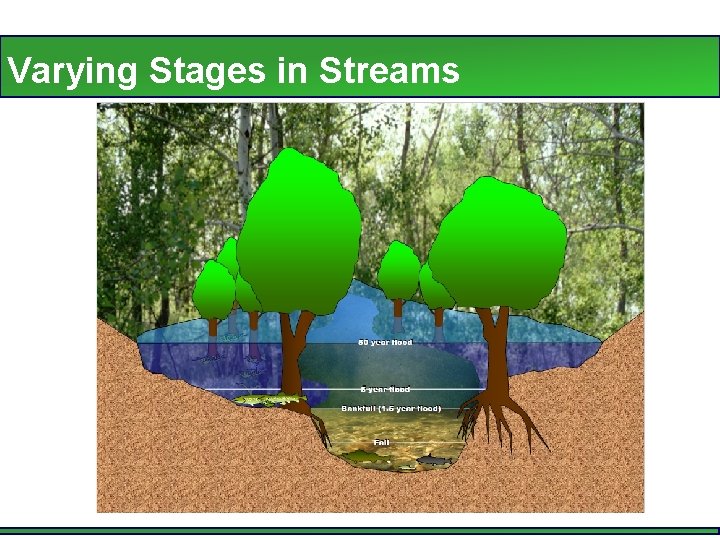
Varying Stages in Streams
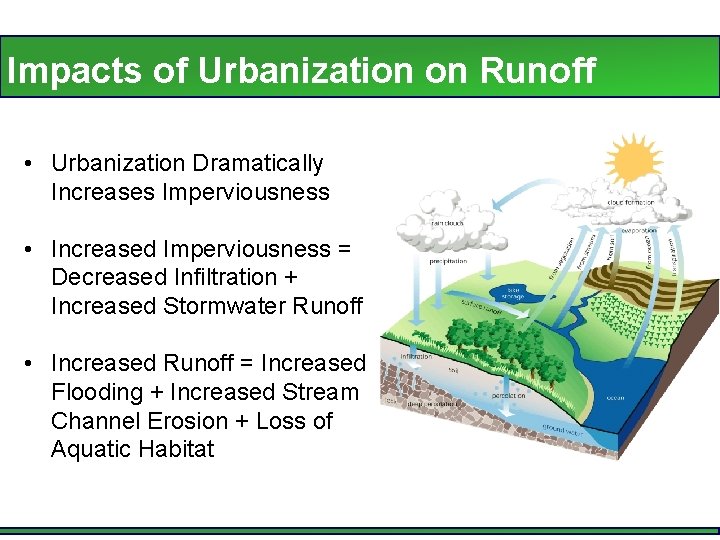
Impacts of Urbanization on Runoff • Urbanization Dramatically Increases Imperviousness • Increased Imperviousness = Decreased Infiltration + Increased Stormwater Runoff • Increased Runoff = Increased Flooding + Increased Stream Channel Erosion + Loss of Aquatic Habitat
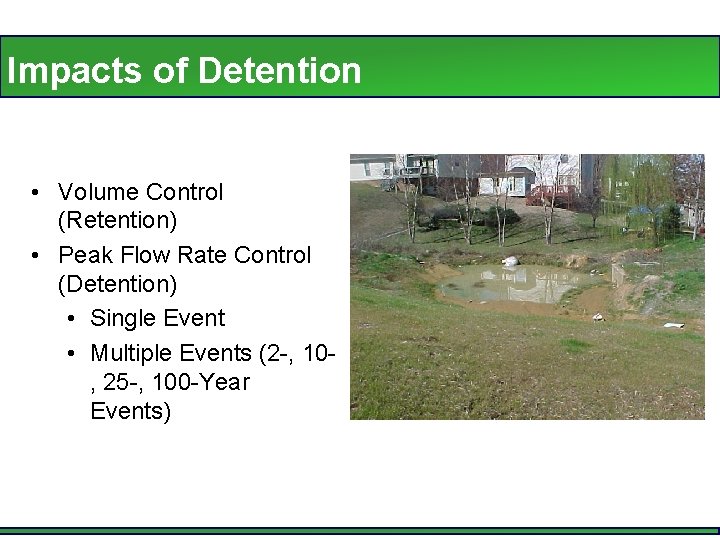
Impacts of Detention • Volume Control (Retention) • Peak Flow Rate Control (Detention) • Single Event • Multiple Events (2 -, 10, 25 -, 100 -Year Events)
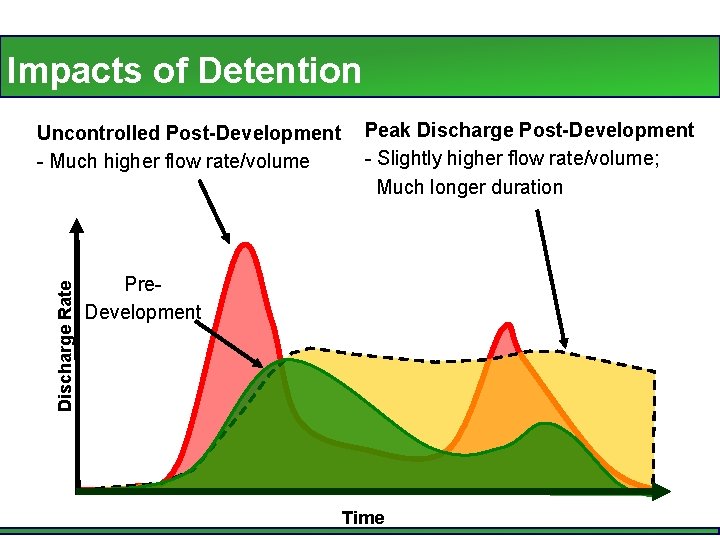
Impacts of Detention Discharge Rate Uncontrolled Post-Development - Much higher flow rate/volume Peak Discharge Post-Development - Slightly higher flow rate/volume; Much longer duration Pre. Development Time
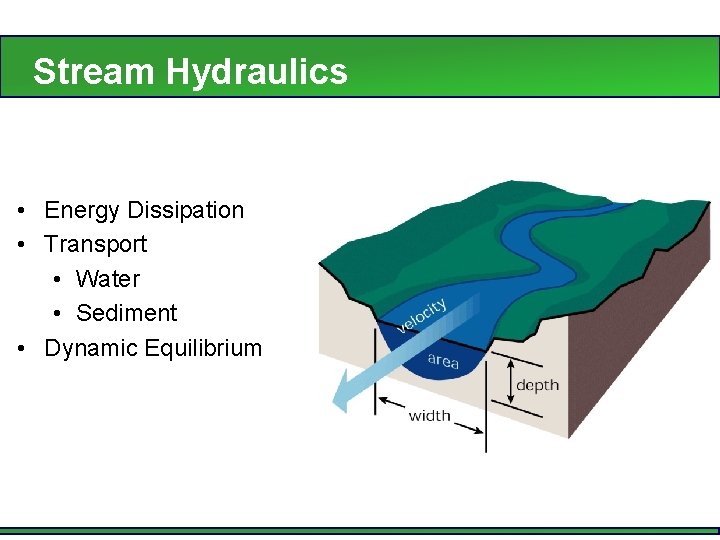
Stream Hydraulics • Energy Dissipation • Transport • Water • Sediment • Dynamic Equilibrium
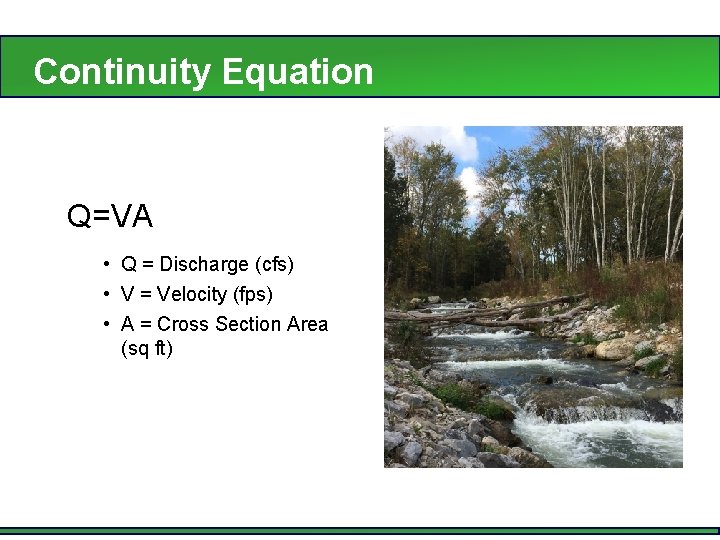
Continuity Equation Q=VA • Q = Discharge (cfs) • V = Velocity (fps) • A = Cross Section Area (sq ft)
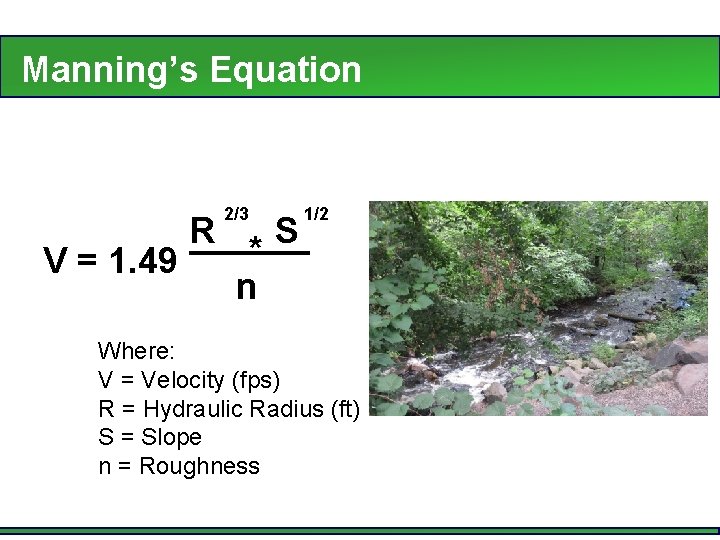
Manning’s Equation 2/3 1/2 R S ______ * V = 1. 49 n Where: V = Velocity (fps) R = Hydraulic Radius (ft) S = Slope n = Roughness
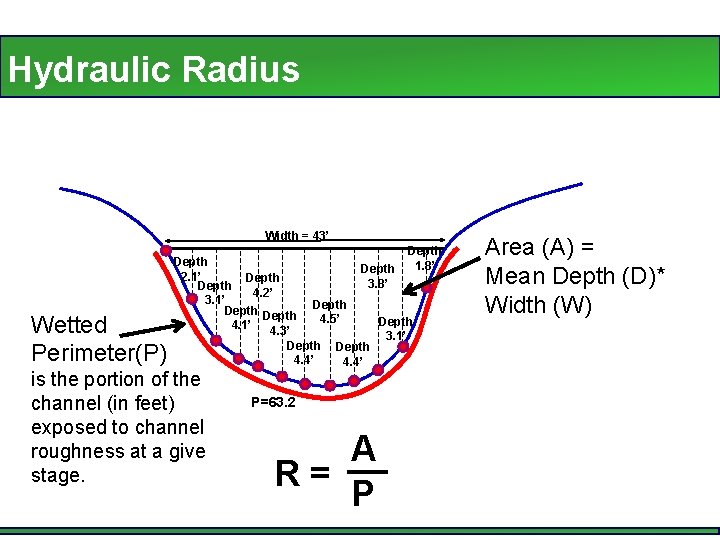
Hydraulic Radius Width = 43’ Wetted Perimeter(P) Depth 2. 1’ Depth 4. 2’ 3. 1’ Depth 4. 1’ 4. 3’ is the portion of the channel (in feet) exposed to channel roughness at a give stage. Depth 3. 8’ Depth 4. 5’ Depth 4. 4’ Depth 1. 8’ Depth 3. 1’ P=63. 2 A __ R= P Area (A) = Mean Depth (D)* Width (W)
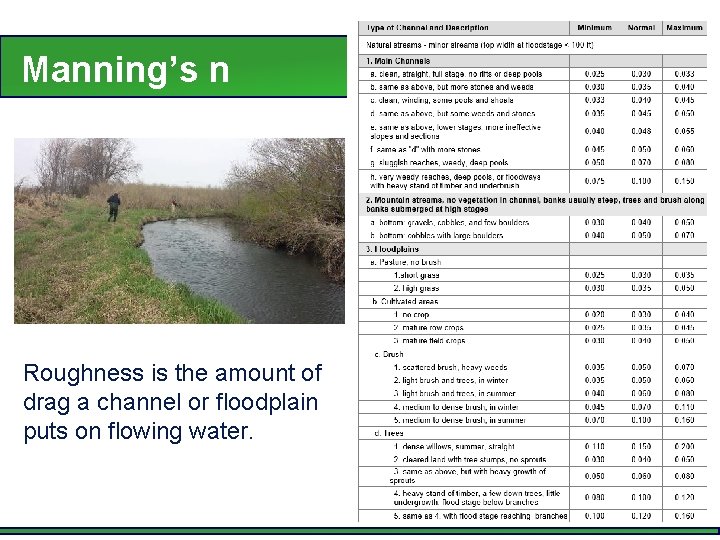
Manning’s n Roughness is the amount of drag a channel or floodplain puts on flowing water.
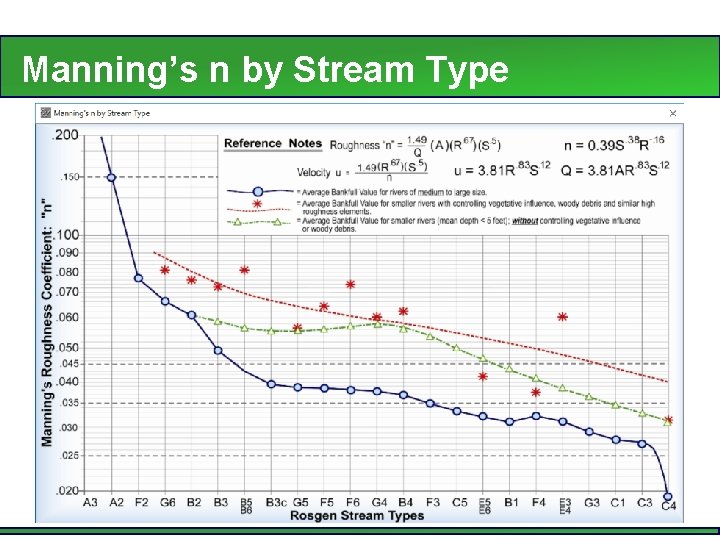
Manning’s n by Stream Type
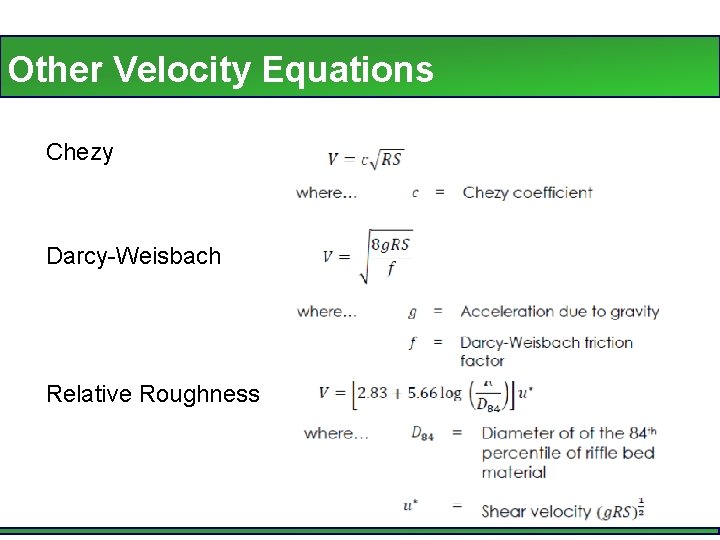
Other Velocity Equations Chezy Darcy-Weisbach Relative Roughness
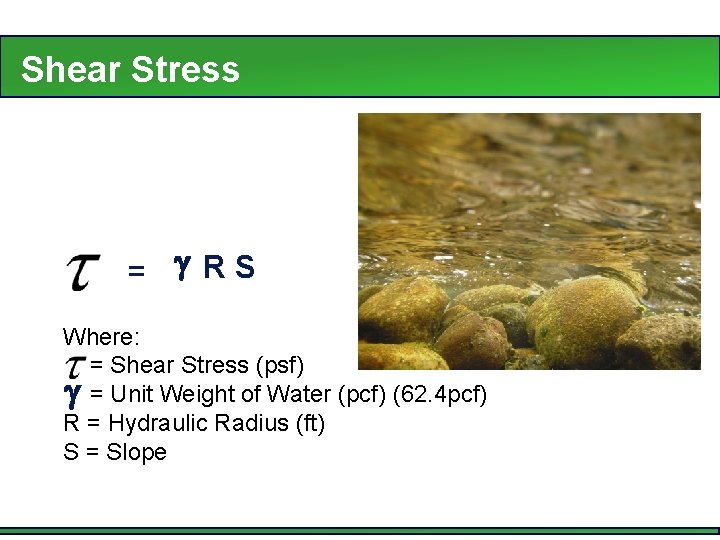
Shear Stress = RS Where: = Shear Stress (psf) = Unit Weight of Water (pcf) (62. 4 pcf) R = Hydraulic Radius (ft) S = Slope
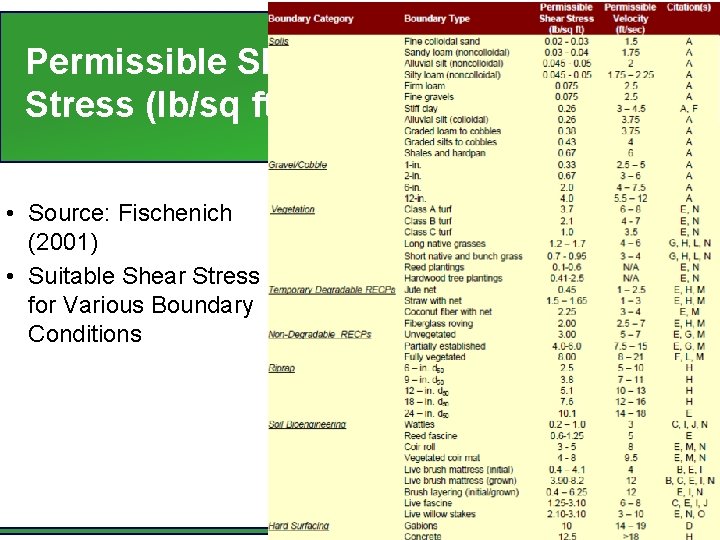
Permissible Shear Stress (lb/sq ft) • Source: Fischenich (2001) • Suitable Shear Stress for Various Boundary Conditions
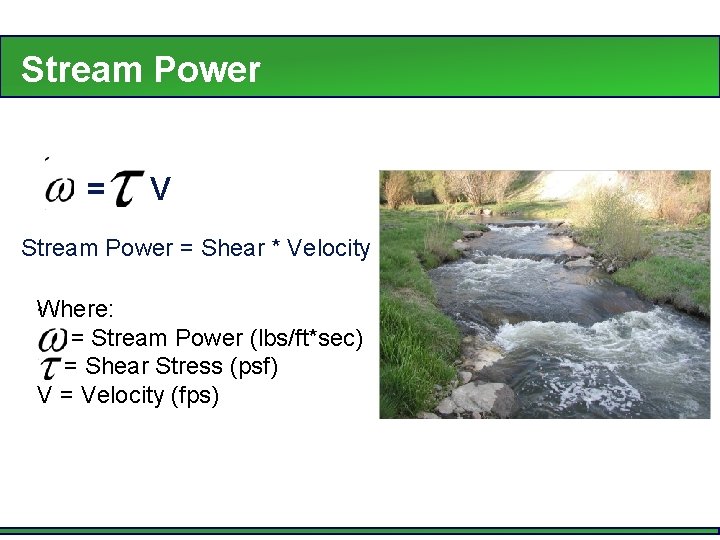
Stream Power = V Stream Power = Shear * Velocity Where: = Stream Power (lbs/ft*sec) = Shear Stress (psf) V = Velocity (fps)
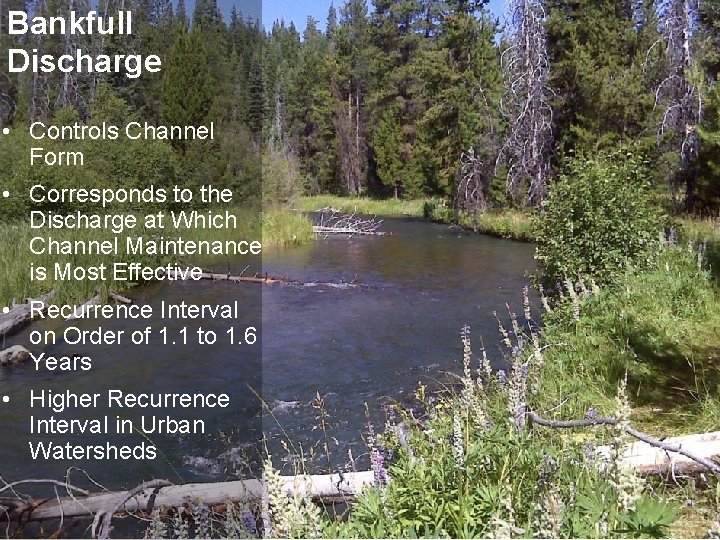
Bankfull Discharge • Controls Channel Form • Corresponds to the Discharge at Which Channel Maintenance is Most Effective • Recurrence Interval on Order of 1. 1 to 1. 6 Years • Higher Recurrence Interval in Urban Watersheds
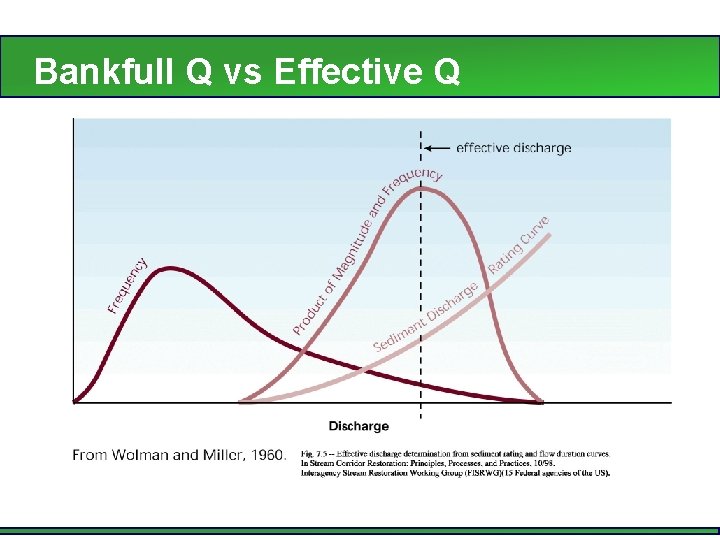
Bankfull Q vs Effective Q
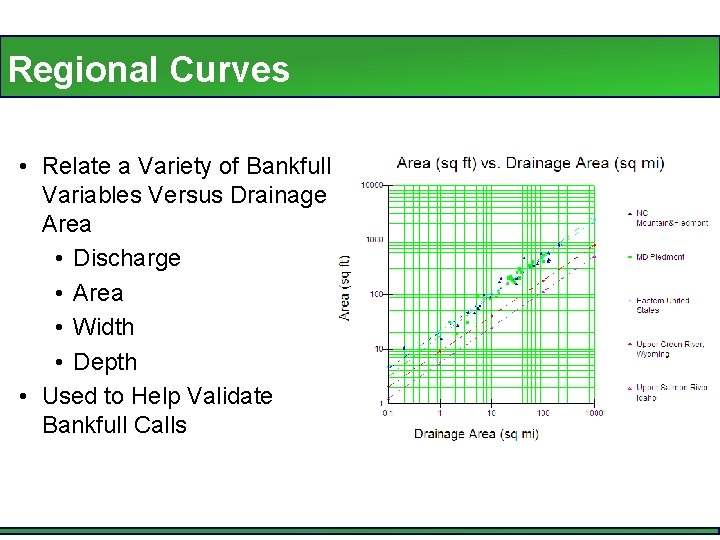
Regional Curves • Relate a Variety of Bankfull Variables Versus Drainage Area • Discharge • Area • Width • Depth • Used to Help Validate Bankfull Calls
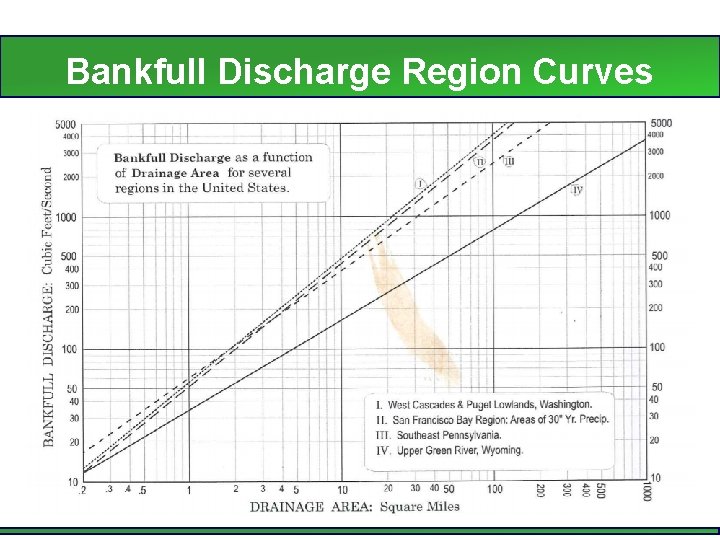
Bankfull Discharge Region Curves
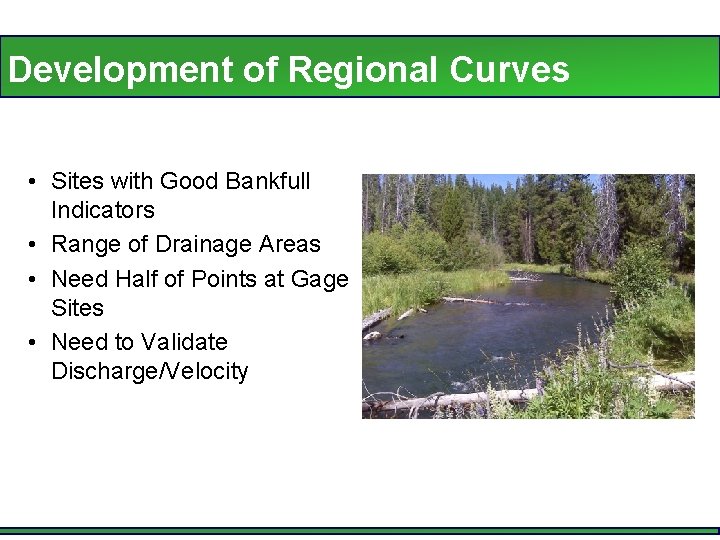
Development of Regional Curves • Sites with Good Bankfull Indicators • Range of Drainage Areas • Need Half of Points at Gage Sites • Need to Validate Discharge/Velocity
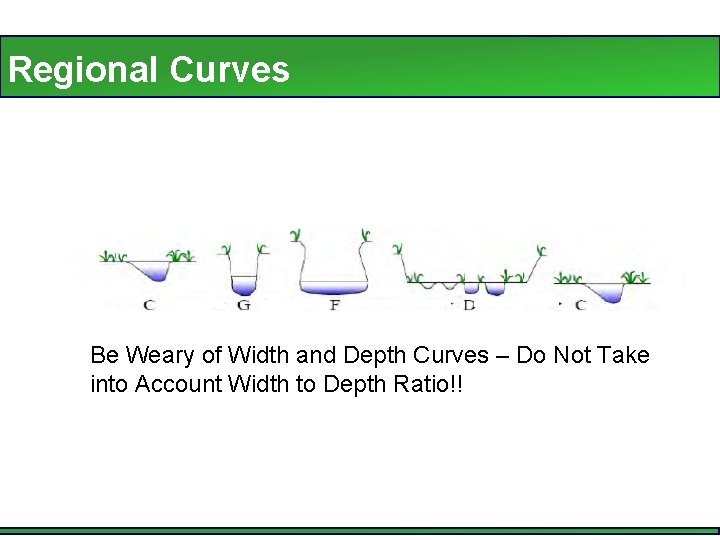
Regional Curves Be Weary of Width and Depth Curves – Do Not Take into Account Width to Depth Ratio!!
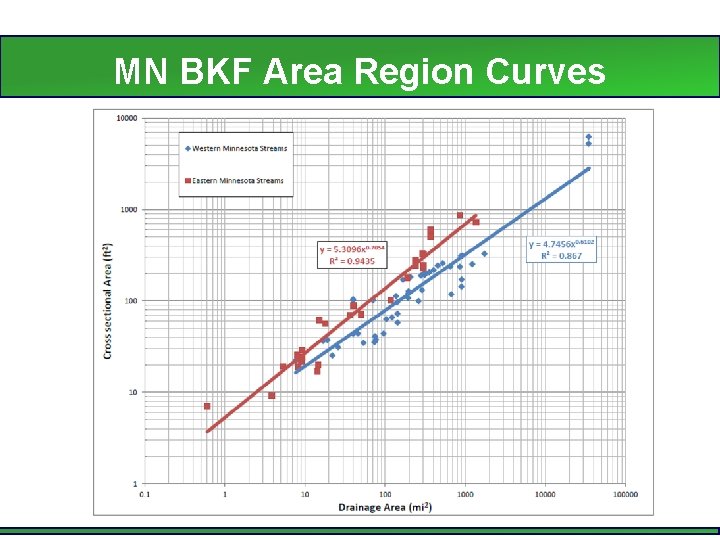
MN BKF Area Region Curves
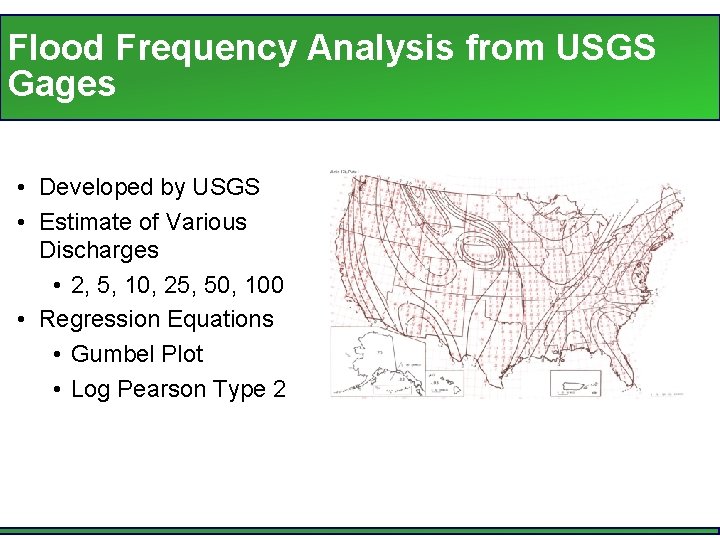
Flood Frequency Analysis from USGS Gages • Developed by USGS • Estimate of Various Discharges • 2, 5, 10, 25, 50, 100 • Regression Equations • Gumbel Plot • Log Pearson Type 2
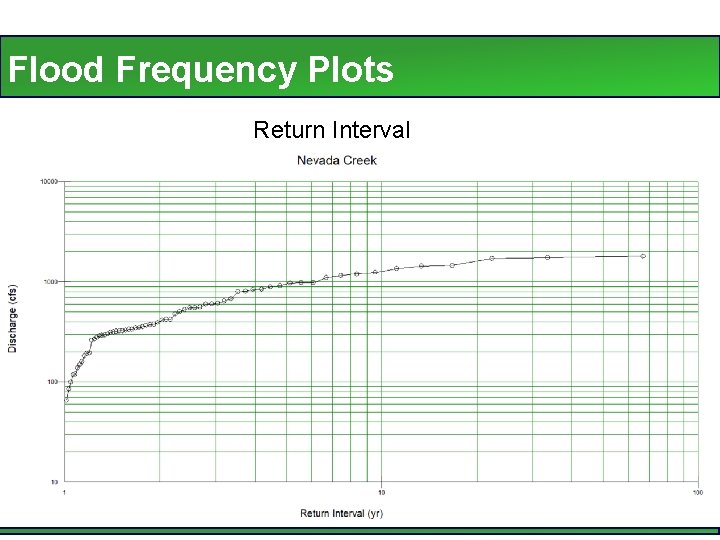
Flood Frequency Plots Return Interval
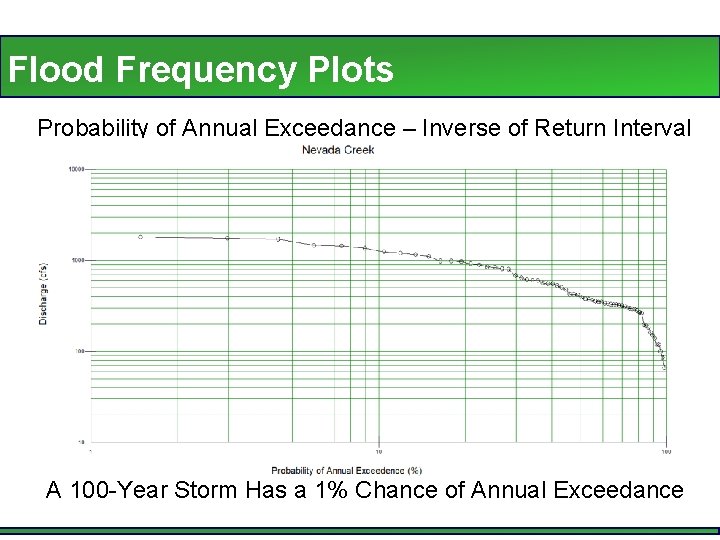
Flood Frequency Plots Probability of Annual Exceedance – Inverse of Return Interval A 100 -Year Storm Has a 1% Chance of Annual Exceedance
Module # 4 Basic Hydrologic/Hydraulic Calculations & Impact of Urbanization Iowa’s River Restoration Toolbox Level 1 / Base Training
- Slides: 31