
MODULE 3 USING THE NUTRITION ASSESSMENT INSTRUMENT NAI
- Slides: 10
MODULE 3: USING THE NUTRITION ASSESSMENT INSTRUMENT (NAI) HEATHER GIBBS, M. S. , R. D. , L. D. N. PH. D. CANDIDATE, UNIVERSITY OF ILLINOIS
OBJECTIVES Participants will be able to: 1. Correctly use the NAI with clients. 2. Match appropriate materials with levels of learning.
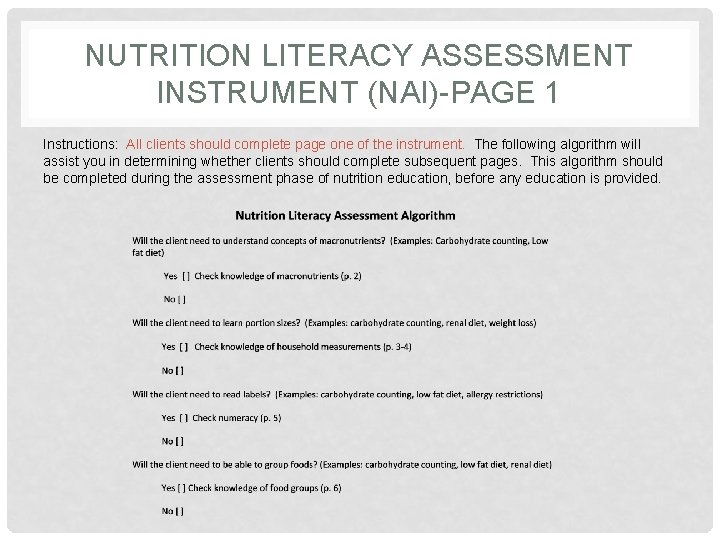
NUTRITION LITERACY ASSESSMENT INSTRUMENT (NAI)-PAGE 1 Instructions: All clients should complete page one of the instrument. The following algorithm will assist you in determining whether clients should complete subsequent pages. This algorithm should be completed during the assessment phase of nutrition education, before any education is provided.
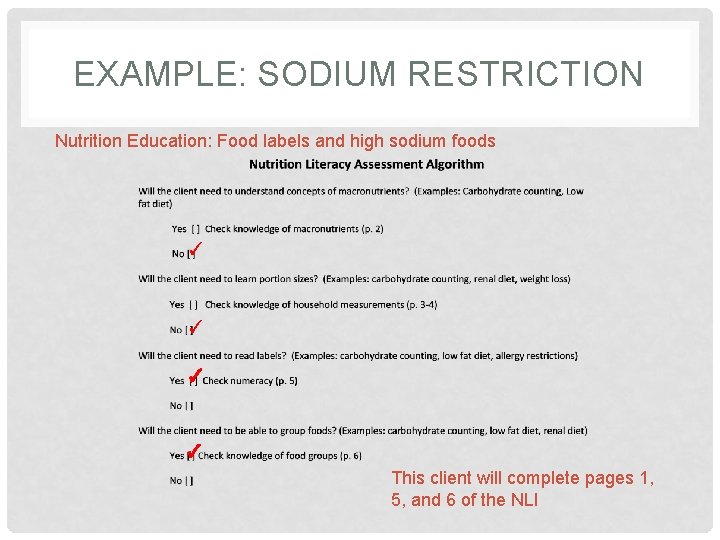
EXAMPLE: SODIUM RESTRICTION Nutrition Education: Food labels and high sodium foods ✓ ✓ This client will complete pages 1, 5, and 6 of the NLI
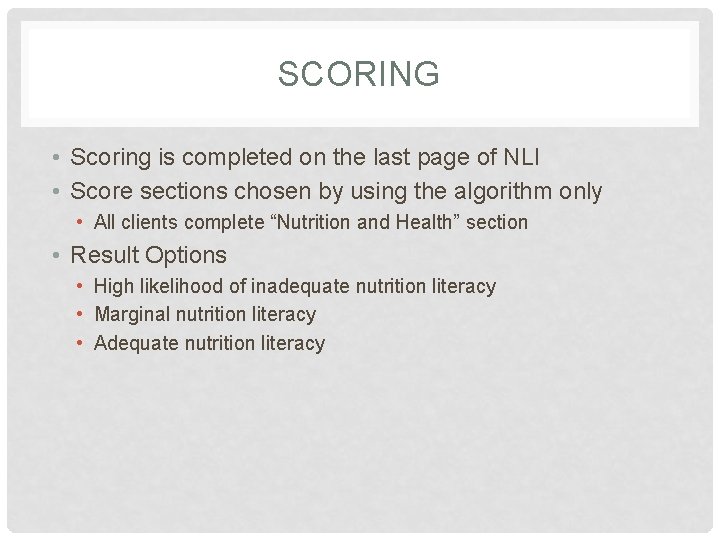
SCORING • Scoring is completed on the last page of NLI • Score sections chosen by using the algorithm only • All clients complete “Nutrition and Health” section • Result Options • High likelihood of inadequate nutrition literacy • Marginal nutrition literacy • Adequate nutrition literacy
WHAT DO I DO WITH THE RESULTS? TARGETING THE CLIENT’S LEVEL OF UNDERSTANDING WITH APPROPRIATE TEACHING METHODS
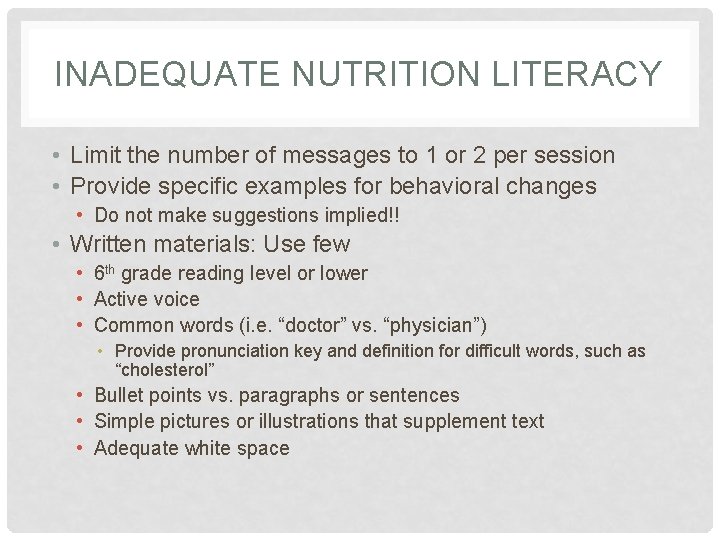
INADEQUATE NUTRITION LITERACY • Limit the number of messages to 1 or 2 per session • Provide specific examples for behavioral changes • Do not make suggestions implied!! • Written materials: Use few • 6 th grade reading level or lower • Active voice • Common words (i. e. “doctor” vs. “physician”) • Provide pronunciation key and definition for difficult words, such as “cholesterol” • Bullet points vs. paragraphs or sentences • Simple pictures or illustrations that supplement text • Adequate white space
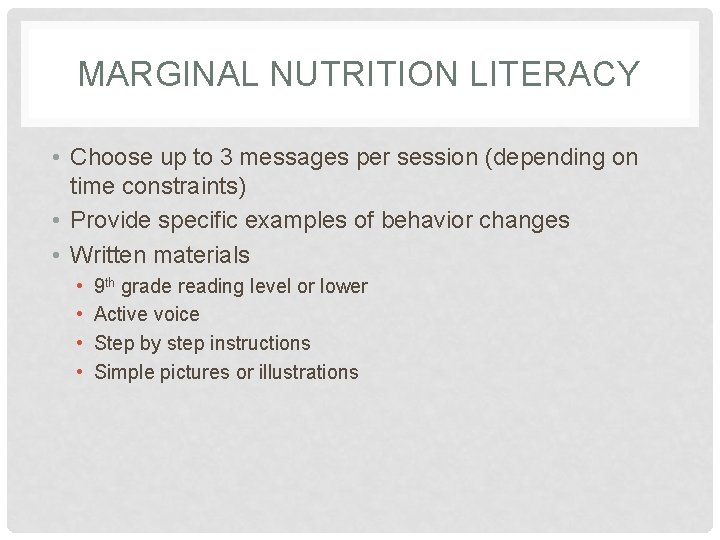
MARGINAL NUTRITION LITERACY • Choose up to 3 messages per session (depending on time constraints) • Provide specific examples of behavior changes • Written materials • • 9 th grade reading level or lower Active voice Step by step instructions Simple pictures or illustrations
ADEQUATE NUTRITION LITERACY • More complex information can be shared, but avoid overload
APPROPRIATE FOR ALL LEVELS • Open-ended questions • Provide written information only if reviewed with client • “Teach back” method • Writing menus • Choosing foods from restaurant menus • Naming foods to treat low blood glucose