
Module 3 Indications Antipsychotics for Schizophrenia Flavio Guzmn
- Slides: 33
Module 3 Indications Antipsychotics for Schizophrenia Flavio Guzmán, MD
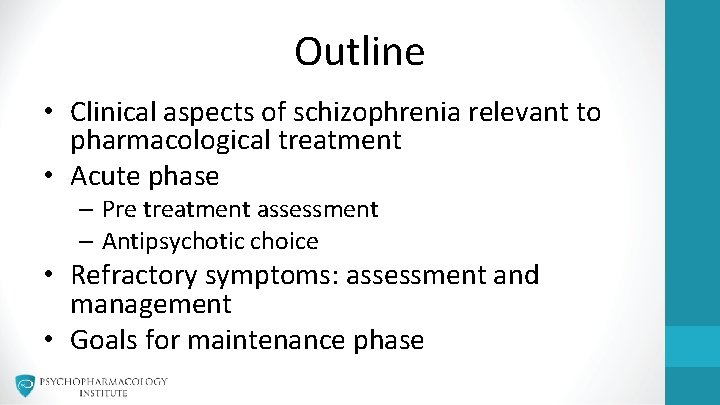
Outline • Clinical aspects of schizophrenia relevant to pharmacological treatment • Acute phase – Pre treatment assessment – Antipsychotic choice • Refractory symptoms: assessment and management • Goals for maintenance phase
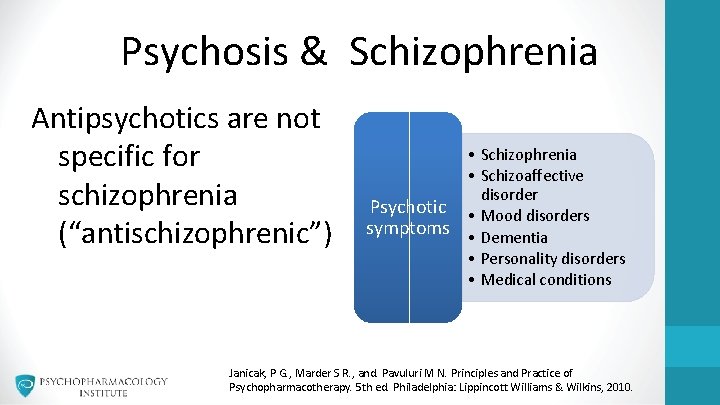
Psychosis & Schizophrenia Antipsychotics are not specific for schizophrenia (“antischizophrenic”) • Schizophrenia • Schizoaffective disorder Psychotic • Mood disorders symptoms • Dementia • Personality disorders • Medical conditions Janicak, P G. , Marder S R. , and. Pavuluri M N. Principles and Practice of Psychopharmacotherapy. 5 th ed. Philadelphia: Lippincott Williams & Wilkins, 2010.
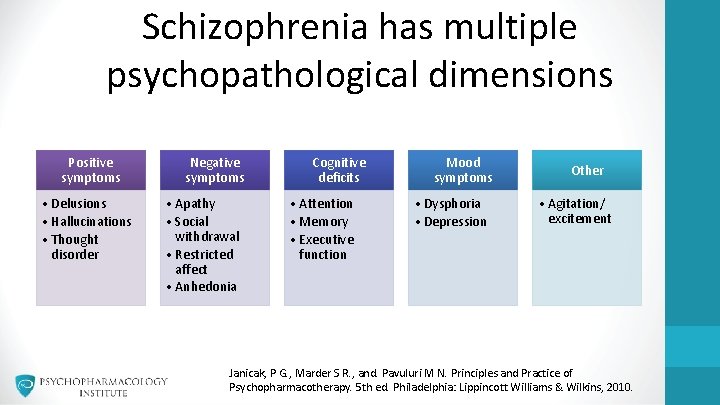
Schizophrenia has multiple psychopathological dimensions Positive symptoms • Delusions • Hallucinations • Thought disorder Negative symptoms • Apathy • Social withdrawal • Restricted affect • Anhedonia Cognitive deficits • Attention • Memory • Executive function Mood symptoms • Dysphoria • Depression Other • Agitation/ excitement Janicak, P G. , Marder S R. , and. Pavuluri M N. Principles and Practice of Psychopharmacotherapy. 5 th ed. Philadelphia: Lippincott Williams & Wilkins, 2010.
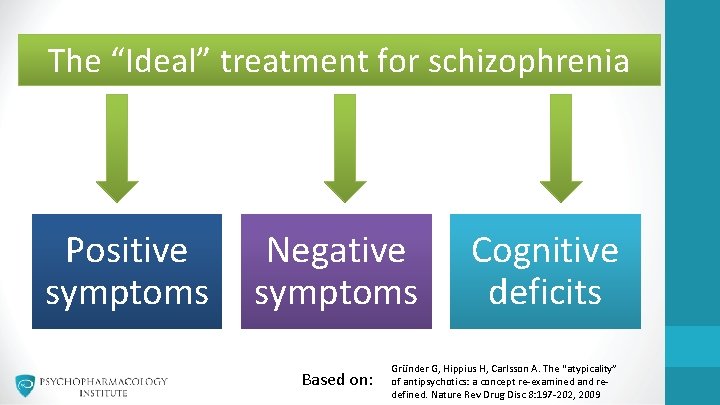
The “Ideal” treatment for schizophrenia Positive symptoms Negative symptoms Based on: Cognitive deficits Gründer G, Hippius H, Carlsson A. The “atypicality” of antipsychotics: a concept re-examined and redefined. Nature Rev Drug Disc 8: 197 -202, 2009
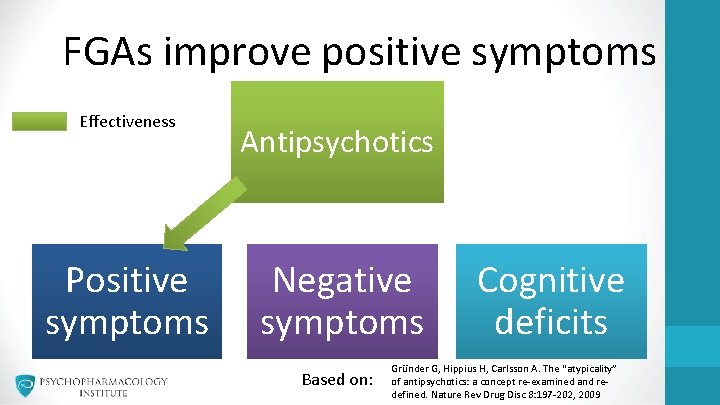
FGAs improve positive symptoms Effectiveness Positive symptoms Antipsychotics Negative symptoms Based on: Cognitive deficits Gründer G, Hippius H, Carlsson A. The “atypicality” of antipsychotics: a concept re-examined and redefined. Nature Rev Drug Disc 8: 197 -202, 2009
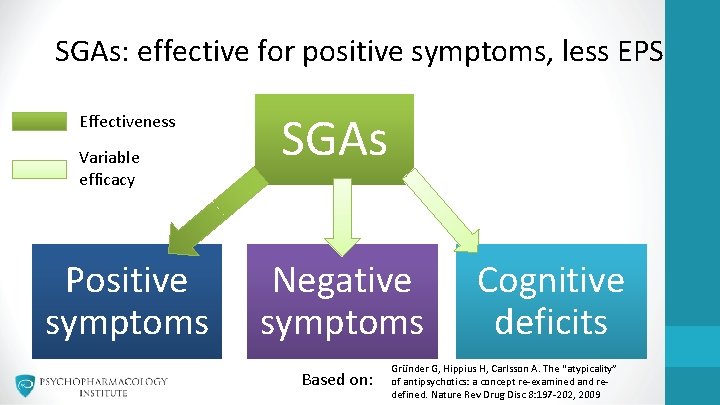
SGAs: effective for positive symptoms, less EPS Effectiveness Variable efficacy Positive symptoms SGAs Negative symptoms Based on: Cognitive deficits Gründer G, Hippius H, Carlsson A. The “atypicality” of antipsychotics: a concept re-examined and redefined. Nature Rev Drug Disc 8: 197 -202, 2009
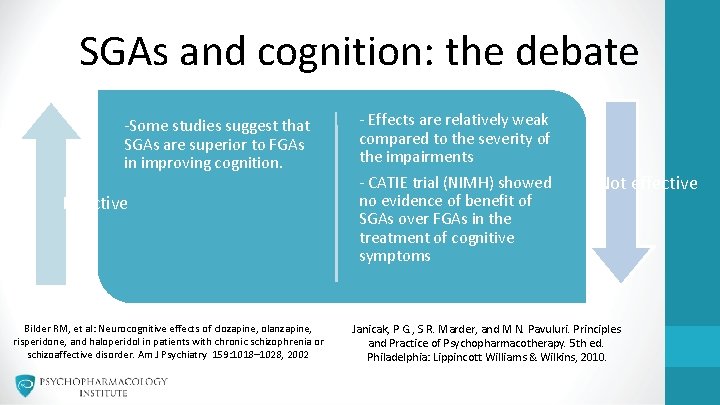
SGAs and cognition: the debate -Some studies suggest that SGAs are superior to FGAs in improving cognition. Effective Bilder RM, et al: Neurocognitive effects of clozapine, olanzapine, risperidone, and haloperidol in patients with chronic schizophrenia or schizoaffective disorder. Am J Psychiatry 159: 1018– 1028, 2002 - Effects are relatively weak compared to the severity of the impairments - CATIE trial (NIMH) showed no evidence of benefit of SGAs over FGAs in the treatment of cognitive symptoms Not effective Janicak, P G. , S R. Marder, and M N. Pavuluri. Principles and Practice of Psychopharmacotherapy. 5 th ed. Philadelphia: Lippincott Williams & Wilkins, 2010.
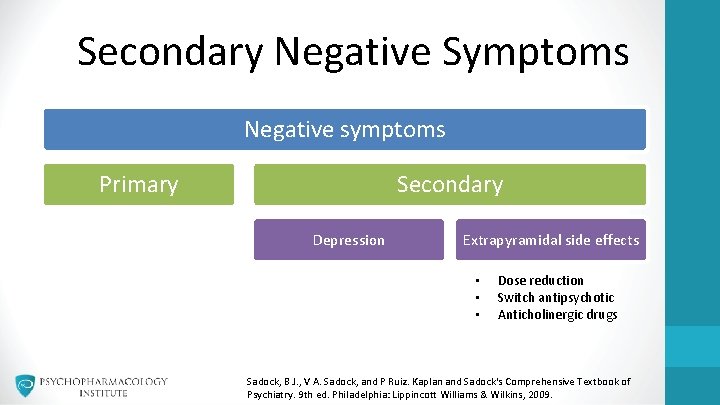
Secondary Negative Symptoms Negative symptoms Primary Secondary Depression Extrapyramidal side effects • • • Dose reduction Switch antipsychotic Anticholinergic drugs Sadock, B J. , V A. Sadock, and P Ruiz. Kaplan and Sadock's Comprehensive Textbook of Psychiatry. 9 th ed. Philadelphia: Lippincott Williams & Wilkins, 2009.
Key Points • Antipsychotics (both FGAs and SGAs) are effective for positive symptoms of schizophrenia. • Antipsychotics are used in the management of acute episodes and in the prevention of relapses. • There is a need for more effective treatments for negative and cognitive symptoms.
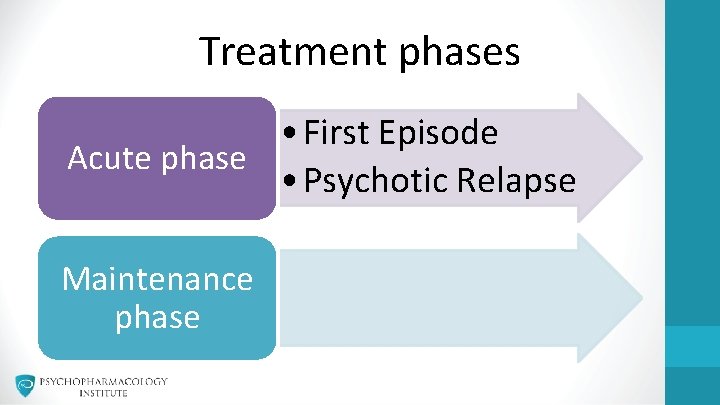
Treatment phases • First Episode Acute phase • Psychotic Relapse Maintenance phase
Assessment
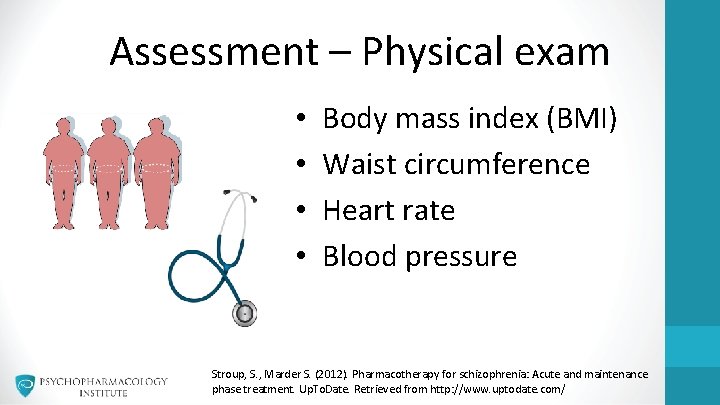
Assessment – Physical exam • • Body mass index (BMI) Waist circumference Heart rate Blood pressure Stroup, S. , Marder S. (2012). Pharmacotherapy for schizophrenia: Acute and maintenance phase treatment. Up. To. Date. Retrieved from http: //www. uptodate. com/
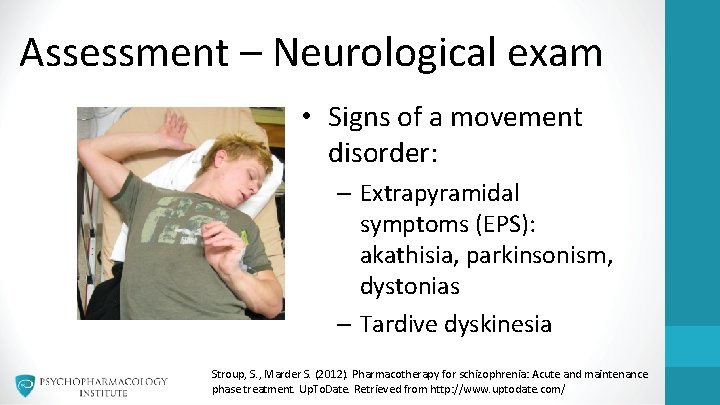
Assessment – Neurological exam • Signs of a movement disorder: – Extrapyramidal symptoms (EPS): akathisia, parkinsonism, dystonias – Tardive dyskinesia Stroup, S. , Marder S. (2012). Pharmacotherapy for schizophrenia: Acute and maintenance phase treatment. Up. To. Date. Retrieved from http: //www. uptodate. com/
Assessment – Lab testing CBC Electrolytes Fasting glucose Lipid profile, Liver, renal and thyroid function tests • White blood cell (WBC) count with differential for patients treated with clozapine • • • Stroup, S. , Marder S. (2012). Pharmacotherapy for schizophrenia: Acute and maintenance phase treatment. Up. To. Date. Retrieved from http: //www. uptodate. com/
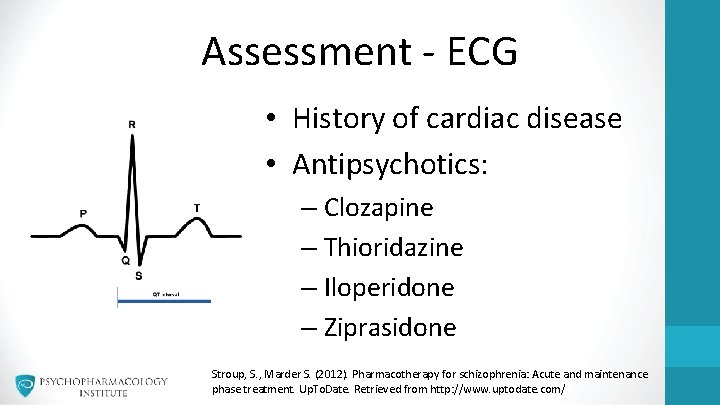
Assessment - ECG • History of cardiac disease • Antipsychotics: – Clozapine – Thioridazine – Iloperidone – Ziprasidone Stroup, S. , Marder S. (2012). Pharmacotherapy for schizophrenia: Acute and maintenance phase treatment. Up. To. Date. Retrieved from http: //www. uptodate. com/
Acute Phase Management
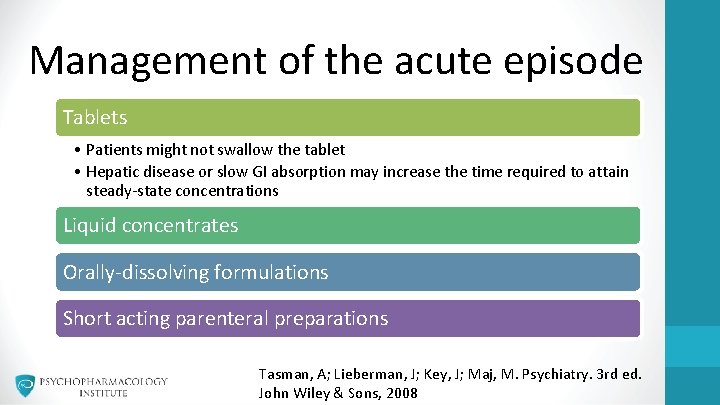
Management of the acute episode Tablets • Patients might not swallow the tablet • Hepatic disease or slow GI absorption may increase the time required to attain steady-state concentrations Liquid concentrates Orally-dissolving formulations Short acting parenteral preparations Tasman, A; Lieberman, J; Key, J; Maj, M. Psychiatry. 3 rd ed. John Wiley & Sons, 2008
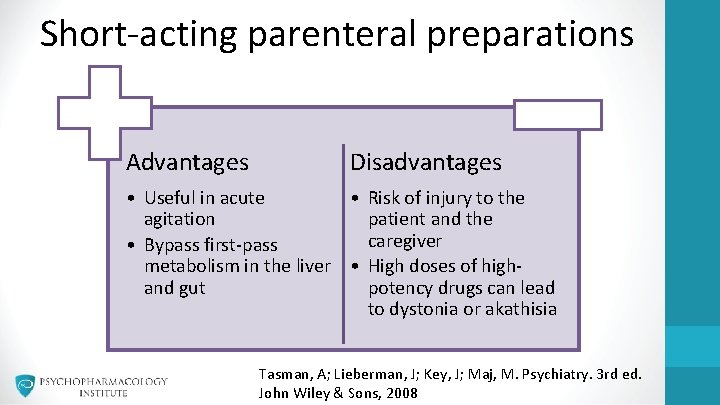
Short-acting parenteral preparations Advantages Disadvantages • Useful in acute • Risk of injury to the agitation patient and the caregiver • Bypass first-pass metabolism in the liver • High doses of highand gut potency drugs can lead to dystonia or akathisia Tasman, A; Lieberman, J; Key, J; Maj, M. Psychiatry. 3 rd ed. John Wiley & Sons, 2008
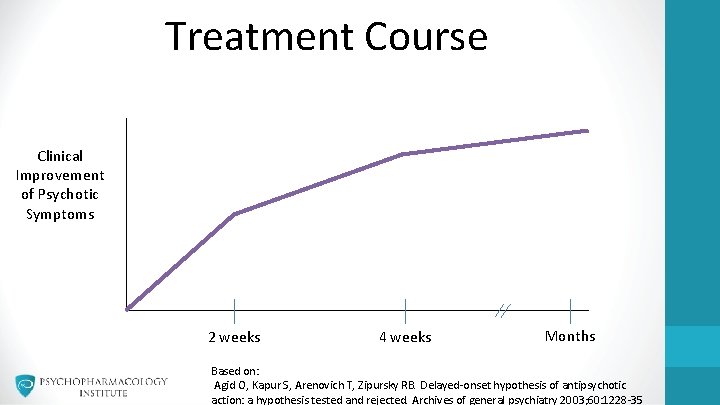
Treatment Course Clinical Improvement of Psychotic Symptoms 2 weeks 4 weeks Months Based on: Agid O, Kapur S, Arenovich T, Zipursky RB. Delayed-onset hypothesis of antipsychotic action: a hypothesis tested and rejected. Archives of general psychiatry 2003; 60: 1228 -35
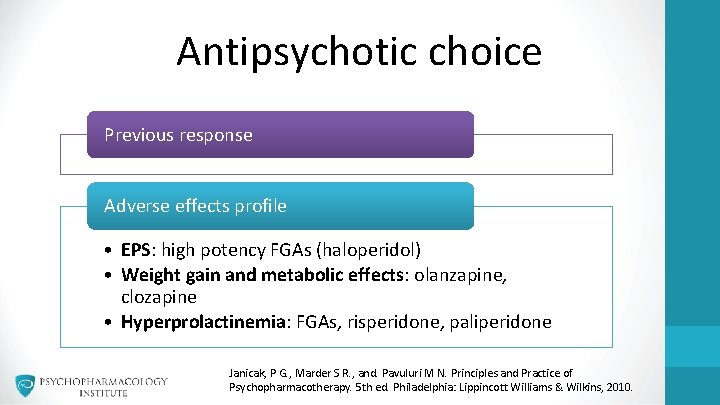
Antipsychotic choice Previous response Adverse effects profile • EPS: high potency FGAs (haloperidol) • Weight gain and metabolic effects: olanzapine, clozapine • Hyperprolactinemia: FGAs, risperidone, paliperidone Janicak, P G. , Marder S R. , and. Pavuluri M N. Principles and Practice of Psychopharmacotherapy. 5 th ed. Philadelphia: Lippincott Williams & Wilkins, 2010.
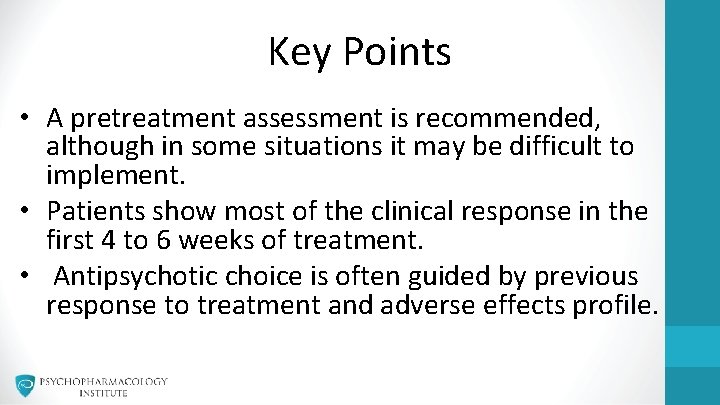
Key Points • A pretreatment assessment is recommended, although in some situations it may be difficult to implement. • Patients show most of the clinical response in the first 4 to 6 weeks of treatment. • Antipsychotic choice is often guided by previous response to treatment and adverse effects profile.
Refractory Symptoms • Assessment • Management
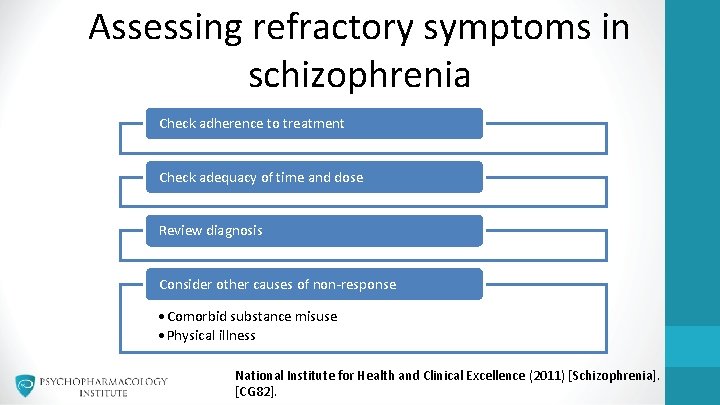
Assessing refractory symptoms in schizophrenia Check adherence to treatment Check adequacy of time and dose Review diagnosis Consider other causes of non-response • Comorbid substance misuse • Physical illness National Institute for Health and Clinical Excellence (2011) [Schizophrenia]. [CG 82].
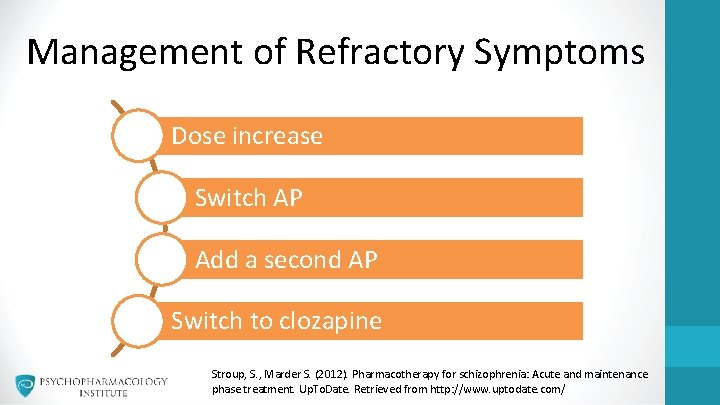
Management of Refractory Symptoms Dose increase Switch AP Add a second AP Switch to clozapine Stroup, S. , Marder S. (2012). Pharmacotherapy for schizophrenia: Acute and maintenance phase treatment. Up. To. Date. Retrieved from http: //www. uptodate. com/
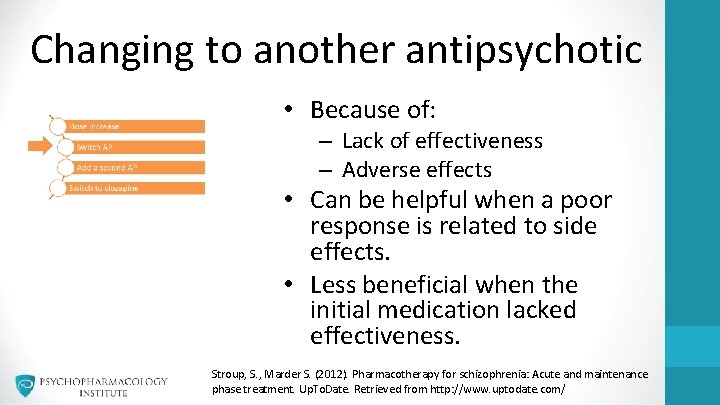
Changing to another antipsychotic • Because of: – Lack of effectiveness – Adverse effects • Can be helpful when a poor response is related to side effects. • Less beneficial when the initial medication lacked effectiveness. Stroup, S. , Marder S. (2012). Pharmacotherapy for schizophrenia: Acute and maintenance phase treatment. Up. To. Date. Retrieved from http: //www. uptodate. com/
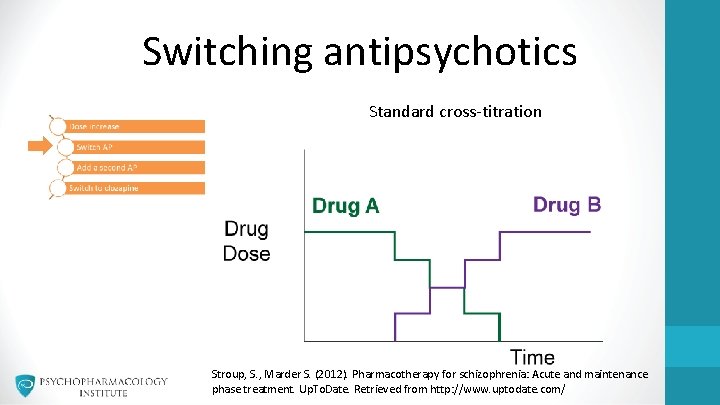
Switching antipsychotics Standard cross-titration Stroup, S. , Marder S. (2012). Pharmacotherapy for schizophrenia: Acute and maintenance phase treatment. Up. To. Date. Retrieved from http: //www. uptodate. com/
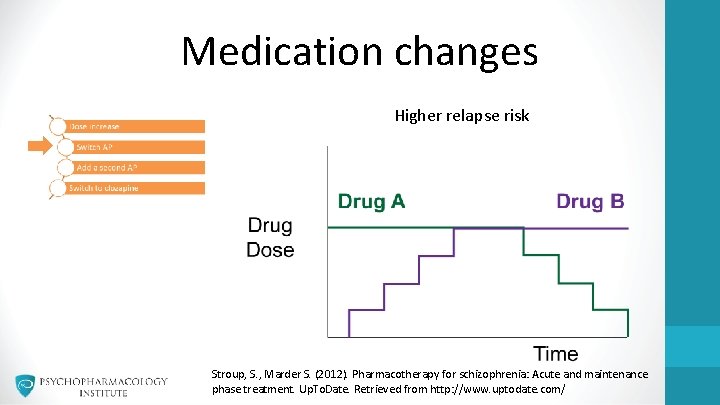
Medication changes Higher relapse risk Stroup, S. , Marder S. (2012). Pharmacotherapy for schizophrenia: Acute and maintenance phase treatment. Up. To. Date. Retrieved from http: //www. uptodate. com/
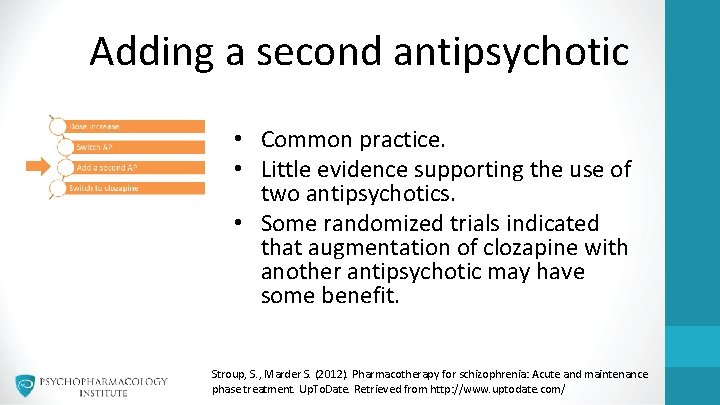
Adding a second antipsychotic • Common practice. • Little evidence supporting the use of two antipsychotics. • Some randomized trials indicated that augmentation of clozapine with another antipsychotic may have some benefit. Stroup, S. , Marder S. (2012). Pharmacotherapy for schizophrenia: Acute and maintenance phase treatment. Up. To. Date. Retrieved from http: //www. uptodate. com/
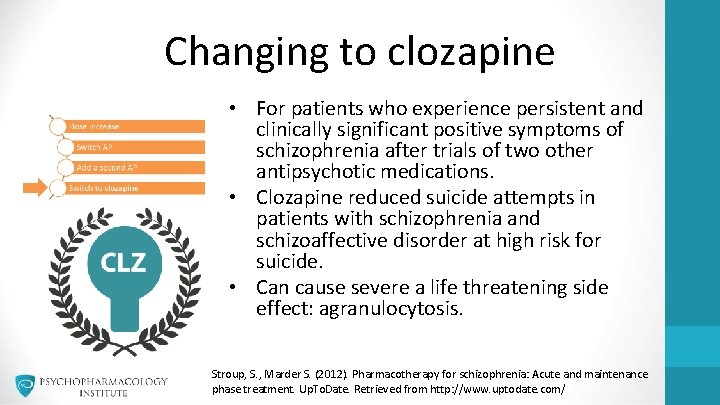
Changing to clozapine • For patients who experience persistent and clinically significant positive symptoms of schizophrenia after trials of two other antipsychotic medications. • Clozapine reduced suicide attempts in patients with schizophrenia and schizoaffective disorder at high risk for suicide. • Can cause severe a life threatening side effect: agranulocytosis. Stroup, S. , Marder S. (2012). Pharmacotherapy for schizophrenia: Acute and maintenance phase treatment. Up. To. Date. Retrieved from http: //www. uptodate. com/
Key Points • When assessing refractory symptoms check adherence to treatment, review diagnosis and consider other causes of non-response. • There is little evidence for combining two antipsychotics. • Clozapine can be used after two trials with other antipsychotics.
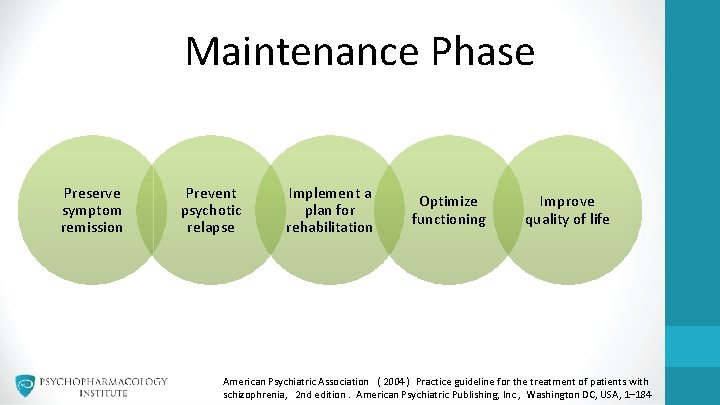
Maintenance Phase Preserve symptom remission Prevent psychotic relapse Implement a plan for rehabilitation Optimize functioning Improve quality of life American Psychiatric Association ( 2004 ) Practice guideline for the treatment of patients with schizophrenia, 2 nd edition. American Psychiatric Publishing, Inc , Washington DC, USA, 1– 184
References • • • American Psychiatric Association ( 2004 ) Practice guideline for the treatment of patients with schizophrenia, 2 nd edition. American Psychiatric Publishing, Inc , Washington DC, USA, 1– 184 Janicak, P G. , Marder S R. , and. Pavuluri M N. Principles and Practice of Psychopharmacotherapy. 5 th ed. Philadelphia: Lippincott Williams & Wilkins, 2010. National Institute for Health and Clinical Excellence (2011) [Schizophrenia]. [CG 82]. Sadock, B J. , V A. Sadock, and P Ruiz. Kaplan and Sadock's Comprehensive Textbook of Psychiatry. 9 th ed. Philadelphia: Lippincott Williams & Wilkins, 2009. Stroup, S. , Marder S. (2012). Pharmacotherapy for schizophrenia: Acute and maintenance phase treatment. Up. To. Date. Retrieved from http: //www. uptodate. com/ Tasman, A; Lieberman, J; Key, J; Maj, M. Psychiatry. 3 rd ed. John Wiley & Sons, 2008