
MODULE 3 DEVELOP AN ACTION PLAN DEVELOP AN

- Slides: 38
MODULE 3: DEVELOP AN ACTION PLAN
DEVELOP AN ACTION PLAN Prioritize identified hazards. Identify occupant / homeowner responsibilities. Identify potential community resources to address hazards. Develop a sample action plan given an assigned issue. 3
SELF ASSESSMENT MODULE 3 – DEVELOP AN ACTION PLAN Name at least 2 types of specialized input we may request before finalizing a scope of work. Name four ways program design can affect prioritization. Name at least one potential program partner. Name three potential program funding sources. 4
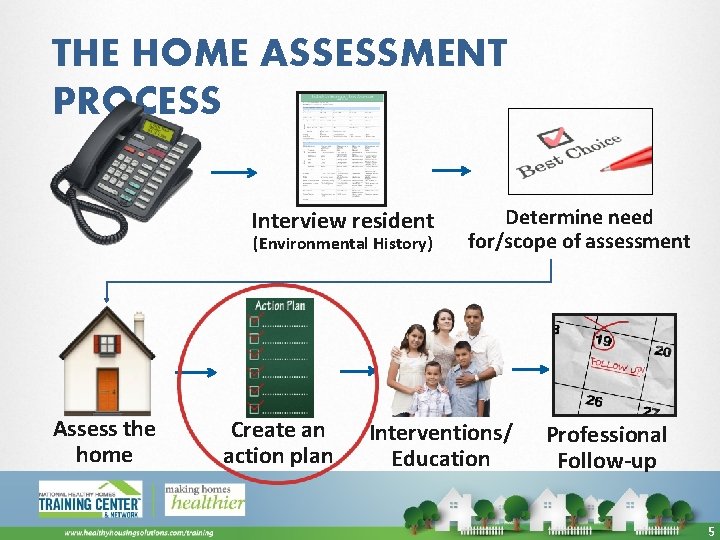
THE HOME ASSESSMENT PROCESS Interview resident (Environmental History) Assess the home Create an action plan Determine need for/scope of assessment Interventions/ Education Professional Follow-up 5
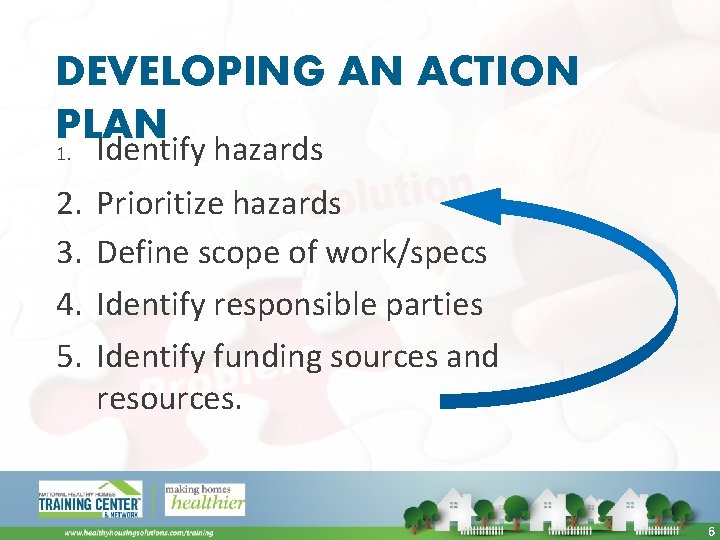
DEVELOPING AN ACTION PLAN 1. 2. 3. 4. 5. Identify hazards Prioritize hazards Define scope of work/specs Identify responsible parties Identify funding sources and resources. 6
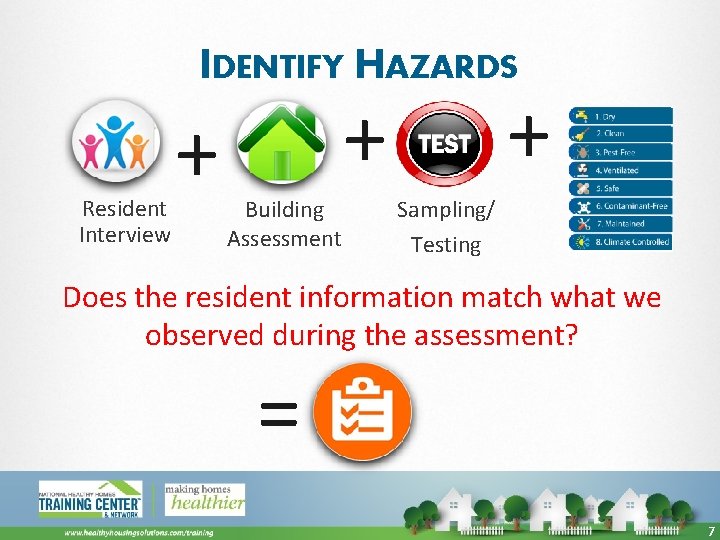
IDENTIFY HAZARDS Resident Interview + + + Building Assessment Sampling/ Testing Does the resident information match what we observed during the assessment? = 7
SPECIALIZED INPUT Lead Inspection/Risk Assessment Combustion Safety Testing Structural Social Services? Why should we deal with these before the action plan is finalized? Healthy Housing Solutions, Inc. www. healthyhousingsolutions. com 8
KEEP IN MIND… The goal is to eliminate or reduce exposure to housing-related hazards that trigger symptoms or cause illness. Consider environmental factors and lifestyle choices Determine interventions for inside and outside the home 9
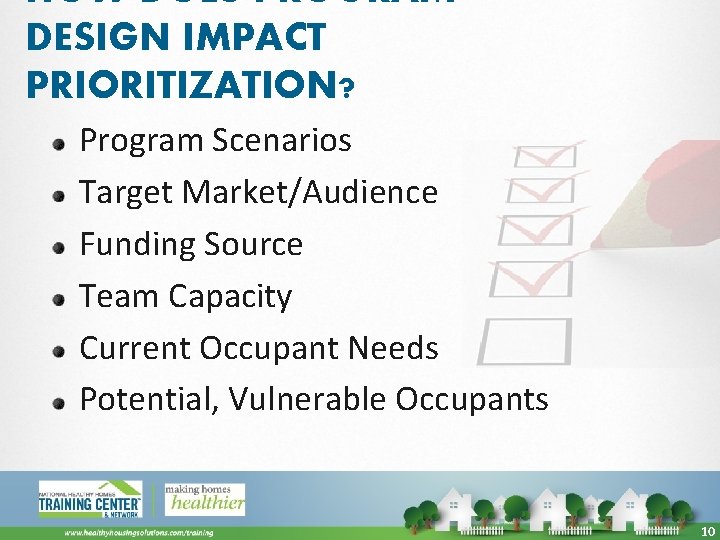
HOW DOES PROGRAM DESIGN IMPACT PRIORITIZATION? Program Scenarios Target Market/Audience Funding Source Team Capacity Current Occupant Needs Potential, Vulnerable Occupants 10
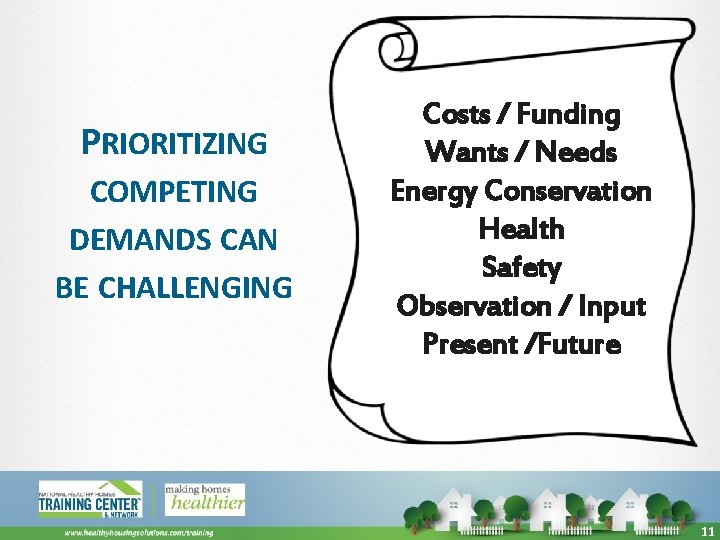
PRIORITIZING COMPETING DEMANDS CAN BE CHALLENGING Costs / Funding Wants / Needs Energy Conservation Health Safety Observation / Input Present /Future 11
WE HAVE COMPETITION… 12
YOUR PROGRAM REQUIREMENTS MAY GUIDE Example: PRIORITIZATION Healthy Home Rating System (HHRS): A riskbased assessment that considers the effect of property hazards in 29 categories. Hazards are rated according to how serious they are and the effect they are having, or could have, on the occupants, that is, “the effect of the defect. ” 13
PRIORITIZE HAZARDS: HEED Health Impact Acute vs Chronic Efficiency/effectiveness Quick? Big impact? Expense Difficulty 14
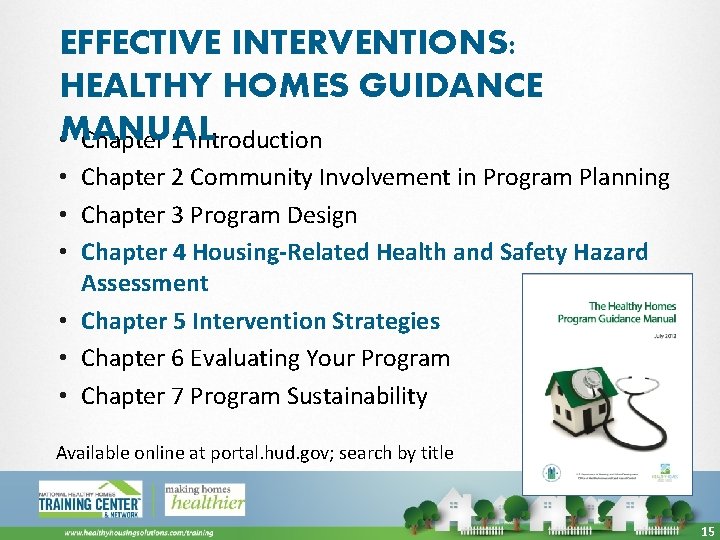
EFFECTIVE INTERVENTIONS: HEALTHY HOMES GUIDANCE MANUAL • Chapter 1 Introduction • Chapter 2 Community Involvement in Program Planning • Chapter 3 Program Design • Chapter 4 Housing-Related Health and Safety Hazard Assessment • Chapter 5 Intervention Strategies • Chapter 6 Evaluating Your Program • Chapter 7 Program Sustainability Available online at portal. hud. gov; search by title 15
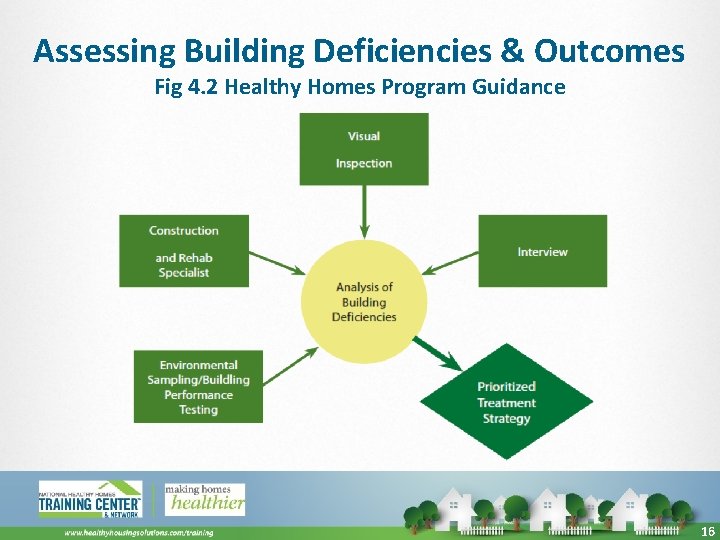
Assessing Building Deficiencies & Outcomes Fig 4. 2 Healthy Homes Program Guidance 16
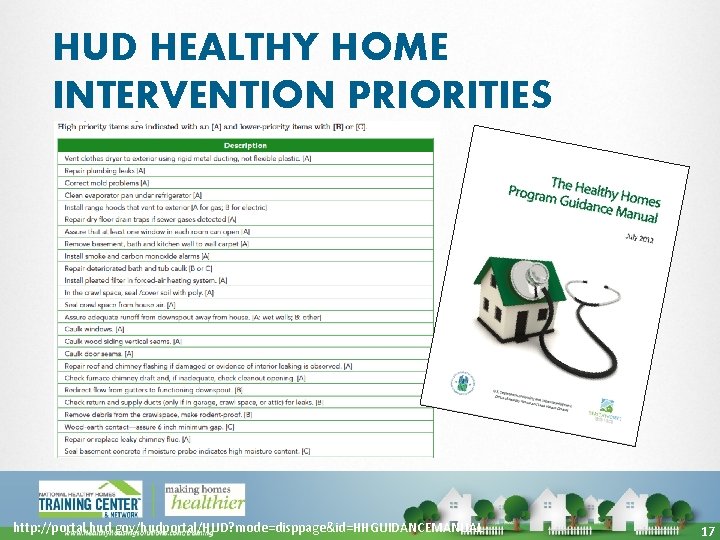
HUD HEALTHY HOME INTERVENTION PRIORITIES http: //portal. hud. gov/hudportal/HUD? mode=disppage&id=HHGUIDANCEMANUAL 17
ONSITE DEBRIEFING: ESTABLISHING A PERSPECTIVE It’s important to approach this exercise from a “constructive” perspective. Assume you are working in a program that has construction resources. 18
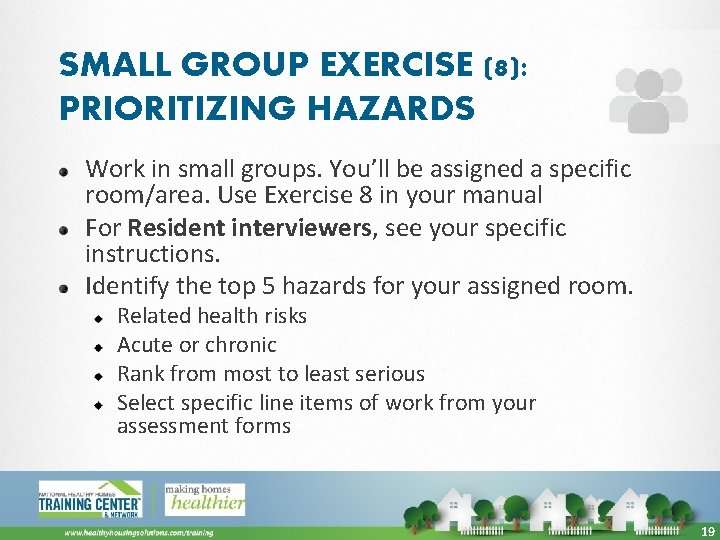
SMALL GROUP EXERCISE (8): PRIORITIZING HAZARDS Work in small groups. You’ll be assigned a specific room/area. Use Exercise 8 in your manual For Resident interviewers, see your specific instructions. Identify the top 5 hazards for your assigned room. Related health risks Acute or chronic Rank from most to least serious Select specific line items of work from your assessment forms 19
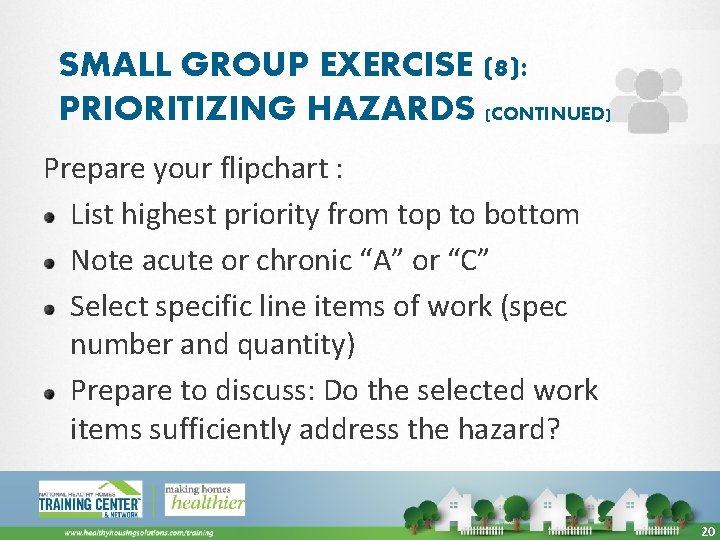
SMALL GROUP EXERCISE (8): PRIORITIZING HAZARDS (CONTINUED) Prepare your flipchart : List highest priority from top to bottom Note acute or chronic “A” or “C” Select specific line items of work (spec number and quantity) Prepare to discuss: Do the selected work items sufficiently address the hazard? 20
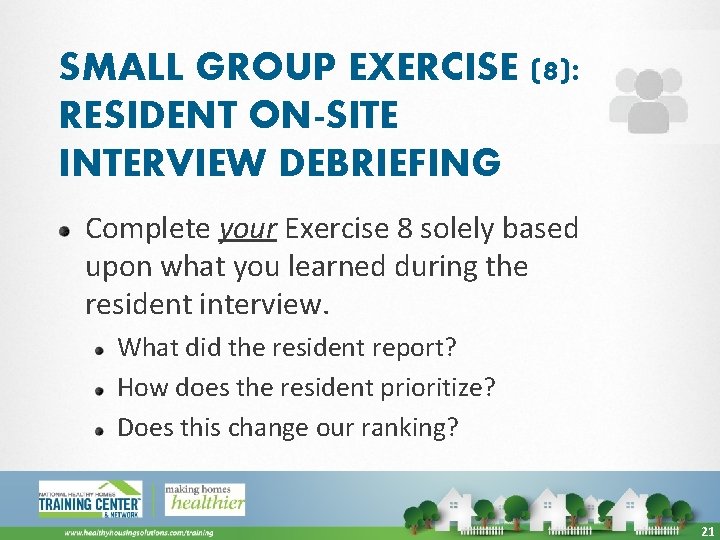
SMALL GROUP EXERCISE (8): RESIDENT ON-SITE INTERVIEW DEBRIEFING Complete your Exercise 8 solely based upon what you learned during the resident interview. What did the resident report? How does the resident prioritize? Does this change our ranking? 21
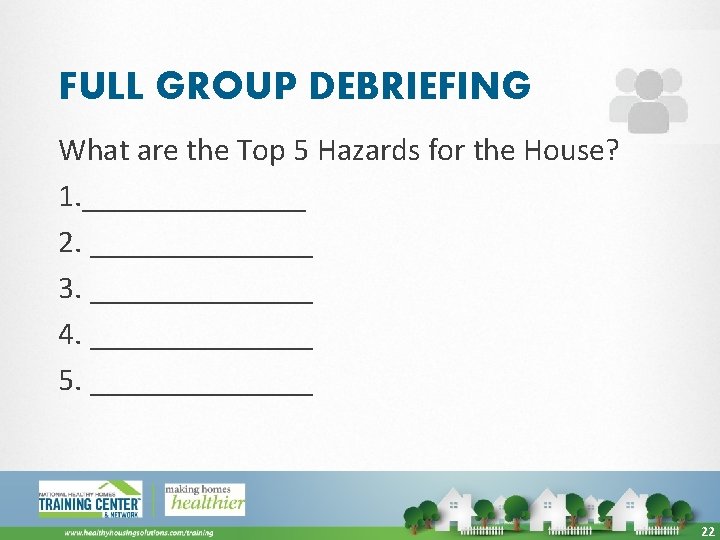
FULL GROUP DEBRIEFING What are the Top 5 Hazards for the House? 1. _______ 2. _______ 3. _______ 4. _______ 5. _______ 22
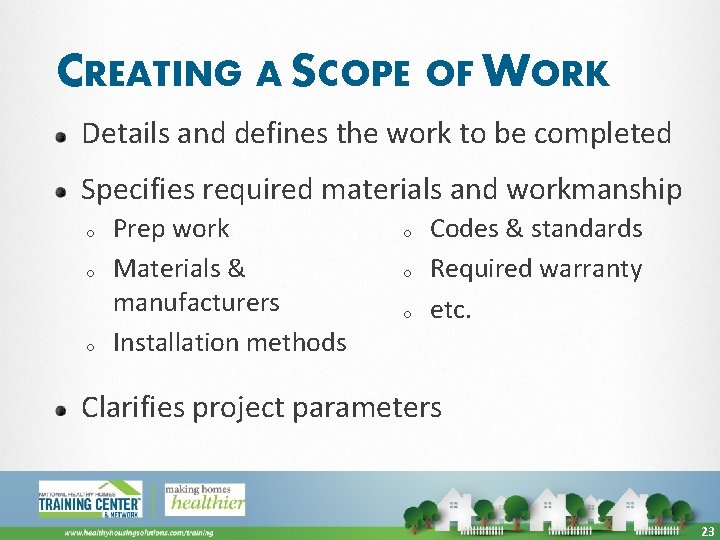
CREATING A SCOPE OF WORK Details and defines the work to be completed Specifies required materials and workmanship o o o Prep work Materials & manufacturers Installation methods o o o Codes & standards Required warranty etc. Clarifies project parameters 23
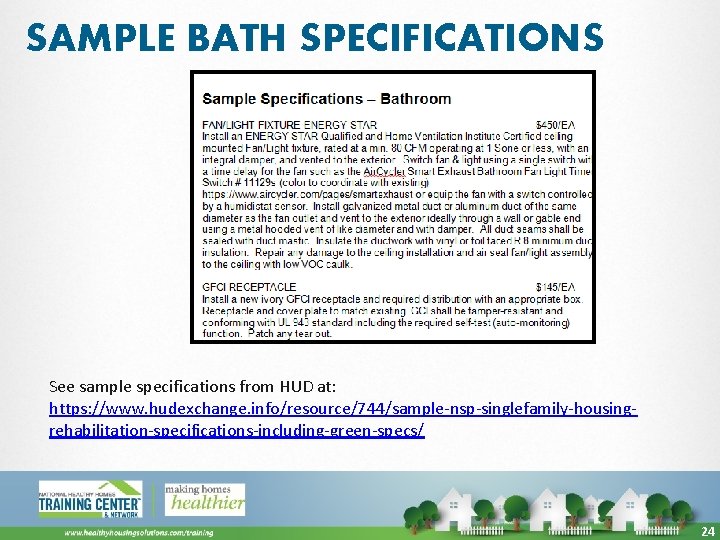
SAMPLE BATH SPECIFICATIONS See sample specifications from HUD at: https: //www. hudexchange. info/resource/744/sample-nsp-singlefamily-housingrehabilitation-specifications-including-green-specs/ 24
TAKING ACTION: IDENTIFY RESPONSIBLE PARTIES Residents Landlord/owner Partners Contracted Professionals 25
REMEMBERING PROGRAM FUNDING AND CAPACITY VARIABLES Allowable program parameters Program design – what they do What they pay for Materials - Work Who does what work Partners & their parameters 26
REFINING THE SCOPE OF WORK Especially important when multiple entities involved Partners Residents Contractors Level of detail will vary by intended audience Do non-professionals need guidance/training? 27
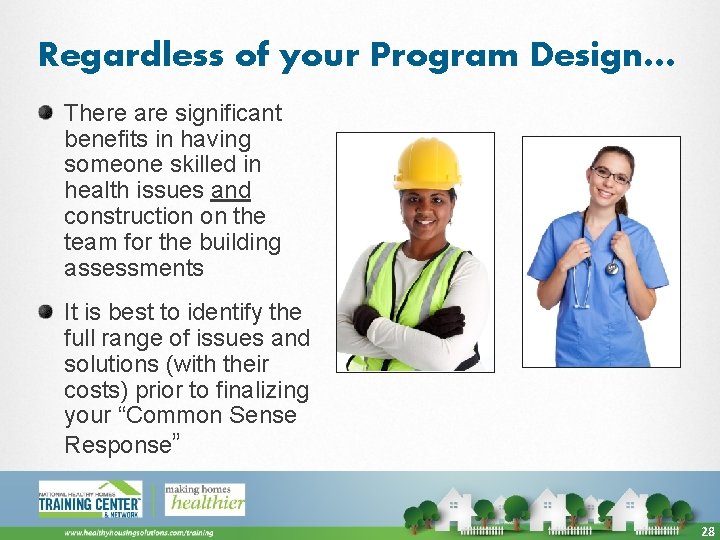
Regardless of your Program Design… There are significant benefits in having someone skilled in health issues and construction on the team for the building assessments It is best to identify the full range of issues and solutions (with their costs) prior to finalizing your “Common Sense Response” 28
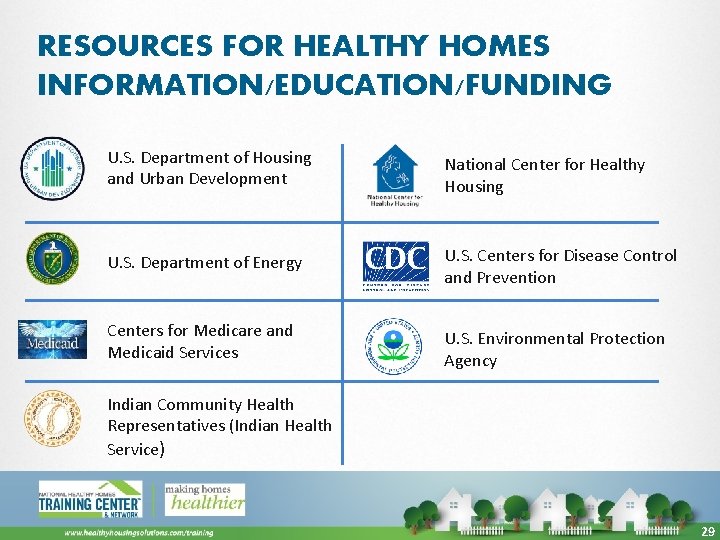
RESOURCES FOR HEALTHY HOMES INFORMATION/EDUCATION/FUNDING U. S. Department of Housing and Urban Development National Center for Healthy Housing U. S. Department of Energy U. S. Centers for Disease Control and Prevention Centers for Medicare and Medicaid Services U. S. Environmental Protection Agency Indian Community Health Representatives (Indian Health Service) 29
RESOURCES FOR SUPPLIES Donated Healthy Homes Supplies Smoke Detectors- Red Cross, Fire Department CO Detectors- Fire Departments Radon Test Kits - State Radon Offices Child Safety Kits - Child Advocacy Organizations 30
RESOURCES FOR SUPPLIES Healthy Home Supply Manufacturers Filters, paint, caulk, etc. Hardware Stores, Home Improvement Stores National Retailers - Local Donation Committees TIP: Buy local so households can find replacement supplies and buy local, too. 31
EXERCISE 9: COMMUNITY RESOURCES What resources are in the room? Your personal knowledge Smartphones Each other Customize the Community Action For Healthy Housing flyer in your manual Be specific! Include websites, emails, phone numbers The group with the most complete flyer wins a fabulous prize! 32
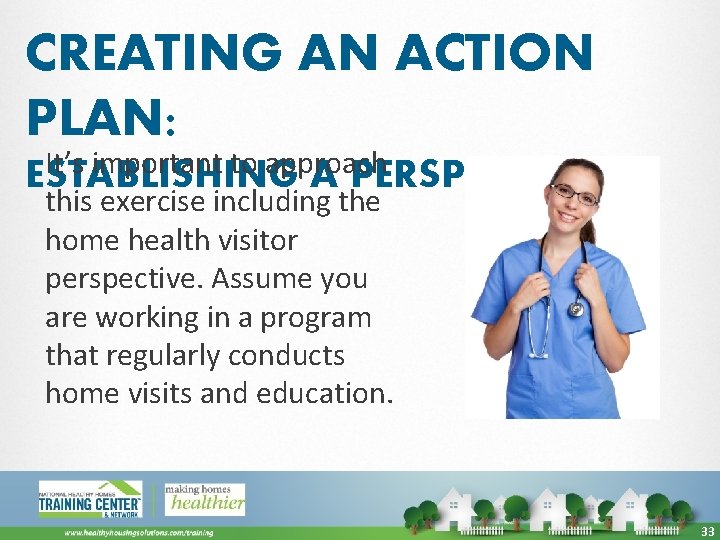
CREATING AN ACTION PLAN: It’s important to approach ESTABLISHING A PERSPECTIVE this exercise including the home health visitor perspective. Assume you are working in a program that regularly conducts home visits and education. 33
SMALL GROUP EXERCISE (10): CREATE AN ACTION PLAN Working in groups, you will be assigned one of the top 5 issues (Exercise 8, Part C). First, use the PEHA nursing care plan to determine responsibilities. This is only one example of an Action Plan. Is it complete for your program purposes? 34
SMALL GROUP EXERCISE (10): CREATE AN ACTION PLAN (CONTINUED) Next, use the Exercise 10 worksheet to develop an Action Plan for your assigned issue. Include all potential resources: Your agency Family Landlord Community organizations, etc. Revisit Exercise 2 Making the Connections 35
SELF ASSESSMENT REVIEW Name at least two types of specialized input we may request before finalizing a Scope of Work Lead Inspection/Risk Assessment Combustion Safety Testing Social Services 36
SELF ASSESSMENT REVIEW Name four ways program design can affect prioritization Funding Source Team Capacity Current Occupant Needs Potential, Vulnerable Occupants 37
SELF ASSESSMENT REVIEW Name one potential program partner Local non-profits Local volunteer groups Social service agencies 38
SELF ASSESSMENT REVIEW Name three potential program funding sources HUD Medicaid Weatherization 39