
Module 3 Adapting Northeastern Forests to a Changing
- Slides: 20
Module 3 Adapting Northeastern Forests to a Changing Climate
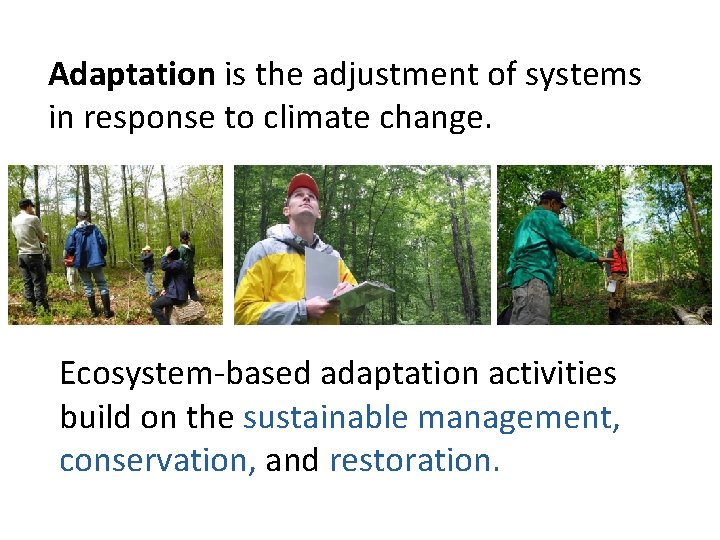
Adaptation is the adjustment of systems in response to climate change. Ecosystem-based adaptation activities build on the sustainable management, conservation, and restoration.
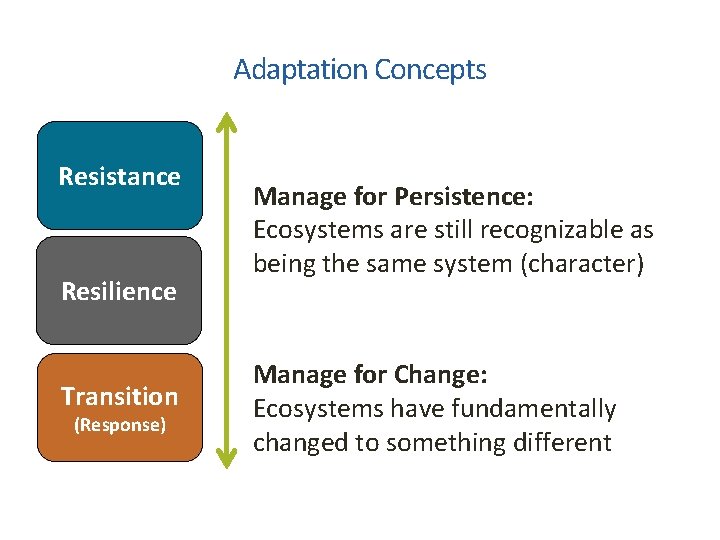
Adaptation Concepts Resistance Resilience Transition (Response) Manage for Persistence: Ecosystems are still recognizable as being the same system (character) Manage for Change: Ecosystems have fundamentally changed to something different
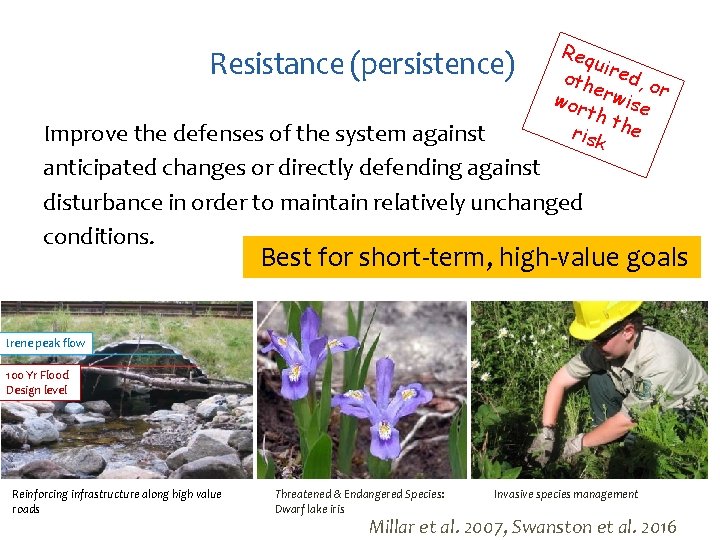
Resistance (persistence) Req ui oth red, o e r wor rwise th t risk he Improve the defenses of the system against anticipated changes or directly defending against disturbance in order to maintain relatively unchanged conditions. Best for short-term, high-value goals Irene peak flow 100 Yr Flood Design level Reinforcing infrastructure along high value roads Threatened & Endangered Species: Dwarf lake iris Invasive species management Millar et al. 2007, Swanston et al. 2016
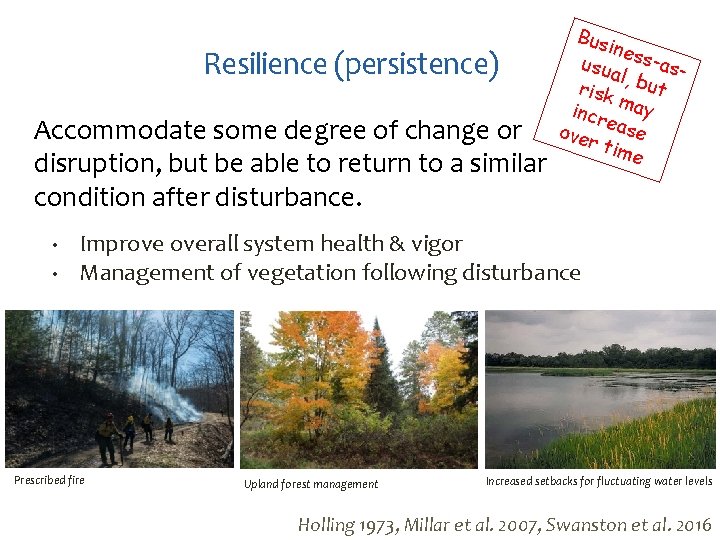
Resilience (persistence) Accommodate some degree of change or disruption, but be able to return to a similar condition after disturbance. • • Bus ines usua s-asl risk , but incr may over ease time Improve overall system health & vigor Management of vegetation following disturbance The Nature Conservancy Prescribed fire Upland forest management Increased setbacks for fluctuating water levels Holling 1973, Millar et al. 2007, Swanston et al. 2016
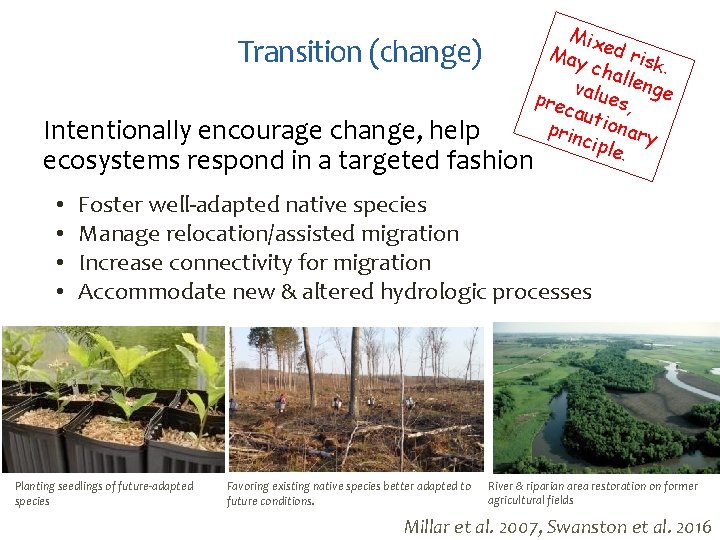
Mix May ed ris Transition (change) k. cha l valu lenge pre e cau s, prin tionary Intentionally encourage change, help cipl e. ecosystems respond in a targeted fashion • • Foster well-adapted native species Manage relocation/assisted migration Increase connectivity for migration Accommodate new & altered hydrologic processes Planting seedlings of future-adapted species Favoring existing native species better adapted to future conditions. River & riparian area restoration on former agricultural fields Millar et al. 2007, Swanston et al. 2016
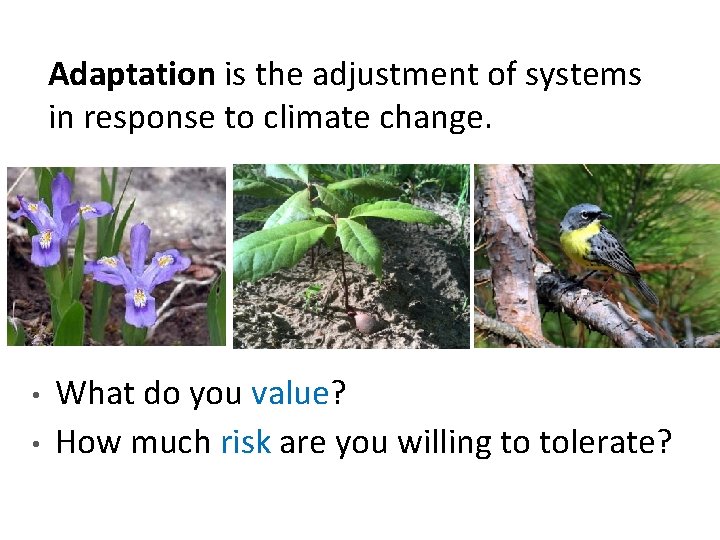
Adaptation is the adjustment of systems in response to climate change. • • What do you value? How much risk are you willing to tolerate?
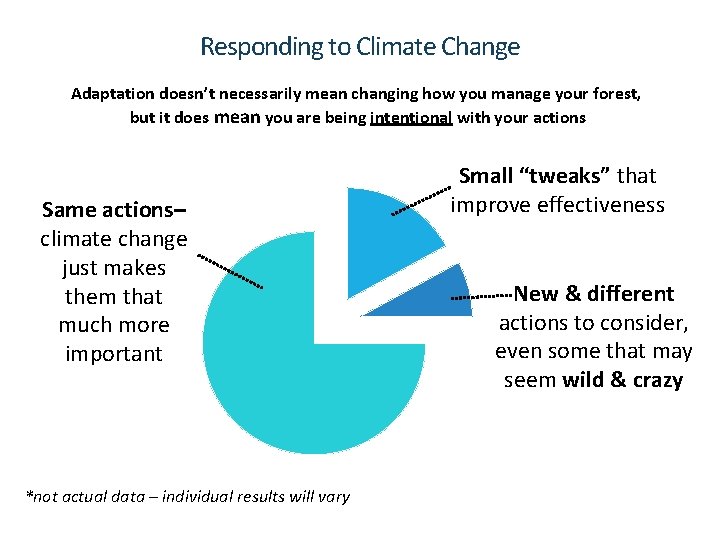
Responding to Climate Change Adaptation doesn’t necessarily mean changing how you manage your forest, but it does mean you are being intentional with your actions Same actions– climate change just makes them that much more important *not actual data – individual results will vary Small “tweaks” that improve effectiveness New & different actions to consider, even some that may seem wild & crazy
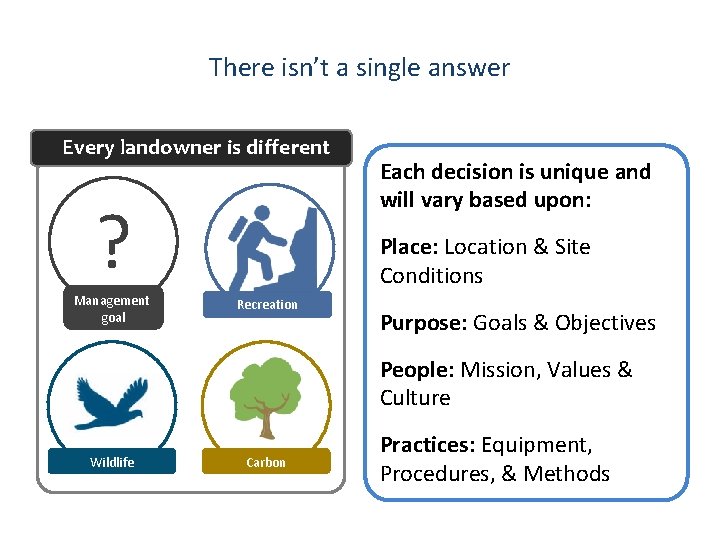
There isn’t a single answer Every landowner is different ? Management goal Each decision is unique and will vary based upon: Place: Location & Site Conditions Recreation Purpose: Goals & Objectives People: Mission, Values & Culture Wildlife Carbon Practices: Equipment, Procedures, & Methods
What can you do for your woods?
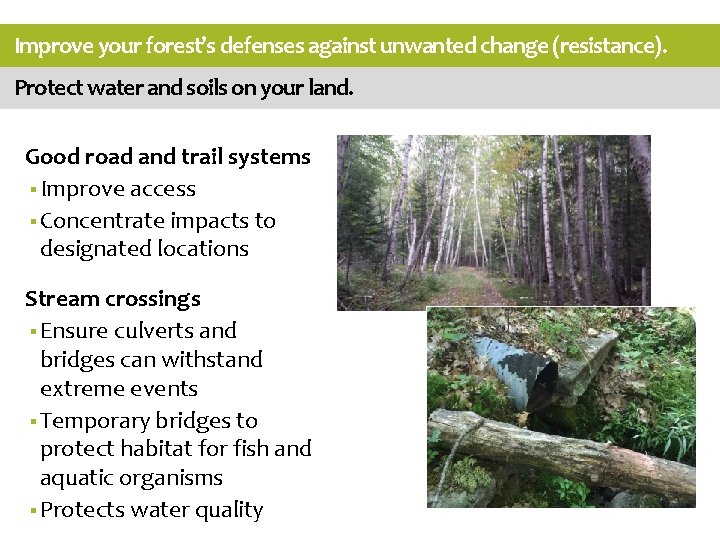
Improve your forest’s defenses against unwanted change (resistance). Protect water and soils on your land. Good road and trail systems § Improve access § Concentrate impacts to designated locations Stream crossings § Ensure culverts and bridges can withstand extreme events § Temporary bridges to protect habitat for fish and aquatic organisms § Protects water quality
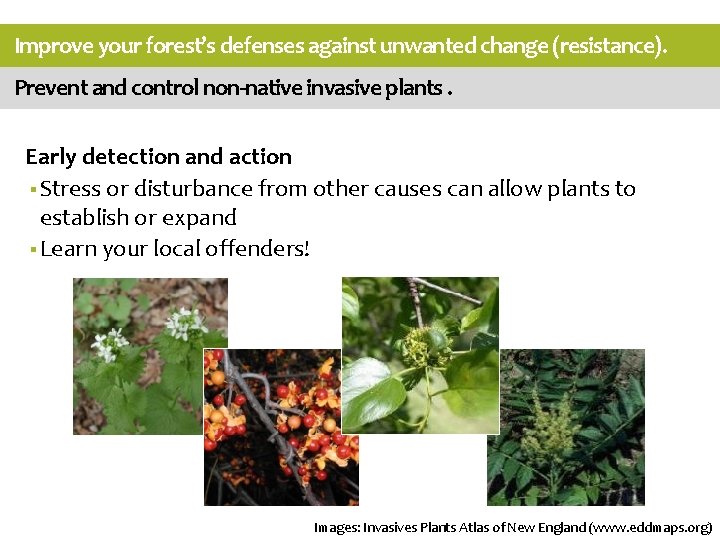
Improve your forest’s defenses against unwanted change (resistance). Prevent and control non-native invasive plants. Early detection and action § Stress or disturbance from other causes can allow plants to establish or expand § Learn your local offenders! Images: Invasives Plants Atlas of New England (www. eddmaps. org)
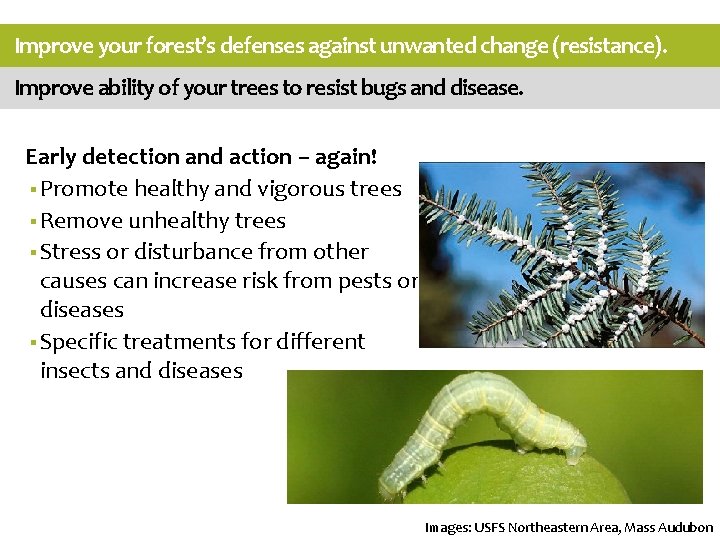
Improve your forest’s defenses against unwanted change (resistance). Improve ability of your trees to resist bugs and disease. Early detection and action – again! § Promote healthy and vigorous trees § Remove unhealthy trees § Stress or disturbance from other causes can increase risk from pests or diseases § Specific treatments for different insects and diseases Images: USFS Northeastern Area, Mass Audubon
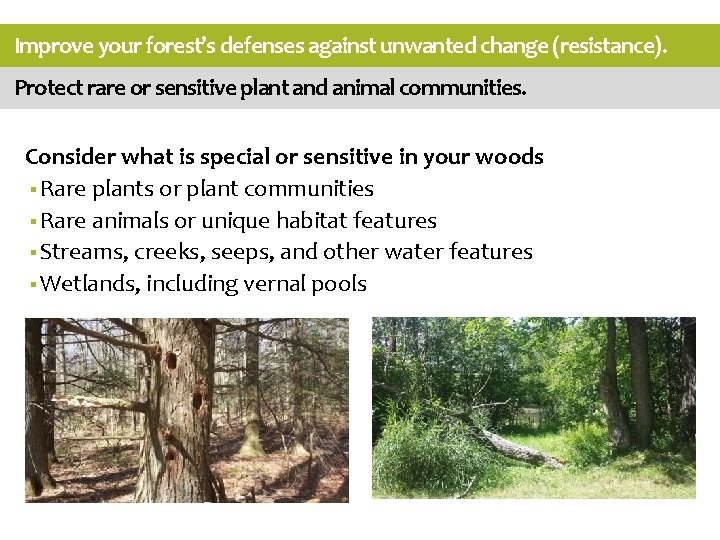
Improve your forest’s defenses against unwanted change (resistance). Protect rare or sensitive plant and animal communities. Consider what is special or sensitive in your woods § Rare plants or plant communities § Rare animals or unique habitat features § Streams, creeks, seeps, and other water features § Wetlands, including vernal pools
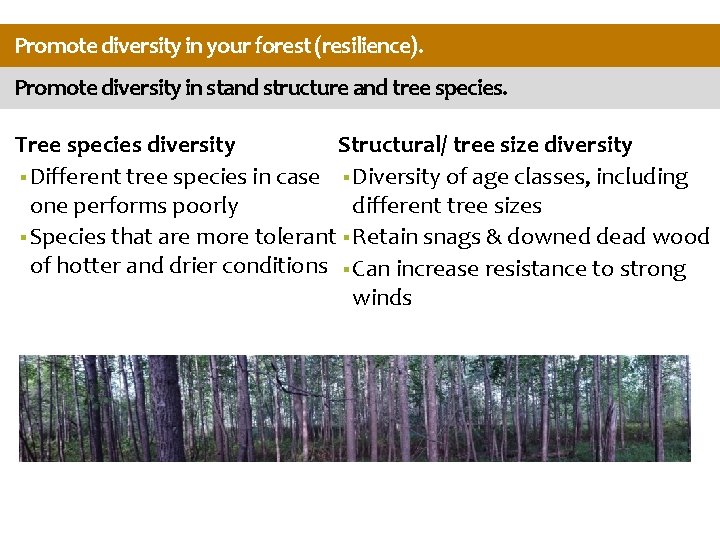
Promote diversity in your forest (resilience). Promote diversity in stand structure and tree species. Structural/ tree size diversity Tree species diversity § Different tree species in case § Diversity of age classes, including different tree sizes one performs poorly § Species that are more tolerant § Retain snags & downed dead wood of hotter and drier conditions § Can increase resistance to strong winds
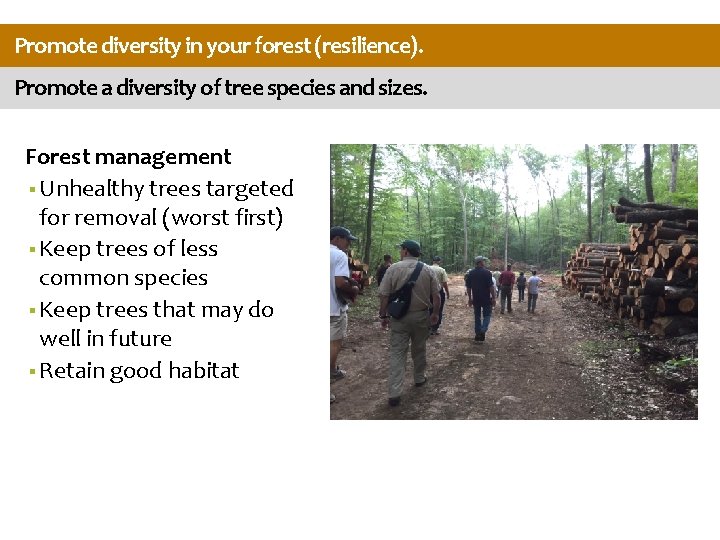
Promote diversity in your forest (resilience). Promote a diversity of tree species and sizes. Forest management § Unhealthy trees targeted for removal (worst first) § Keep trees of less common species § Keep trees that may do well in future § Retain good habitat
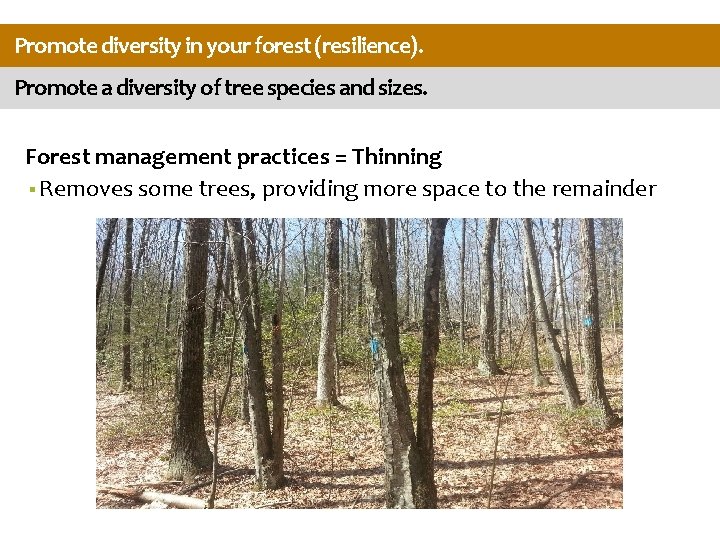
Promote diversity in your forest (resilience). Promote a diversity of tree species and sizes. Forest management practices = Thinning § Removes some trees, providing more space to the remainder
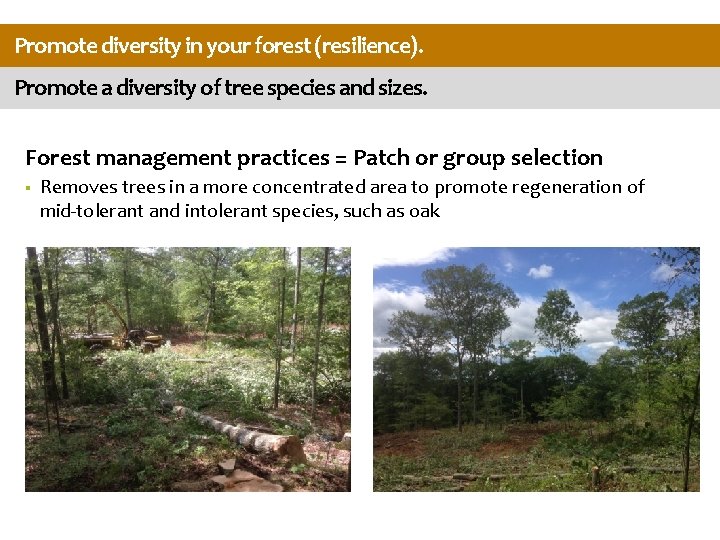
Promote diversity in your forest (resilience). Promote a diversity of tree species and sizes. Forest management practices = Patch or group selection § Removes trees in a more concentrated area to promote regeneration of mid-tolerant and intolerant species, such as oak
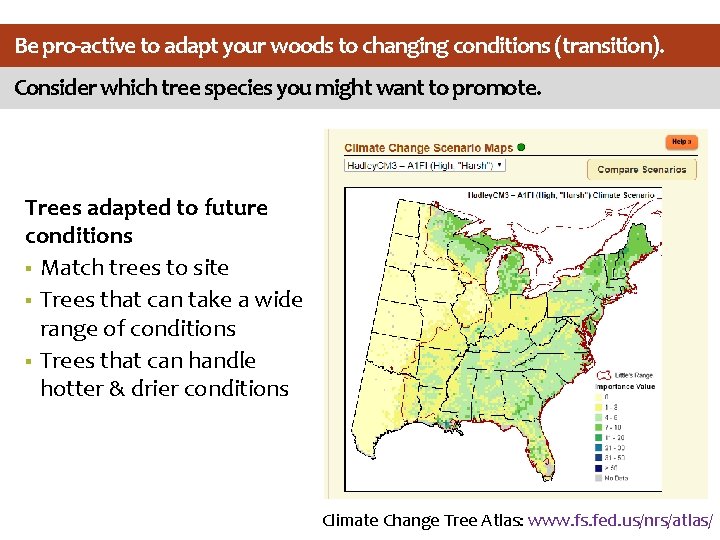
Be pro-active to adapt your woods to changing conditions (transition). Consider which tree species you might want to promote. Trees adapted to future conditions § Match trees to site § Trees that can take a wide range of conditions § Trees that can handle hotter & drier conditions Climate Change Tree Atlas: www. fs. fed. us/nrs/atlas/
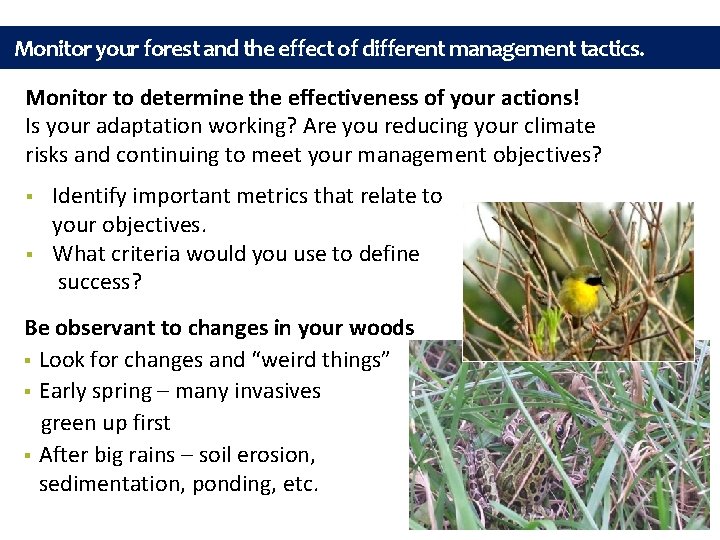
Monitor your forest and the effect of different management tactics. Monitor to determine the effectiveness of your actions! Is your adaptation working? Are you reducing your climate risks and continuing to meet your management objectives? § § Identify important metrics that relate to your objectives. What criteria would you use to define success? Be observant to changes in your woods § Look for changes and “weird things” § Early spring – many invasives green up first § After big rains – soil erosion, sedimentation, ponding, etc.