
Module 25 Banking Money Creation TAccount TAccount table
Module 25 Banking & Money Creation
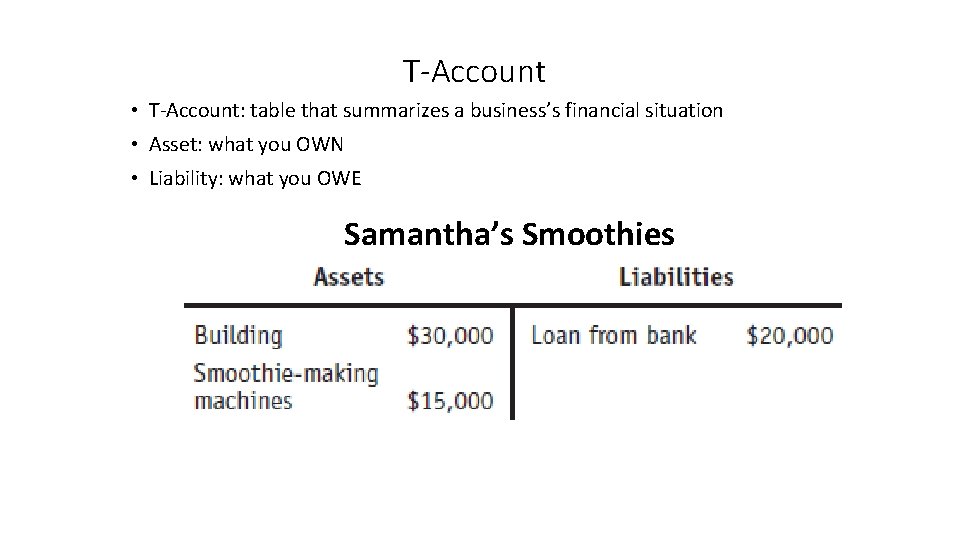
T-Account • T-Account: table that summarizes a business’s financial situation • Asset: what you OWN • Liability: what you OWE Samantha’s Smoothies

T-Account • Note: the bank’s assets > its liabilities • This is required by the Fed Benny’s Bank
T-Account • Bank reserves: the currency that banks hold in their vaults + their deposits at the Fed • Required reserve ratio (RRR): the % of demand deposits (checking accounts) that the Fed requires banks to hold • In the US: 0 -10% depending on deposit size • Reserve ratio: the % of demand deposits that a bank actually holds (can be > RRR) • Bank run: occurs when many of a bank’s depositors try to withdraw their funds due to fears of a bank failure
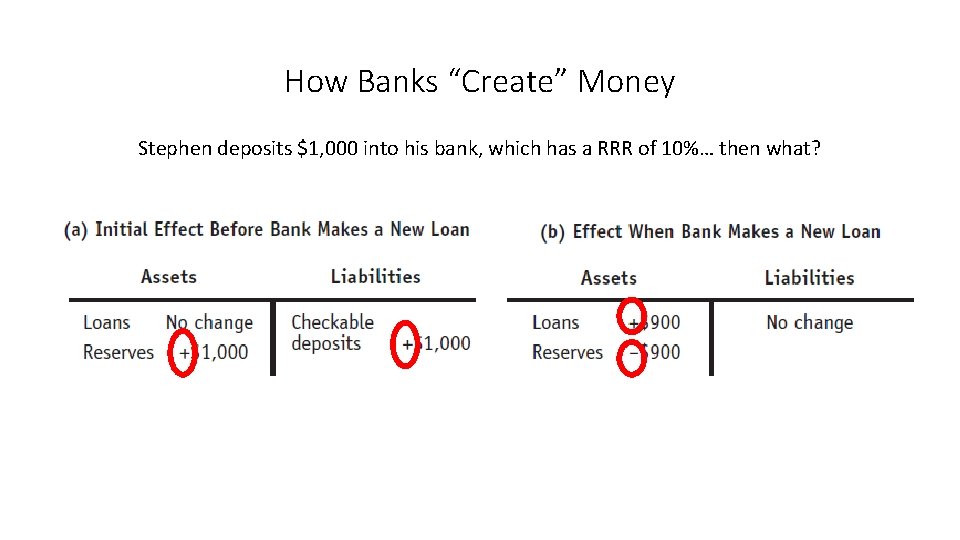
How Banks “Create” Money Stephen deposits $1, 000 into his bank, which has a RRR of 10%… then what?
Meeting the RRR • What if a bank can’t meet the RRR? • Option 1: borrow from another bank (that has excess reserves) in the federal funds market at the federal funds rate • Excess reserves: a bank’s reserves over & above its required reserves • Option 2: borrow from the Fed via the discount window at the discount rate
Fractional Reserve Banking & Multiple Deposit Expansion • Requires banks to keep a set % of deposits as reserves on hand to meet customers’ needs • Allows banks to lend most of a person’s deposit over & over, keeping only a small fraction
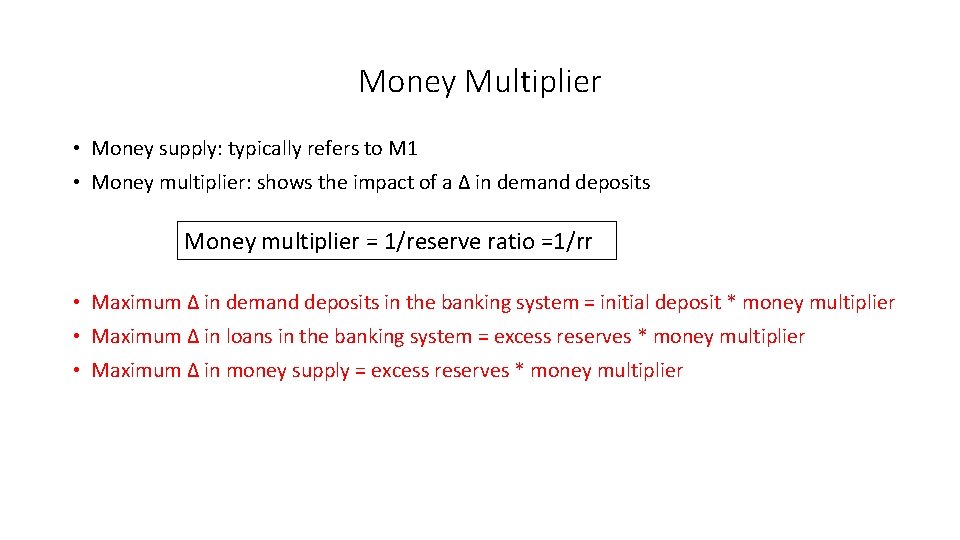
Money Multiplier • Money supply: typically refers to M 1 • Money multiplier: shows the impact of a ∆ in demand deposits Money multiplier = 1/reserve ratio =1/rr • Maximum ∆ in demand deposits in the banking system = initial deposit * money multiplier • Maximum ∆ in loans in the banking system = excess reserves * money multiplier • Maximum ∆ in money supply = excess reserves * money multiplier

Helpful Video https: //www. youtube. com/watch? v=JG 5 c 8 nh. R 3 LE

Assignment Please answer the questions in the next slide and send it to Mr. Ventura.
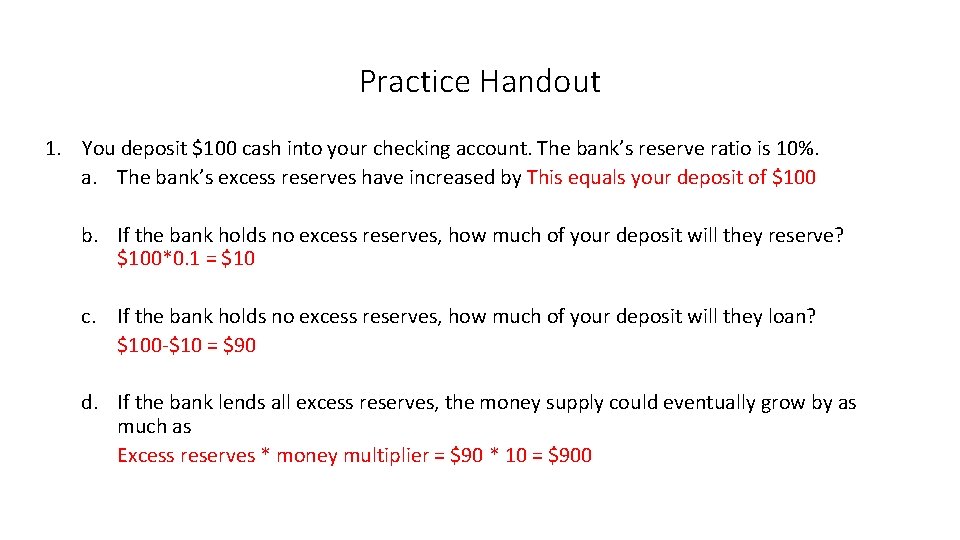
Practice Handout 1. You deposit $100 cash into your checking account. The bank’s reserve ratio is 10%. a. The bank’s excess reserves have increased by This equals your deposit of $100 b. If the bank holds no excess reserves, how much of your deposit will they reserve? $100*0. 1 = $10 c. If the bank holds no excess reserves, how much of your deposit will they loan? $100 -$10 = $90 d. If the bank lends all excess reserves, the money supply could eventually grow by as much as Excess reserves * money multiplier = $90 * 10 = $900
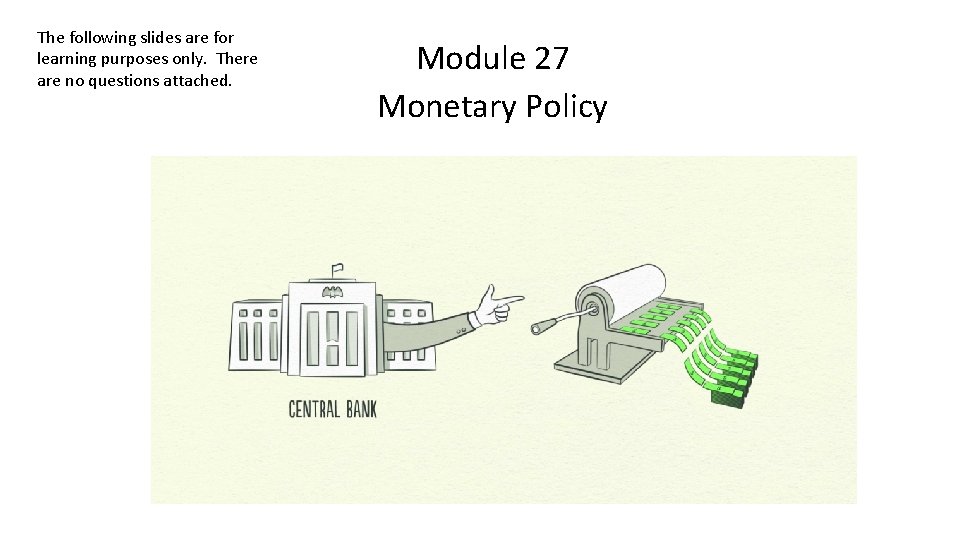
The following slides are for learning purposes only. There are no questions attached. Module 27 Monetary Policy
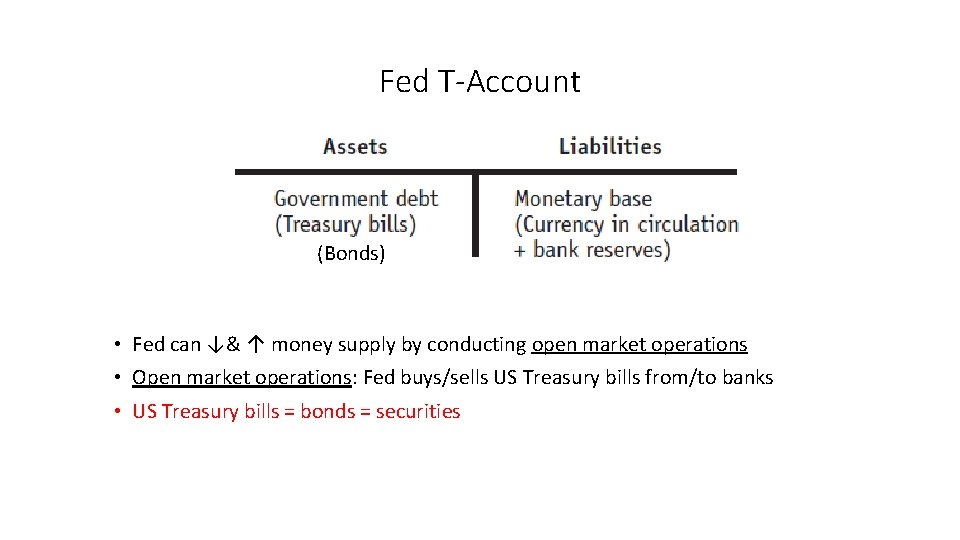
Fed T-Account (Bonds) • Fed can ↓& ↑ money supply by conducting open market operations • Open market operations: Fed buys/sells US Treasury bills from/to banks • US Treasury bills = bonds = securities
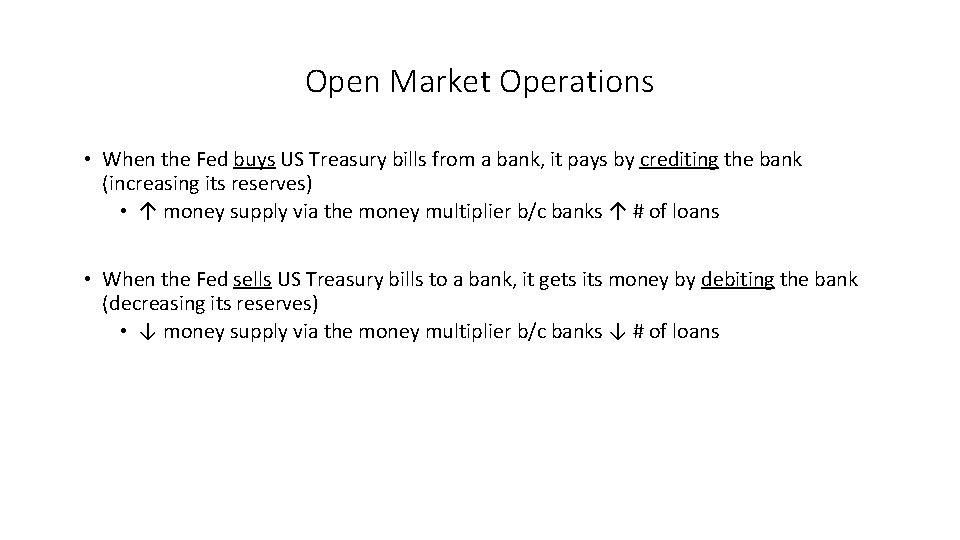
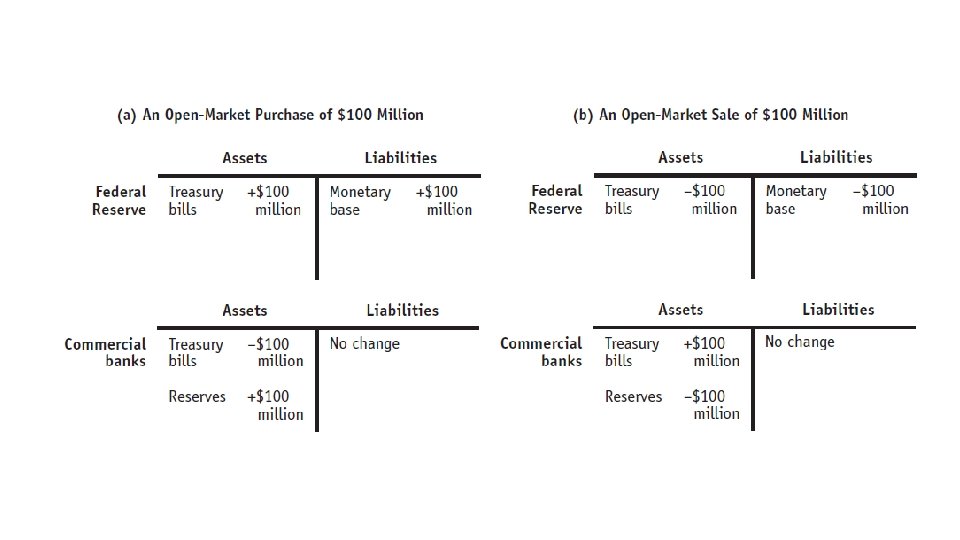
Open Market Operations • When the Fed buys US Treasury bills from a bank, it pays by crediting the bank (increasing its reserves) • ↑ money supply via the money multiplier b/c banks ↑ # of loans • When the Fed sells US Treasury bills to a bank, it gets its money by debiting the bank (decreasing its reserves) • ↓ money supply via the money multiplier b/c banks ↓ # of loans
- Slides: 15