
Module 22 Drugs Standards SSPBF 2 The student
Module 22: Drugs
Standards: �SSPBF 2: The student will compare different states of consciousness. �d. Analyze the physical and psychological issues associated with addiction. �e. Explain how the major drug classes (stimulants, depressants, and hallucinogens) affect neurotransmission and behaviors.
Essential Question: �What are the various types of drugs and how do they affect neurotransmission?
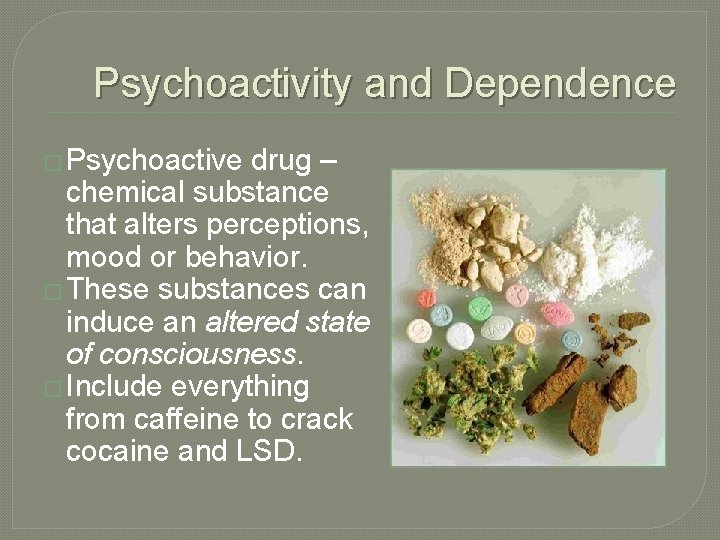
Psychoactivity and Dependence � Psychoactive drug – chemical substance that alters perceptions, mood or behavior. � These substances can induce an altered state of consciousness. � Include everything from caffeine to crack cocaine and LSD.
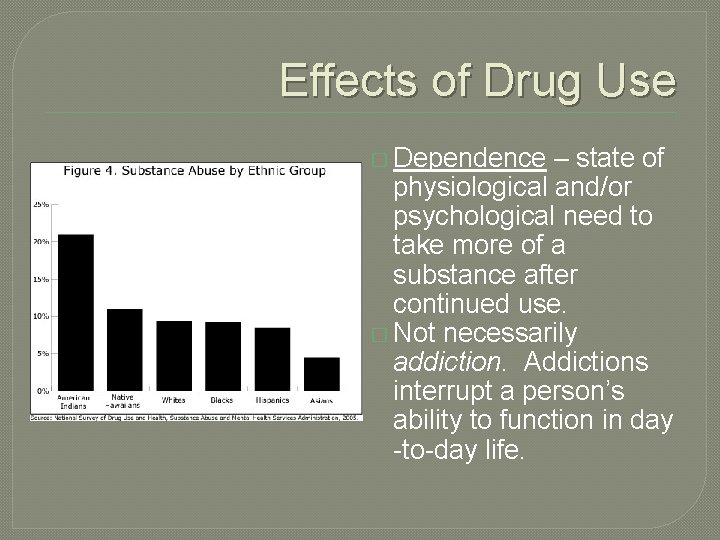
Effects of Drug Use � Dependence – state of physiological and/or psychological need to take more of a substance after continued use. � Not necessarily addiction. Addictions interrupt a person’s ability to function in day -to-day life.
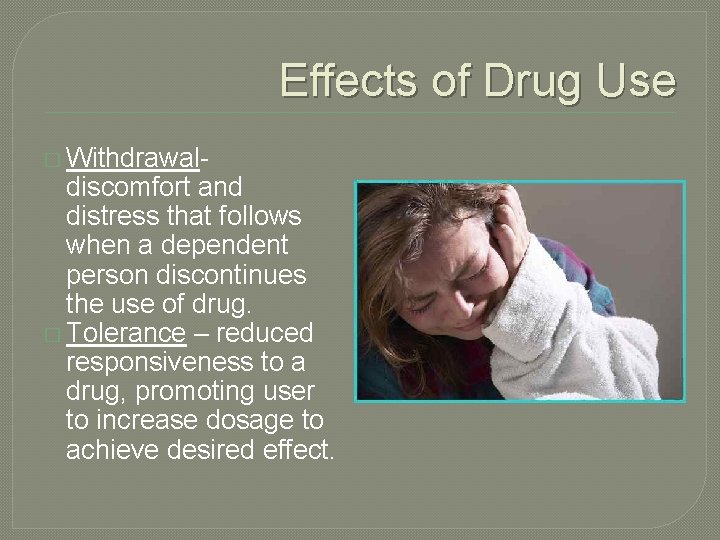
Effects of Drug Use � Withdrawal- discomfort and distress that follows when a dependent person discontinues the use of drug. � Tolerance – reduced responsiveness to a drug, promoting user to increase dosage to achieve desired effect.
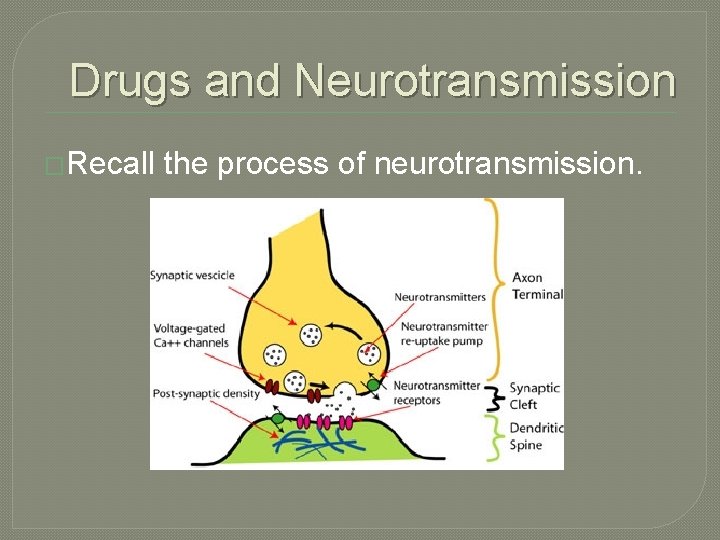
Drugs and Neurotransmission �Recall the process of neurotransmission.
Drugs and Neurotransmission �Psychoactive drugs get into your synapses and affect neurotransmission in three different ways. � 1. Binding with receptor cells – mimics a neurotransmitter’s effects � 2. Blocking receptor sites – prevents neurotransmitters from binding � 3. Blocking neurotransmitter reabsorption – intensifying the effects of neurotransmitter
Drug Classifications �According to the text, there are five major drug categories. �On a separate sheet of paper, I want you to write what you already know about: � 1. depressants � 2. opiates � 3. stimulants � 4. hallucinogens � 5. marijuana
Drug Classes Brochure � Either alone or in pairs, you are to complete a brochure discussing the 5 classes of drugs and how each class uniquely affects neurotransmission. � Please also elaborate on specific types of drugs that comprise each class and other relevant information you acquire from your text. � Make the brochure informative and interesting. � Avoid including insignificant details and put brochure IN YOUR OWN WORDS!
- Slides: 10