
Module 2 Planning and Optimizing a TCPIP Physical
- Slides: 22
Module 2: Planning and Optimizing a TCP/IP Physical and Logical Network
Overview Planning a Functional TCP/IP Solution Evaluating Network Performance
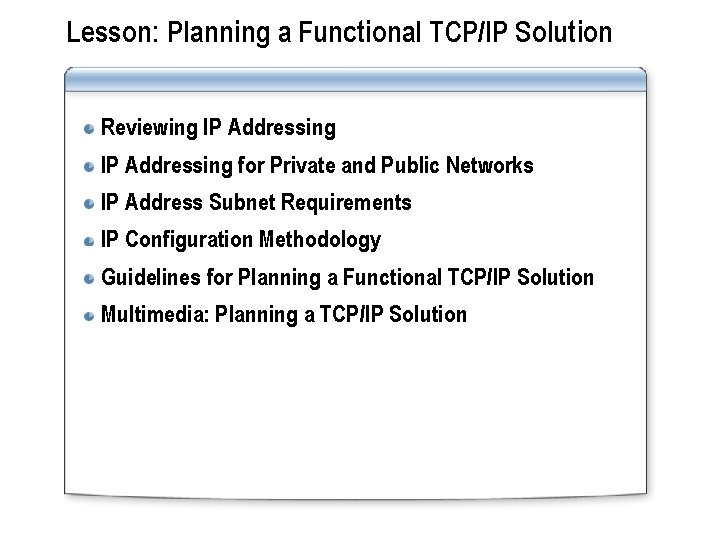
Lesson: Planning a Functional TCP/IP Solution Reviewing IP Addressing for Private and Public Networks IP Address Subnet Requirements IP Configuration Methodology Guidelines for Planning a Functional TCP/IP Solution Multimedia: Planning a TCP/IP Solution
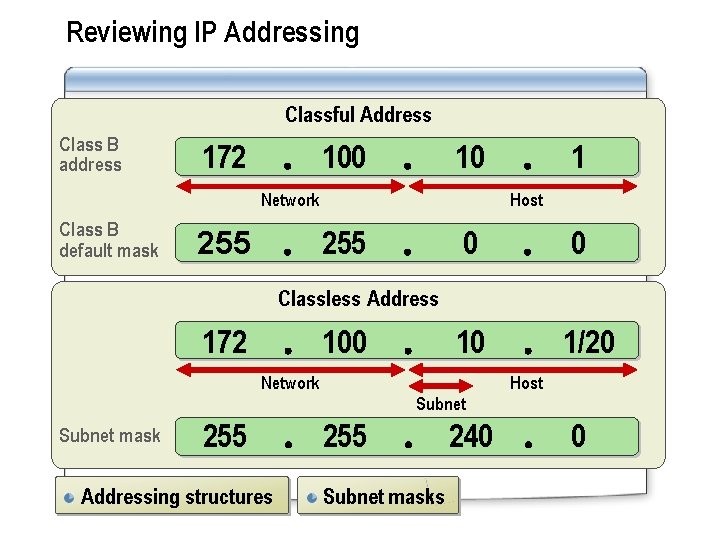
Reviewing IP Addressing Classful Address Class B address 172 100 10 Network Class B default mask Host 255 1 0 0 10 1/20 Classless Address 172 100 Network Subnet mask 255 Addressing structures Subnet 255 Subnet masks 240 Host 0
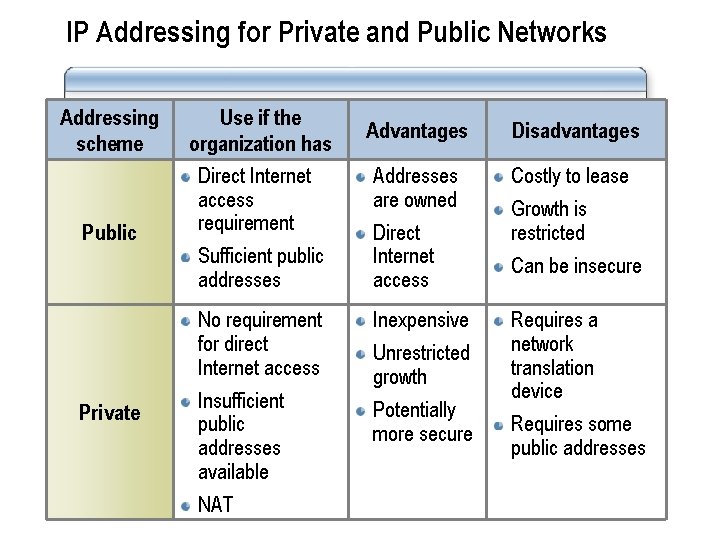
IP Addressing for Private and Public Networks Addressing scheme Public Private Use if the organization has Direct Internet access requirement Sufficient public addresses No requirement for direct Internet access Insufficient public addresses available NAT Advantages Disadvantages Addresses are owned Direct Internet access Costly to lease Growth is restricted Can be insecure Inexpensive Unrestricted growth Potentially more secure Requires a network translation device Requires some public addresses
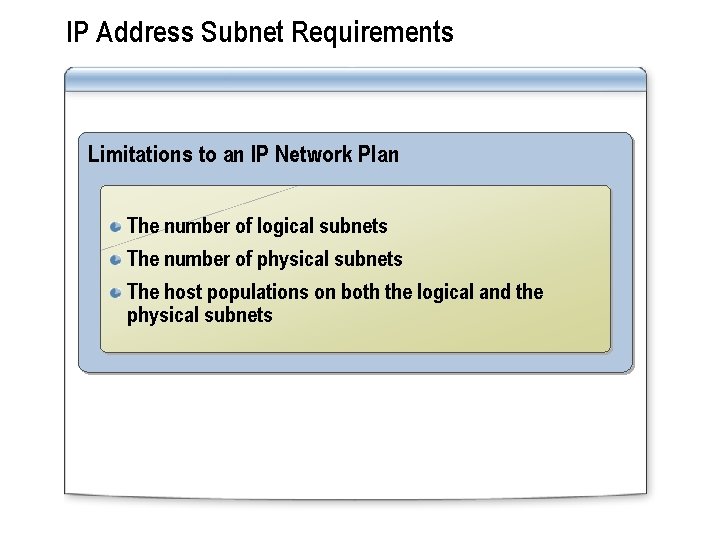
IP Address Subnet Requirements Limitations to an IP Network Plan The number of logical subnets The number of physical subnets The host populations on both the logical and the physical subnets
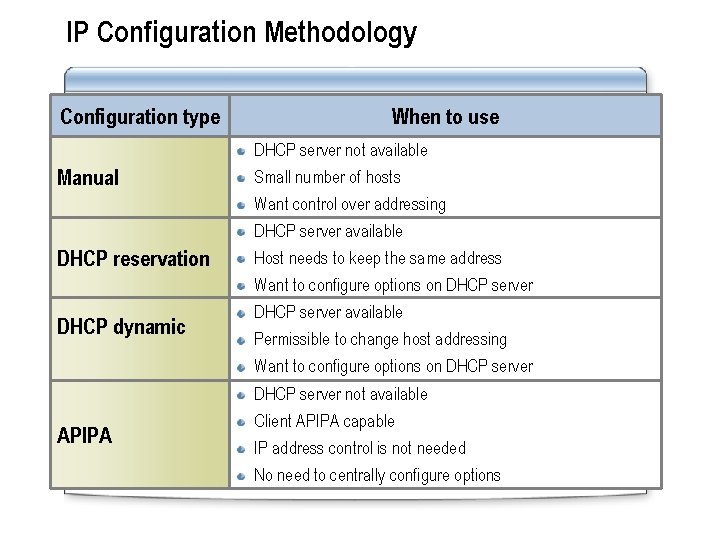
IP Configuration Methodology Configuration type When to use DHCP server not available Manual Small number of hosts Want control over addressing DHCP server available DHCP reservation Host needs to keep the same address Want to configure options on DHCP server DHCP dynamic DHCP server available Permissible to change host addressing Want to configure options on DHCP server not available APIPA Client APIPA capable IP address control is not needed No need to centrally configure options
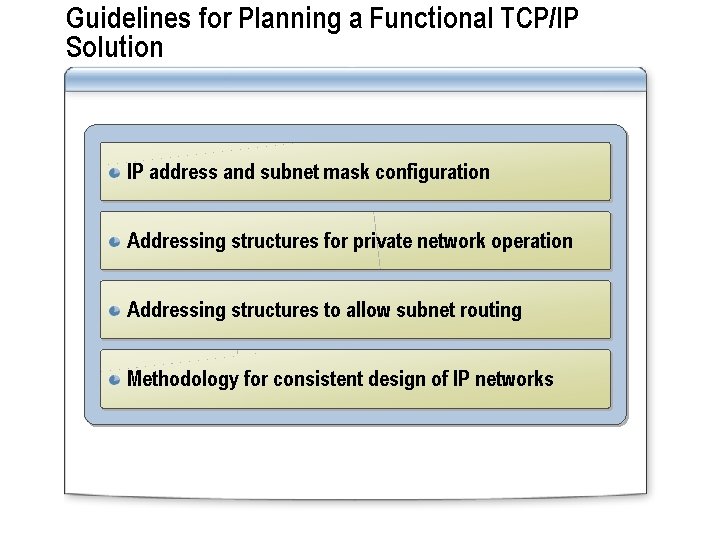
Guidelines for Planning a Functional TCP/IP Solution IP address and subnet mask configuration Addressing structures for private network operation Addressing structures to allow subnet routing Methodology for consistent design of IP networks
Multimedia: Planning a TCP/IP Solution The objective of this presentation is to explain how to plan a TCP/IP solution in a Microsoft Windows Server 2003 network You will learn how to: Create a TCP/IP plan customized to the needs of your organization Select an address hierarchy suitable for a routed network Size subnets for performance or client population
Practice: Planning a TCP/IP Solution In this practice, you will plan: The number of subnets required The IP addressing and subnet mask An IP address configuration methodology
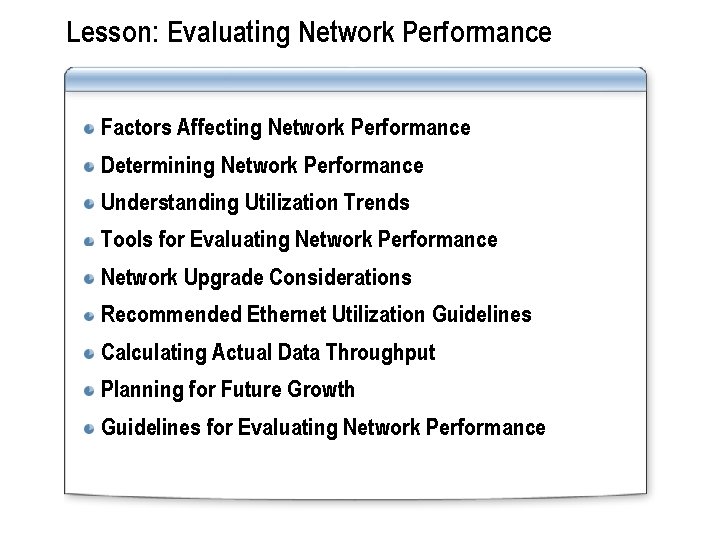
Lesson: Evaluating Network Performance Factors Affecting Network Performance Determining Network Performance Understanding Utilization Trends Tools for Evaluating Network Performance Network Upgrade Considerations Recommended Ethernet Utilization Guidelines Calculating Actual Data Throughput Planning for Future Growth Guidelines for Evaluating Network Performance
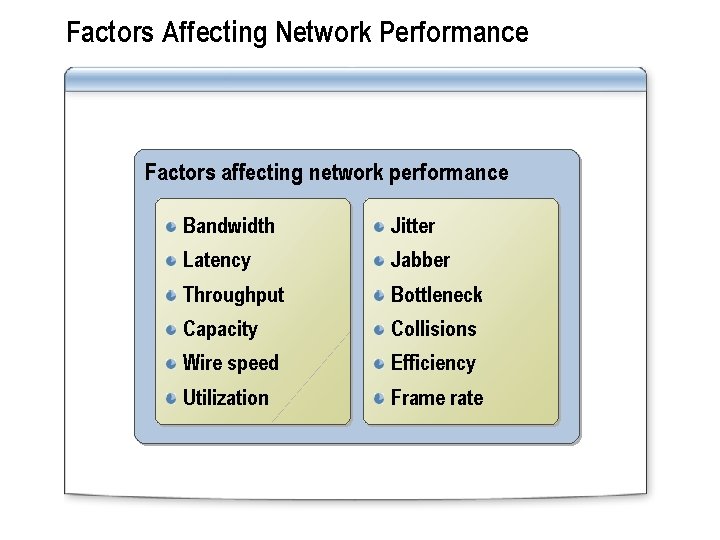
Factors Affecting Network Performance Factors affecting network performance Bandwidth Jitter Latency Jabber Throughput Bottleneck Capacity Collisions Wire speed Efficiency Utilization Frame rate
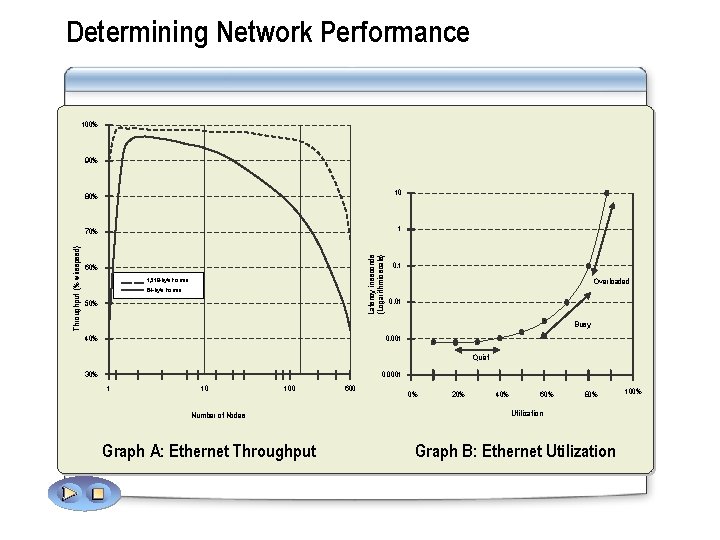
Determining Network Performance 100% 90% 70% 60% 50% 40% 1 10 80% 0. 1 70% 1 Overloaded Latency in seconds (Logarithmic scale) (Logarithmic Scale) Throughput (% wirespeed) Latency in Seconds Throughput (% Wirespeed) 90% 80% 10 1, 518 -byte 0. 01 frames 64 -byte frames 60% 1518 byte frames 0. 001 50% Overloaded 0. 01 Busy 64 byte frames 0. 001 Quiet 40% 0. 0001 30% 0. 1 0. 0001 1 10 0% 30% 100 20% 600 40% 0% 60% 20% 40% 80% 100% Utilization Number of Nodes 1 60% 10 100 600 Utilization Graph A: Ethernet Throughput Number of Nodes. Graph B: Ethernet Utilization 100%
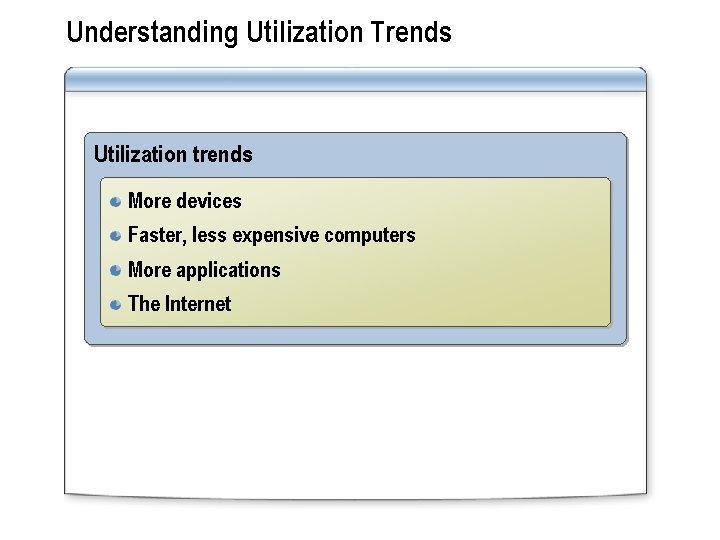
Understanding Utilization Trends Utilization trends More devices Faster, less expensive computers More applications The Internet
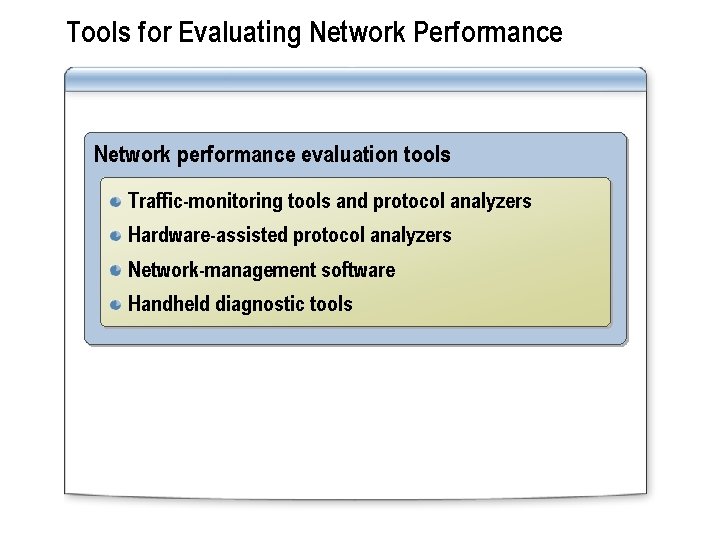
Tools for Evaluating Network Performance Network performance evaluation tools Traffic-monitoring tools and protocol analyzers Hardware-assisted protocol analyzers Network-management software Handheld diagnostic tools
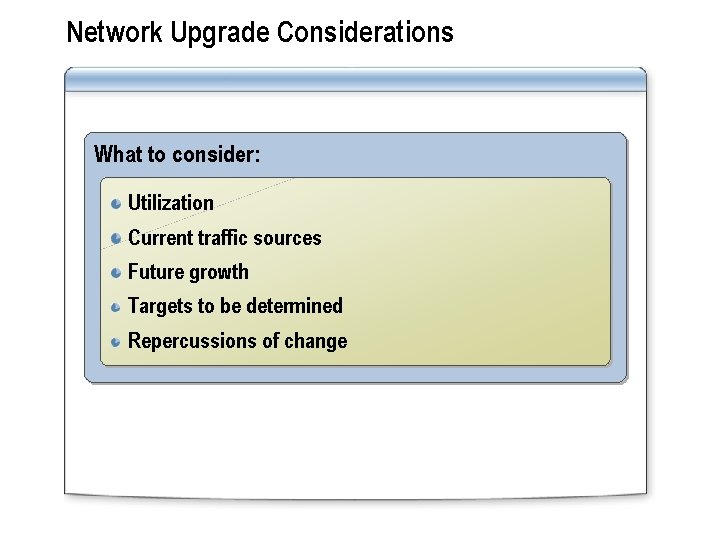
Network Upgrade Considerations What to consider: Utilization Current traffic sources Future growth Targets to be determined Repercussions of change
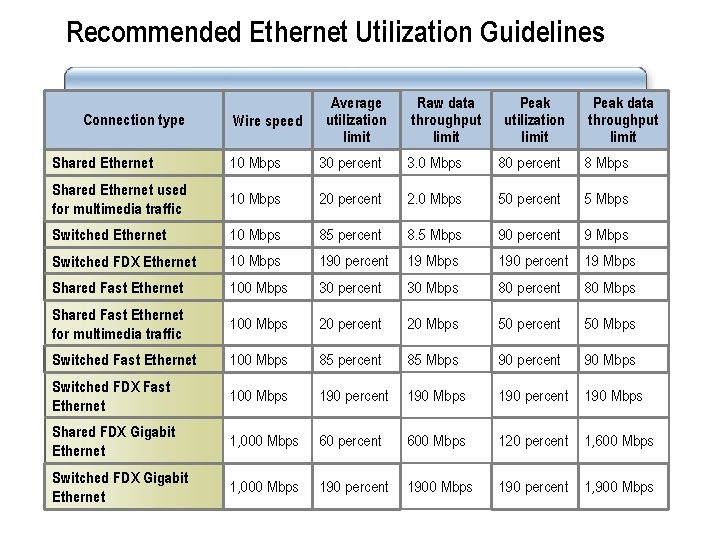
Recommended Ethernet Utilization Guidelines Connection type Wire speed Average utilization limit Raw data throughput limit Peak utilization limit Peak data throughput limit Shared Ethernet 10 Mbps 30 percent 3. 0 Mbps 80 percent 8 Mbps Shared Ethernet used for multimedia traffic 10 Mbps 20 percent 2. 0 Mbps 50 percent 5 Mbps Switched Ethernet 10 Mbps 85 percent 8. 5 Mbps 90 percent 9 Mbps Switched FDX Ethernet 10 Mbps 190 percent 19 Mbps Shared Fast Ethernet 100 Mbps 30 percent 30 Mbps 80 percent 80 Mbps Shared Fast Ethernet for multimedia traffic 100 Mbps 20 percent 20 Mbps 50 percent 50 Mbps Switched Fast Ethernet 100 Mbps 85 percent 85 Mbps 90 percent 90 Mbps Switched FDX Fast Ethernet 100 Mbps 190 percent 190 Mbps Shared FDX Gigabit Ethernet 1, 000 Mbps 60 percent 600 Mbps 120 percent 1, 600 Mbps Switched FDX Gigabit Ethernet 1, 000 Mbps 190 percent 1900 Mbps 190 percent 1, 900 Mbps
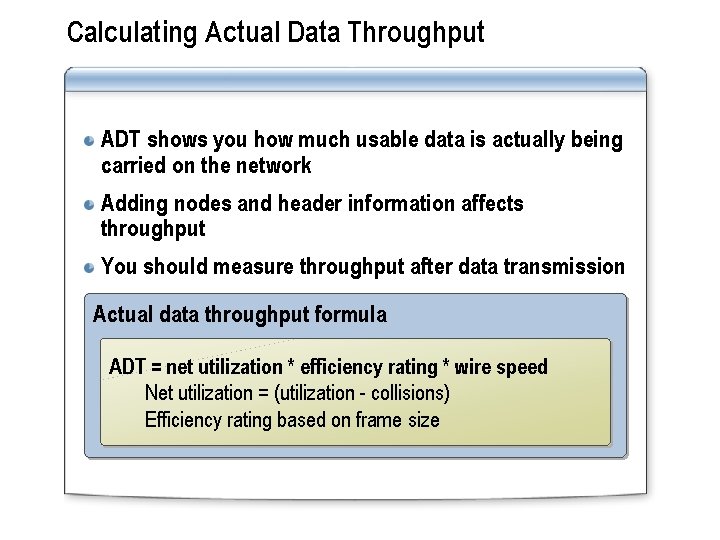
Calculating Actual Data Throughput ADT shows you how much usable data is actually being carried on the network Adding nodes and header information affects throughput You should measure throughput after data transmission Actual data throughput formula ADT = net utilization * efficiency rating * wire speed Net utilization = (utilization - collisions) Efficiency rating based on frame size
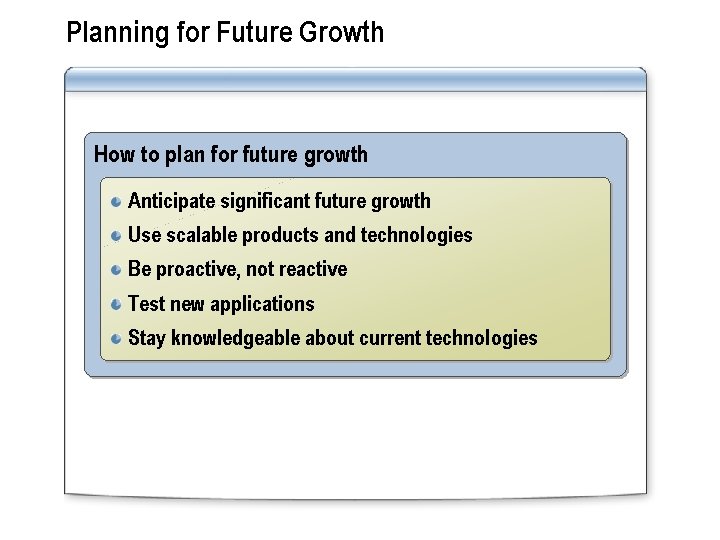
Planning for Future Growth How to plan for future growth Anticipate significant future growth Use scalable products and technologies Be proactive, not reactive Test new applications Stay knowledgeable about current technologies
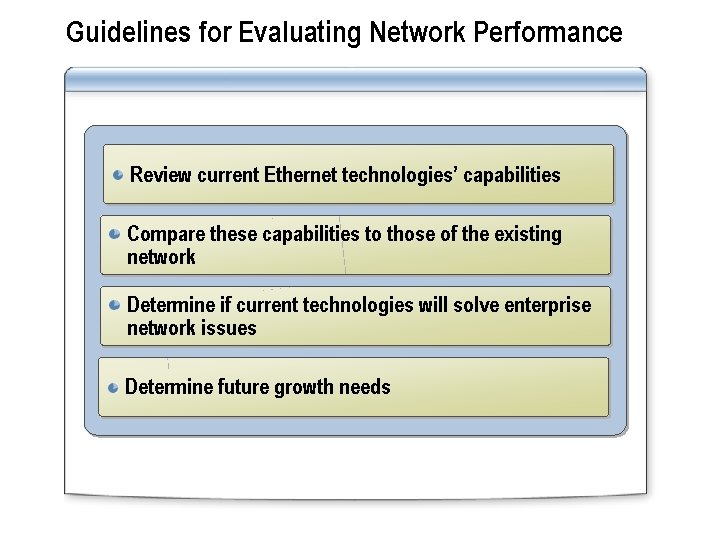
Guidelines for Evaluating Network Performance Review current Ethernet technologies’ capabilities Compare these capabilities to those of the existing network Determine if current technologies will solve enterprise network issues Determine future growth needs
Practice: Evaluating Network Performance In this practice, you will Determine if current utilization is appropriate Identify ways of improving network performance
Lab A: Planning a TCP/IP Physical and Logical Network Exercise 1: Evaluating Network Performance Exercise 2: Planning a Logical TCP/IP Network Exercise 3: Measuring Network Utilization