
MODULE 2 PERFORMANCE APPRAISAL UNIT 2 CHARACTERISTICS OF

- Slides: 8
MODULE 2: PERFORMANCE APPRAISAL UNIT 2 CHARACTERISTICS OF PERFORMANCE APPRAISAL
Characteristics of a Sound Appraisal Plan ØThere must be agreement among line managers as regards the need and the purposes. ØComplex plans should be avoided. ØThe supervisors' co-operation should be solicited not only in preparing the appraisal form, but also in respect of the weights to be assigned to each factor. ØIt is necessary that the appraisal plan is totally explained in advance to those who are possible to have bearing on it because of its implementation. ØThe supervisors must be provided essential training for the same. ØThere must be full collaboration of line and staff employees and also mutual checking of their performance appraisal. ØThere must be provisions for challenges and review of performance appraisals, if required by the union representative
Sources of Performance Appraisal ØThe immediate supervisor ØPeers ØSubordinates ØSelf-appraisal ØRating Committees ØUser of Services
Metrics of Performance Appraisal ØQuality: The degree to which the process or result of carrying out an activity approaches perfection ØQuantity: The amount produced, expressed in monetary terms, number of units, or number completed activity cycles. ØTimeliness: The degree to which an activity is completed or result produced, at the earliest time. ØCost effectiveness: The degree to which the use of organisation’s resources that is monetary, human, technological and material etc. is maximized. ØNeed for supervision: The degree to which a job performer can carry out a job function without either having to request supervisory intervention to prevent an adverse outcome. ØInterpersonal impact: The degree to which a performer promotes feeling of self-esteem, goodwill and cooperation among co-workers and subordinates.
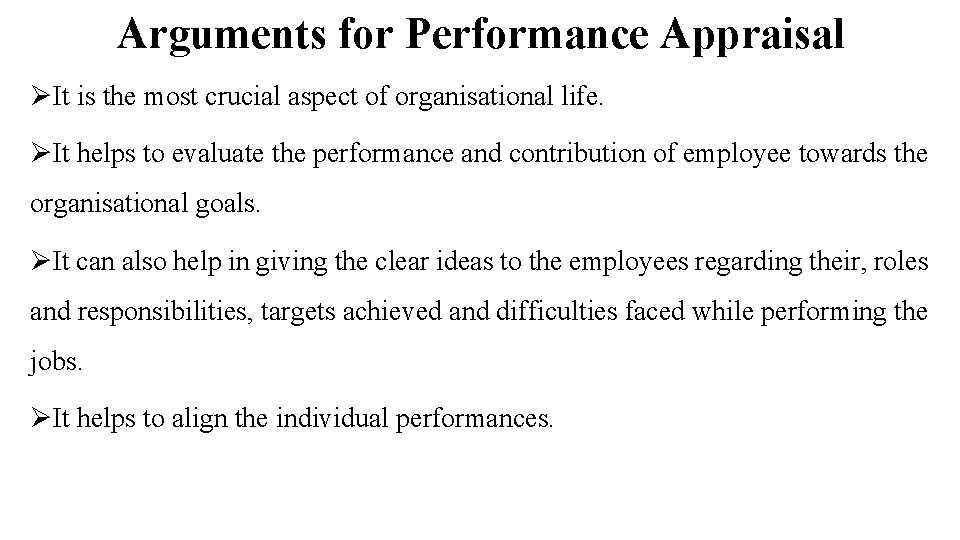
Arguments for Performance Appraisal ØIt is the most crucial aspect of organisational life. ØIt helps to evaluate the performance and contribution of employee towards the organisational goals. ØIt can also help in giving the clear ideas to the employees regarding their, roles and responsibilities, targets achieved and difficulties faced while performing the jobs. ØIt helps to align the individual performances.
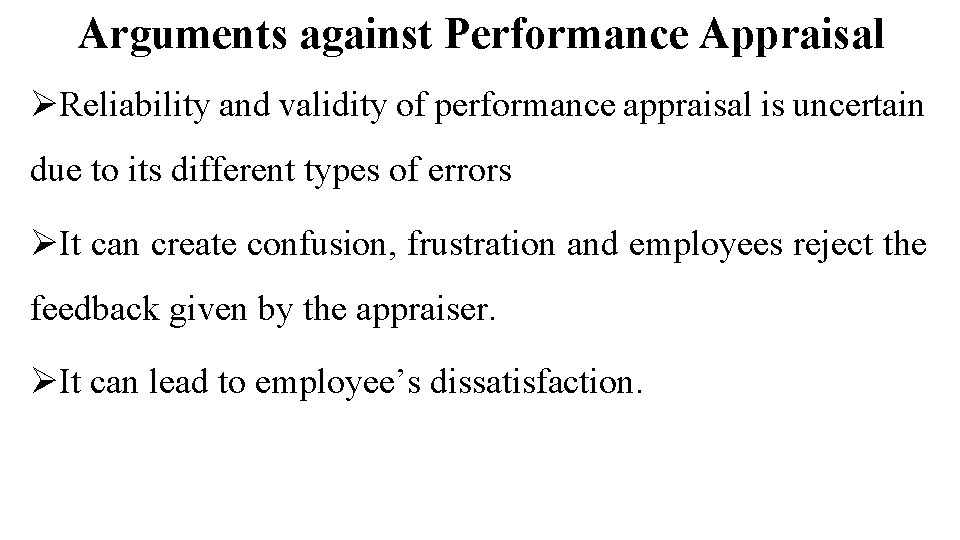
Arguments against Performance Appraisal ØReliability and validity of performance appraisal is uncertain due to its different types of errors ØIt can create confusion, frustration and employees reject the feedback given by the appraiser. ØIt can lead to employee’s dissatisfaction.
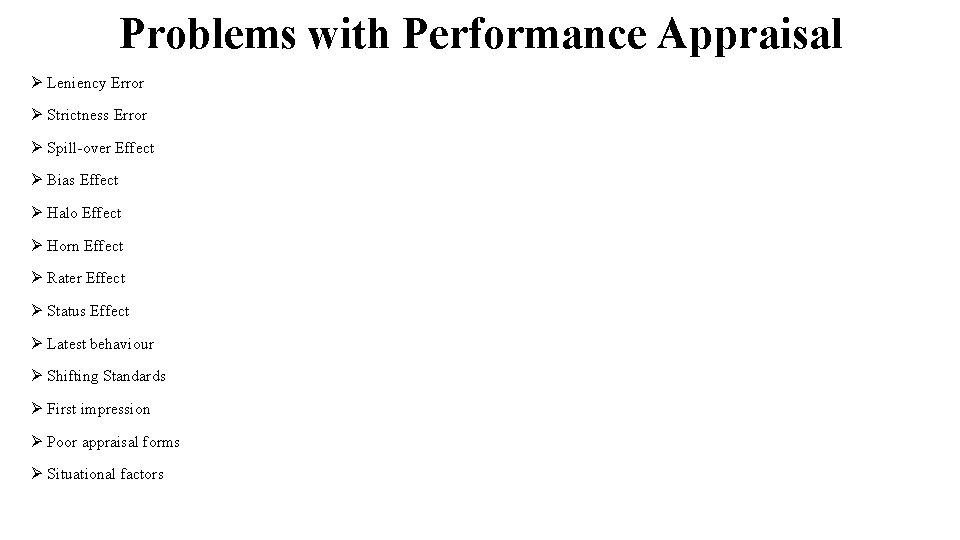
Problems with Performance Appraisal Ø Leniency Error Ø Strictness Error Ø Spill-over Effect Ø Bias Effect Ø Halo Effect Ø Horn Effect Ø Rater Effect Ø Status Effect Ø Latest behaviour Ø Shifting Standards Ø First impression Ø Poor appraisal forms Ø Situational factors
QUESTION Define performance appraisal and the need for it in formal organisation.