
Module 2 Moving the Team and Process Forward

- Slides: 25
Module 2 Moving the Team and Process Forward
Team Building Activity
Session Objectives • • • Review the role and responsibilities of the campus PBIS Leadership Team Review the components of the PBIS Improvement Process Review specific roles within the PBIS Leadership Team and identify team members to serve in the roles Develop and implement effective team meeting structures and procedures Learn about additional roles associated with the implementation School-wide PBIS
Role of the PBIS Campus Team • • • Lead and facilitate the process Meet on a regular basis Gather, summarize and analyze data Communicate effectively with staff Provide effective staff development Represent your peers Share enthusiasm/encouragement Model what you expect from staff/students Build capacity
Your Team Will Drive the On -going Improvement Process
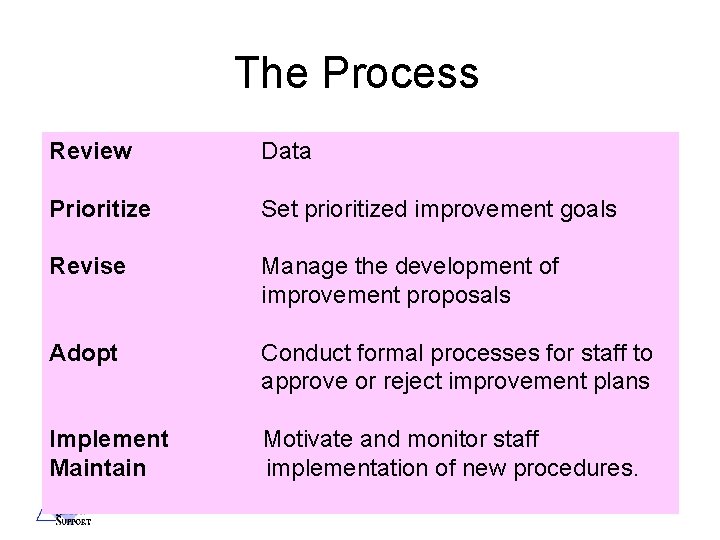
The Process Review Data Prioritize Set prioritized improvement goals Revise Manage the development of improvement proposals Adopt Conduct formal processes for staff to approve or reject improvement plans Implement Maintain Motivate and monitor staff implementation of new procedures. 6
How to Develop a Campus Team 7
Specific Roles Within the PBIS Team are Important • Increases team efficiency • Capitalizes on the specific strengths of individual team members • Helps to ensure that tasks get done in a timely fashion
Examples • • • Co-Chairperson(s) Recorder Data/Evaluation Coordinator Materials Manager “Keeper of the List” Timekeeper 9
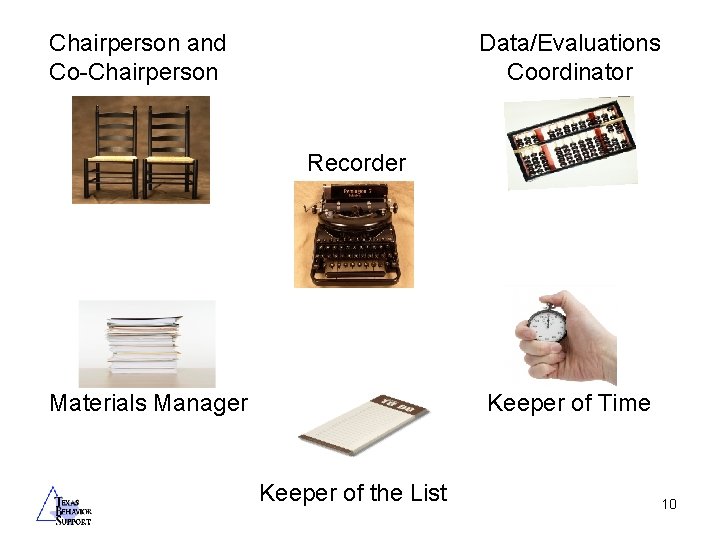
Chairperson and Co-Chairperson Data/Evaluations Coordinator Recorder Keeper of Time Materials Manager Keeper of the List 10
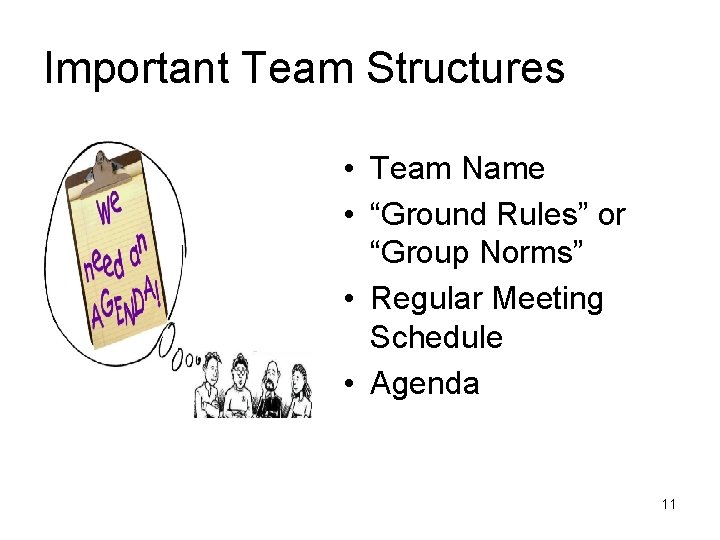
Important Team Structures • Team Name • “Ground Rules” or “Group Norms” • Regular Meeting Schedule • Agenda 11
Why a Team Name is Important • Creates a sense of unity • Creates a sense of connection between the team, the process and the rest of the staff *Special note: Do not call yourselves “The Discipline Committee”
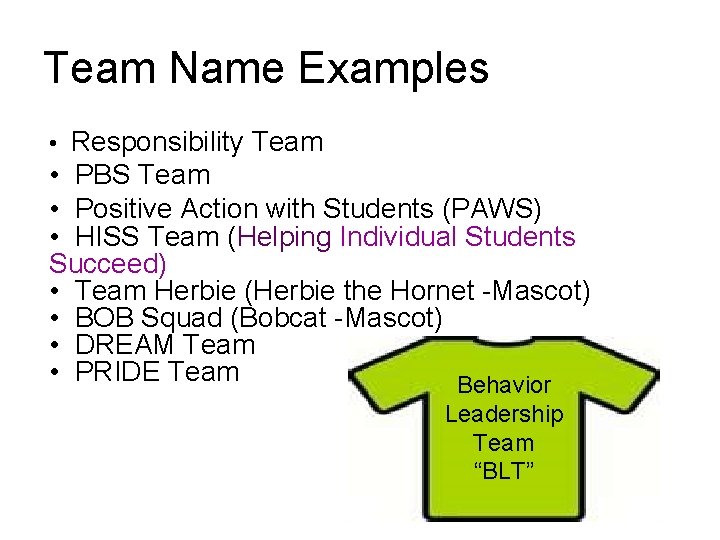
Team Name Examples • Responsibility Team • PBS Team • Positive Action with Students (PAWS) • HISS Team (Helping Individual Students Succeed) • Team Herbie (Herbie the Hornet -Mascot) • BOB Squad (Bobcat -Mascot) • DREAM Team • PRIDE Team Behavior Leadership Team “BLT”
Ground Rules for Team Meetings • Examples – Be honest – Be open to new ideas – Listen to others – Respect Confidentiality – Be up front – Don’t judge – See the opportunities ahead – Speak your mind
More Samples • Start and end on time • There will be no side conversations during the meeting and no parking lot meetings • All team discussions and disagreements will be respectful • The staff co-chair will serve as the on-task and on time nag • Meeting minutes will identify specific tasks to be done, including persons responsible and timelines
What to Avoid • Side conversations • “Parking lot” discussions
Team Discussions • Lead with respect (even when we disagree) • Listen. Thoughts brought up in the meeting are likely to be thoughts of others on campus.
“What is said in here stays in here!” 18
Meet on a Regular Basis • Meet weekly for 30 minutes • Meet twice a month for 1 hour • Meet once a month/6 weeks for a half a day • Note: New teams benefit from meeting more frequently at least at first
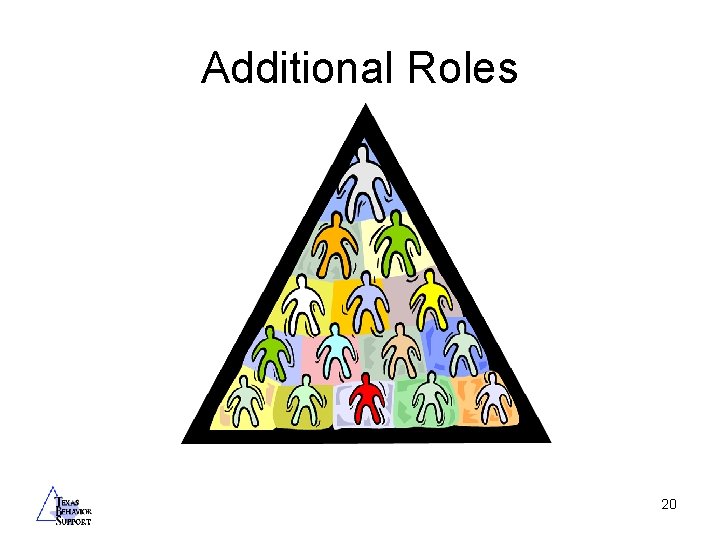
Additional Roles 20
Role of Administrator(s) • • Leadership Vision Commitment Accountability Encouragement Empower Model and lead by example Communicate negotiables/non-negotiables
Role of District/External Coach • • • Keep things moving Collect meaningful data Provide resources Facilitate networking Train teams On-site assistance Ask difficult questions Build capacity Validate progress
The Role of Campus Staff • • Commit to and get involved in the process Provide input and support to the team Utilize data for decision-making Implement with fidelity/consistency Model what you expect from students Celebrate progress/success Provide positive and skillful feedback to students
The Role of Students
Module 2: Team Assignment • Determine if any additional team members are needed • Create a team name • Develop your group norms • Establish roles for team members • Determine a regular meeting schedule (including specific time/date/location)