
Module 2 Fundamentals of Erosion and Runoff Module

- Slides: 59
Module 2 Fundamentals of Erosion and Runoff
Module 2 Contents 2 a. Erosion Defined 2 b. Stormwater Runoff 2 c. Principles of Erosion and Sediment Control
Module 2 a. Erosion Defined
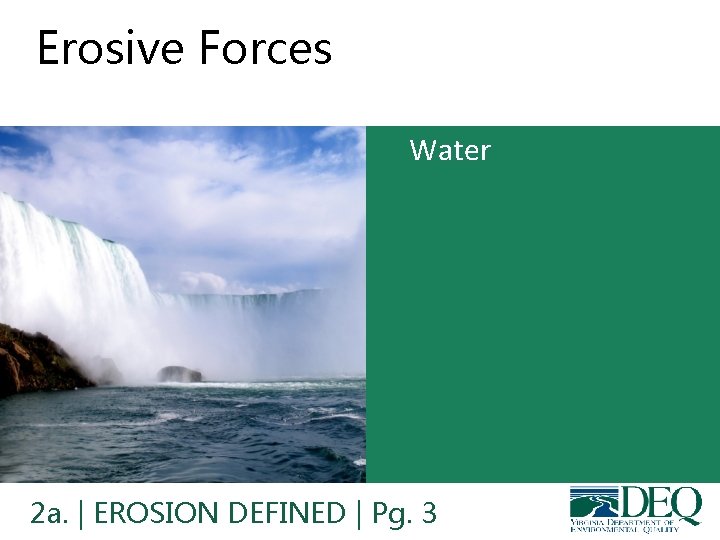
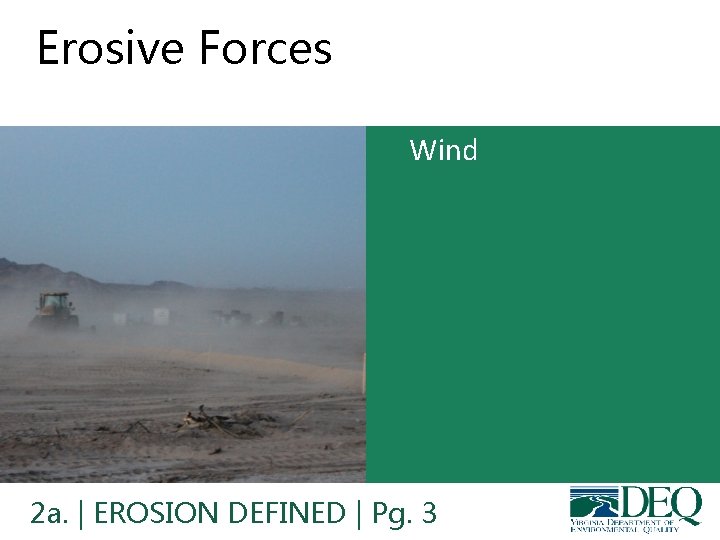
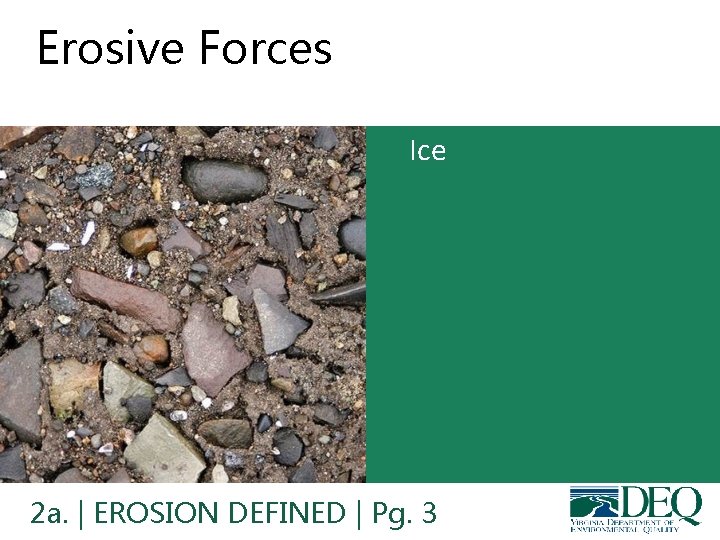
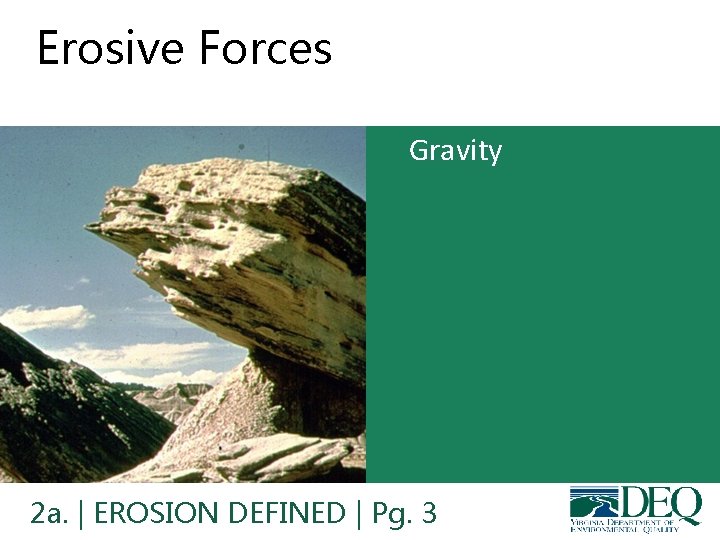
Erosion Defined • Soil erosion is the removal and transportation of soil particles by erosive forces such as… 2 a. | EROSION DEFINED | Pg. 3
Erosive Forces • Water 2 a. | EROSION DEFINED | Pg. 3
Erosive Forces • Wind 2 a. | EROSION DEFINED | Pg. 3
Erosive Forces • Ice 2 a. | EROSION DEFINED | Pg. 3
Erosive Forces • Gravity 2 a. | EROSION DEFINED | Pg. 3
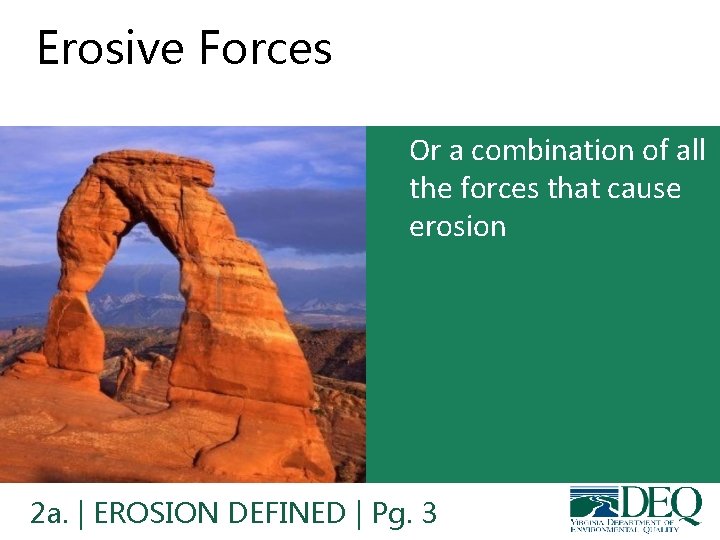
Erosive Forces • Or a combination of all the forces that cause erosion 2 a. | EROSION DEFINED | Pg. 3
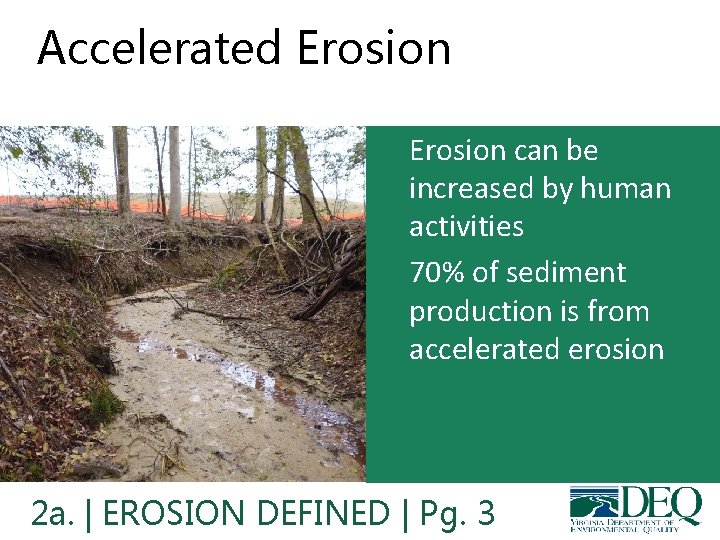
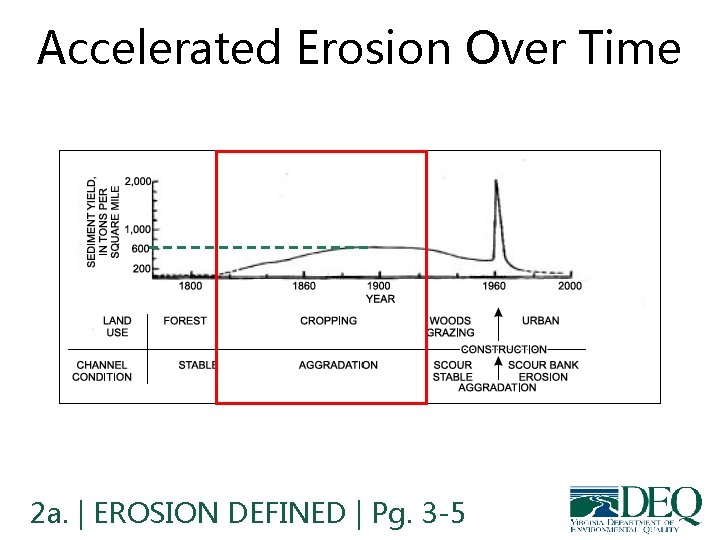
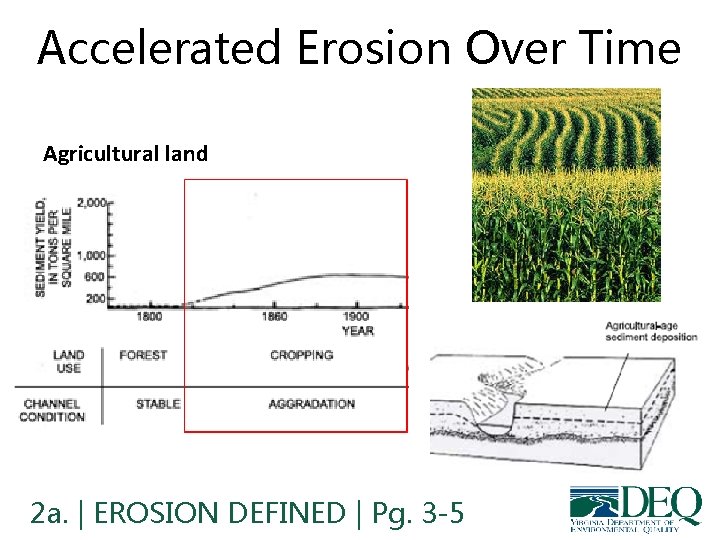
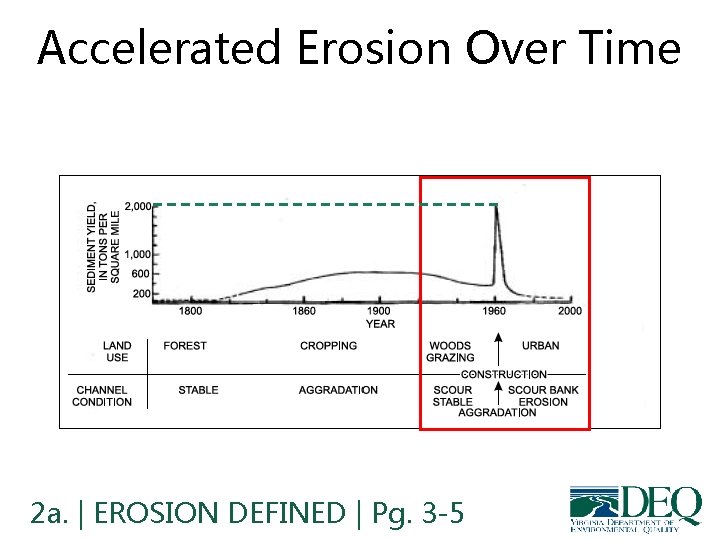
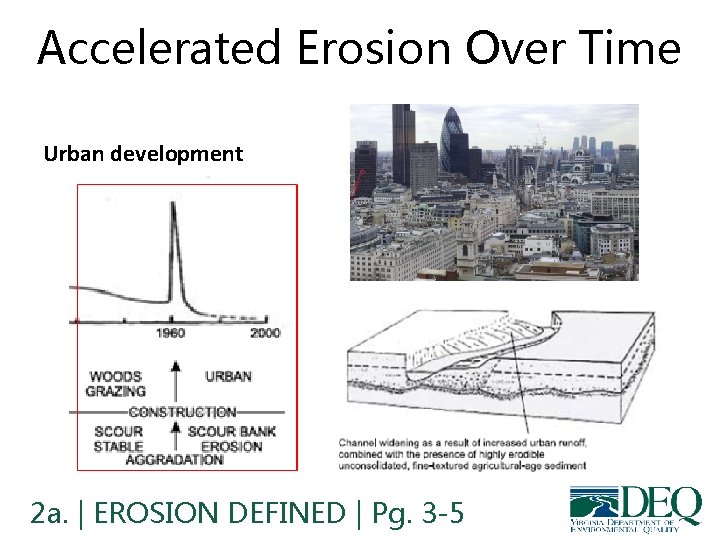
Accelerated Erosion • Erosion can be increased by human activities • 70% of sediment production is from accelerated erosion 2 a. | EROSION DEFINED | Pg. 3
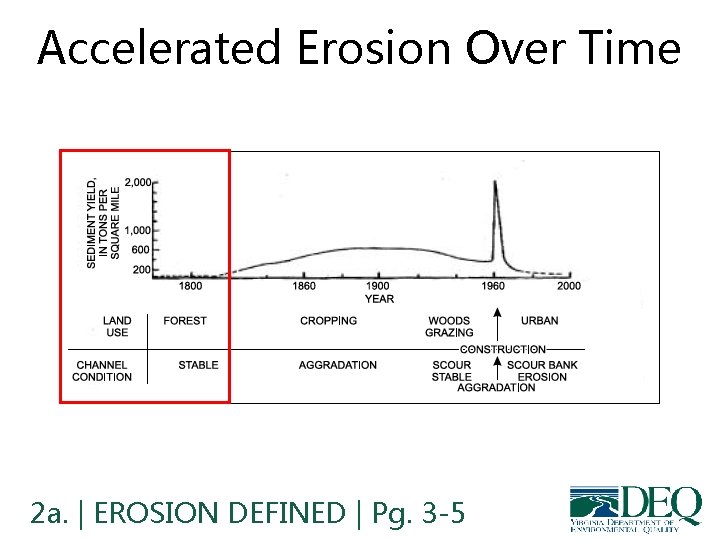
Accelerated Erosion Over Time 2 a. | EROSION DEFINED | Pg. 3 -5
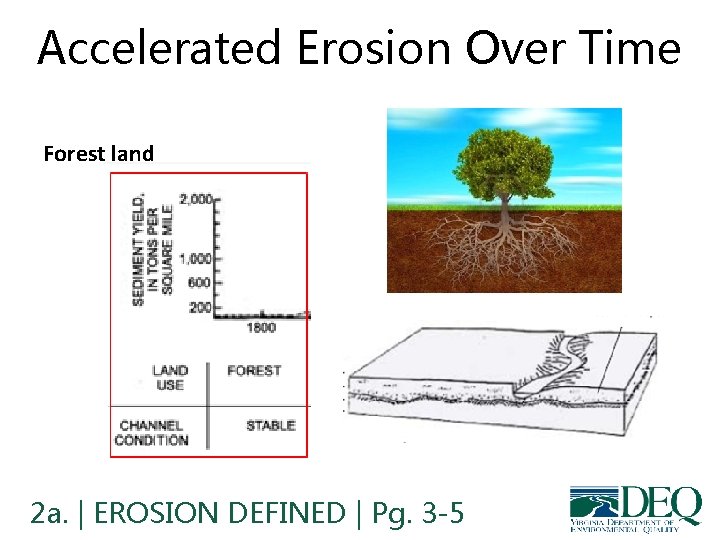
Accelerated Erosion Over Time Forest land 2 a. | EROSION DEFINED | Pg. 3 -5
Accelerated Erosion Over Time 2 a. | EROSION DEFINED | Pg. 3 -5
Accelerated Erosion Over Time Agricultural land 2 a. | EROSION DEFINED | Pg. 3 -5
Accelerated Erosion Over Time 2 a. | EROSION DEFINED | Pg. 3 -5
Accelerated Erosion Over Time Urban development 2 a. | EROSION DEFINED | Pg. 3 -5
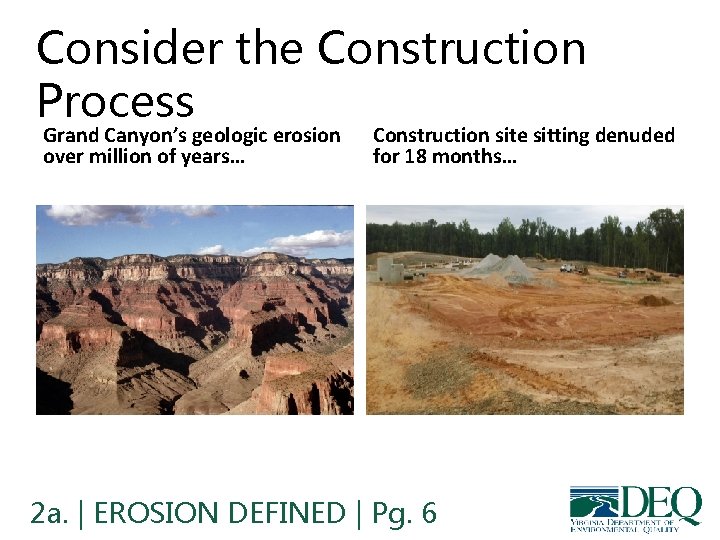
Consider the Construction Process Grand Canyon’s geologic erosion over million of years… Construction site sitting denuded for 18 months… 2 a. | EROSION DEFINED | Pg. 6
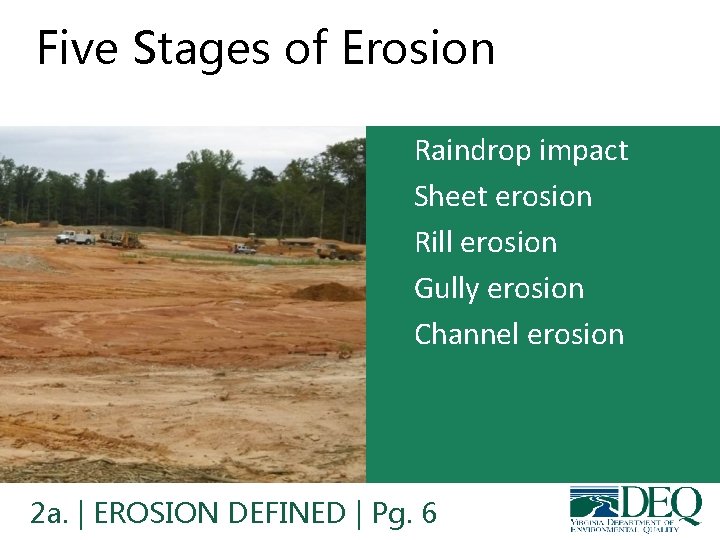
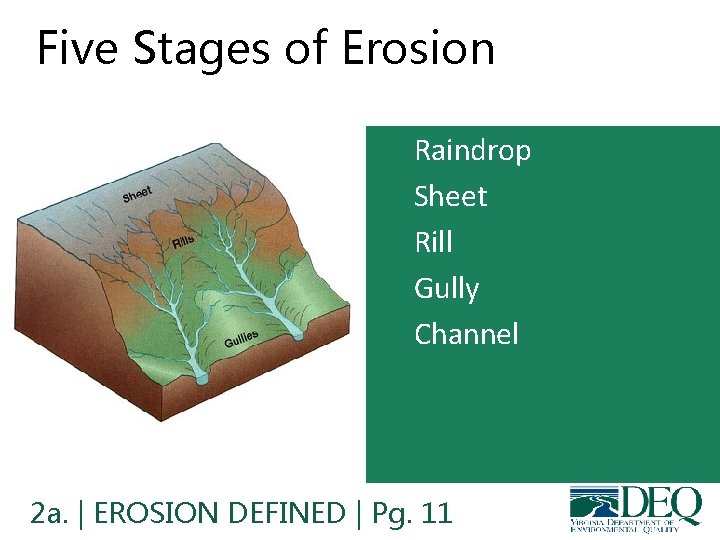
Five Stages of Erosion 1. 2. 3. 4. 5. Raindrop impact Sheet erosion Rill erosion Gully erosion Channel erosion 2 a. | EROSION DEFINED | Pg. 6
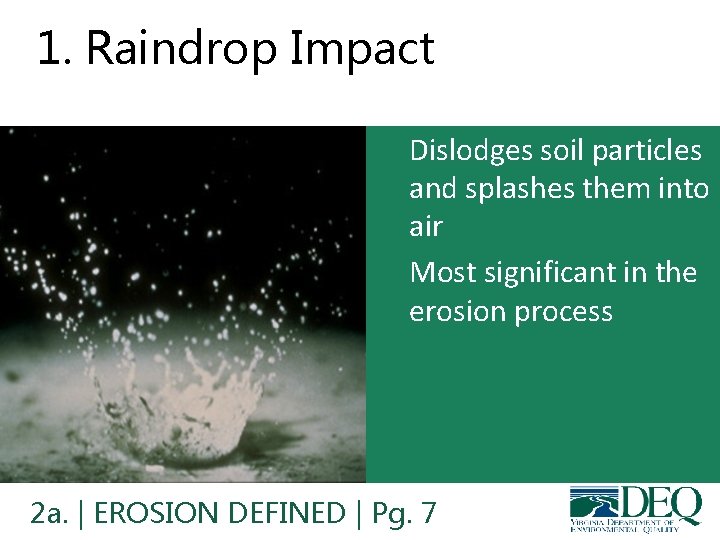
1. Raindrop Impact • Dislodges soil particles and splashes them into air • Most significant in the erosion process 2 a. | EROSION DEFINED | Pg. 7
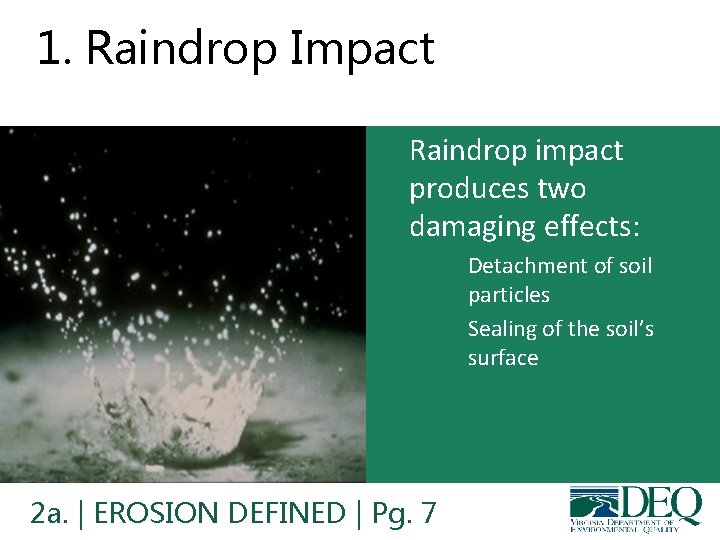
1. Raindrop Impact • Raindrop impact produces two damaging effects: • • 2 a. | EROSION DEFINED | Pg. 7 Detachment of soil particles Sealing of the soil’s surface
1. Raindrop Impact The action of falling rain on disturbed or denuded soil is responsible for 90% or more of total soil erosion. 2 a. | EROSION DEFINED | Pg. 7
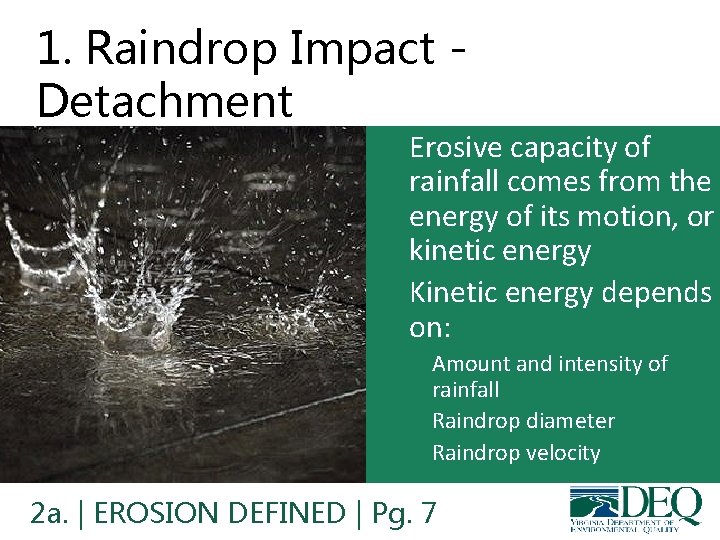
1. Raindrop Impact Detachment • Erosive capacity of rainfall comes from the energy of its motion, or kinetic energy • Kinetic energy depends on: – Amount and intensity of rainfall – Raindrop diameter – Raindrop velocity 2 a. | EROSION DEFINED | Pg. 7
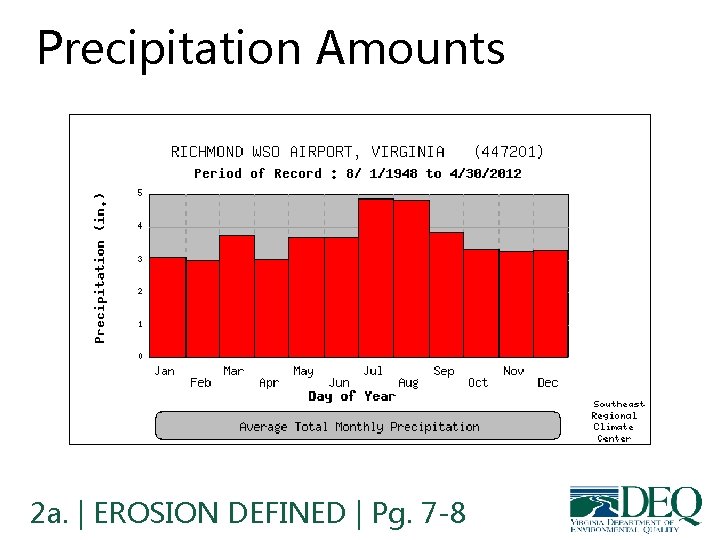
Precipitation Amounts 2 a. | EROSION DEFINED | Pg. 7 -8
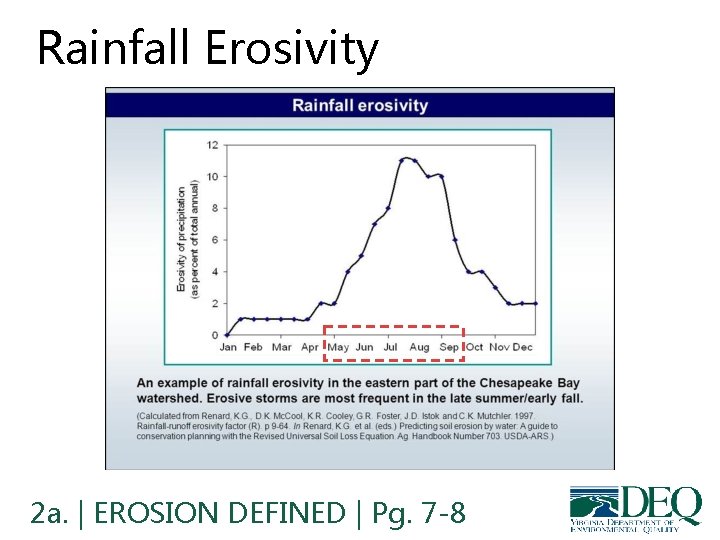
Rainfall Erosivity 2 a. | EROSION DEFINED | Pg. 7 -8
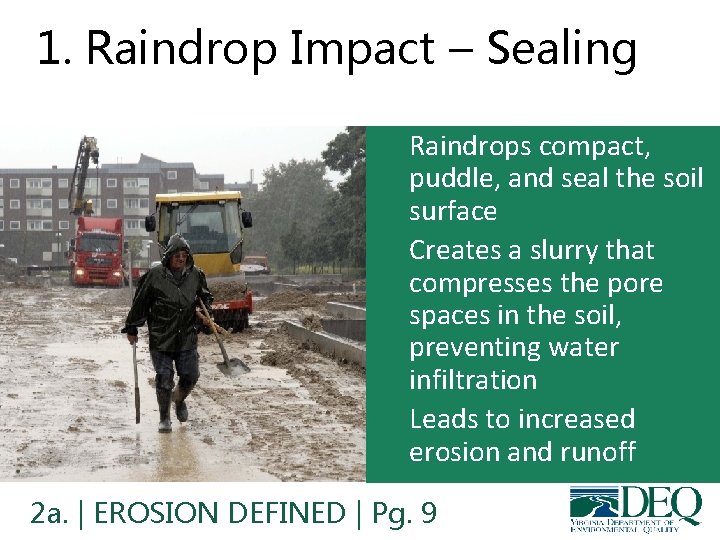
1. Raindrop Impact – Sealing • Raindrops compact, puddle, and seal the soil surface • Creates a slurry that compresses the pore spaces in the soil, preventing water infiltration • Leads to increased erosion and runoff 2 a. | EROSION DEFINED | Pg. 9
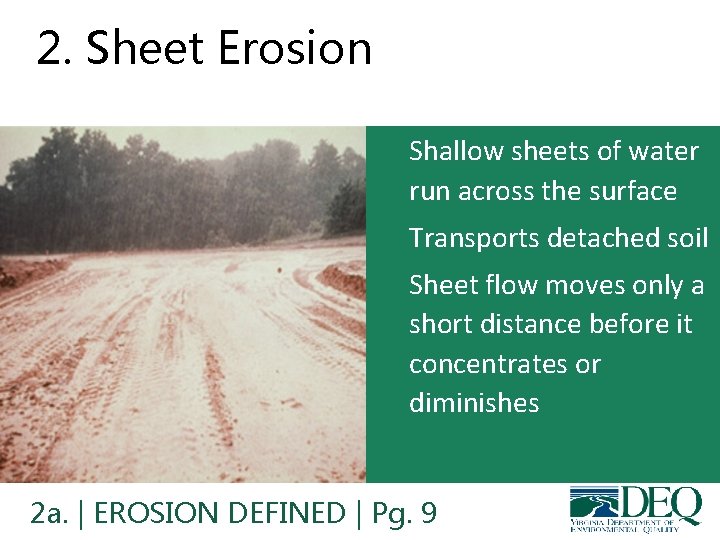
2. Sheet Erosion • Shallow sheets of water run across the surface • Transports detached soil • Sheet flow moves only a short distance before it concentrates or diminishes 2 a. | EROSION DEFINED | Pg. 9
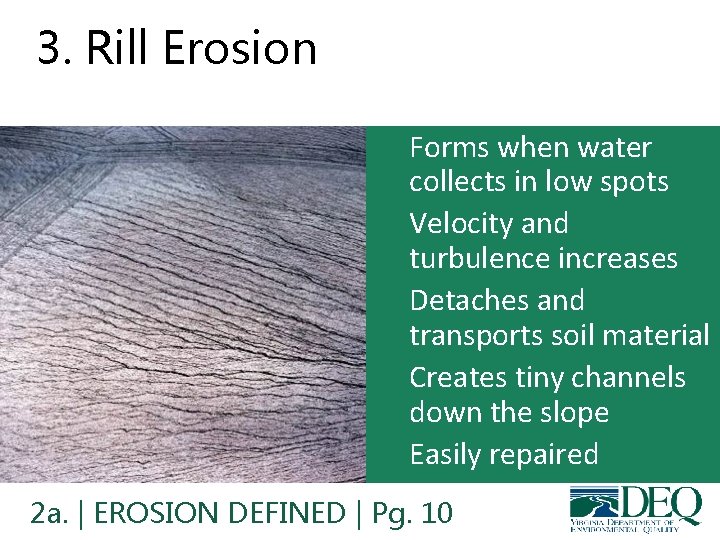
3. Rill Erosion • Forms when water collects in low spots • Velocity and turbulence increases • Detaches and transports soil material • Creates tiny channels down the slope • Easily repaired 2 a. | EROSION DEFINED | Pg. 10
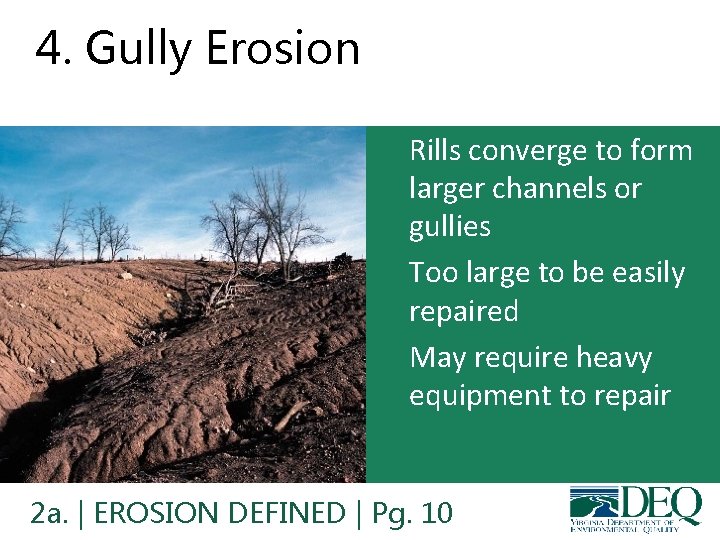
4. Gully Erosion • Rills converge to form larger channels or gullies • Too large to be easily repaired • May require heavy equipment to repair 2 a. | EROSION DEFINED | Pg. 10
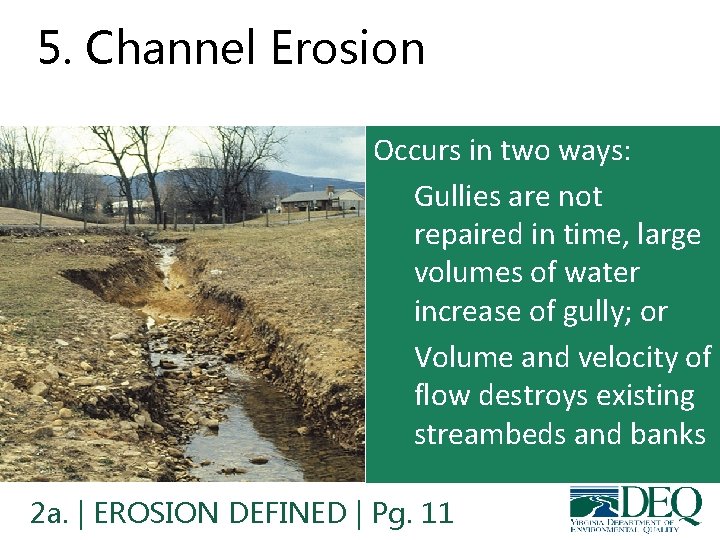
5. Channel Erosion Occurs in two ways: 1. Gullies are not repaired in time, large volumes of water increase of gully; or 2. Volume and velocity of flow destroys existing streambeds and banks 2 a. | EROSION DEFINED | Pg. 11
Five Stages of Erosion 1. 2. 3. 4. 5. Raindrop Sheet Rill Gully Channel 2 a. | EROSION DEFINED | Pg. 11
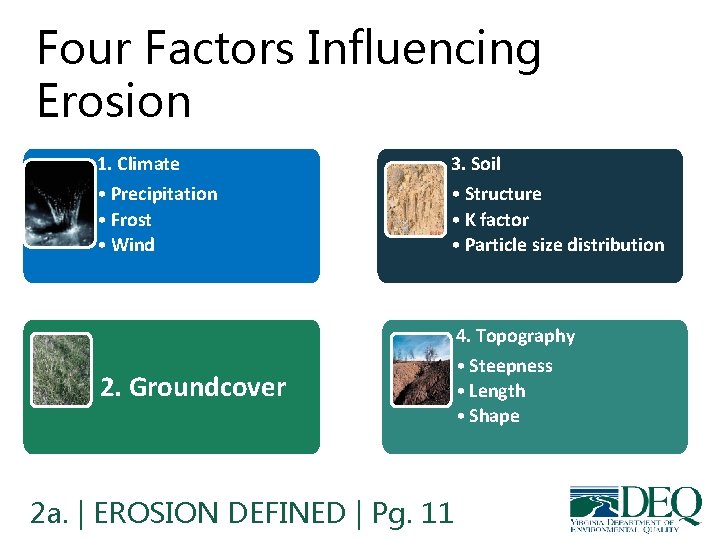
Four Factors Influencing Erosion 1. Climate 3. Soil • Precipitation • Frost • Wind • Structure • K factor • Particle size distribution 4. Topography 2. Groundcover 2 a. | EROSION DEFINED | Pg. 11 • Steepness • Length • Shape
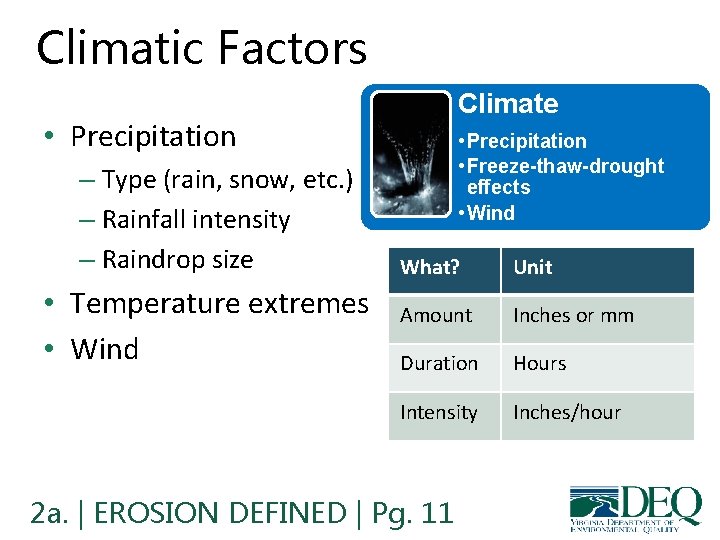
Climatic Factors Climate • Precipitation – Type (rain, snow, etc. ) – Rainfall intensity – Raindrop size • Temperature extremes • Wind • Precipitation • Freeze-thaw-drought effects • Wind What? Unit Amount Inches or mm Duration Hours Intensity Inches/hour 2 a. | EROSION DEFINED | Pg. 11
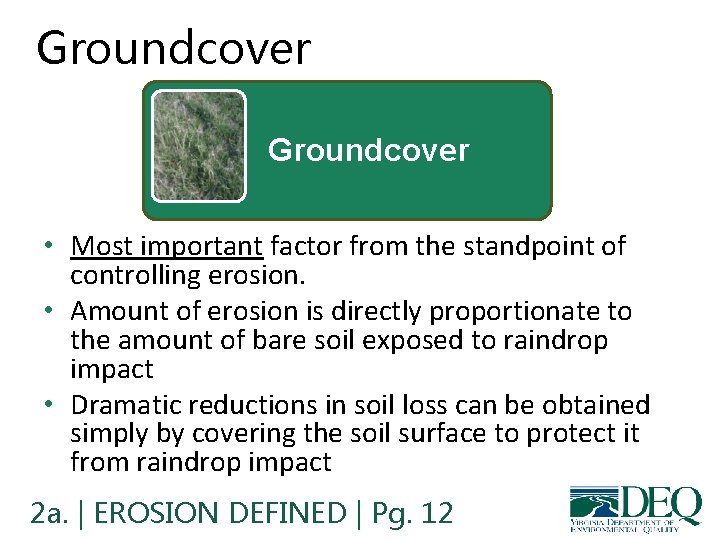
Groundcover • Most important factor from the standpoint of controlling erosion. • Amount of erosion is directly proportionate to the amount of bare soil exposed to raindrop impact • Dramatic reductions in soil loss can be obtained simply by covering the soil surface to protect it from raindrop impact 2 a. | EROSION DEFINED | Pg. 12
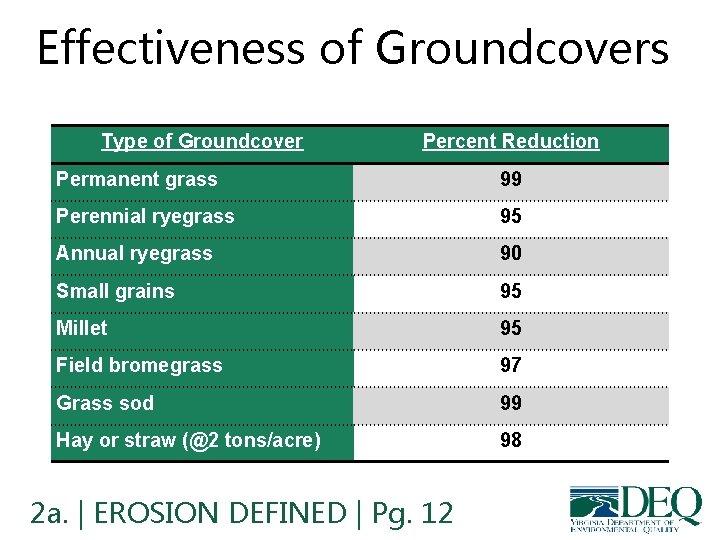
Effectiveness of Groundcovers Type of Groundcover Percent Reduction Permanent grass 99 Perennial ryegrass 95 Annual ryegrass 90 Small grains 95 Millet 95 Field bromegrass 97 Grass sod 99 Hay or straw (@2 tons/acre) 98 2 a. | EROSION DEFINED | Pg. 12
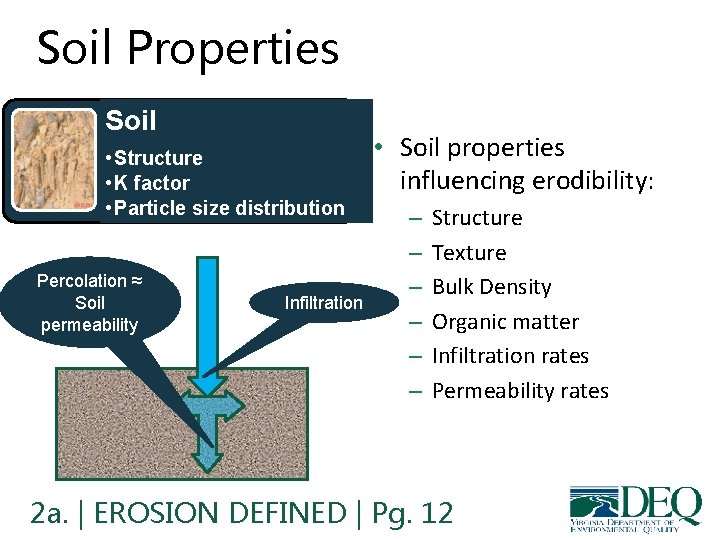
Soil Properties Soil • Structure • K factor • Particle size distribution Percolation ≈ Soil permeability Infiltration • Soil properties influencing erodibility: – – – Structure Texture Bulk Density Organic matter Infiltration rates Permeability rates 2 a. | EROSION DEFINED | Pg. 12
Soil Erodibility (K factor) • Erodibility is the vulnerability of a material to erode • Different soils will erode at different rates • The K factor is a big indicator of how erodible a soil is 2 a. | EROSION DEFINED | Pg. 13
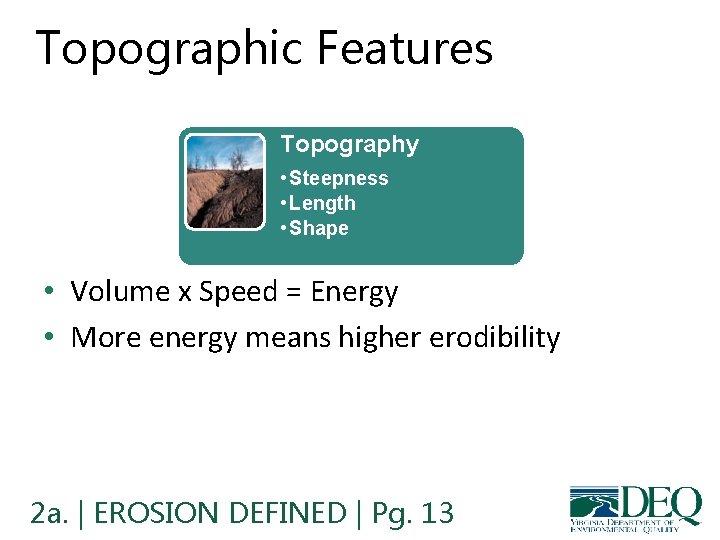
Topographic Features Topography • Steepness • Length • Shape • Volume x Speed = Energy • More energy means higher erodibility 2 a. | EROSION DEFINED | Pg. 13
Slope Steepness • Steeper grades cause velocity (speed) of the runoff to increase. – Less chance for water to infiltrate on a steep slope More runoff – Additional splash effect on bare soil 2 a. | EROSION DEFINED | Pg. 13
Slope Length • The longer the slope – the greater the depth of runoff – the greater the velocity (speed) of the runoff 2 a. | EROSION DEFINED | Pg. 13
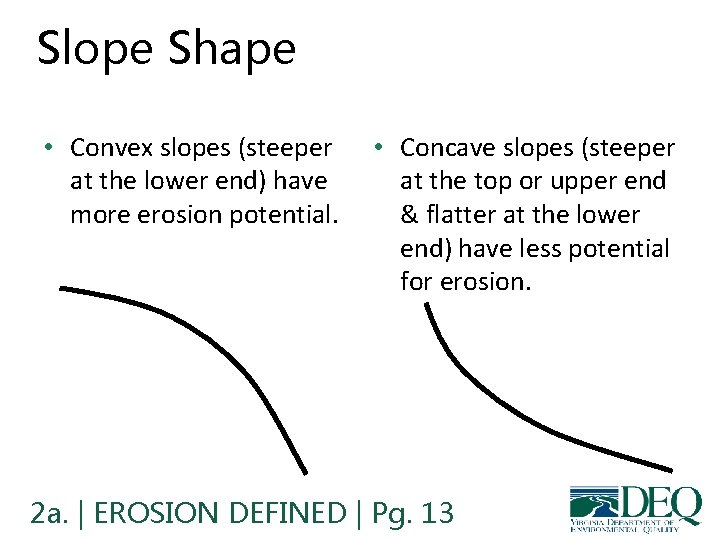
Slope Shape • Convex slopes (steeper at the lower end) have more erosion potential. • Concave slopes (steeper at the top or upper end & flatter at the lower end) have less potential for erosion. 2 a. | EROSION DEFINED | Pg. 13
Module 2 b. Stormwater Runoff
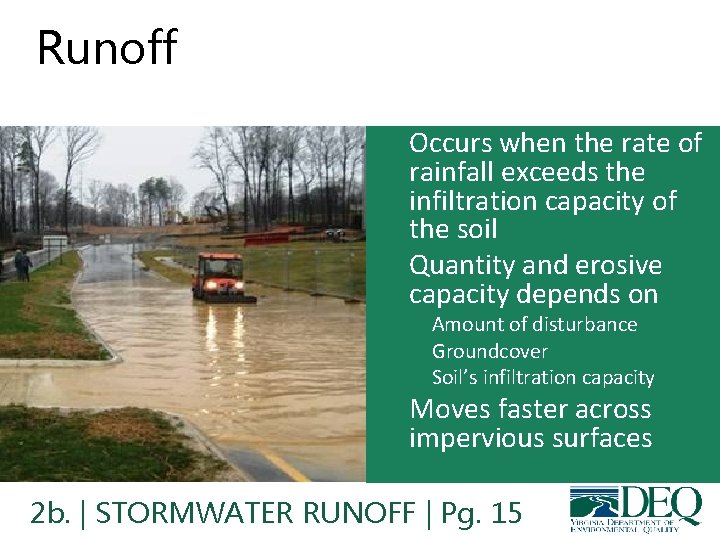
Runoff • Occurs when the rate of rainfall exceeds the infiltration capacity of the soil • Quantity and erosive capacity depends on – Amount of disturbance – Groundcover – Soil’s infiltration capacity • Moves faster across impervious surfaces 2 b. | STORMWATER RUNOFF | Pg. 15
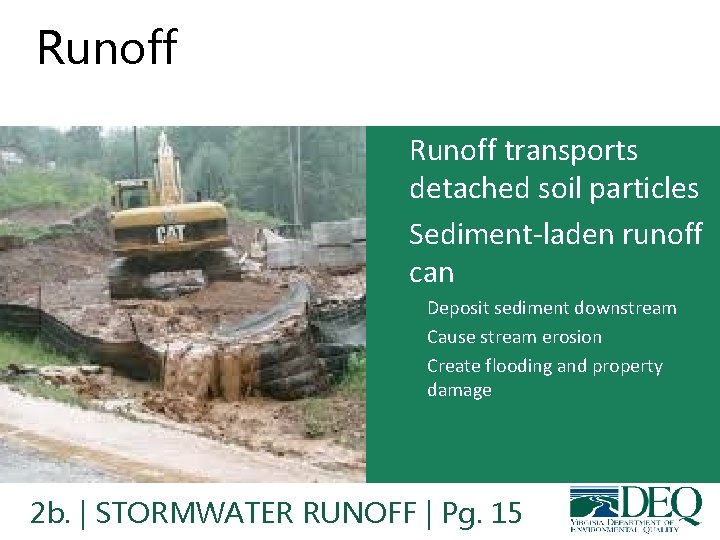
Runoff • Runoff transports detached soil particles • Sediment-laden runoff can − Deposit sediment downstream − Cause stream erosion − Create flooding and property damage 2 b. | STORMWATER RUNOFF | Pg. 15
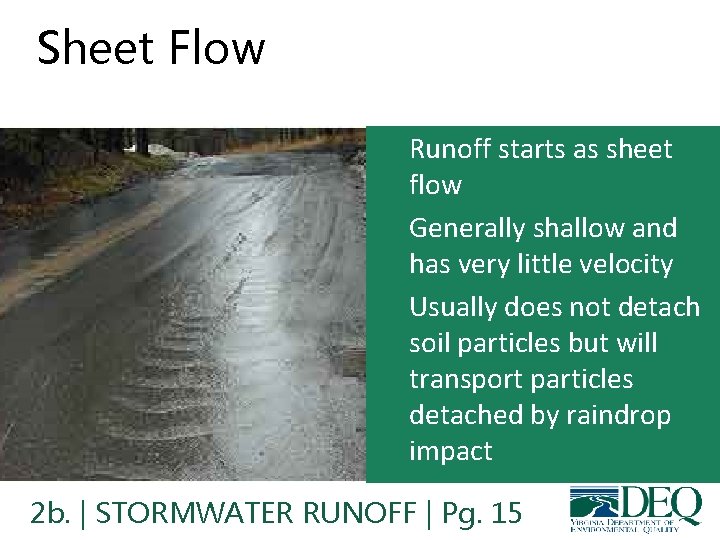
Sheet Flow • Runoff starts as sheet flow • Generally shallow and has very little velocity • Usually does not detach soil particles but will transport particles detached by raindrop impact 2 b. | STORMWATER RUNOFF | Pg. 15
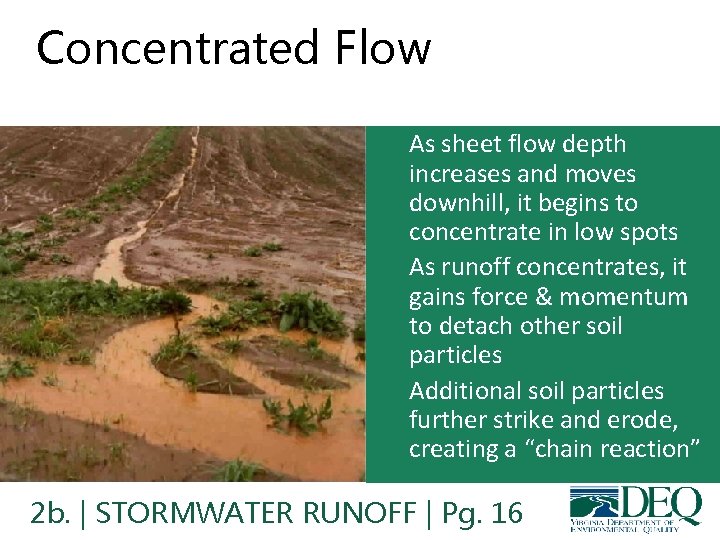
Concentrated Flow • As sheet flow depth increases and moves downhill, it begins to concentrate in low spots • As runoff concentrates, it gains force & momentum to detach other soil particles • Additional soil particles further strike and erode, creating a “chain reaction” 2 b. | STORMWATER RUNOFF | Pg. 16
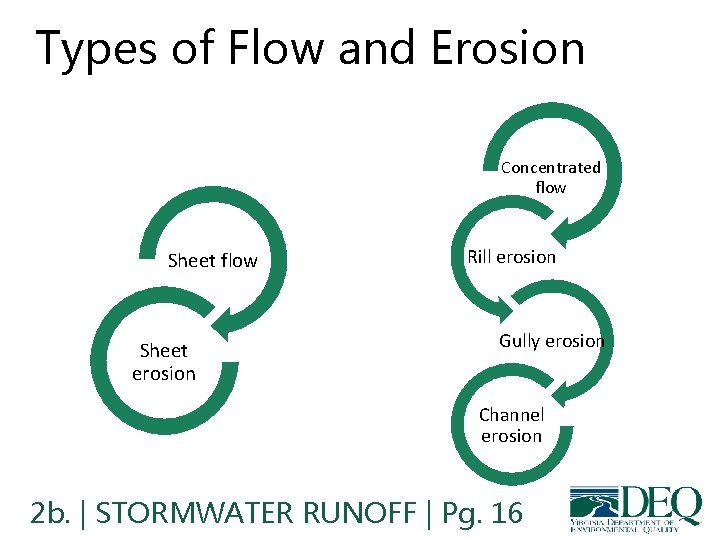
Types of Flow and Erosion Concentrated flow Sheet erosion Rill erosion Gully erosion Channel erosion 2 b. | STORMWATER RUNOFF | Pg. 16
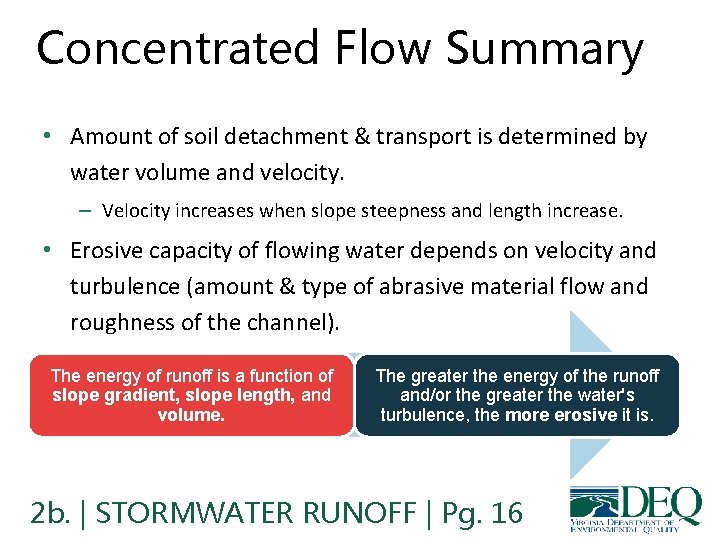
Concentrated Flow Summary • Amount of soil detachment & transport is determined by water volume and velocity. – Velocity increases when slope steepness and length increase. • Erosive capacity of flowing water depends on velocity and turbulence (amount & type of abrasive material flow and roughness of the channel). The energy of runoff is a function of slope gradient, slope length, and volume. The greater the energy of the runoff and/or the greater the water's turbulence, the more erosive it is. 2 b. | STORMWATER RUNOFF | Pg. 16
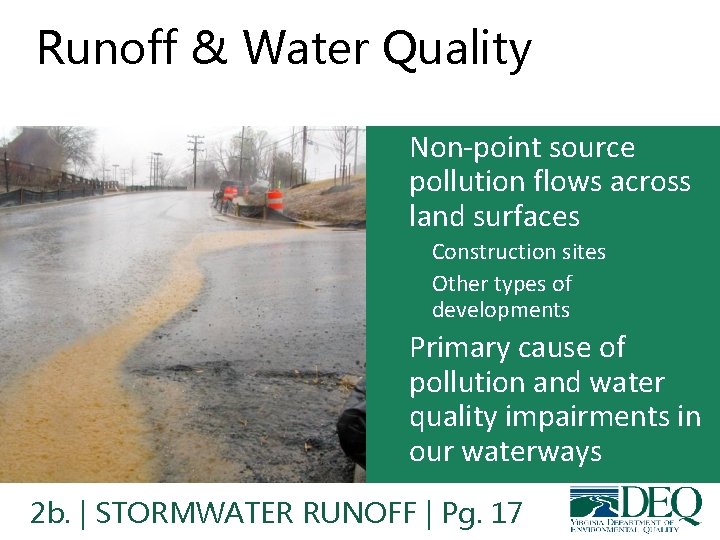
Runoff & Water Quality • Non-point source pollution flows across land surfaces – Construction sites – Other types of developments • Primary cause of pollution and water quality impairments in our waterways 2 b. | STORMWATER RUNOFF | Pg. 17
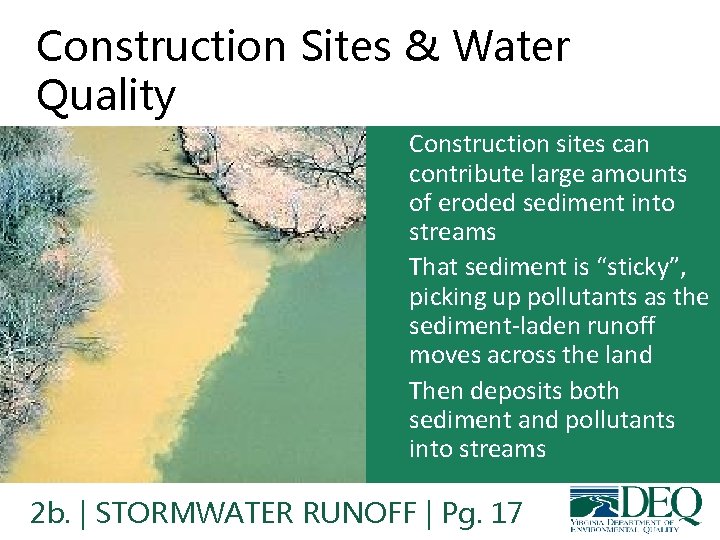
Construction Sites & Water Quality • Construction sites can contribute large amounts of eroded sediment into streams • That sediment is “sticky”, picking up pollutants as the sediment-laden runoff moves across the land • Then deposits both sediment and pollutants into streams 2 b. | STORMWATER RUNOFF | Pg. 17
Harmful Sediment • Shades aquatic vegetation, killing it – Water loses oxygen • Aquatic organisms die • Plugs fish gills – Fish kills • Smothers aquatic habitats • Negative economic impacts Virginia ranks stormwater runoff as the second most prevalent source of water quality impairment in the state’s estuaries. Agriculture is currently ranked number one, which follows the national trend. 2 b. | STORMWATER RUNOFF | Pg. 17
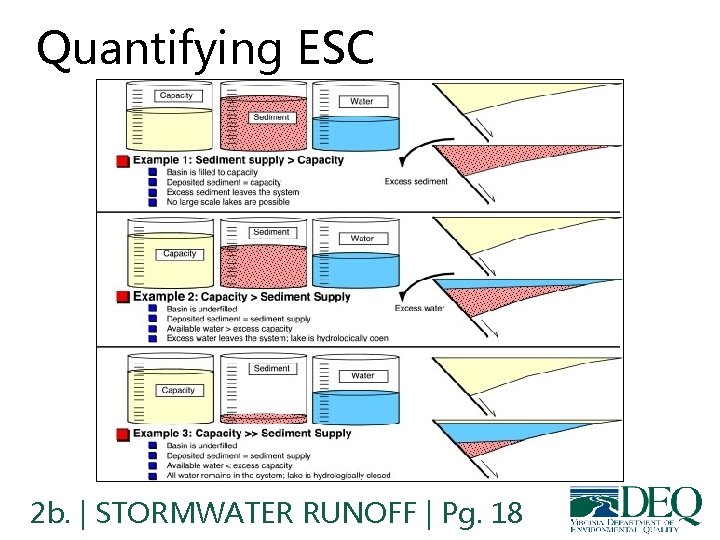
Quantifying ESC • EPA estimates 20 – 150 tons of soil per acre per year are lost from construction activities • That sediment settles somewhere – Neighboring properties – Stream channels – Carried further away than VA waters – Drinking water reservoirs 2 b. | STORMWATER RUNOFF | Pg. 18
Quantifying ESC 2 b. | STORMWATER RUNOFF | Pg. 18
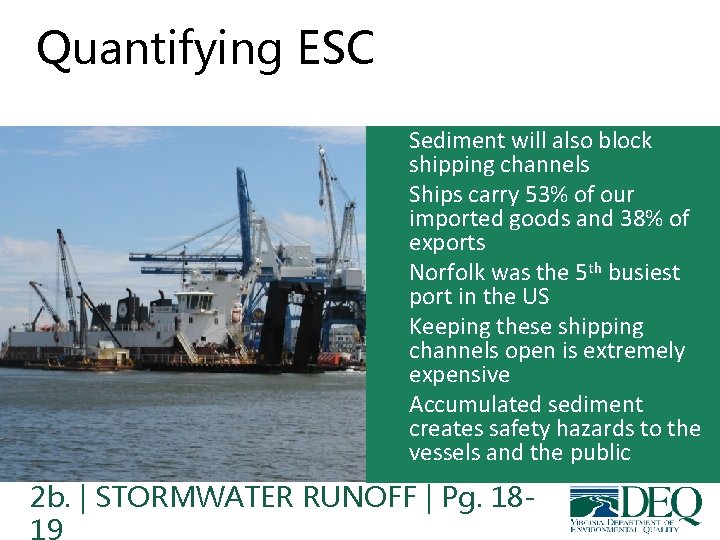
Quantifying ESC • • • Sediment will also block shipping channels Ships carry 53% of our imported goods and 38% of exports Norfolk was the 5 th busiest port in the US Keeping these shipping channels open is extremely expensive Accumulated sediment creates safety hazards to the vessels and the public 2 b. | STORMWATER RUNOFF | Pg. 18 -
Module 2 c. Principles of Erosion and Sediment Control
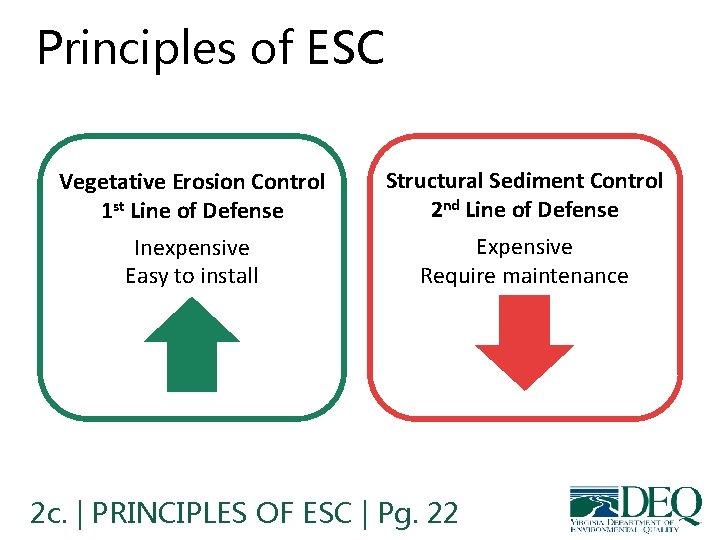
Principles of ESC • Controlling erosion first will then control sediment – Use sediment controls as the second line of defense • They are more costly – Installation – Maintenance 2 c. | PRINCIPLES OF ESC | Pg. 20
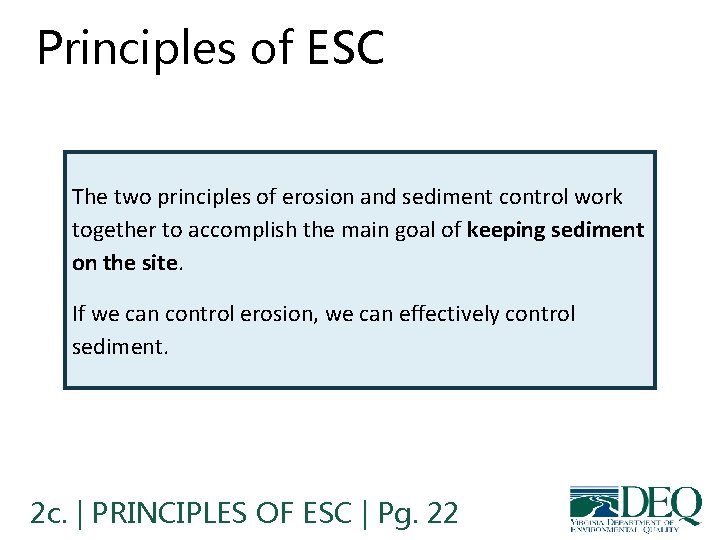
Principles of ESC The two principles of erosion and sediment control work together to accomplish the main goal of keeping sediment on the site. If we can control erosion, we can effectively control sediment. 2 c. | PRINCIPLES OF ESC | Pg. 22
Principles of ESC Vegetative Erosion Control 1 st Line of Defense Structural Sediment Control 2 nd Line of Defense Inexpensive Easy to install Expensive Require maintenance 2 c. | PRINCIPLES OF ESC | Pg. 22
Questions?
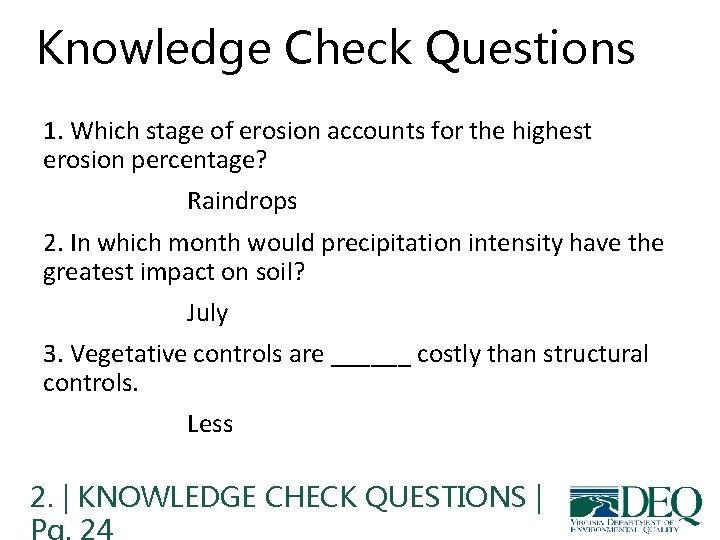
Knowledge Check Questions 1. Which stage of erosion accounts for the highest erosion percentage? Raindrops 2. In which month would precipitation intensity have the greatest impact on soil? July 3. Vegetative controls are ______ costly than structural controls. Less 2. | KNOWLEDGE CHECK QUESTIONS |