
Module 2 Food Purchasing and Receiving Learning Objectives
Module 2: Food Purchasing and Receiving
Learning Objectives • Understand symptoms, sources and control of Hepatitis A virus and foodborne parasites • Define approved supplier and list requirements • Explain best practices for receiving and describe criteria for accepting/rejecting a shipment

Key Terms • Approved supplier - A reputable company in compliance with regulatory authorities. • Flow of food - The path that food follows from delivery to service and consumption. • Shelf-life - The time under proper storage conditions that food will remain microbiologically safe and/or of good quality • Spoilage - Process that occurs that makes food unacceptable to consume; spoilage may be attributed to spoilage microorganisms
Hepatitis A Virus • Source – Infected people – Spread through fecal-oral transmission • Symptoms and onset – Fever, weakness, nausea, abdominal pain, jaundice – Can take up to 50 days for symptoms to appear • Foods associated – Ready-to-eat foods – Shellfish harvested from contaminated waters – Any food contaminated by employee
Parasites • Parasites can be associated with contaminated food and water, especially produce irrigated with contaminated water • Sourcing from approved suppliers can decrease risk • Best practices to control parasites include: • Safe water supply and plumbing • Products from approved suppliers • Proper cooking
Cryptosporidium • Source – Found in infected people and animals – Spread by contaminated water and feces • Symptoms and onset – Severe diarrhea, abdominal cramps, mild fever and nausea – Symptom onset around 7 days • Foods associated – Fresh produce – Contaminated water
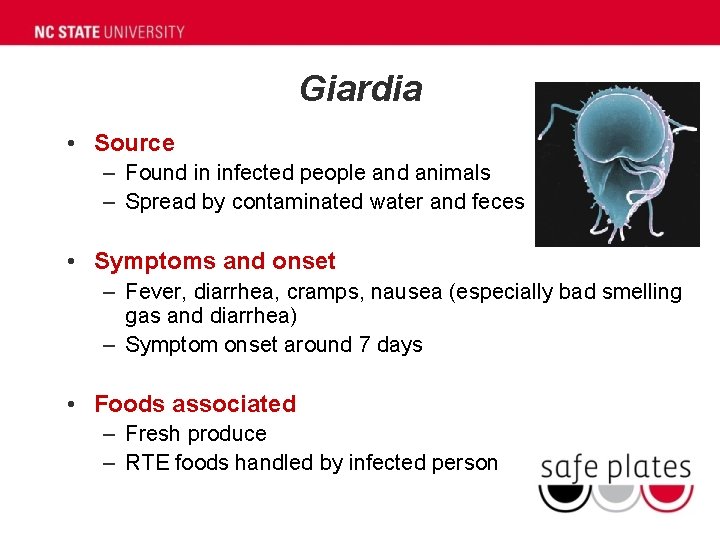
Giardia • Source – Found in infected people and animals – Spread by contaminated water and feces • Symptoms and onset – Fever, diarrhea, cramps, nausea (especially bad smelling gas and diarrhea) – Symptom onset around 7 days • Foods associated – Fresh produce – RTE foods handled by infected person
Toxoplasma gondii • Source – Found in contaminated water and soil – Cat feces • Symptoms and onset – Over 60 million people may be infected – Few have symptoms; immune system prevents illness – Severe infection cause damage to eyes, brain and other organs – Pregnant and immunocompromised could have serious illness • Foods associated – Fresh produce – Pork products, wild game
Trichina spiralis • Source – Found in the environment – Problem when pigs are fed garbage/ allowed to roam free • Symptoms and onset – Nausea, abdominal pain, vomiting, diarrhea – Muscle pain, fever, breathing difficulty – Average symptom onset, 2 -28 days • Foods associated – Pork products – Wild game
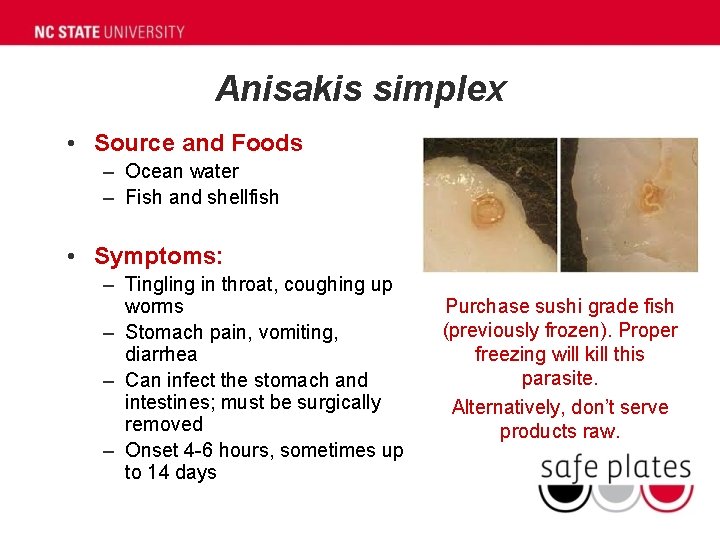
Anisakis simplex • Source and Foods – Ocean water – Fish and shellfish • Symptoms: – Tingling in throat, coughing up worms – Stomach pain, vomiting, diarrhea – Can infect the stomach and intestines; must be surgically removed – Onset 4 -6 hours, sometimes up to 14 days Purchase sushi grade fish (previously frozen). Proper freezing will kill this parasite. Alternatively, don’t serve products raw.

Best Practices for Sourcing Food and Supplies
Approved Suppliers FDA Model Food Code Definition • Approved supplier is acceptable to the regulatory authority based on conformity to best principles and practices that protect public health. What do you think this means? Who is the regulatory authority?
Approved Suppliers • Characteristics: – Have a good reputation – Get ingredients from approved sources – Are inspected by regulators • May have additional food safety certifications or audits done by other companies
Regulatory Approval • Know regulations a producer must meet to be an approved supplier – Fresh fruit and vegetable production is regulated under the FDA’s Food Safety Modernization Act (FSMA) Produce Safety Rule – USDA Food Safety Inspection Service regulates food safety of meat, poultry and some egg products – FDA’s FSMA sets the regulations for processed foods that are not meat and poultry
Know Your Products • Know risks involved with your products – Receiving temperatures – Package and product conditions – Allergens • Know how to handle your products safely • Monitor alerts from suppliers about recalls and ingredient changes
Know Your Products: Fish & Shellfish • Purchase from approved suppliers – Parasite destruction for sushi-grade fish – Harvesting from approved waters • Retain shellfish tag for 90 days – In case of an outbreak, shellfish can be traced back to harvesting waters
Verifying Supplier Practices • Do suppliers provide good customer service during ordering, receiving and dealing with quality issues? • How do suppliers train their employees in food safety? • Do suppliers’ delivery trucks look and smell clean? • What is the protocol for rejecting and returning products?
Scheduling Deliveries • Schedule receiving – At a convenient time – When people will be available for receiving – So it won’t interfere with other activities and flow of food • Retain bill of sale to track products • Have procedures for rejecting shipments
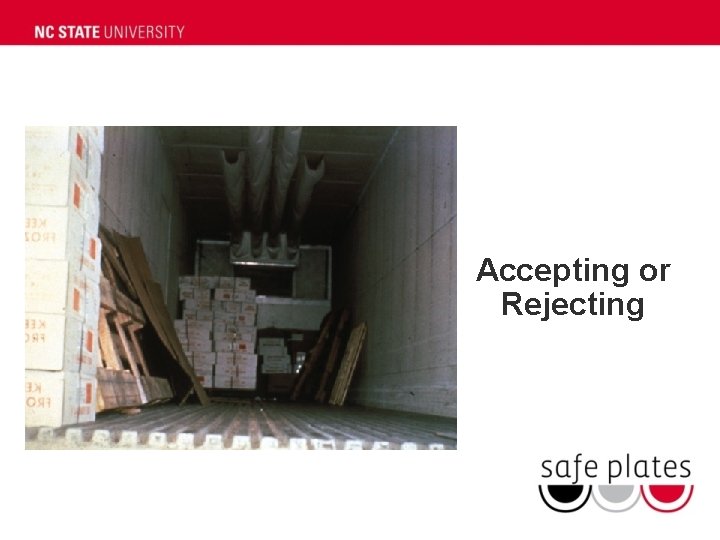
Accepting or Rejecting
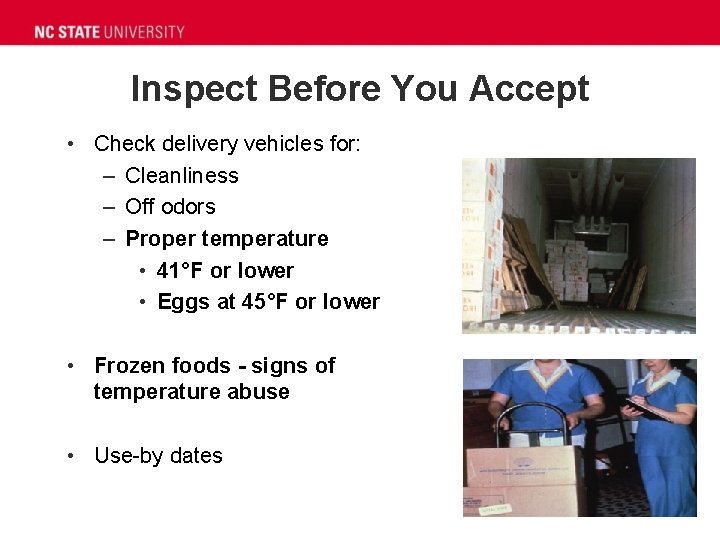
Inspect Before You Accept • Check delivery vehicles for: – Cleanliness – Off odors – Proper temperature • 41°F or lower • Eggs at 45°F or lower • Frozen foods - signs of temperature abuse • Use-by dates
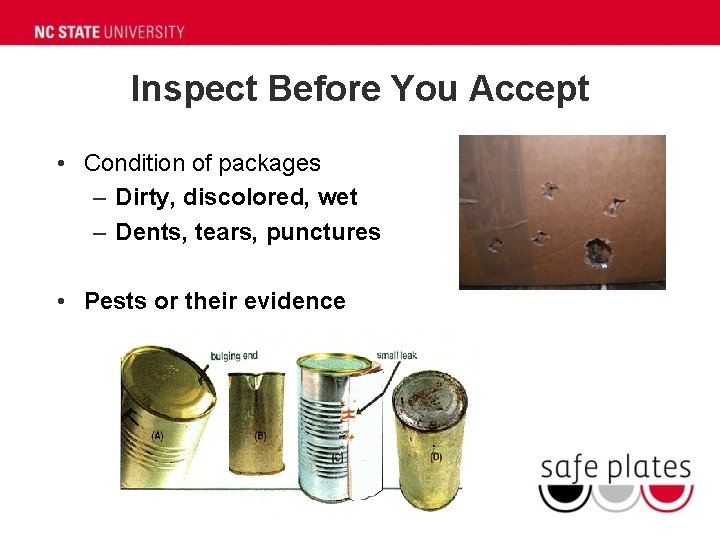
Inspect Before You Accept • Condition of packages – Dirty, discolored, wet – Dents, tears, punctures • Pests or their evidence
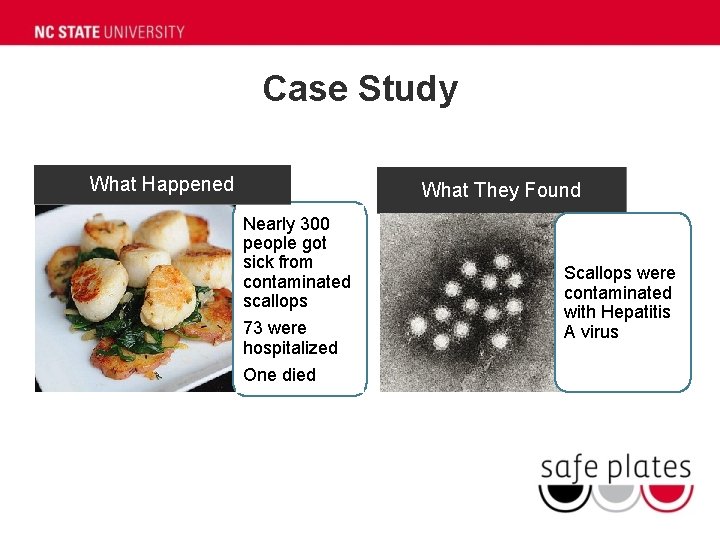
Case Study What Happened What They Found Nearly 300 people got sick from contaminated scallops 73 were hospitalized One died Scallops were contaminated with Hepatitis A virus
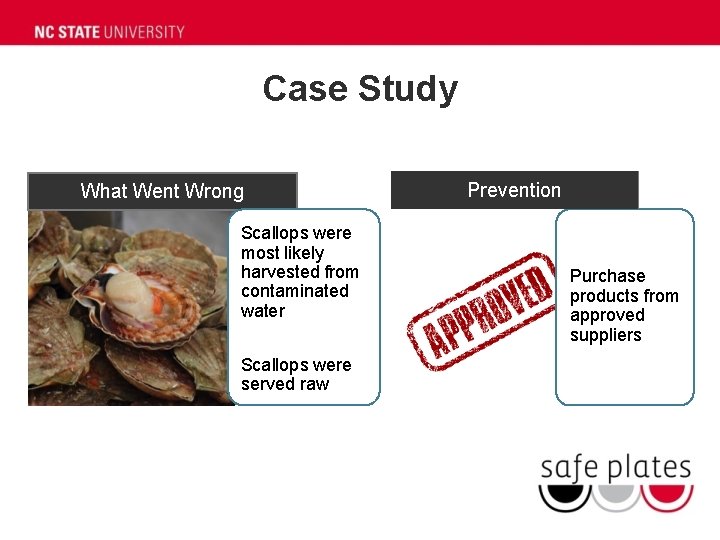
Case Study What Went Wrong Scallops were most likely harvested from contaminated water Scallops were served raw Prevention Purchase products from approved suppliers
Quiz When receiving food, which of the following is not a reason for rejecting food: a) b) c) d) Frozen food is thawed or partially thawed Visible mold or slime Eggs received at 41°F or below Packaging is damaged or dirty
Quiz When receiving food, which of the following is not a reason for rejecting food: a) b) c) d) Frozen food is thawed or partially thawed Visible mold or slime Eggs received at 41°F or below Packaging is damaged or dirty
Quiz A shipment of frozen fish arrives at your food establishment. You see that the outside bottoms of shipping cartons have too much ice and the fish fillets held within the carton have brown edges. These are signs of: a) b) c) d) Thawing and refreezing Safe, high quality seafood Seafood that has been kept in frozen storage too long Seafood that has been blast chilled
Quiz A shipment of frozen fish arrives at your food establishment. You see that the outside bottoms of shipping cartons have too much ice and the fish fillets held within the carton have brown edges. These are signs of: a) b) c) d) Thawing and refreezing Safe, high quality seafood Seafood that has been kept in frozen storage too long Seafood that has been blast chilled
Review • Approved suppliers • Requirements for inspecting and accepting shipments • Hepatitis A virus and parasites
- Slides: 28