
Module 2 Dust Control 1 Terminal Objectives Upon
Module 2 Dust Control 1
Terminal Objectives Upon the successful completion of this module, participants will be able to explain combustible dust control techniques. 2
Enabling Objectives • Explain the purpose of the pressure relief valve. • Discuss methods used to minimize dust escape. • Discuss dust collection methods. • Identify procedures necessary to prevent dust accumulation. 3
Pressure Release Valve • PRV • Safety device • Releases in case of overpressure 4

Dust Escape and Accumulation. Design • Utilize surfaces that minimize dust accumulation • Utilize surfaces that facilitate cleaning • Provide access to hidden areas • Locate PRVs away from dust hazard areas 5
Dust Escape and Accumulation. Equipment Integrity • Dust generating equipment • Maintenance of equipment is critical • Clean equipment regularly 6
Dust Collection • Cleanup dust at regular intervals • ONLY USE approved vacuum cleaners – Bag house – Cartridge – Cyclone – Portable – Wet 7
Dust Collection • Bag House – Effective on abrasive, sticky or curly particles – Effective with heavy dust loads • Cartridge – Continuous collection/removal of airborne dust – Allows collection without shutting down – Used on broad spectrum of industrial processes 8
Dust Collection • Cyclone – Separates/removes medium to large particles • Portable – Uses extractor arm to facilitate removal • Wet – Safe collection of hazardous/explosive dusts 9
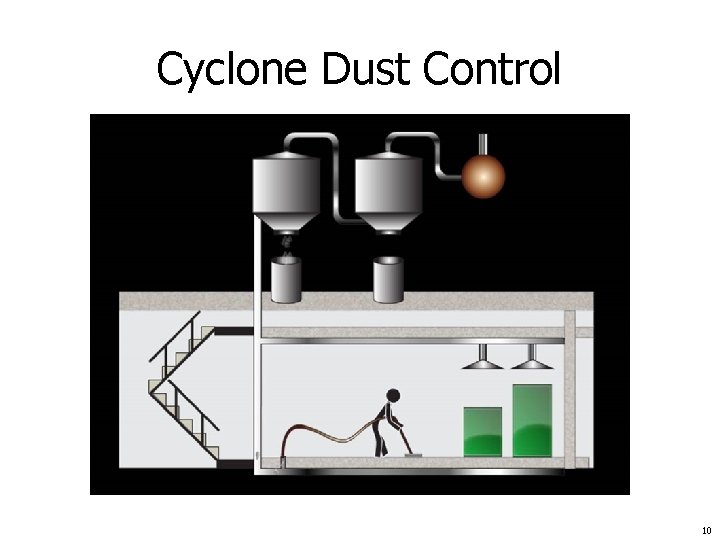
Cyclone Dust Control 10
Cleanup Methods • Use methods that do not generate dust clouds • Safe removal methods – Wet method/water removal – Explosion-proof industrial vacuum • Small areas may be wiped clean 11
Vacuum Cleaner Filter • Clean/replace according to manufacturer’s instructions • Maintenance-free filters 12
Dust Accumulation Prevention 1. Implement hazardous dust inspection 2. Implement housekeeping plan 3. Implement control program – Written plan – Establish frequency and methods 13
Next Module 3: Ignition Control 14
- Slides: 14