
Module 17 Aggregate Demand Introduction and Determinants KRUGMANS


- Slides: 15
Module 17 Aggregate Demand: Introduction and Determinants KRUGMAN'S MACROECONOMICS for AP* Margaret Ray and David Anderson
Do Now § Pick up a copy of the assignment § Read assignment § Write an example for each shift along AD curve.
Reading Modules 17 -18 aggregate demand & supply We will cover Module 16 later
What you will learn in this Module: • How the aggregate demand curve illustrates the relationship between the aggregate price level and the quantity of aggregate output demanded in the economy • How the wealth effect and interest rate effect explain the aggregate demand curve’s downward slope • What factors can shift the aggregate demand curve
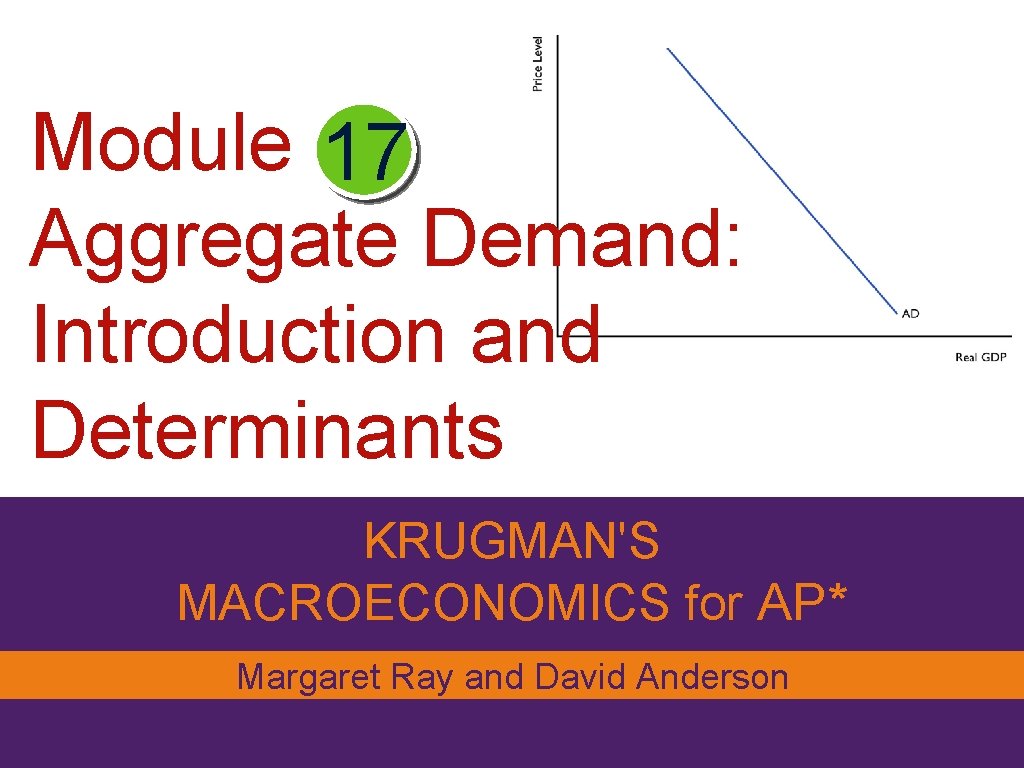
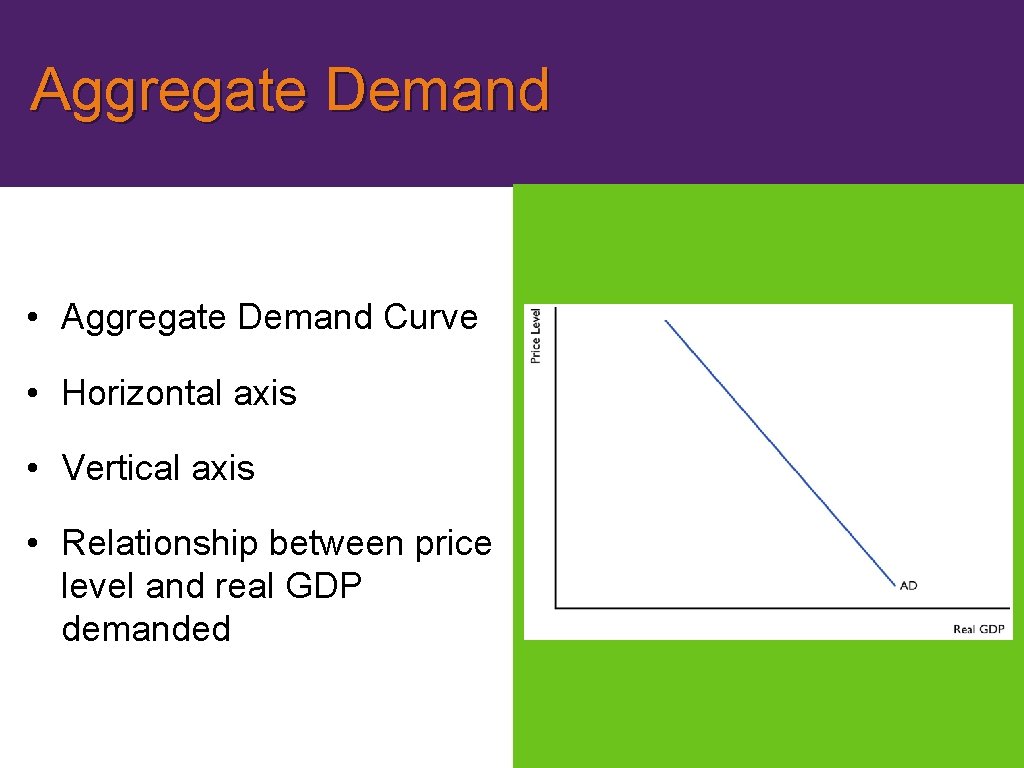
Aggregate Demand • Aggregate Demand Curve • Horizontal axis • Vertical axis • Relationship between price level and real GDP demanded
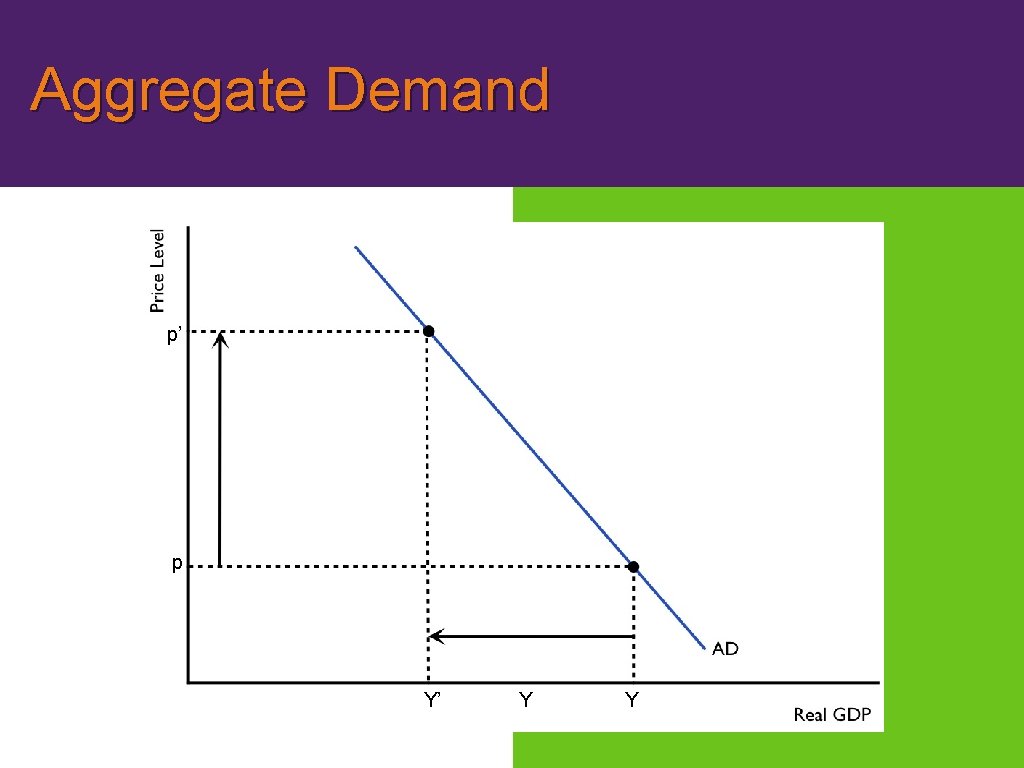
Aggregate Demand p’ p p Y’ Y Y
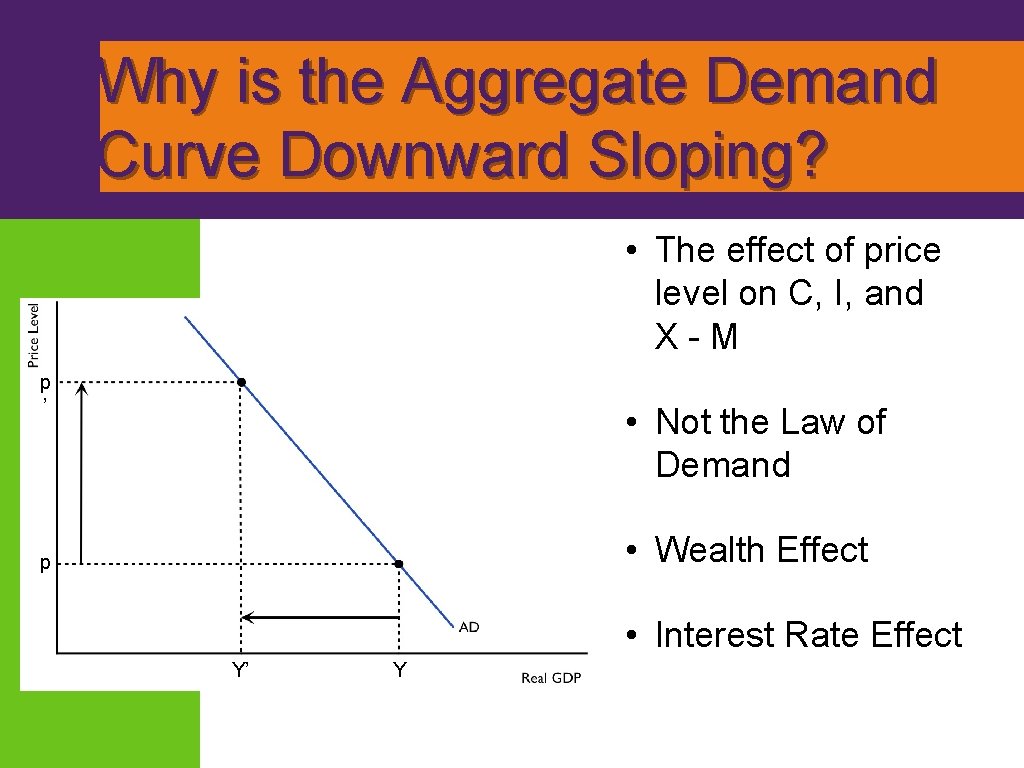
Why is the Aggregate Demand Curve Downward Sloping? • The effect of price level on C, I, and X-M p ’ • Not the Law of Demand • Wealth Effect p • Interest Rate Effect Y’ Y
Wealth Effect • Prices fall. • Purchasing power of money increases. • People spend more. • Aggregate demand increases.
Interest Rate Effect • Prices fall. • Demand for money decreases. • Interest rates decrease. • Investment and consumption increase.
Activity 23 – Part A •
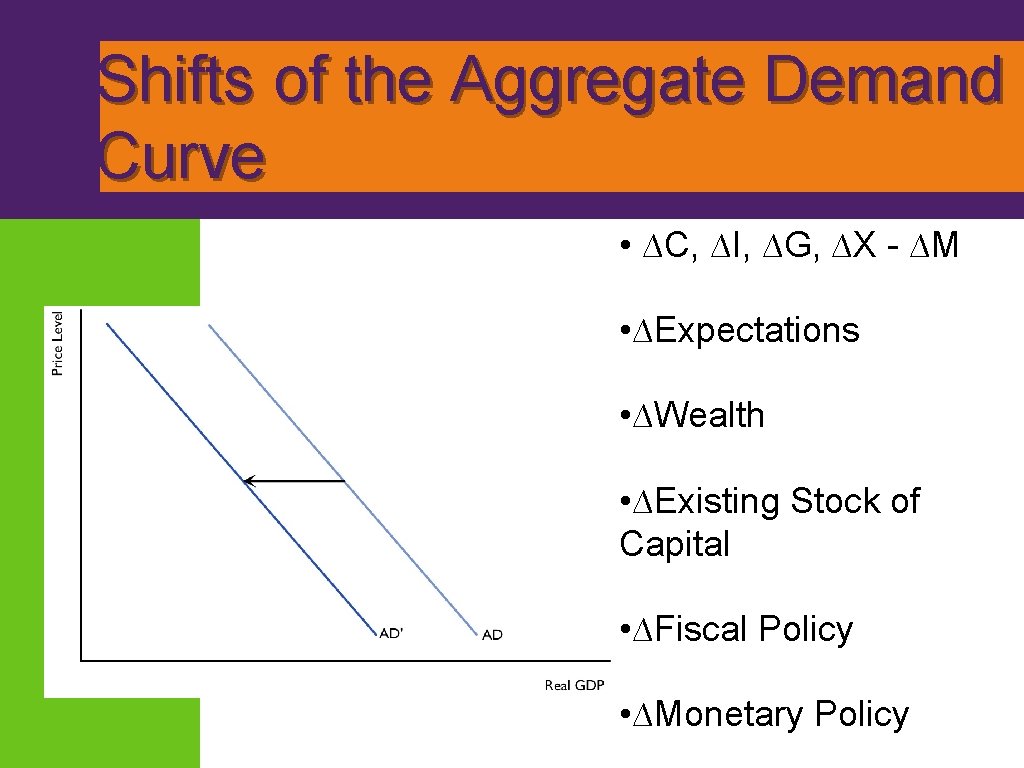
Shifts of the Aggregate Demand Curve • ∆C, ∆I, ∆G, ∆X - ∆M • ∆Expectations • ∆Wealth • ∆Existing Stock of Capital • ∆Fiscal Policy • ∆Monetary Policy
Roving Economists • Appoint an expert in expectations, wealth changes, physical capital stock and government for each team. • Three experts get together: • Identify how this factor changes aggregate demand. • Develop an example for each shift. • Whiteboard your examples and share with your team.
Activity 23 – Part B •
Do Now • Aggregate Demand Scenarios • Last page in Demand packet.
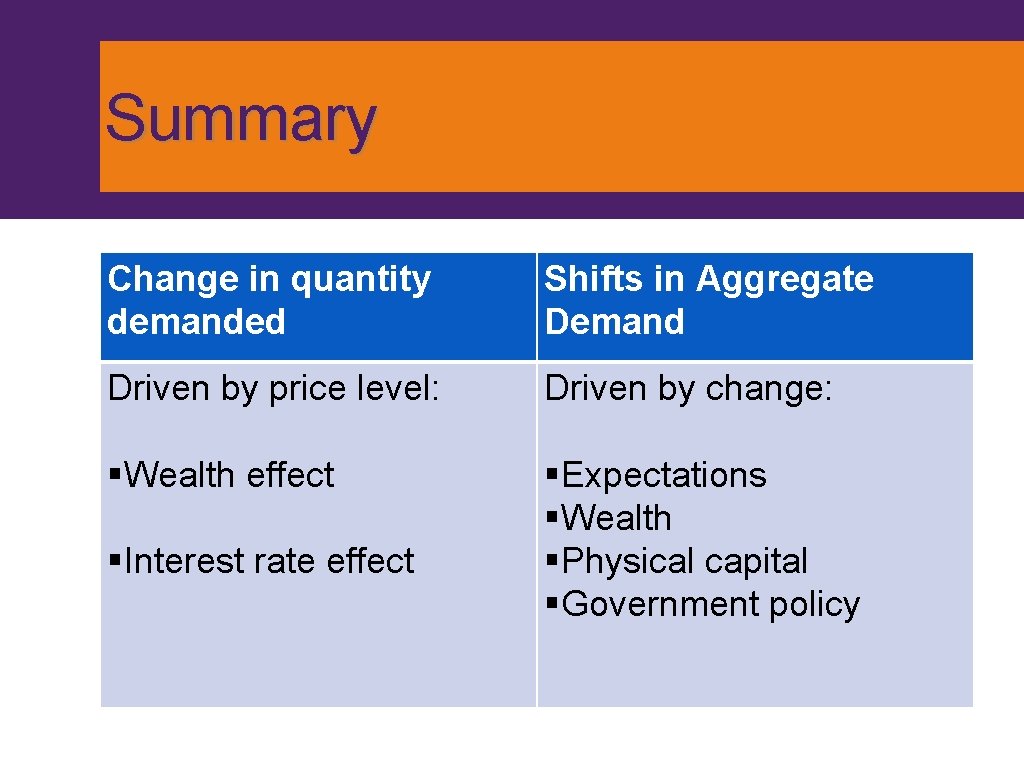
Summary Change in quantity demanded Shifts in Aggregate Demand Driven by price level: Driven by change: §Wealth effect §Expectations §Wealth §Physical capital §Government policy §Interest rate effect