
Module 16 Social Interaction and Social Structure Sociology







- Slides: 64
Module 16: Social Interaction and Social Structure Sociology in Modules Richard T. Schaefer 3 rd edition
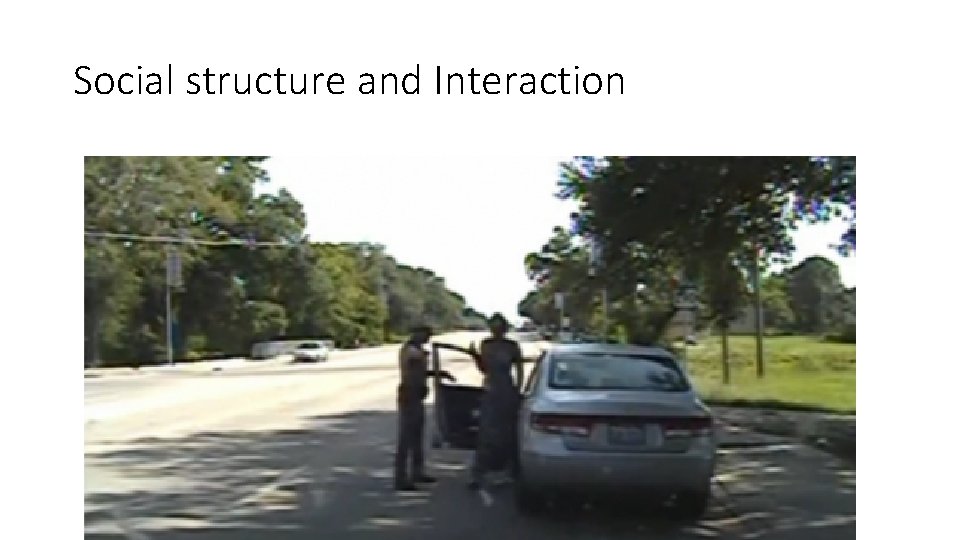
Social structure and Interaction
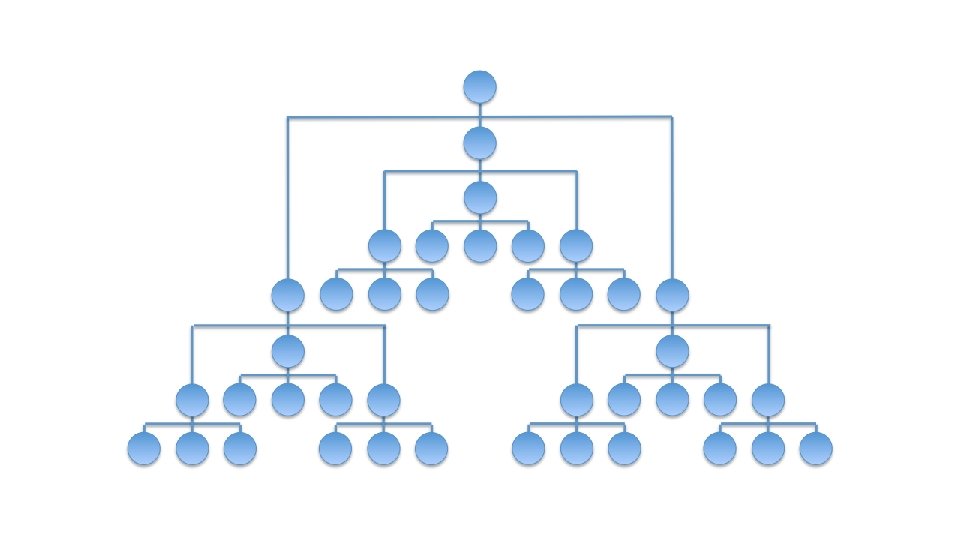
What is social structure? • Criminal justice system • Most criminal justice systems have five components • Law enforcement • Prosecution • Defense attorneys • Courts • Corrections Each playing a key role in the criminal justice process. Example -Law enforcement officers take reports for crimes that happen in their areas.
What is social structure? • A social structure consists of institutions, rules and practices. • A social structure is socially embodied in the actions, thoughts, beliefs, and durable dispositions of individual human beings. • A social structure is effective in organizing behavior of large numbers of actors.
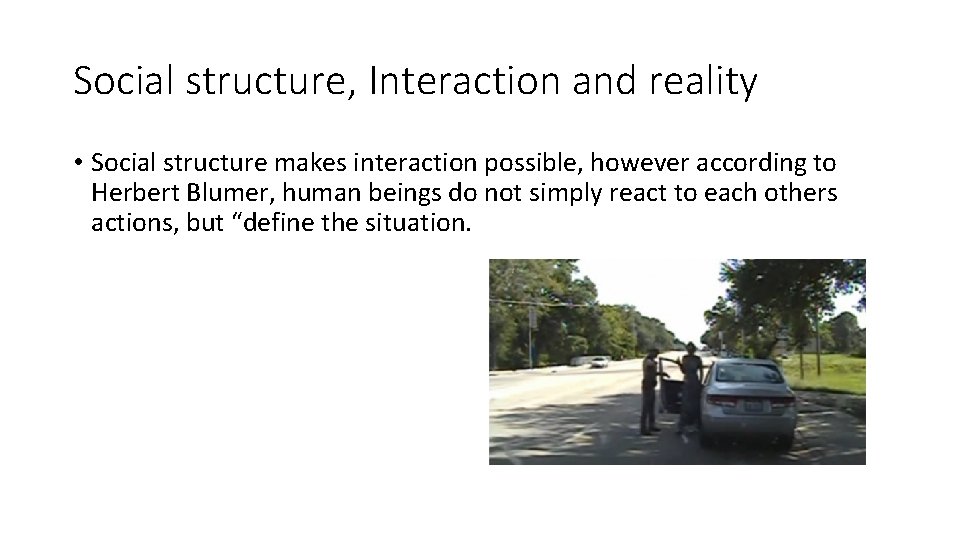
Social structure, Interaction and reality • Social structure makes interaction possible, however according to Herbert Blumer, human beings do not simply react to each others actions, but “define the situation.
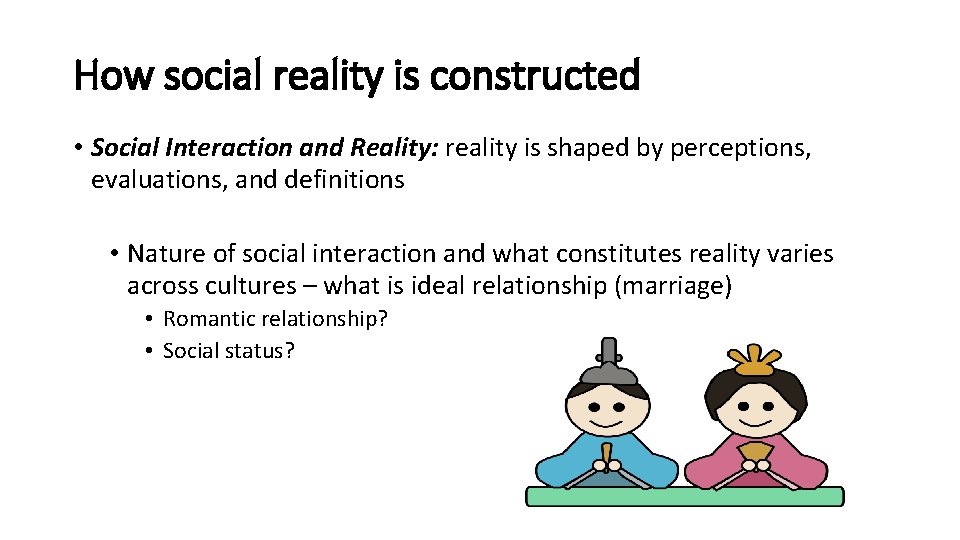
How social reality is constructed • Social Interaction and Reality: reality is shaped by perceptions, evaluations, and definitions • Nature of social interaction and what constitutes reality varies across cultures – what is ideal relationship (marriage) • Romantic relationship? • Social status?
• Ability to define social reality reflects group’s power within a society • • It reflects norms and values of the dominant culture and. . Consider – when you are stopped by police – what are the norms? • Important aspect of the process of social change involves redefining or reconstructing social reality
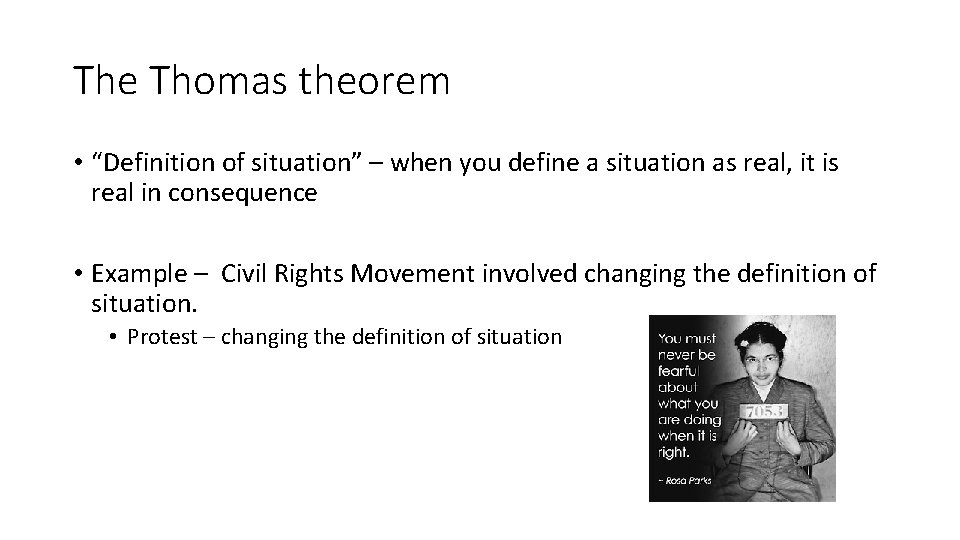
The Thomas theorem • “Definition of situation” – when you define a situation as real, it is real in consequence • Example – Civil Rights Movement involved changing the definition of situation. • Protest – changing the definition of situation
Elements of Social Structure • All social interaction takes place within a social structure, which can be broken down into five elements: • Statuses • Social roles • Groups • Social networks • Social institutions
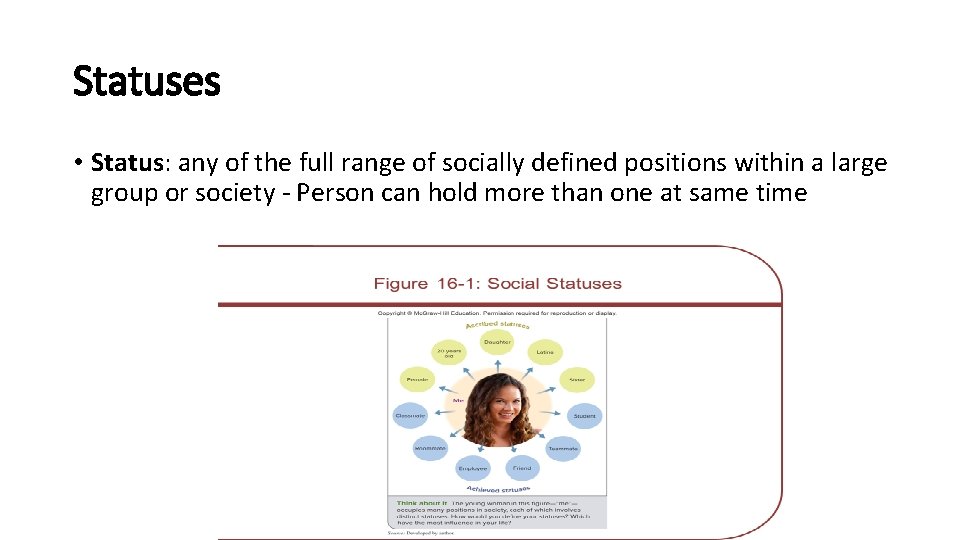
Statuses • Status: any of the full range of socially defined positions within a large group or society - Person can hold more than one at same time
Statuses • Ascribed and Achieved Status • Ascribed status: status one is born with • Racial background • Gender • Age Although biological, each culture attaches meaning to these statuses Example – Indian caste system American race relations
Ascribed status - Age • We cant’ change ascribed status, but change to traditional constrains associated with it • Example – Gray Panthers (1971) • 1 October 2016 – The United Nations is marking the International Day of Older Persons by encouraging countries to draw attention to and challenge negative stereotypes and misconceptions about older persons and ageing, and to enable older persons to realize their potential to build a life of dignity and human rights. • http: //www. un. org/apps/news/story. asp? News. ID=55182#. V_44 Li. TMJa. Y
Achieved status: status one earns
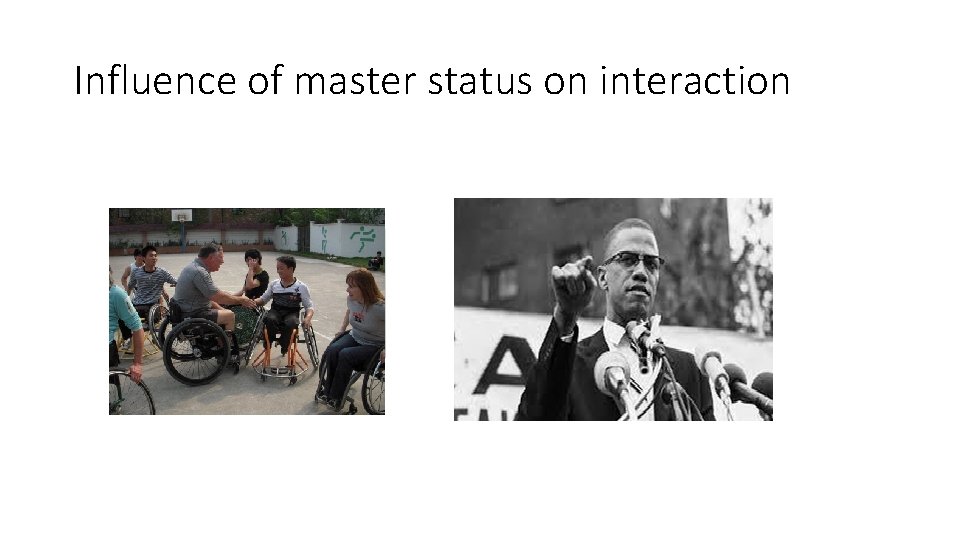
Statuses • Master Status • Status that dominates other statuses and determines a person’s general position in society In U. S. , ascribed statuses of race and gender can function as master statuses In India, caste can function as master status
Influence of master status on interaction
Social Roles • What Are Social Roles? • Social role: set of expectations for people who occupy a given status • Example – role of a student • Functionalism – Roles are significant components of social suture • Social stability – members can anticipate behavior of others based on their role. • Dysfunction of role?
• Role Conflict • When incompatible expectations arise from two or more social positions held by same person Example – Friend? Or supervisor? Conflict between ascribed and achieved roles – Male Nurse • Role strain • Difficulties that arise when same social position imposes conflicting demands and expectations • Example – Navajo Nations Officers – “peacemaking” as alternate form of justice
Social Roles • Role Exit • Process of disengagement from a role that is central to one’s identity to establish a new role • Ebaugh’s four stages: 185 respondents who disengaged from a role • “divorced”, “ex-nuns” “retirees” • • Doubt Search for alternatives Action or departure stage Creation of a new identity
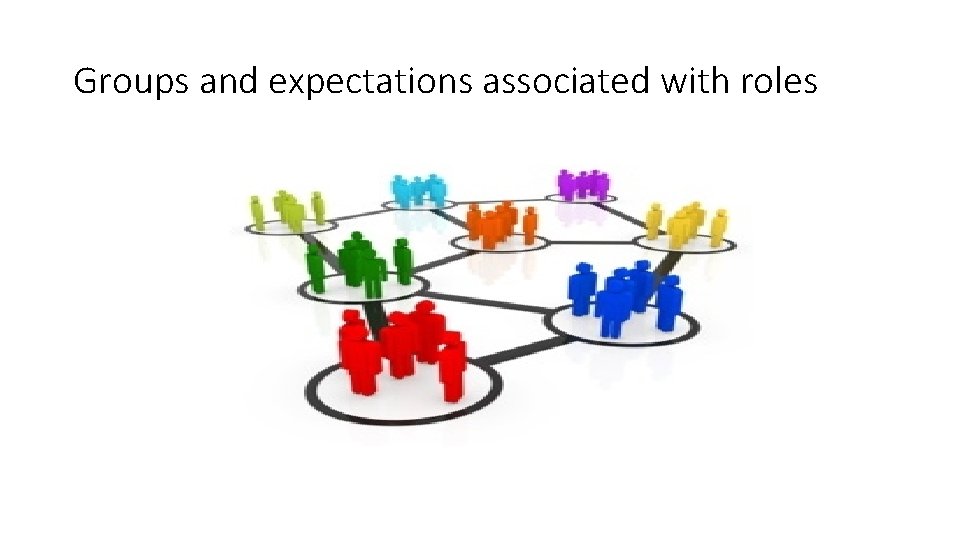
Groups • Group: any number of people with similar norms, values, and expectations who interact on a regular basis • Baseball team • People belonging to a church • Will residents of suburb (Katy) be a group? • Vital part of society’s social structure – because much of social interaction takes place in a group
Groups and expectations associated with roles
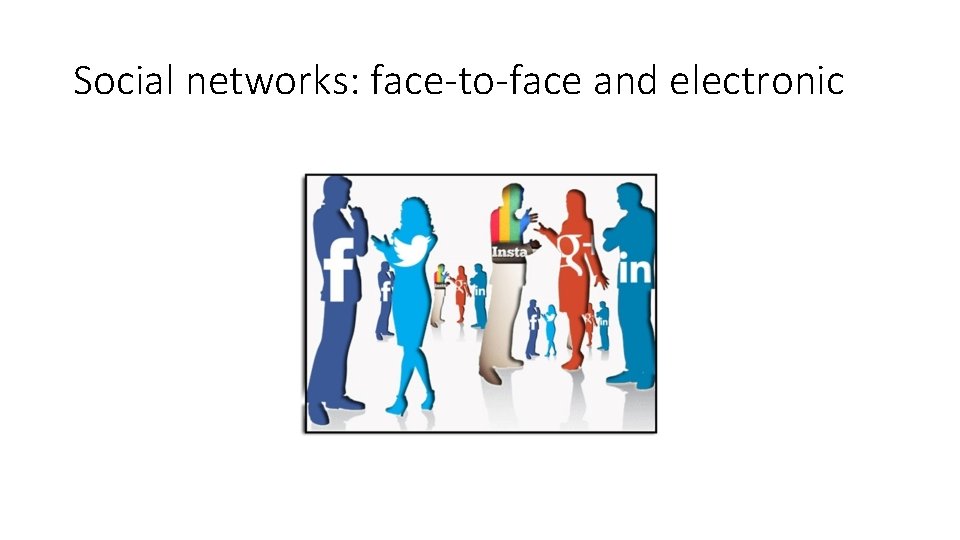
Social Networks • Social network: series of social relationships that links a person directly to others, and through them indirectly to still more people • Example – Facebook • Social networks one of five basic elements of social structure • Research indicates that in person and online not everyone participates equally in social networks
Social networks: face-to-face and electronic
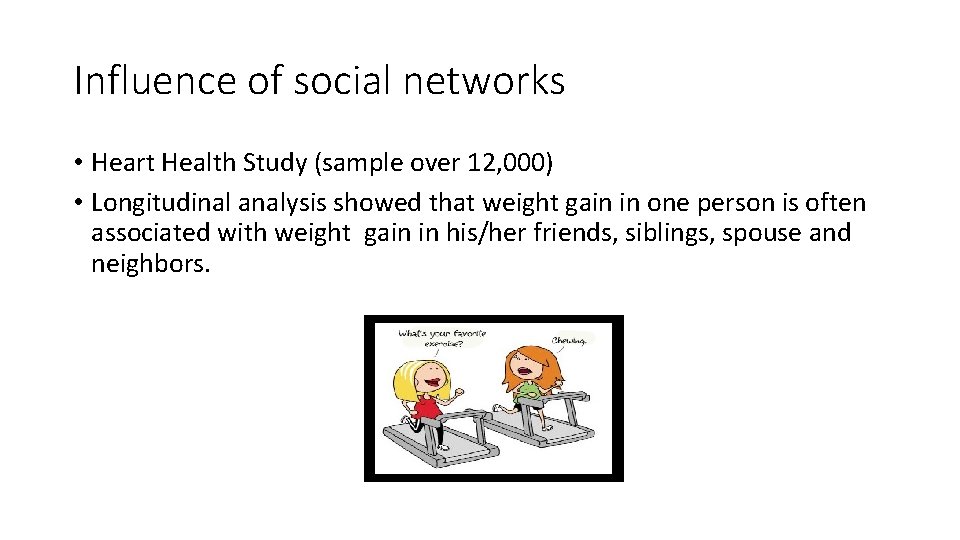
Influence of social networks • Heart Health Study (sample over 12, 000) • Longitudinal analysis showed that weight gain in one person is often associated with weight gain in his/her friends, siblings, spouse and neighbors.
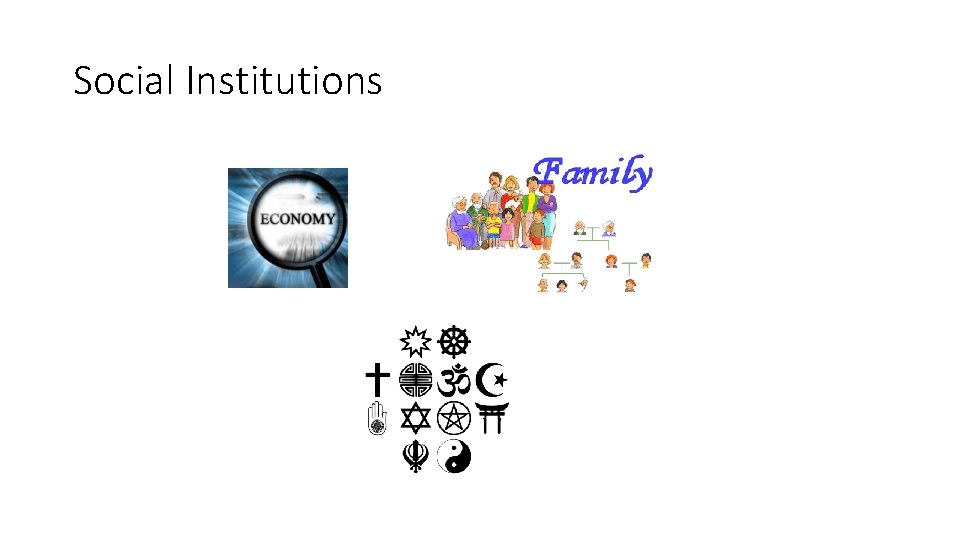
Social Institutions
Replacing personnel • Functions of social institutions: • Groups can become smaller when members leave, die or become incapacitated • Example – The “Shakers” who came to US in 1774 – it failed to replace its members • Means of maintaining group membership – annexation, immigration, acquisition of slaves
Teaching new recruits • Groups and societies must make sure that its members know the norms and values and accept them. • Example – Sunday schools • Preserving order -This function is critical to sustain the group.
Producing and distributing goods and services • Any relatively permanent group should provide desired goods and services to its members. • Example – Church Providing and maintaining a sense of purpose -The group need to motivate its members to be part of the group Patriotism, tribal identities, religious rituals
Module 18: Understanding Groups Sociology in Modules Richard T. Schaefer 3 rd edition
Understanding Groups • A group is any number of people with similar norms, values, and expectations Examples – • College sorority or fraternity • Dance company • Tenants association • Share a sense of belonging – key feature
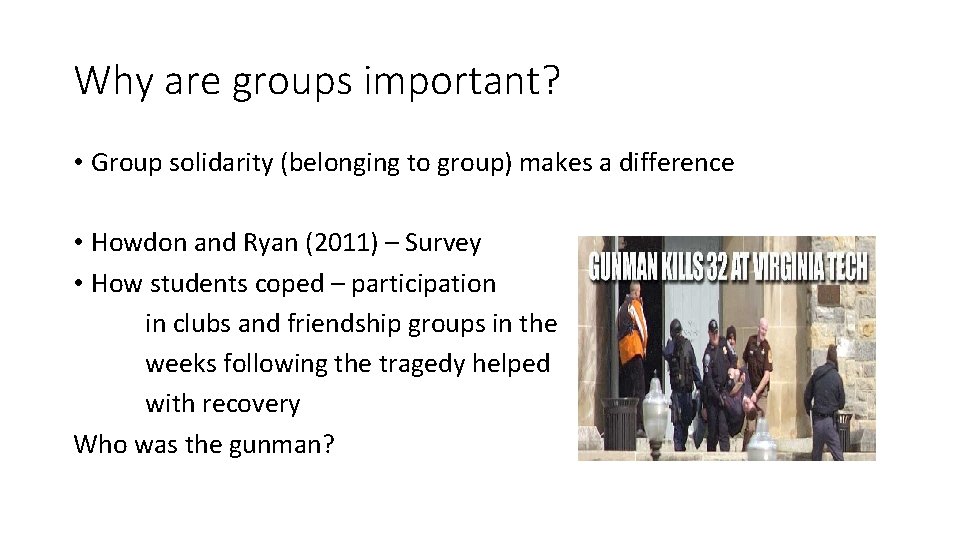
Why are groups important? • Group solidarity (belonging to group) makes a difference • Howdon and Ryan (2011) – Survey • How students coped – participation in clubs and friendship groups in the weeks following the tragedy helped with recovery Who was the gunman?
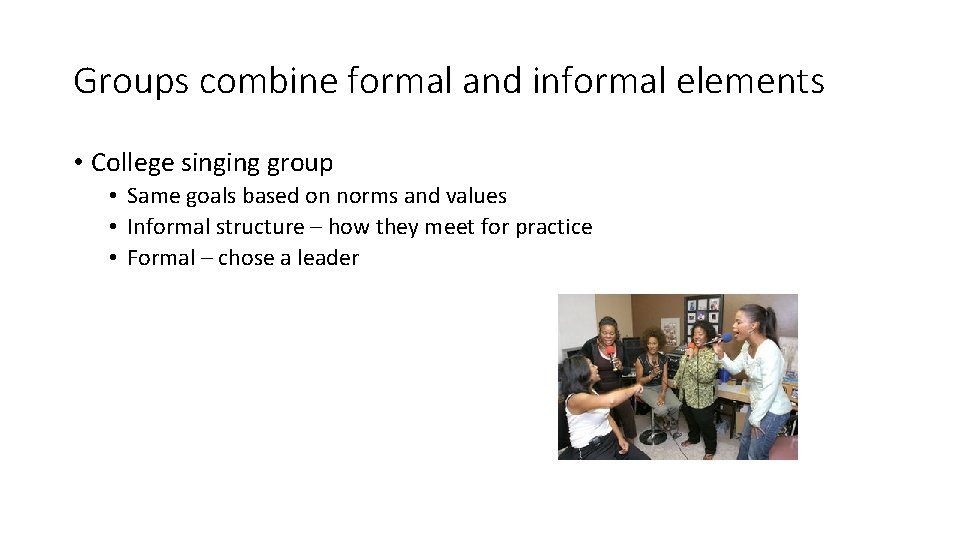
Groups combine formal and informal elements • College singing group • Same goals based on norms and values • Informal structure – how they meet for practice • Formal – chose a leader
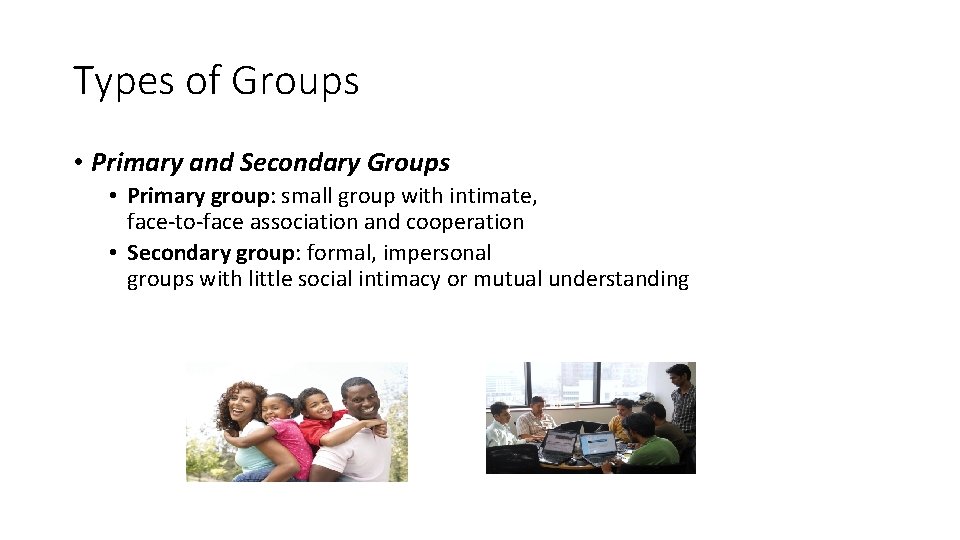
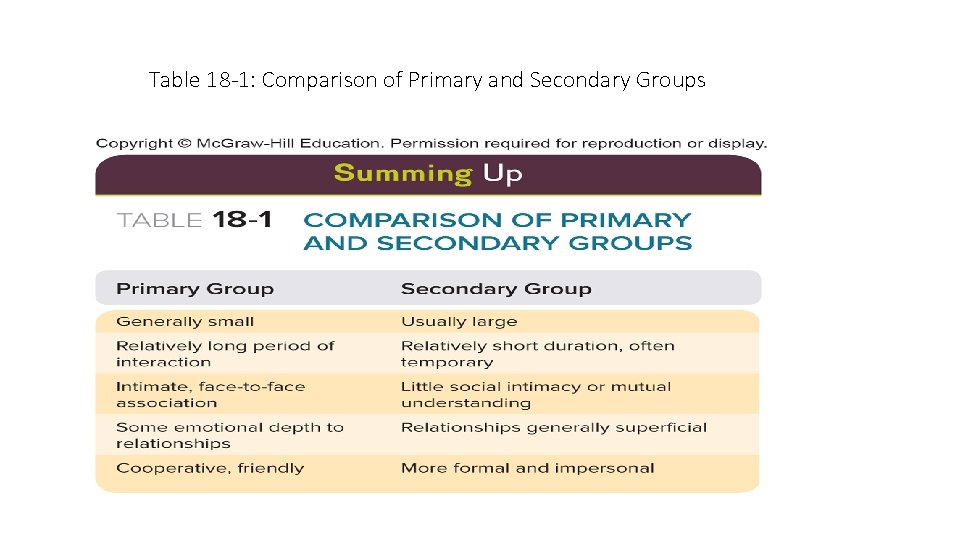
Types of Groups • Primary and Secondary Groups • Primary group: small group with intimate, face-to-face association and cooperation • Secondary group: formal, impersonal groups with little social intimacy or mutual understanding
Table 18 -1: Comparison of Primary and Secondary Groups
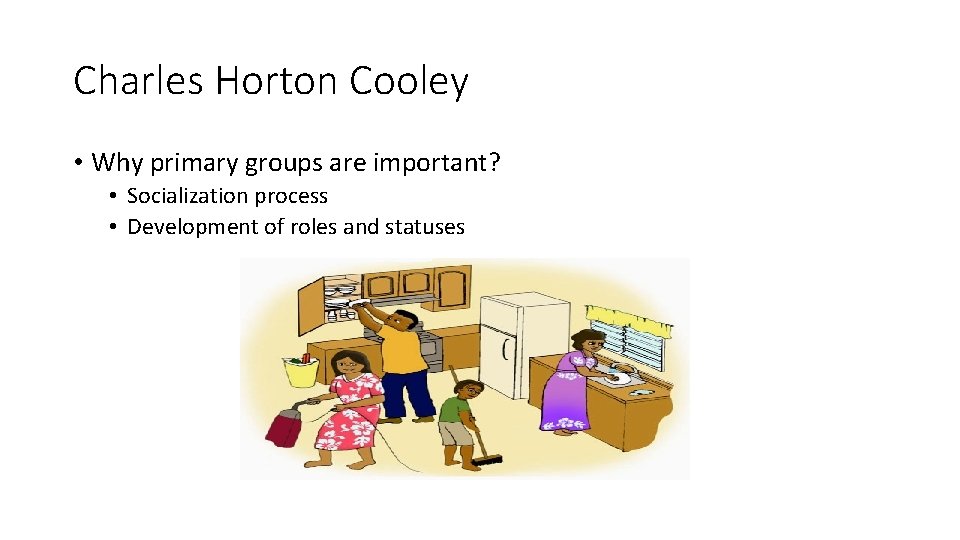
Charles Horton Cooley • Why primary groups are important? • Socialization process • Development of roles and statuses
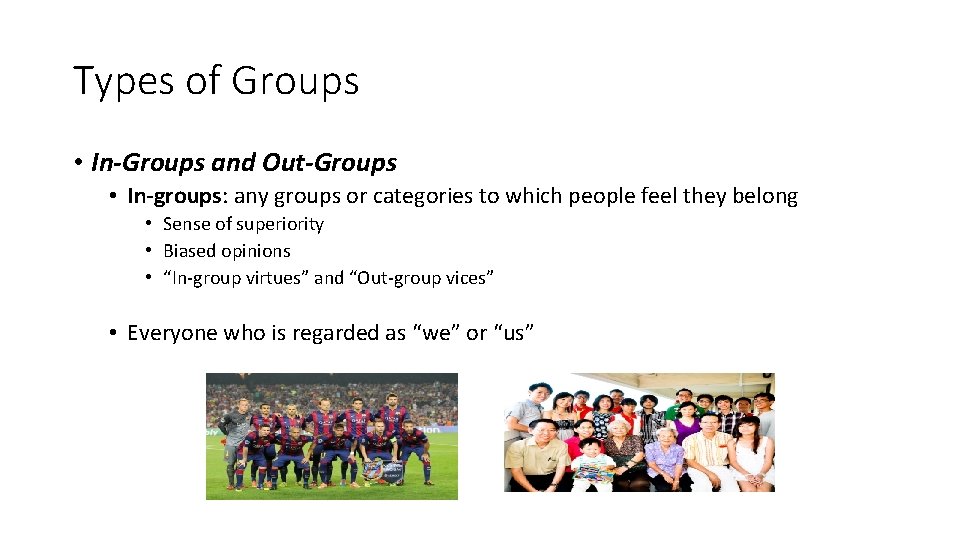
Types of Groups • In-Groups and Out-Groups • In-groups: any groups or categories to which people feel they belong • Sense of superiority • Biased opinions • “In-group virtues” and “Out-group vices” • Everyone who is regarded as “we” or “us”
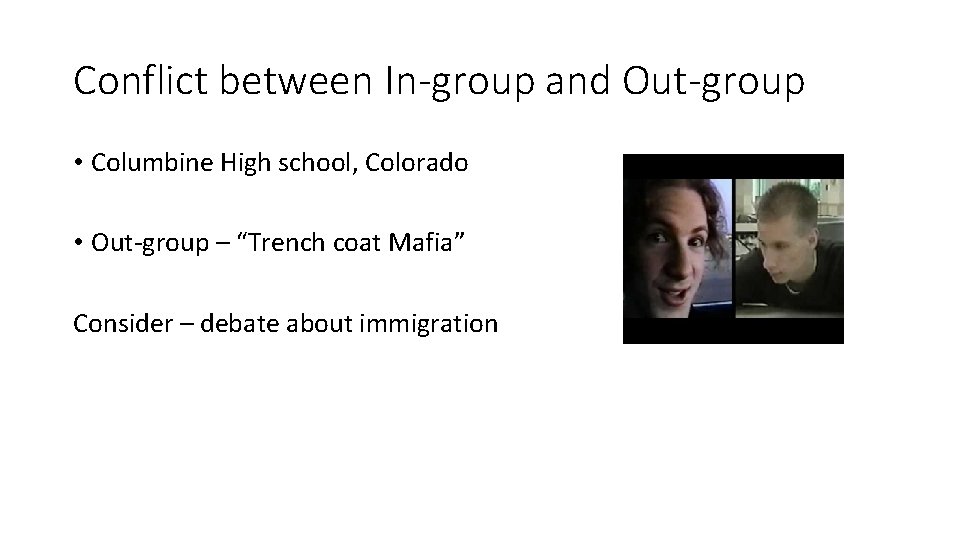
Conflict between In-group and Out-group • Columbine High school, Colorado • Out-group – “Trench coat Mafia” Consider – debate about immigration
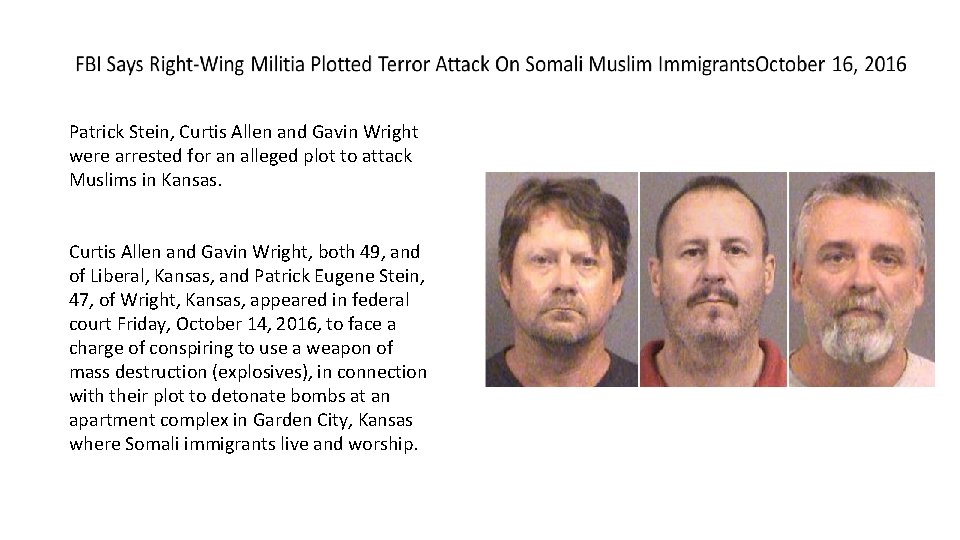
Patrick Stein, Curtis Allen and Gavin Wright were arrested for an alleged plot to attack Muslims in Kansas. Curtis Allen and Gavin Wright, both 49, and of Liberal, Kansas, and Patrick Eugene Stein, 47, of Wright, Kansas, appeared in federal court Friday, October 14, 2016, to face a charge of conspiring to use a weapon of mass destruction (explosives), in connection with their plot to detonate bombs at an apartment complex in Garden City, Kansas where Somali immigrants live and worship.
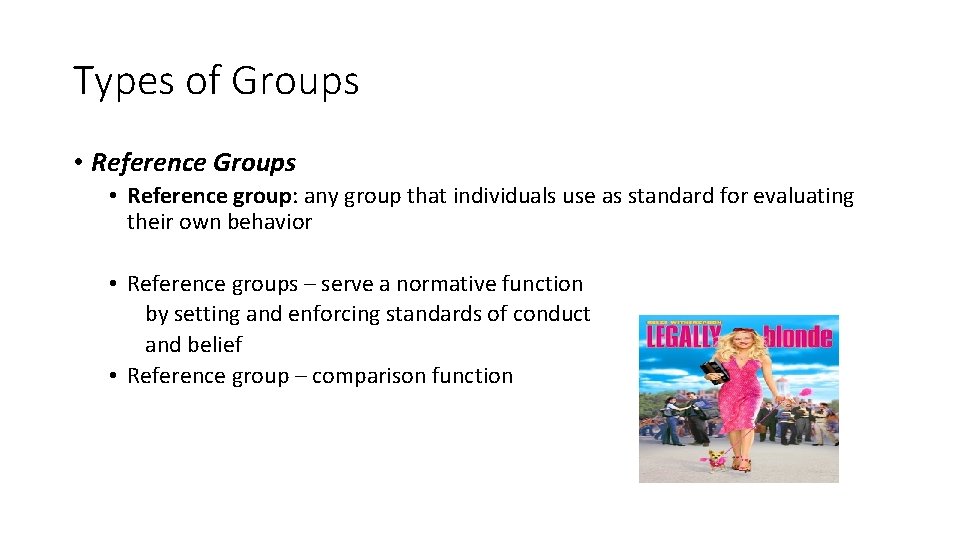
Types of Groups • Reference group: any group that individuals use as standard for evaluating their own behavior • Reference groups – serve a normative function by setting and enforcing standards of conduct and belief • Reference group – comparison function
Types of Groups • Reference group may help the process of anticipatory socialization • Reading “Wall street Journal” - finance student • Set and enforce standards of conduct and belief; also perform a comparison function • Example – an actor will evaluate himself/herself against other actors • Often two or more reference groups influence us at the same time
Types of Groups • Coalitions • As the group grows larger, a coalition begins to form • Temporary or permanent alliances geared toward common goal • Some intentionally short-lived • Example: Survivor
Formal Organizations and Bureaucracies • Formal organization: group designed for special purpose and structured for maximum efficiency – • US postal Service, HCC, Houston symphony • Size, specify of goals and efficiency may vary but all formal organizations are structured to manage large-scale operations.
Formal organizations • In our society, formal organizations fulfill enormous variety of personal and societal needs • IRS • HISD • Ascribed statuses can influence how we see ourselves within formal organizations • Study of female lawyers
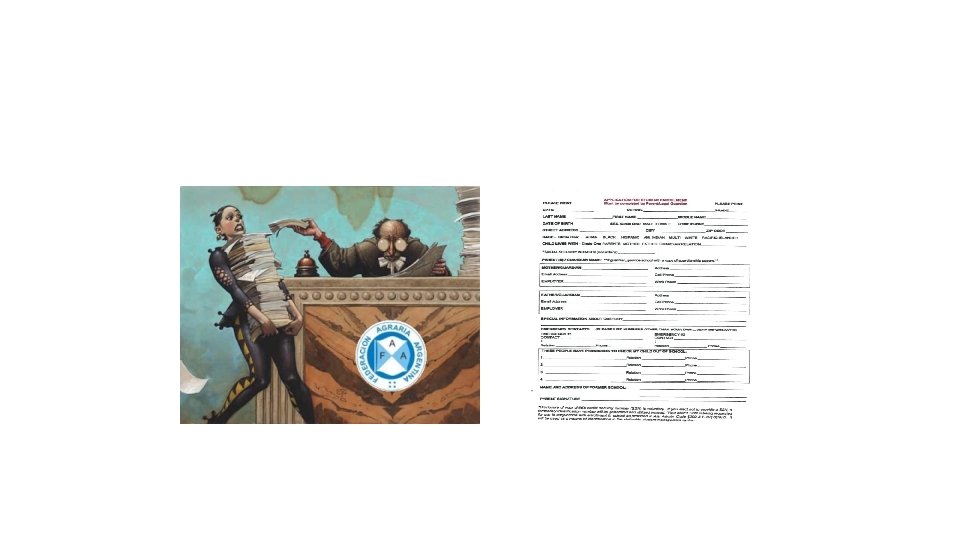
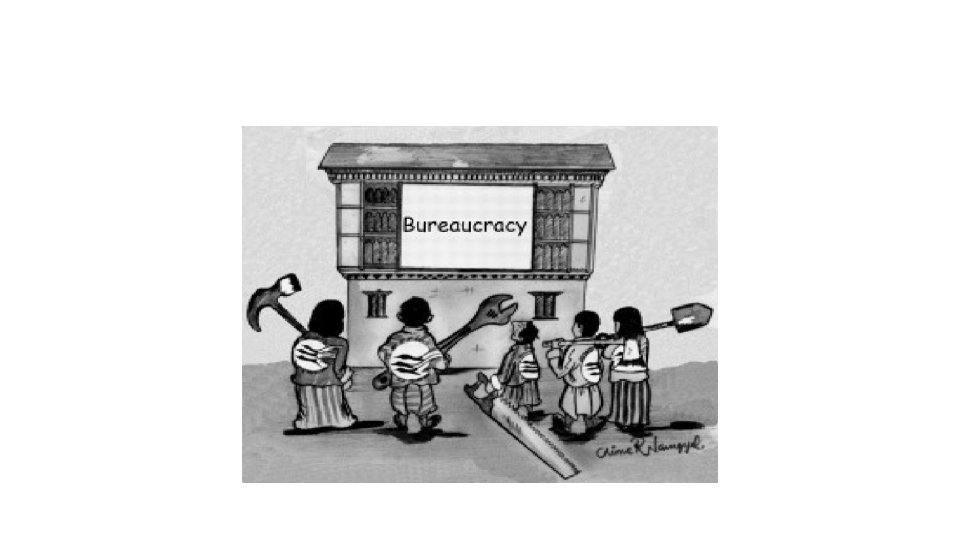
Characteristics of a Bureaucracy • Bureaucracy: component of formal organization that uses rules and hierarchical ranking to achieve efficiency
Characteristics of a Bureaucracy • Ideal type: a construct or model for evaluating specific cases (Weber) • Weber emphasized basic similarity of structure and process found in dissimilar enterprises of religion, government, education, and business – what was common?
Characteristics of a Bureaucracy • Characteristics of Weber’s ideal bureaucracy: 1. Division of labor 2. Hierarchy of authority 3. Written rules and regulations 4. Impersonality 5. Employment based on technical qualifications
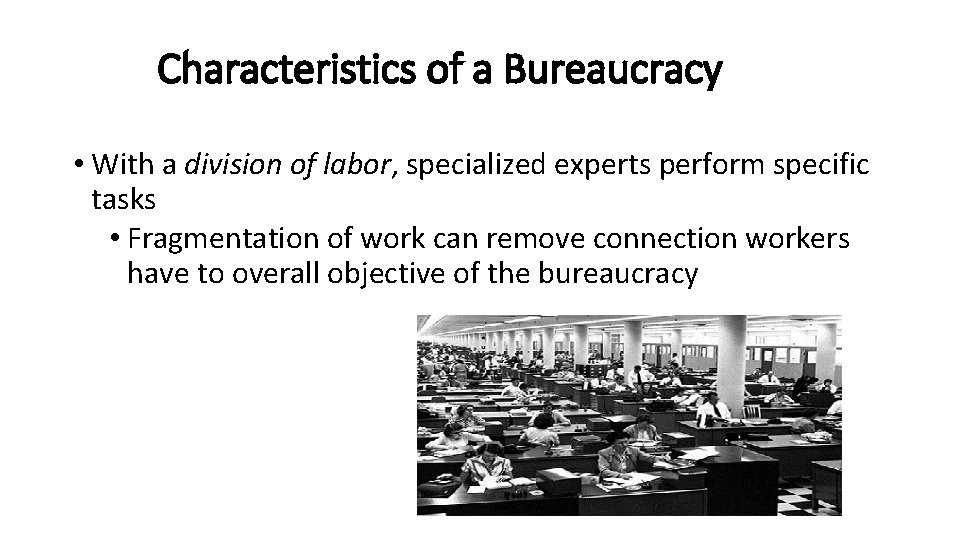
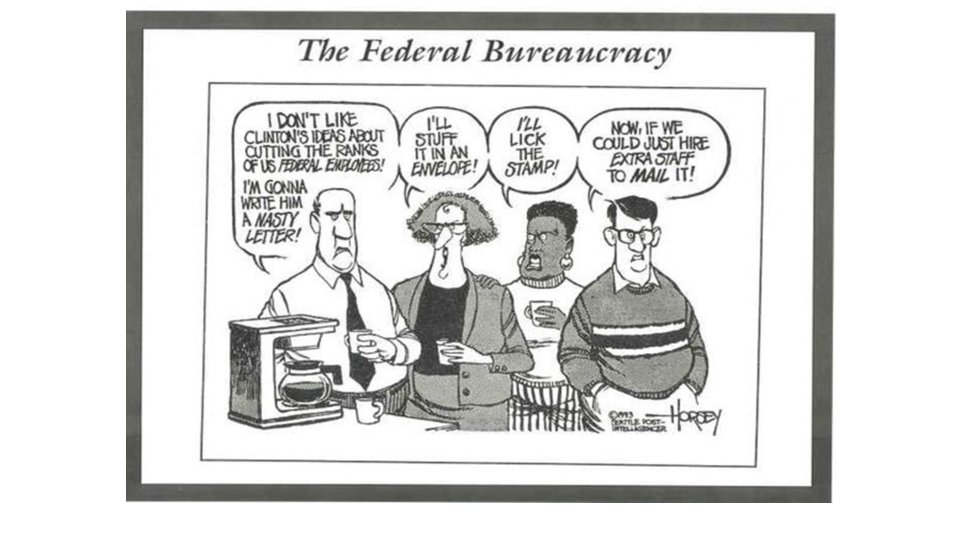
Characteristics of a Bureaucracy • With a division of labor, specialized experts perform specific tasks • Fragmentation of work can remove connection workers have to overall objective of the bureaucracy
Characteristics of a Bureaucracy • Alienation: condition of estrangement or dissociation from the surrounding society • Trained incapacity: workers become so specialized that they develop blind spots and fail to notice obvious problems
Characteristics of a Bureaucracy
Characteristics of a Bureaucracy • Example – what we learnt about bureaucracies after 911? • CIA (Overseas matters) and FBI (domestic matters)– division of labor.
Characteristics of a Bureaucracy • A hierarchy of authority means each position is under supervision • Written rules and regulations ensure uniform performance of every task • Provide continuity, but…. . • Goal displacement: when rules and regulations overshadow larger goals of organization and become dysfunctional
Characteristics of a Bureaucracy • Impersonality a key characteristic • Bureaucratic norms dictate that officials perform duties without personal consideration to people as individuals
Characteristics of a Bureaucracy • Employment based on technical qualifications: ideally, performance measured against specific standards • Peter principle: every employee within a hierarchy tends to rise to his or her level of incompetence (Peter and Hull 1969) • Bureaucracy pervades modern life; through Mc. Donaldization, it has reached new heights
Characteristics of a Bureaucracy • Bureaucratization as a Process • Bureaucratization: process by which group, organization, or social movement becomes increasingly bureaucratic • Can take place within small group settings • Oligarchy: Rule by a Few • Iron law of oligarchy: even a democratic organization eventually develops into a bureaucracy ruled by a few
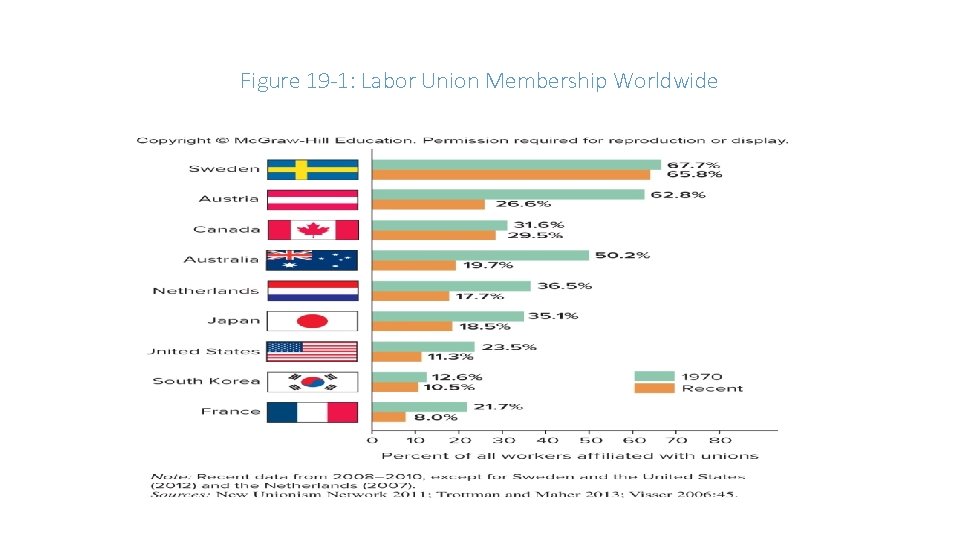
Social Policy and Organizations: The State of the Unions Worldwide • Looking at the Issue • Labor unions consist of organized workers who share either the same skill or the same employer • Labor union practices were historically discriminatory, but today some actually ensure equal pay for minorities • Labor union power varies greatly from country to country
Figure 19 -1: Labor Union Membership Worldwide
Social Policy and Organizations: The State of the Unions Worldwide • Reasons for ongoing decline in labor union membership: • Changes in the type of industry • Growth in part-time jobs • The legal system • Globalization • Employer offensives
Social Policy and Organizations: The State of the Unions Worldwide • Applying Sociology • Marxists and functionalists view union development as logical response to organizational growth • Sociologists have linked decline in union membership to widening gap between hourly workers’ wages and managerial and executive compensation
Social Policy and Organizations: The State of the Unions Worldwide • Initiating Policy • U. S. is unique among industrial democracies in allowing employers to oppose union development • European labor unions play a major role in politics • Unions are a global force, but form and function vary from country to country
Sociology in the Global Community Mc. Donald’s and the Worldwide Bureaucratization of Society • What features of fast-food restaurants do you appreciate? Do you have any complaints about them? • Analyze life at your college using Weber’s model of bureaucracy. What elements of Mc. Donaldization do you see? Do you wish life were less Mc. Donaldized?